






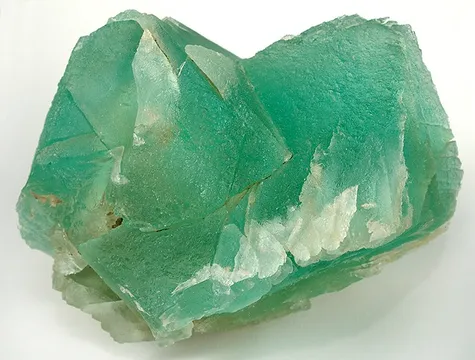
New Hampshire, USA - pegmatite-rich locality yielding aquamarine beryl, smoky quartz, microcline; Palermo No. 1 and Ruggles Mine are key collector sites.
Key facts
New Hampshire is one of the classic mineral states of the northeastern United States, not because it offers a single showy ore district, but because it compresses a remarkably varied collector’s province into a small piece of New England. Its signature specimens come from granitic pegmatites of the Grafton, Groton, Keene, Newport, Raymond, and related districts; from miarolitic cavities in the White Mountain igneous rocks; from metamorphic and contact-metamorphic terrains rich in aluminous silicates; and from small sulfide, fluorite, gold, and skarn occurrences scattered through the state. The best New Hampshire material has a very local look: aquamarine beryl in pale to strong blue prisms from the Palermo and other pegmatites; glassy smoky quartz and microcline from Conway Granite and related cavity localities; mica, feldspar, quartz, schorl, uranium minerals, and phosphate rarities from Ruggles and Palermo; and stout brown cordierite crystals, commonly altered to pinite, set in pale quartz from the Richmond soapstone quarry area.
The state’s importance to collectors rests especially on its pegmatites. Palermo No. 1 in North Groton is New Hampshire’s great systematic-collector locality, a beryl-columbite-phosphate pegmatite famous for an extraordinary secondary phosphate suite and for a long line of type-locality species. Ruggles Mine, on Isinglass Mountain in Grafton, is the state’s best-known historic mica pegmatite and a rare example of a New England mine that was both an industrial operation and, for generations, a public collecting landmark. In the White Mountains, the Conway Granite and related intrusive rocks provided a second collecting identity: smoky quartz, microcline, topaz, and accessory rare-element minerals from small pockets and seams rather than from large mined pegmatite bodies.
Regional View
Country View
The finest New Hampshire specimens tend to reward close locality knowledge. A cabinet aquamarine from Palermo is not valued merely as “beryl,” but as a well-formed, well-colored survivor from a mine where much beryl is pale, etched, frozen in feldspar, or removed quickly from dumps. A good Palermo quartz specimen is unusual when it is aesthetic rather than just massive: doubly terminated, perched in a cleft, or associated with albite, phosphate minerals, or etched beryl. A good Moat Mountain or Government Pit smoky quartz is judged by glass, luster, completeness, and association with microcline, amazonite, or topaz. A good Richmond cordierite is judged by form before color: clear hexagonal outlines, terminations, and enough fresh brown cordierite to stand apart from the mica-and-clay pinite alteration that commonly replaces it.


Search for specimens: View all specimens from New Hampshire, USA
New Hampshire’s collector mineralogy is dominated by granitic pegmatites and related late-magmatic systems, with a strong supporting cast of metamorphic and small hydrothermal localities. The most economically important beryl-bearing pegmatites occur in the southern two-thirds of the state, particularly in the Grafton and Keene districts, with the Raymond district of southeastern New Hampshire receiving attention for feldspar and possible beryl resources. Many of the larger pegmatites are hosted by mica-quartz and quartz-mica schists of the Littleton Formation, locally carrying sillimanite, andalusite, actinolite, or lime-silicate layers. In collector terms, that geology translates into coarse quartz-feldspar-mica bodies with beryl, schorl, garnet, columbite-group minerals, lithium phosphates, uranium minerals, and an extensive sequence of secondary phosphates wherever primary phosphate pods have altered.
The best-known pegmatite mine in the state for rare species is Palermo No. 1, near North Groton on the southeast flank of Bald Mountain. It is a concordant pegmatite body in mica-quartz-sillimanite schist, roughly 85 m long and 42 m wide in published descriptions. It began as a mica mine in the nineteenth century and later produced beryl, feldspar, quartz, and mineral specimens. Early work was concentrated underground and in open cuts; later collecting and specimen mining exposed phosphate pods and altered zones that made Palermo one of the richest phosphate localities in North America. Palermo’s essential collector assemblage includes albite, microcline, quartz, muscovite, beryl, triphylite, montebrasite, graftonite, apatite, vivianite, ludlamite, scorzalite, lazulite, whitlockite, palermoite, jahnsite-group minerals, schoonerite, foggite, goedkenite, samuelsonite, whitmoreite, and many other microminerals. Some species are best found in old phosphate-rich dump material rather than in obvious fresh beryl-bearing rock, so the mine has always rewarded slow trimming and microscope work as much as brute-force digging.
Palermo’s mining history is complicated enough to matter for labels. The mine was worked for sheet mica beginning in the 1860s, was operated seriously by the Hartford Mining Company in the late nineteenth century, took the Palermo name after purchase by the Palermo Mining Company of Schenectady, and later became widely known under General Electric ownership. General Electric worked it for muscovite, microcline, and beryl, and the Ashley Mining Corporation later leased and worked the property. Subsequent leases and ownership changes shifted the mine away from industrial production and toward specimen recovery. Since the 1970s, the Palermo name has remained central in the collector market, and “GE Mine” on an old label generally refers to the same historic Palermo No. 1 operation rather than to a separate locality.
Ruggles Mine, near Grafton, is the other indispensable New Hampshire pegmatite name. Its fame rests on very coarse pegmatitic granite exposed in a dramatic open pit and underground openings on Isinglass Mountain. The major minerals are quartz, feldspar, muscovite, biotite, and schorl, with beryl and uranium minerals among the collector species that gave the locality much of its later interest. Ruggles began as an early commercial mica source and subsequently supplied feldspar and other industrial material; it later became a public collecting attraction. After a period of closure, it reopened to public collecting in the 2020s under new ownership, with current access governed by posted seasonal hours, admission, collecting limits, and separate arrangements for club field trips. Because rules at operating or reopened collecting localities can change rapidly, collectors should rely on current operator instructions rather than old guidebooks or childhood memories of the mine.
Beryl resources in New Hampshire were important enough to receive detailed federal study. More than 200 pegmatites were examined in the mid-twentieth-century beryl-resource investigations, with Palermo No. 1, Beryl Mountain, Blake, Chickering, Smith No. 1, Corson, McGall, Chandler, Millard Chandler, Welch, Parker Mountain, and several prospects among the principal localities. The statewide resource estimate was modest by industrial standards: beryl was generally sparse and scattered, commonly less than 0.10 percent of the host pegmatite, and economically recoverable mainly as a byproduct of feldspar and mica mining. For collectors, however, that same distribution produced a broad family of localities where beryl occurs as blue, green, yellowish, white, or etched crystals in quartz-feldspar-mica pegmatite rather than as a single large orebody.
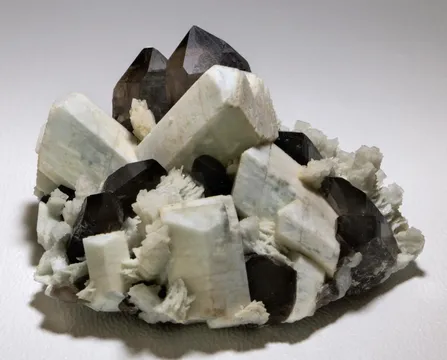
Quartz specimens span several New Hampshire settings. In the pegmatites, quartz may be massive, smoky, milky, rose-tinted, or well crystallized in cavities and seams, commonly associated with feldspar, mica, beryl, schorl, or phosphate minerals. At Palermo, good display quartz is uncommon enough to stand out when a crystal is doubly terminated or set aesthetically in massive quartz or albite. In the White Mountains, the Conway Granite and related units host miarolitic cavities that have produced smoky quartz, microcline, topaz, and rare-element accessory minerals. Government Pit at Albany is one of the classic published cavity localities, with attractive topaz, smoky quartz, and feldspar specimens appearing at New England shows in the mid-1970s and sometimes carrying confusing labels such as Conway, North Conway, Bartlett, or Albany. Moat Mountain and nearby Conway-area localities remain widely known to field collectors for smoky quartz and feldspar, with legal collecting limited to specifically designated areas and current permit or site rules.
Cordierite gives New Hampshire a very different collector signature. The Richmond Soapstone Quarry, also known in older usage as the Harris Quarry, has produced brown cordierite crystals in quartz from a metamorphic amphibole environment. The crystals are typically small, but they can show strong hexagonal prism outlines and terminations, and many specimens display partial alteration to pinite, a mica-and-clay replacement material that produces bright reflective patterns around islands of fresher cordierite. These pieces are not showy in the gem-pegmatite sense; their appeal is crystallographic and locality-specific, especially when a brown terminated crystal is sharply defined against quartz.
Access today is mixed and must be treated as part of specimen ethics. Many of the famous pegmatites and quarries are private property, closed to casual walk-in collecting, and available only by permission or organized mineral-club field trips. Palermo is a permission-only locality; club trips, when offered, are the legitimate route. Ruggles is a public-facing collecting and sightseeing operation when open, but posted rules, seasonal closures, fees, and collecting limits govern what can be taken. White Mountain National Forest collecting is restricted; the Moat Mountain mineral collecting site is the notable legal exception for recreational smoky quartz collecting, and collectors should confirm current Forest Service rules before digging. New Hampshire state park and agency lands may prohibit removal of rocks, fossils, or minerals unless specifically allowed, so “public land” should never be assumed to mean “open collecting.”
New Hampshire cordierite is most collectible from the Richmond Soapstone Quarry in Cheshire County, where brown cordierite occurs as small but sharply recognizable hexagonal prismatic crystals in quartz, with documented specimens showing terminated crystals around 1.3 cm, pairs of 6 mm hexagonal terminations, and partially altered crystals to about 2 cm; the best pieces preserve crisp outlines and visible terminations rather than merely showing altered “pinite” patches, because surface-weathered cordierite here readily alters to mica-and-clay material that can blur the crystal form. Associations are simple compared with the state’s pegmatite assemblages: quartz matrix and metamorphic host material dominate, so a superior New Hampshire cordierite is judged by contrast, freshness, and morphology, not by color saturation or exotic paragenesis.
Quartz from New Hampshire ranges from massive pegmatite core material to fine crystals, but the collector-grade pieces fall into two main visual families: pegmatite quartz from Palermo, Ruggles, and related mica-feldspar-beryl mines, and smoky quartz from miarolitic cavities in the White Mountain region. Palermo quartz can be milky, smoky, or glassy, with exceptional pieces showing doubly terminated crystals in massive quartz or albite-rich cavities and associations with beryl, autunite, phosphate minerals, or microcline; Conway-area and Moat Mountain material is prized when the smoky quartz is lustrous, transparent to translucent, undamaged, and perched on microcline or amazonitic feldspar rather than simply loose and chipped. The most desirable New Hampshire quartz specimens have clear locality attribution, because “Conway,” “North Conway,” “Albany,” “Moat Mountain,” “Government Pit,” and “Palermo” represent different geological and historical contexts that collectors do not value interchangeably.
New Hampshire beryl is a pegmatite mineral first and a gem mineral second: at Palermo No. 1, Beryl Mountain, Ruggles, Corson, Smith, Chickering, and numerous smaller workings it occurs in quartz-feldspar-mica pegmatite as pale blue aquamarine, greenish to yellowish beryl, white beryl, etched crystals, and large embedded masses. Palermo provides the most famous specimen context, including terminated aquamarine crystals, etched beryl associated with beryllonite and other beryllium phosphates, and large beryl crystals locked in feldspar; cabinet-quality pieces are scarce because much New Hampshire beryl is pale, fractured, contacted, or massive. A top example from the state shows strong hexagonal form, intact termination, attractive blue color, and minimal contacting, while ordinary field pieces are more often partial prisms or weathered fragments pulled from feldspar-rich dump material.
Beyond cordierite, quartz, and beryl, New Hampshire is especially important for phosphate and uranium mineralogy. Palermo No. 1 is the key locality, with type-locality or co-type-locality species including bjarebyite, falsterite, foggite, goedkenite, palermoite, samuelsonite, schoonerite, whitlockite, whitmoreite, wolfeite, and xanthoxenite, while jahnsite was described from the Fletcher Mine, graftonite from Melvin Mountain, and hurlbutite from the G. E. Smith Quarry. The state’s rarities include palermoite and natropalermoite, classic whitlockite, samuelsonite, schoonerite, scorzalite, lazulite, ludlamite, vivianite, autunite and meta-autunite, uranophane-group minerals, soddyite from Ruggles, and numerous mm-scale secondary phosphates that make New Hampshire a microscope collector’s state as much as a cabinet-specimen state.
The most serious authenticity issue with New Hampshire specimens is not wholesale fakery but locality drift. Old labels may use obsolete or alternate mine names, especially at Palermo No. 1, where “GE Mine,” “Palermo,” and “North Groton” can refer to the same historic operation depending on period and owner. Conway-area smoky quartz and topaz can also be label-sensitive: Government Pit material has appeared under Albany, Conway, North Conway, and Bartlett labels, and those names should be interpreted carefully against specimen style, old labels, and collection history. “New Hampshire aquamarine” without a mine name is much less meaningful than a specific Palermo, Beryl Mountain, Ruggles, Corson, or other pegmatite attribution.
Condition problems are typical of New England pegmatites. Beryl is often contacted where it grew into quartz or feldspar, internally fractured, etched, pale, or incomplete; sharp terminations and rich blue color are much less common than hexagonal fragments or dull embedded sections. Quartz from dump material is frequently bruised on terminations and edges, iron-stained, or detached from its feldspar matrix. Moat Mountain and Conway-area smoky quartz may be naturally etched, fractured, or clay-coated from pocket weathering; good cleaning can reveal excellent glass, but aggressive acid or mechanical cleaning can strip matrix, dull luster, or create an overprocessed look. Cordierite from Richmond is prone to pinite alteration, so apparently “micaceous” surfaces may be natural replacement rather than damage, but specimens with sharp fresh brown crystal faces are distinctly better.
Radioactive minerals from Ruggles and Palermo deserve sober handling. Uraninite, gummite, autunite/meta-autunite, uranophane, soddyite, phosphuranylite, and related secondary uranium species are legitimate parts of the New Hampshire suite, but friable coatings and dusty altered material should be stored in closed boxes, handled minimally, and kept away from abrasion, food-preparation areas, and children. Autunite and meta-autunite identifications on old labels can be tricky because hydration state and alteration history matter; serious collectors should prefer analyzed or well-documented specimens when the exact uranium species is important.
Availability varies sharply by species. Ruggles material is again entering collections through legal public collecting and club trips, but the best historical mica, beryl, and uranium specimens still come from old collections. Palermo specimens remain available on the secondary market and through organized collecting, yet choice aquamarine, aesthetic quartz, large brazilianite, and well-crystallized type-locality phosphates are not common. Many Palermo rarities are micromounts or thumbnail specimens; size should not be overvalued at the expense of analytical confidence and paragenetic interest. For New Hampshire, a small, accurately labeled, locality-specific rarity is often a better specimen than a larger but anonymous pegmatite fragment.
Palermo’s old workings read like a New England industrial novel written in mica, rail, and phosphate. The mine sits near North Groton, but its history reaches through a succession of owners and names: nineteenth-century mica work, the Palermo Mining Company, General Electric, Ashley Mining Corporation, later leases, and finally the modern specimen-mining era. At one time the Palermo operation reportedly had 85 miners and 25 to 30 trimmers, with a 400-foot shaft and a 40,000-square-foot floor at the bottom. Those numbers are startling because the site now lives in collectors’ minds as a place of thumbnail phosphates and careful dump picking; behind those delicate specimens was once a labor system built to pull industrial mica, feldspar, quartz, and beryl from a steep New Hampshire hillside.
One of the great Palermo stories is a pocket so large it scarcely sounds like the same mine that micromounters know. In an 1898 report, a pocket at the mine was described as about 10 feet in diameter. From its roof, according to the mine superintendent, a quartz crystal three feet across was removed. Whether imagined as a single monumental crystal or as part of a cavernous pegmatite chamber, the scene explains why old Palermo material still carries a charge for collectors: a mine best known today for mm-scale phosphates also had room for crystals and pockets on a human scale.
The most vivid modern Palermo tales come from collectors who saw what remained underground after industrial mining ended. One field-trip account describes the mine pumped out enough for visitors to go inside, where old railroad rails still lay in place for ore carts. In one part of the workings, shining lights upward into the ceiling revealed large beryl crystals still locked in feldspar, one estimated at more than a foot long. It is a perfect Palermo image: not a gem pocket being emptied, but major beryl still imprisoned in the pegmatite, visible only by flashlight in the old mine’s roof.
Ruggles has a different romance. It was the public-facing “Mine in the Sky,” a mountaintop pegmatite where families, school groups, and serious collectors walked into a huge open working and saw feldspar, quartz, mica, and schorl on the scale of architecture. The mine’s modern history has been almost as dramatic as its geology: after decades as a tourist and collecting attraction, it closed, changed hands, drew public efforts and speculation, and finally reopened to visitors in 2024. Its current operators again advertise mineral collecting, sightseeing, camping, and club field trips, making Ruggles a rare case where a famous New England locality is not merely a label on old specimens but a living collecting destination.
The White Mountain smoky quartz story is quieter and more dispersed, but just as characteristic of New Hampshire collecting. Government Pit at Albany became one of the state’s premier cavity localities after attractive topaz, smoky quartz, and feldspar specimens began appearing at northern New England mineral shows in the mid-1970s. The locality name itself became part of the collecting puzzle: specimens were sold or reported as Government Pit, Conway, North Conway, Bartlett, or Albany, while the correct locality was Government Pit in Albany. For collectors, that tangle of labels is not a nuisance but part of the specimen’s historical texture, linking small miarolitic cavities in the Conway Granite to show tables, field notes, and the detective work of later locality research.

_(37097712006).jpg)