A collector's guide to N'Chwaning Mines, South Africa: its geology, mining history and notable minerals, illustrated with the 472 specimens documented from this locality on EarthWonders.
Key facts
N'Chwaning is one of the great specimen names of the Kalahari Manganese Field: an industrial manganese operation that happens, by geological accident and by decades of careful underground recovery, to have supplied collectors with some of the most distinctive manganese-mineral specimens ever seen. The mines lie in the Black Rock area of the Northern Cape, in the world-class Paleoproterozoic manganese succession of the Hotazel Formation, where manganese ore beds are interlayered with iron formation and carbonate rocks of the Transvaal Supergroup. For the economic geologist, N'Chwaning is a high-grade manganese orebody shaped by faulting and hydrothermal upgrading. For the collector, it is a locality of red rhodochrosite on black manganese oxides, lemon-yellow ettringite-group crystals, glittering black hausmannite, orange-red inesite, salmon-pink olmiite, silky manganite, and a remarkable supporting cast of calcium-manganese silicates, carbonates, borates, sulfates, and hydroxides.
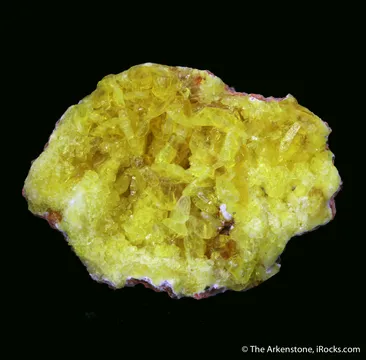
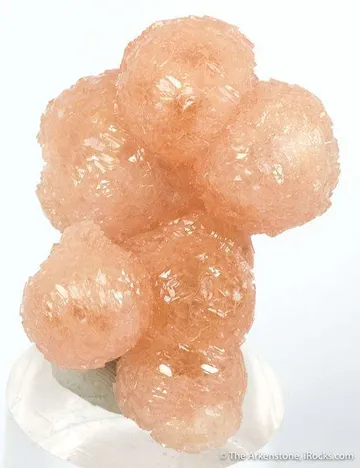
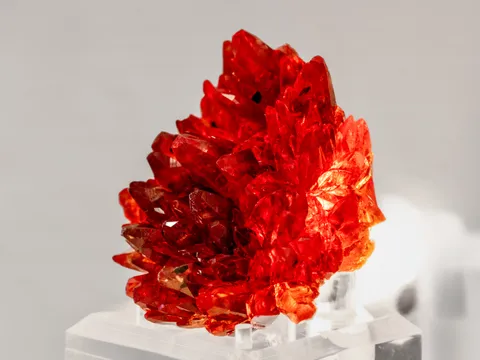
The look of the best N'Chwaning specimens is unmistakable. Classic rhodochrosite occurs as lustrous cherry-red to rose-red scalenohedra, truncated “dogtooth” crystals, intergrown sheaves, and drusy crusts, often against black manganite or hausmannite-rich ore. Ettringite, sturmanite, thaumasite, charlesite, and jouravskite bring the opposite visual language: soft but electric yellows, honey tones, amber, and pale lemon prisms perched on calcite, oyelite, xonotlite, and dark ore. The great hausmannites are jet-black, highly lustrous, tetragonal dipyramids on red-brown andradite or calcite; the olmiites are rounded, sparkling, flesh-pink to salmon aggregates that made a once-obscure species into a cabinet mineral; and the inesites add sprays and blades of red to orange-red manganese silicate, often with the famous orange prehnite-calcite assemblage from N'Chwaning II.
Regional View
Country View
N'Chwaning is also a historically important collecting locality because its most famous material came not from casual surface collecting but from active underground mining. The N'Chwaning group includes N'Chwaning I, II, and III, with the second shaft particularly tied to many major collector finds. The mines have yielded type-locality minerals, species later clarified or redefined using N'Chwaning material, and enough unusually fine crystals to make the name familiar well beyond specialists in manganese mineralogy.

Photo: Wikimedia Commons

Photo: Wikimedia Commons
Search for specimens: View all specimens from N'Chwaning Mines, South Africa
The N'Chwaning Mines are underground manganese mines in the Black Rock mining district, near Hotazel and northwest of Kuruman in South Africa’s Northern Cape Province. The locality name is tied to farm N'Chwaning 267, and the modern operation forms part of Assmang’s Black Rock Mine Operations, alongside Gloria and associated surface infrastructure. The complex is worked commercially for manganese ore; it is not a public collecting site, and modern specimen recovery is inseparable from underground mine access, safety control, mine planning, and the small number of people permitted to handle mineral pockets when they are exposed.
Geologically, the mines are in the Kalahari Manganese Field, one of Earth’s largest land-based manganese resources. The ore is hosted in the Hotazel Formation of the Griqualand West Sequence, within the Paleoproterozoic Transvaal Supergroup. The Hotazel Formation contains repeated manganese-rich and iron-rich sedimentary units, with ore beds interbedded with banded iron formation and carbonate. At N'Chwaning, later structural and hydrothermal events upgraded parts of the original sedimentary ore. Fault-adjacent zones became richer in manganese and developed high-grade hausmannite-rich assemblages, while more distal areas preserved lower-grade, kutnohorite- and braunite-bearing ore. This zoning is not an abstract mining detail: it is the engine behind the locality’s collector mineralogy.
Two principal manganese seams are important in the mine descriptions. The No. 1 seam is thick and deep underground in the N'Chwaning area, while the No. 2 seam lies stratigraphically above it and has been accessed using N'Chwaning II infrastructure. Commercial extraction is by underground room-and-pillar methods, with drilling, blasting, underground crushing, conveying, washing, sizing, and stockpiling by grade. In broad specimen terms, vugs, cavities, fault-controlled openings, brecciated ore, and calc-silicate bodies are the settings that matter most: they provided the open space and reactive fluids that allowed crystals rather than massive ore to form.
N'Chwaning I was established in the early 1970s, N'Chwaning II came into production in 1981, and N'Chwaning III became fully operational in the mid-2000s. N'Chwaning I is remembered by collectors for early and classic rhodochrosite and later shigaite-related material; N'Chwaning II became the signature shaft for many of the locality’s famous collector specimens, including rhodochrosite, ettringite-group minerals, olmiite, hausmannite, inesite, calcite, and rare calcium-manganese silicates; N'Chwaning III has contributed more recent rarities, including significant jouravskite material.
The deposit’s mineral assemblage reflects multiple overlapping events. Primary and upgraded manganese ore includes braunite, braunite-II, hausmannite, bixbyite, hematite, marokite, and associated carbonate. Hydrothermal alteration introduced or redistributed calcium, manganese, iron, boron, sulfate, silica, and other components, producing rare silicates and borates such as olmiite, poldervaartite, bultfonteinite, xonotlite, datolite, pectolite, prehnite, gaudefroyite, and related minerals. Carbonate-rich openings supplied rhodochrosite, kutnohorite, calcite, and manganocalcite. Late-stage cavities produced delicate hydrated minerals of the ettringite group: ettringite, sturmanite, thaumasite, charlesite, and jouravskite, whose outward similarity is a continuing challenge for collectors.
The most important specimen pockets are known less as public “diggings” than as short-lived underground episodes: late-1970s and early-1980s rhodochrosite, early-1980s ettringite-group material, the orange prehnite–inesite–calcite occurrence around 2000, the large olmiite and poldervaartite recoveries of the 2000s, the 2006 shigaite-on-rhodochrosite pockets in N'Chwaning I, and the late-2016 jouravskite find at N'Chwaning III. These finds are now dispersed through museums, advanced private collections, dealer inventories, and older estate material. Fresh production from the mines continues as an ore operation, but collector-quality pieces appear irregularly and usually through established specimen channels rather than open field collecting.
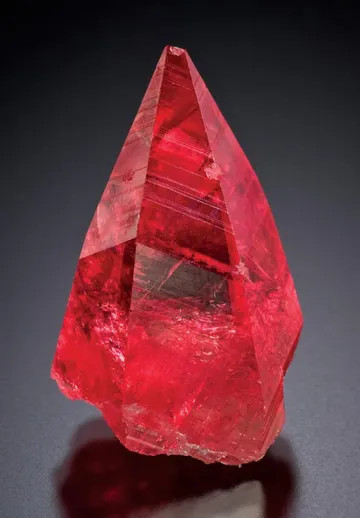
Rhodochrosite is the emotional center of N'Chwaning collecting: the classic pieces show cherry-red to rose-red, highly lustrous crystals on black manganite, hausmannite-rich ore, or dark manganese matrix, with habits ranging from sharp scalenohedra and truncated “dogtooth” crystals to intergrown wheatsheaf or barrel-like aggregates and sparkling drusy crusts. Much of the most celebrated material is tied to N'Chwaning I and II production from the late 1970s into the early 1980s, with later pieces often representing older stock rather than new production. Crystal groups are commonly miniature to small-cabinet in scale, while individual crystals from the finest older finds may reach several centimeters; value rises steeply when the color is saturated red rather than pale pink, the faces are glassy and undamaged, the rhodochrosite stands in strong contrast to black manganite, and the specimen preserves an architectural pocket form rather than appearing as a broken crust.
Ettringite from N'Chwaning is prized for lemon-yellow to canary-yellow hexagonal prisms, sometimes as sharp, doubly terminated floaters and sometimes perched on calcite, oyelite, hausmannite, hematite, manganite, or manganese-ore matrix. N'Chwaning II is the principal collector source, and specimens from early-1980s pockets are among the locality’s icons; individual crystals documented from the mine range from thumbnails and miniatures to unusually large cabinet-scale crystals, with fine examples judged by color intensity, transparency, complete terminations, absence of bruising along prism edges, and an uncluttered display position. Because ettringite, sturmanite, charlesite, thaumasite, and jouravskite can be visually deceptive, confident species-level labeling of N'Chwaning ettringite-group specimens is strongest when supported by analysis or by reliable provenance from an analyzed batch.
Calcite at N'Chwaning is more than a background carbonate: it is the pale stage on which many of the locality’s rarer species are displayed, forming white, colorless, grayish, or lightly manganese-tinted rhombohedra, druses, and lustrous crystal aggregates associated with inesite, orange prehnite, ettringite, thaumasite, hausmannite, kutnohorite, manganite, and andradite-bearing matrix. N'Chwaning II calcites are especially important in the prehnite–ferroan inesite–hydroxyapophyllite–datolite–pectolite assemblage, where glassy calcite rhombohedra provide contrast for red-orange and yellow-orange silicates. Good calcite specimens from the locality are not judged merely by calcite size but by association quality, clarity, luster, sharpness, and whether the calcite acts as an undamaged, aesthetic pedestal for a rarer Kalahari species.
Hausmannite from N'Chwaning II is one of the great crystallized expressions of this manganese oxide, occurring as jet-black, metallic to submetallic tetragonal dipyramids, pseudo-octahedral crystals, stepped crystal groups, and sparkling crusts on red-brown andradite, calcite, barite, datolite, hematite, gaudefroyite, ettringite, and manganese-ore matrix. Fine examples may show sharp crystals around 1 cm and, in exceptional pieces, larger sculptural groupings; the best specimens combine strong luster, crisp geometry, multiple exposed faces, and contrasting matrix rather than massive black ore alone. Association pieces with andradite, gaudefroyite, datolite, or bright ettringite are especially desirable because they place the black oxide in the full N'Chwaning paragenetic context.
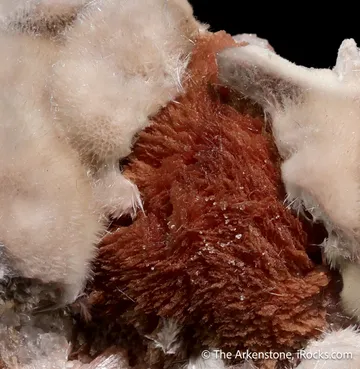
Poldervaartite from N'Chwaning II occurs in the same collecting conversation as olmiite because the two species are chemically and visually close, and some older “poldervaartite” labels from the Kalahari need re-examination in light of the later recognition of olmiite as the Mn-dominant analogue. N'Chwaning material may form pale pink, salmon, brownish-pink, or creamy acicular to elongated crystals in radiating sprays, spherical aggregates, and crusts, commonly with calcite, hematite, and calcium-manganese silicates in vugs. Good N'Chwaning poldervaartite requires more than a pretty pink ball: the strongest pieces have analytic confidence, bright luster, distinct radiating crystal structure, an attractive association, and enough separation from similar olmiite material that the label is defensible.
Manganite at N'Chwaning is most familiar as the black, lustrous, bladed to acicular manganese oxyhydroxide that makes red rhodochrosite specimens look electric, but it also occurs as drusy coatings, sprays, small blade clusters, and dark vug linings associated with rhodochrosite, kutnohorite, ettringite-group minerals, hausmannite, hematite, and manganese ore. N'Chwaning manganite crystals are usually modest in size, so the collector premium is on contrast, sparkle, and intact crystal sprays rather than sheer scale. The classic combination is rhodochrosite on manganite: without the black manganite stage the rhodochrosite may still be beautiful, but the best N'Chwaning pieces owe much of their drama to that red-on-black pairing.
Quartz from N'Chwaning is a supporting but locally meaningful species, occurring as drusy secondary quartz, small clear to grayish crystals, and silica-rich coatings in altered manganese ore, especially in association with rhodochrosite, manganite, and fault-related assemblages. At N'Chwaning I, classic rhodochrosite occurrences are noted with manganite and drusy secondary quartz, and in the broader N'Chwaning suite quartz also belongs with hematite-, braunite-, and manganese-oxide-bearing alteration zones. Fine quartz-only specimens are not the locality’s claim to fame; the better collector pieces are those where clean drusy quartz provides sparkle and texture beneath rhodochrosite or manganese oxides without visually overwhelming the rarer species.
Hematite from N'Chwaning ranges from ore and matrix material to bright, prismatic, blocky, or tabular black crystals associated with hausmannite, andradite, calcite, gaudefroyite, ettringite, and occasionally rarer sulfates or strontium minerals. In specimen terms, N'Chwaning hematite is best when it forms sharp, mirror-bright crystals on the typical red-brown andradite-rich matrix, or when it anchors high-contrast combinations with hausmannite and gaudefroyite. Ordinary dark hematite-rich matrix is common enough in the ore environment, but well-crystallized, undamaged, glossy hematite with recognizable associated species is a much more selective collector target.
Sturmanite from N'Chwaning occurs as yellow, golden, amber, honey-brown, to orange-brown hexagonal crystals of the ettringite group, often as prismatic to flattened or barrel-like crystals associated with ettringite, charlesite, calcite, hematite, barite, manganite, hausmannite, and manganese-ore matrix. N'Chwaning II has produced large, glassy crystals and attractive matrix specimens, but visual separation from ettringite and related species is unreliable, especially where solid-solution compositions or overgrowths are involved. The best sturmanite specimens combine rich amber color, bright luster, complete terminations, and analytical confidence; damaged edges, dehydration, or a speculative species label greatly reduce desirability.
Inesite from N'Chwaning is a refined collector mineral, usually seen as rose, salmon, red-orange, or Persian-red sprays, blades, acicular tufts, and small discrete crystals on calcite, orange prehnite, hydroxyapophyllite, baryte, pectolite, and dark manganese-rich matrix. The best-documented N'Chwaning II material belongs to the unusual orange prehnite assemblage, in which ferroan inesite occurs with hydroxyapophyllite, datolite, calcite, and pectolite; individual crystals are generally small, but isolated blades around the centimeter scale are highly desirable. Good pieces have saturated color, wet luster, open sprays or readable blades rather than matted fibers, and strong contrast against pale calcite or orange prehnite.
Braunite is central to the ore geology of N'Chwaning, occurring as part of the manganese ore assemblage with braunite-II, bixbyite, hausmannite, hematite, marokite, calcite, and related manganese oxides and silicates. For collectors it is usually less showy than rhodochrosite, hausmannite, or ettringite, but it matters as a matrix and paragenetic mineral in the lower-grade to intermediate alteration zones of the Hotazel-hosted ore. The better specimen-grade braunite pieces show discrete black to brownish-black crystals or attractive ore textures with companion species; massive granular ore, even if mineralogically important, is much less competitive unless it carries a rare associated species or a documented geological context.
Andradite at N'Chwaning is one of the locality’s great “matrix minerals,” forming dark red-brown to reddish garnet-rich surfaces and granular crusts that host lustrous hausmannite, gaudefroyite, hematite, ettringite, calcite, and other manganese-field species. Individual andradite crystals are typically small, so the value lies in texture, color, and contrast: an andradite-rich matrix can make black hausmannite or gaudefroyite read sharply, while also signaling the calcium-rich hydrothermal environment responsible for many N'Chwaning rarities. Good andradite specimens are those with sparkling, continuous garnet coverage and attractive associated crystals; loose granular brown matrix without contrast is commoner and less sought after.
Thaumasite from N'Chwaning is a rare ettringite-group prize, occurring as colorless, pale yellow, yellow, to transparent hexagonal crystals, commonly with calcite and related hydrated sulfate-carbonate assemblages. N'Chwaning II material from older pockets is regarded among the finest for the species, with thumbnail and miniature crystals that can be surprisingly gemmy and complete. The challenge is identification: thaumasite overlaps visually with ettringite, sturmanite, charlesite, and jouravskite, so top pieces combine verified identity, glassy transparency, sharp terminations, freedom from dehydration damage, and a clean placement on calcite or contrasting matrix.
Olmiite made N'Chwaning II famous for a modern type-locality mineral that is genuinely aesthetic: rounded clusters, spherical aggregates, sprays, and crusts of glassy, flesh-pink, salmon, rose-brown, or tan elongated orthorhombic crystals, commonly with calcite, celestine, sturmanite, bultfonteinite, hematite, and related calcium-manganese silicates. Important finds around the early 2000s and again in 2008 produced enough fine material to place olmiite in major collections, with some specimens reaching impressive cabinet scale and individual radiating balls large enough to be visually dominant. The best pieces have sparkle, well-defined radial structure, pleasing color, minimal bruising, and a reliable post-olmiite identification rather than an inherited “poldervaartite” label.
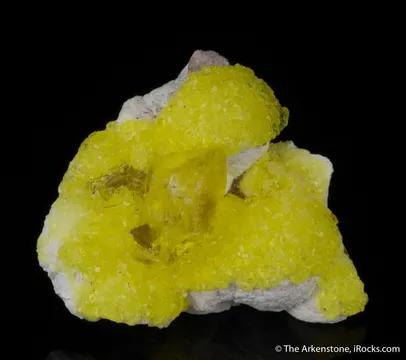
Jouravskite from the N'Chwaning group is one of the more dramatic late additions to the Kalahari collector suite, especially the N'Chwaning III material discovered in late December 2016, where lemon-yellow to canary-yellow hexagonal crystals and sparkling microcrystalline crusts occur on white xonotlite, bultfonteinite, hematite, and manganese-ore matrix. Many specimens are thumbnail to miniature, but some plates carry dense yellow coverage or discrete crystals large enough to reset expectations for the species. Fine examples need analytical confidence because the ettringite-group look-alikes are treacherous; when the identity is secure, the best pieces are those with gemmy yellow crystals, open spacing, snow-white xonotlite contrast, and little edge wear.
Gaudefroyite at N'Chwaning occurs as small black to very dark brown hexagonal or prismatic crystals, often on andradite-rich matrix and in association with hausmannite, hematite, calcite, ettringite, barite, bixbyite, and manganese oxides. It is rarely the large, obvious star of a hand specimen; instead, it is a sharp rarity that rewards close inspection, especially on classic black-and-red N'Chwaning combination pieces. The best specimens show identifiable, lustrous gaudefroyite crystals with enough size and contrast to be more than a micromount curiosity, and the label should distinguish it from other small black manganese minerals where possible.
Shigaite from N'Chwaning is best known from the 2006 N'Chwaning I find, where bright, lustrous dark amber to orange-red, micaceous hexagonal crystals occurred in small vugs with drusy pink rhodochrosite, barite, kutnohorite, manganocalcite, pyrochroite, and fibrous sussexite. Most crystals are small, from millimeter scale upward, but rare crystals reached centimeter size, including celebrated pieces around 2 cm and a record-class 3.2 cm crystal on rhodochrosite. A strong N'Chwaning shigaite has saturated reddish amber color, a bright mica-like luster, well-formed crystal shape, and rhodochrosite contrast; vague reddish coatings or unverified dark flakes on rhodochrosite should be treated cautiously.
Barite is a minor but important N'Chwaning association mineral, occurring as white to colorless blades or platelets with hausmannite, ettringite, oyelite, hematite, rhodochrosite, shigaite, and gaudefroyite-bearing assemblages. It is not common enough here to be dismissed as simple gangue, and some combination specimens show barite as an attractive bladed accent on hematite-rich or manganese-rich matrix. The best barite-bearing N'Chwaning pieces are those in which the barite is clean, sharp, and compositionally meaningful in a rare association—such as with ettringite, oyelite, or shigaite—rather than small broken white tabs on otherwise ordinary ore.
Kutnohorite at N'Chwaning occurs as pale pink, cream, tan, or grayish manganese-calcium carbonate in sprays, acicular aggregates, hollow cores, and carbonate-rich matrix associated with rhodochrosite, manganite, calcite, and manganese ore. It is especially interesting on rhodochrosite specimens where a kutnohorite spray or core is partly covered by red rhodochrosite microcrystals, revealing a carbonate sequence rather than a single crystallization event. Fine examples show a distinct spray or sculptural carbonate form, attractive rhodochrosite contrast, and crisp preservation; massive pale carbonate without crystal form is much less collectible unless it documents a pocket relationship.
Goethite belongs to the later weathering and supergene side of the N'Chwaning story, forming hydrated iron-oxide coatings, brown to black crusts, and earthy to botryoidal material in altered manganese ore environments. It is a secondary supporting mineral rather than a headline species at the locality, but it can appear with manganese oxides and late-stage alteration products where iron has been mobilized along cracks, cavities, or surface-influenced zones. Collectible goethite from N'Chwaning needs a clear habit—botryoidal luster, fibrous texture, or an attractive contrast with manganese minerals—because ordinary rusty coatings are common and rarely worth preserving as specimens on their own.
Beyond these headline species, N'Chwaning is documented for an exceptional suite of manganese-field rarities and type-locality minerals. N'Chwaning II is the type locality for nchwaningite, olmiite, manganvesuvianite, and kenotobermorite, and it is a major occurrence for bultfonteinite, xonotlite, datolite, pectolite, hydroxyapophyllite, prehnite, oyelite, ruizite, mozartite, cyprine, sugilite, sussexite, pyrochroite, marokite, bixbyite, brucite, and numerous other species. Some minerals are collector-significant chiefly as microminerals or paragenetic markers, while others—especially olmiite, bultfonteinite, orange prehnite, and certain ettringite-group species—bridge the gap between rare-species collecting and cabinet aesthetics.
N'Chwaning specimens are generally not “faked” in the crude sense as often as they are misidentified, over-attributed, repaired, or overconfidently labeled. The single biggest authenticity issue is the ettringite group. Ettringite, sturmanite, charlesite, thaumasite, and jouravskite can be visually indistinguishable, and N'Chwaning specimens labeled as one of these species without analysis should be treated as probable rather than certain. Color alone is not enough: lemon-yellow, honey-yellow, amber, and brownish crystals can belong to more than one related phase or to zoned/overgrown material. For expensive examples, ask whether the specimen was analyzed, came from an analyzed pocket or batch, or has a credible older provenance.
The second major labeling issue is olmiite versus poldervaartite. Before olmiite was recognized as a distinct Mn-dominant species, some Kalahari material circulated as poldervaartite. Older pink to salmon radiating aggregates from N'Chwaning II may be beautiful and perfectly authentic as specimens, but the species name may need verification. This is especially important for collectors who are buying the label as much as the aesthetics.
Rhodochrosite is subject to a different kind of scrutiny. The famous N'Chwaning material is old, coveted, and expensive, so condition and provenance matter. Look closely for bruised terminations, cleaved crystal tips, edge chips on sheaf aggregates, repaired clusters, glued contacts, and excessive trimming of the black manganese matrix. A small, pristine cherry-red piece on manganite may be better than a larger but abraded plate. Some specimens are described as “N'Chwaning” when they may be from another Kalahari mine, or as N'Chwaning I versus II without documentation; for high-end material, an old collection label, dealer history, or photo record is valuable.
Condition problems are species-specific. Ettringite-group minerals are soft, hydrated, and vulnerable to bruising, dehydration, and edge wear; keep them away from heat, direct sun, and aggressive airflow. Sturmanite and ettringite crystals often have naturally dull or altered spots, but powdering, cracking, or whitening can signal deterioration. Manganite blades and sprays can be brittle. Hausmannite and hematite are tougher but show chips clearly because fresh breaks interrupt the black luster. Calcite can cleave and may fluoresce; some N'Chwaning calcite has been reported with red fluorescence, which is interesting but should not be assumed for every piece. Rhodochrosite should be protected from acid and from prolonged strong light if color preservation is a concern.
Market availability is uneven. Small N'Chwaning calcite, manganite, and common association pieces appear regularly, while top rhodochrosite, verified ettringite-group crystals, large olmiite, exceptional hausmannite, and record-quality shigaite or jouravskite are much less common. A fair market description should distinguish “from the N'Chwaning Mines” from a precise shaft, pocket, or analyzed species. The strongest purchases combine aesthetics, locality confidence, condition, and a label history that can survive the next generation of collection cataloguing.
The most vivid way to understand N'Chwaning specimens is to imagine them not under show lights but underground, still in the ore. A Cape Minerals field account of a descent into N'Chwaning II describes the approach in hardhat, lamp, and loose overalls, riding toward the portal and over a steep braking-test bump before the vehicle entered the mine. The phrase that stayed with the writer was “Down the rabbit hole we go,” and it fits: the collector’s dream of a red rhodochrosite or yellow ettringite begins in a humid industrial underworld, not on a sunny dump.
Underground, the mine is described almost as a city: engineering stations, safe rooms, vehicle bays, maintenance areas, rest areas, passing sidings, geologists, miners, electricians, and heavy equipment all moving through a controlled system. At the rock face, the romance of specimen recovery becomes physical. The face held small cavities in hard manganese ore, and the pockets extended into the sheer wall. Extracting them required tools, heavy equipment, patience, and the constant discipline of underground safety. The account emphasizes 100 percent humidity, the smell of a recent blast, warm rock, and the taste of dust from rock that had not seen daylight in geologic time.
The specimens from that visit were packed in old cloth and plastic containers, then inspected at the surface. Much of the recovered material consisted of manganocalcite with sprays and tufts of kutnohorite. The striking moment came not underground but in sunlight. Under mine lighting, the pieces looked subdued; once washed and brought into bright daylight, their color and sparkle emerged. That is a useful lesson for collectors: N'Chwaning specimens are born in the least glamorous conditions imaginable, and yet some of them become among the most luminous objects in a cabinet.
Paul Balayer’s name recurs in several N'Chwaning collecting stories because he had legal access to mine for specimens and brought important material to the mineral market. The 2006 N'Chwaning I shigaite find is one of the great modern episodes. Earlier traces of shigaite had been known in old workings, but the 2006 pockets yielded brighter, more lustrous, orange-red to amber crystals. The cavities were small: the largest was described as slightly smaller than a basketball, while most were only about 10–15 cm across. In those cavities, drusy pink rhodochrosite was the common lining, and shigaite was the prize.
The standout specimen from that find became a benchmark for the species: a 3.2 cm shigaite crystal perched on a saucer-shaped matrix of drusy rhodochrosite, with barite, minor pyrochroite, and smaller shigaite crystals. Most shigaite crystals from the find were far smaller, from about 1 mm to occasional 2 cm examples, making the 3.2 cm crystal exceptional. The association matters as much as the measurement: dark reddish amber mica-like shigaite on pink rhodochrosite is one of those Kalahari combinations that could hardly be mistaken for another locality.
Olmiite has its own N'Chwaning mythology. Around the late 2000s, reports from the mineral-show circuit described new pockets at N'Chwaning II yielding pinkish salmon olmiite with water-clear calcite. One account from the 2009 Tucson show relayed that Paul Balayer had recovered the contents of a series of pockets shortly before Christmas, only six or seven weeks before the show. Another report from the 2009 Munich show noted roughly 30 superb thumbnail and toenail olmiites from a new pocket, different in habit and color from older examples. These finds helped transform olmiite from a new mineral name into a collector-recognized aesthetic species.
The orange prehnite occurrence at N'Chwaning II is a quieter but scientifically elegant story. Prehnite is not what most collectors expect from a manganese mine, and the N'Chwaning material was described as the first prehnite recognized from the Kalahari manganese deposits. The crystals were yellow-orange to orange, elongated and prismatic, in sprays or aggregates, associated with hydroxyapophyllite, datolite, ferroan inesite, calcite, and pectolite. For specimen collectors, the best pieces are beautiful because the orange prehnite and red inesite play against pale calcite; for mineralogists, they are clues to unusual fluid chemistry in a deposit better known for manganese oxides and carbonates.
N'Chwaning III supplied one of the locality’s later surprises: jouravskite in late December 2016. Dealer descriptions of the find emphasize lemon-yellow, glassy crystals on white xonotlite and bultfonteinite, with some examples carrying two generations of jouravskite—larger gem crystals and smaller sparkling microcrystals. For a species that had long been a rarity, these specimens were not merely “available”; they were unusually rich, bright, and, in some cases, large for the mineral. As with all ettringite-group material, the best examples invite analysis, but the 2016 find gave collectors a new reason to pay attention to N'Chwaning III rather than thinking only of the older N'Chwaning I and II legends.