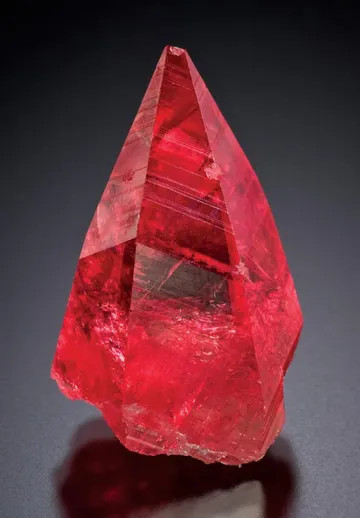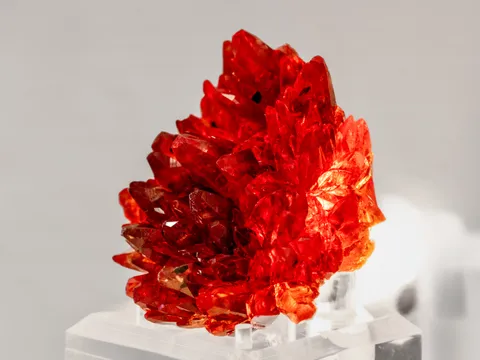
A collector's guide to N'Chwaning III Mine, South Africa: its geology, mining history and notable minerals, illustrated with the 184 specimens documented from this locality on EarthWonders.
Key facts
N'Chwaning III is one of the modern collector-mineral faces of the Kalahari Manganese Field: a working underground manganese mine in the Black Rock–Hotazel district of South Africa’s Northern Cape, developed in the same extraordinary Paleoproterozoic manganese province that gave collectors the classic N'Chwaning and Wessels suites. Its host rocks belong to the Hotazel Formation of the Transvaal Supergroup, where rhythmically layered manganese formation, hematitic lutite and banded iron formation record one of the great chemical-sedimentary ore systems of the early Earth. Later deformation, faulting, hydrothermal alteration and local low-temperature overprints transformed parts of that sedimentary ore package into a mineralogical laboratory, with calcium-manganese silicates, sulfates, carbonates and rare alkali-lithium silicates crystallizing in seams, vugs and altered ore.
For collectors, N'Chwaning III matters less for one single blockbuster species than for the specificity of its assemblages. It is a mine of small, intense, association-rich specimens: canary-yellow jouravskite on white xonotlite and oyelite; black, brilliant octahedral jacobsite on white calcite with andradite; fibrous purple sugilite draped through dark manganese ore; rare crusts of pink rhodochrosite micro-rhombs; and a suite of type-locality minerals that makes the locality far more important than its specimen output alone would suggest. The best pieces are typically miniatures to small cabinets, and their appeal depends on contrast, freshness and honest scale: bright yellow against snow-white fibrous silicate, purple chatoyance against charcoal ore, black spinel-family crystals isolated on pale calcite, or an uncommon species represented by only a few square centimeters of crystallized surface.
Regional View
Country View
The mine also has a scientific stature unusual for such a young collecting locality. Lipuite, saccoite, taniajacoite and strontioruizite are all documented as type-locality minerals from N'Chwaning III, and the associated mineralogy links the mine to ongoing work on manganese-rich hydrothermal systems, phyllosilicate structures, sorosilicates and hydrated calcium-manganese phases. A collector who acquires a good N'Chwaning III specimen is not simply adding another Kalahari label; the strongest examples are direct evidence of a modern chapter in a district whose specimen fame began decades earlier with rhodochrosite, manganite, ettringite, inesite and other classics from neighboring workings.

Search for specimens: View all specimens from N'Chwaning III Mine, South Africa
N'Chwaning III is part of the N'Chwaning mining complex in the Black Rock area of the Kalahari Manganese Field, northwest of Kuruman in the Northern Cape. The mine lies on the historic farm N'Chwaning 267 and forms part of Assmang’s Black Rock Mine Operations, together with N'Chwaning II and Gloria. Current corporate reporting describes the Black Rock manganese operations as the N'Chwaning and Gloria underground mines, with Assmang owned equally by African Rainbow Minerals and Assore. N'Chwaning I was commissioned in 1972, N'Chwaning II in 1981, and N'Chwaning III in 2004; modern descriptions of the complex note underground bord-and-pillar mining, trackless equipment, underground conveyors and consolidated Black Rock processing infrastructure.
Geologically, N'Chwaning III exploits high-grade manganese ore within the Hotazel Formation, part of the Griqualand West succession of the Transvaal Supergroup. The Hotazel Formation is a cyclic package of banded iron formation, hematitic lutite and manganese formation, commonly described as three manganese ore beds intercalated with iron-rich strata and carbonates. In the wider Kalahari Manganese Field, the primary sedimentary ores include manganese carbonates and oxides, later modified by deformation, hydrothermal alteration and supergene processes. The N'Chwaning–Wessels–Black Rock area lies in the high-grade, hydrothermally altered sector of the province, which helps explain why a mine developed for manganese ore has yielded such a chemically diverse specimen suite.
The collector minerals at N'Chwaning III are not a random sprinkling on ore. They occur in specific altered zones, seams, vugs and pockets where calcium, manganese, silica, sulfate, carbonate, boron, strontium, potassium, sodium, lithium and other components were locally available. This is the setting that produced fibrous sugilite with rare associated new species; jouravskite with xonotlite, oyelite and hydroxyapophyllite-(K); small but sharply crystallized jacobsite on calcite; saccoite in voids of hydrothermally altered manganese ore; and calcium-manganese silicate assemblages that require analysis for secure identification. The matrix is often dark manganese ore, locally with braunite, hausmannite, hematite or massive manganese oxides, and the best aesthetic pieces rely on that dark base to set off pale calcite, white xonotlite, yellow jouravskite or vivid purple sugilite.
N'Chwaning III became fully operational in the mid-2000s and entered the collector market later than the classic N'Chwaning rhodochrosites and manganites that made the district famous. Several important collecting moments are now tied to the mine. Around 2010, analyzed despujolsite specimens from the mine appeared, including unusually elongate crystals collected in the summer of that year. Around August 2012, a jacobsite occurrence produced small black octahedra on white calcite with andradite; these were offered as new material at Tucson 2013 and were valued for their sharpness and contrast. A limited 2015 rhodochrosite find produced pink micro-rhombohedral crusts and sparkling spherical aggregates rather than the older, blood-red scalenohedral style associated with earlier Kalahari finds. The 2016–2017 period brought two of the mine’s most recognizable specimen styles: fibrous, chatoyant purple sugilite on manganese ore and a highly regarded discovery of lemon-yellow jouravskite on xonotlite and related minerals.
Access today should be understood in the context of an active industrial underground manganese operation, not a casual collecting locality. Specimens reach the market through mine-related recovery, local contacts, dealers and older collections; collectors should not assume that underground access, dump collecting or independent digging is available. The locality also sits inside a complicated modern rights environment. In 2025, South Africa’s Department of Mineral Resources and Energy publicly described a dispute involving Assmang, PP Gemstones, gemstone rights, sugilite and material from Farm N'Chwaning 267. For the collector, the practical lesson is simple: strong provenance, reputable dealers and clear paper trails matter, especially for sugilite and other high-value N'Chwaning material.
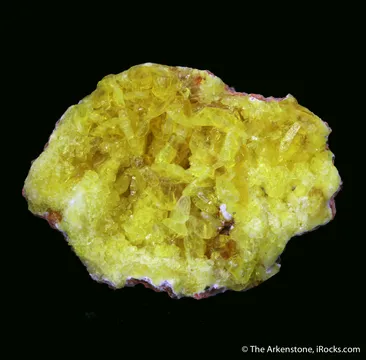
Jouravskite from N'Chwaning III is among the mine’s signature modern rarities, especially the material introduced to the market after the late-2016 and 2017 discovery that produced bright lemon- to canary-yellow crystals and botryoidal microcrystalline aggregates on pale silicate matrices. The finest pieces show transparent to translucent, glassy yellow crystals from a few millimeters to about a centimeter, with exceptional isolated crystals reported larger still, set on white xonotlite, oyelite or hydroxyapophyllite-(K), locally over dark manganite or manganese-ore matrix; associated bultfonteinite and other pale calcium silicates add texture but the collector’s eye goes first to saturation and contrast. Good N'Chwaning III jouravskite is sharply defined, lustrous, undamaged on the exposed high points and visually separated from the matrix; ordinary pieces lose their impact when the yellow is thin, granular, bruised, mixed into crusts without form, or crowded by matrix so that the species reads only as a stain.
Calcite at N'Chwaning III is most collectible as a stage for rarer species rather than as an isolated calcite locality entry, but that supporting role is important: the best-known examples are white to pale scalenohedral calcite crystals carrying black jacobsite octahedra and small andradite from the circa-August 2012 find shown at Tucson 2013. Documented N'Chwaning III calcite includes ordinary calcite and manganese-bearing calcite, and specimen descriptions note minor fluorescence under long- and short-wave ultraviolet on some pieces, with stronger short-wave response reported on others; more unusual associations include calcite on amethystine quartz from 2015 and calcite accompanying celestine or other manganese-field minerals. Good calcite pieces from this mine have clean, bright, three-dimensional white crystal surfaces that make associated black, red, purple or yellow species stand out; dull, etched, iron-stained or massive calcite without a rare association is far less important here.
Jacobsite from N'Chwaning III is a small-crystal connoisseur material, famous for sharp black octahedra on white calcite with andradite rather than for large individual crystals. The most widely documented specimens came from an approximately August 2012 occurrence and were promoted as Tucson 2013 new material; the crystals are generally only about 1–2 mm, but they are bright, sharply octahedral and strikingly isolated against white calcite, with small andradite crystals adding a second manganese-field accent. The best specimens are not necessarily the largest cabinet pieces but those with crisp, reflective octahedra, obvious contrast, minimal bruising to the calcite points, and an uncluttered arrangement that lets the black jacobsite read immediately; because the crystals are small and black, magnification, lighting and confirmation by analysis or trusted provenance are especially valuable.
Sugilite from N'Chwaning III is prized in a distinctive fibrous style, very different from the massive lapidary sugilite that dominates the broader gem market. The notable 2016–2017 material occurs as rich purple to electric violet fibrous layers, seams, swirling matted aggregates and locally small acicular crystals lying flat on dark manganese ore matrix, sometimes forming flattened stellate or disc-like groupings; published descriptions connect this N'Chwaning III sugilite assemblage with the new minerals lipuite and taniajacoite. The strongest specimens show saturated color, silky chatoyance, broad coverage for the size, and a natural contrast between velvety purple fibers and charcoal-gray to black ore; weaker pieces are thin, patchy, grayish, overly massive, or lack the shimmer that makes this material so desirable to species collectors.
Xonotlite at N'Chwaning III is best known as the white fibrous to foliated matrix for the mine’s jouravskite specimens, where it forms silky blankets, botryoidal-looking tufts, sprays and pale aggregates that set off bright yellow jouravskite, pinkish oyelite, lavender hydroxyapophyllite-(K) or bultfonteinite. The species is documented from the mine in association with jouravskite, and specimen descriptions emphasize white fibrous xonotlite as a major visual component of the 2017 jouravskite discovery; some xonotlite-bearing pieces from this find show short-wave fluorescence with weaker long-wave response. Top N'Chwaning III xonotlite specimens are those where the xonotlite is fresh, snowy and textural rather than chalky or crushed, and where it contributes to a balanced association specimen; as a stand-alone species, most collectors will still compare it against larger, more sculptural xonotlite from nearby Wessels, so N'Chwaning III examples need excellent association value to compete.
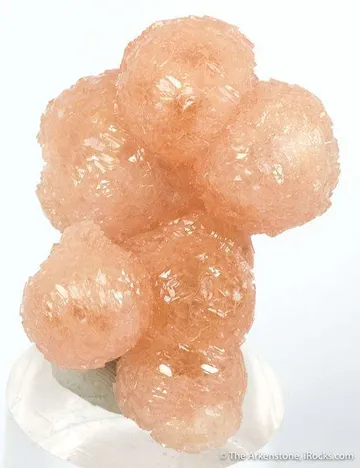
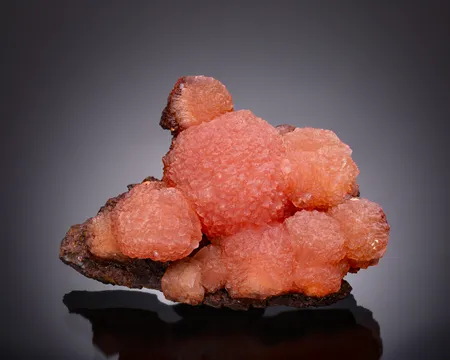
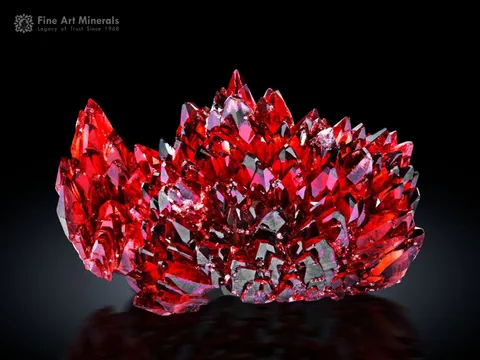
Rhodochrosite from N'Chwaning III is rare and should not be confused with the older, far more famous blood-red scalenohedral rhodochrosites of the classic N'Chwaning and Hotazel era. The characteristic N'Chwaning III material comes from a limited 2015 find: sparkling pastel- to rich-pink crusts of tiny rhombohedral crystals, nubby spherical aggregates and mounded vug surfaces on dark manganese or gossanous matrix, with specimens recorded from miniatures to substantial cabinet pieces. Good examples have even coverage, lively glassy sparkle under close light, sculptural mounded form and undamaged microcrystal surfaces; ordinary pieces are merely pink druse, and they lack the rarity premium unless the locality, date and association are credible.
Beyond those collector-market staples, N'Chwaning III has a remarkable roster of documented rarities. It is the type locality for lipuite, a dark red-brown manganese phyllosilicate found with Mn-bearing sugilite, taniajacoite, pectolite, richterite, norrishite and namansilite; for saccoite, an olive-green hydrated calcium manganese fluoride-sulfate occurring as needles, felted masses and crusts in voids of hydrothermally altered ore; and for taniajacoite and strontioruizite, two strontium-bearing ruizite-group minerals. Other minerals recorded from the mine include aluminosugilite, andradite, baryte, braunite, brucite, celestine, despujolsite, ettringite, goethite, hausmannite, hematite, manganvesuvianite, namansilite, norrishite, olmiite, oyelite, pectolite, pyrite, quartz, richterite, sturmanite and manganese oxides. Mindat’s locality record also flags bixbyite-(Mn) and gaudefroyite as erroneous or questionable entries for this exact mine, a useful caution in a district where labels can migrate between neighboring workings.
N'Chwaning III specimens reward careful label reading. The mine is one member of a closely packed cluster of Kalahari manganese localities—N'Chwaning I, N'Chwaning II, N'Chwaning III, Wessels, Black Rock, Gloria and Hotazel—and misassignment is easy when older dealer labels say only “N'Chwaning,” “Kuruman,” or “Kalahari.” For high-value pieces, exact mine attribution should be supported by a reputable dealer, a known pocket style, a minID or museum record, analytical data where appropriate, or an older collection label with plausible history. This is particularly important for species that occur at several neighboring mines, such as rhodochrosite, sugilite, ettringite-group minerals, despujolsite-like yellow sulfates and calcium-manganese silicates.
The most serious authenticity issue is not usually an outright fake matrix specimen but category confusion. Massive purple sugilite is widely imitated in the gem trade by dyed stone, composites and other purple materials; while fibrous N'Chwaning III sugilite has a very distinctive chatoyant, matted texture on manganese ore, any loose, polished, cabochon-style or massive purple material labeled simply “N'Chwaning III” deserves scrutiny. In 2025, South African government statements also placed sugilite from Farm N'Chwaning 267 inside an active mineral-rights dispute, making provenance and lawful chain of custody especially relevant for new, bulk or high-value sugilite material.
For the rare yellow sulfate-carbonate suite, visual identification can be treacherous. Jouravskite, ettringite-group minerals, despujolsite and other hydrated calcium-manganese phases may all appear as yellow to greenish-yellow crystals or crusts in Kalahari specimens, and small crystals on ore can be overcalled when the piece lacks analysis. The best jouravskite pieces from N'Chwaning III have the specific 2016–2017 style: intense lemon-yellow crystals or botryoidal microcrystalline aggregates on xonotlite, oyelite or related pale silicates. If the specimen is expensive, a strong provenance trail is part of the specimen, not an afterthought.
Condition is species-specific. Fibrous sugilite can mat, shed, bruise or lose visual life if handled across the fibers; avoid rubbing the surface and keep it out of dusty, high-contact drawers. Xonotlite is fibrous and easily flattened or dirtied. Jouravskite crystals are small, hydrated and relatively soft, so exposed edges and perched isolated crystals should be examined for contacts and repairs. Calcite bruises and cleaves, and its white surfaces can hide small chips until angled light catches them. Jacobsite octahedra are tiny and black, so rubs on the highest points can be nearly invisible in a dealer case but obvious under a loupe. Rhodochrosite micro-rhombs sparkle beautifully when fresh, but broad crusts can have rubbed high points, healed-looking cleavages or matrix contacts that reduce their appeal.
Fluorescence can add interest but should not be the sole basis for value. Some N'Chwaning III calcite is reported to fluoresce under long- and short-wave UV, and xonotlite associated with the 2017 jouravskite material has been reported with short-wave fluorescence and weaker long-wave response. Test gently, do not overheat fragile hydrated species under lamps, and remember that a visually first-rate N'Chwaning III specimen is still judged by color, contrast, crystal definition, association and provenance in normal light.
Market availability is uneven. Jacobsite-on-calcite thumbnails and miniatures from the 2012 occurrence appear occasionally, often at accessible prices relative to their rarity. Fibrous sugilite is more actively sought and ranges from small affordable pieces to premium, saturated, chatoyant miniatures and small cabinets. Jouravskite from the 2016–2017 discovery is genuinely scarce and can command strong prices when the crystals are large, bright and well separated. N'Chwaning III rhodochrosite is a niche rarity from the 2015 find; it is usually bought by Kalahari specialists rather than by collectors seeking the classic blood-red South African rhodochrosite aesthetic. Type-locality species such as lipuite, taniajacoite, strontioruizite and saccoite are primarily scientific or systematic-mineral targets, and good display specimens are not routinely available.
The 2016–2017 jouravskite find is the kind of small pocket that changes a species’ collector status overnight. Before that discovery, jouravskite was a name many systematic collectors knew but few display collectors had seen as an attractive specimen mineral. Then N'Chwaning III produced the startling combination: lemon-yellow jouravskite, white xonotlite, oyelite, occasional lavender hydroxyapophyllite-(K), and dark manganese matrix. Dealers described clusters with individual yellow crystals to about 1 cm, and at least one EarthWonders-recorded specimen carried a doubly terminated, glassy yellow crystal measuring 1.7 cm long—an exceptional size for the species. What made the find memorable was not merely rarity; it was the color. The best specimens looked almost artificially bright, as if someone had placed fragments of sulfur-yellow glass onto a snow-white fibrous silicate cushion.
A quieter story belongs to the 2015 rhodochrosite find. In a district where “N'Chwaning rhodochrosite” can evoke blood-red scalenohedra and legendary early finds, N'Chwaning III’s contribution was different: mounded crusts of tiny pink rhombohedra, sparkling spherical aggregates and sculptural vugs rather than big transparent teeth. A large-cabinet specimen from the find was described with an 11.5 cm undulating crust of pastel-pink rhodochrosite rhombs on a heavy manganese ore wedge and a 4.5 cm radiating spray of an unknown white bladed mineral on the back. The appeal was intimate rather than theatrical. Under a hand lens, the surface came alive as a field of tiny rhombs; at cabinet distance, the specimen read as a soft pink skin over dark Kalahari ore.
The fibrous sugilite story has a second life outside the mineral cabinet. For collectors, the finest N'Chwaning III material from 2016–2017 is all about texture: electric purple fibers, matted swirls, satin sheen and chatoyant flashes over dark ore. But by March 10, 2025, sugilite from Farm N'Chwaning 267 had become the subject of a public government statement. South Africa’s Department of Mineral Resources and Energy described a dispute between Assmang and PP Gemstones over mineral rights in the same area, with gemstone permit applications, appeals, litigation and a seized consignment at OR Tambo International Airport. The number that caught every collector’s eye was 619 kg: the mass of “sugilite” gemstones that PP Gemstones sought to have released from SARS custody. For a species often encountered by collectors as a two- or three-centimeter fibrous specimen, the legal dispute revealed a different scale entirely—the same purple mineral moving through the worlds of mining law, export permits, gemstone rights and customs custody.
Even the scientific discoveries have a specimen-world texture. Lipuite was not introduced as a showy, single-crystal mineral; it was found on specimens from N'Chwaning III as platy, tabular or granular crystals and veined agglomerates, dark red-brown rather than flamboyant purple or yellow. Its associates—Mn-bearing sugilite, taniajacoite, pectolite, richterite, norrishite and namansilite—read like a list from a highly specialized thin section, not a dealer’s showcase tray. Saccoite, too, emerged from voids in hydrothermally altered manganese ore as olive-green needles, felted masses and crusts. These are not minerals that make a passerby stop at a show table. They are the reason a serious collector turns a N'Chwaning III label over twice.