N'Chwaning II Mine, South Africa — premier manganese locality yielding rare cabinet-scale minerals (hausmannite, rhodochrosite, ettringite) prized for color an…
Key facts
N'Chwaning II is one of the defining mineral-specimen mines of the Kalahari Manganese Field: a working underground manganese mine whose industrial ore bodies have, again and again, opened pockets of world-class collector minerals. The mine lies in the Black Rock–Hotazel district of the Northern Cape, within the Paleoproterozoic Hotazel Formation of the Transvaal Supergroup, where layered manganese ores, iron formation, and carbonate rocks were later reshaped by fault-controlled hydrothermal alteration. That overprint is the key to the mine’s personality. It transformed ordinary sedimentary manganese ore into vuggy, locally spectacular assemblages of hausmannite, hematite, manganite, jacobsite, andradite, calcite, rhodochrosite, barite, celestine, prehnite, inesite, xonotlite, and a remarkable suite of hydrated sulfate-carbonate-silicate species.
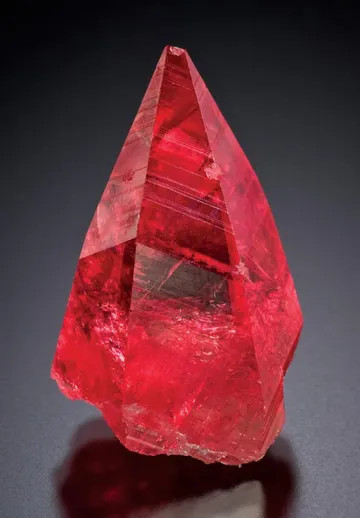
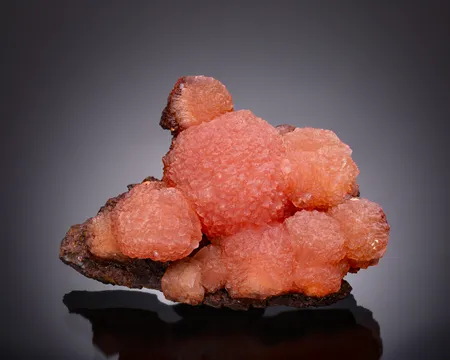
For collectors, N'Chwaning II matters because it combines rarity with beauty at cabinet scale. Many deposits yield rare minerals as crusts or microscope material; N'Chwaning II has yielded rare species as lustrous, sculptural specimens. Its best olmiites are peach, cinnamon, pink, or reddish polycrystalline balls and wheat-sheaf aggregates on white calcite, often accompanied by oyelite or bultfonteinite. Its classic rhodochrosites are deep cherry-red to vivid pink scalenohedra, commonly on dark manganite. Its ettringite, sturmanite, jouravskite, and thaumasite specimens bring lemon-yellow, honey-yellow, or pale glassy tones to a manganese-ore matrix. Hematite and hausmannite from the mine can show an almost metallic theatricality: jet-black, mirror-bright crystals set off by red-brown andradite or white calcite.
Regional View
Country View
N'Chwaning II also has unusual historical weight. The second N'Chwaning shaft came into production in 1981, after the original N'Chwaning mine had established the area’s reputation for fine manganese minerals. By the late 1980s and 1990s, N'Chwaning II was central to the international market for Kalahari specimens. Later finds, especially olmiite-rich pockets at the turn of the twenty-first century, changed the way collectors and mineralogists understood material that had long been traded as poldervaartite.

Photo: Wikimedia Commons

Photo: Wikimedia Commons
Search for specimens: View all specimens from N'Chwaning II Mine, South Africa
N'Chwaning II is part of Assmang’s Black Rock Mine Operations, near Hotazel and northwest of Kuruman in the Northern Cape. The larger operation includes the Gloria and N'Chwaning underground mining complexes. N'Chwaning II and N'Chwaning III produce high-grade oxide manganese ore, while Gloria is associated with lower- to medium-grade carbonate ore. The mines are situated in the Kalahari Manganese Field, the world’s great land-based manganese province and one of the most mineralogically diverse manganese deposits known.
The ore is hosted by the Hotazel Formation, part of the Griqualand West succession of the Transvaal Supergroup. The formation contains repeated iron- and manganese-rich sedimentary packages: manganese formation interlayered with banded iron formation and carbonate-bearing strata. The original ore was deposited in a Paleoproterozoic marine basin, but the collector-quality minerals at N'Chwaning II owe much of their character to later alteration. Faulting, hydrothermal fluids, oxidation-state changes, and localized metasomatism created zones of exceptionally complex manganese mineralogy. Distal parts of the ore body retain more primary braunite-kutnohorite character; intermediate zones carry diverse manganese oxides and silicates; and areas close to structures can be enriched in high-grade hausmannite ore.
Mining at N'Chwaning II is underground. The principal seam is roughly several metres thick at depth, and the No. 2 seam, positioned above the No. 1 seam, has also been accessed through N'Chwaning II infrastructure. Modern extraction is by mechanized underground bord-and-pillar methods, with drilling, blasting, underground crushing, and conveyor transport to surface processing facilities. This industrial context is important for collectors: the classic specimens were not dug from a casual collecting hill or a surface dump, but from active underground stopes, roofs, faults, and ore faces where vugs and altered zones were exposed during mining.
Assmang’s history in the district stretches back to the Black Rock manganese outcrop, acquired in 1940 after early mining in the area had begun. N'Chwaning I was commissioned in the early 1970s, the second N'Chwaning shaft came into production in 1981, and N'Chwaning III followed in the 2000s. For specimen collectors, the 1980s through the early 2000s were especially consequential. Important rhodochrosite, sturmanite, ettringite, hausmannite, hematite, inesite, manganite, calcite, and rare-species specimens entered collections from N'Chwaning II during this period, often with labels noting particular underground sections, stopes, or pocket dates.
Among the best-documented specimen-producing areas are the upper levels and the Section 5 South, stope 46–47 roof area, associated with notable olmiite and calcite material in the early 2000s. Level 45 South is also linked with fine olmiite with calcite and oyelite from a December 2009 find. A pocket near a fault intersection in Section 27 South is tied to nchwaningite, a type-locality species named for the mine. Dealer and collector records also describe individual pocket-style finds: “Chocolate Pocket” olmiite, olmiite-bultfonteinite-celestine pockets, and later calcite-rich material with manganocalcite and kutnohorite sprays.
Collecting access today is not public collecting. N'Chwaning II is an active, fenced, regulated underground mine, and specimens that reach the market do so through mine-approved recovery, older collections, dealer inventories, and deaccessioned private material. Labels matter greatly. Older labels may say only “N'Chwaning,” “Kuruman,” “Black Rock,” or “Kalahari Manganese Field,” and not all early labels distinguish N'Chwaning I, II, and III. The most desirable labels preserve the mine name, section or level, year, and original collector or dealer provenance.
Olmiite is the signature N'Chwaning II species and the mineral that turned a once-confusing poldervaartite story into one of the great modern type-locality successes. Here it occurs as wheat-sheaf, spherical, radiating, and blocky polycrystalline aggregates, usually in peach, cinnamon, pale pink, reddish pink, or reddish brown tones, commonly perched on white calcite or dark manganese ore with oyelite, bultfonteinite, celestine, hematite, sturmanite, and manganite. Fine crystals range from millimetric druses to freestanding balls and composite crystals over 2 cm, with exceptional miniatures and small-cabinet pieces showing sharp edges, translucency, high luster, and strong color change toward red under incandescent light. The most prized N'Chwaning II olmiites are three-dimensional, undamaged, well isolated, and contrast sharply against calcite or pale oyelite; ordinary pieces are more massive, granular, pale, bruised, or visually lost in matrix.
Calcite at N'Chwaning II is both a major gangue mineral and one of the mine’s most useful aesthetic foils, forming colorless to white scalenohedra, rhombs, complex sparkling crusts, and lustrous matrix plates for olmiite, ettringite, sturmanite, inesite, hematite, manganite, and rare hydrated species. Some calcites from the mine are strongly fluorescent under long- and short-wave ultraviolet light, and many specimen descriptions emphasize the dramatic contrast of white or glassy calcite against black manganese oxides, cherry-red rhodochrosite, yellow ettringite-group minerals, or peach olmiite. The finest collector calcites from N'Chwaning II are not merely accessory; they are sharp, lustrous, bright, and well positioned, either as sculptural crystals in their own right or as clean, sparkling platforms that make the associated rare species read clearly.
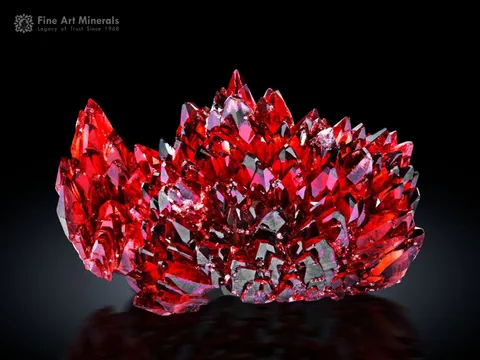
N'Chwaning II rhodochrosite is famous for deeply saturated pink to cherry-red crystals, most classically scalenohedral or modified scalenohedral, with some specimens showing white zoning, botryoidal growths, or crusts of transparent bright crystals. The best pieces place gemmy, sharply formed rhodochrosite on dark manganite or manganese-oxide matrix, occasionally with pyrite, quartz, barite, gonyerite, or shigaite, producing the high-contrast red-on-black look that made the Kuruman manganese field world-famous. Individual crystals on quality specimens are commonly in the millimetre to sub-centimetre range, but their value depends less on bulk size than on color saturation, glassy luster, transparency, lack of bruising on terminations, and whether the specimen has that unmistakable “lit from within” red that separates N'Chwaning classics from more ordinary pink carbonate crusts.
Ettringite from N'Chwaning II occurs as lemon-yellow to yellow-green, sometimes gemmy hexagonal prisms, dipyramidal crystals, crusts, and aggregates on calcite, manganite, or manganese ore, and the mine is one of the very few localities where this fragile hydrated calcium aluminum sulfate becomes a showy cabinet mineral. Good crystals may be isolated, doubly terminated, bright, and sharply hexagonal, but ettringite-group minerals from the Kalahari are notoriously difficult to identify by eye, with sturmanite, charlesite, jouravskite, thaumasite, and ettringite sometimes requiring analysis. The best N'Chwaning II ettringites combine rich lemon color, undamaged terminations, strong contrast on white calcite or black ore, and credible analytical or provenance support; lesser pieces are dull, crumbly, pale, incomplete, or simply sold under a convenient yellow-species name.
Hematite is a major ore and specimen mineral at N'Chwaning II, where it forms superb metallic black crystals, including blades, complex floaters, richly modified crystals, and lustrous crystals on calcite, hausmannite, andradite, celestine, or gaudefroyite-bearing matrix. The mine’s best hematites have mirror-bright luster, crisp faces, sculptural form, and dramatic isolation, sometimes as small but intense miniatures and thumbnails and sometimes as larger ore-vug crystals with a polished-steel presence. Condition is crucial because the reflective faces reveal every nick; fine N'Chwaning II hematite should show sharp terminations, minimal edge bruising, good face quality, and a matrix association that enhances rather than obscures the black metallic crystal.
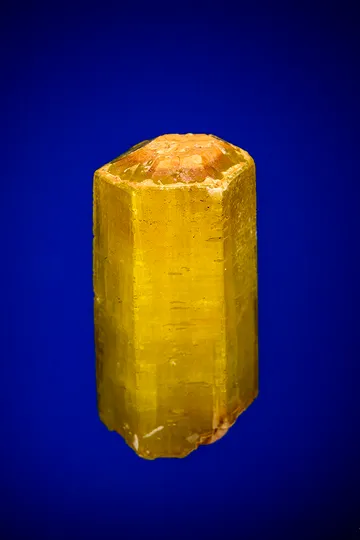
Sturmanite from N'Chwaning II is one of the great Kalahari display minerals, occurring as yellow to honey-yellow hexagonal prisms, flattened dipyramidal crystals, and doubly terminated crystals on calcite-coated manganese ore, commonly in association with ettringite-group species, calcite, manganite, and other Mn-rich minerals. Documented specimens from older finds include bright isolated crystals around the centimetre scale, and exceptional Kalahari sturmanite crystals have reached extraordinary sizes by world standards. The finest N'Chwaning II pieces have strong yellow color, clear hexagonal geometry, intact pinacoids or dipyramids, and verifiable identification; because sturmanite and ettringite can look deceptively similar, serious collectors should prize analyzed specimens and old labels from trusted collections.
N'Chwaning II inesite is typically seen as salmon-pink, orange-red, or deep pink acicular crystals in radial, globular, or spheroidal sprays, frequently accompanied by calcite, prehnite, hydroxyapophyllite-(K), barite, natrolite, or manganese-ore matrix. The best pieces are airy and dimensional: tight sprays or balls of fine needles rising from pale calcite or prehnite, with intense color and little crushing. Large plates can be impressive, but quality is measured by freshness of color, separation of the sprays, intact needle terminations, and contrast; ordinary specimens tend to be matted, dull, dusty, or broken where the acicular habit has been compressed against the pocket wall.
Prehnite at N'Chwaning II is a pale, often subordinate but important calc-silicate mineral, occurring as translucent to pale greenish, whitish, or cream aggregates and matrix beneath or among inesite, calcite, barite, and hydroxyapophyllite-(K). It was specifically documented from N'Chwaning II in the Kalahari manganese field as chemically distinctive material with minor manganese, fitting the mine’s broader hydrothermal calc-silicate assemblage. The most desirable specimens use prehnite as a clean, contrasting base for vivid inesite or as lustrous, well crystallized masses associated with calcite; ordinary examples are massive, chalky, or visually secondary unless the association is unusually sharp.
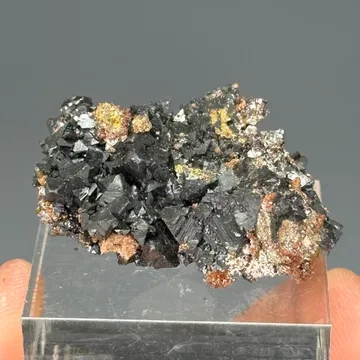
Hausmannite is a central N'Chwaning II ore and specimen species, forming black, submetallic to brilliant pseudo-octahedral, tetrahedral-looking, and complex twinned crystals, often in parallel intergrowths or burr-like clusters on calcite, andradite, celestine, hematite, gaudefroyite, barite, or kutnohorite-bearing matrix. Highly lustrous crystals around the centimetre scale are classic, and notable mid-1990s finds produced excellent clusters and aggregates, including parallel-intergrown groups. The best hausmannites are sharp, glossy, three-dimensional, and cleanly isolated; they stand apart from ordinary black manganese ore by their distinct crystal form, reflective luster, and association with red andradite or white calcite that makes the crystals visually legible.
Thaumasite from N'Chwaning II belongs to the same visually treacherous family of hydrated calcium sulfate-carbonate-silicate minerals that includes ettringite, sturmanite, and jouravskite, and at this mine it is found as pale yellow, gemmy to translucent prismatic crystals, often in association with xonotlite, calcite, and manganese-ore matrix. Fine specimens show sharp hexagonal prisms or glassy yellow crystals set in silky white acicular xonotlite, a combination that gives even small miniatures exceptional delicacy. The best N'Chwaning II thaumasites need both aesthetics and proof: bright undamaged crystals, fresh color, attractive contrast, and analytical or reliable old provenance, because visual identification alone is not dependable in this assemblage.
Andradite from N'Chwaning II is usually a manganese-field matrix mineral rather than the main attraction, but it can be very effective: tiny to several-millimetre dodecahedral or modified garnet crystals in red-brown, orange-red, brown, or dark red tones coating matrix and accompanying hematite, hausmannite, gaudefroyite, calcite, jacobsite, and celestine. Some specimens show flat plates of dark red andradite crystals, while others use andradite as a sparkling garnet carpet beneath black metallic oxides. The best andradite-bearing pieces are association specimens, where the garnet provides color and texture without overwhelming the principal species; ordinary examples are massive or drusy brown matrix unless crystals are sharp, lustrous, and sufficiently exposed.
Shigaite in the N'Chwaning district is a rare layered sulfate hydroxide that forms tabular to platy hexagonal crystals and crusts, with colors reported from reddish brown to brownish, sometimes deepened at crystal edges, and it is particularly desirable when perched on rhodochrosite. While the most celebrated shigaite zone material is often discussed in relation to the N'Chwaning mines as a group, N'Chwaning II labels do occur, and the species belongs to the mine’s broader family of unusual hydrated Mn-Al sulfate minerals. The finest collector pieces show distinct, lustrous hexagonal plates with strong color contrast and credible locality assignment; lesser material can be thin, dark, crusty, or easily confused with other platy alteration products without analysis.
Gaudefroyite from N'Chwaning II is a rare calcium manganese borate-carbonate species that appears as black, lustrous prismatic crystals, commonly doubly terminated and sharply formed, on andradite-rich or manganese-ore matrix and in association with hematite, hausmannite, calcite, and other Kalahari species. Display specimens are scarce, but when crystals are well exposed they can be surprisingly attractive: small, glossy black prisms with excellent definition, sometimes up to several millimetres or more, set against red-brown garnet. The best pieces are not judged by size alone but by crystal sharpness, luster, exposure, and association; ordinary examples are easy to overlook as black needles or grains on dark ore.
Poldervaartite is historically important at N'Chwaning II because much material once marketed under that name was later shown or strongly suspected to be olmiite, the Mn-dominant analogue described from the mine. True poldervaartite and olmiite can be visually indistinguishable in hand specimen, appearing as pinkish, tan, peach, or reddish aggregates on calcite and manganese-ore matrix, and older labels must be treated cautiously. For collectors, a good N'Chwaning II “poldervaartite” specimen is best approached as a chemistry question as much as an aesthetic one: sharp spherical or wheat-sheaf aggregates are desirable, but verified analysis and transparent provenance separate a reliable poldervaartite-series specimen from an old-name olmiite.
Manganite from N'Chwaning II occurs as black to dark metallic acicular, prismatic, fibrous, massive, or vug-lining material and is a frequent matrix or companion for rhodochrosite, ettringite, calcite, olmiite, hausmannite, and other manganese minerals. It is especially important aesthetically when deep red rhodochrosite scalenohedra sit on dark manganite, or when yellow ettringite-group minerals stand on black manganite-rich ore. The finest manganite specimens from the mine show distinct lustrous crystals, sprays, or attractive contrasting associations; ordinary manganite is simply black manganese-oxide mass and gains collector interest mainly when it hosts a better crystallized species.
Xonotlite from N'Chwaning II is a pale to silky white calc-silicate that forms fibrous, acicular, cottony, or matted aggregates, most appealing when it creates a snowy matrix for yellow thaumasite or jouravskite. The species fits the mine’s hydrothermal calc-silicate pockets, where calcium-rich fluids interacted with manganese ore and associated carbonate rocks. As a collector mineral it is usually appreciated through association: the best specimens are clean white sprays or masses with sharp, contrasting yellow crystals emerging from them, while ordinary pieces are soft-looking, fibrous, and visually plain unless the texture is especially delicate or the associated species is rare and well crystallized.
Quartz is a minor but recurring N'Chwaning II gangue and association mineral, appearing as small colorless to white crystals or drusy coatings with calcite, barite, rhodochrosite, poldervaartite-series minerals, pyrite, and manganese-ore matrix. It is not a species for which the mine is famous, but on the best pieces quartz adds sparkle and contrast, particularly in mixed carbonate-sulfide or carbonate-silicate associations. Desirable N'Chwaning II quartz specimens are therefore locality and association pieces: sharp, undamaged crystals that help frame rhodochrosite, calcite, or rare manganese minerals; ordinary quartz from the mine is generally too small or too subordinate to stand alone.
Kutnohorite is part of the carbonate side of the N'Chwaning II assemblage, occurring as pale, white, cream, pinkish, or buff carbonate material, sometimes as sprays or tufts associated with manganocalcite, calcite, barite, hausmannite, hematite, and manganese ore. In the broader Kalahari ore system, kutnohorite-rich assemblages are characteristic of more distal or less intensely upgraded manganese ore, but at N'Chwaning II it also appears in collectible pocket material as a delicate accessory. The best specimens show distinct crystal sprays or aesthetically placed pale carbonate against dark ore; ordinary kutnohorite is massive or visually difficult to separate from calcite or manganocalcite without testing.
Brucite from N'Chwaning II is a minor species in a locality better known for manganese oxides, carbonates, and exotic hydrated silicates and sulfates. Verified specimens are typically association pieces rather than showy brucite classics, and they should be expected as small pale to whitish material in calc-silicate or manganese-rich assemblages with minerals such as calcite, andradite, hausmannite, hematite, celestine, or related gangue species. Good N'Chwaning II brucite is primarily a rarity-and-provenance specimen: cleanly identified, well labeled, and associated with recognizable Kalahari matrix; ordinary material can be visually nondescript and should not be bought on appearance alone.
Pyrite is uncommon but documented from N'Chwaning II, most often as small brassy crystals or grains in association with rhodochrosite, calcite, quartz, and manganese-ore matrix. It is not a headline mineral here, but it can add a welcome metallic accent to pink-red carbonate specimens, especially where rhodochrosite occurs with quartz and sulfides. The best pieces are association specimens with sharp pyrite crystals that are bright and not oxidized; ordinary pyrite from the mine is minor, granular, or partly hidden and valued mainly because it supports a more complex N'Chwaning II paragenesis.
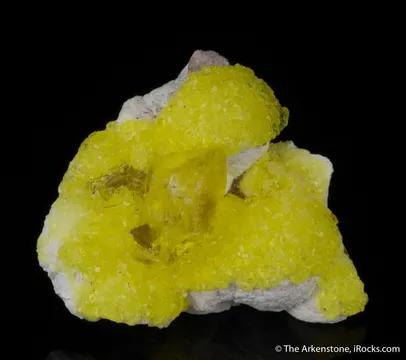
Jouravskite from N'Chwaning II is a rare yellow hydrated calcium manganese sulfate-carbonate mineral, occurring as vivid lemon-yellow crusts, sparkling microcrystal carpets, and occasional sharper crystals on calcite, xonotlite, or manganese-ore matrix. Fine specimens can be brilliantly colored despite modest crystal size, with yellow coatings so rich that the whole matrix glows; others are subtle and require magnification to appreciate. As with ettringite, sturmanite, and thaumasite, identification is a serious issue: the best jouravskites combine rich color, intact microcrystals or crystals, attractive contrast, and reliable analytical or collection provenance.
Jacobsite at N'Chwaning II belongs to the mine’s manganese-oxide spineled assemblage and occurs as black, metallic to submetallic crystals or aggregates, sometimes with calcite and andradite. Dealer records show N'Chwaning II jacobsite association specimens with sharp black crystals on garnet- or calcite-bearing matrix, but the species can be difficult to distinguish visually from other black manganese oxides without analytical support. The best collector pieces show recognizable crystals with bright luster and contrasting matrix; ordinary material risks being only black ore unless the label, form, and analysis support the identification.
Barite from N'Chwaning II occurs as colorless to white or pale tabular crystals, blades, and plates, commonly as an accessory with inesite, calcite, prehnite, rhodochrosite, hausmannite, hematite, and manganese-ore matrix. It is most appealing where thick, transparent to translucent tablets rise above pink inesite sprays or where pale barite adds geometry to a complex manganese assemblage. Good N'Chwaning II barite is sharp, bright, and well separated from the matrix; ordinary barite is small, chalky, or merely a pale accessory unless the association is unusual.
Celestine is a distinctive but relatively uncommon N'Chwaning II association mineral, forming white to pale blue or colorless crystals with hausmannite, hematite, calcite, andradite, gaudefroyite, and olmiite-series material. Its pale crystals can be subtle, but on good specimens they provide a cool contrast against black hausmannite or mirror-bright hematite, and blue-tinged celestine scattered through andradite-rich matrix can make a combination piece unusually lively. The best examples show discrete, undamaged celestine crystals with attractive placement; ordinary pieces may have only tiny pale blebs that are of interest mainly to association collectors.
Beyond these collector staples, N'Chwaning II is notable for type-locality and rare species that underline the mine’s scientific importance. Olmiite and nchwaningite are directly tied to the mine as type-locality minerals, and kenotobermorite has also been cited with N'Chwaning II as type locality in modern tobermorite-supergroup nomenclature. Other rare or important documented species include bultfonteinite, oyelite, hydroxyapophyllite-(K), gonyerite, natrolite, despujolsite-group and ettringite-group relatives, manganvesuvianite, tweddillite, caryopilite, gageite, pectolite-serandite-series minerals, braunite-II, bixbyite, diopside, and several obscure manganese silicates, borates, and sulfates better suited to specialized systematic collections than to purely aesthetic display.
The first caution with N'Chwaning II specimens is not forgery so much as identification. Several of the mine’s best-known rare minerals are visually unreliable. Ettringite, sturmanite, charlesite, jouravskite, and thaumasite can overlap in color, habit, and association; serious examples should be supported by analysis, old collection provenance, or a highly reputable dealer. Olmiite and poldervaartite present a second classic problem: large amounts of N'Chwaning II material were historically called poldervaartite before olmiite was described as the Mn-dominant analogue. Many older “poldervaartite” labels from this locality should be treated as olmiite-series labels unless the specimen has been analyzed.
Mislabelling between N'Chwaning I, N'Chwaning II, N'Chwaning III, Wessels, Black Rock, and generic “Kuruman” is common in older collections. This is especially important for rhodochrosite, manganite, shigaite, hausmannite, and olmiite. A vague “N'Chwaning” label may still be collectible, but it should not be upgraded to N'Chwaning II without evidence. Conversely, older mine-worker, Desmond Sacco, dealer, or published labels that give a level, stope, date, or find name add real value.
Condition issues vary by species. Ettringite-group minerals are soft, hydrated, and comparatively delicate; they should be protected from heat, prolonged dryness, soaking, ultrasonic cleaning, and handling by the crystals. Inesite and xonotlite are fibrous to acicular and easily crushed. Rhodochrosite scalenohedra commonly show tiny bruises on exposed tips. Hematite and hausmannite are tougher, but their high luster makes chips and rubs obvious. Calcite can be cleaved, bruised, or acid damaged; never acid-clean mixed N'Chwaning II specimens unless every associated species has been considered.
Fluorescence is a useful pleasure, not a substitute for identification. Calcite from N'Chwaning II can fluoresce brightly under long- and short-wave ultraviolet light, and olmiite has been reported with red fluorescence under short-wave UV. Some dealer descriptions also note fluorescence in calcite-bearing olmiite or rhodochrosite specimens. Use low-heat UV lamps and avoid prolonged exposure for sensitive hydrated species.
Market availability is uneven. Olmiite remains one of the most available rare species from the mine because significant pocket material entered the market, yet fine, large, sculptural, damage-free examples are still strongly pursued. Calcite, manganite matrix pieces, and modest association specimens appear regularly. Good rhodochrosite, analyzed ettringite or sturmanite, sharp gaudefroyite, rich jouravskite, fine hausmannite, and mirror-grade hematite are substantially scarcer and often move quickly when provenance and aesthetics align. Specimens from named pockets, documented finds, published pieces, or major collections command a premium.
A descent into N'Chwaning II is not the romantic image of a collector strolling a sunny dump with a hand lens. Cape Minerals’ account of a 2007 visit begins at the headgear and quickly becomes an underground sensory experience: 100% humidity, the smell of a recent blast, the taste of ancient rock dust, and “tons of rock hanging above your head.” Before the vehicle entered the workings, it had to pass a braking test on a large steep bump, a small procedural detail that captures the seriousness of underground travel better than any general warning could.
The ride down was remembered physically: the hardhat lamp pressing into the head, loose overalls adding heat, and hands gripping the bar of the mine vehicle. The writer’s phrase for the moment—“Down the rabbit hole we go”—is apt, because the mine below is described less as a tunnel than as a working city: engineering stations, safe rooms for rock falls, maintenance bays, rest areas, sidings where large machines can pass, and a constant traffic of geologists, engineers, miners, electricians, and specimen workers.
At the rock face, the romance returns, but only after the safety inspection. The face showed small cavities in hard manganese ore, and the visitor was handed a crowbar. The pockets extended deep into the sheer face, requiring heavy equipment and hours of work. Heat and humidity made cooling almost impossible; even the rock felt warm. The specimens collected on that trip were packed in old cloth inside plastic containers and brought to the surface for evaluation.
The most memorable moment came in daylight. Underground lighting had washed the specimens flat, but once cleaned and carried into the warm sun, their quality changed in an instant. The account describes gasps as the minerals—mostly manganocalcite pieces, often with kutnohorite sprays and tufts—were seen under their first natural light. It is a reminder that many N'Chwaning II specimens have had two births: one in Paleoproterozoic and hydrothermal time, and another in the moment a pocket wall is opened and a miner realizes the ore has made something beautiful.
Bruce Cairncross has also described the N'Chwaning underground visits as among his best field experiences, especially trips with Paul Balayer, who had a legal contract with the mine to recover specimens. In June 2006, Cairncross joined Balayer’s specimen-mining work in the Kalahari Manganese Field during the rediscovery of the shigaite zone. Accounts and captions from that period show the human side of Kalahari collecting: Cairncross and family prepared to go underground at N'Chwaning II, a freshly opened olmiite-bultfonteinite-celestine pocket photographed at only 15 cm across, and the kind of once-in-a-career field access that modern mine safety regulations have made increasingly rare.