






A collector's guide to Namibia: its geology, mining history and notable minerals, illustrated with the 67 specimens documented from this locality on EarthWonders.
Key facts
Namibia is not a single mineral locality in the collector’s imagination so much as a chain of sharply different geological theaters, each with its own signature specimens. In the north, the Tsumeb ore pipe remains one of the great polymetallic mineral deposits on Earth: a steep, karst-related, copper-lead-zinc-silver-germanium-arsenic pipe in Otavi Group carbonate rocks, famous for three oxidation zones and an almost unrivaled harvest of secondary species. West-central Namibia gives collectors a different vocabulary: miarolitic pockets in granitic and volcanic complexes at Erongo and Spitzkoppe; basalt amygdules and volcanic cavities around Goboboseb and Tafelkop; alkaline phonolite vugs at Aris; and carbonatite-related fluorite ores at Okorusu. The country’s best specimens are correspondingly varied—electric-blue Tsumeb azurites and gemmy cerussites, glassy Brandberg-area amethyst-smoky quartz phantoms, sea-green Okorusu fluorite with purple zoning, icy Erongo aquamarine on black schorl, carmine villiaumite cubes in phonolite, and rare rutile twins from the Gamsberg area.
Regional View
Country View
What makes Namibia unusually important to serious collectors is the way specimen quality and scientific importance overlap. Tsumeb is a type-locality engine, responsible for dozens of first descriptions and for museum-quality standards in azurite, dioptase, mimetite, smithsonite, cerussite, and many rarities. The Erongo Mountains are prized for specimens that still look like pocket specimens—blue beryl perched on schorl and feldspar, fluorite wedged into pegmatite assemblages, etched topaz, smoky quartz, and occasional jeremejevite. The Goboboseb Mountains, often marketed under the older trade shorthand “Brandberg,” are known for quartz crystals that seem built in chapters: amethyst bases, smoky caps, hematite veils, phantoms, skeletal growth, and moving fluid inclusions in water-clear interiors. Aris, near Windhoek, contributes a different kind of cabinet magic: small but intensely colored halide and agpaitic minerals from vesicular phonolite, the sort of material that rewards a hand lens as much as a display case.

Photo: James St. John / Wikimedia Commons
Namibian specimens also matter because their labels carry history. “Brandberg” may mean the granite massif itself, the broader Brandberg region, or—in much of the specimen trade—the Goboboseb and Tafelkop collecting ground west of the mountain. “Erongo” can refer to a large mountain complex rather than a single pit. “Tsumeb” may mean a precise mine level and pocket, or merely the broader town-mine district on an older label. For the advanced collector, Namibia rewards careful provenance: the difference between “Brandberg” and “Goboboseb,” “Okorusu” and “Erongo fluorite,” or “Tsumeb, 8 Level, Easter Pocket” and a generic Tsumeb label can be the difference between a pretty mineral and a specimen with a specific geological story.
Search for specimens: View all specimens from Namibia
Namibia’s collectible mineral deposits fall into several distinct geological families. Tsumeb is the country’s benchmark ore deposit: a polymetallic Cu-Pb-Zn-Ag-Ge-As-Mo pipe hosted in Neoproterozoic Otavi Group carbonate rocks and infilled by feldspathic sandstone and breccia of the overlying Mulden Group. The mineralized pipe is described as roughly 120 by 15 meters in cross section and has been followed to about 1,700 meters depth. Its collector significance comes from vertical oxidation: instead of a simple gossan over sulfide ore, Tsumeb developed multiple oxidation zones, including a deep third oxidation zone encountered in the 1980s. These zones created exceptionally complex secondary assemblages, with copper, lead, zinc, arsenic, vanadium, molybdenum, germanium, gallium, and other elements available to produce rare species and superb crystal habits.
The Tsumeb story began long before scientific mineralogy reached the deposit. The copper-stained outcrop known as the “Green Hill” was worked and traded locally before European mining. Commercial development was undertaken by the Otavi Minen- und Eisenbahn-Gesellschaft after 1900, with production initially dependent on the construction of the Otavi railway from the coast. Full-scale commercial mining followed in the early twentieth century; operations later passed through Tsumeb Corporation Limited and related corporate structures. Large-scale mining ceased in 1996 after a combination of low metal prices, high costs, labor conflict, and flooding. A short-lived specimen-mining phase followed between the late 1990s and early 2000s, but the mine is effectively closed as an ore and specimen producer. Classic Tsumeb specimens on the market today are therefore overwhelmingly old stock, collection recirculation, or material recovered during historical mining and post-mining specimen work.
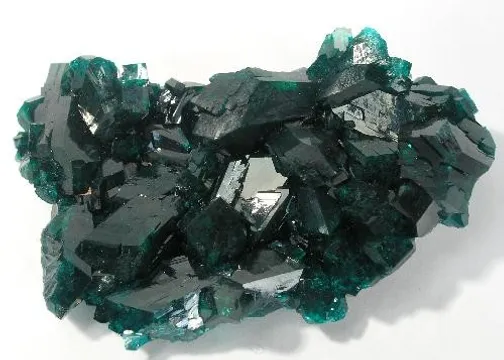
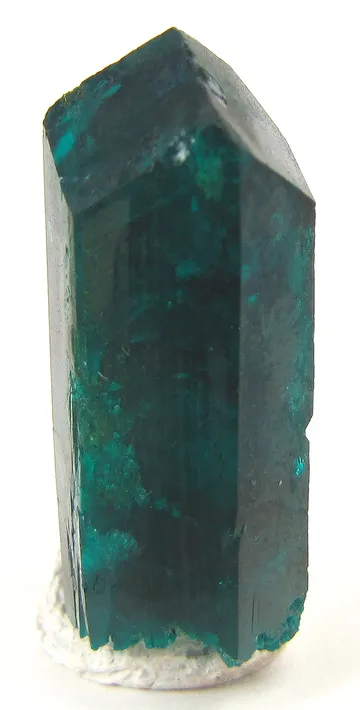
In collector terms, Tsumeb’s ore bodies produced finds that are still discussed by level and pocket. The “Easter Pocket” of 1994, found during pillar-robbing on 8 Level, is among the most famous late discoveries, noted for tabular azurite crystals. The 44 Level “Zinc Pocket,” discovered in the early 1990s, produced notable associations involving legrandite, leiteite, paradamite, reinerite, and smithsonite. The third oxidation zone added rare species such as biehlite, erikapohlite, and ianbruceite to the Tsumeb narrative. Older oxidation-zone workings yielded the great historical suites: azurite, malachite, cerussite, dioptase, mimetite, wulfenite, smithsonite, willemite, duftite, mottramite, tsumebite, arsentsumebite, ludlockite, leiteite, and germanium- or gallium-bearing rarities.
The Erongo Mountains, west-central Namibia, are a different sort of collector locality: a large Early Cretaceous granitic to volcanic complex, roughly circular in expression, with miarolitic pegmatites and pocket systems in granite. The productive pockets are best known for aquamarine, schorl, smoky quartz, feldspar, fluorite, topaz, cassiterite, muscovite, goethite after siderite, hyalite opal, foitite, and jeremejevite. These specimens are often mined from small claims and hard-rock workings rather than large industrial pits. The most desirable Erongo pieces keep their three-dimensional pocket relationships intact: blue aquamarine crystals on jet-black schorl, fluorite perched among tourmaline and feldspar, or etched pale topaz on feldspar with smoky quartz. The Erongo Mountains continue to supply the international market sporadically through small-scale mining, but truly fine, undamaged combinations remain scarce.
The Goboboseb Mountains and Tafelkop area west of the Brandberg massif are the principal source of the quartz, amethyst, smoky quartz, prehnite, calcite, zeolite, and hematite-included specimens widely traded as “Brandberg” material. Geologically, the Goboboseb Mountains are part of the Etendeka volcanic province, with a volcanic succession of basalts and quartz latites related to the Messum Complex. The mineral specimens come chiefly from amygdules and geodes in the Tafelkop Basalt Member and surrounding basaltic units. The basalt flow tops include cavities ranging from small amygdules to large geodes, and these cavities supplied the quartz crystals that made the area famous. Brandberg Mountain itself is culturally and legally distinct, and digging in the protected massif is prohibited; the majority of modern “Brandberg” quartz specimens in collections and on the market are better described as Goboboseb or Tafelkop, Brandberg area.
Okorusu, north of Otjiwarongo, is Namibia’s classic fluorite mine. The deposit is part of an alkaline igneous-carbonatite ring-dike complex where fluorite replaced pegmatitic carbonatites, sodic fenites, host marbles, and biotite schists. Industrial fluorspar mining occurred in phases: early work around the first half of the twentieth century, closure in the 1960s, renewed large-scale operation from 1988, acquisition by Solvay in the late 1990s, and closure in 2014 after high-grade ore depletion and processing problems. Later ownership under Gecko Namibia kept the brownfields project and plant within the mining landscape, and parts of the site have been evaluated for tailings, fluorite, apatite, and rare-earth-element potential. For collectors, Okorusu’s importance lies in sharp cubic fluorite plates and clusters, particularly green, purple, lavender, yellow, and color-zoned specimens with internal phantoms. Earlier specimen recovery included both informal collecting by mine personnel and formal specimen-mining arrangements.
The Aris Quarries, about 25 kilometers south of Windhoek on the road toward Rehoboth, expose highly vesicular phonolite quarried for road and building stone. The Aris phonolite is fine-grained and alkaline, dominated by alkali feldspar, nepheline, and aegirine/acmite, with numerous miarolitic cavities and hydrothermal vugs. Those cavities host natrolite, microcline, aegirine, villiaumite, makatite, analcime, apophyllite, labuntsovite-group minerals, neptunite, fluorite, and several rare or type-locality species. Unlike Erongo or Goboboseb, Aris is not valued for large cabinet drama; it is a locality for vivid small specimens, micromounts, and rare species. The best villiaumites are red, lustrous, cubic crystals lining phonolite cavities, but the species is water-soluble and chemically sensitive, so old, dry, carefully stored pieces are far more desirable than altered material.
The Gamsberg area southwest of Windhoek contributes the Namibian rutile represented in many collections. The Natas Mine, on Natas Farm 220 at the foot of the Gamsberg escarpment, is recorded as a gold mine in granite pegmatite with rutile among a mixed assemblage that includes quartz, feldspar, muscovite, tourmaline, hematite, ilmenite, scheelite, molybdenite, copper minerals, and native gold. Rutile from this district is prized when it forms sharp, lustrous, reddish-brown to black metallic twins and cyclic intergrowths, particularly on matrix. Matrix pieces are notably less common than loose crystals or small twin groups.
Collecting access in Namibia is governed by mineral rights, land ownership, and export regulations. The Ministry of Mines and Energy has published guidance stating that private collectors and researchers need permits for material collected or purchased, and commercial export requires additional authorization. Mining claims are part of a formal rights system, and small-scale gemstone mining is often carried out on claims held by Namibian citizens or by operators working through licensed arrangements. Serious collectors should not treat well-known names such as Erongo, Brandberg, or Aris as open invitations to dig. Access may involve private farms, mining claims, protected cultural landscapes, active industrial sites, or abandoned workings with significant safety hazards. The most ethical route is to buy from reputable Namibian miners, established dealers, or old collections with precise labels.
Namibian villiaumite is essentially an Aris Quarries specialty: vivid red to carmine-orange NaF occurring in miarolitic cavities of alkaline phonolite south of Windhoek, typically as small cubic crystals or crusts on phonolite matrix with aegirine/acmite, natrolite, analcime, labuntsovite-group minerals, neptunite, makatite, apophyllite, fluorite, and other agpaitic species. The best collector pieces show sharp, lustrous, translucent cubic crystals—reported on good specimens to about 5 mm—lining open vugs rather than appearing as dull reddish fillings or altered patches. Because villiaumite is a soluble sodium fluoride mineral, Namibian examples must be kept dry and never washed; freshness of color, intact cube faces, and an unweathered phonolite cavity are what separate fine Aris pieces from ordinary locality examples.
Namibian amethyst for collectors is dominated by the Goboboseb-Tafelkop “Brandberg area” style: glassy crystals from basalt cavities west of the Brandberg massif, commonly as single points, scepters, reverse scepters, small clusters, or amethyst zones within otherwise clear or smoky quartz. The color is usually not a uniform Uruguayan purple; its charm is in internal architecture—purple caps, violet phantoms, smoky overgrowths, hematite veils, negative crystals, and occasionally mobile fluid inclusions. Documented Goboboseb examples include crystals around 5 cm and groups in miniature to cabinet size, while the best pieces show bright luster, strong transparency, distinct color zoning, and undamaged terminations on natural matrix or as elegant floaters. Labels reading simply “Brandberg” should be refined when possible to Goboboseb Mountains, Tafelkop, or Brandberg area, because the protected Brandberg massif itself is not the source of most circulating amethyst specimens.
Quartz is Namibia’s most abundant collector language, but the country’s finest quartz specimens are far from ordinary: Goboboseb crystals can combine water-clear rock crystal, smoky quartz, amethyst, hematite inclusions, clay or chlorite-like inclusions, skeletal “fenster” growth, phantoms, scepters, reverse scepters, and two-phase fluid inclusions in a single object. The host setting is basalt amygdules and geodes around Tafelkop and the Goboboseb Mountains, with prehnite, calcite, hematite, and zeolites as important companions; Erongo contributes smoky quartz in granitic pocket assemblages with schorl, feldspar, fluorite, aquamarine, topaz, and muscovite. Fine Namibian quartz is judged less by sheer size than by glass, architecture, and internal life: crisp faces, bright luster, undisturbed terminations, sharp phantoms, mobile enhydros where present, and a label precise enough to distinguish Goboboseb from generic “Brandberg” and Erongo from the wider Erongo Region.
Namibian fluorite has two major collector personalities: Okorusu’s carbonatite-related cubic fluorite and Erongo’s rarer pegmatite-pocket fluorite. Okorusu produced some of the world’s most distinctive sea-green to purple, lavender, yellow, and color-zoned fluorite, commonly as sharp lustrous cubes, stepped cubes, plates, and clusters with internal cubic phantoms; associations include quartz, calcite, baryte, fluorapatite, goethite, celestine, aragonite, and other carbonatite or replacement minerals, and many specimens fluoresce blue, especially under longwave UV. Erongo fluorite is less abundant but highly coveted when it occurs with schorl, aquamarine, smoky quartz, feldspar, or topaz in pegmatite-pocket combinations. Fine Okorusu pieces are transparent to translucent, undamaged, strongly zoned, and not merely massive green fluorite; fine Erongo pieces are judged by association, sculptural balance, and whether the fluorite remains naturally integrated with tourmaline or beryl.
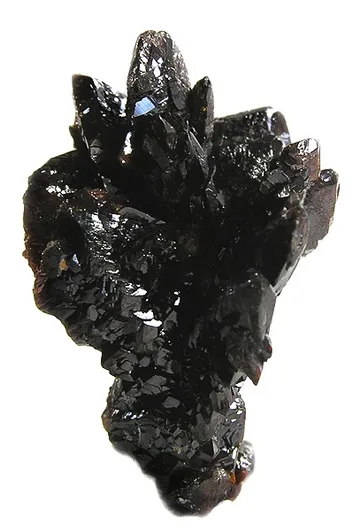
Namibian rutile is best documented for collectors from the Gamsberg area, especially the Natas Mine on Natas Farm 220 southwest of Windhoek, where rutile occurs in a granite-pegmatite and gold-mine setting with quartz, orthoclase, muscovite, tourmaline, hematite, ilmenite, scheelite, molybdenite, copper minerals, and related species. The recognizable collector habit is small, lustrous, reddish-brown to black metallic crystals in twin intergrowths and cyclic twins; published specimen data include rutile twin intergrowths around 1.7 cm, with matrix examples considered much less common than loose twins. Good Namibian rutile should show clear twinning, bright metallic adamantine luster, sharp edges, and locality integrity—“Gamsberg area” or “Natas Mine” is far preferable to a vague Namibia label—because rutile-in-quartz from other countries is easily confused in the broader trade.
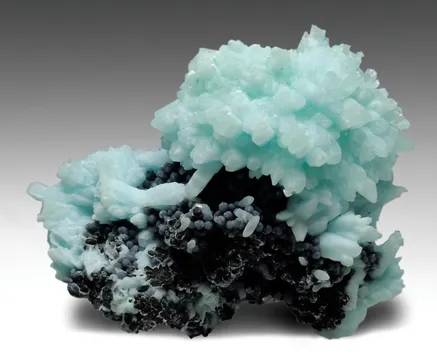
Beyond these five species, Namibia is especially significant for type-locality and rare minerals. Tsumeb alone accounts for a remarkable suite of first-described species and locality classics, including tsumebite, arsentsumebite, ludlockite, leiteite, stottite, söhngeite, schneiderhöhnite, stranskiite, otjisumeite, gallobeudantite, tsumgallite, and many others tied to arsenate, germanate, gallium, lead, copper, and zinc chemistry. Aris is the type locality for rare alkaline-rock species such as arisite-(La), windhoekite, ellingsenite, escheite, and sazhinite-(La), with arisite-(Ce) also central to its rare-earth fluorcarbonate story. The Erongo Mountains are not primarily a type-locality district, but they have given the market superb and scientifically interesting jeremejevite, aquamarine, foitite, schorl, topaz, fluorite, smoky quartz, cassiterite, and uranium- or tungsten-bearing rarities. Other Namibian localities broaden the picture further: Kombat is known for unusual lead-copper and arsenate species such as asisite; Kaokoveld and Kunene localities are associated with dioptase, shattuckite, chrysocolla, and other copper minerals; Klein Spitzkoppe is historic for topaz, aquamarine, and other beryl; and Rosh Pinah, Berg Aukas, Onganja, and the Karibib-Cape Cross pegmatite belt contribute important base-metal, vanadium, tungsten, lithium, beryllium, and phosphate mineralogy.
Namibia is a label-sensitive country. The most common locality problem is not outright fakery but imprecision: “Brandberg” on a quartz or amethyst label often means the Goboboseb Mountains or Tafelkop area west of the Brandberg massif, not the protected Brandberg granite mountain itself. For serious cataloguing, retain the old trade name if historically useful, but add the more accurate locality where known: Goboboseb Mountains, Brandberg Area, Dâures Constituency, Erongo Region, Namibia. The distinction matters because Brandberg Mountain has cultural and legal protection, while the specimen-producing basalt cavities of Goboboseb are a different geological setting.
Villiaumite from Aris requires special handling. It is sodium fluoride, water-soluble, and potentially toxic if mishandled. Do not wash it, soak it, trim it wet, lick it, or store it in humid conditions. Keep it in a dry, well-labeled box, avoid skin contact with broken or powdery surfaces, and wash hands after handling. A deep red Aris villiaumite that has retained sharp crystal faces is far more desirable than a damp-stored or partially dissolved specimen. Any “cleaning” that improves the matrix may destroy the villiaumite.
Okorusu fluorite commonly has condition issues related to pocket extraction and industrial mining. Plates may have sawn backs, contacted edges, bruised cube corners, or repaired-looking cleavage surfaces that are actually mining damage. Sawn backs are common and not necessarily a fatal flaw if the display face is intact, but top examples should have clean, lustrous cube faces, sharp zoning, and minimal edge bruising. Check color under neutral lighting: some Okorusu fluorites look dramatically different in transmitted, LED, or case lighting, and the best specimens do not depend on exaggerated photography. Fluorescence can be strong blue on some Okorusu material and on selected Erongo fluorite, but it is not universal.
Goboboseb quartz and amethyst are often robust compared with more delicate zeolite specimens, but their value is highly condition-dependent. Look closely for polished chips at terminations, oiling or wetting used to disguise dings, glued bases, and missing scepter heads. Hematite inclusions, veils, clay inclusions, and negative crystals are normal and often desirable; surface iron staining is less attractive unless it contributes to the specimen’s character. Mobile enhydros should be handled carefully: avoid heat, freezing, ultrasonic cleaning, and strong lamps for extended periods.
Erongo specimens can be deceptively fragile. Aquamarine-on-schorl combinations often have thin contact points, etched beryl terminations, feldspar cleavage, and brittle tourmaline sprays. Fluorite on schorl or aquamarine is especially vulnerable because fluorite cleaves readily and may be perched on uneven matrix. Hyalite coatings from Erongo can fluoresce vividly but should not be scrubbed or chemically cleaned without expert advice. For high-end Erongo pieces, prioritize unrepaired balance: original pocket association, natural contacts, and clean terminations are more important than brute size.
Tsumeb material requires the most provenance discipline of all. Many Tsumeb species are visually similar to minerals from other lead-copper-zinc deposits, and some rarities require analytical confirmation. Old labels, level information, pocket names, and collection pedigrees can add substantial value. Be cautious with bright blue-green secondary minerals sold as rare Tsumeb arsenates without analysis; duftite, conichalcite, bayldonite, and mixed arsenate coatings can be difficult to distinguish visually. Conversely, a modest but well-labeled Tsumeb specimen from a known pocket may be more important than a showier piece with only a country label.
Market availability varies strongly by district. Goboboseb quartz and amethyst remain relatively available, though exceptional phantom, scepter, and moving-fluid-inclusion pieces are increasingly competitive. Okorusu fluorite appears regularly from old stocks, dealer holdings, and occasional later recovery, but the finest transparent, strongly zoned plates are no longer inexpensive. Erongo aquamarine and schorl combinations are continuously desired and high-grade matrix pieces command strong prices. Aris villiaumite is much more specialized and less abundant in the broad market. Tsumeb is finite in the practical collecting sense: important pieces recirculate from collections, and the best historic specimens remain trophy material.
The most famous Namibian mineral story begins not with a cabinet specimen, but with a hill. Before European companies drove shafts and built railways, local people were already mining and trading copper from the green-stained outcrop at Tsumeb. The place was remembered as Otjisume, often translated as “the place of the frog,” a name linked in later accounts to the appearance of the copper-colored outcrop. By the 1880s, European travelers had encountered Africans moving copper ore and smelted metal, and the trail led back to the Green Hill.
In January 1893, the British mining engineer Mathew Rogers arrived at Tsumeb on behalf of the South West Africa Company. What he saw impressed him enough to send back one of the great locality lines in mineral history: “I have never seen such a sight.” The remark has lasted because it was not collector hyperbole; it was the first outside glimpse of an ore body that would later give the world one of its richest suites of mineral species. The practical problem was distance. Early ore had to move across brutal country toward the Atlantic coast, and the mine’s future became tied to railway engineering as much as geology. The Otavi Minen- und Eisenbahn-Gesellschaft developed the mine after 1900, and full commercial production waited for the completion of the dedicated rail link from the coast.
Tsumeb’s underground life produced its own folklore. The deposit was not simply “oxidized at the top.” Miners drove downward through sulfide and oxide zones, and in the 1980s they encountered a third oxidation zone at depths around 1,380 meters. For a collector, that is an astonishing fact: fragile, colorful secondary species—the kind of minerals one expects near surface waters—were forming or preserved more than a kilometer underground. The deep oxidation zone yielded minerals new to science and improbable associations, and by the early 1990s the 44 Level Zinc Pocket was producing combinations of legrandite, leiteite, paradamite, reinerite, and smithsonite that sounded more like a curated museum drawer than a working ore mine.
One of Tsumeb’s last great specimen events came during Easter weekend in 1994. Pillar-robbing operations on 8 Level broke into a large azurite pocket, now remembered as the Easter Pocket. The azurites were not ordinary blocky crystals; they were tabular, distinctive, and instantly recognizable to collectors who follow Tsumeb morphology. The timing gave the pocket its name, but the find’s importance came from its place in the mine’s chronology. It arrived near the end of large-scale mining, when costs, labor conflict, and falling metal prices were already closing in. By mid-1996 the pumps were shut down during a strike, the workings flooded rapidly, and Tsumeb’s long career as an active mine effectively ended.
The Brandberg-Goboboseb story is a lesson in how locality names drift. Brandberg itself rises as Namibia’s highest mountain, its German name meaning “burnt mountain,” while Damara and Herero names also evoke fire and glowing rock. The mountain is famous far beyond mineral collecting for its rock art, especially the painting long called the White Lady. That painting was first recorded in February 1917 by Reinhardt Maack in Tsisab Gorge; later interpretations moved it away from early European fantasies of Mediterranean origin and toward an African, San context. The mountain became a protected cultural landscape, and digging there is prohibited.
Yet show tables around the world filled with “Brandberg” quartz. The explanation lies west of the mountain, in the Goboboseb Mountains and Tafelkop area, where basalt flow tops contain the geodes and amygdules that yielded most of the collectible quartz, amethyst, smoky quartz, and prehnite. The trade name stuck because Brandberg was the landmark everyone recognized. Scientifically and ethically, however, the correction matters: the finest “Brandberg” amethyst-smoky phantoms in many collections are Goboboseb specimens, born not in the granite massif but in volcanic cavities tied to the Etendeka succession.
Aris offers a quieter but wonderfully odd field image. The quarries south of Windhoek are worked for phonolite, practical stone for roads and construction, yet the rock is full of tiny mineralized cavities. Some cavities are wet when broken; some are lined with natrolite, aegirine, villiaumite, makatite, and rare agpaitic silicates and carbonates. It is the kind of locality where the quarry face looks industrial and ordinary at first glance, then becomes a mineralogical alphabet under magnification. A tiny red villiaumite cube in a phonolite vug may never dominate a display case, but it carries the signature of a chemically unusual alkaline volcanic system.
Okorusu’s story is another contrast between industry and beauty. The mine was worked for fluorspar, not specimens, and its economics rose and fell with industrial demand, stripping ratios, beneficiation, and high-grade ore. Yet collectors remember it for transparent green and purple cubes with internal phantoms—geometric objects that look almost designed rather than mined. Some specimen recovery took place within the framework of the operating mine, and the result was a rare case in which an industrial fluorite deposit supplied both acid-grade fluorspar and world-class cabinet specimens. When the mine closed in 2014, hundreds of workers were affected, and the specimen community was reminded that beautiful fluorite plates are a byproduct of a much larger mining economy.

_(33797316354).jpg)