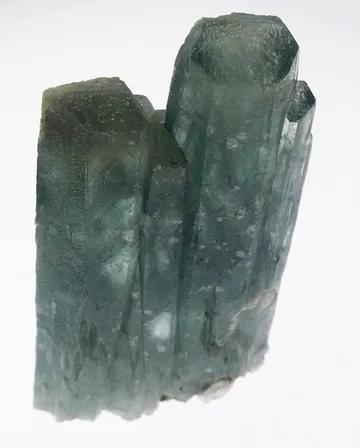
Mt Antero, Colorado — a high-altitude gem locality famed for pale to blue aquamarine in alpine pegmatites, with rare bertrandite, phenakite, and striking pocke…
Key facts
Mt Antero is one of the great American gem-mineral localities: a high, wind-scoured Colorado fourteener where beryllium-rich granites, pegmatites, miarolitic cavities, greisen zones, and quartz veins have yielded the country’s most storied aquamarine specimens. Its importance to collectors is not simply that blue beryl occurs there, but that it occurs with a distinctive alpine pegmatite suite: phenakite, bertrandite, smoky and clear quartz, microcline, albite, muscovite, fluorite, topaz, garnet, and rarer accessories. The best specimens have a look that is immediately recognizable—glassy pale to medium blue hexagonal beryl, often from small pockets, sometimes with smoky quartz and white feldspar, and in rare elite pieces still sitting in plausible pocket architecture rather than as loose singles.
The locality sits in the southern Sawatch Range of central Colorado, in Chaffee County, within the San Isabel National Forest. Productive ground lies high on Mount Antero and neighboring Mount White, mostly above timberline, in the Mount Antero Granite and related leucogranitic bodies. The collecting story is inseparable from altitude: short seasons, violent afternoon storms, frost-broken granite, difficult roads, and a century-plus of determined prospectors working small pockets rather than broad ore bodies.
Regional View
Country View
Mineralogically, Mt Antero is a classic example of late-stage enrichment in beryllium and fluorine. The pocket minerals formed in small pegmatitic and hydrothermal spaces near the upper parts of the granitic system, not in a continuous gemstone “reef.” That is why good Antero pieces are so episodic: one cavity may be barren or clay-filled, another may yield a handful of broken pale beryls, and an exceptional one may produce gemmy aquamarine, smoky quartz, phenakite, fluorite, and feldspar in a combination that defines a generation of Colorado collecting.

Photo: Wikimedia Commons
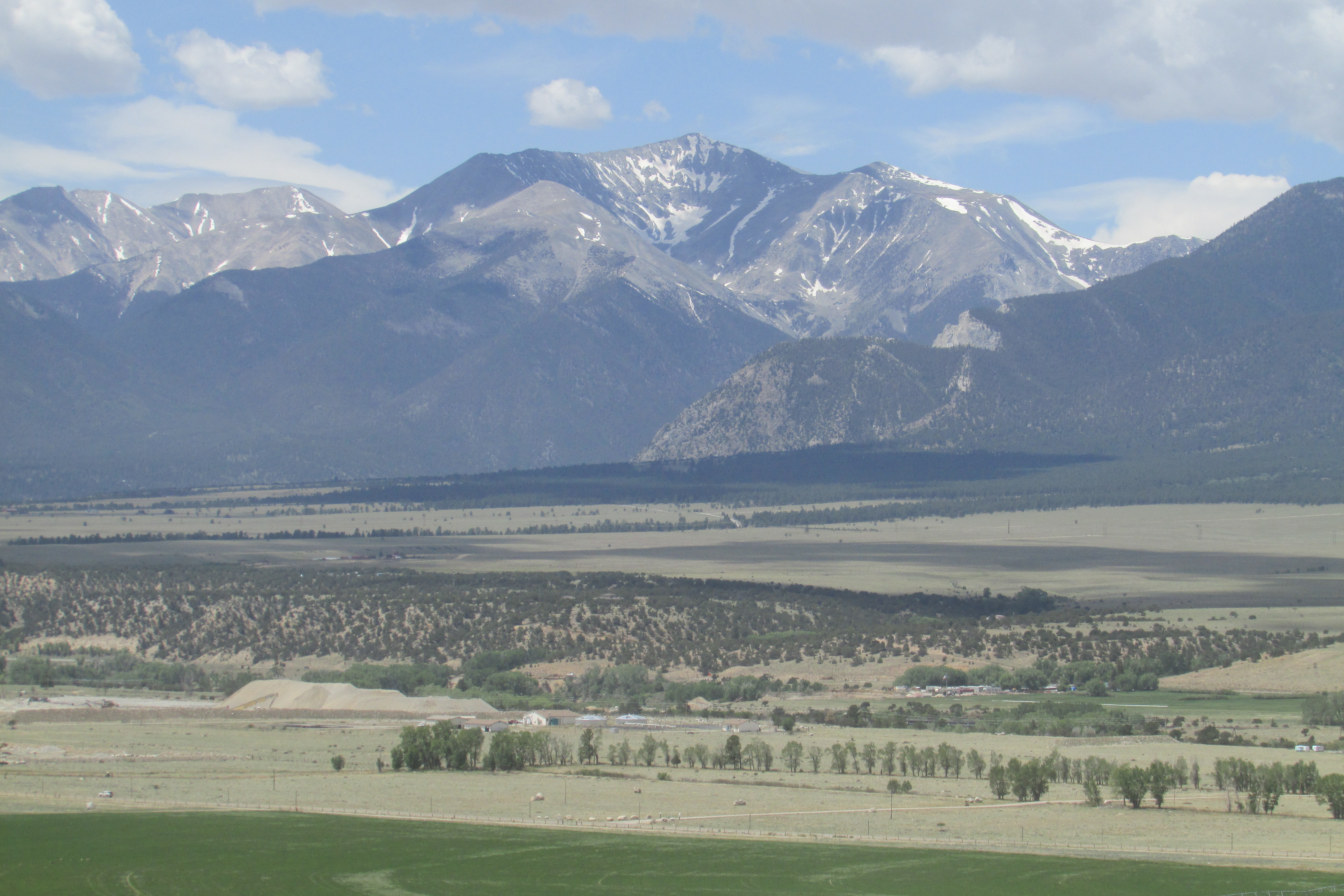
Photo: Wikimedia Commons
Search for specimens: View all specimens from Mt Antero, USA
Mt Antero is a high-alpine beryllium-gem pegmatite and vein locality on and around the upper slopes of Mount Antero and nearby Mount White in Chaffee County, Colorado. The principal host is the Mount Antero Granite, more precisely described in modern mapping as part of the early Oligocene leucogranite suite of Mount Antero, with the main phase dated at about 29.97 Ma. The California Mine leucogranite, a closely related body south of the main Antero granite, is also cut by pegmatites and greisen zones that carry beryl, fluorite, quartz, white mica, and molybdenite.
The productive specimen environment is unusually specific. The gem pockets are small pegmatites, miarolitic cavities, and related hydrothermal veins in the upper parts of the granitic system. George Switzer’s classic work divided the Antero pegmatites and veins by mineral assemblage: beryl-smoky quartz bodies; phenakite with colorless or smoky quartz; beryl-phenakite-bertrandite assemblages, sometimes with fluorite; topaz-bearing pockets; muscovite-quartz veins; phenakite-quartz-fluorite veins; and beryl-quartz-molybdenite veins. Later USGS work emphasized that the largest miarolitic cavities may reach several feet across, but that many pegmatitic bodies are only inches to a few feet in width and discontinuous in outcrop.
The larger geological district includes pegmatites, quartz veins, beryl-rich schlieren, and greisenized granite. The best collectible crystals came from open pockets high in the granite, where volatiles allowed euhedral crystals to grow into cavities. Below the principal pocket zone, beryl can be present in schlieren-like pegmatitic concentrations, but those bodies are commonly poor specimen producers. For collectors, the distinction matters: disseminated or massive beryl may be geologically significant, but Antero’s reputation rests on the rare open pockets that produced terminated aquamarine, phenakite, bertrandite, octahedral fluorite, smoky quartz, feldspar, and mica.
The California Mine, southwest of the main peak, is a related but distinct chapter in the locality’s beryllium story. It was worked on a small scale for molybdenite, especially during the World War I era, and is important mineralogically because beryl occurs with quartz and molybdenite in a vein setting rather than only in classic pocket pegmatites. The mine was reopened around 1960 during renewed interest in beryllium, but the district’s commercial beryllium ambitions repeatedly ran into the same problem: the beryllium minerals are too irregularly distributed for large, sustained ore production. Their real value has always been as gem rough and mineral specimens.
The earliest documented fame of Mt Antero belongs to the late nineteenth century. Aquamarine from the mountain was shown to Colorado State Geologist J. Alden Smith by 1882, and “Nels” Nelson Daniel Wanemaker introduced Antero material to eastern mineralogical circles in the 1880s. E. G. Cross published an early note on the aquamarine in 1887, and Samuel L. Penfield quickly followed with studies of phenakite, bertrandite, and the beryllium minerals. By the 1890s, Antero aquamarine, phenakite, and bertrandite were already established as American classics.
In the 1930s, Ed Over, Arthur Montgomery, and George Switzer brought new specimens and scientific attention to the mountain. Switzer’s 1939 study remains a cornerstone because it treated the locality not as a romantic gem hill, but as a complex magmatic-to-hydrothermal mineral system. Mid-century beryllium demand brought heavier attempts at development: Grady Cardwell built the road up the west side of the peak in the 1950s, helping open the mountain to vehicles, and North American Beryllium Corp. later reclaimed and worked parts of the south knob. Those beryllium ventures failed as ore operations, but the access they created changed collecting permanently.
Modern collecting is dominated by claims and permission. Much of the best aquamarine-bearing ground is held under patented or unpatented mining claims, and productive pockets are not open public collecting sites simply because they lie on federal land. The practical rule is simple: assume any promising dig, dump, pocket zone, or actively worked cut is claimed unless you have confirmed otherwise through current land and claim records and have permission from the claim holder. The road is severe, seasonal, and unsuitable for ordinary low-clearance vehicles; even experienced drivers treat the upper switchbacks, talus, creek crossings, and weather as serious hazards.
Among the modern finds, Steve Brancato’s work on the Claire Mary Ellen No. 1 claim and the pocket later known as Diane’s Pocket stands at the center of Antero lore. The Claire Mary Ellen area produced thousands of slender, gemmy aquamarine crystals and rare matrix specimens with aquamarine, microcline, smoky quartz, and muscovite. Diane’s Pocket, discovered in 2004, produced what many collectors regard as the finest Antero matrix aquamarine assemblage, with terminated blue beryl, smoky quartz, feldspar, mica, garnet, and a dramatic pocket architecture known from museum and show photography. The Cardwell claims, the Snowpatch area, the north face, and the Busse family’s Thank You Lord claim have also kept Antero in the public eye through modern hand-mining, guided digging, and documentary media.
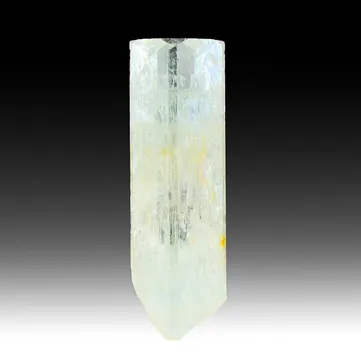
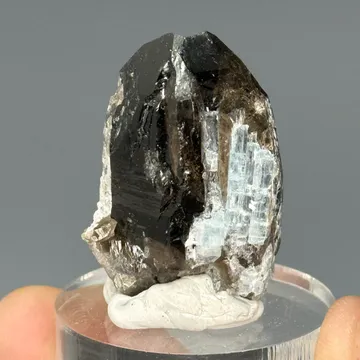
Mt Antero aquamarine is the locality’s signature mineral: usually pale to medium blue, locally blue-green or nearly colorless, and most prized as sharp, glassy hexagonal crystals with good transparency and undamaged terminations. Many crystals are only a few centimeters or smaller, and even modest examples are collectible when the color is fresh, the prism faces are bright, and the termination is clean; larger crystals with saturated blue color and gemmy windows are uncommon, and matrix specimens are scarcer still because frost, pocket movement, and extraction often separate crystals from the walls. The best pieces come from miarolitic cavities and pocketed pegmatites high in the Mount Antero Granite, especially where aquamarine is associated with smoky quartz, microcline, albite, muscovite, phenakite, bertrandite, or fluorite; a convincing Antero matrix specimen with blue beryl rising from white feldspar and smoky quartz has far greater locality character than a loose broken crystal or cutting fragment.
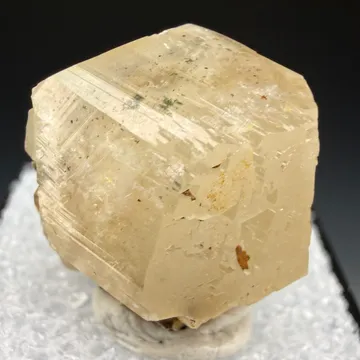
Phenakite from Mt Antero is one of the mineral’s classic American occurrences, appearing as glassy colorless, white, pale straw, sherry, tan, or pale orange crystals in beryllium-rich pegmatites and quartz-fluorite veins. It can occur as small rhombohedral or short-prismatic crystals, compact doubly terminated individuals, and locally twinned forms that collectors prize when sharp and lustrous; many specimens are only millimetric to thumbnail scale, but bright crystals on feldspar, smoky quartz, aquamarine, fluorite, or albite carry strong locality value. Ordinary Antero phenakite may look like small quartz at first glance, so the best pieces are those with unmistakable crystallography, high luster, transparency, and documented pocket provenance, especially from the beryl-phenakite-bertrandite assemblages or the more distinctive phenakite-quartz-fluorite vein settings.
Quartz at Mt Antero ranges from clear and milky crystals to smoky crystals that anchor many of the locality’s best combination pieces. In the gem pockets, quartz may occur as well-formed crystals with feldspar, aquamarine, phenakite, fluorite, muscovite, and albite, while in veins it can dominate the assemblage and host beryllium minerals in smaller vugs and fractures. Collectors judge Antero quartz less as a standalone species than as part of the pocket story: sharp, undamaged smoky or clear crystals with aquamarine, phenakite, bertrandite, or octahedral fluorite are far more desirable than ordinary loose quartz, and matrix pieces with natural spatial relationships are especially important because so much Antero material has been recovered as separated crystals or fragments.
Beryl at Mt Antero includes the famous aquamarine variety, colorless goshenite-like crystals, pale blue crystals, blue-green material, and rare reported yellowish or pinkish tints, with most collectible examples coming from miarolitic cavities rather than massive beryl-rich schlieren. The crystals are typically hexagonal prisms, often etched, internally fractured, clay-coated, or detached by pocket collapse; clean terminations, strong glassy luster, transparent zones, and attractive blue color separate serious specimens from common broken rough. The most characteristic Antero beryl associations are smoky quartz, microcline, albite, muscovite, fluorite, phenakite, and bertrandite, with the latter two especially important because they record the late beryllium-rich evolution and alteration history of the pockets.
Mt Antero fluorite is most characteristically octahedral, with crystals reported from millimeter scale to very large examples, and colors including deep purple, violet, colorless, and light green; thin green coatings on earlier fluorite and small late drusy coatings are part of the locality’s textural vocabulary. It occurs in pegmatites, miarolitic cavities, muscovite-quartz veins, phenakite-quartz-fluorite veins, and beryl-phenakite-bertrandite-fluorite assemblages, making it one of the minerals that links the magmatic pocket suite to later hydrothermal activity. The best collector pieces show sharp purple octahedra, spinel-law twins, or fluorite with phenakite, aquamarine, smoky quartz, or muscovite, while damaged cleaved masses or isolated crude octahedra are much less compelling despite the locality name.
Smoky quartz is one of the defining visual companions to Mt Antero aquamarine, forming dark to medium smoky crystals in pegmatite pockets, quartz-rich veins, and cavity assemblages with feldspar and beryllium minerals. The habit is typically prismatic quartz, sometimes doubly terminated or as well-formed crystals in clusters, and the strongest specimens combine dark, lustrous smoky quartz with pale blue aquamarine or pale phenakite for sharp contrast. Because smoky quartz is common in many Colorado pegmatites, the Antero premium depends on association and provenance: a smoky crystal with aquamarine, microcline, albite, muscovite, fluorite, or phenakite from a documented pocket is far more desirable than an unassociated loose smoky that could resemble material from numerous Rocky Mountain localities.
Microcline at Mt Antero is the principal feldspar framework mineral of many pegmatite pockets, typically white to off-white or pale feldspathic matrix rather than the bright amazonite-green microcline of Pikes Peak-type specimens. It occurs with smoky quartz, albite, beryl, muscovite, fluorite, phenakite, and bertrandite, and its value is usually as matrix: clean, blocky microcline that supports aquamarine or phenakite in natural position can make an Antero specimen, while crude feldspar without gem minerals is usually only a geological reference. The best microcline-bearing pieces show open-pocket architecture—feldspar plates or blocky crystals with blue beryl, smoky quartz, mica, and accessory Be minerals still attached—because intact matrix relationships are comparatively rare from this frost-shattered alpine locality.
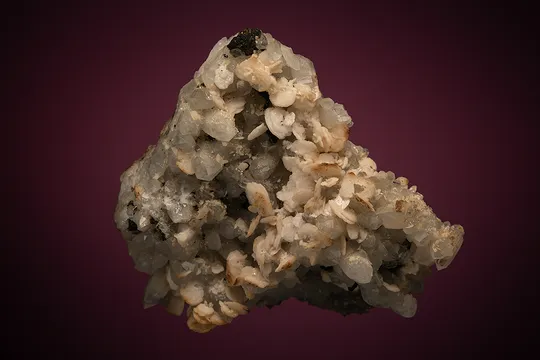
Bertrandite is one of the minerals that gives Mt Antero its special beryllium-mineral pedigree, occurring as small colorless, whitish, beige, or transparent tabular blades and lath-like crystals, often in cavities associated with quartz, beryl, phenakite, fluorite, muscovite, feldspar, and smoky quartz. Early descriptions emphasized tiny rectangular blades only a few millimeters long, and that remains typical: even small bertrandite is important when it is sharp, identifiable, and naturally placed with aquamarine or phenakite. Fine Antero bertrandite specimens are scarce because the species is commonly inconspicuous and may represent late-stage alteration of beryl exposed to reactive fluids, so a matrix piece with visible blades in a beryl-bearing pocket is much more desirable than a vague white coating or an unverified label.
Albite at Mt Antero occurs as part of the feldspar-rich pegmatite matrix, including white albite and cleavelandite-like platy material in pockets with beryl, smoky quartz, microcline, muscovite, fluorite, phenakite, and bertrandite. It is rarely the headline mineral, but it is important aesthetically because bright white albite can frame pale blue aquamarine and small transparent phenakite crystals, giving specimens the contrast and delicacy collectors associate with the best Antero matrix pieces. Albite-rich specimens are most desirable when the feldspar is clean, fresh, and visibly crystallized rather than chalky or crushed, and when it supports undamaged aquamarine, smoky quartz, fluorite, or Be-mineral accessories in an undisturbed pocket relationship.
Muscovite from Mt Antero appears as silvery to pale mica books, plates, and rosettes in pegmatite pockets and muscovite-quartz veins, commonly accompanying aquamarine, smoky quartz, feldspar, albite, fluorite, phenakite, and bertrandite. It is a classic accessory rather than a primary trophy species, but it can be crucial in defining a specimen’s locality character: mica books nestled among white feldspar, smoky quartz, and blue beryl give many Antero pieces their high-alpine pegmatite texture. The best muscovite-bearing specimens are not simply mica specimens, but balanced combinations where the muscovite is fresh, lustrous, and naturally placed with aquamarine or phenakite; loose, bruised mica books from dumps have far less collector importance.
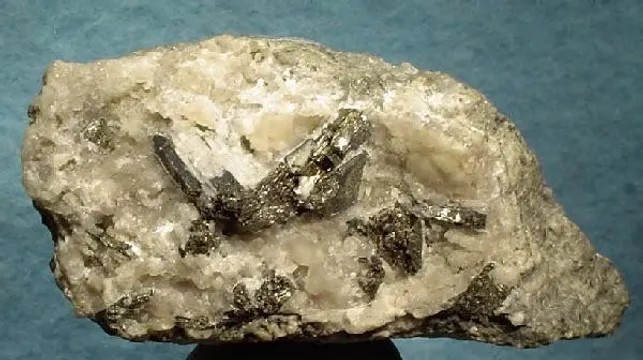
Other documented Mt Antero minerals include topaz, apatite, spessartine or garnet-group crystals, pyrite, limonite after pyrite, calcite, biotite, magnetite, hematite, jarosite, monazite, zircon or cyrtolite, rutile or ilmenorutile, ilmenite, brannerite, molybdenite, bismuthinite, tourmaline, ferberite, sulfur, and microlite-group material in the broader claim area. Topaz is an important rarity here, especially sherry to orange crystals from select pockets, while helvite-group minerals gained attention through modern collecting on the Cardwell claims. The name “Mt Antero” is also significant stratigraphically and petrologically because the Mount Antero Granite itself has its type locality on the mountain, but the locality is best known to collectors for its beryllium-mineral assemblage rather than for serving as the type locality of an accepted mineral species.
Mt Antero specimens need careful provenance. The name carries a premium, and loose pale aquamarine, smoky quartz, feldspar, fluorite, and phenakite can be difficult to separate from superficially similar material unless the specimen has an old label, a known collector history, or a documented claim or pocket source. Matrix aquamarine is especially worth scrutinizing: true Antero matrix pieces are scarcer than loose crystals, and the modern market has abundant foreign aquamarine on feldspar from Pakistan, Afghanistan, China, Namibia, and other pegmatite fields. A convincing Antero specimen should look geologically plausible for the locality—pale to medium blue beryl, smoky quartz, white feldspar, albite, muscovite, small Be minerals, and a high-alpine pocket texture—rather than a generic blue beryl on bright imported matrix.
Repairs and reconstructions are not automatically disqualifying, but they must be disclosed. Mt Antero pockets are commonly frost-disturbed, clay-filled, and broken during natural pocket collapse or extraction, so reattached crystals and repaired matrix pieces are part of the locality’s collecting reality. The distinction is between honest repair of a naturally associated specimen and artificial assembly. Use magnification and UV/oblique light to check joins, filled gaps, suspicious glue lines, or crystals that do not seat naturally into the matrix.
Condition issues are common. Aquamarine may be etched, frosted, internally crazed, rehealed, veiled, or chipped at prism edges and terminations; even attractive crystals can have internal fractures that limit cutting value. Fluorite cleaves easily and may show bruised octahedral points or edge damage. Phenakite can be small, glassy, and quartz-like, so labels should be backed by morphology or analysis when the crystals are ambiguous. Bertrandite is often tiny and easy to misidentify as feldspar splinters, white mica, or secondary coatings; serious bertrandite specimens benefit from analytical confirmation or a strong old pedigree.
Faceted Mt Antero aquamarine should be treated as a separate market from cabinet specimens. Aquamarine in the gem trade is commonly heated worldwide to improve blue color by reducing greenish tones, so cut stones or cutting rough represented as Antero material should come with a clear treatment statement and provenance. In mineral specimens, color enhancement is less commonly claimed, but collectors should still be cautious with unusually saturated loose crystals that lack history.
Radioactive accessories are a real handling consideration in some Antero material. Brannerite and other uranium- or thorium-bearing accessory phases have been reported from the pegmatites; they are typically minor, but specimens containing black radioactive grains should be stored and labeled sensibly, kept out of prolonged close contact, and handled with routine mineral-collection hygiene. The main practical hazards, however, are field-related: high elevation, lightning, unstable talus, private and unpatented claims, and the temptation to dig where permission has not been granted.
Market availability is uneven. Small loose aquamarine crystals, broken cutting rough, smoky quartz, feldspar pieces, and modest phenakite appear regularly, especially from modern claim operations and local Colorado dealers. Fine aquamarine matrix specimens, sharp phenakite on matrix, verified bertrandite combinations, topaz from good pockets, fluorite with phenakite, and old-time specimens with nineteenth- or mid-twentieth-century labels are much less common. A top Antero specimen should be bought for locality character, not just species name: the premium belongs to sharp form, credible pocket context, color, transparency, association, and provenance.
The old Antero story begins with a surprise: the mountain was prospected in the late 1800s like so much of Colorado, but the treasure that endured was not gold or silver. It was blue beryl, found in tiny pockets and exposed by weathering on a mountain so high that the gem ground sits above the trees. Early collectors went up by foot, and the locality’s remoteness gave the first aquamarines and phenakites a kind of legend before roads, claim maps, and television crews changed the mountain forever.
The road itself is part of the mineral history. In the mid-1950s, Grady Cardwell came from Texas and built a road up the west side of Mt Antero to pursue beryl, aquamarine, and possibly molybdenite. The commercial beryl idea did not last: the minerals were too scattered, the season was too short, and the elevation too severe. But the road transformed the locality. What had been a climb for determined mineral men became a brutal but possible drive for rockhounds, claim owners, and eventually film crews. Even with a vehicle, the trip remained unforgiving: a narrow, rocky shelf road above timberline, afternoon lightning, hypothermia weather, and switchbacks where a bad decision could mean a catastrophic fall.
One of the great modern episodes belongs to Steve Brancato. According to Colorado collecting accounts, Brancato first came into the Antero circle after walking up from the village of Alpine in Chalk Creek and catching a ride from another collector. An acquaintance had found a large pocket, and Brancato began testing the same general side of the mountain facing Mt White, close to ground known to Ed Over, Arthur Montgomery, and other early collectors. Not long afterward he hit his own aquamarine pocket—around 2,000 crystals. Many were long, thin, light blue, gemmy, and terminated. More importantly, the pocket produced matrix pieces of aquamarine with microcline, smoky quartz, and muscovite, a style that had always been scarce from Antero because so many crystals had been found loose or broken from pocket walls.
Brancato filed the Claire Mary Ellen No. 1 claim and kept working. One pocket produced some of the finest Antero topaz, sherry to orange crystals from a mountain where topaz is never abundant. Then came the discovery that entered locality folklore as Diane’s Pocket. It was a large tubular pocket with major matrix pieces of terminated aquamarine, smoky quartz, and feldspar. Some pieces had to be reassembled because crystals had broken naturally in the pocket, but the assemblage was so strong that it reset expectations for what Antero matrix aquamarine could be. Museum and show captions describe a Diane’s Pocket aquamarine vug measuring 37 inches by 25 inches, with white feldspar, silvery mica, red garnets, and dozens of black quartz crystals—a scale almost absurd for a locality where a sharp 3 cm aqua can be a victory.
The Weather Channel’s Prospectors brought a different kind of fame. The show, filmed beginning in the early 2010s, put Mt Antero and Colorado gem digging in front of a public far larger than the mineral-collecting community. The attention was double-edged. It made Antero aquamarine more widely recognized, but it also brought claim disputes, unrealistic treasure hunting, and new pressure on a mountain already divided among serious claim holders, hand diggers, hikers, and land managers. Longtime collectors have often said the show changed the social atmosphere as much as the market.
Brian Busse’s Thank You Lord Aquamarine Mine offers the most vivid modern portrait of life on the mountain. At 12,500 feet, Busse was described working loose gravel with a garden tool, searching for the flash of blue glass. A pebble-sized aquamarine might become earrings, he joked, enough for dinner or at least “a side of fries at McDonalds.” Gravity helped clear decomposed granite down a 45-degree slope, and his worksite between 12,000 and 13,000 feet opened onto a natural amphitheater of Sawatch peaks.
Busse’s family story is almost as famous as his stones. He and his wife Yolanda raised six children in the rhythm of the mountain, camping and homeschooling there for days at a time, in some years as much as 100 days. They hauled truckloads of supplies to basecamp, slept in a giant tarp teepee, and took showers in solar-heated water drawn from Baldwin Creek. Five of the six children continued mining and selling gems as adults. Busse estimated that he had worked only 1 acre of a 20-acre claim, and he treated aquamarine not as a weekend hobby but as a family economy.
The hazards in Busse’s telling are not abstract. He remembered lightning and thunder so violent that avalanches followed the sound. On one especially loud day, he recalled around 100 lightning strikes echoing through the amphitheater, then ball lightning drifting through the trees and exploding in a puddle full of mosquito larvae. “We were all deaf for a minute,” he said. He also described rolled Jeeps, weapons encounters, theft, and the strange human magnetism that valuable blue crystals exert at high altitude. Two stones worth an alleged $1 million were stolen from his mine and never recovered, but his response was to keep digging: better to find the next stone than live inside the loss of the last one.