






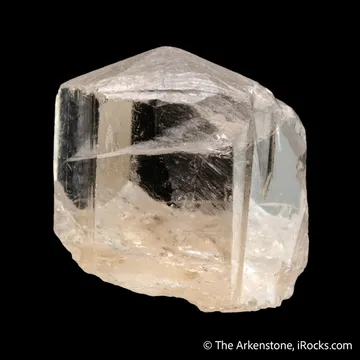
Mogok Township, Myanmar — famed marble-hosted ruby and red spinel among diverse minerals, top-tier display specimens and a storied gem locality.
Key facts
Mogok is one of the few mineral localities whose name functions almost like a color. To gem dealers it evokes “pigeon’s-blood” ruby; to specimen collectors it means red spinel octahedra on white marble, ruby crystals glowing against calcite, pale champagne topaz on glassy quartz, rare borates and borosilicates, and a district so mineralogically fertile that even its gem gravels have yielded new species. The township sits in Myanmar’s Mandalay Region within the Mogok Metamorphic Belt, where high-grade marbles, gneisses, calc-silicate rocks, syenitic and granitic intrusions, skarns, pegmatites, and alluvial gravels are packed into a steep, humid, structurally complicated mountain tract.
The classic Mogok gem system is not a single mine but a constellation of valleys, hills, primary marble bodies, contact zones, pegmatites, and old gravels around Mogok, Kyatpyin, Chaung Gyi, Bernardmyo, Kyauk Pya That, Kabaing, Kin, Dattaw, Pein Pyit, Pingu-taung, Lin Yaung Chi, and many smaller workings. The core collector assemblage is marble-hosted corundum and spinel: ruby, sapphire, red spinel, calcite, dolomite, scapolite, apatite, phlogopite, diopside, titanite, pyrite, and graphite-bearing or mica-rich marble. West and southwest of the main ruby-spinel belt, granitic pegmatites add topaz, aquamarine, goshenite, quartz, danburite, tourmaline, cassiterite, and rare boron-bearing minerals.
Historically, Mogok’s reputation rests on ruby. Its stones supplied royal courts, colonial monopolies, gem markets in Mandalay and Rangoon/Yangon, and the modern laboratory vocabulary of marble-hosted ruby origin. But the mineral collector quickly learns that Mogok’s finest specimens are not merely cuttable rough. They are display objects: a lustrous red spinel octahedron set like a jewel on sugary white marble; a ruby crystal with sharp hexagonal form and red fluorescence; a topaz crystal rising from quartz with a glassy, almost water-clear body; a scapolite-ruby marble association that turns alive under ultraviolet light; or a thumbnail-sized rarity whose locality label is longer than the specimen itself.
Regional View
Country View
Mogok’s best specimens have a visual grammar all their own. The ruby and spinel pieces are often small by cabinet-mineral standards, but their intensity compensates: transparent red crystals, marble contrast, sharp form, and fluorescence. The pegmatite specimens can be larger, especially topaz and aquamarine, though truly fine matrix examples are much scarcer than loose crystals. Labels deserve careful reading because “Mogok,” “Mogok Valley,” “Mogok Stone Tract,” “Mandalay Division,” “Burma,” and modern Myanmar township names may refer to the same broad district, while individual mine names can radically affect desirability.

Photo: Wikimedia Commons

Photo: Wikimedia Commons

Photo: Wikimedia Commons
Search for specimens: View all specimens from Mogok Township, Myanmar
Mogok Township lies in the famous Mogok Stone Tract of Upper Myanmar, roughly northeast of Mandalay, in rugged, densely vegetated country cut by steep valleys and seasonal drainages. The productive tract is best understood as a gem district rather than a point locality. The old literature commonly describes the region in terms of Mogok and Kyatpyin, with surrounding valleys and villages such as Bernardmyo, Chaung Gyi, Kyauk Pya That, Kabaing, Kin, Dattaw, Pein Pyit, Le Oo, Bawpadan, Pingu-taung, and Lin Yaung Chi supplying named sublocalities on better labels.
The ruby-spinel deposits are principally marble-hosted and alluvial. The primary source rocks are coarse-grained calcite marbles and calc-silicate rocks of the Mogok Metamorphic Belt, interlayered with gneiss and intruded locally by syenite, charnockite, and granitic bodies. In the classic marble environment, ruby and spinel formed in low-silica, aluminum-rich carbonate rocks during high-grade metamorphism and metasomatism. Later tropical weathering liberated durable corundum and spinel into residual and stream gravels, which are locally rich enough to be mined by pits, shafts, tunnels, and washing operations.
The mineralized bodies are usually not broad, even seams. Studies of the ruby-bearing marbles describe narrow, lenticular, structurally controlled bands, fracture zones, contact zones, and cave or karst-related secondary accumulations. Dattaw’s ruby-bearing marble bands lie near the summit of the hill and are associated with phlogopite marble, titanite-diopside marble, light blue scapolite, apatite, pyrite, and mica. In the Shwe-daing–Lin Yaung Chi group, ruby occurs in marble and along contacts with intrusive rocks, with scapolite, diopside, and phlogopitic mica. Kadoke-tat–Kyauk-saung marble bands are associated with titanite, pyrite, apatite, and scapolite. Bawpadan–Kyauk-poke produced ruby-bearing bands in bluish to yellowish marble with pyrite, diopside, apatite, titanite, and scapolite. Pingu-taung is noted for star ruby, while Baw-lone-gyi material is often pinkish.
The pegmatite side of Mogok is equally important for collectors, though it is sometimes overshadowed by ruby. The Kabaing granite and related pegmatitic bodies contain quartz- and topaz-bearing pegmatites, some with cassiterite. Sakhan-gyi, about 16 km west of Mogok in the broader tract, has long been a major Myanmar source of aquamarine, goshenite, topaz, quartz, and danburite. Pondaw and Pan-taw labels are also seen on notable topaz specimens, including water-clear to pale champagne crystals on quartz matrix.
Mining in Mogok is centuries old. Burmese royal control of the ruby mines was established by the late sixteenth century, and the region later became a focus of British colonial interest after the annexation of Upper Burma. Burma Ruby Mines Ltd. attempted large-scale, European-style mining with pumping, drainage, washing plants, and infrastructure, but the terrain, geology, economics, and later market conditions proved difficult. After the company era declined, much work reverted to smaller, local methods, and twentieth-century production shifted through government control, military oversight, state entities, licensed operators, and joint ventures.
Modern mining has alternated between artisanal work, small claims, mechanized earthmoving, underground hard-rock operations, and reworking of old gravels and tailings. GIA field reports from the 2010s documented deep underground hard-rock ruby mining, including descents by ladders, ropes, and pulleys to hundreds of meters below surface. In other places, miners dig and wash gem-bearing gravels, searching for corundum, spinel, peridot, scapolite, zircon, moonstone, garnet, topaz, and a long list of rarer species. Fine specimen recovery is incidental: most mining is for gem rough, so a crystal survives as a specimen only when someone recognizes that its form, matrix, association, or historical value is worth more than the cutting table.
Collecting access today is highly restricted in practice. Mogok has long required permissions for foreign visitors, and since Myanmar’s 2021 coup the broader country has been politically unstable. The township saw major fighting in 2024 and 2025, including control changes involving the Ta’ang National Liberation Army, allied forces, and the Myanmar military. For collectors, this means that mine visits and casual field collecting should not be treated as realistic options. Specimens reach the market through older collections, Myanmar and Thai gem channels, dealer networks, and occasional new parcels, but new material from Mogok should be approached with careful attention to legality, sanctions exposure, provenance, and ethical sourcing.
Notable specimen finds include ruby and spinel on marble from Dattaw, Pein Pyit, Ohngaing, Man Sin, Kyauk-saung, and related marble mines; matrix topaz from Pondaw and pegmatite zones; large pegmatitic topaz crystals historically recorded from the Kabaing-related bodies; gem peridot from Pyaung Gaung in the Bernardmyo area; poudretteite first recognized as a gem-quality stone after being purchased in Mogok; painite from the Mogok area and later occurrences such as Wet-loo and Hinthar-taung; kyawthuite from alluvium in the Chaung-gyi valley; and johnkoivulaite from Pein Pyit gem gravels. Few localities in the world combine elite gem fame with this density of mineralogical surprises.
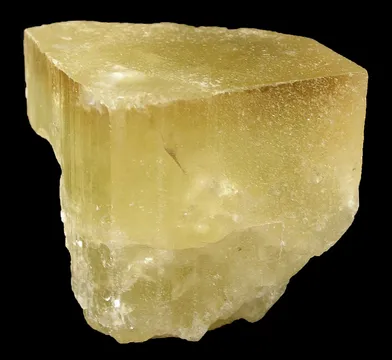
Topaz from Mogok belongs to the district’s pegmatite story rather than its marble-hosted ruby-spinel story, with the most desirable pieces coming as glassy orthorhombic crystals from quartz-bearing pegmatites at localities such as Sakhan-gyi, Pondaw, and Pan-taw in the broader Stone Tract. Historic accounts note quartz- and topaz-bearing pegmatites associated with the Kabaing granite and record very large crystals, including examples around 5 kg kept by the Burma Geological Survey; collector specimens are more often centimeter-scale to small-cabinet crystals, typically colorless, water-clear, pale champagne, or occasionally blue. The best Mogok topaz is sharply terminated, lustrous, transparent, and preferably on quartz or pegmatite matrix, because many crystals were recovered loose or with contacts from pocket walls; matrix examples with multiple gemmy crystals have much stronger locality character than ordinary single crystals, especially when the quartz-topaz association and old Mogok provenance are intact.
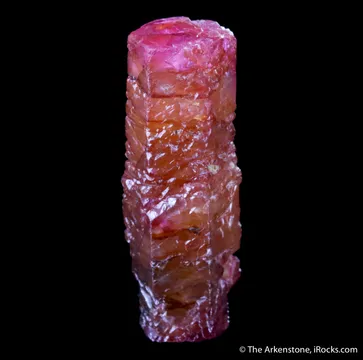
Ruby is the mineral that made Mogok a legend: red corundum in coarse marble, calc-silicate skarn, fracture zones, and alluvial gravels derived from them. Specimen crystals range from small alluvial grains and part-crystals to thumbnail and miniature hexagonal prisms, barrels, tabular crystals, and rare doubly terminated floaters; larger masses and star-ruby material are known from specific zones, with Dattaw, Lin Yaung Chi, Kadoke-tat, Kyauk-saung, Pingu-taung, Bawpadan, Kyauk-poke, and Ohngaing among the names collectors encounter. Associations include calcite, dolomite, scapolite, apatite, phlogopite, diopside, titanite, pyrite, spinel, and mica-rich marble, and the best pieces show the essential Mogok combination: rich red to pinkish-red color, transparency or gemmy windows, sharp natural faces, strong red fluorescence, minimal abrasion from gravel transport, and ideally a white marble or calcite matrix that has survived mining and preparation.
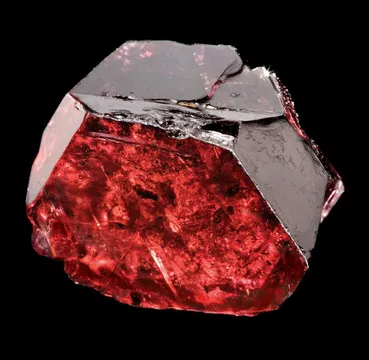
Spinel from Mogok is among the world standards for natural red spinel crystals, especially lustrous octahedra from marble and secondary gem gravels around the Mogok Valley, Man Sin, Pein Pyit, Dattaw, and nearby workings. Crystals are commonly octahedral, from a few millimeters to 1–2 cm for fine display pieces, with larger examples much rarer; colors include deep cherry red, ruby red, pinkish red, purplish red, and the vivid neon red material often discussed in the trade under “Jedi” language, particularly from the Man Sin area. Good Mogok spinel separates itself by transparency, undamaged octahedral form, high luster, saturated red color without excessive darkness, and marble or calcite matrix; because many spinels were mined as loose gem rough, a sharp gem crystal still attached to white matrix is far less common and far more desirable than a tumbled single.
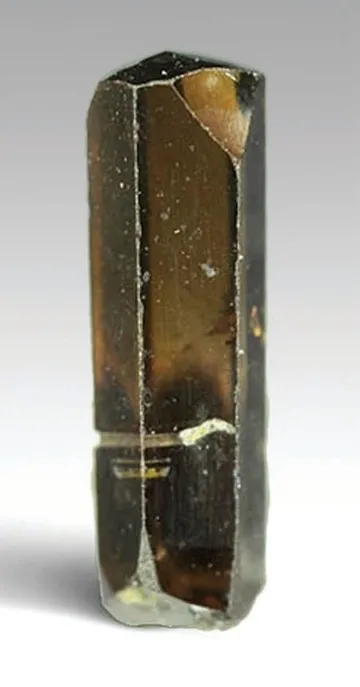
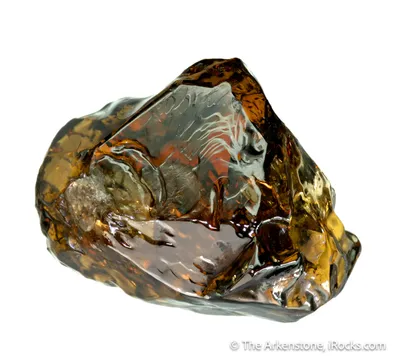
Beyond topaz, ruby, and spinel, Mogok Township has produced one of the most diverse gem-mineral suites on Earth: sapphire, star ruby, star sapphire, peridot, scapolite, moonstone, zircon, apatite, danburite, aquamarine, goshenite, tourmaline, chrysoberyl including alexandrite, garnet, kornerupine, sinhalite, serendibite, hibonite, johachidolite, jeremejevite, poudretteite, sodalite including hackmanite, lapis lazuli-related material, scheelite, titanite, quartz varieties, and cassiterite in pegmatitic contexts. Its type-locality record is especially important: painite was described from Mogok material in 1957; kyawthuite, Bi3+Sb5+O4, was described from a waterworn crystal from the Chaung-gyi valley; and johnkoivulaite, Cs(Be2B)Mg2Si6O18, was described from Pein Pyit gem gravels. For rarity collectors, those names make Mogok much more than a ruby locality.
Mogok material demands disciplined labeling. “Burma,” “Myanmar,” “Mogok,” “Mogok Valley,” “Mogok Stone Tract,” and “Mandalay Division/Region” can all appear on legitimate older labels, but they are not equally precise. A ruby labeled only “Burma” might be Mogok, Mong Hsu, Namya, or another marble-hosted source; a spinel labeled “Burmese” may not be Mogok; and pegmatite minerals from Sakhan-gyi, Pondaw, Pan-taw, Kabaing, or neighboring tracts should not automatically be collapsed into an unspecific “Mogok” label if better information is available. Serious collectors should preserve old labels, invoices, lab reports, and any dealer notes naming Dattaw, Pein Pyit, Man Sin, Ohngaing, Pingu-taung, Kyauk-saung, or other sublocalities.
Ruby authenticity and treatment issues are central. Mogok rubies can be unheated, heated, low-temperature heated, flux-assisted, fracture-filled, lead-glass filled, oiled, or misrepresented by origin. GIA’s experimental work on Burmese ruby showed that inclusions such as calcite, mica, spinel, and zircon can respond visibly to heating between roughly 600 and 1100°C, making inclusion study important in treatment detection. For faceted stones, a major laboratory report is appropriate whenever Mogok origin, unheated status, or “pigeon’s-blood” color materially affects value. For crystals, look for unnatural surface residues, filled cracks, repolished faces, suspiciously perfect “floaters,” dyed matrix, repaired crystals, and mixed lots where lower-value ruby-in-marble has been given a Mogok label without documentation.
Spinel has a different problem set. Natural spinel from Mogok has been historically confused with ruby, and today it is imitated by synthetic spinel or by non-Mogok spinel sold with a premium origin. Gemmy red octahedra are often chipped at corners, abraded by gravel transport, or detached from matrix; a crystal on marble should be checked under magnification for glue, restoration at the contact, or selective acid preparation. Very bright red “Jedi” color language is a trade description, not a mineralogical identification or proof of origin.
Topaz from Mogok’s pegmatites should be inspected for the usual topaz vulnerabilities: basal cleavage, internal fractures, etched terminations, bruised prism edges, and pocket-contact damage. Matrix pieces with quartz are particularly desirable, but topaz may be confused in parcels with quartz, beryl, danburite, and jeremejevite unless crystal form, optical properties, and density are considered. Older Mogok pegmatite pieces are often more valuable when accompanied by labels from established collections because recent supply is uneven and locality names can be used loosely.
Fluorescence is part of the pleasure of Mogok specimens. Many rubies show strong red fluorescence, especially because the marble-hosted stones are typically low in iron compared with basalt-related rubies. Scapolite-bearing matrices may fluoresce yellow, and mixed marble specimens can show several responses under longwave and shortwave ultraviolet light. Use UV cautiously: strong lamps can reveal repairs and fillers, but they also exaggerate color in photographs, so fluorescence photos should supplement, not replace, daylight inspection.
Current market availability is divided between old-collection specimens and new or recently circulating material. Fine ruby crystals on matrix, top red spinel on marble, classic Man Sin-type spinel, and old Mogok topaz on quartz are all genuinely competitive specimen categories. Commoner material includes small ruby-in-marble pieces, abraded spinel singles, mixed gem gravel parcels, and commercial faceting rough. Rarity-species specimens such as painite and johachidolite appear periodically, but their labels and identifications should be treated as analytical matters rather than dealer adjectives.
Legal and ethical considerations are unavoidable. The United States ended the old blanket Burmese ruby and jadeite import ban in 2016, but Myanma Gems Enterprise was designated by OFAC in 2021, and many transactions connected to Myanmar’s state gemstone apparatus can create sanctions and compliance risk. Other jurisdictions and companies apply their own Myanmar sourcing restrictions. For a U.S.-based collector, the safest posture is to favor documented pre-sanction or old-collection specimens, buy from dealers who can explain chain of custody, and avoid newly mined high-value ruby or jade transactions whose proceeds may pass through sanctioned entities or armed actors.
Mogok’s origin story is told not with stratigraphy but with eggs. In a legend reported by G. F. Kunz in 1915, a serpent laid three eggs some two thousand years ago. One produced the King of Bagan, one produced an Emperor of China, and the third produced the rubies of Mogok. It is the kind of story only a place like Mogok could keep alive: geology translated into dynastic myth, crystals imagined not as aluminum oxide in marble but as something hatched.
The most famous Mogok tale is darker. A miner named Nga Mauk is said to have found a great ruby and, rather than surrender the whole stone to the king, broke it in half. One half he gave to the court, receiving a reward; the other he sold to a Chinese merchant. The deception unraveled when a Chinese prince later presented the second half to the Burmese king, who recognized that the two stones fit together. The miner and his family were burned alive. His wife, Daw Nan Kyi, saw the execution from a hill where she had been gathering wood and died of grief, “broken in half like the ruby.” The hill above Kyatpyin still anchors the story in the landscape, making a morality tale out of provenance, taxation, and the terrifying value of a single red crystal.
In the 1870s, during the reign of King Mindon, the Nga Mauk ruby appears again in another story of power. French interests wanted access to the mines. When a representative asked what price might open Mogok to French companies, the king reportedly showed him the Nga Mauk ruby and asked him to estimate its value. The point was not appraisal but sovereignty: if the visitor could not price the stone, how could he price the mines?
Modern fieldwork has supplied its own Mogok folklore. When GIA field gemologists returned after years in which foreign access had been nearly impossible, the journey carried the thrill of a closed book reopening. Andrew Lucas and Vincent Pardieu reached Mogok at the end of December 2013, after government restrictions had loosened enough for a rare visit. They found not a museum locality but a living gem town: markets, temples, cutters, miners, old mine names, and the constant movement of parcels. The main road from Mandalay that once made the trip slow and uncertain had become a paved six-hour route, yet the place still retained the feeling of a guarded valley.
One GIA expedition moment has become especially memorable among gemologists: the descent into a deep underground ruby mine in the Kadoke Tad area. Pardieu, Aaron Palke, and the field team went down by handmade ladders and by ropes and pulleys into hard-rock workings, at one point about 1,200 feet, or 365 meters, below the surface. This was not the romantic surface image of gem gravels in a basket. It was Mogok as a vertical world: marble, darkness, ropes, timber, miners, and red corundum still locked in the earth.
The rare-mineral stories are quieter but just as remarkable. In November 2000, an Italian dealer buying gems in Mogok was shown a 3 ct faceted stone that a local gem merchant and gemologist could not identify. The stone went to the Gübelin Gem Lab and proved to be gem-quality poudretteite, a species previously known only from tiny crystals at Mont Saint-Hilaire in Quebec. A stone bought in a gem market in Mogok had expanded the known gemological character of an already rare mineral.
Kyawthuite is the most improbable of all. The original crystal was waterworn, roughly rectangular, and weighed 3.66 carats before cutting. It came from alluvium at Chaung-gyi-ah-le-ywa in the Chaung-gyi valley, about 5 km north-northeast of Mogok. After faceting, the 1.61 ct rectangular cushion could not be matched to any known gem by Kyaw Thu or by the GIA Bangkok laboratory; X-ray diffraction finally pointed to BiSbO4, previously known as a synthetic compound. A single alluvial pebble from Mogok had become the holotype of a new mineral.
In 2026, Mogok again produced a headline-sized ruby. State media reported an approximately 11,000 ct, 2.2 kg rough ruby from the Mogok region, discovered in mid-April and later examined in Naypyitaw. Reports compared it with earlier major Myanmar finds, including a 496.25 ct SLORC ruby from 1990, a 21,450 ct ruby from 1996, and a 2,789.25 ct NaSaKa ruby from 2022. Whether such a mass ever becomes a specimen, a state object, a cut stone, or a symbol, the message to collectors is familiar: Mogok is old, heavily worked, politically fraught, and still capable of astonishing the world.
Claringbull, G. F., Hey, M. H., and Payne, C. J. (1957). “Painite, a new mineral from Mogok, Burma.” Mineralogical Magazine, 31(236), 420–425. Describes painite from Mogok material and establishes one of the locality’s most famous rare species. https://rruff.geo.arizona.edu/doclib/MinMag/Volume_31/31-236-420.pdf
Keller, P. C. (1983). “The Rubies of Burma: A Review of the Mogok Stone Tract.” Gems & Gemology, Winter 1983. A classic overview of Mogok ruby history, geology, mining, gemology, and famous stones. https://www.gia.edu/gems-gemology/winter-1983-ruby-mogok-keller
Kane, R. E., and Kammerling, R. C. (1992). “Status of Ruby and Sapphire Mining in the Mogok Stone Tract.” Gems & Gemology, 28(3). Documents the early-1990s resurgence of mining, including mechanized government mines and joint-venture operations. https://www.gia.edu/gems-gemology/fall-1992-mogok-tract-ruby-sapphire-kane
Smith, C. P., Bosshart, G., Graeser, S., Hänni, H., Günther, D., Hametner, K., and Gübelin, E. J. (2003). “Poudretteite: A Rare Gem Species from the Mogok Valley.” Gems & Gemology, 39(1), 24–31. Describes a gem-quality poudretteite purchased in Mogok in 2000. https://www.gia.edu/doc/Poudretteite-A-Rare-Gem-Species-from-the-Mogok-Valley.pdf
Harlow, G. E., and Bender, W. (2005). “Mineral assemblages and the origin of ruby and sapphire in the Mogok Stone Tract, Myanmar.” GIA research abstract. Useful for Mogok ruby and sapphire assemblages, including Datta/Dattaw-type marble associations. https://research.amnh.org/users/gharlow/GIA_Mogok_Abs_PP.pdf
Kyi, U. H., and Thu, U. K. (2006). “A new deposit of jeremejevite from the Mogok stone tract, Myanmar.” Australian Gemmologist, 22(9), 402–405. Reports colorless and pale yellow prismatic crystals from Mogok identified as jeremejevite after being purchased as quartz and beryl. https://gem-a.com/images/Documents/JoG/Archive/JoG2006_30_1-2.pdf
Sutherland, F. L., Zaw, K., Meffre, S., Yui, T.-F., Thu, K., and others (2015). “Advances in Trace Element ‘Fingerprinting’ of Gem Corundum, Ruby and Sapphire, Mogok Area, Myanmar.” Minerals, 5, 61–79. Gives detailed sublocality descriptions for ruby-bearing marble bands and associated minerals. https://www.911metallurgist.com/wp-content/uploads/2016/01/Advances-in-Trace-Element-Fingerprinting-of-Gem-Corundum-Ruby-and-Sapphire-Mogok-Area-Myanmar.pdf
Kampf, A. R., Rossman, G. R., Ma, C., et al. (2017). “Kyawthuite, Bi3+Sb5+O4, a new gem mineral from Mogok, Burma (Myanmar).” Mineralogical Magazine, 81(3), 477–484. Describes kyawthuite from a waterworn alluvial crystal in the Chaung-gyi valley; the holotype is a 1.61 ct faceted gem in the Natural History Museum of Los Angeles County, catalogue no. 65602. https://sgiinstitute.com/wp-content/uploads/2019/10/Kyawthuite-Bi3Sb5O4-a-new-gem-mineral-from-Mogok-1.pdf
Searle, M. P., et al. (2020). “Timing of Syenite-Charnockite Magmatism and Ruby and Sapphire Metamorphism in the Mogok Valley Region, Myanmar.” Tectonics, 39. Important modern geologic synthesis tying ruby-sapphire mineralization to Mogok marbles, skarns, syenite-charnockite intrusions, and dated tectonometamorphic events. https://agupubs.onlinelibrary.wiley.com/doi/10.1029/2019TC005998
Palke, A. C., Henling, L. M., Ma, C., Rossman, G. R., Sun, Z., Renfro, N., Kampf, A. R., Thu, K., Myo, N., Wongrawang, P., and Weeramonkhonlert, V. (2021). “Johnkoivulaite, Cs(Be2B)Mg2Si6O18, a new mineral of the beryl group from the gem deposits of Mogok, Myanmar.” American Mineralogist, 106(11), 1844–1851. Describes johnkoivulaite from the Pein Pyit area of Mogok. https://kyushu-u.elsevierpure.com/en/publications/johnkoivulaite-csbesub2subbmgsub2subsisub6subosub18sub-a-new-mine/
The Mineralogical Record (2022). “Mogok!” Vol. 53, No. 1, January–February 2022. A collector-focused issue on the history, mines, and minerals of the Mogok Stone Tract, including ruby, spinel, topaz, aquamarine, peridot, painite, kyawthuite, hibonite, johachidolite, and poudretteite. https://mineralogicalrecord.com/wp-content/uploads/2022/01/3DFlipbookvol53n1janfebmogok-20220906-181351.pdf
Global New Light of Myanmar (8 May 2026). “Antique Giant Ruby Unearthed in Mogok Gem Tract.” State-media report on the approximately 11,000 ct Mogok ruby and comparisons with earlier large Myanmar rubies. https://cdn.digitalagencybangkok.com/file/client-cdn/gnlm/wp-content/uploads/2026/05/8_May_26_gnlm.pdf
“GIA Field Gemologists seek Ruby, Sapphire, and Spinel in Mogok, Myanmar” — GIA. Field report and video from GIA’s 2014 expedition, including underground ruby mining in the Kadoke Tad area and commentary by Vincent Pardieu and Aaron Palke. https://www.gia.edu/gia-news-research/ruby-sapphire-spinel-mogok-myanmar-field-expedition
“Mogok Expedition Series, Part 1: The Valley of Rubies” — Andrew Lucas and Vincent Pardieu, GIA. Illustrated field account introducing Mogok’s roads, markets, people, mines, and history. https://www.gia.edu/gia-news-research-expedition-to-the-valley-of-rubies-part-1
“Hunting for ‘Jedi’ Spinels in Mogok” — Vincent Pardieu, Gems & Gemology. Field article on vivid red spinels, including the Man Sin spinel mining area and its position among other famous Mogok gem sites. https://origin.prod.gia.edu/gems-gemology/spring-2014-pardieu-jedi-spinels-in-mogok
Mindat — Mogok Township, Pyin-Oo-Lwin District, Mandalay Region, Myanmar — The central locality index for Mogok Township, with species lists, sublocalities, photos, and references.
Gemdat — Mogok Township — Gem-focused species and variety list for the township, useful for quick checks on gem names and varieties.
GIA — The Rubies of Burma: A Review of the Mogok Stone Tract — Classic historical and geological review of Mogok ruby mining.
GIA — Status of Ruby and Sapphire Mining in the Mogok Stone Tract — Important snapshot of mining conditions and operators in the early 1990s.
GIA — Mogok Expedition Series, Part 1: The Valley of Rubies — Readable field account with vivid locality history and mining context.
GIA — Field Gemologists seek Ruby, Sapphire, and Spinel in Mogok — Video and report on GIA’s underground fieldwork in the Mogok mines.
AMNH — Ruby Land: The Gems and Geology of Myanmar’s Mogok Stone Tract — Museum-level introduction to Mogok geology and gem formation.
AMNH — Rubies — Useful discussion of Mogok ruby inclusions, fluorescence, and marble-hosted origin.
Searle et al. — Timing of Syenite-Charnockite Magmatism and Ruby and Sapphire Metamorphism in the Mogok Valley Region — Modern geologic paper on the intrusive and metamorphic setting of Mogok ruby-sapphire deposits.
Sutherland et al. — Advances in Trace Element “Fingerprinting” of Gem Corundum, Ruby and Sapphire, Mogok Area, Myanmar — Detailed mine-zone descriptions and trace-element work on Mogok corundum.
GIA — A Canary in the Ruby Mine: Low-Temperature Heat Treatment Experiments on Burmese Ruby — Essential treatment-detection reading for Burmese ruby collectors.
Mineralogical Magazine — Kyawthuite, Bi3+Sb5+O4, a new gem mineral from Mogok — Primary description of kyawthuite, one of Mogok’s most extraordinary mineralogical records.
American Mineralogist / Kyushu University portal — Johnkoivulaite from Mogok — Publication page for the new beryl-group mineral from Pein Pyit.
RRUFF — Painite, a new mineral from Mogok, Burma — Primary 1957 painite description.
Wikimedia Commons — Corundum-52754.jpg — Freely licensed image page for a classic Mogok ruby crystal.
Wikimedia Commons — Quartz-Topaz-gem7-76c.jpg — Freely licensed image page for topaz on quartz from Pondaw, Mogok.
Wikimedia Commons — Spinelle sur marbre — Freely licensed image page for spinel on marble from Mogok.
U.S. Treasury — Sanctions on Myanma Gems Enterprise — Current compliance context for transactions connected to Myanmar’s state gemstone sector.
AP News — 11,000-carat ruby unearthed near Mogok — News report on the 2026 giant ruby discovery and conflict context around Mogok.


.jpg)