






Minnesota, USA Locality guide to iron-range minerals (groutite, goethite, hematite) in dark specimens, with historic mining heritage and collector appeal.
Key facts
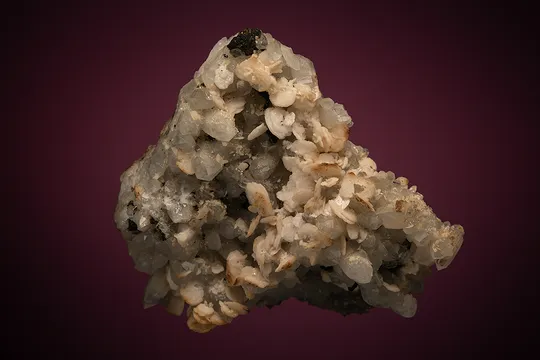
Minnesota is a state-scale locality, but for mineral collectors its personality is remarkably focused: iron, manganese, silica, and the deep weathering of Precambrian rocks. The classic specimens come from the iron ranges of northern and east-central Minnesota, especially the Cuyuna North Range in Crow Wing County, where tightly folded Paleoproterozoic iron-formation was oxidized, fractured, brecciated, and locally enriched in manganese. Those fractures and vugs produced the state’s most distinctive collector minerals: jet-black groutite, botryoidal and stalactitic goethite, compact and crystalline hematite, quartz in cherty veins and coatings, and the lapidary oddity binghamite, a chatoyant quartz-rich rock intergrown with fibrous hematite and/or goethite.
The Cuyuna material is not showy in the way of alpine quartz or Tsumeb carbonates. Its appeal is denser, darker, and more geological. The best groutites are lustrous black crystals in cavities of pale quartz and massive manganese oxides; the best goethites are rolling, iridescent, black-to-bronze botryoids from old mine pockets; the best hematites range from massive banded iron ore to tiny translucent red crystals on quartz-rich matrix. In a cabinet, Minnesota’s iron-range specimens carry the same visual signature as the deposits themselves: red-brown ironstone, white or gray silica, black manganese oxides, and the occasional mirror flash from a small, sharp crystal face.
Regional View
Country View
Minnesota also matters historically. The Vermilion Range supplied the state’s first shipped iron ore in the 1880s; the Mesabi Range became one of the great iron provinces of North America; and the Cuyuna Range, the last of Minnesota’s classic iron ranges to be developed, added a manganese-rich chapter that is unusually important to mineral collectors. Groutite was described from the Cuyuna mines, and minnesotaite, the iron-rich talc analogue so characteristic of iron-formation mineralogy, was named for the state. Beyond the iron ranges, the North Shore of Lake Superior contributes agates, amygdule minerals, zeolites, and lizardite-bearing material; the Duluth Complex contributes sulfides, PGE minerals, and the type occurrence of hibbingite.

Photo: Wikimedia Commons

Photo: Wikimedia Commons
Search for specimens: View all specimens from Minnesota, USA
Collector-grade Minnesota specimens are strongly tied to the state’s iron-formation geology. The Cuyuna North Range, near Crosby, Ironton, Trommald, Riverton, and Cuyuna, is the key district for the groutite-goethite-hematite-quartz assemblage represented in many collections. The ore-bearing rocks are part of a tightly folded, slightly metamorphosed Precambrian sequence of argillite, slate, phyllite, iron-formation, and lesser clastic and volcanic rocks. The principal ore unit is the Trommald Formation, underlain in places by the Mahnomen Formation and overlain by younger units of the North Range Group. Pleistocene glacial drift covers much of the bedrock, so many of the exposures that collectors and geologists know were made by mining.
The Cuyuna ores are Lake Superior-type iron-formation, but they differ from the more famous Mesabi deposits in being notably manganese-rich. In the thick-bedded facies of the Trommald Formation, chert and iron oxides form beds from inches to feet thick, with hematite, goethite, and quartz dominant and lesser carbonate, magnetite, chlorite, stilpnomelane, and iron silicates. In thinner-bedded or less oxidized zones, the assemblage can include siderite, magnetite, minnesotaite, stilpnomelane, nontronite, and quartz. Oxidation was essential to the collector minerals: earlier veins were altered to quartz-goethite and quartz-hematite, while later fracture, vug, and breccia fillings introduced or concentrated quartz, calcite, siderite, rhodochrosite, hematite, goethite, manganite, pyrolusite, groutite, and cryptomelane.
The most important specimen setting is not the bulk ore itself but the cavities and fractures in and near the oxidized iron-formation. Groutite occurs in late-stage vugs in banded iron-formation at the Mahnomen and Sagamore Mangan No. 2 pits, its co-type localities, and in additional Cuyuna mines such as the Robert Mine and Section 6 mine. Manganese oxides and hydroxides locally filled fractures several inches wide, especially near the base of the Trommald Formation and in openings in quartzite near the top of the Mahnomen Formation. These were the pockets that yielded recognizable mineral specimens rather than simply ore.
Mining history is inseparable from collecting history. Magnetic deflections were noticed by nineteenth-century surveyors, and Cuyler Adams later traced the buried range with dip-needle surveys. Drilling proved iron in 1903 and ore-quality material in 1904. The Kennedy mine was the first Cuyuna shaft to reach bedrock, and the first ore shipment left the range in 1911. During the boom years around World War I, demand for manganiferous iron ore pushed activity to a peak, with dozens of mines operating across the district. Major companies and operators associated with Cuyuna exploration and mining included Adams Brothers, Cleveland-Cliffs, M. A. Hanna, Inland Steel, Oliver Iron Mining Division of U.S. Steel, Pickands Mather, Snyder Mining, and others.
Mining methods evolved with time. The earliest work included underground operations, but by the late 1920s and 1930s open-pit mining became increasingly important and eventually dominant. The Pennington and Rowe pits were among the early open-pit operations; later, pits and dumps merged into a rugged mining landscape of flooded excavations, stockpiles, benches, and ironstone rubble. Cuyuna production continued into the late twentieth century, with the last ore shipped from the Zeno mine in 1984. The Mesabi Range, by contrast, remains Minnesota’s active iron-mining center, now focused on taconite.
For collectors today, access is the limiting factor. Many of the old Cuyuna mines are flooded, reclaimed, privately owned, or incorporated into Cuyuna Country State Recreation Area. Minnesota DNR rules prohibit rock collecting in state parks and state recreation areas, and the same practical caution applies to old mine lands: never assume that an abandoned pit, dump, or stockpile is open. The Mahnomen pit area, for example, is now part of the recreation landscape, and collecting is not permitted there. Modern Minnesota specimens on the market are therefore mostly older mine-era or post-mining collections, club-trip material, museum deaccessions only in rare cases, and pieces that circulated from local collectors before access tightened.
Several mines have special specimen reputations. The Mahnomen and Sagamore Mangan No. 2 pits are essential because of groutite’s type occurrence. The Robert Mine produced especially desirable groutite, including sharp, lustrous black crystals in quartz-rich vugs from a noted 1980s find. Section 6 is known for attractive botryoidal goethite and manganese-iron oxide material. Rabbit Lake has yielded sizable goethite specimens from the Cuyuna assemblage. Portsmouth is represented by quartz-coated goethite stalactites and by the broader quartz-hematite-goethite vein system that also gave the district its binghamite. Manuel and related Cuyuna mines are documented for hematite, including small crystals on massive hematite and quartz matrix.
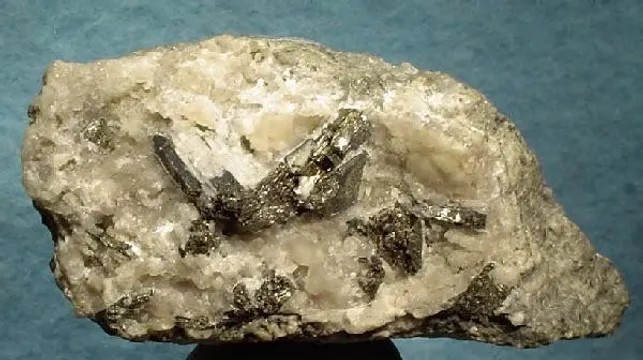
Minnesota groutite is the state’s signature rare species: black to iridescent Mn3+O(OH), first recognized from Cuyuna Range material that had been mistaken for manganite until X-ray work showed it was different. At the Mahnomen and Sagamore Mangan No. 2 type localities it occurs as late-stage mineralization in vugs in banded iron-formation with goethite, hematite, manganite, and quartz; Robert Mine specimens add the collector ideal of super-lustrous, jet-black, sharp crystals lining quartz- and manganese-oxide cavities, with individual crystals commonly in the millimeter range but good cabinet-quality vug plates much scarcer. The best Minnesota pieces show bright luster, distinct crystal form rather than dull black crust, open vug display, and clean contrast against pale quartz or ironstone matrix; ordinary pieces are usually massive, indistinct, or visually lost in mixed manganese oxides.
Minnesota quartz in the iron-range suite is chiefly a vein, chert, chalcedony, and coating mineral rather than a source of large transparent crystals. In the Cuyuna North Range it occurs through the Trommald iron-formation as chert layers, quartz veins, quartz-goethite and quartz-hematite vein material, and late coatings over iron oxides; Portsmouth specimens of quartz coating goethite stalactites show the most distinctly collectible habit, while binghamite represents the lapidary end member, a chatoyant quartz-rich rock intergrown with fibrous hematite and/or goethite. Good Cuyuna quartz specimens are valued less for crystal size than for texture and association: sparkling druse on black goethite, white quartz caps over manganese-rich cavities, red hematitic chalcedony, or polished binghamite with a strong moving eye.
Minnesota goethite is one of the principal ore minerals of the oxidized Cuyuna iron-formation and one of the more available display minerals from the state. In collector pieces it appears as black to brown botryoidal crusts, mammillary surfaces, stalactitic forms, and ironstone masses, often with quartz, hematite, or manganese oxides; Section 6 has produced iridescent botryoidal material, Rabbit Lake is represented by sizable goethite specimens, and Portsmouth has yielded quartz-coated goethite stalactites. The most desirable pieces have glossy botryoidal surfaces, bronze-blue-purple iridescence, intact stalactitic form, or sharp contrast with white quartz; common pieces are massive “limonite”-style ironstone with little surface definition, and old labels may require careful streak and association checks to separate goethite from hematite-rich material.
Minnesota hematite is both the backbone of the state’s iron-mining history and a legitimate specimen mineral when it escapes the category of mere ore. In the Cuyuna Range it occurs with goethite and quartz in oxidized iron-formation, quartz-hematite veins, massive banded ore, specularite veinlets, and small crystal groups; Manuel Mine material includes very small translucent hematite crystals on massive hematite and quartz, while the broader Cuyuna and Mesabi districts supplied immense quantities of hematitic iron ore. Good specimens show clean botryoidal kidney-ore form, bright metallic or submetallic luster, crystalline sparkle, red translucency in tiny crystals, or attractive red-and-white banding with quartz; ordinary examples are heavy massive ore fragments whose interest is mainly historic unless the texture, polish, or association is exceptional.
Minnesota’s wider mineral list extends well beyond these four species. Minnesotaite, Fe2+3Si4O10(OH)2, is a type-locality iron silicate from the Cuyuna and Mesabi iron ranges and is central to the mineralogy of relatively unoxidized iron-formation, though it rarely makes aesthetic specimens. Hibbingite, Fe2+2(OH)3Cl, was described from partially serpentinized troctolitic rocks of the Duluth Complex and is chiefly a scientific micro- to core-sample mineral. Lizardite has a co-type occurrence on the North Shore of Lake Superior, reported from a beach pebble of Keweenawan rhyolite, including tiny platy crystals. Cuyuna rarities and associates include manganite, pyrolusite, cryptomelane, rhodochrosite, siderite, nontronite, stilpnomelane, magnetite, acmite/aegirine, tourmaline-rich rocks, and the much-loved lapidary material binghamite. Elsewhere in the state, the Duluth Complex adds copper-nickel-PGE sulfide mineralogy including pentlandite, chalcopyrite, pyrrhotite, cubanite-group minerals, tellurides, and PGE species, while the Lake Superior shoreline is famed among field collectors for agates and amygdaloidal basalt minerals.
Minnesota iron-range specimens are most often misrepresented through overconfident labeling rather than deliberate fakery. The classic caution is groutite versus manganite: the original Cuyuna material was initially thought to be manganite because both are black manganese oxyhydroxides, and unlabeled or poorly labeled black manganese crusts from the range can still be visually treacherous. A sharp, lustrous vug specimen with old Cuyuna provenance is far more convincing than a dull massive black oxide fragment sold simply as “groutite.” For important purchases, especially type-locality groutite, a documented old label, dealer history, collection provenance, or analytical confirmation is worth a premium.
Goethite, hematite, and “limonite” labels also need scrutiny. Cuyuna ironstone commonly contains mixtures, and older labels may use limonite as a field term for brown iron oxides rather than a species. A red-brown streak supports hematite; yellow-brown to brown streak and hydrated botryoidal habit support goethite, though mixtures are common. Botryoidal hematite and goethite can be confused, particularly where surfaces are dark, weathered, or coated with later silica.
Condition issues are typical for iron-oxide specimens but important. Botryoidal goethite bruises and chips along high points, losing the iridescent skin that gives the piece value. Quartz-coated goethite stalactites can be fragile where the silica crust bridges hollow or porous iron oxide beneath. Groutite crystals are small, brittle, and easily dulled by abrasion; the best pieces should be handled by the matrix and stored so that black crystal faces do not rub against cotton, foam, or a box lid. Hematite ore pieces are physically tough but can shed red dust or stain labels and trays.
Binghamite is a special case. It is often marketed loosely as a quartz variety, jasper, chalcedony, silkstone, cuyunite, or “American tiger eye.” The collectible value depends on strong chatoyance after cutting, not on species purity. Rough pieces with no flash are commoner than attractive polished stones; bright red, gold, and gray material with a moving eye is much more desirable. Because binghamite is a rock composed of quartz/chalcedony with iron-oxide fibers or plates, species labels should be descriptive rather than pretending it is a single mineral species.
Rarity varies sharply by species. Massive hematite and goethite from Minnesota are not rare, but fine, well-provenanced Cuyuna display specimens are much less common than the tonnage of ore might suggest. Type-locality groutite is genuinely scarce on the market, and good Robert Mine or Mahnomen pieces with lustrous open vugs are sought by systematic collectors and iron-range specialists. Minnesotaite and hibbingite are scientifically important but seldom appear as conventional aesthetic specimens. Modern field collecting from the famous Cuyuna mine sites is generally not a realistic supply source: many sites are flooded, reclaimed, private, unsafe, or within public recreation lands where collecting is prohibited.
The name “Cuyuna” sounds ancient, but the best-known origin story is wonderfully personal. Cuyler Adams, the prospector associated with tracing the buried range, worked a landscape where glacial drift hid the ore from sight. The story has the name formed from “Cuy,” taken from Cuyler, and “Una,” the name of his dog. Whether repeated in mining histories, local interpretation, or roadside lore, it is exactly the kind of naming tale collectors remember: a major iron district christened not only for the man with the dip needle, but for the dog that followed him through the brush.
The Cuyuna discovery was a triumph of instruments over outcrop. Surveyors had noticed compass deflections as early as 1859, but the ore bodies were buried under drift, in places tens to hundreds of feet thick. Adams’ dip-needle work in 1895 helped outline magnetic attraction where no red cliffs or obvious ironstone ridges told the story at the surface. Drilling finally found iron in 1903, ore-quality material in 1904, and the Kennedy mine shaft reached bedrock in 1908. When the first stockpiled ore moved by rail from the Kennedy mine in 1911, the last-developed of Minnesota’s famous iron ranges had become an industrial fact.
Cuyuna’s most tragic story is the Milford Mine disaster of February 5, 1924. The Milford was an underground iron mine north of Crosby, owned by George H. Crosby, and by 1924 it had reached roughly 200 feet depth. That year the mine shipped about 70,000 tons of manganiferous iron ore, the kind of ore that made Cuyuna important to steelmakers. Then a surface cave-in at the eastern end of the workings connected the mine to mud and water associated with Foley Lake. In less than twenty minutes the mine flooded to within fifteen to twenty feet of the surface. Forty-one miners were killed; only seven escaped. One remembered command from the disaster has become part of the local story: “Save your breath and start climbing!”
The mining landscape later found a second life that would have astonished many of the men who worked the ore. The Portsmouth pit, once a place of benches, machinery, and iron ore, became the launch site for Project Manhigh II on August 19, 1957. A 280-foot plastic balloon was prepared in the shelter of the deep mine pit so it would be protected from wind. It carried Air Force Major David G. Simons in a sealed gondola to the stratosphere, about nineteen miles above Earth, as part of high-altitude biomedical research before human spaceflight. Few mineral districts can claim such a strange arc: Precambrian iron-formation, manganese oxides in vugs, open-pit mining, and then a balloon ascent toward the edge of space.

.jpg)