Mineral Point Mine, USA: Upper Mississippi Valley locality famed for galena, sphalerite, smithsonite, and calcite pseudomorphs; rich history for collectors.
Key facts
Mineral Point Mine belongs to one of the great old American base-metal provinces: the Upper Mississippi Valley Zinc-Lead District of southwestern Wisconsin, northwestern Illinois, and adjoining Iowa. For collectors, its importance is not simply that lead and zinc were mined here early; it is that the Mineral Point area preserves the whole sequence of a classic Mississippi Valley-type system in hand specimens. Galena and sphalerite formed in fractures, bedding-plane openings, “pitches,” and “flats” in Ordovician carbonate rocks, then oxidation above the water table converted zinc sulfides into smithsonite, limonite-rich “dry bone” ore, and locally striking pseudomorphs after earlier calcite. The best specimens have an unmistakable Upper Midwest character: pale, lustrous calcite perched on dark sphalerite; tan to ocher smithsonite casts of dogtooth calcite; brassy marcasite with cubic galena; and uncommon copper-mineral pieces with azurite, malachite, chalcocite, and chalcopyrite in cherty boxwork.
Regional View
Country View
The locality is also historically charged ground. Mineral Point was one of the centers of the 1820s lead rush that helped launch permanent Euro-American settlement in southwestern Wisconsin, and the name “badger” is tied to miners who lived in crude hillside diggings and shelters while following shallow galena leads. Cornish miners soon brought deeper hard-rock methods, stone-building traditions, and a mining culture that still gives Mineral Point its distinctive architectural atmosphere. By the late nineteenth and early twentieth centuries, zinc had become the stronger industrial story, and old lead diggings were revisited for sphalerite and oxidized zinc ores.
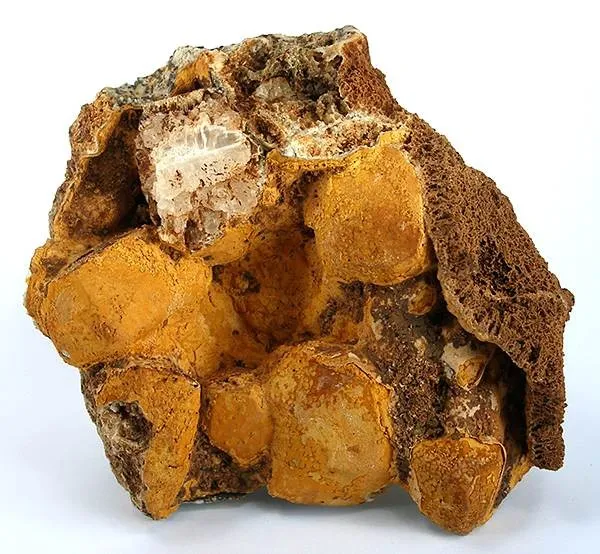
Photo: EarthWonders specimen record
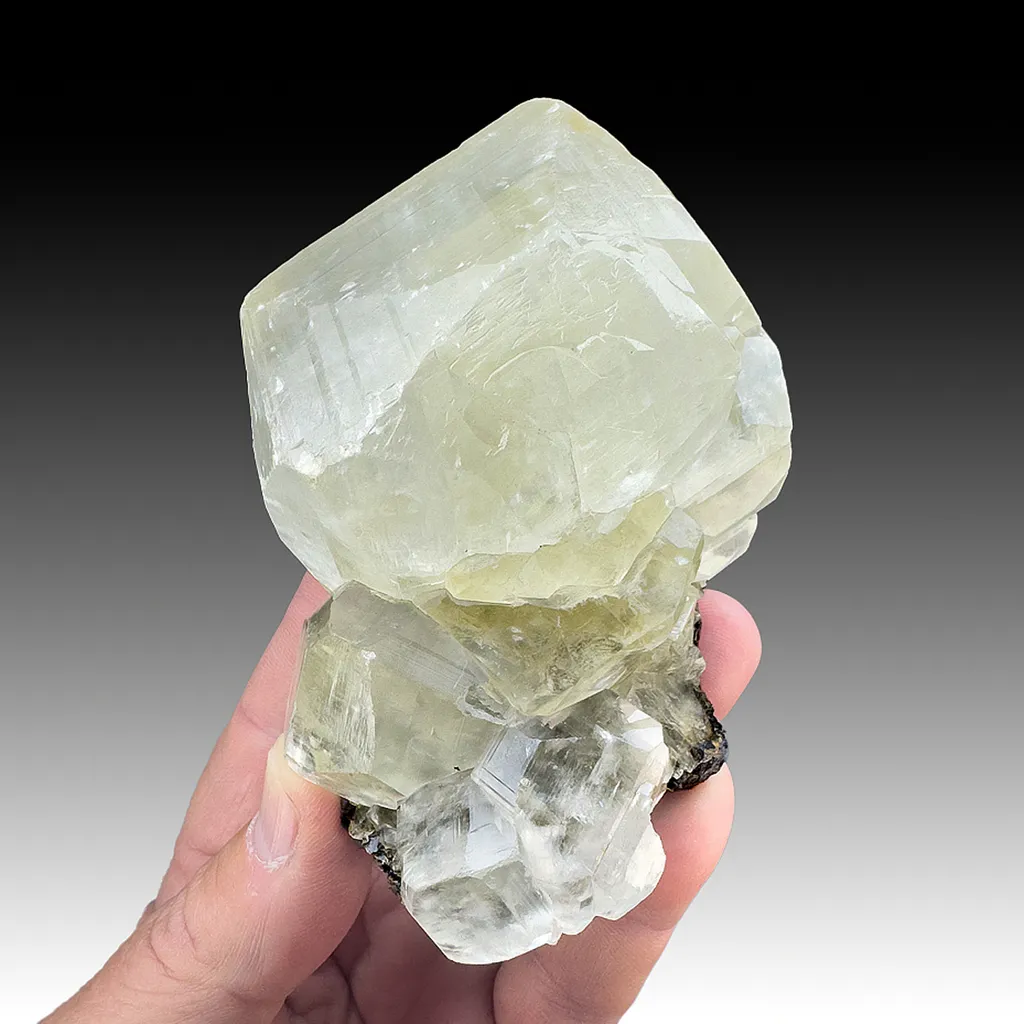
Photo: EarthWonders specimen record
Search for specimens: View all specimens from Mineral Point Mine, USA
Mineral Point Mine is best understood within the Mineral Point area of the Upper Mississippi Valley Zinc-Lead District, a classic Mississippi Valley-type lead-zinc province hosted by Ordovician carbonate strata. In the Dodgeville and Mineral Point quadrangles, ore is tied to the Platteville Formation, Decorah Formation, and Galena Dolomite, with mineralization controlled by joints, small folds, solution openings, and the distinctive “pitch-and-flat” structures that made the district famous among economic geologists. The “pitches” are steeply inclined veins, commonly dipping roughly 45–60 degrees, while “flats” follow bedding-plane openings. Zinc production in the Mineral Point and Dodgeville areas came chiefly from these pitch-and-flat deposits, and the Mineral Point area is especially noted for well-developed pitches.
The ore suite reflects several stages of mineralization and weathering. Primary sulfides include galena, sphalerite, pyrite, marcasite, and locally chalcopyrite and other copper sulfides. Gangue and cavity minerals include calcite, dolomite, quartz, and barite. Above the water table, oxidation produced limonite-rich residuum, cerussite after galena, and smithsonite after sphalerite and, in collector terms most memorably, smithsonite pseudomorphs and casts after calcite. The Mineral Point area also includes small copper deposits east and southeast of town, where azurite, malachite, chalcocite, chalcopyrite, covellite, djurleite, and tenorite have been recorded from related carbonate-hosted mineralization.
Mining began as shallow lead digging. Mineral Point was settled in 1827 during the early rush for galena, and by 1829 it had become the seat of newly formed Iowa County. The lead boom drew miners from older American mining regions and then from Cornwall, where hard-rock mining skills were already deeply established. As easily accessible galena declined, zinc became increasingly important: sphalerite from deeper workings and smithsonite-rich oxidized ores both entered the industrial stream, and by 1891 the Mineral Point Zinc Company was reported as the largest zinc oxide works in the United States. Nearby operations such as the Merry Christmas Mine, opened in 1906 and closed in 1912, show the later zinc-mining phase that overprinted the older landscape of lead pits and ranges.
The exact “Mineral Point Mine” label in the specimen trade should be treated with care. Some old labels use Mineral Point Mine, some use Mineral Point, and some use Mineral Point area; many nineteenth-century and early twentieth-century pieces circulated long before modern locality hierarchies separated individual shafts, ranges, copper prospects, and nearby diggings. The mapped Mineral Point Mine locality lies near Mineral Point, Iowa County, Wisconsin, in a dense cluster of abandoned lead-zinc diggings, and the broader Mineral Point area contains scores of named mines and prospects. Today the mines are long abandoned, many traces are obscured by time, development, vegetation, or reclamation, and collecting access should not be assumed. Public appreciation of the mining landscape is better represented by historic sites and walking areas such as Pendarvis and the preserved Merry Christmas Mine Hill setting rather than by open underground access.
The most desirable specimen finds appear to have come from old pockets and oxidized zones preserved in private and institutional collections rather than from modern collecting. EarthWonders records document calcite collected in the 1940s and by “Ray” in October 1956, as well as smithsonite-calcite pseudomorphs tied to older collections, including Carnegie Museum, William W. Jefferis, Charlie Key, DuFoe, and George Feist provenance lines. A Jefferis label dated 1878 on a cabinet-size smithsonite-after-calcite specimen is especially important because it anchors the material in the nineteenth-century collecting era, when fresh oxidized zinc pockets and old lead workings were still much closer to active mining life.
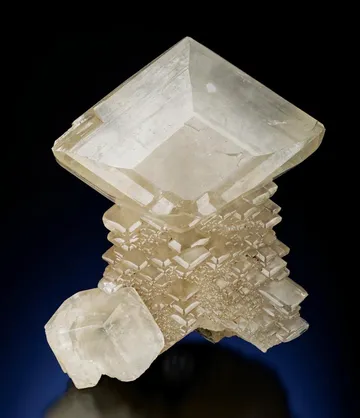
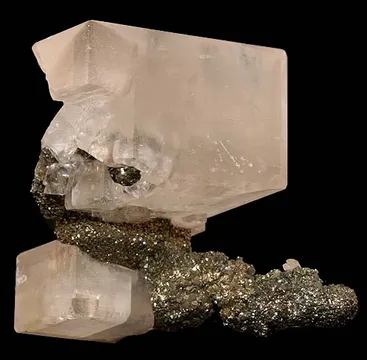
Calcite from Mineral Point Mine is the classic display mineral of the locality, generally colorless to faintly straw or smoky, translucent, lustrous, and best when it shows the Upper Mississippi Valley habit of steep scalenohedral “dogtooth” forms modified or capped by stacked rhombohedrons, sometimes with an almost scepter-like profile. Documented EarthWonders examples include calcite crystals to 1.8 cm on crystallized sphalerite, a small-cabinet scalenohedral crystal covered by stacked rhombohedrons, and a cabinet specimen with translucent colorless crystals to 8.0 cm on sphalerite matrix, reportedly collected in the 1940s. Good pieces stand apart by being complete all around, firmly matrixed on dark sphalerite or sulfide-rich dolomite, and unusually free of the edge bruising and cleavage nicks that are common on these old soft-carbonate specimens; ordinary examples tend to be loose, chipped, dull, or detached from their original ore matrix.
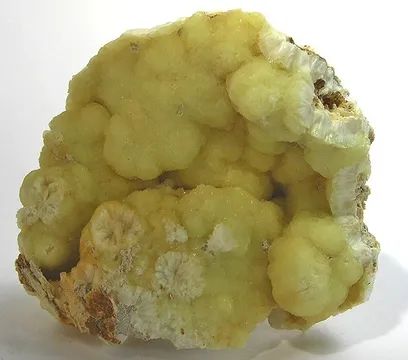
Smithsonite is the prestige rarity from Mineral Point Mine, especially as tan, ocher, yellowish, or medium-brown pseudomorphs and casts after earlier calcite crystals on limonite-rich matrix. The best documented pieces are old cabinet and small-cabinet specimens in which smithsonite preserves hollow or solid dogtooth calcite forms: complete crystals around 2.25 cm, casts to 2.4 cm, pseudomorphed calcite crystals to 3.75 cm, and one large-cabinet specimen with sharp molds after calcite to about 4 cm on a 17.0 cm matrix. Several are described with yellowish-tan coloration from greenockite, the cadmium sulfide mineral, coating the pseudomorphs. The highest-grade specimens are not merely “dry bone” smithsonite; they retain recognizable calcite geometry, multiple complete casts, stable limonite matrix, old provenance, and enough luster or surface definition to read as crystals rather than amorphous oxidized ore.
Other minerals documented from Mineral Point Mine and the immediately associated Mineral Point area include galena, sphalerite, marcasite, pyrite, dolomite, quartz, barite, cerussite, goethite or limonite, fluorite, and the uncommon copper suite of azurite, malachite, chalcocite, chalcopyrite, covellite, djurleite, and tenorite. EarthWonders records add notable collector examples: brassy botryoidal marcasite with euhedral galena, a cabinet grouping of dull cubic galena collected in 1956, azurite and malachite with gray chalcocite and brassy chalcopyrite in cherty boxwork, and old Carnegie/Jefferis-associated specimens described as hemimorphite replacing calcite or coating sphalerite. No type-locality mineral was verified for Mineral Point Mine itself; its importance rests instead on classic regional paragenesis, old American provenance, and unusually sculptural oxidation-zone replacements.
Mineral Point Mine specimens require locality discipline. Old labels may say Mineral Point, Mineral Point Mine, Mineral Point area, Upper Mississippi Valley District, southwest Wisconsin, or occasionally refer loosely to nearby Shullsburg, New Diggings, or other Wisconsin lead-zinc camps. Because the district contains many small mines with overlapping mineral suites, the most reliable labels are those with old collection cards, institutional deaccession history, dealer archives, or specific collection chains such as Jefferis, Carnegie Museum, Charlie Key, DuFoe, George Feist, Will Johnson, Ray, Weinrich Minerals, or The Arkenstone. A specimen with the right species but a vague “Wisconsin” label should not be upgraded to Mineral Point Mine without documentation.
No specific modern fake or treatment problem was verified for this locality, but mislabelling is a real risk because the classic habits are shared across the Upper Mississippi Valley. Calcite on sphalerite, marcasite-galena plates, and dry-bone smithsonite occur at numerous mines in Wisconsin, Illinois, and Iowa. Smithsonite pseudomorphs after calcite from Mineral Point are especially worth scrutinizing: look for natural limonite matrix, coherent cast interiors, old dirt in protected recesses, and consistency between matrix and pseudomorph surfaces. Be cautious of detached casts newly glued to matrix, overly clean limonite surfaces, or labels that claim Mineral Point Mine while the specimen style and matrix suggest a different UMV camp.
Condition is central. Calcite is soft and cleaves readily, and the tall scalenohedral crystals that make Mineral Point pieces desirable often show small bruises on tips and edges. Minor micro-chipping is normal on old examples and should be judged against age, completeness, and aesthetics. Smithsonite casts and pseudomorphs can be hollow, so crushed edges and broken walls are common; whole clusters with multiple intact casts are genuinely scarce. Marcasite is the biggest preservation concern. The Upper Mississippi Valley District is notorious for marcasite deterioration, and unstable specimens may powder, crack, smell sulfurous, stain boxes, or damage neighboring specimens. Keep marcasite pieces dry, ventilated, and isolated from humidity swings; do not seal questionable marcasite in an airtight display with valuable neighboring minerals.
Handling is straightforward but should be thoughtful. Calcite and smithsonite both react to acid and should not be cleaned with acid solutions. Galena is lead sulfide; normal cabinet handling is safe if you wash hands afterward and keep dust away from children and food areas. Limonite-rich smithsonite matrices can shed grit, so store them on padded trays rather than sliding them across glass shelves. Fluorescence is not a primary value driver for Mineral Point Mine material; crystal form, pseudomorph quality, old provenance, and locality confidence matter far more.
On the market, Mineral Point Mine material is thinly available and uneven. Calcite specimens appear more often than smithsonite, but fine calcite with large translucent crystals, original sulfide matrix, and old collection data is still much scarcer than generic UMV calcite. Smithsonite-after-calcite from the old oxidized zinc pockets is the prize: cabinet-sized pieces with complete casts, greenockite coloration, or nineteenth-century labels are rare enough that they tend to move through established dealers, major private collections, or museum-related provenance chains rather than casual field-collecting supply.
The Mineral Point story begins before it was a town. Lead was known in southwestern Wisconsin long before American settlement, and Native people mined and traded it before French fur traders entered the region. In the 1820s, prospectors pushed into the lead-bearing country, and Mineral Point became one of the places where the new rush took visible form. The earliest miners were not building romantic frontier cabins with tidy porches; many were seasonal men chasing shallow galena in crude surface diggings, living in dugouts, pole shelters, sod huts, or caves cut into the hillside. Those hillside holes are part of the reason Wisconsin became the “Badger State.”
The pace of the rush was astonishing. Federal mining permits in the region rose from 69 in 1825 to 350 in 1826, then to 2,384 in 1827, 3,788 in 1828, and 4,253 in 1829; in 1829, 52 smelters were licensed as well. Mineral Point’s settlement was difficult to pin to a single founder because the mining rush outpaced civil order. Elder William Roberts and Solomon Francis are generally credited with erecting cabins near a spring in 1827, a place Roberts called Jerusalem Spring, while Christopher Law built near the base of Mineral Point ridge, close to what became Shake Rag Street. John Hood and his wife arrived in 1828 and are often treated as the first family in the settlement. Around them was not yet a stable town so much as a mineral camp, divided between transient miners and people trying to make a permanent community out of a rush.
Cornwall arrived next. News of the Wisconsin lead country reached a mining culture already centuries deep in hard-rock practice, and Cornish miners brought skills that changed the district: deeper shafts, better underground organization, pumping, ventilation, and a stone-building tradition that made Mineral Point look different from other frontier towns. Pendarvis preserves that world in limestone houses whose scale is modest but whose meaning is large. The Cornish story also survives in food. The pasty was not a picturesque tourist invention; it was a practical miner’s meal, a folded crust sturdy enough to carry underground and handle with dirty hands.
Mineral Point became political as well as mineral ground. In 1829 it became the county seat of Iowa County, then a huge jurisdiction covering the lead-mining country. On July 4, 1836, Henry Dodge was inaugurated in Mineral Point as the first governor of Wisconsin Territory. For a time, the mining region shaped territorial politics, and Mineral Point shaped the mining region. The boom did not last unchanged. In 1849 the California Gold Rush drew away hundreds of experienced miners, and the old lead camp lost energy. But the geology had another act: zinc. As miners worked deeper and revisited old ground, sphalerite and smithsonite became the new commercial minerals, and by 1891 the Mineral Point Zinc Company stood at the center of a zinc oxide industry large enough to be described as the largest in the United States.
For specimen collectors, the most evocative Mineral Point objects are the ones that carry both mineral form and human history. A cabinet smithsonite-after-calcite specimen with a Jefferis label dated 1878 is more than a tan pseudomorph on limonite; it is a survivor from the era when the oxidized zinc pockets were still close to the working mines and when American mineral collecting was becoming a serious, label-conscious pursuit. The best of these pieces preserve calcite ghosts: dogtooth forms converted to smithsonite, some hollow, some solid, some stained yellow by greenockite. They are fossil-like records of mineral replacement and, at the same time, artifacts of a vanished mining landscape.
Heyl, A.V., Agnew, A.F., Lyons, E.J., Behre, C.H., and Flint, A.E. (1959), The Geology of the Upper Mississippi Valley Zinc-Lead District, U.S. Geological Survey Professional Paper 309 — The foundational district monograph for the geology, structure, ore controls, and mineralization of the Upper Mississippi Valley Zinc-Lead District.
Allingham, J.W. (1963), Geology of the Dodgeville and Mineral Point Quadrangles, Wisconsin, U.S. Geological Survey Bulletin 1123-D — The key quadrangle-scale report for the Mineral Point area, including stratigraphy, structure, pitch-and-flat deposits, mineralogy, production history, and mine descriptions.
Heyl, A.V., Lyons, E.J., Agnew, A.F., and Behre, C.H. (1955), Zinc-lead-copper resources and general geology of the Upper Mississippi Valley district, U.S. Geological Survey Bulletin 1015-G — A concise USGS treatment of lead, zinc, and copper resources, including oxidation-zone minerals and the relationship between gash veins and pitch-and-flat ore bodies.
Hobbs, W.H. (1895), “A Contribution to the Mineralogy of Wisconsin,” Bulletin of the University of Wisconsin, Science Series, 1(4): 109–156 — An early mineralogical reference cited for the Mineral Point area and Wisconsin minerals.
Cordua, W.S. (1998), “Wisconsin Mineral Locality Index,” Rocks & Minerals, 73(6): 378–399 — A collector-useful statewide locality index cited in Mindat records for Wisconsin minerals and Mineral Point-area species.
Bannister, F.A. (1932), “The distinction of pyrite from marcasite in nodular growths,” Mineralogical Magazine, 23(138): 179–187 — Relevant to the pyrite-marcasite problem in nodular sulfide specimens from the broader Wisconsin lead-zinc district.
EarthWonders specimen 104613, smithsonite pseudomorph after calcite, Will Johnson collection, Tom Spann photo — A 7.6 cm Mineral Point-area smithsonite-after-calcite specimen published in Mineralogical Record, “Flawless Beauty,” page 302.
EarthWonders specimen 104616, azurite with malachite, Will Johnson collection, Tom Spann photo — A 6.4 cm Mineral Point-area copper-mineral specimen published in Mineralogical Record, “Flawless Beauty,” page 305.
EarthWonders specimen 105772, barite, Steve Bussan collection and photo — A 3.5 cm barite specimen from County Road W reconstruction near Shullsburg, published in Mineralogical Record, “Mineral Collections in American Midwest,” page 25; included here because it is currently filed under the EarthWonders Mineral Point Mine locality and illustrates the need for careful label review.
EarthWonders specimen 41394, smithsonite and calcite, ex. William W. Jefferis and Carnegie Museum collections — A cabinet-size smithsonite-after-calcite specimen with greenockite coating and a Jefferis label dated 1878.
EarthWonders specimen 39581, smithsonite and calcite, ex. Carnegie Museum Collection — A small-cabinet limonite-matrix specimen with smithsonite after calcite, including a complete 2.25 cm crystal and yellowish-tan greenockite coloration.
EarthWonders specimen 48584, smithsonite and calcite, ex. Charlie Key — A large-cabinet smithsonite cast specimen with sharp molds after calcite to about 4 cm.
EarthWonders specimen 54522, smithsonite and calcite, ex. Charlie Key — A cabinet specimen of lustrous smithsonite casts after calcite, described as old material from the early 1900s or late 1800s.
EarthWonders specimen 111588, calcite — A small-cabinet Mineral Point calcite showing the stacked rhombohedron-over-scalenohedron habit typical of classic Upper Midwest calcite.
EarthWonders specimen 112604, calcite with sphalerite — A calcite-on-sphalerite specimen collected by Ray in October 1956.
EarthWonders specimen 123518, calcite with sphalerite — A cabinet calcite specimen with translucent colorless crystals to 8.0 cm on sphalerite matrix, reportedly collected in the 1940s.
Mindat: Mineral Point area, Iowa County, Wisconsin, USA — The best locality framework for the Mineral Point area, including minerals, sublocalities, history notes, and references.
Mindat: Upper Mississippi Valley Zinc-Lead District, USA — District-level mineral list, locality hierarchy, and collector notes for the broader UMV lead-zinc province.
USGS Professional Paper 309: The Geology of the Upper Mississippi Valley Zinc-Lead District — Essential geological background for ore genesis, structure, stratigraphy, and district-wide mining context.
USGS Bulletin 1123-D: Geology of the Dodgeville and Mineral Point Quadrangles, Wisconsin — The most directly relevant USGS publication for Mineral Point’s local geology and pitch-and-flat deposits.
USGS Bulletin 1015-G: Zinc-lead-copper resources and general geology of the Upper Mississippi Valley district — Useful concise discussion of the district’s zinc, lead, copper, oxidation-zone minerals, and resource setting.
Mineral Point Chamber of Commerce: History of Our Town — A readable local history tying the lead rush, Cornish immigration, Wisconsin territorial politics, and later zinc industry together.
Pendarvis, Wisconsin Historical Society: History of Pendarvis — Strong historical context for Cornish miners, early lead mining, and the preserved mining-era architecture of Mineral Point.
Library of Congress: Mineral Point Tribune — Historical newspaper context for Mineral Point’s mining economy, civic development, and nineteenth-century regional importance.
Advisory Council on Historic Preservation: Mineral Point, Wisconsin — A concise preservation-oriented overview of Mineral Point’s mining heritage and historic landscape.
Mineral Point Historical Society: Mineral Point History — Local history portal with references to Cornish settlement, diaries, reminiscences, and archival resources.