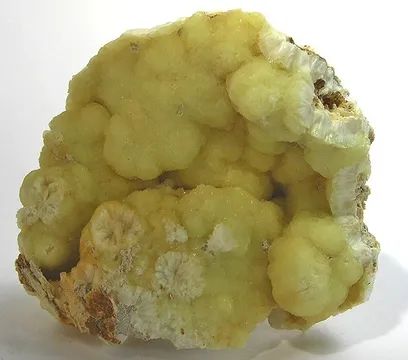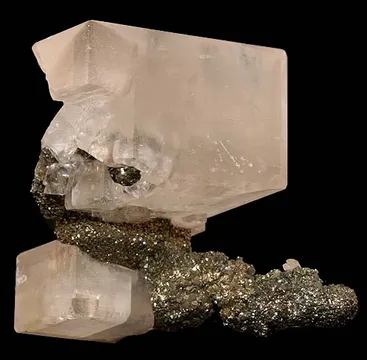
Flambeau Mine, USA - a brief, rich open pit in Wisconsin's Penokean belt, famed for supergene chalcocite and bornite specimens with blue iridescence.
Key facts
Flambeau is one of those rare localities where an orebody, a short mining window, and unusually thoughtful specimen recovery aligned almost perfectly. The mine lay just south of Ladysmith in Rusk County, Wisconsin, beside the Flambeau River, in a Paleoproterozoic volcanogenic massive sulfide system of the Penokean volcanic belt. Its collector fame rests on the supergene-enriched upper part of the deposit: a copper-rich zone in which chalcocite, bornite, chalcopyrite, pyrite and subordinate precious-metal minerals were concentrated above deeper primary sulfides. In mining terms it was a compact, rich copper-gold-silver open pit. In specimen terms it was a brief modern classic that produced some of the finest crystallized chalcocite known from North America.
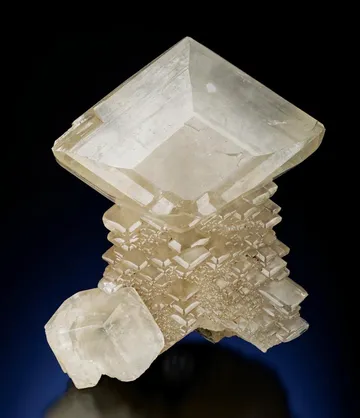
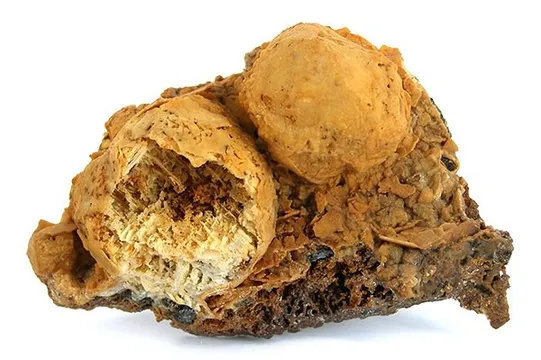
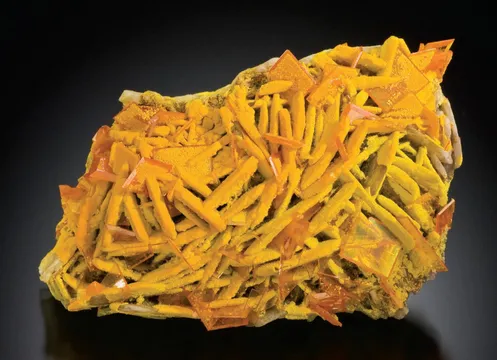
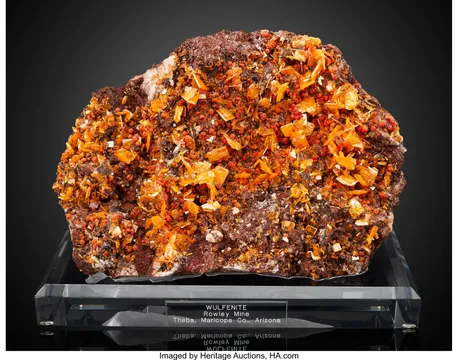
The signature Flambeau specimen is not a generic black copper sulfide. It is chalcocite in lustrous tabular, pseudohexagonal, stacked, bladed, stalactitic, botryoidal, skeletal, and compound crystal groups, often wearing a natural bornite film that flashes blue, violet, bronze, brass, green, and purple as the piece is turned in the light. The best pieces have a dense metallic presence, sharp geometry, and the unmistakable “wet” iridescence of supergene copper sulfides rather than the brittle carnival colors of treated chalcopyrite. Matrix pieces may carry quartz-sericite schist, metachert, dolomite or siderite; cabinet pieces are often more sculptural than pretty in the ordinary sense, with dark gunmetal relief, flashing bornite skins, and surprisingly complex twinning.
Regional View
Country View
The mine’s importance is sharpened by its brevity. The productive open-pit phase ran only in the 1990s, and the famous specimen pockets were encountered as the enriched ore was being removed. After mining, the pit was backfilled, reclaimed, revegetated, and converted to public recreation and habitat. There is no modern dump to wander, no open workings to revisit, and no continuing stream of fresh material. Flambeau chalcocite is therefore a finite population of specimens, many with unusually good recovery documentation because Casey and Jane Jones and the mine staff recognized, while the pit was active, that this was not ordinary ore.

Photo: Wikimedia Commons

Photo: Wikimedia Commons

Photo: Wikimedia Commons
Search for specimens: View all specimens from Flambeau Mine, USA
The Flambeau deposit was a copper-zinc-gold volcanogenic massive sulfide body hosted in strongly deformed Paleoproterozoic volcanic and sedimentary rocks of northwestern Wisconsin. The orebody was a steep, tabular lens near Ladysmith, generally described as about 50 feet wide, roughly 2,400 feet long, and extending to about 800 feet depth. Its country rocks and alteration assemblages include quartz-sericite schist, metachert, chloritic and aluminous schists, metadacitic volcanic rocks, and related felsic volcanic units. The deposit was later folded, faulted, tilted steeply during Penokean deformation, and then deeply weathered; that long post-ore history is the key to both the mine’s economics and its mineral specimens.
The collectible Flambeau assemblage came overwhelmingly from the supergene-enriched upper ore, not from the deeper primary VMS sulfides. In simplified vertical order, the upper system included an iron-rich, gold-bearing gossan; oxidized copper zones with malachite, azurite, cuprite and other secondary species; enriched chalcocite and bornite zones; and deeper hypogene sulfide mineralization dominated by pyrite with chalcopyrite, sphalerite, pyrrhotite and minor galena. Weathering and moving groundwater stripped and redistributed metals, upgrading the upper part of the orebody into a remarkably rich copper-gold ore. For collectors, those same watercourses opened cavities at fracture intersections and along contacts where later chalcocite crystals grew on curved, botryoidal, skeletal, stalactitic, or granular earlier copper sulfide.
Exploration history reaches back well before the mine. Early Wisconsin Geological and Natural History Survey work preserved copper-bearing clues from the Ladysmith area, and Kennecott’s postwar search for Canadian Shield-style massive sulfides eventually returned to those hints. A key airborne electromagnetic survey, flown by Kennecott-related exploration interests in the 1960s, identified the anomaly that led to drilling. The first discovery drilling in late 1968 cut high-grade supergene copper mineralization, after which more than 100 drillholes helped define the orebody’s geometry, grade, and orientation.
The mine was ultimately developed not as the larger open-pit-plus-underground operation once considered in the 1970s, but as a smaller open pit targeting the enriched upper ore. Flambeau Mining Company, a Kennecott subsidiary, received permits in the early 1990s after a long public review, construction and development followed, and ore shipments began in 1993. The ore was rich enough to be shipped directly off site for processing, avoiding construction of a concentrator and tailings impoundment at the mine. Mining of the high-grade open pit continued for about four years, and the operation is repeatedly noted in geological and mineralogical literature for the richness of the ore and the unusually high proportion of valuable metal in a small footprint.
Specimen recovery began in the practical way operating-mine collecting often begins: geologists and miners noticed attractive pieces. The visitor center and administrative displays needed examples from the pit, so azurite, malachite, native copper and chalcocite were saved. That visible evidence led to a formal recovery arrangement, most famously involving Casey Jones, whose pocket names and specimen records are now part of the locality’s collector vocabulary. The important pockets were not anonymous: labels may mention the First Pocket, Watercourse Pocket, Sunrise Pocket, Drill Pocket, Fog Pocket, Lucky Friday Pocket, Quick Pocket, Rocket Pocket, and other named zones or bench levels. Such information matters at Flambeau because different pockets produced visibly different habits, colors and degrees of bornite coating.
The productive crystallized chalcocite zones were often along the hanging-wall or footwall contacts, at or near intersections of fractures and former watercourses in the enriched ore. Crystals came out of damp sulfide sand, pocket clay, broken ore and cavities exposed by drilling, blasting and mucking. Some of the finest pieces were saved under urgent conditions in an active pit, where a promising void could be partly destroyed by necessary blasting before anyone could work it. That gives Flambeau pieces a distinctive paradox: many are remarkably well documented for a modern mine, yet the best survivors also hint at an even richer population that was inevitably crushed as ore.
Today the mine is not a collecting locality. The open pit was backfilled with waste rock and other mine materials, limestone was blended into sulfide-bearing rock as part of the reclamation design, and surface reclamation was substantially completed by the end of 1999. The reclaimed site is now a landscape of grassland, woodland, wetlands, ponds and public trails near Ladysmith, including nature and equestrian routes. Visitors can walk the reclaimed mine area for recreation, birding and interpretation, but collecting mineral specimens from the former orebody is effectively a matter of the historical specimen market, museum holdings, and old collections rather than field access.
Chalcocite is the defining Flambeau mineral and the species by which the mine entered the modern canon of American classics. It occurs here as sooty to granular ore, botryoidal and curving cavity linings, stalactitic and skeletal growths, and, most importantly, later euhedral crystals and crystal groups perched in supergene cavities. The collectible crystals are typically metallic gray to black, often with a bornite film that gives violet, blue, bronze, brassy, green or purple iridescence; the common habit is tabular to pseudohexagonal cyclic twinning, with rarer X-shaped twins and stacked compound groups. Thumbnail to small-cabinet specimens are most often seen, while major pieces can show crystals several centimeters across or masses with broad crystal coverage. Quartz-sericite schist, metachert, chalcopyrite, bornite, dolomite, siderite, pyrite and occasional gold-bearing material are natural associations. The difference between an ordinary Flambeau chalcocite and a fine one is sharpness, crystal separation, luster, stability of the iridescent bornite skin, pocket documentation, and lack of blast bruising; top pieces have a sculptural architecture and deep natural color that immediately separates them from massive ore or post-mining “peacock ore” material.
Flambeau’s broader mineralogy is far richer than the market usually suggests. Native copper, native gold and native silver are recorded, as are digenite, bornite, acanthite, hessite, petzite, covellite, sphalerite, chalcopyrite, cubanite, empressite, galena, pyrrhotite and abundant pyrite in the sulfide suite. The oxidized and supergene assemblage produced attractive malachite, azurite, cuprite variety chalcotrichite, chrysocolla, pseudomalachite and a notable suite of rare phosphates and sulfate-phosphates including kolbeckite, crandallite, plumbogummite, hidalgoite, kemmlitzite and vivianite. Kolbeckite is a special micromount prize here, known as bright green microcrystals and sprays, including occurrences with chalcocite. The mine is not chiefly celebrated as a type locality; its reputation rests instead on the exceptional preservation and abundance of world-class crystallized chalcocite from a modern, well-documented, short-lived orebody.
Flambeau specimens deserve close reading of the label. The locality should be Ladysmith or Rusk County, Wisconsin, and older high-quality pieces often carry Casey Jones, Jane Jones, BURMINCO, Barlow, Larson, Rodewald, museum, or established dealer provenance. Pocket names and bench-level information add real value when believable. Because the mine is reclaimed and closed to specimen production, any claim of recent field collecting from the orebody should be treated skeptically; pieces appearing now are almost certainly from old stocks, collections, or dealer inventories.
The most common confusion is not a formal locality fake so much as visual misidentification. Flambeau’s natural bornite-coated chalcocite can look blue, purple or bronze, and the general “peacock ore” market is saturated with acid-treated chalcopyrite from unrelated localities. A genuine Flambeau chalcocite should show the dense heft and metallic luster of chalcocite, appropriate crystal habit, and believable Wisconsin provenance. Acid-bright chalcopyrite, especially massive brassy material with lurid rainbow etching and vague “bornite/chalcocite” labels, is not a substitute. Conversely, some true Flambeau pieces are not vividly colored; excellent gunmetal-gray, black, or subtly iridescent crystals are entirely correct for the locality.
Condition is central. Many Flambeau pockets were exposed in an operating open pit, and specimens may show blast bruising, broken contact points, sheared backs, crushed pocket debris, or edge rubs from hasty extraction. Damage on the rear or at removal points is common and often acceptable; damage across display faces, chipped pseudohexagonal edges, or dull abraded luster is much more serious. Larger pieces should be inspected for repaired breaks, hidden glue along stacked crystal groups, and overly cleaned surfaces. Matrix-supported specimens can be fragile where copper sulfide rests on altered schist or pocket clay.
A documented storage issue is “scuzzing” or development of a brownish powdery coating on some chalcocite and bornite-rich specimens, with loss of iridescent patina in unfavorable cabinets. The problem appears variable and may depend on microenvironment, airborne contaminants, humidity, temperature, or the exact sulfide intergrowth. Store Flambeau material dry, cool, and stable, away from wooden cabinets, acidic papers, foam, sulfur-bearing materials, and damp basements. Acid-free boxes, inert mounts, silica gel where appropriate, and periodic inspection are sensible. Do not oil, lacquer, acid-dip, or aggressively clean iridescent Flambeau pieces; the beauty is a thin natural surface phenomenon and can be permanently ruined.
Market availability is better than the mine’s short life might imply because many specimens were saved and dispersed, but selectivity narrows fast. Small thumbnails and modest small-cabinet pieces appear regularly; sharp, aesthetic, undamaged, deeply iridescent examples with named-pocket provenance are much scarcer. Large cabinet pieces with broad crystal coverage, strong color, and credible early provenance belong in the upper tier of American copper-mineral collecting. Micromount collectors should also watch for properly identified kolbeckite, chalcotrichite, pseudomalachite and phosphate assemblages, which can be more mineralogically interesting than yet another average chalcocite.
The discovery trail to Flambeau began with almost implausibly old clues. In 1915 George W. O. Hotchkiss of the Wisconsin Geological and Natural History Survey was prospecting and mapping north-central Wisconsin. His notes and samples did not disappear into a mine office; they sat in the Survey’s Madison files. Decades later, in 1954, George Moerlien of Kennecott’s Bear Creek Mining was shown the old material. One specimen was enough to stir interest: it assayed 0.7% copper and was said to have come from a well near an old schoolhouse south of Ladysmith. Moerlien went to the schoolhouse, found no outcrop, but did find azurite and malachite fragments around the old well. It was a slender thread, but it held.
The thread became airborne in the 1960s. Great Lakes Exploration, Kennecott’s subsidiary, returned to Wisconsin with improved airborne electromagnetic methods. Jack Phillips recognized the significance of the old sample, and E. H. Eisenbrey supervised the survey that picked up a strong anomaly near the Flambeau River. The near miss is famous among those who know the mine’s history: had the easternmost survey line been flown one line farther west, the deposit might not have been found. Two short follow-up lines were authorized from the river eastward to Highway 27, a distance of about a mile. On November 6, 1968, drilling found the Flambeau deposit, including 48 feet of massive supergene-enriched chalcocite averaging 9.25% copper.
The specimen story began quietly, in the visitor center. The open pit was being mined as ore, but the public display overlooking the pit needed handsome examples. Mine geologists collected azurite, malachite, native copper and chalcocite, and those display pieces convinced Casey and Jane Jones that a proper specimen-recovery contract was worth pursuing. Their first day collecting was a hard reset from underground collecting habits: this was an active open pit, with benches, contacts, machinery, blasting schedules and production pressures. At an area where the orebody met quartz-sericite schist or siliceous chert, the first rewards were reniform to sub-euhedral crystallized chalcocite, black to steely gray and promising enough to keep them swinging.
June 30, 1994 changed everything. Beneath a ledge left after removal of a large block of chalcocite ore, the Joneses opened a small pocket containing five chalcocites of astonishing quality. Casey later named it the First Pocket, recorded at 401.2 on the 1030 level. In the same work area, only inches into the face, the First Pocket led to the Watercourse Pocket. Water was running through it, and the chalcocites carried a gold patina that later shifted toward violet-purple. It was a lesson repeated at Flambeau: a cavity’s exact groundwater history could change the look of its chalcocite as much as the shape of the void changed the crystals.
The Sunrise Pocket earned its name literally. On October 10, 1994, after an interval without major finds, Casey needed Joe the excavator operator to take a few cleanup swipes at a promising corner without slowing production. The corner lay between the 1010 level bench and the footwall bench. As dawn came up over the rim of the pit, Casey still had three or four yards of sulfide ore to hand-muck. Then the outline of an in situ pocket began to show. Loose damp bornite sand brushed away to reveal bright metallic golden crystals packed with just enough space to remove them one by one. Casey lay on his stomach and worked pieces out, using the sand as a cushion. The pocket debris included broken quartz-sericite schist and little chalcopyrite casts after calcite that he remembered as “tiny ice-cream cones.” Among the Sunrise pieces was the “Flambeau Chief,” a crystal group with a prominent crystal nearly 4 cm across.
The Drill Pocket is the one that still hurts. In February 1995, while the Joneses were away at the Tucson Show, a drill rig punched into a small chamber at the 1000 level hanging-wall contact. The void was estimated at about 6 feet long and 3 feet wide, with unknown depth before it pinched out. It was named, grimly, for the drill rig that found it. The pocket apparently contained chalcocites of the highest order, perhaps the best in the mine, but production could not wait for ideal collecting. High explosives were used nearby, and most specimens were heavily damaged or lost. The surviving pieces are rare reminders of a cavity whose full specimen potential was destroyed before careful recovery could happen.
On March 30, 1995 came the Fog Pocket. It was a cold, sunny morning, about 28 degrees F, on the exposed 1000 bench at the footwall contact. While probing loose ground, Casey triggered a small avalanche of rock and ore debris at chest height and had to jump back in what he called the “Flambeau two step.” In the fallen muck lay delicate small golden-violet chalcocites with perfect stop-sign form. About two dozen thumbnails were quickly wrapped. Tracing their path upward revealed a small opening packed with crystallized chalcocite, trending toward the bench crest overhead. Recovery meant fingerless gloves, small screwdrivers and bare fingers in the cold, crouched close to the pocket. Each exhalation made a little fog bank at the opening. The pocket produced only about a dozen outstanding specimens, but their sharp edges and delicate habit were unlike anything else recovered.
Lucky Friday was October 13, 1995, and the name wrote itself. The day before, drilling a blast pattern had encountered a good-sized void at 7.5 feet. That hole was left unloaded, and as many burlap bags as possible were stuffed down it. The blasting crew and Ames Construction project manager Bob Donaldson worked out a way to pull the round while trying to spare specimens. After the shot, Joe positioned the excavator so he could dig perpendicular to the strike of the orebody, taking thin slices toward where the burlap should appear. Heavy clouds threatened snow; light was fading. Then large crystals began sliding out of soft pocket muck. The burlap finally appeared under about 10 feet of broken ore, and with barely an hour of daylight left the best specimens had to be pulled quickly. Many survived blasting, mucking and the rushed recovery. The pocket produced heavy disc-like stacked groups, thick penetration twins, and classic sixling “stopsign” twins, with colors from gold and brass to violet, purple, blue and gray.
The Quick Pocket, recovered May 20, 1996, was named not for its brilliance but for its problem. It lay on the hanging-wall contact, far from the more productive west end, at 415.2 on the 980 level. Drilling was taking place just above the pocket, loose ground had to be watched constantly, and the blast pattern would be shot no matter what because the main ramp into the pit was at stake. The recovery had to be fast. The chalcocites were less well developed and tended toward bornite replacement, but crystals reached about 6 cm, making even this “quick” episode important.
The Rocket Pocket was the last significant Flambeau pocket, and its name came from a piece of pipe launched into the air. At 401.3 on the 970 level, near the far west end of the pit, presplit holes were being drilled every three feet to a depth of 30 feet. Trouble began near the hanging-wall contact when drill steel stuck. A replacement hole dropped through about 4 feet of void only 2 feet down. The hole was too unstable for explosives, so a 3-foot section of 2-inch PVC pipe was pounded into it. When the blast was fired, the PVC pipe shot almost straight up, trailing smoke and dust. At first light the next morning, recovery began under the spot where the pipe had flown. The cavity was full of blast rock, and perhaps a fifth of the pocket was already destroyed, but the survivors included the largest specimens recovered to that date: four pieces over 20 pounds, with up to 90% crystal coverage. It took 16 hours to remove the specimen material. The void was large enough to sit in, about 3 feet wide, 4 inches high, and 3.5 feet deep. Then Flambeau’s run of major pockets was over.