






A collector's guide to Merelani Hills, Tanzania: its geology, mining history and notable minerals, illustrated with the 77 specimens documented from this locality on EarthWonders.
Key facts
Merelani is the great modern gem-mineral locality: a narrow, structurally tangled belt of vanadium-rich metamorphic rocks on the Lelatema Mountains of northern Tanzania that changed the language of both mineral collecting and jewelry. The locality is best known for tanzanite, the blue-to-violet gem variety of zoisite, but collectors soon learned that the same black, graphite-rich rock that stains miners and specimens also releases an unusually rich suite: green grossular and tsavorite, chrome- to vanadium-colored diopside and tremolite, fluorapatite, prehnite, axinite-(Mg), pyrite, calcite, quartz, and a small but important cast of rare sulfides and oxides.
Geologically, Merelani is not a simple vein locality. Its gem pockets occur in boudinaged calc-silicate bodies, pegmatitic and hydrothermal veins, and fracture fillings within graphitic gneisses and associated marbles and calc-silicates of the Mozambique Belt. The collecting appeal comes directly from that setting: fine specimens can be startlingly gemmy yet visibly born from a dark metamorphic world, with transparent blue-violet zoisite or grass-green garnet emerging from calcite, graphite, pyrite, quartz, and pale green diopside. The best Merelani pieces combine gem quality with believable geological context—sharp, lustrous crystals, strong color, clean terminations, and matrix that shows natural growth rather than later assembly.
Historically, Merelani is one of the few mineral localities whose discovery can be placed in living memory and whose name became a global commercial word almost overnight. From the late 1960s onward, it evolved from surface picking and shallow pits into a formalized mining field divided into blocks, with large-scale and small-scale operations working side by side. For specimen collectors, that mining history matters: the locality has produced enough material to make tanzanite familiar, but truly fine undamaged crystals—especially on natural matrix—remain scarce because the same blast-and-haul conditions that recover gem rough often destroy mineral specimens.
Regional View
Country View
Merelani’s visual signature is immediately recognizable: graphite-dark matrix, white to cream calcite, brassy pyrite, pale or vivid green calc-silicate minerals, and the electric blue-violet of vanadian zoisite. Even modest specimens often carry the locality’s atmosphere. The great ones have the improbable look of jewels pried out of black shale—gem crystals in a setting that still smells, mineralogically, of heat, pressure, carbon, sulfur, and vanadium-rich metamorphic fluids.
Search for specimens: View all specimens from Merelani Hills, Tanzania
The Merelani gem field lies in the Lelatema Mountains of Simanjiro District, Manyara Region, near the better-known northern Tanzanian travel corridor between Arusha, Moshi, and Kilimanjaro. In mineralogical literature the locality appears under several spellings—Merelani, Mererani, and Mirerani—and older labels may use Arusha Region rather than the present Manyara Region. For collectors, those label variants are normal; the more important question is whether a specimen genuinely comes from the tanzanite-mineralized Merelani mining area and, where possible, whether a block or mine is known.
The deposit is a vanadium-rich metamorphic and hydrothermal gem system hosted by graphitic gneisses, marbles, calc-silicate rocks, quartz veins, and pegmatitic bodies. A practical way to picture it is as a deformed, steeply dipping ore zone in which calcium-rich and graphite-rich horizons have been folded, sheared, broken into boudins, and later invaded or reworked by fluids. Gem-quality zoisite and green grossular occur mainly in boudinaged pegmatitic veins and hydrothermal fracture fillings, especially where altered graphite-bearing gneiss, calcite, quartz, diopside, graphite, and pyrite meet. The dark carbonaceous component is not incidental: graphite-rich metasedimentary rocks are central to the deposit’s chemistry and supplied the vanadium that colors tanzanite, tsavorite, vanadian phlogopite, and related green minerals.
The ore bodies are structurally controlled rather than evenly distributed. Productive shoots follow folded and boudinaged calc-silicate horizons, and gem pockets occur in tension sites, brittle shear zones, and broken vein segments. This explains the frustrating mining pattern: long stretches of barren or low-grade rock can suddenly yield a pocket of crystal-rich material, and then the quality can disappear again. At specimen scale, the productive assemblage is often a tight intergrowth of zoisite, grossular, diopside, tremolite, calcite, quartz, graphite, pyrite, pyrrhotite, fluorapatite, prehnite, and minor sulfides. The best collector pieces usually preserve evidence of this pocket environment rather than simply presenting a loose gem crystal.
Mining began after the late-1960s discovery of blue zoisite and quickly moved from collecting crystals at or near the surface to pits and underground workings. By the early 1970s the mines had been nationalized; later, in the period of economic liberalization, the field was divided into blocks. The standard modern block terminology is A, B, C, D, and D-Extension. Block C became the best-known large-scale operation under Graphtan, Afgem, and later TanzaniteOne, while Blocks B and D became strongly associated with small-scale and artisanal mining. Block D, in particular, is legendary among gem dealers and field visitors for deep, narrow, graphite-black underground workings and for a specimen supply that is erratic but sometimes extraordinary.
The operator history is complex. Block A has been associated with Kilimanjaro Mines; Block C with Graphtan, Afgem, TanzaniteOne, and later state involvement; D-Extension has been associated with Tanzanite Africa; and Blocks B and D have long supported many small-scale miners and claim holders. A Tanzanian audit report records that on May 13, 2020, the government, through the Mining Commission, acquired the Block C mining area at Mererani from Tanzania One Company Limited following legislative changes and negotiations involving STAMICO. That transition is important for labels and provenance because older Block C material may be tied to TanzaniteOne-era mining, while later production may pass through different administrative channels.
Collecting access today should be understood as controlled mining access, not recreational collecting. The Mirerani mining area is a regulated mining-controlled area, enclosed by a perimeter wall built to reduce smuggling and channel production through official markets. Entry is restricted, identification and permissions are required, and underground access depends on mine ownership, safety conditions, and government controls. Collectors normally acquire Merelani specimens through miners, brokers, Arusha dealers, international mineral dealers, and established specimen marketplaces rather than by field collecting.
Notable specimen production has come from both industrial and artisanal contexts. Large-scale mining is better positioned to follow ore shoots systematically and to document geology, but artisanal miners have opened countless shafts and crosscuts in Blocks B and D, sometimes encountering pockets that become famous in the trade even when their precise geological coordinates are poorly recorded. Collectors hear recurring references to Block C for fine tanzanite, Block D for dramatic artisanal production and rare associated minerals, and Block B for important grossular and “Merelani mint” garnet material. Specific find names are less consistently preserved than in classic European or American localities, but documented episodes include the December 2007 find of unusually vivid green diopside crystals and the 2017 Merelani tsavorite rough that was later cut as the Lion of Merelani.
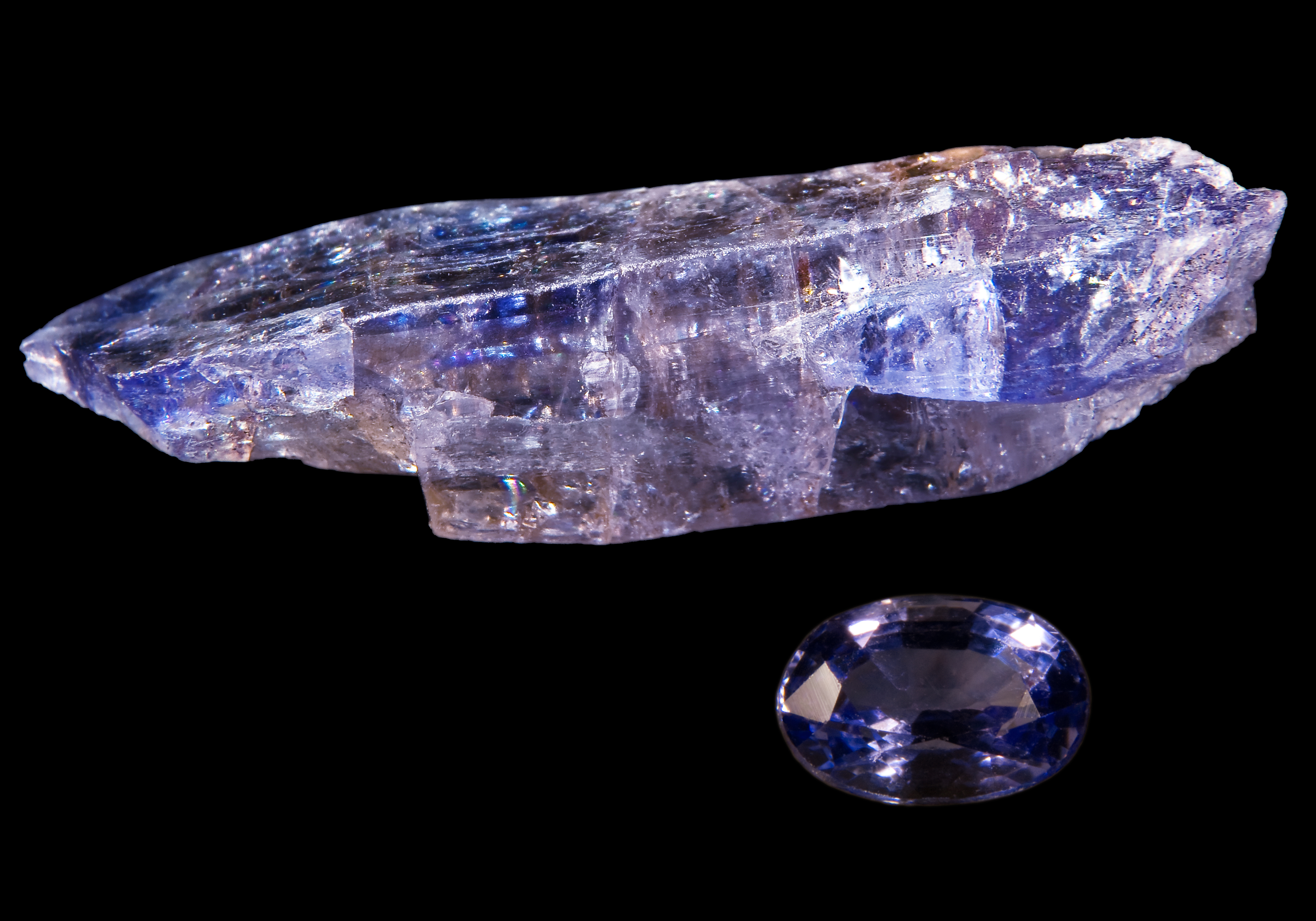
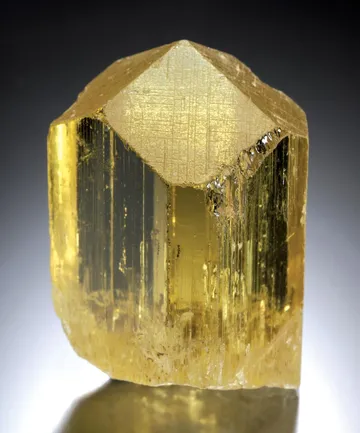
At Merelani, zoisite is the master species behind the locality’s fame: blue-to-violet tanzanite is only one expression of a vanadian zoisite population that also includes brown, green, yellow, pink, and colorless material. Collector crystals are typically prismatic to bladed, vertically striated, vitreous, and often fractured or etched by pocket movement and mining; loose crystals and fragments are far more common than natural matrix specimens. Fine zoisite from Merelani is separated from ordinary pieces by transparency, saturated pleochroic color, sharp terminations, undamaged prism faces, and natural association with calcite, graphite, pyrite, quartz, diopside, or grossular. The best non-blue “fancy” zoisites are collected in their own right when they show attractive natural color rather than merely serving as heating candidates for tanzanite.
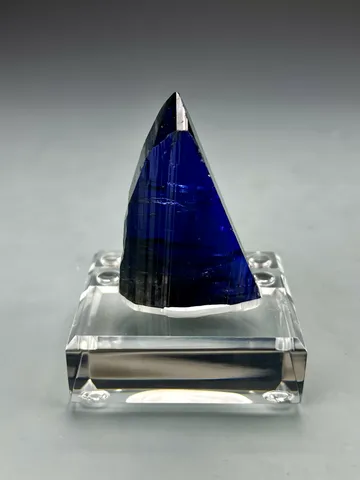
Tanzanite from Merelani is blue-to-violet vanadium-bearing zoisite, famous for strong pleochroism that can show blue, violet-purple, and brownish to reddish or bronze directions in unheated stones. The crystals occur in pockets and fracture fillings within the boudinaged graphitic calc-silicate system, most often as loose gem crystals, crystal sections, or repaired specimens rather than pristine matrix plates. Sizes range from small thumbnails and broken gem rough to major crystals and rare multi-kilogram rough masses, but the collector standard is not weight alone: the finest specimens have glassy luster, rich color without dead dark areas, clean natural terminations, attractive striated prism faces, and believable matrix if present. Most commercial blue tanzanite has been heated to remove brownish components and strengthen the blue-violet color, while naturally blue, unheated, undamaged crystals of good size carry a special premium.
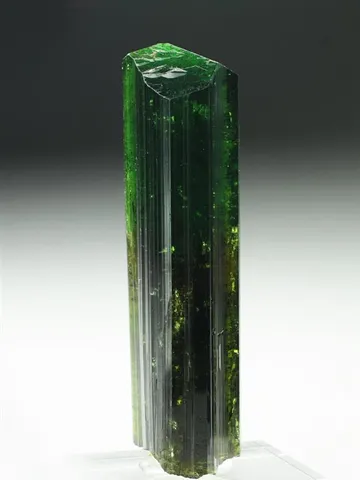
Merelani tremolite is a connoisseur mineral, not a bulk species: the notable material is yellowish green to grass-green, gemmy to translucent, and easily confused at first glance with Merelani diopside unless tested. Documented gem samples from Block D were confirmed as tremolite and diopside, with the green color attributed to V3+, Cr3+, or both, making the amphibole part of the same vanadium-chromium color story as the locality’s better-known gems. Good tremolite specimens from Merelani are sharply formed, lustrous, visibly green rather than gray or washed out, and preferably associated with graphite, calcite, or the broader tanzanite-pocket assemblage. Because tremolite has perfect cleavage and is uncommon here in attractive crystals, undamaged gemmy pieces are much scarcer than their small market footprint suggests.
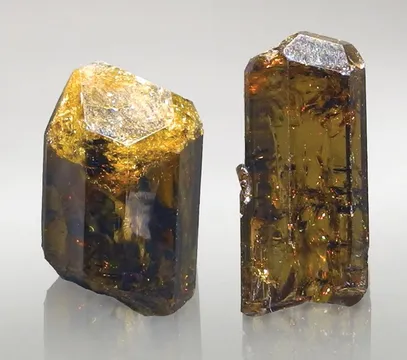
Merelani diopside ranges from pale yellowish green to vivid chrome-green crystals, commonly tied to the graphite-calcite-quartz-pyrite assemblage that surrounds tanzanite and tsavorite pockets. The finest pieces are prismatic, glassy, transparent to gemmy, and strongly colored, with the celebrated December 2007 production remembered for unusually rich green crystals far better than average Merelani diopside. Diopside is a key matrix and association mineral here: it can appear with tanzanite, grossular or tsavorite, graphite, calcite, pyrite, and quartz, and its presence often helps a specimen “read” as Merelani even before the label is checked. Good examples must be inspected for bruising, cleavage cracks, and edge wear, because the same slender habit that makes a crystal elegant also makes it vulnerable during mining.
Prehnite from Merelani is a secondary but very collectible member of the tanzanite-field suite, typically valued when it is yellowish green, lustrous, translucent, and naturally associated with graphite and calcite. It occurs in the hydrothermal pocket environment rather than as the main gem objective, and its presence alongside graphite, calcite, quartz, diopside, tremolite, and zeolite-group minerals is part of the same late fracture-filling story that produced some of the locality’s rare sulfide specimens. Fine collector prehnite from Merelani is more about freshness and association than size: rounded or crystalline masses with lively luster, clean surfaces, and dark graphite contrast are far preferable to dull broken pieces or unattributed green crusts. Because prehnite is relatively soft and may sit with calcite, aggressive cleaning can quickly reduce the locality character that makes these specimens desirable.
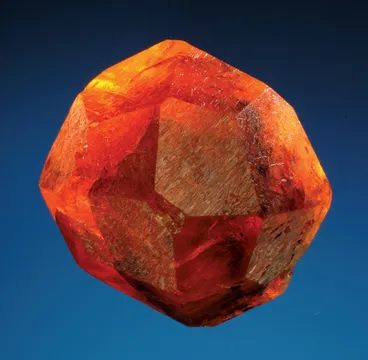
Merelani grossular ranges from pale mint green to deep tsavorite green, and it is genetically intimate with the tanzanite system: grossular formed in and near boudins, and tanzanite can occur as a metasomatic product or rim related to earlier grossular. Crystals and porphyroblasts may reach impressive sizes for the species, but many are fractured, included, or too pale to qualify commercially as tsavorite. Block B’s Karo mine has been noted for unusually large, clean, gemmy green grossular material, while more typical collector specimens show mint to green dodecahedral or rounded crystals with graphite, quartz, pyrite, diopside, or calcite. For mineral collectors, the strongest grossular pieces have obvious crystal form, lively luster, attractive green color, minimal fracturing, and natural matrix; for gem cutters, even paler “mint” material can cut into surprisingly saturated stones when the size and clarity are sufficient.
Tsavorite at Merelani is the vanadium- and chromium-colored green variety of grossular, found in the same mining field as tanzanite and often accompanied by graphite, pyrite, diopside, quartz, calcite, and occasional zoisite. Compared with many tsavorite localities, Merelani is especially important for large porphyroblasts and unusually fine gem rough, though many crystals are fractured or mint-green rather than the deep emerald-green that the trade reserves for top tsavorite. The finest specimens show sharp dodecahedral or trapezohedral form, saturated green color, transparency, high luster, and undamaged faces; natural matrix examples are particularly scarce and desirable. Merelani’s tsavorite reputation was amplified by the 2017 rough crystal that became the 116.76-carat Lion of Merelani, a reminder that this tanzanite district is also one of the world’s great grossular localities.
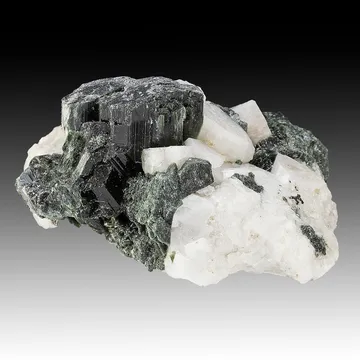
Beyond the headline species, Merelani has an unusually deep supporting cast for a gem locality. Mindat lists 48 valid minerals from the locality and three valid type-locality minerals: axinite-(Mg), merelaniite, and richardsite. Axinite-(Mg) is prized as pale blue, lavender, pinkish, or brownish gem crystals and is historically important because Merelani furnished the material that established the magnesium-dominant axinite species. Merelaniite, Mo4Pb4VSbS15, is a microscopic to small metallic whisker-like sulfosalt named for the locality and the miners; richardsite, Zn2CuGaS4, is a gallium-essential stannite-group sulfide described from tiny dark gray overgrowths on wurtzite-sphalerite material. Karelianite, vanadian phlogopite, graphite, pyrite, pyrrhotite, fluorapatite, dravite, calcite, quartz, wurtzite, sphalerite, colusite, germanocolusite, alabandite, and zeolite-group minerals give the locality a scientific importance far broader than cut tanzanite alone would suggest.
Merelani demands unusually careful buying because the specimen and gem markets overlap. A clean tanzanite crystal may be worth more as gem rough than as a mineral specimen, so surviving natural crystals tend either to be imperfect, too specimen-worthy to cut, or deliberately saved because their form and provenance carry collector value. Large, deeply colored, undamaged, well-terminated crystals are not ordinary merchandise, and convincing tanzanite-on-matrix specimens are substantially rarer than loose crystals. Prices that ignore that reality deserve skepticism.
The most specific documented authenticity problem is assembled matrix specimens. GIA reported a constructed “tanzanite mineral specimen” made from grayish purple tanzanite crystals, a light green diopside crystal, and smoky quartz fragments glued onto calcite and graphite matrix with a white chalky glue mixture; under 20x magnification the glue was visible, and under long-wave ultraviolet the adhesive fluoresced strongly. That report is a perfect checklist for Merelani: inspect every high-value matrix piece under magnification, look for glue menisci or chalky paste at contacts, check whether calcite actually grew around the crystal, and treat too-perfect mixed-species arrangements with caution. Natural Merelani associations exist, but the premium on matrix tanzanite creates strong incentive to improve, reattach, or build specimens.
Heat treatment is normal for commercial tanzanite and should not automatically be treated as fraud if disclosed. Much Merelani zoisite is brownish, grayish, or mixed in color when mined, and heating can produce or intensify the blue-violet color. For cut stones, stable heat treatment is widely accepted. For mineral specimens, the question is more subtle: collectors often prefer unheated crystals when natural color, pleochroism, and provenance are important, but heated crystals can still be attractive and legitimate if sold honestly. Undisclosed coating is more serious. GIA has documented cobalt-coated and titanium-coated tanzanite intended to deepen apparent blue-violet color; coatings may be present only on part of a faceted stone, especially the pavilion, and can show luster differences, abrasion at facet junctions, or lower saturation where chipped or worn.
Mislabelling is common at the variety level. Not all Merelani zoisite is tanzanite in the strict sense; tanzanite is the blue-to-violet gem variety, while green, yellow, pink, brown, or colorless pieces are best described as zoisite unless trade context clearly explains “fancy color tanzanite” usage. Green grossular may be sold as tsavorite, Merelani mint garnet, or simply grossular; the distinction depends on color saturation and trade convention as much as species. Green diopside and green tremolite can look deceptively similar, and documented Merelani samples required Raman spectroscopy, X-ray diffraction, and microprobe work for firm separation.
Condition is a major value driver. Tanzanite and zoisite have cleavage and only fair to poor toughness, so broken terminations, cleaved backs, repaired crystals, edge bruises, and internal stress fractures are common. Diopside and tremolite are also susceptible to cleavage damage, while calcite matrix can be bruised, etched, acid-cleaned, or chipped. Graphite coatings are not necessarily dirt; they are part of Merelani’s geological identity and may hide or protect delicate contacts. Avoid ultrasonic cleaners, steam, sudden temperature changes, acids, and aggressive mechanical cleaning. Warm water and careful hand cleaning are safest, and on matrix specimens even that should be conservative.
Fluorescence can help but should not be overinterpreted. Calcite may fluoresce, adhesives may fluoresce, and some Merelani minerals—including axinite-(Mg) and certain grossular material—can show responses that are interesting but not by themselves diagnostic of authenticity. Use ultraviolet as one inspection tool among many, not as a yes-or-no test.
Market availability remains broad at the low and middle levels: loose tanzanite crystals, fragments, small heated crystals, faceted stones, mint grossular, diopside, and minor matrix pieces appear regularly. The genuinely rare categories are large unheated fine-color tanzanite crystals, top-color undamaged terminated specimens, natural tanzanite on matrix, sharp tsavorite crystals on matrix, excellent chrome-green diopside from the best finds, gem tremolite, and specimens carrying rare type-locality minerals with analytical support. In practice, buy Merelani the way one buys fine emerald or classic alpine cleft minerals: provenance, condition, natural contacts, and honest disclosure matter as much as color.
The discovery story of tanzanite has been argued for decades, but the Tanzanian government’s formal recognition centers on Jumanne Mhero Ngoma. In Ngoma’s own telling, he was walking through the bush near Kiteto in early January 1967 when blue transparent crystals appeared on the ground. He collected about 5 kilograms in only a few hours—an almost unbelievable beginning for a gem that would later support an entire mining economy. The cruel detail is what happened next: he carried the unknown blue stones to Nairobi, left the 5 kilograms with a foreign gem company, and received only a return ticket home, worth about $5. Many years later, he was still waiting for the promised answer.
That delay in recognition became one of Merelani’s defining human stories. Ngoma was issued recognition by Julius Nyerere’s government after the discovery period and later received scientific recognition, but by 2018 Tanzanian newspapers described him as an elderly man still struggling for acknowledgment and living in poverty. On April 6, 2018, at the ceremony connected with the Mirerani wall, President John Magufuli presented him with 100 million Tanzanian shillings and called him a forgotten national hero. The scene was late justice: the man associated with a gemstone that had generated fortunes was finally honored in public, more than fifty years after picking up those first crystals from the ground.
The most vivid field account of Merelani comes from Block D, where visiting gemologists and writers entered the artisanal workings in 2007. Their host at the Kikuyu Mine was Nixon Monga, only 24 years old and managing the mine after his father’s death nine years earlier. Sixty miners were working underground in teams of thirty, in six-hour shifts. Monga told the visitors that the mine had found hardly any stones during the previous two years, even as the tunnels went deeper and the work grew more difficult.
The descent began with a vertical drop of roughly 100 meters on a wooden ladder. After that came 200 to 300 meters of narrow tunnels leading toward the active face. The passages were so low that taller visitors could not crawl on hands and knees; they had to slide forward on their bellies through graphite dust. Masks became nearly useless because the air was so dense and hot that breathing through them felt worse than breathing the carbon-laden atmosphere directly. At the working face, miners followed pyrite and graphite in the veins, driven by the possibility that the next pocket might contain enough blue crystal to change a life.
The return to the surface was described as harder than the descent. The visitors stopped repeatedly simply to breathe, then climbed back up the wooden ladder meter by meter toward a small circle of daylight. When miners emerged after their shifts, they were coated head to foot in graphite and sweat, glittering in the sunlight like blackened mineral specimens themselves. One miner came out with only a small fragment of pale green diopside to show for six hours underground. It is hard to look at a bright Merelani crystal the same way after reading that detail.
Merelani’s modern history also includes sudden, headline-making abundance. In June 2020, small-scale miner Saniniu Laizer and his team recovered two enormous dark violet-blue tanzanite stones, reported at 9.27 kilograms and 5.103 kilograms, each about 30 centimeters long and 10 centimeters thick. They were sold to the Tanzanian government for 7.74 billion shillings, making Laizer an instant celebrity and shilling billionaire. Only weeks later he found another major tanzanite, around 6.3 kilograms, and received another multibillion-shilling payment. The finds were exceptional not only for size but for the way they played out in public, under Tanzania’s newer official buying and control system.
The tsavorite story has its own Merelani chapter. In 2017, miners near Merelani recovered a cocoon-shaped tsavorite rough weighing about 283 carats, larger than a D-size battery. It reached a Hong Kong gem show, where Bruce Bridges—son of Campbell Bridges, the famed tsavorite discoverer—saw it and immediately recognized the possibility of a vivid green cut stone over 100 carats. The rough was eventually cut by Victor Tuzlukov into the 116.76-carat square-cushion Lion of Merelani, with 177 facets. It was named in honor of Campbell Bridges, known as “The Lion,” and entered the Smithsonian’s National Gem Collection as one of the best-documented great tsavorites in existence.
Wilson, Wendell E.; Saul, John M.; Pardieu, Vincent; Hughes, Richard W. “Famous Mineral Localities: The Merelani Tanzanite Mines, Lelatema Mountains, Arusha Region, Tanzania.” The Mineralogical Record, 40(5), 346–408, 2009. The major collector monograph on Merelani, covering discovery history, mining, geology, and specimen minerals.
Olivier, Bernard. “The Geology and Petrology of the Merelani Tanzanite Deposit, NE Tanzania.” PhD thesis, University of Stellenbosch, 2008. A key geological model for the deposit, emphasizing deformation, boudinage, skarn processes, vanadium source, fluid chemistry, and tanzanite formation.
Malisa, E. P. J. “Trace Elements Characterization of the Hydrothermally Deposited Tanzanite and Green Grossular in the Merelani–Lelatema Shear Zone, Northeastern Tanzania.” Tanzania Journal of Science, 29, 45–60, 2003. Important trace-element work on the hydrothermal rocks and gemstone-bearing shear-zone environment.
Malisa, E. P. “Petrology and Lithogeochemistry of the Mineralized Tanzanite-Grossular Bearing Rocks in the Merelani-Lelatema Area, Northeastern Tanzania.” Tanzania Journal of Science, 29(2), Article 7, 2003. A detailed treatment of host rocks, folding, boudinage, hydrothermal alteration, and structural control of tanzanite and grossular mineralization.
Harris, C.; Hlongwane, W.; Gule, N.; Scheepers, R. “Origin of Tanzanite and Associated Gemstone Mineralization at Merelani, Tanzania.” South African Journal of Geology, 117(1), 15–30, 2014. A peer-reviewed origin study using isotope and geological evidence for tanzanite, tremolite, tsavorite, and associated minerals.
Giuliani, G.; Ohnenstetter, D.; Palhol, F.; Feneyrol, J.; Boutroy, E.; de Boissezon, H.; Lhomme, T. “Karelianite and Vanadian Phlogopite from the Merelani Hills Gem Zoisite Deposits, Tanzania.” The Canadian Mineralogist, 46(5), 1183–1194, 2008. Documents vanadium-rich accessory minerals in the Merelani gem zoisite system.
Fritz, Eric A.; Laurs, Brendan M.; Downs, Robert T.; Costin, Gelu. “Yellowish Green Diopside and Tremolite from Merelani, Tanzania.” Gems & Gemology, 43(2), 146–148, 2007. Establishes gemological and mineralogical distinctions between similar green diopside and tremolite from Block D.
Jaszczak, John A.; Rumsey, Michael S.; Bindi, Luca; Hackney, Stephen A.; Wise, Michael A.; Stanley, Chris J.; Spratt, John. “Merelaniite, Mo4Pb4VSbS15, a New Molybdenum-Essential Member of the Cylindrite Group, from the Merelani Tanzanite Deposit, Lelatema Mountains, Manyara Region, Tanzania.” Minerals, 6(4), 115, 2016. The type description of merelaniite, one of the locality’s namesake rare minerals.
Bindi, Luca; Jaszczak, John A. “Richardsite, Zn2CuGaS4, A New Gallium-Essential Member of the Stannite Group from the Gem Mines near Merelani, Tanzania.” Minerals, 10(5), 467, 2020. The type description of richardsite, a microscopic gallium-bearing sulfide from the Merelani gem mines.
Cairncross, Bruce. “Connoisseur’s Choice: Tsavorite, The Green Gem Variety of Grossular, Merelani Hills, Manyara District, Tanzania.” Rocks & Minerals, 95(3), 252–259, 2020. A collector-focused treatment of Merelani tsavorite and the distinction between grossular, mint garnet, and fine tsavorite.
GIA Gem News International. “Fake Tanzanite Mineral Specimens.” Gems & Gemology, Summer 2004. A practical and locality-specific report documenting assembled Merelani-style tanzanite specimens made with glue, calcite, graphite, diopside, and quartz.
Smithsonian National Museum of Natural History. “Lion of Merelani Tsavorite.” Museum record for the 116.76-carat Lion of Merelani tsavorite, cut from a 283.76-carat rough crystal mined in 2017.
“Traveling into the Tanzanite Mines of Tanzania, Africa” — MoreGems.com A field-travel video showing a visit to Merelani, a tanzanite mine, miners, and local gem buying.
“Tanzanite” — Amani Films A short atmospheric film centered on Mererani miners and the physical experience of the tanzanite mining landscape.
“Let’s Tour a Tanzanite Mine!” — Joe Henley Rough & Gemstones A blog-and-video mine visit describing Merelani workings, mine shafts, air pumps, and underground conditions.
“Gems Slaves: Child Labour in Tanzania” — Journeyman Pictures / educational repost A short documentary segment on child labor and hazardous conditions in the Mererani tanzanite mining economy.
Mindat locality page: Merelani Hills, Lelatema Mountains, Simanjiro District, Manyara Region, Tanzania The best mineral-species checklist and locality reference, including synonyms, coordinates, sublocalities, type-locality minerals, and photo galleries.
Lotus Gemology: “Tanzanite Mines of Merelani — Working the Blueseam” A vivid field account by experienced gemologists, valuable for understanding the human and underground context of Block D mining.
University of Stellenbosch: Bernard Olivier thesis on Merelani geology and petrology The most useful open academic source for the deposit model, structural geology, fluids, vanadium source, and tanzanite formation.
Tanzania Journal of Science: Malisa, “Petrology and Lithogeochemistry…” Open academic article on host rocks, boudins, structural control, and hydrothermal processes in the Merelani-Lelatema area.
GIA: Tanzanite Care and Cleaning Guide Practical treatment and durability guidance for tanzanite, including heating, coatings, fracture filling, cleavage, and cleaning cautions.
GIA: Titanium-Coated Tanzanite A useful lab note for recognizing color-enhancing coatings on tanzanite.
GIA Summer 2004 Gems & Gemology PDF Includes the important “Fake tanzanite mineral specimens” note documenting assembled Merelani-style matrix pieces.
Smithsonian Magazine: “The Story Behind the Smithsonian’s Newest Gem: the Exquisite Lion of Merelani” A readable account of the 283-carat rough tsavorite and its transformation into the 116.76-carat Lion of Merelani.
Smithsonian GeoGallery: Lion of Merelani Tsavorite The official museum collection record for the Lion of Merelani, including weight, catalog number, cutter, and gift information.
Tanzania government minerals overview Government background on Tanzanian minerals, Mirerani licensing, the recognition of Jumanne Ngoma, and the Mirerani control-wall period.
The Citizen: “Magufuli issues Sh100 million to discoverer of Tanzanite” Contemporary Tanzanian reporting on the 2018 public recognition and payment to Jumanne Ngoma.
The Citizen: “Teamwork behind Laizer’s Sh7.7bn tanzanite find” Local reporting on the 2020 giant tanzanite finds by Saniniu Laizer and his team.
ScienceDirect abstract: “Assessment of mine ventilation systems and air pollution impacts on artisanal tanzanite miners at Merelani, Tanzania” Technical occupational-health context for ventilation, dust, and artisanal underground mining conditions.
USGS Minerals Yearbook: Tanzania 2019 Government mineral-industry summary noting Merelani’s role as the world source of tanzanite and the status of Block C mining expectations.
Merelaniite on Mindat Essential reference page for the type-locality mineral merelaniite, with formula, occurrence, type material, and associated minerals.
Richardsite article, Minerals 2020 Open-access type description of richardsite from the gem mines near Merelani.
.jpg)