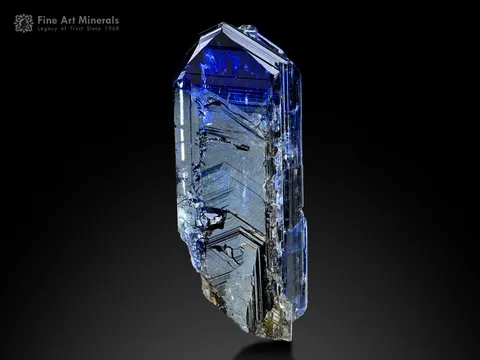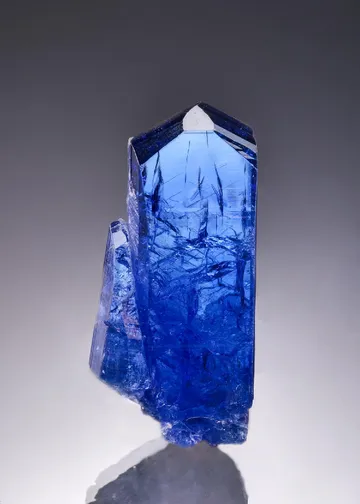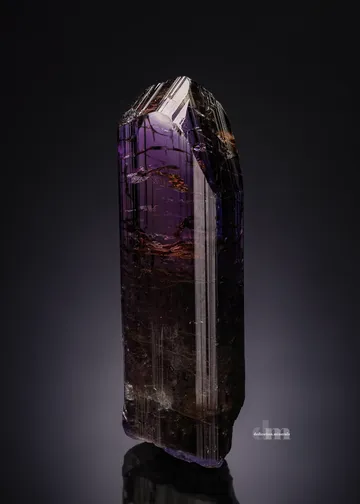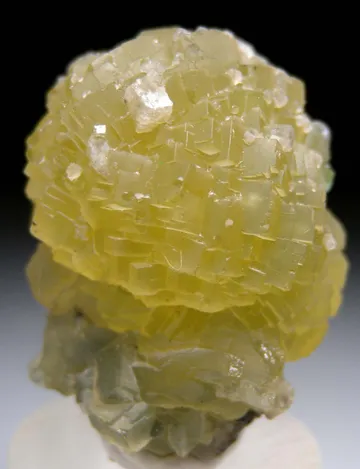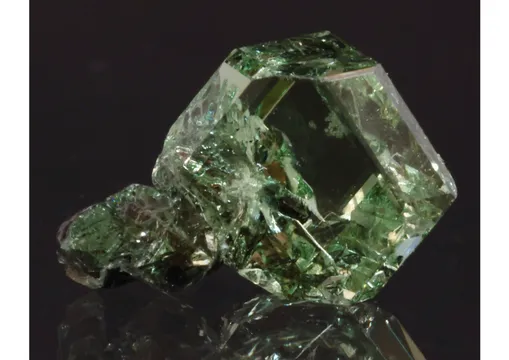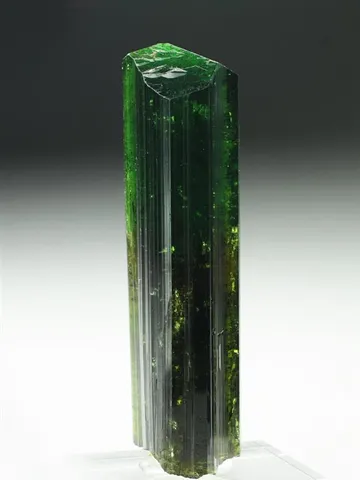
Manyara Region, Tanzania - Merelani Hills yields tanzanite from blue-violet zoisite, plus tsavorite and diopside, a storied, highly prized collector locality.
Key facts
Manyara Region is one of the great modern names in East African collecting because it contains the Merelani Hills tanzanite field and the wider Simanjiro gemstone belt: a compact but mineralogically extravagant part of northern Tanzania where vanadium-rich metasediments, graphitic gneisses, marbles, calc-silicate rocks, hydrothermal veins, and later brittle openings have produced some of the most recognizable mineral specimens of the last half-century. For most collectors, Manyara first means tanzanite—blue, violet, purple, greenish, brownish, or trichroic zoisite from Merelani—but the region’s reputation is much broader than one gemstone. It also includes tsavorite and mint grossular, chrome- and vanadium-bearing dravite, chromium-bearing diopside, fluorapatite, prehnite, graphite, calcite, pyrite, wurtzite, alabandite, chabazite, natrolite, axinite-(Mg), and a remarkable suite of rare sulfides.
The geological setting gives Manyara specimens their particular character. The Merelani deposits belong to the Mozambique Belt, where late Proterozoic metasedimentary rocks were metamorphosed, folded, sheared, and locally altered by hydrothermal fluids. Vanadium and chromium were scavenged and redistributed through graphitic and calcareous rocks, then fixed in zoisite, grossular, phlogopite, karelianite, tourmaline, and other phases. The result is a collector’s province of intense color: tanzanite with directional blue-violet fire, tsavorite with saturated green, dravite that looks black until backlit into emerald, olive, honey, or root-beer tones, and diopside, prehnite, and fluorapatite with the fresh greens and yellows that make Merelani suites unmistakable.
Historically, Manyara is also a locality of names and legends. Tanzanite was discovered at Merelani in 1967 and was soon promoted internationally by Tiffany & Co.; older literature and labels often say “Arusha Region,” but the modern administrative locality is in Simanjiro District, Manyara Region. Merelani later yielded axinite-(Mg), merelaniite, and richardsite as type-locality minerals, giving the field a stature that reaches well beyond the gem trade. The best specimens from the region are typically not massive cabinet showpieces but highly focused crystals: a sharp, lustrous tanzanite prism with graphite attached, a translucent green grossular in graphitic matrix, a dark vanadian dravite crystal whose termination glows when lit from behind, or a sulfide specimen that rewards the collector willing to look closely.
Regional View
Country View
Manyara is best understood as a regional guide rather than a single mine guide. The collector localities are spread across several geological stories: Merelani and its A, B, C, D, and D-Extension mine blocks; Landanai and nearby Simanjiro tourmaline occurrences; Mwajanga diggings near Komolo; the Commander Mine at Nadonjukin; Lemshuku and other grossular localities; and the Minjingu phosphate quarry near Lake Manyara. Some of these produce specimen-grade crystals; others matter because they document the region’s mineralogical breadth. Labels should therefore be read carefully. “Manyara, Tanzania” may be truthful but imprecise; the strongest labels add the sublocality, district, and, for Merelani material, ideally the block or mine when that information is reliable.
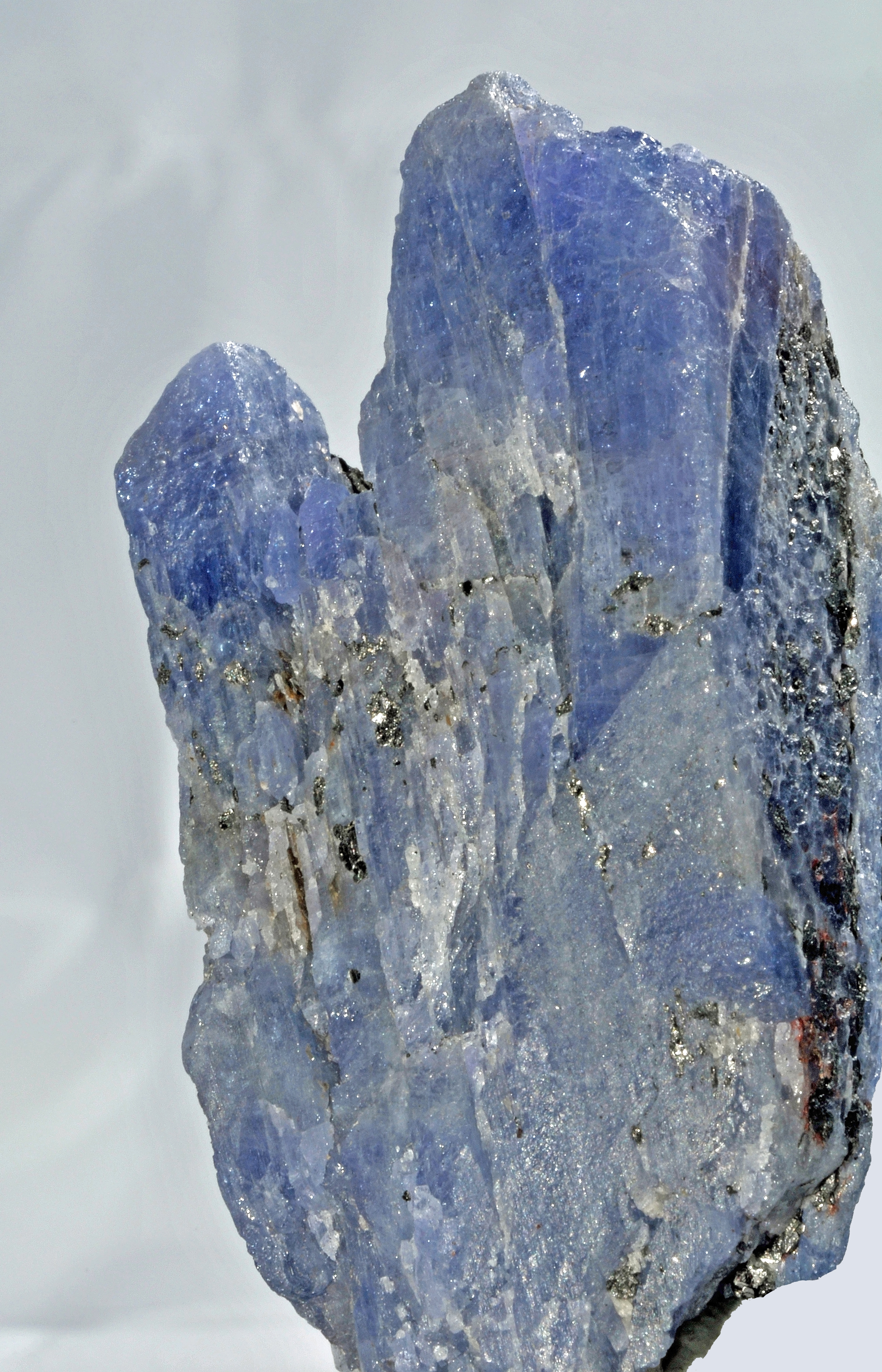
Photo: Wikimedia Commons
The best Manyara specimens have a look that collectors learn to recognize quickly: glassy but often graphite-dusted surfaces, narrow prismatic habits, broken-contact bases from pocket walls, complex terminations, and color that changes dramatically with viewing angle or lighting. Many crystals were saved against a strong economic pull toward cutting. That tension—specimen versus gem rough—runs through the entire history of the region and explains why complete, unrepaired, well-localized crystals command such respect.
Search for specimens: View all specimens from Manyara Region, Tanzania
Manyara Region lies in northern Tanzania, with Babati as the regional capital and Lake Manyara occupying part of the northern landscape. For mineral collectors, the most important part of the region is Simanjiro District, especially the Merelani Hills in the Lelatema Mountains. Older labels frequently say Arusha, Arusha Region, Mererani, Merelani, Lelatema Mountains, or simply Tanzania. The change is not necessarily a sign of a bad label: administrative boundaries, trade routes through Arusha, and older collecting habits all contributed to those variants. A modern full label for the tanzanite field should read Merelani Hills, Lelatema Mountains, Simanjiro District, Manyara Region, Tanzania.
The dominant collector deposit in the region is the Merelani tanzanite-grossular-diopside system. It is hosted by a metamorphic succession of graphitic gneiss, graphite-kyanite gneiss, sillimanite-kyanite-garnet gneiss, dolomitic marble, calc-silicate rocks, quartz-diopside layers, and hydrothermally altered zones. The ore bodies are structurally controlled rather than simple open cavities in granite pegmatite. Boudinage, folding, pressure shadows, shearing, retrograde reactions, and late hydrothermal infilling all matter. In practice, that means the pockets and veins that produce collectible crystals may be narrow, irregular, and deep, with graphite-stained seams carrying zoisite, grossular, diopside, quartz, calcite, sulfides, and accessory minerals.
Merelani is usually described by mining blocks. The Tanzanian government formalized the field into blocks around 1990. Block C became associated with more organized and mechanized large-scale mining, while Blocks B and D became famous for small-scale and artisanal workings. Block D in particular has a strong collector reputation, but “D-Block” has also become a marketing phrase; it should be supported by provenance rather than accepted as a quality grade. Published and market records also refer to A-Block, B-Block, C-Block, D-Block, D-Extension, the Samax Mine, Karo Mine, Opec pits, Machakecho workings, and other local mine names.
The mining history is inseparable from tanzanite. Surface finds and shallow workings were followed by a rush after the 1967 discovery, then by nationalization, state involvement, block demarcation, corporate mining, and continuing small-scale production. Graphtan, Afgem, TanzaniteOne, Tanzanite Africa, and many licensed artisanal miners all appear in the modern history of the field. At different times, thousands of miners have worked the area, often in narrow, hot, graphite-blackened underground workings. Government control has tightened repeatedly, including licensing, official trading systems, security controls, and the perimeter wall around the Mirerani mining area.
Specimen production from Merelani has always been a byproduct of gem mining. Clean tanzanite rough is valuable, so crystals that survive intact generally did so because a miner, buyer, or dealer recognized specimen value before the cutter’s saw did its work. The same is true, in a different way, for tsavorite, mint grossular, diopside, fluorapatite, and prehnite. Matrix pieces are uncommon because the mine environment is harsh and the working methods are directed toward recoverable gem rough, not delicate display specimens. A tanzanite on calcite, graphite, quartz, pyrite, or diopside that is natural, unrepaired, and well documented is far scarcer than a loose crystal of similar size.
Manyara’s green and brown dravites come from several related but distinct Simanjiro occurrences. Landanai is the classic name for dark green “chrome tourmaline,” although the color of many modern examples is better understood as vanadium-dominant rather than chromium-dominant. Mwajanga diggings, near Komolo in Simanjiro District, produced dravite crystals in calcite or dolomitic pocket environments, with natrolite and opal also recorded. Some Mwajanga crystals are duller brown or root-beer colored, but later production included deeper yellowish to orangey brown, pale green, and multicolored crystals. The Commander Mine at Nadonjukin, about 14 km from the village and roughly two hours south of Arusha by road, produced a celebrated 2016 occurrence of intense green and bicolored brown-green vanadium-bearing tourmaline in the dravite-uvite compositional range.
The Minjingu quarry near Lake Manyara represents another side of the region: sedimentary and diagenetic phosphate rather than gem pockets. The phosphate deposit occurs near the Eastern Rift Valley and has been worked as an opencast quarry. Its mineralogy is dominated by carbonate-rich fluorapatite, with quartz, K-feldspar, Na/Ca feldspars, calcite, dolomite, muscovite, amphibole, pyroxene, and limonitic material reported. It is not a classic aesthetic specimen locality in the way Merelani is, but it explains why feldspar appears in the regional mineral record and why Manyara’s mineralogy should not be reduced to gemstone pockets alone.
Collecting access today should be treated as restricted throughout the important gemstone localities. Merelani is an active mining district with security, licensed claims, government oversight, and underground hazards. Landanai, Mwajanga, Nadonjukin, and related Simanjiro gem occurrences are private or mineral-rights-controlled workings, not casual rockhound localities. Specimens normally reach collectors through Tanzanian miners, brokers, Arusha gem channels, international dealers, auction platforms, and older collections. The most desirable modern acquisitions carry precise locality, block or mine information when credible, old labels when available, and analytic documentation for species that are easily confused.
Manyara dravite is best known from Landanai, Mwajanga, Merelani, and the Commander Mine at Nadonjukin, and the material varies from dark green “chrome tourmaline” and vanadian dravite-uvite crystals to brown, orangey brown, yellow-green, pale green, pink-zoned, and root-beer-colored tourmalines from Mwajanga. Landanai and Commander Mine crystals are usually loose thumbnails to miniatures, often appearing nearly black in reflected light but glowing emerald, olive, yellow-green, honey, or reddish-brown when strongly backlit; the better ones show sharp trigonal terminations, lustrous striated prism faces, complete floater geometry, or rare matrix attachment on calcite, quartz, carbonate-rich rock, or associated pocket minerals. Mwajanga is a different flavor: crystals up to about 10 cm have been reported, with many duller or only locally transparent, but selected later-production crystals are high-luster, gemmy, multicolored, biterminated, or associated with calcite, natrolite, and fluorescent opal. The finest Manyara dravites are not merely dark green bits of gem rough; they are crystallographically satisfying specimens with undamaged terminations, strong internal color under light, accurate sublocality, and, for the green material, a label that recognizes the vanadium-rich chemistry rather than relying uncritically on the old “chrome” trade name.
Feldspar in Manyara is more a geological and association mineral than a headline collector species, but it appears in several important contexts: calcic plagioclase is part of the metasomatic layers in the Merelani tanzanite system, K-feldspar and Na/Ca feldspars are recorded from the Minjingu phosphate deposit, and blocky white feldspar matrix is known from Mwajanga-area specimens where bluish mica crystals sit on feldspar-rich crystal groupings. For collectors, Manyara feldspar is therefore valued chiefly when it preserves locality context—white, blocky feldspar serving as the architecture for mica, tourmaline, or metamorphic-pocket assemblages—rather than as isolated gem feldspar. Good pieces are clean, three-dimensional, and honestly labeled to the sublocality; ordinary ones are massive white matrix or poorly documented “Tanzania feldspar” with little visual or paragenetic connection to the region’s stronger specimen traditions.
Beyond dravite and feldspar, Manyara’s mineral list is unusually rich for a gemstone district. Merelani is the type locality for axinite-(Mg), merelaniite, and richardsite. Axinite-(Mg), formerly known as magnesioaxinite, occurs as rare pale blue, lavender, pinkish, or gemmy fragments and crystals, sometimes associated with graphite and the calc-silicate assemblage. Merelaniite forms dark gray metallic whiskers, often only tens of micrometers thick and up to millimeters long, associated with minerals such as prehnite, chabazite, calcite, quartz, fluorapatite, zoisite, graphite, diopside, alabandite, wurtzite, and pyrite. Richardsite, Zn2CuGaS4, is a gallium-essential stannite-group sulfide from the Merelani gem-mining district. Other notable Manyara minerals include zoisite var. tanzanite, grossular var. tsavorite and mint grossular, chromium-bearing diopside, prehnite, fluorapatite, fluorite, graphite, calcite, quartz, pyrite, pyrrhotite, wurtzite, alabandite, sphalerite, chalcopyrite, stannite, clausthalite, colusite, germanocolusite, karelianite, vanadian phlogopite, tremolite, chabazite, natrolite, opal, corundum, ruby, sapphire, chrysoberyl var. alexandrite, beryl var. emerald, microcline, muscovite, nepheline, forsterite, perovskite, rutile, zircon, and carbonate-rich fluorapatite from Minjingu.
Manyara specimens are often mislabelled by imprecision rather than outright deception. Older Merelani labels may say Arusha Region, while modern locality practice places the mines in Manyara Region. That is acceptable if the specimen is old or came through the Arusha trade, but a serious catalogue entry should preserve the old label and add the modern hierarchy. Conversely, vague labels such as “Tanzania,” “Merelani,” or “D-Block” should be treated with caution unless backed by dealer history, old collection records, mine paperwork, or reliable visual and paragenetic evidence.
Tanzanite authenticity issues are well known. Heat treatment is common and accepted in the gem trade, and many loose crystals have been heated to enhance blue-violet color. Mineral collectors often prefer unheated or naturally colored crystals, especially those showing greenish, brownish, yellowish, reddish, violet, and blue pleochroic directions. The problem is that heat status is not always visually certain, and some crystals were heated at or near the source before they ever reached the specimen market. Repaired crystals, reattached crystals, and fabricated matrix specimens also occur in the broader tanzanite trade because matrix pieces are rare and visually valuable. Any dramatic tanzanite-on-matrix specimen should be inspected for glue, mismatched contact, unnatural positioning, etched or trimmed matrix, and inconsistent graphite or calcite surfaces.
Condition matters intensely on Manyara crystals. Tanzanite has perfect cleavage and is not a forgiving handling mineral. A tiny bruised termination, cleavage nick, or repaired base can change the value sharply. Dravite is tougher, but Landanai and Commander Mine crystals are often dark, internally fractured, contacted at the base, or scuffed from recovery; judge them under both reflected and transmitted light. Good green dravite may look disappointingly black in a cabinet until a point light reveals its true color. Mwajanga dravite commonly shows contacts, regrowth, bent-looking growth features, duller surfaces, or limited transparent zones; these are locality features, not automatically defects, but they should be priced honestly.
Manyara specimens also carry chemical naming traps. The trade term “chrome tourmaline” is deeply entrenched for green Simanjiro dravite, but analytical work has shown that vanadium may be the dominant chromophore in some famous material, with chromium minor or absent. The safest specimen language is “dravite,” “vanadium-bearing dravite,” “green dravite,” or, where analysis supports it, “dravite-uvite series.” Similarly, “tanzanite” is a variety name for vanadium-bearing zoisite, while “zoisite” may be the better label for non-blue or unheated crystals if the variety designation is uncertain.
Fluorescence can be useful but should not be oversold. Axinite-(Mg) from Merelani is recorded with red luminescence, and opal from Mwajanga is recorded as green under shortwave UV when present as globular transparent coatings on calcite with dravite. Grossular from Merelani has been studied for fluorescence, including red and yellow responses in selected material. UV response can add interest, but it does not replace proper identification, particularly for pale garnet, diopside, axinite, and zoisite fragments.
Market availability is uneven. Tanzanite crystals are always present in the gem and specimen trade, but fine, complete, well-terminated, unrepaired, unheated, or natural-matrix examples are far scarcer than the general name suggests. Dravite from Landanai, Mwajanga, and Commander Mine appears intermittently; truly bright green, sharp, undamaged thumbnails remain desirable and can disappear quickly into locality collections. Manyara feldspar is much less sought as an isolated species and is best pursued as matrix or association material. Rare sulfides, merelaniite-bearing specimens, richardsite, axinite-(Mg), and high-quality Merelani combinations are specialized purchases that reward documentation more than size.
The most famous Manyara story begins not underground but on the surface of the Merelani Hills in 1967, with Jumanne Mhero Ngoma finding the stones that would become known to the world as tanzanite. The discovery was later wrapped in competing accounts, trade promotion, and decades of uncertainty over credit. The Tanzanian government ultimately recognized Ngoma formally, and on April 6, 2018, he was honored as the discoverer of tanzanite. For collectors, the human element matters because it reminds us that “Merelani” was not born as a brand. It began as a local discovery in a dry, rocky landscape, then became a global gem locality almost overnight.
The underground reality of Merelani is far removed from the elegance of finished stones in a jewelry window. Field accounts from Block D describe miners emerging graphite-blackened from narrow workings, sometimes after hours below ground with little to show for the effort beyond a small fragment of diopside or a hint that the seam might improve. In older small-scale workings, miners descended by rope or ladder, used simple lamps, worked in cramped passages, and hauled broken rock to the surface by hand, bucket, or pulley. The graphite that gives so many Merelani specimens their characteristic black matrix also coats skin, clothes, and lungs. It is the visual signature of the locality in the hand cabinet, but underground it is dust, darkness, and heat.
One of the most vivid modern visitor accounts describes the descent into Block D as a transition from the bright, open, semi-arid landscape outside Arusha into a world where the mine itself seems to swallow light. The first approach passes individual claims, walls, security, and the controlled entrance to the mining area. Underground, the passages become tight enough that a visitor cannot romanticize the work. Graphite stains the rock and the body; veins carrying pyrite and graphite are read as clues; the miners know the difference between barren effort and the subtle signs that a pocket might lie ahead. The collector who later holds a loose tanzanite crystal or a green diopside on graphite is holding the most polished remnant of a much harsher process.
In 2020, Manyara again made world news when small-scale miner Saniniu Laizer and his team recovered two enormous tanzanite stones from the Mirerani area. The stones weighed 9.27 kg and 5.103 kg and were sold to the Tanzanian government for a total of 7.75 billion Tanzanian shillings. A later large stone weighing about 6.33 kg followed, further cementing Laizer’s place in tanzanite history. The numbers are almost absurd in specimen terms: kilograms, not carats; government ceremony, not a dealer’s flat. Yet the episode also belongs in a collector guide because it shows that Merelani is not merely an exhausted historical locality. Even after decades of mining, rare and extraordinary material can still appear from a licensed small-scale operation.
The Simanjiro dravite story has its own pocket drama. At the Commander Mine near Nadonjukin, a 2016 find of intense green and bicolored brown-green vanadium-bearing tourmaline produced fragments and crystals up to about 10 cm long, with total production estimated around 25 kg. Only a small fraction was faceting quality, and a meaningful portion was saved as crystals or specimens. That decision mattered. Without it, some of the finest dark green dravite-uvite crystals of modern East African collecting would have become cabochons, beads, or broken cutting rough. The best Commander pieces now seen in collections—lustrous, trigonal, and nearly black until illuminated—owe their survival to the moment someone recognized that crystal form was worth preserving.
Mwajanga offers a quieter but equally instructive episode. Much of the early tourmaline was sold as crystals to mineral collectors rather than as faceted gems, partly because large crystals could be well formed but dull and only locally transparent. Later parcels changed the picture: deeper yellowish-orange brown crystals, pale green pieces, crystals with sharply defined chatoyant white zones, complex regrowth, and multicolored material ranging from black through brown, yellowish green, and bright pink. Natrolite crystals reportedly came from the same deposit. To a gem cutter, such pieces might be small or difficult. To a mineral collector, they are evidence of a pocket system changing from one episode to the next, and of a locality still revealing its range through scattered parcels.