






Tanzania - home to Merelani Hills, the tanzanite source; diverse gem fields yield tanzanite, zoisite, rubies, sapphires, and rare minerals prized by collectors.
Key facts
Tanzania is one of the defining collector countries of modern gem mineralogy. Its reputation rests above all on the Merelani Hills in the Lelatema Mountains of northern Tanzania, where the world’s commercial tanzanite supply comes from a narrow, structurally complex belt of graphite-rich metamorphic rocks in the Mozambique Belt. The collector appeal is not merely that tanzanite is rare in a geographic sense; it is that Merelani produces blue-to-violet vanadian zoisite as real mineral specimens — elongated, glassy prisms with strong pleochroism, occasionally perched on black graphite and pale calcite, and sometimes associated with diopside, grossular, tremolite, fluorapatite, pyrite, and other members of a rich calc-silicate assemblage.
Regional View
Country View
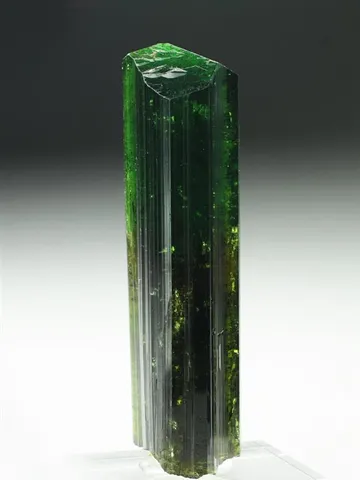
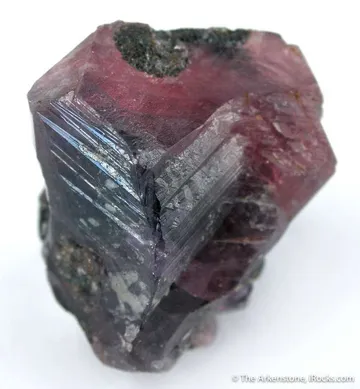
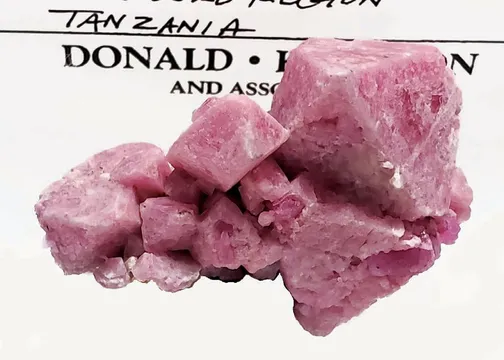
The country’s significance is broader than Merelani alone. Tanzania’s gem fields occupy a remarkable spread of geological settings: high-grade Proterozoic mobile belts, graphite-bearing gneisses and marbles, skarn-like calc-silicate rocks, alluvial river gravels, ruby-bearing amphibolites, sapphire and spinel gravels, kimberlites, carbonatites, and pegmatitic or hydrothermal pockets. For collectors, this translates into an unusually diverse suite: tanzanite and green grossular from Merelani, ruby-in-zoisite from Longido and Mundarara, sapphires and spinels from Tunduru and Songea, rhodolite and “umbalite” garnets from the Umba area, zircon from northeastern Tanzania and southern gem gravels, and rarities such as axinite-(Mg), merelaniite, and richardsite.
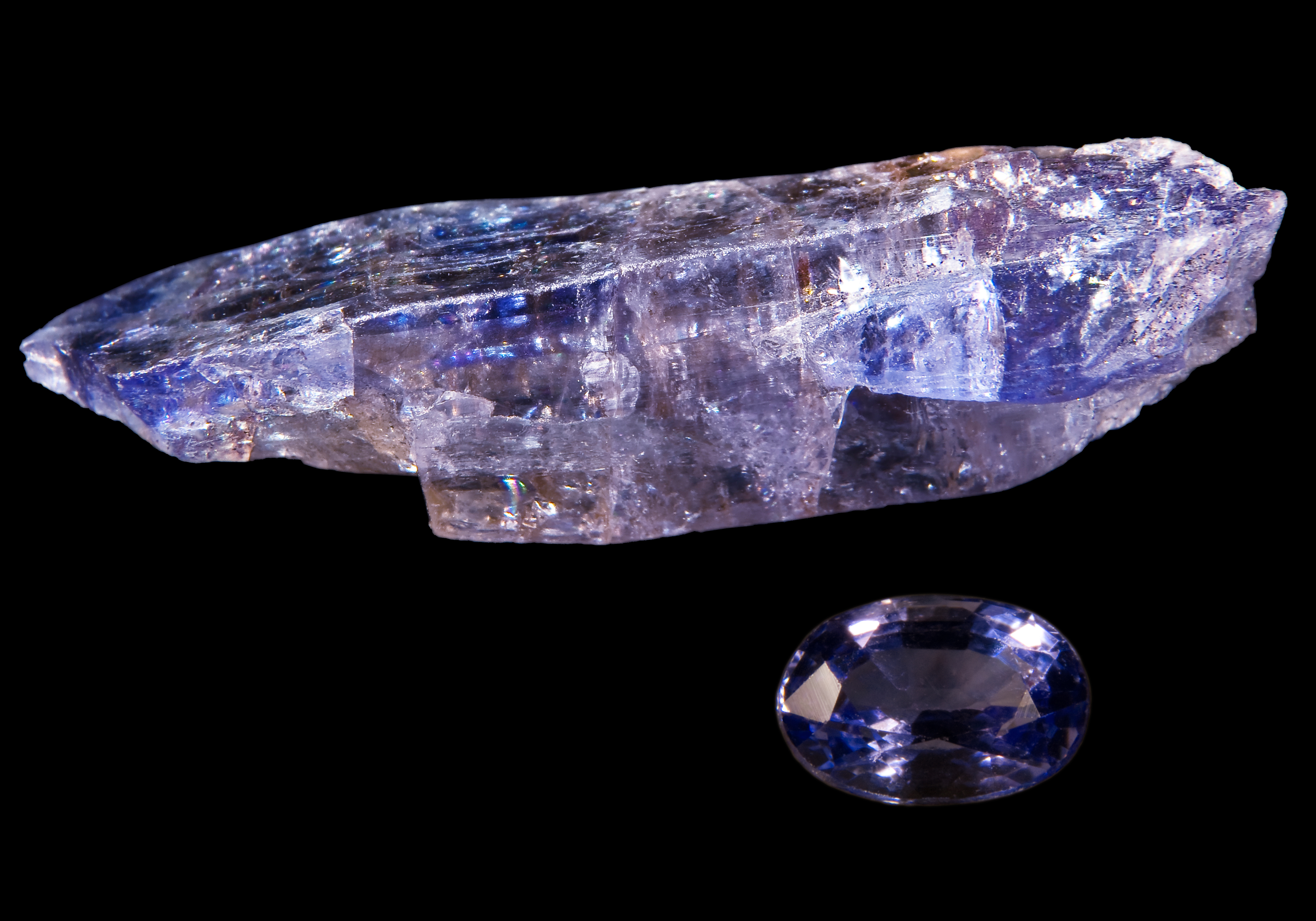
Photo: Wikimedia Commons
The finest Tanzanian specimens have a very particular look. Tanzanite crystals can appear violet, blue, lavender, bronze, greenish, or multicolored depending on orientation and heating history; Merelani tsavorite can be electric green against graphite-dark matrix; chrome diopside and tremolite may glow with saturated green in sharply formed crystals; and gem zircons from the Tanga and Tunduru regions are typically valued for transparency, warm body color, and strong dispersion rather than matrix presentation. Tanzania is therefore not a single-mineral locality so much as a collector province — but it is Merelani that gives the country its unmistakable signature: blue-violet zoisite born in black, graphitic metamorphic rock.
Search for specimens: View all specimens from Tanzania
Tanzania’s specimen mineralogy is anchored in the East African Mozambique Belt, a long, multiply metamorphosed orogenic system that runs through eastern Africa and hosts many of the region’s most important colored-stone deposits. At Merelani, the tanzanite deposit is developed in a sequence of graphitic gneisses, marbles, and calc-silicate rocks that were folded, boudinaged, fractured, and hydrothermally altered. The productive zones are not broad ore bodies in the metallic-mining sense. They are restricted, structurally controlled pockets and vein systems in which quartz, calcite, graphite, pyrite, diopside, grossular, zoisite, tremolite, fluorapatite, and sulfides occur in favorable openings within or near boudinaged calc-silicate lenses. The vanadium responsible for tanzanite’s color is tied to the unusual geochemical environment of these graphitic metamorphic rocks and associated vanadium-bearing assemblages.
The Merelani field is generally described in mining terms as a group of blocks — A, B, C, D, and D-extension — with different histories of mechanized, company, and small-scale production. Block C became the principal large-scale commercial operation, while Blocks B and D have long been associated with smaller licensed miners and the famous deep, difficult workings that supplied many collector crystals. The Tanzanian government’s current public description places the Mirerani tanzanite mines in five blocks and notes hundreds of mining licenses, a smaller subset of which are actively mined. The same government account describes the “Magufuli Wall,” a perimeter wall around the Mirerani controlled area, as 24.5 kilometres long and three metres high, built as part of efforts to reduce smuggling and regulate trade.
Historically, tanzanite was discovered in 1967. The modern Tanzanian government officially recognized Jumanne Mhero Ngoma as the discoverer in 2018, though older gem-trade accounts also record the role of Manuel d’Souza, who registered early claims after being shown the blue-violet crystals. Tiffany & Co. then transformed “blue zoisite” into “tanzanite,” a name that linked the gem to its country and carried it into the international jewelry market. This commercial success had a direct effect on mineral collecting: crystals that might otherwise have gone straight to cutting rooms were preserved when they had strong form, exceptional color, sharp terminations, matrix contrast, or scientific interest.
Mining at Merelani began with near-surface collecting and shallow pits but moved steadily underground as the exposed material was exhausted. In the better-run mechanized workings, specimen recovery can be deliberate and careful, but much of the small-scale production has historically come from narrow shafts and cramped tunnels following productive seams and pockets. Collector-quality specimens are therefore a tiny fraction of total production. Many crystals are broken, etched, iron-stained, naturally fractured, or removed as cutting rough. Matrix pieces are scarcer still, because graphite-rich host rock is friable and pocket removal is unforgiving.
Other Tanzanian gem districts are mostly important to collectors through cut stones, parcels, and occasional crystallized specimens rather than classic matrix minerals. The Umba River and surrounding Tanga-region deposits are famous for sapphires, garnets, spinels, tourmalines, and zircons, with much material recovered from secondary gravels or weathered gem-bearing zones. Tunduru in southern Tanzania is an alluvial gem field associated with the Muhuwesi, Mtetesi, Lumesule, Mbwenkuru, and Ruvuma river systems; its production includes sapphire, spinel, chrysoberyl, garnet, and zircon, generally as waterworn crystals or fragments. Longido and Mundarara are best known for ruby-in-zoisite and ruby-bearing material, while Winza gained international attention in 2007–2008 for rubies and sapphires in central Tanzania.
Collecting access today should be understood as commercial and regulated, not recreational. Active tanzanite mines are licensed operations inside a controlled mining area, and access requires authorization. Foreign buyers and researchers working in Tanzanian gemstone areas operate through licensed local structures, brokers, dealers, regional permissions, and official export procedures. For collectors, the practical route is the established mineral and gem trade: specimens with sound provenance to Merelani, Umba, Tunduru, Winza, Longido, or other Tanzanian districts, ideally accompanied by older labels, dealer documentation, lab reports where relevant, or collection history.
Notable specimen finds have shaped the country’s reputation. Merelani’s Karo pit became known for green grossular, including tsavorite crystals and matrix specimens with graphite. Block D produced some of the most memorable tanzanite specimens and also furnished rare associated minerals. Merelani later became the type locality for merelaniite and richardsite, confirming that the deposit is not only a gem source but a serious mineralogical research locality. In 2020, the Saniniu Laizer finds — huge tanzanite crystals weighing 9.27 kg, 5.103 kg, and later 6.33 kg according to Tanzanian government figures — made international news and reminded collectors that, even after decades of mining, Merelani can still produce astonishing material.
Tanzanian tanzanite is vanadian zoisite from the Merelani Hills, where collector specimens range from slender, striated prisms and wedge-like crystals to blockier fragments, partial crystals, and rare matrix pieces on graphite-rich calcite or calc-silicate rock. The best examples show vivid blue-violet to violet-blue color, glassy luster, transparency, strong pleochroism, sharp terminations, and minimal bruising along edges; unheated pieces may retain bronze, greenish, reddish, or multicolored pleochroic axes, while many commercial stones have been heat-treated from brownish or greyish starting material to stronger blue and violet. Size varies from small thumbnails to cabinet crystals, but intact, lustrous, well-terminated crystals with saturated color and matrix are far scarcer than facetable fragments. Merelani associations to watch for include graphite, calcite, diopside, grossular, pyrite, fluorapatite, and tremolite, with Block D and Block C labels especially common in the specimen trade; genuinely fine pieces separate themselves by crystal completeness, undamaged termination, rich color on more than one viewing direction, and the unmistakable black-and-blue contrast of Merelani matrix.
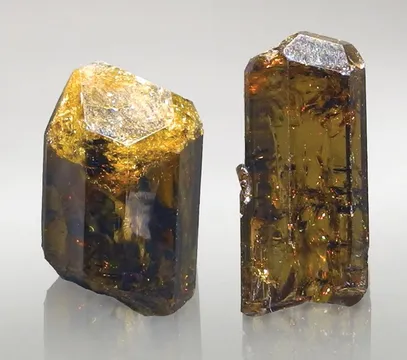
Tanzanian zircon is best known from gem-bearing districts such as the Tanga Province south of Umba and the broader Umba–Tunduru gemstone circuit, where it is recovered mainly as transparent rounded crystals, abraded fragments, and occasional prismatic crystals rather than as matrix specimens. Colors include pale yellow, yellowish brown, orange-brown, brownish pink, reddish brown, red, and greenish tones, with the finest pieces valued for high transparency, lively dispersion, and warm “cinnamon,” “root beer,” or orange-red body color. The Smithsonian’s 30 ct orange-brown Tanzanian zircon reflects the kind of clean, brilliant material that made northeastern Tanzania notable for fancy-color zircon, while Tunduru and related southern gravels add alluvial stones to the country’s zircon record. For specimen collectors, a Tanzanian zircon with recognizable crystal form, attractive natural color, and clean faces is more desirable than a nondescript pebble; for gem collectors, the premium lies in brightness, lack of abrasion, pleasing color, and disclosure of any heating, since zircon in the jewelry trade is commonly heat-treated elsewhere to modify color.
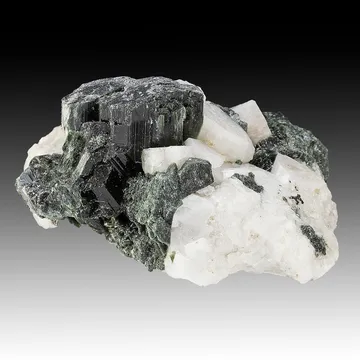
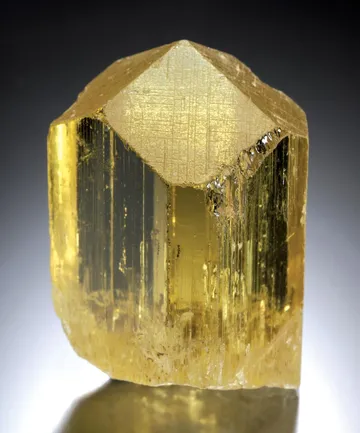
Beyond tanzanite and zircon, Tanzania has produced a long list of collector-worthy species and gem varieties. Merelani alone is documented for green grossular var. tsavorite, chrome diopside, tremolite, fluorapatite, graphite, calcite, pyrite, kyanite, sulfides, and several rarities; it is the type locality for axinite-(Mg), merelaniite, and richardsite. The wider country adds ruby and sapphire from Longido, Mundarara, Winza, Songea, Tunduru, and related districts; rhodolite, “umbalite,” spessartine, hessonite, and other garnets from Umba and southern Tanzania; spinel and chrysoberyl from alluvial gem fields; emerald and alexandrite from Lake Manyara-area occurrences; diamond from Mwadui; and euclase, scapolite, kornerupine, tourmaline, danburite, vesuvianite, clinohumite, and other less common gem minerals from scattered localities. For systematic collectors, the Tanzanian label should always be narrowed when possible, because “Tanzania” may describe anything from a Merelani pocket specimen to a river-worn Tunduru gem pebble.
Tanzanite authenticity and treatment disclosure matter more for Tanzania than for most mineral localities because the locality name and the gem name are tightly linked. True tanzanite is zoisite from Merelani, and fine crystals should show the optical and physical behavior of zoisite rather than that of iolite, sapphire, fluorite, dyed quartz, synthetic spinel, glass, or “tanzanion” simulant material. In faceted stones, lab confirmation is prudent for expensive purchases; in mineral specimens, crystal habit, pleochroism, hardness, cleavage, and association with Merelani matrix are useful clues, but they are not substitutes for provenance and testing.
Heat treatment is normal in tanzanite. Much Merelani material emerges brownish, greyish, bronze, or mixed-color and is heated to improve or stabilize the blue-to-violet appearance. Heating is generally stable and accepted, but collectors of mineral specimens often value unheated crystals when the natural color zoning or trichroic effect is visually interesting. A blue-violet crystal is not automatically unheated, and an “unheated” claim should be treated as a premium assertion requiring strong evidence. Surface coating and fracture filling have also been documented in tanzanite, though they are less routine than heat; coatings can be scratched or abraded, and filled fractures can age or become visually obvious.
Condition is central. Tanzanite has distinct cleavage and only fair to poor toughness compared with corundum, so even a vivid crystal can lose much of its value if the termination is bruised, if the main prism faces are chipped, or if a repaired break runs through the display face. Matrix specimens require extra scrutiny because graphite-rich matrix is soft, dirty, and friable; detached and reattached crystals, stabilized matrix, glued contacts, and cleaned or oiled surfaces should be considered. The best Merelani specimens are not merely blue — they are structurally sound, sharply formed, and naturally balanced.
Zircon from Tanzania brings a different set of issues. Gem zircon is dense, brilliant, and dispersive, but it is brittle and easily abraded along facet junctions. In specimen form, many Tanzanian zircons are alluvial and naturally rounded, so collectors should not expect matrix or sharp crystal perfection from many legitimate stones. Color modification by heat is common in zircon globally; Tanzanian fancy-color zircons should be bought with realistic expectations and, for significant gem purchases, documentation from a reputable laboratory.
Mislabelling is common at the country level. “Tanzanian garnet” may mean Merelani mint grossular, Umba rhodolite, Malaya-type pyrope-spessartine, hessonite, or another garnet entirely. “Tanzanian sapphire” may be from Umba, Tunduru, Songea, Winza, Kibuko, or another field. “Tanzanite from Tanzania” is too broad for a serious specimen label; the desirable locality is Merelani Hills, Lelatema Mountains, Simanjiro District, Manyara Region, Tanzania, with mine block or pit if known. Older labels may use Arusha Region, Mererani, Mirerani, or Merelani; these can be historically meaningful, but they should be interpreted carefully against current administrative names.
Market availability is uneven. Small faceted tanzanites are abundant, but undamaged collector crystals with saturated color and good form are much less common, and matrix specimens are scarcer still. Tanzanian zircons are available in the gem trade but are less often seen as classic mineral specimens. Type-locality rarities such as merelaniite and richardsite are primarily of scientific and micromount interest, while axinite-(Mg) can occur as attractive crystals but remains far less common than tanzanite. For high-end Tanzanian minerals, the best purchases are still made on provenance, condition, and mineralogical honesty rather than on color alone.
The tanzanite story begins with a deceptively simple scene: blue crystals lying on the ground in the bush country near Merelani. Jumanne Mhero Ngoma later described walking toward Kiteto in early January 1967 when he saw “some crystals of a blue mineral” on the ground. He collected about 5 kg in a few hours, took the material to Nairobi after borrowing money for the journey, and left it with a foreign stone company in exchange for a return ticket worth $5. Decades later, he was still waiting for their answer. That little packet of unknown blue crystals became one of the great gemstone discoveries of the twentieth century.
The early commercial story moved quickly from mystery to marketing. The material was recognized as zoisite, an attractive but poorly named mineral for luxury jewelry; Tiffany & Co. understood that “blue zoisite” would never carry the romance of an African discovery. “Tanzanite” did. The new name did more than sell gems — it fixed the stone permanently to its country of origin. Few gem names have worked so well. In one word, it told the buyer that the stone was blue, exotic, modern, and geographically singular.
Merelani itself became a boom landscape. Surface collecting gave way to pits, pits gave way to shafts, and shafts gave way to deep, dangerous tunnelling in black graphitic rock. In Block D, field observers described small claims packed tightly together behind tin siding and barbed wire, the entrances controlled like miniature forts. At the Kikuyu Mine, sixty miners worked underground in two teams of thirty on six-hour shifts. The manager, Nixon Monga, was only 24 and had been running the mine since his father’s death nine years earlier. He explained that hardly any stones had been found in the previous two years and that the work grew harder as tunnels reached deeper.
The descent into Block D is one of the most vivid accounts in modern gem field writing. The shaft began with a vertical drop of about 100 metres down a wooden ladder, followed by 200 to 300 metres of narrow, irregular tunnels toward the active face. The passages were so low that tall visitors could not crawl on hands and knees; they had to slide on their bellies through graphite dust. Masks became nearly useless because breathing through them was harder than breathing the carbon-heavy air. The reward at the working face was not a glittering gallery but veins of pyrite and graphite, followed in hope of the pocket that might change a miner’s life.
When the visitors returned, the surface scene was almost mineralogical in itself. Men emerged from the shaft coated head to foot in graphite, sweating, gasping, and sparkling in the sun. One miner came up after six hours underground with only a small fragment of pale green diopside to show for the shift. That image — black graphite on skin, a green chip in hand, Kilimanjaro in the distance — is part of the true provenance of Merelani specimens. The beauty of a tanzanite crystal is inseparable from the conditions under which it was removed.
The country has also produced spectacular public moments. In 2020, Saniniu Laizer’s mining operation recovered two enormous dark violet-blue tanzanite crystals, reported at 9.27 kg and 5.103 kg; Tanzanian television showed him receiving a large cheque, and President John Magufuli phoned to congratulate him live. Laizer said he wanted to build a school and shops for his community, and stated that a share of the proceeds would go to workers. A third large stone, later reported by the Tanzanian government at 6.33 kg, reinforced the sense that Merelani was not exhausted. For collectors accustomed to thumbnail and miniature crystals, the idea of tanzanite measured by the kilogram rather than the carat is almost surreal.
Another Tanzanian story belongs not to tanzanite but to green grossular. In 2017, a remarkable tsavorite crystal weighing more than 283 carats was found near Merelani. Bruce Bridges, son of tsavorite pioneer Campbell Bridges, saw the rough at a Hong Kong show and recognized its potential. The stone was eventually cut by Victor Tuzlukov into the 116.76 ct square-cushion Lion of Merelani, with 177 facets, and donated to the Smithsonian’s National Gem Collection. It was named in honor of Campbell Bridges, known in the region as “The Lion.” The finished gem is a reminder that Merelani’s mineralogical personality is not only blue-violet; it can also be a hard, vivid, vanadium-green flash from the same extraordinary Tanzanian gem belt.
Far to the south, Tunduru tells a different kind of story. Rather than tight graphite tunnels, its gem fields follow rivers — the Muhuwesi, Mtetesi, Lumesule, Mbwenkuru, and Ruvuma. Mining is seasonal. During wetter months, miners may dig gravels away from the rivers and carry them to water for washing; during the dry season, activity moves into the exposed riverbeds. In the late 1990s Tunduru drew heavy gem-trade attention, but when sapphire was discovered at Ilakaka in Madagascar in 1999, buyers left within months and many miners returned to farming or moved on to other Tanzanian fields. That boom-and-retreat pattern explains why Tanzanian parcels can suddenly appear rich in sapphire, spinel, chrysoberyl, garnet, or zircon, then become difficult to source with the same consistency.
.jpg)