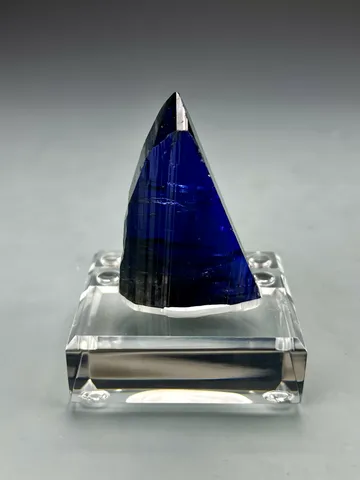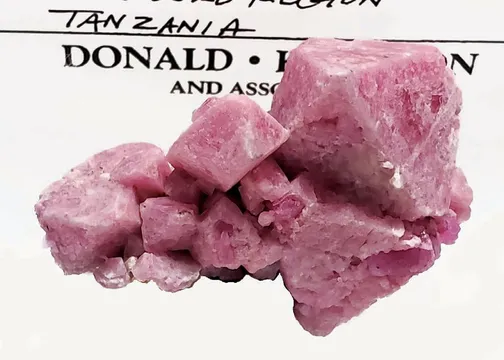
Morogoro, Tanzania - a gem district famed for marble-hosted ruby, pink sapphire, spinel, and scapolite; diverse localities and collector-grade crystals.
Key facts
Morogoro matters to collectors because it is not one mine but a gem district whose name has been stretched by the trade to cover several closely related occurrences in and around the Morogoro Region of eastern Tanzania. The heart of its specimen reputation is the Uluguru–Matombo–Mwaraze–Kibuko belt east of Morogoro town, where ruby, pink sapphire, purple to pink spinel, and golden scapolite have come from metamorphosed carbonate rocks and small marble lenses. Farther south in the same region, Mahenge and its satellite deposits add another important chapter, especially for spinel, but the classic “Morogoro” collector look remains the marble-hosted suite: red to pink corundum, violet spinel, phlogopite, calcite/dolomite marble, graphite, pyrite, tremolite, and scapolite.
Geologically, these are high-grade metamorphic gem deposits in the East African Orogen, where Neoproterozoic cover sequences of marble and calc-silicate rock were folded, thrust, and recrystallized on the gneissic basement of the Eastern Granulites. The best ruby mineralization is structurally controlled: mineralized lenses and mica-rich boudins occur in fold hinges and other zones where fluids could move through the marble. That structural setting explains both the irregular distribution of gems in the field and the dramatic specimen associations collectors prize—small but sharp ruby crystals in pale carbonate, pink spinel from secondary gravels and primary marble, and transparent yellow scapolite crystals from marble lenses worked by local miners.
Regional View
Country View
Historically, Morogoro became visible to the gem trade in stages. Rubies from the broader region were already known by the 1970s, and by the late 1980s and early 1990s the district was important enough that gem laboratories were studying Morogoro ruby because some stones resembled marble-hosted Mogok material. The specimen market later came to know Morogoro for something different from faceted gems: glassy, golden scapolite crystals; lustrous purple spinel clusters; and ruby or pink sapphire crystals that can show clean hexagonal form even when the cutting trade would normally consume such material before it reached collectors.
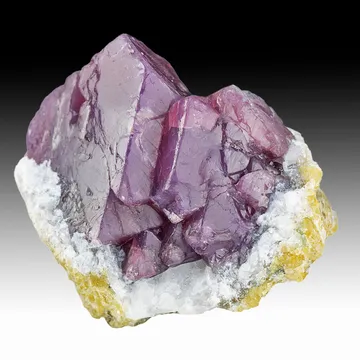
The best specimens have a very recognizable East African marble-deposit character. Scapolite is at its finest as transparent to translucent yellow, amber, or wine-toned prismatic crystals, commonly single terminated, with a bright vitreous luster and enough internal clarity to make them feel like gem rough rather than ordinary rock-forming scapolite. Spinel is usually valued here for color and form—octahedral to modified octahedral purple, pinkish-purple, violet, or red crystals, sometimes on marble or with phlogopite/calcite. Corundum ranges from ruby-red to pink sapphire, commonly as elongated hexagonal prisms, tapered or barrel-like crystals, and occasional matrix pieces; the choicest examples combine sharp morphology, saturated color, undamaged terminations, and honest locality provenance.
Search for specimens: View all specimens from Morogoro, Tanzania
Morogoro collector material comes mainly from small-scale workings in metamorphic gem deposits rather than from a single industrial mine. The Uluguru Mountains east of Morogoro town and the Matombo–Ngongolo–Mwaraze–Kibuko area are especially important for ruby, pink sapphire, spinel, and scapolite. The wider Morogoro Region also includes Mahenge, about 150 km south of Morogoro, whose marble-hosted spinel and ruby occurrences are among the region’s best-known gem sources. Because older gem-trade usage often grouped material from separate mines under “Morogoro,” precise mine names on labels should be treated as valuable but not always present.
The dominant specimen-forming environment is marble and impure carbonate rock within the Eastern Granulites. In the Uluguru deposits, the ruby-bearing assemblage is based on corundum, carbonate, phlogopite, and spinel, with associated calcite or dolomite, pargasite, scapolite, plagioclase, margarite, chlorite, tourmaline, apatite, rutile, pyrite, graphite, and mica. The deposits are not simple tabular ore bodies. Mineralization is concentrated in marble lenses, mica-rich boudins, fold hinges, and permeable zones where metamorphic fluids interacted with the carbonate host. That geometry produces small, discontinuous pockets and lenses rather than large predictable specimen chambers.
At Mwalazi, mineralized nodules have been described with corundum, dolomite, phlogopite, spinel, calcite, pargasite, plagioclase, margarite, tourmaline, apatite, rutile, and sulphides. Euhedral corundum can occur in the core of nodules, while finer-grained phlogopite-rich necks and margins contain smaller corundum and apatite grains. This is an important point for collectors: the most attractive crystals are not necessarily from open cavities in the pegmatite sense, but from selective extraction and trimming of gem-bearing marble and calc-silicate material.
Mining has been mostly artisanal to small scale. Ruby mining around Morogoro expanded notably from the late 1980s, with Matombo and its active areas at Ngongolo, Mwalazi, Gumba, and Nyamuhui named in small-scale mining studies. Other named ruby areas in the broader Morogoro Region include Lukande in Mahenge, plus Kitonga, Nzelezi, Epanko, Ruaha, Kituti, Mayote, and related localities. Licence-application figures from the early 1990s show the boom-and-bust pattern typical of Tanzanian gemstone fields: Morogoro regional small-scale mining licence applications rose from 99 in 1989 to 227 in 1991, then declined sharply by 1995–1996 as attention shifted to the Tunduru rush.
Modern field accounts show a working district rather than an abandoned classic. In the Uluguru area, gem trading has centered in Mkuyuni, while mining has taken place near Matombo, Ngongolo, Mwaraze, and Kibuko. At Matombo, small groups have recovered pink spinel and ruby from secondary deposits near Kiswila. Near Ngongolo, miners using hand tools have worked small rubies from marble with pyrite, graphite, and mica. At Kibuko, pink sapphire was reported from a primary carbonate-and-pyrite occurrence, with some milky “geuda” material and some transparent facet-grade pieces; stones up to 100 carats were reported from that site, and about 20 kg of sapphire was said to have been produced over a six-month period in the mid-2010s.
Access should be approached as a legal and cultural matter, not as a rockhounding stop. Tanzanian mining areas are controlled by mineral rights, and gemstone production moves through licensed miners, brokers, dealers, and export channels. Foreign buyers or visiting collectors need proper permission, local guidance, and appropriate business or research documentation where applicable. The small-scale workings are not casual collecting sites; they are active livelihoods, often on private or licensed ground, and conditions can involve unstable pits, underground workings, flooding risk, hard marble, and limited safety infrastructure.
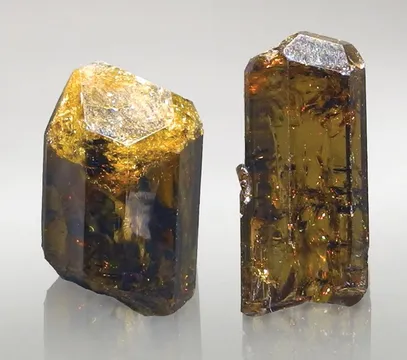
Morogoro’s notable finds are best understood in market waves. The 1970s brought wider recognition of ruby and pink sapphire. The late 1980s and early 1990s produced mixed parcels of spinel and ruby that attracted gemological attention because a notable portion of the so-called spinel lots proved to be ruby or light ruby. In the 2000s, collectors saw more golden scapolite and purple spinel specimens from marble occurrences near Morogoro and the Uluguru Mountains. Around 2013, a limited discovery of yellow danburite from the Morogoro area entered the gem and specimen trade, adding another attractive but separate species to the district’s reputation.
Morogoro scapolite is the locality’s most distinctive non-corundum collector species, best known from small marble occurrences in the Morogoro Rural District and Uluguru Mountains as transparent to translucent yellow, amber, golden-brown, pale yellow, and occasional wine-toned crystals. Good pieces are typically prismatic, lustrous, and singly terminated, ranging from small gem crystals around 1–2 cm to miniature and small-cabinet crystals over 5 cm; recorded examples include slender gem marialite crystals about 1.8 cm long, sharp yellow crystals around 3–4 cm, and unusually large transparent golden crystals approaching 6 cm. The best specimens are bright and glassy, with strong color saturation, clean interiors, intact prism edges, and a complete termination; ordinary pieces are more etched, cloudy, bruised, or merely broken gem rough. Associations tie the material to marble lenses with spinel, clinohumite, graphite, marialite, and tremolite, and some Morogoro scapolite shows attractive ultraviolet response, including faint blue under longwave and red under shortwave light in documented examples.
Morogoro spinel occurs in the same marble-related gem province as the ruby, with collector material ranging from sharp purple, violet, pinkish-purple, and red octahedra to massive or clustered crystals. At the Morogoro marble occurrences, spinel is documented with scapolite, clinohumite, graphite, calcite, and marble; in the broader Morogoro Region, Mahenge-area deposits add classic pink-to-red spinel from marble massifs. Specimen quality depends heavily on crystal definition and surface condition: a sharp, isolated octahedron on pale carbonate or a cluster with lively purple color is far more desirable than dull massive spinel, even if the latter is larger. Gemological work on Morogoro spinel is especially important because reddish to purple stones from the area are known for lamellar högbomite inclusions oriented in the spinel; these inclusions helped link parcels of spinel and ruby to a common Morogoro source in the late 1980s and early 1990s.
Morogoro corundum is principally ruby and pink sapphire, usually in marble-hosted or marble-related deposits, and the best collector specimens show elongated hexagonal prisms, tapered or barrel-shaped crystals, pseudo-octahedral forms, or bright red-to-pink crystals standing from pale carbonate or schistose matrix. The Matombo area is historically important because ruby was reported together with spinel there, and gemological studies of Morogoro parcels found that roughly 10% of some large “spinel” lots were actually ruby or light ruby, including material good enough to facet. Gairo District has also supplied attractive crystallized ruby, including freestanding reddish-pink hexagonal crystals and matrix specimens with strong fluorescence. Fine Morogoro corundum specimens are judged by saturated ruby or vivid pink color, sharp crystal geometry, visible termination, freedom from severe bruising, and credible mine or district attribution; much ordinary material is translucent, fractured, cabochon-grade, or cut before it can reach specimen collectors.
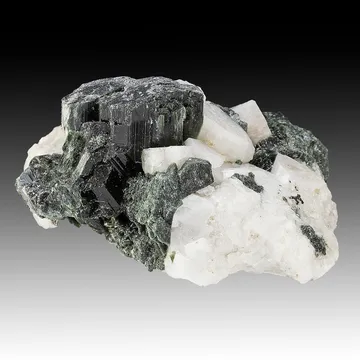
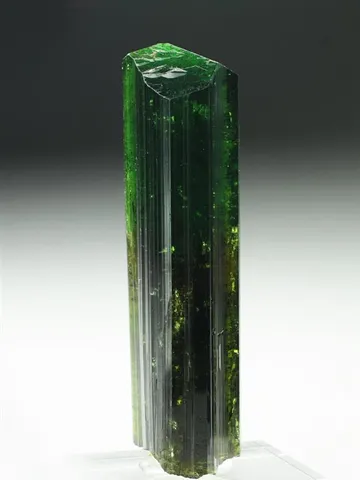
Other documented minerals from the Morogoro Region make the district far broader than the three headline species. Clinohumite, graphite, tremolite, marialite, calcite, dolomite, phlogopite, pargasite, plagioclase, margarite, chlorite, tourmaline, apatite, rutile, pyrite, diopside, magnetite, quartz, and sphene/titanite occur in the marble-hosted gem assemblages. The region also has important rare-species significance at Lukwengule on the western slope of the Uluguru Mountains, where uranium-bearing pegmatite workings produced uraninite altered to rutherfordine; Lukwengule is the type locality for rutherfordine, (UO2)CO3, and associated uranium minerals include kasolite, uranophane, vandendriesscheite, and muscovite. The Morogoro Rural District is also known for yellow danburite from a separate danburite mine, with associated dravite, kyanite, microcline including amazonite, monazite-(Ce), quartz, smoky quartz, blue quartz, schorl, and amphibole-group minerals.
Morogoro labels require careful reading. “Morogoro” may mean Morogoro town, Morogoro Rural District, the Uluguru Mountains, Matombo, Gairo, Kibuko, or even the broader Morogoro Region, including Mahenge. Older gem and specimen labels are often broad because the trade historically referred to rubies from many parts of the region as “Morogoro ruby.” For higher-value pieces, a label naming Matombo, Mwaraze/Mwalazi, Ngongolo, Kibuko, Gairo, Mahenge, Lukande, Kituti, or the marble occurrence is much more informative than “Tanzania” or “Morogoro” alone.
For ruby and pink sapphire, misidentification with spinel has a genuine locality history: Morogoro ruby was found in parcels sold as spinel, and the rough crystals can be superficially confusing when waterworn, distorted, or pseudo-octahedral. That history cuts both ways. Some old stones or specimens labelled spinel deserve verification, and some ruby labels on red spinel should be treated skeptically unless crystal form, hardness, refractive data, or a lab report supports the identification. Fine red corundum from Morogoro can also be confused in the market with other Tanzanian localities, especially Winza, Longido, Umba, and Mahenge, or with marble-hosted ruby from Myanmar, Vietnam, Afghanistan, or Pakistan.
Treatment issues are most relevant to faceted gems rather than matrix specimens. Ruby and sapphire from Tanzania may be heated, fracture-filled, dyed, or otherwise represented poorly in the gem trade, but well-formed Morogoro mineral specimens are generally valued for natural crystal form and locality rather than cutting enhancement. Be alert for oiled or resin-stabilized fractured ruby crystals, repaired matrix pieces, and overly tidy “ruby on matrix” specimens assembled from loose crystals and carbonate. Natural iron-stained fissures, graphite-rich marble, and mica partings are common; glue lines and unnatural contact geometry are not.
Scapolite from Morogoro is often sold as scapolite rather than by precise end-member name. Marialite has been documented from the marble occurrence, but unless a label is supported by analysis or a museum record, “scapolite” is the safer species-level designation for most trade specimens. Good scapolite is brittle enough to chip along prism edges and terminations, and the best transparent crystals show damage readily. Avoid washing in acids or aggressive cleaners; carbonate matrix and associated calcite/dolomite can be attacked, and some surface luster may be compromised by careless cleaning. UV response can be attractive, especially in shortwave, but should be tested gently and not used as the sole basis for identification.
Spinel is tougher than scapolite and corundum is harder still, but Morogoro specimens are still vulnerable because they are often perched in soft carbonate or mica-rich matrix. The commonest condition issues are bruised octahedral points on spinel, contacted or chipped ruby terminations, friable marble, and broken scapolite bases. For thumbnail and miniature collectors, intact geometry matters more than size: a 2 cm undamaged golden scapolite or a sharp pink spinel on marble can outrank a larger, dull, incomplete piece.
Rarity varies sharply by species and style. Facetable ruby, pink sapphire, and spinel continue to move through gem channels, but matrix specimens with strong aesthetics are much scarcer because the mining is small-scale and the economic incentive favors cutting rough. Golden scapolite from Morogoro appears periodically and is obtainable, but clean, lustrous, terminated crystals with strong color are not common. Rutherfordine from Lukwengule is a specialist rarity: topotype specimens with uraninite cubes and yellow rutherfordine coatings are old, scarce, radioactive, and belong in a properly labelled rare-species suite with appropriate handling and storage.
The most revealing Morogoro story begins not with a spectacular pocket, but with a parcel problem. In June 1987, gemologists began examining spinels reportedly from a new Tanzanian source. The parcels were colorful—red, orange, reddish purple, purplish blue, and blue—and many of the stones carried distinctive lamellae later associated with högbomite. Then came the surprise: in large parcels sold as spinel, roughly one stone in ten proved to be ruby or light ruby. Some dealers already separated the two materials before cutting, but others did not realize that facetable ruby, some of good to excellent quality, was mixed into their spinel rough. That confusion turned Morogoro from a trading name into a gemological case study.
The scientific tension came from resemblance. The new Morogoro rubies shared features with marble-hosted rubies from Mogok, Myanmar, enough to worry laboratories that issue origin reports. The stones could show rutile silk, negative crystals, spinel inclusions, zircon, apatite, and growth structures reminiscent of Burmese material. Some rutile concentrations were dense enough to produce star stones when cut en cabochon. The researchers examined more than 60 Morogoro samples—about 50 rough crystals, 10 faceted stones, and three cabochons—and compared the new find with older Morogoro ruby, which was usually more translucent, more cabochon-grade, and chemically different. In the trade, that moment gave Morogoro a reputation larger than its output: a Tanzanian marble deposit whose rubies could enter conversations normally reserved for the old Asian classics.
A very different field story comes from 2013, when gem cutter and dealer Lisa Elser and Tom were asked by the Federation of Canadian Municipalities to spend a week in Morogoro consulting with the local mining cooperative. The budget was small—about 30,000 to 40,000 dollars—and local hopes were large. Morogoro’s leaders and mine owners hoped for something like a major cutting house. Elser’s assessment was blunt: unreliable power, no established trained workforce, limited market infrastructure, and the modest budget made that impossible. Over five days, the visitors worked out a more practical plan.
On one mine trip, a miner handed Elser yellow rough described as tourmaline. She opened her portable field-gemology kit and identified it instead as danburite, a small moment that captured the larger problem: miners were selling stones without always knowing what they were. The cooperative office proposed for cutting was “tiny, dark, and damp,” not a place to build a professional lapidary operation. The better answer was mobile knowledge. With the available funds, the program could train and equip two gemologists and two gem cutters. The gemologists could travel by bus to emerging regional gem markets and charge local testing fees; the cutters could work in a well-lit hotel with reliable power and tourist traffic. The goal was not glamour, but leverage: give miners and brokers enough identification and grading knowledge to negotiate better prices before rough disappeared down the trading chain.
There is one collector-market lesson in that same story that every buyer of “mine direct” stones should remember. Elser noted that rough usually leaves small mines within days or even hours. Brokers carry material to town, and much buying happens at markets or offices rather than at the pit. The romance of standing at the source is real, but the economics are faster than the romance. A Morogoro stone with a good story still needs the ordinary discipline of specimen buying: correct species, credible locality, honest treatment disclosure, and a chain of custody that makes sense.