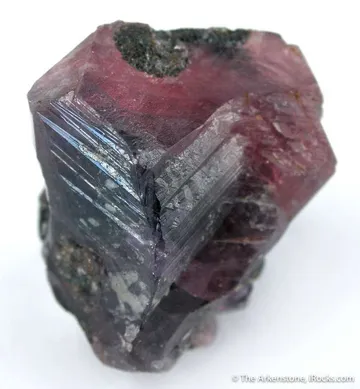
Dodoma Region, Tanzania - a cluster of metamorphic terrains producing Mautia Hill’s rare yoderite and amphibole–magnetite crystals, plus Winza rubies.
Key facts
Dodoma Region occupies a remarkable collector’s position in central Tanzania because it is not a single-mine locality in the ordinary sense, but a cluster of specimen-producing metamorphic terrains and small-scale gem fields spread across the interior plateau. Its most scientifically famous mineral ground is Mautia Hill near Kongwa, a classic high-pressure whiteschist locality in the East African Orogen where talc–kyanite–quartz rocks, amphibole-bearing schists, metabasites, marbles, quartzites, and pegmatites preserve an unusually oxidized, water-rich metamorphic history. That small hill made its name in mineralogy through yoderite, first described from there in 1959, and later through a suite of rare phases including yellow sapphirine, manganian andalusite, piemontite, hollandite, kornerupine, pseudobrookite, and magnesiohögbomite-2N3S.
For the specimen market, Dodoma has recently become better known for handsome amphibole–magnetite combinations from the Kongwa–Ijaka and Chemba–Mondo areas: dark green to green-black actinolite crystals with unusually stout, lustrous, striated faces, and sharp magnetite octahedra with a metallic to submetallic sheen. These are not the silky, fibrous actinolites familiar from many metamorphic belts; the better Dodoma pieces are chunky, architectural crystals, often set against pale grey or whitish matrix that gives the green-black amphibole a strong visual contrast. Magnetite pieces, when well developed, are miniature-scale octahedra with enough sharpness and luster to stand as species specimens, not merely accessory iron oxide.
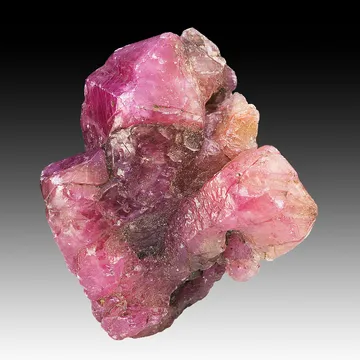
Dodoma’s broader mineral identity is enlarged by the Winza ruby and sapphire field in Mpwapwa District, one of the great East African gem discoveries of the early twenty-first century. Winza corundum belongs to metamorphic amphibolite-hosted mineralization of the Paleoproterozoic Usagaran Belt and produced rubies and sapphires that startled the gem trade in late 2007 and 2008 with vivid color, high transparency, and distinctive bluish-violet zoning. Thus the region combines three collecting stories: a type-locality metamorphic mineral suite at Mautia Hill, modern display-quality actinolite and magnetite specimens from central Tanzanian metamorphic rocks, and one of Tanzania’s most discussed modern ruby-sapphire occurrences.
Regional View
Country View
The look of the best specimens is distinctive. Mautia Hill pieces tend to be petrographic collector material: violet-blue yoderite laths and grains in talc–quartz–kyanite schist, red piemontite coloring quartz, or rare assemblage slices that reward a loupe or microscope as much as a display case. The newer actinolite and magnetite material is more cabinet-oriented: blocky to prismatic amphibole crystals, dark but flashing green on broken or striated faces, and compact metallic magnetite crystals sometimes carrying green actinolite on their backs or edges.


Search for specimens: View all specimens from Dodoma Region, Tanzania
Dodoma Region lies in central Tanzania along the meeting ground of several important Precambrian crustal elements. To collectors, the most important names are Kongwa, Mautia Hill, Ijaka, Mondo, Chemba, Mpwapwa, and Winza. Mautia Hill is a small but mineralogically famous metamorphic hill near Kongwa, historically also encountered in older literature under Tanganyika or Central Province labels. Its rocks belong to the East African Orogen and include high-pressure whiteschists, amphibole–kyanite–talc–quartz schists, enstatite–sapphirine–chlorite schists, metapelites, garnet–clinopyroxene–quartz metabasites, marbles, quartzites, and pegmatites. The key mineralogical event was not ore deposition in a vein sense, but high-grade metamorphism and fluid infiltration under oxidizing conditions. That environment generated uncommon Mg-Al-Si-H2O and Mn-bearing assemblages, with peak pressures around 10–11 kbar and maximum temperatures inferred near 720 °C in modern petrologic work on the hill.
The collector-grade actinolite and magnetite specimens attributed to Dodoma Region appear in the trade chiefly from Kongwa/Ijaka and Mondo in Chemba District. The exact workings behind many specimen labels are not well documented publicly, and most specimens reach the market through small-scale Tanzanian collecting and dealer channels rather than through a named industrial mine. What can be said from documented dealer specimens is that the material occurs as lustrous dark green to green-black actinolite crystals, sometimes on grey matrix, and as sharp magnetite octahedra, in several cases directly associated with green actinolite. These pieces are best treated as metamorphic specimen material from local small workings or surface collecting areas, not as products of a large, continuously operated mine.
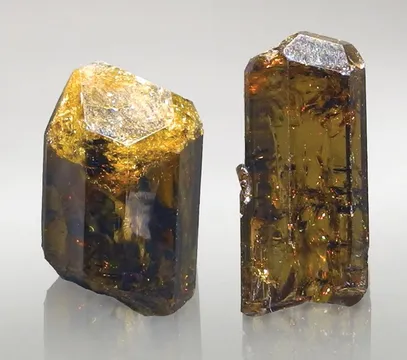
Mautia Hill’s rare-mineral assemblages occupy specific metamorphic zones rather than open pockets in the classic pegmatite or alpine-cleft sense. Högbomite-sapphirine assemblages have been recorded at the junction of dolomite marble and quartz-yoderite-kyanite-talc schist, while yoderite is characteristic of quartz–kyanite–talc schist and related whiteschist assemblages. Purple yoderite is the historical showpiece, commonly appearing as dark bluish to violet laths or anhedral grains intergrown with quartz, talc, and kyanite. Green yoderite is much rarer and has been studied from the type locality as a distinct color variety.
The Winza field in Mpwapwa District is a different kind of deposit. There, ruby and sapphire occur in both primary and eluvial settings. The primary corundum is hosted by amphibolitic rocks in the Usagaran Belt, with corundum contained in amphibole–garnet ± plagioclase “dikes” or dike-like bodies; weathering of those primary rocks produced an overlying eluvial soil that also carried gem corundum. The Winza rush began when the deposit entered the trade in late 2007 and early 2008. By mid-2008, mining was being carried out by many small groups organized around a local miners’ association. The eluvial soil was dug with picks and shovels, carried to the Mtindiri River by hand, bicycle, cart, or truck, and washed with pumps and screens. Primary tunnels had reached depths of about 30 m during early documentation of the field.
Other mineralization in Dodoma is more industrial or exploration-oriented. The Asanje iron ore deposit in the Mayamaya-Hombolo Belt consists of iron ores hosted by Precambrian volcano-sedimentary rocks. Published work describes two parallel NW-SE ridges: one with vein and banded hematite-type ore, the other with massive-type ore. XRD study showed hematite and goethite as the main components with quartz gangue, and geochemical work classified the ores as low to medium grade for metallurgical and cement-industry use. Regional development documents also record gypsum in Mpwapwa and Chamwino, limestone and quartz in Chemba, manganese in Mpwapwa, nickel in Chamwino, copper occurrences in Mpwapwa, and scapolite in the Mpwapwa–Rubeho area.
Collecting access today should be regarded as controlled and permission-dependent. Tanzania’s mineral sector is regulated under national mining law, and gem mining areas in particular require proper authorization from the relevant authorities and mineral-rights holders. The same caution applies to scientifically important sites such as Mautia Hill, where rare type-locality mineral assemblages have heritage and research value. Serious collectors should buy from reputable sources with precise labels and should avoid assuming that historical field localities are open-access collecting ground.
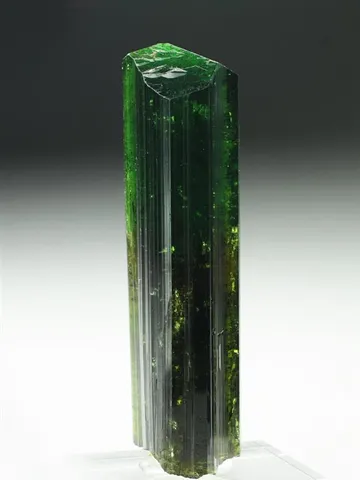
Dodoma actinolite is prized because much of the recent collector material is unusually robust for the species: dark green to green-black, lustrous, prismatic to blocky crystals with striated faces and occasional reflective green zones rather than merely fibrous sprays. Specimens labeled Kongwa, Ijaka, or Kangwa in the trade commonly range from thumbnail and miniature pieces to small-cabinet examples around 5–8 cm across, with some crystals set on pale grey or whitish matrix that gives a strong color contrast; the best examples show complete terminations, crisp faces, and enough separation that the amphibole reads as individual crystals rather than a matted mass. Association with magnetite is important, especially on Ijaka and Mondo material, and the most desirable combination specimens balance a sharp metallic magnetite octahedron with green actinolite on the rear or matrix side. The distinctive Dodoma look entered the wider collector market in the early 2020s, including material shown at Tucson, and good pieces are separated from ordinary ones by luster, crystal thickness, visible green flash, matrix contrast, and lack of bruised or fibrous broken edges.
Magnetite from Dodoma Region is best known in the specimen trade as sharp, compact octahedral crystals from Ijaka in Kongwa District and Mondo in Chemba District, commonly miniature in scale rather than cabinet-sized masses. Documented dealer pieces include lustrous to semi-lustrous metallic crystals around 3–4 cm, in some cases with a red-brown surface hue and green actinolite crystals attached on the back or along the matrix contact. The appeal is straightforward: good Dodoma magnetite should show a complete octahedral habit, clean edges, bright metallic luster, and minimal contacting; average pieces are darker, duller, more massive, or visually dependent on the actinolite association. The finest combinations work as both magnetite and locality specimens, because the green amphibole provides a clear metamorphic association and a color counterpoint to the black iron oxide.
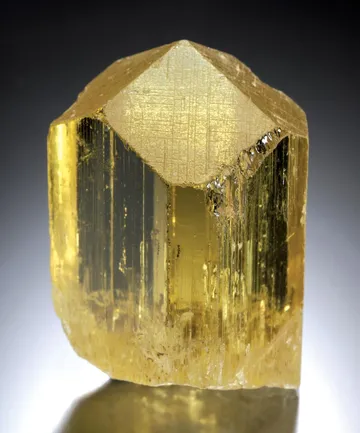
Beyond actinolite and magnetite, Dodoma Region’s mineral list is anchored by Mautia Hill’s rare metamorphic assemblage and Winza’s corundum suite. Mautia Hill is the type locality of yoderite, Mg(Al,Fe3+)3(SiO4)2O(OH), and an important type or co-type locality for magnesiohögbomite-2N3S, [(Mg,Fe2+,Zn)4(Al,Ti,Fe3+)10O19(OH)]2. The hill has yielded kyanite, talc, quartz, hematite, rutile, pseudobrookite, hollandite, piemontite, sapphirine, andalusite, anthophyllite, tremolite, magnesio-hornblende, kornerupine, diopside, dolomite, enstatite, zircon, titanite, and corundum. Winza adds ruby and sapphire, commonly with amphibole, garnet, apatite, and opaque inclusions; Mpwapwa is also known for scapolite, including golden-yellow and purple material, and cat’s-eye scapolite with magnetite inclusions has been documented from the Dodoma area.
Dodoma Region labels deserve careful reading. “Dodoma, Tanzania” may refer to several quite different specimen-producing areas: Mautia Hill yoderite assemblages near Kongwa, Kongwa/Ijaka actinolite, Mondo/Chemba magnetite with actinolite, Winza ruby-sapphire material in Mpwapwa District, or older Mpwapwa scapolite. Serious collectors should prefer labels that retain the sublocality—Mautia Hill, Ijaka, Kongwa, Mondo, Chemba, Winza, Mpwapwa—because the geological meaning and market value change sharply from one name to another.
The most important authenticity issue documented for the region concerns Winza corundum. Early Winza rubies were so transparent and brightly colored that some buyers suspected them of being synthetic. The reverse problem also occurred: synthetic ruby was found mixed into parcels being offered as Winza material, and pink-red spinel was also noted as a possible parcel contaminant. For faceted Winza stones, locality-specific inclusions, color zoning, and chemistry are important; relatively high Fe content and characteristic amphibole, garnet, apatite, limonite-like tubes or hairs, healed fissures, and bluish-violet zoning can help separate natural Winza stones from synthetics and from rubies of other origins. Heat treatment was reported as uncommon in early Winza faceted material, but heat-treated stones were identified by gem laboratories soon after the deposit entered the market.
For actinolite, the main practical issue is condition and habit. Dodoma actinolite should not be confused with asbestiform amphibole simply because the species can occur in fibrous habits elsewhere. The most collectible Dodoma specimens are stout, crystallized pieces; still, broken fibrous edges or splintery surfaces should be handled sensibly, kept out of abrasion, and not cleaned aggressively. Avoid ultrasonic cleaning and vigorous brushing. Dusty matrix can usually be dealt with by gentle air, a soft artist’s brush, or careful water rinsing if the matrix is stable.
Magnetite from Dodoma is dense, brittle at sharp points, and vulnerable to edge bruising. It should be stored so that octahedral corners do not strike other specimens. A reddish-brown surface hue on some Mondo pieces appears to be natural oxidation or surface alteration, not necessarily damage, but buyers should distinguish attractive patina from dull, weathered, rounded faces. Because Dodoma magnetite specimens are not abundant on the market, crisp miniature crystals with actinolite association are worth preserving with their dealer labels and acquisition history.
Mautia Hill rare-mineral specimens are usually locality and species pieces rather than aesthetic cabinet specimens. Yoderite is typically best appreciated with magnification, and many specimens are matrix-rich schists with dark violet-blue or bluish-black grains. Good pieces show visible yoderite in association with kyanite, talc, and quartz, and labels mentioning the type locality are significant. Piemontite-bearing quartz from Mautia Hill can look like red-stained quartz; the value lies in the documented Mn-bearing epidote-group inclusion, not in quartz quality alone. Magnesiohögbomite-2N3S should be treated with particular caution: it is a technical rare species requiring analytical support, and visually similar orange kyanite or other phases from Mautia Hill have caused discussion among collectors.
Market availability is uneven. Actinolite from Dodoma appears periodically and is currently the easiest Dodoma display species to obtain. Magnetite with actinolite is scarcer but has appeared through specialist dealers. Yoderite and other Mautia Hill rarities surface sporadically from older collections and are usually modest in size. Winza ruby and sapphire remain available in the gem trade, but fine natural crystals or matrix specimens with reliable provenance are much less common than cut stones and parcels of rough.
Mautia Hill’s story begins not with a gem rush but with a mineral that seemed to belong to the laboratory before it belonged to the field. Duncan McKie described yoderite in 1959 from Mautia Hill, then in Tanganyika, as a major constituent of quartz–kyanite–talc schist. The new mineral was named for Hatten Schuyler Yoder Jr., the experimental petrologist whose work on high-pressure silicate systems made the name especially apt. Yoderite was not just another rare accessory: it was a clue to pressure, water, oxidation, and reaction. In McKie’s interpretation, kyanite and talc reacted to form yoderite and quartz, placing the blue-violet mineral at the center of a high-pressure metamorphic puzzle.
Decades later, Mautia Hill remained small on the map but large in the literature. Petrologists returned to its whiteschists because the hill preserves a rare combination: talc–kyanite rocks, oxidized iron-bearing assemblages, and an array of uncommon minerals that seem excessive for such a restricted outcrop. Modern work framed Mautia Hill as a record of fluid infiltration during high-grade metamorphism. The numbers are severe: pressures around 10–11 kbar, temperatures up to about 720 °C, and later decompression recorded by reaction rims. For a collector holding a dark yoderite grain in pale talc–quartz schist, that means the specimen is not merely rare by species count; it is a hand sample of crust once driven to roughly lower-crustal depths and then returned.
The Winza story is more dramatic in the human sense. In November 2007, news moved through Tanzania’s gem-mining community that ruby had been found near Winza village in Mpwapwa District. Within a few days, miners were heading toward the deposit. By January 2008, a Tanzanian broker, Abdul Msellem, reported that about 600 miners were already working there, recovering pink to red rubies as well as blue and purple sapphires. The first accounts placed facetable stones mostly in the 0.5–3 g range, with well-formed crystals reaching about 10 g. The locality name Mtakanini, attached to a nearby hill and interpreted in one published account as meaning “what do you want?” in Swahili, became part of the field vocabulary.
By mid-2008 the scene had all the mechanics of a classic East African gem rush, but in central Tanzania rather than the better-known northern and southern gem belts. The miners worked eluvial soil with picks and shovels, carried sacks of gem-bearing earth by hand and bicycle, and washed the material at the Mtindiri River. In the dry season, when the river lacked water, they dug pits in the riverbed and built small dams to create washing pools. Primary mining began in March 2008; by the time of early scientific visits, tunnels had reached depths of about 30 m, and material was hauled up in buckets using windlasses or ropes.
The trade response was immediate and anxious. Some of the best Winza rubies were so clean, bright, and transparent that experienced buyers wondered whether they could be natural at all. The suspicion was not idle: synthetic stones were documented in parcels offered as Winza ruby, including convincing rough with color zoning. Yet the natural stones had their own internal signature—amphibole crystals, garnet, apatite, long orange-brown tubes or hairs, healed fissures, and bluish-violet zoning unlike ordinary ruby from older sources. The deposit forced gemologists to build a new reference file almost as soon as the stones appeared.
Mpwapwa, the nearby town, became part of the Winza system. Tanzanian brokers typically bought at the mine and sold to foreign buyers in Mpwapwa, where buying offices and advertisements made the town reminiscent of earlier rush centers such as Tunduru in Tanzania and Ilakaka in Madagascar. Much of the production moved onward to Bangkok and Colombo, linking a small central Tanzanian field to the great cutting and trading centers of the colored-stone world.
Duncan McKie, “Yoderite, a new hydrous magnesium iron aluminosilicate from Mautia Hill, Tanganyika,” Mineralogical Magazine and Journal of the Mineralogical Society, Vol. 32, Issue 247, 1959, pp. 282–307. The original description of yoderite from Mautia Hill, including occurrence in quartz–kyanite–talc schist, crystallography, chemistry, and interpretation as a high-pressure phase. Cambridge Core / RRUFF PDF
Duncan McKie, “The högbomite polytypes,” Mineralogical Magazine, Vol. 33, 1963, pp. 563–580. A key early paper on högbomite polytypes, including material from Mautia Hill, where högbomite-group minerals occur in rare sapphirine-bearing assemblages. RRUFF PDF
Duncan McKie, “Order-disorder in sapphirine,” Mineralogical Magazine, Vol. 33, Issue 263, 1963, pp. 635–645. Important for the Mautia Hill sapphirine record and associated high-grade Mg-Al assemblages. Mindat reference and locality indexing
Niels Jöns and Volker Schenk, “Petrology of Whiteschists and Associated Rocks at Mautia Hill (Tanzania): Fluid Infiltration during High-Grade Metamorphism?” Journal of Petrology, Vol. 45, Issue 10, 2004, pp. 1959–1981. The essential modern petrologic treatment of Mautia Hill, documenting talc–kyanite whiteschists, amphibole-bearing schists, peak P-T conditions, oxidizing assemblages, and fluid infiltration. Oxford Academic
T. Armbruster, “Revised nomenclature of högbomite, nigerite, and taaffeite minerals,” European Journal of Mineralogy, Vol. 14, 2002, pp. 389–395. The reference tied to magnesiohögbomite-2N3S nomenclature and the Mautia Hill type or co-type record. Mindat reference
Dietmar Schwarz, Vincent Pardieu, John M. Saul, Karl Schmetzer, Brendan M. Laurs, Gaston Giuliani, Leo Klemm, Anna-Kathrin Malsy, Eric Erel, Christoph Hauzenberger, Garry Du Toit, Anthony E. Fallick, and Daniel Ohnenstetter, “Rubies and Sapphires from Winza, Central Tanzania,” Gems & Gemology, Vol. 44, No. 4, 2008, pp. 322–347. The major gemological and geological study of Winza ruby and sapphire, covering mining, host rocks, morphology, inclusions, chemistry, synthetics, and heat-treatment issues. GIA PDF
Yusto J. Shine, Michael M. Msabi, and Jagarlamudi Seetharamaiah, “Mineralogy and Geochemistry of the Asanje Iron Ore Deposit within the Mayamaya-Hombolo Belt, Dodoma Region, Central Tanzania,” Tanzania Journal of Science, Vol. 48, Issue 3, Article 16, 2022. A regional economic-geology paper documenting hematite-goethite iron ore, quartz gangue, two NW-SE ridges, and low- to medium-grade ore chemistry at Asanje. University of Dar es Salaam Digital Commons
Monruedee Chaipaksa and Brendan M. Laurs, “Scapolite from Tanzania with Magnetite Inclusions,” The Journal of Gemmology, Vol. 35, No. 3, 2016. A gem note comparing magnetite-included scapolite to previously documented brown cat’s-eye meionite from the Dodoma area. Gem-A PDF
Handbook of Mineralogy, “Yoderite.” Concise mineral data sheet listing Mautia Hill occurrence, association with kyanite, talc, hematite, and quartz, and type-material repositories including the Geological Survey of Tanzania and the National Museum of Natural History, Washington, D.C. Handbook of Mineralogy PDF
“Expedition to New Ruby Mines in Winza, Tanzania / Sapphire Mining in Madagascar,” Gems & Gemology media review, Fall 2009 — A review of the GRS Gemresearch Swisslab DVD supplement, noting Winza mine-shaft footage, interviews with miners and officials, Mpwapwa buying offices, and Dar es Salaam customs offices. URL: https://www.gia.edu/doc/FA09.pdf
GRS Gemresearch Swisslab, Winza Rubies Identified, Contributions to Gemology No. 7, December 2008 / January 2009 material — A field-and-laboratory media package on the Winza ruby discovery, including expedition material from the new ruby mines. URL: https://www.gemresearch.ch/assets/contributions_to_gemology/2008-journal-07.pdf
Mindat: Dodoma Region, Tanzania — Regional locality page aggregating documented minerals and sublocalities across Dodoma Region.
Mindat: Mautia Hill, Kongwa District, Dodoma Region — Essential locality record for yoderite, magnesiohögbomite-2N3S, and the Mautia Hill rare metamorphic assemblage.
Mindat: Kongwa District, Dodoma Region — District-level locality record including Ijaka and Mautia Hill mineral entries.
Mindat: Mpwapwa District, Dodoma Region — District-level page for Winza corundum, scapolite, garnet, kyanite, pargasite, and other Mpwapwa minerals.
WebMineral: Yoderite — Mineral data and crystallographic summary for yoderite, with Mautia Hill listed as the locality.
Handbook of Mineralogy: Yoderite PDF — Compact technical reference for formula, occurrence, associations, type material, and key yoderite literature.
RRUFF: McKie 1959 yoderite original description — Full scan of the original yoderite description from Mautia Hill.
Oxford Academic: Jöns & Schenk 2004 Mautia Hill whiteschist petrology — Authoritative modern paper on high-pressure metamorphism and fluid infiltration at Mautia Hill.
GIA: Rubies and Sapphires from Winza, Central Tanzania — Primary gemological reference for Winza ruby and sapphire geology, mining, inclusions, chemistry, and identification.
Rapaport: Field Report from Winza — Field-report account of the early Winza ruby rush, including miners, buyers, and initial gemological concerns.
University of Dar es Salaam Digital Commons: Asanje Iron Ore Deposit — Published regional study of iron-ore mineralogy and geochemistry in the Mayamaya-Hombolo Belt.
Quebul Fine Minerals: Magnetite with Actinolite from Mondo, Chemba — Dealer-documented example of Dodoma magnetite with actinolite, useful for visualizing the current specimen style.
Weinrich Minerals: Magnetite with Actinolite from Ijaka, Dodoma — Dealer record of an Ijaka magnetite-actinolite combination specimen.
Mine Mineral Market: Actinolite from Kongwa, Dodoma Region — Dealer record describing recent Kongwa actinolite material and its Tucson 2022 market appearance.
Wikimedia Commons: Yoderite in talc from Mautia Hill — Public-domain specimen photograph of yoderite from Mautia Hill.
Wikimedia Commons: Piemontite from Mautia Hill — Photograph of piemontite coloring quartz from the Mautia Hill assemblage.