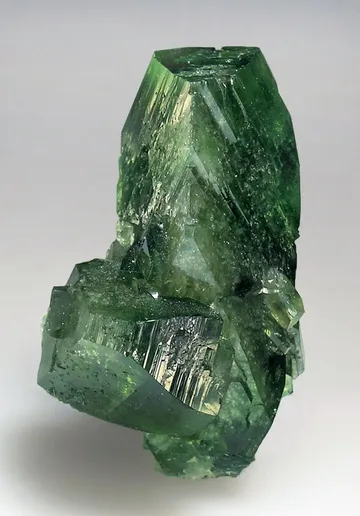
Mammoth mine, USA - classic Tintic locality in Utah, yielding dark, dense copper-ores with azurite, malachite, clinoclase and arsenates; prized by collectors.
Key facts
Mammoth Mine is one of the classic specimen localities of the Tintic Mining District of central Utah: a deep, historically important Cu-Au-Ag-Pb-Zn-As mine at the old camp of Mammoth, near Eureka, in the East Tintic Mountains of Juab County. To ore geologists it belongs to the great Main Tintic system of structurally controlled fissure veins, chimneys, pipes, and carbonate-replacement bodies developed in strongly deformed Paleozoic carbonate and quartzite units around the Silver City intrusive complex. To collectors it means something more tactile: dark cellular chalcocite and enargite-rich ore, brilliant green malachite and brochantite, velvety to radiating blue-green clinoclase, sharp blue azurite, and a suite of arsenates, carbonates, sulfates, chlorides, tellurates, bismuth species, and oxidized copper minerals that made Mammoth a natural laboratory long before “micro-mineral” was a collecting category.
The mine sits near the southern, copper-gold-rich end of the Main Tintic metal zonation, where the district’s productive “ore runs” pass from Cu-Au-Ag chimneys and fissures into more lead-zinc-silver replacement deposits northward. The best Mammoth specimens therefore have a different look from the silver-lead classics of Eureka: they are often compact, heavy, and dark, with oxidized pockets and vugs breaking through sulfide matrix. Fine pieces show color contrast rather than theatrical size—indigo azurite against malachite, blue-green clinoclase hemispheres on altered copper ore, emerald brochantite in cellular chalcocite, quartz-barite gangue, limonite, and arsenate crusts that reward a loupe.
Regional View
Country View
Mammoth is especially prized by advanced collectors because its specimens bridge three worlds: old-time Western mining history, classic secondary copper mineralogy, and analytical rare-species work. Many of the most desirable pieces are not large show specimens in the Bisbee or Tsumeb sense; they are dense, serious, locality-rich cabinet and miniature pieces whose value lies in association, age, and chemistry. The label “Mammoth Mine, Tintic District” on clinoclase, azurite, brochantite, chalcocite, olivenite, cornwallite, tyrolite, carminite, conichalcite, or arsenobismite should always make a collector slow down and look closely.

Photo: Wikimedia Commons
Search for specimens: View all specimens from Mammoth mine, USA
Mammoth Mine is the historic Mammoth Mine at Mammoth, Tintic Mining District, East Tintic Mountains, Juab County, Utah, USA. Mineralogically it should not be confused with the Mammoth-Saint Anthony Mine at Tiger, Arizona, nor with other American mines of the same name. The Utah mine is recorded as a former copper-gold-silver-lead-zinc-arsenic producer on patented private ground near Mammoth Peak, east-northeast of the old townsite of Mammoth and south of Eureka.
The deposit belongs to the Main Tintic district, a polymetallic intrusive-related system formed in a thick Paleozoic sedimentary section that was folded, faulted, intruded, and later mineralized by hydrothermal fluids. The district’s ore bodies include fissure veins, carbonate-replacement deposits, chimneys, pipes, mantos, and related porphyry-style and skarn prospects. Mammoth lies near the copper-gold-rich southern end of the principal Main Tintic ore system, in the region of the Mammoth-Chief ore run. The Mammoth ore body itself is best understood as a large, steeply developed copper-gold-silver chimney and fissure-related replacement system, with favorable carbonate beds, steep structures, brecciation, and jasperoid providing the plumbing and reactive host rocks.
The larger Tintic stratigraphy begins with Cambrian quartzite and thick carbonate successions, overlain locally by younger volcanic rocks and cut by Eocene–Oligocene intrusive rocks. The important controls at Mammoth are structural: steep mineralized fissures, the Sioux-Ajax fault system, cross faults, folded carbonate beds, and pipe-like zones of enhanced permeability. In the southern Main Tintic area, fissures and vertical chimneys tend to be richer in copper and gold than the more northerly lead-zinc-silver replacement bodies. That zonation is written directly into Mammoth specimens: copper sulfides and sulfosalts below, and a spectacular oxidized suite of copper carbonates, copper arsenates, sulfates, and associated lead, bismuth, and iron species above.
Historically, Mammoth was one of the most important producers in the district. The broader Tintic district began with discoveries in the late 1860s and early 1870s; the Mammoth discovery is generally placed in 1870, with important development following soon after. The mine became one of the district’s deep and persistent operations, eventually reaching more than 2,600 feet underground. Reported post-1901 production for Mammoth is about 1.179 million tonnes averaging roughly 9.7 g/t gold, 349 g/t silver, 1.42% copper, and 1.39% lead, placing it among the top historic producers of the Main Tintic district. The mine’s ore was not a simple single-metal proposition: Mammoth shipped and treated copper, silver, gold, lead, and arsenic-bearing material, and its complex oxidized and primary mineralogy repeatedly challenged early metallurgical schemes.
The mine and its camp had the surface infrastructure expected of a major Tintic operation: shafts, hoists, a mill, boarding facilities, mine offices, assay and shop buildings, dumps, roads, and later railroad connections. The Mammoth mill operated at the mouth of Mammoth Hollow in the late nineteenth and early twentieth centuries, built to reduce the expensive wagon haul from the mine above. The steep terrain mattered economically: moving ore from the mine to reduction works was difficult enough that a short, steep railroad branch—the East Tintic Railway—was organized in the 1890s to connect the mine area with rail service at Mammoth.
The mine’s best-known mineral specimens came from oxidized zones and from old ore and dump material associated with the Mammoth-Ajax copper zone. Early scientific work on the district emphasized that many of the rare copper minerals from Mammoth were alteration products of arsenic-bearing primary copper minerals, especially enargite-rich ore. That paragenesis is collector-relevant: good specimens often show a sulfide or sulfosalt parentage, cellular ore textures, and late blue-green copper arsenates or carbonates lining cavities. Clinoclase is the signature collector species, but the associated azurite, malachite, brochantite, olivenite, cornwallite, conichalcite, tyrolite, carminite, chalcophyllite, and other secondary species are what give Mammoth specimens their distinct Tintic character.
Collecting access today must be treated conservatively. The Mammoth Mine area is patented private land, and the district has seen modern corporate exploration, rehabilitation, drilling, mapping, and renewed interest in deeper carbonate-replacement and porphyry-related targets. Old underground workings are dangerous, and dumps and surface structures may be on private property or within active claim blocks. Collectors should not enter shafts, adits, stopes, hoist buildings, or fenced areas, and should not collect without explicit permission from the land or mineral-rights holder. Legitimate specimens on the market generally come from old collections, historical dump material, or documented modern permission-based collecting.
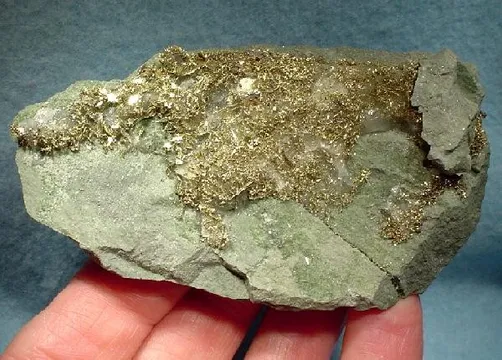
Chalcocite from Mammoth Mine is best appreciated as part of the mine’s copper-rich ore fabric rather than as a locality of freestanding, showy “wheel” crystals. It occurs as dark gray to black, heavy, commonly cellular or massive copper sulfide matrix, locally associated with malachite, brochantite, azurite, quartz, barite, pyrite, enargite, and altered copper-arsenate assemblages. Old dealer descriptions of Mammoth material emphasize brochantite and malachite on cellular chalcocite, and modern exploration work has also documented chalcocite in deeper sulfide mineralization and hypogene copper enrichment below historic workings. Good collector pieces are those where chalcocite is not merely anonymous ore but provides a crisp, lustrous, dark metallic ground for bright secondary minerals; ordinary pieces are dense, black, massive ore fragments with little vug development, poor contrast, or ambiguous locality history.
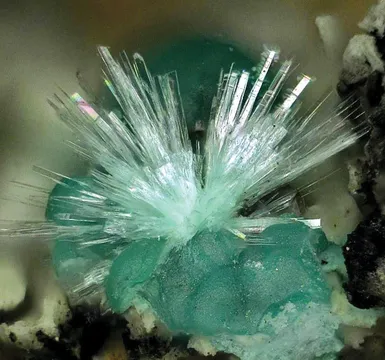
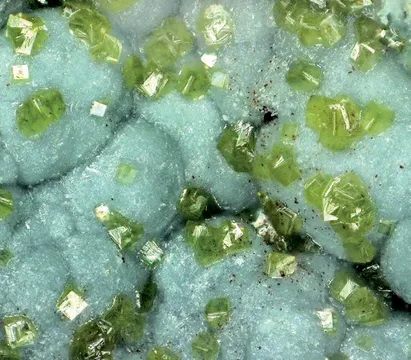
Clinoclase is the Mammoth Mine mineral that most clearly enters classic-specimen territory. At Mammoth it occurs as dark blue-green to deep indigo-green individual crystals, radiating sprays, intergrown crystal clusters, hemispherical aggregates, and botryoidal crystalline masses, with crystals ranging from sub-millimeter druses to exceptional aggregates reaching centimeter scale. The best examples come from the Mammoth-Ajax copper zone and are typically associated with azurite, malachite, olivenite, tyrolite, quartz, and altered sulfide matrix; early descriptions note clinoclase as a later arsenate developed on olivenite and locally overgrown by azurite. Superior specimens show three things at once: unmistakable blue-green color, radial or hemispherical architecture, and clean contrast against darker sulfide matrix or lighter gangue. Weak pieces are dull, blackish crusts that need magnification and analysis to separate from other copper arsenates.
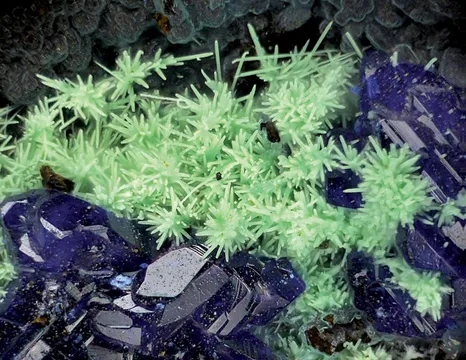
Azurite from Mammoth Mine ranges from small bright blue crystals and druses to richer vug linings and euhedral crystals associated with malachite, clinoclase, quartz, and oxidized copper ore. It is not generally the giant-crystal azurite of Bisbee or Tsumeb; Mammoth azurite is valued for its context in a high-arsenic copper oxidation suite, where its brighter blue can sit beside darker blue-green clinoclase and vivid green malachite. Recent documented pieces include self-collected Mammoth azurite-malachite specimens in the small-cabinet size range, and older district references illustrate azurite from the mine at hand-specimen scale. The best examples have sharp blue crystals, fresh luster, and clear separation from malachite alteration; ordinary material is powdery, rubbed, or so intimately mixed with malachite and dark matrix that the azurite loses visual definition.
Beyond those three, Mammoth Mine has a remarkably broad documented suite: acanthite, adamite including copper-bearing adamite, argentojarosite, arseniosiderite, arsenobismite, arsenogoyazite, arthurite, atelestite, aurichalcite, austinite, bariopharmacosiderite, barite, bismuthinite, brochantite, calcite, carminite, cerussite, chalcophyllite, chalcopyrite, chenevixite, chlorargyrite, chrysocolla, clinoclase, conichalcite, cornubite, cornwallite, covellite, cuprite, enargite, fluorite, galena, goethite, gold, hematite, hemimorphite, jarosite, kettnerite, linarite, malachite, mimetite, mixite, olivenite, pharmacosiderite-group minerals, plumbojarosite, preisingerite, pyrite, quartz, scorodite, sphalerite, tenorite, tetrahedrite, tyrolite, and other rare oxidized species. Arsenobismite gives the locality special historical weight, as the Tintic district—and Mammoth material in particular—figures in the early record of this bismuth arsenate. For specialists, the mine’s secondary arsenates and bismuth-bearing species are often more important than large display aesthetics.
Mammoth Mine specimens require careful locality control. “Mammoth Mine” is an ambiguous name in the United States, and Mammoth-Saint Anthony Mine at Tiger, Arizona is a far more famous specimen locality in the general market. A label reading simply “Mammoth Mine, USA” is not enough for high-value buying unless the species and habit match Utah Tintic material or the label chain clarifies “Mammoth, Tintic District, Juab County, Utah.” Conversely, wulfenite, diaboleite, leadhillite, and many Tiger-style lead-copper chloride and carbonate classics should not be casually reassigned to Mammoth, Utah.
For Utah Mammoth material, the strongest visual authenticity clues are association and matrix. Clinoclase commonly appears as dark blue-green radial or hemispherical aggregates with malachite, azurite, olivenite, tyrolite, or dark sulfide matrix. Brochantite and malachite may occur on cellular chalcocite. Azurite is typically smaller and more contextual than major Arizona azurite, and often accompanies malachite or clinoclase rather than forming large isolated cabinet crystals. Old labels from British or American dealers, prewar collections, or Tintic-focused collections add real value, especially when they specify Mammoth shaft, Mammoth Mine, Tintic District, or Mammoth, Juab County.
Condition issues are common. Many Mammoth specimens are oxidized ore fragments with delicate microcrystalline coatings. Clinoclase hemispheres and radiating sprays can be bruised on high points; azurite edges chip easily; malachite and brochantite coatings can be rubbed; old dump material may be iron-stained, dusty, or partly stabilized by limonite. Chalcocite is soft and can show edge wear, dulling, or tarnish. Avoid aggressive cleaning: acid treatment can attack associated carbonates, destabilize delicate arsenates, and erase the natural oxidation textures that identify Tintic material. Water rinsing should be minimal and avoided entirely on fragile crusts, crumbly limonite, or powdery secondary species.
No broad class of manufactured Mammoth fakes is well established in the collector literature, but mislabeling is a persistent risk because of the name “Mammoth,” the proximity of related Tintic mines such as Ajax, Gold Chain, Carisa, North Star, Grand Central, and Centennial Eureka, and the tendency of old labels to abbreviate localities. For rare species from Mammoth, visual identification is not enough. Analytical confirmation by Raman, XRD, SEM-EDS, or electron microprobe is appropriate for rare arsenates, bismuth minerals, tellurates, and look-alike blue-green copper species.
Market availability is modest but steady in old collections. Clinoclase from Mammoth appears often enough that a patient collector can acquire a representative thumbnail or miniature, but fine, sharp, old-time pieces with rich radial aggregates are scarce and competitive. Azurite and chalcocite are less often sold as headline species from this mine; they are more commonly part of combination specimens or matrix pieces. The best value is often in honest, well-provenanced miniatures that show several Mammoth minerals together rather than in single-species showpieces.
The story that still gives Mammoth its frontier flavor begins with cattle. George Crismon began work on the Mammoth ground in 1870, but the property did not immediately become the bonanza later history would remember. In 1873 Samuel and William McIntyre arrived in Tintic from Texas with a herd of longhorn cattle. They traded roughly 1,400 head for a controlling interest in the Mammoth Mine—a deal that looks astonishing in hindsight. The winter of 1873–1874 was disastrous for the cattle, most of which reportedly froze, while the mine went on to become one of the great producers of Tintic. It is one of those transactions that sounds like camp legend because it is too neatly symbolic: hoofs and hide exchanged for a mountain of copper, silver, and gold.
Early newspaper descriptions treated Mammoth with appropriate awe. Reports from the 1870s spoke of a great copper and silver-bearing lode, unusually wide ore, tunnels driven hundreds of feet, and a mine that seemed ready to draw attention far beyond Utah. One 1877 account described work by twenty-three men producing thirteen tons of ore per day, divided between high-grade silver ore sent to a mill and gold ore treated by the company’s own works. The rhetoric of the period is easy to overread, but the numbers convey the practical reality: Mammoth was not a romantic prospect hole; it was a functioning industrial mine that quickly forced owners to solve problems of haulage, treatment, timbering, and capital.
The mine also attracted international money and international trouble. In the early 1880s, English investors attempted to take control and expand the operation on a grand scale. H. A. Munro Butler-Johnstone, a former Member of Parliament for Canterbury and grandson of the 13th Baron Dunboyne, became entangled in the Mammoth venture. The plan was ambitious: pay off the property, improve the works, build furnaces and refining capacity, and float the company on the London Stock Exchange. The reality was harsher. Smelting schemes underperformed, debts mounted, wages went unpaid, machinery was attached, and by March 1883 workers had struck and seized property until they were paid. The tangled dispute over unpaid materials and labor eventually reached the U.S. Supreme Court as Mammoth Mining Co. v. Salt Lake Foundry & Machine Co., a remarkably high legal afterlife for a Tintic mine-credit crisis.
Haulage became its own drama. The mine stood high in Mammoth Hollow, while the mill and railroad connection lay below. Ore moved by wagon down a steep road, a constant expense for a high-volume operation. In January 1894 the mine owners organized the East Tintic Railway to build a short but difficult 2.5-mile line from Mammoth Station up toward the mine. It was a classic Western mining calculation: if the ore body was rich and persistent enough, even a steep railroad into rough ground made sense. The railway story is a reminder that specimen localities were also logistical machines; every beautiful clinoclase vug came out of a system of timbers, hoists, wagons, rails, mills, furnaces, and men trying to make rock move downhill profitably.
Mammoth’s gold reached into Utah civic symbolism. Much of the gold leaf used in the Gold Room of the Utah State Capitol is reported to have come from the Mammoth Mine. That detail gives the locality a pleasing double identity: underground it was dark copper sulfide, arsenic minerals, wet workings, and metallurgical headaches; above ground, part of its gold became state-room brilliance.
The surviving surface plant and town remains show how complete the Mammoth world once was. National Register documentation for the Tintic area identifies a Mammoth Mine residence, an old beanery and boardinghouse, a mine office erected after a 1928 fire, and surface-plant structures including compressor, assay, mule-barn, carpenter-shop, and hoist-house buildings. These were not decorative ruins. They were the working anatomy of a mine that operated sporadically for generations, and they help explain why old Mammoth specimens often carry a stronger sense of place than anonymous ore pieces from vanished dumps.