






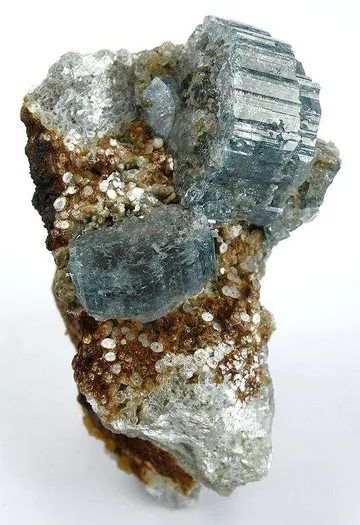
Maine, USA — famed pegmatites yield gem tourmaline (elbaite) and vivid purple fluorapatite; a classic locality for collectible thumbnails and cabinet specimens.
Key facts
Maine’s mineral-collecting reputation rests on a belt of granitic pegmatites that runs through the southwestern part of the state, especially Oxford, Androscoggin, and Sagadahoc counties. These bodies are not ore deposits in the narrow metallic sense; they are coarse, volatile-rich granitic intrusions, locally enriched in lithium, boron, beryllium, phosphorus, manganese, cesium, tantalum, and other elements that make pegmatites irresistible to collectors. Their commercial history began with practical quarrying for feldspar and mica, but the by-products—gem elbaite, royal-purple fluorapatite, beryl, smoky quartz, hydroxylherderite, eosphorite-group phosphates, pollucite, lithiophilite, lepidolite, cookeite, and rarities from the Be–Li–P system—are what made Maine a classic world locality.
Regional View
Country View
To a collector, “Maine” usually means two overlapping traditions. The first is the great gem-tourmaline story: Mount Mica at Paris, the Newry quarries on Plumbago Mountain, Mount Rubellite at Hebron, Black Mountain at Rumford, and related Oxford County workings that produced pink, green, blue, and watermelon elbaite in cabinet specimens and cutting rough. The second is the phosphate-and-rare-mineral story: the Mount Apatite quarries in Auburn, especially the Pulsifer Quarry, where purple fluorapatite became one of North America’s most coveted thumbnail and miniature minerals; the Emmons and Harvard quarries at Greenwood; the Bennett, Lord Hill, and Stoneham localities; and a suite of Maine phosphates whose names recur throughout serious pegmatite literature.
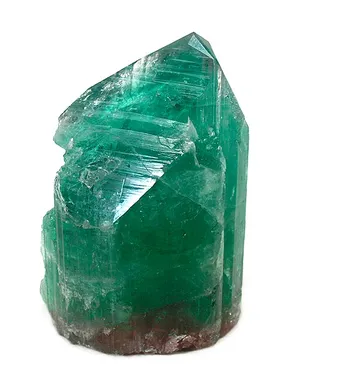
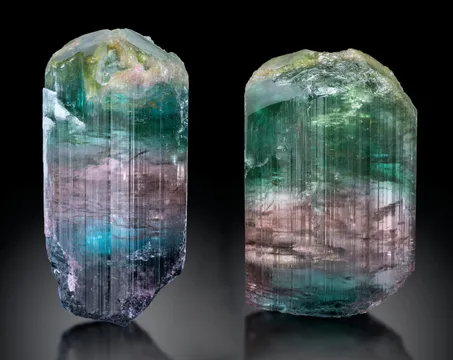
The look of the best Maine specimens is unmistakable. A fine tourmaline piece may show striated green or watermelon elbaite emerging from snow-white cleavelandite with lilac lepidolite, smoky quartz, or pale feldspar. A fine Pulsifer fluorapatite is small by giant-mineral standards but electrically vivid: glassy, purple to royal purple, commonly tabular or short prismatic, and set against white quartz, albite, cookeite, or mica. Maine is a locality where a specimen’s value often comes not from size alone, but from clean color, undamaged crystal edges, original matrix, and a label that pins it to a famous quarry rather than merely to the state.

Photo: Wikimedia Commons

Photo: Wikimedia Commons
Search for specimens: View all specimens from Maine, USA
The classic Maine specimen deposits are complex granitic pegmatites, most famously in the Oxford County pegmatite field and the Auburn–Poland area. The pegmatites intrude older metasedimentary and metamorphic country rocks and commonly show internal zoning: border and wall zones of feldspar, quartz, and mica; coarser intermediate zones; quartz and feldspar-rich cores; and late pockets where water- and flux-rich residual fluids allowed euhedral crystals to grow. In the field, the collector’s most important distinction is between massive pegmatite, where crystals are locked into feldspar and quartz, and pocket pegmatite, where open cavities may contain free-growing tourmaline, quartz, apatite, mica, cleavelandite, cookeite, and late phosphate minerals.
The commercial “ore” of many Maine quarries was feldspar, not gems. Feldspar from the Auburn and Topsham districts fed ceramic and porcelain manufacture, and mica was also worked in a number of pegmatites. At Mount Apatite in Auburn, quarrying by the Maine Feldspar Company began in the early twentieth century; feldspar was hauled to the Littlefield Station processing plant, and the quarry became one of the state’s important feldspar operations. The mineral specimens that collectors prize today were often secondary to production: crystals encountered in pockets could be saved and sold, but quarrymen also had to keep tonnage moving, and many delicate specimens were inevitably damaged or lost.
Mount Apatite is one of the most important Maine localities for collectors because it combines genuine classic status with unusually clear modern access on the city-owned eastern side. The City of Auburn owns Mount Apatite Park, a roughly 325-acre wooded recreation area that includes the Maine Feldspar and Greenlaw quarry areas. Hand-tool collecting is allowed in designated quarry and dump areas under posted rules, but the collector should treat the site as a public park with hazards: steep quarry walls, flooded pits, loose dump rock, other visitors below slope, and changing municipal regulations. The western quarries, including the Pulsifer and associated workings, are private and should not be treated as open public collecting ground.
The Pulsifer Quarry, in the West Mount Apatite district, is the locality behind Maine’s most celebrated purple apatites. The famous pocket-bearing zone lies above a garnet-rich seam in the pegmatite; below that seam the rock is largely graphic granite, while above it the quarry exposes coarser feldspar, quartz, mica, cleavelandite, and pocket material. Historic reports describe early pockets with loose purple apatite crystals and groups on matrix, and modern accounts of the 2022 renewal at Pulsifer describe small but superb crystals from a pocket zone later nicknamed “Lucky 13.” Good pieces from Pulsifer are typically judged by color saturation first: a transparent, glassy, royal-purple crystal on clean contrasting matrix outranks larger but pale, etched, or heavily contacted material.
Oxford County carries the larger historical weight. Mount Mica at Paris is one of the oldest and most storied gem-tourmaline mines in the United States, with intermittent production from the nineteenth century into modern times. The Dunton Gem Quarry at Newry, on Plumbago Mountain, produced the 1972 “Big Find,” a series of tourmaline pockets that renewed global attention on Maine. The Newry and related Plumbago Mountain pegmatites yielded green, pink, and watermelon elbaite, along with beryl, quartz, lepidolite, cleavelandite, hydroxylherderite, and phosphate minerals. Greenwood’s Emmons Quarry is especially important for phosphate collectors, with lithiophilite, eosphorite-group minerals, perhamite, pollucite-associated assemblages, and fluorapatite, while Noyes Mountain’s Harvard Quarry is known for schorl, garnet, albite, quartz, and fine purple apatite in the broader Maine style.
Maine collecting today is a patchwork. Some classic quarries are private fee-dig or guided-visit operations, some are closed during active mining, some are on public or municipal land with strict hand-tool rules, and others are simply not open. The safest collector’s assumption is that every quarry requires current permission unless it is clearly posted and managed for public collecting. The state’s dumps can still produce worthwhile specimens, but museum-grade pieces usually come from fresh pocket work, older collections, or properly documented private operations rather than from casual surface collecting.
Maine fluorapatite is most prized from the Pulsifer Quarry at Mount Apatite, where small, glassy, manganese-colored purple crystals occur in late pegmatite pockets with quartz, albite or cleavelandite, cookeite, muscovite, lepidolite, beryl, garnet, lithiophilite, and locally gahnite; classic crystals are commonly short prismatic to tabular hexagonal forms, often thumbnail-sized rather than large, with historic top examples in the 3–4 cm class and most recent 2022 crystals reported from sub-millimetre size to about 10 mm. The best pieces are intensely saturated royal purple, transparent to gemmy, sharply terminated, and perched on contrasting white or pale matrix, while ordinary Maine apatites tend to be paler lavender, more included, damaged, isolated, or without a secure quarry label. Outside Pulsifer, notable Maine fluorapatite also comes from Emmons Quarry, Harvard Quarry, Mount Rubellite, Bell Pit and other Newry workings, and scattered Auburn quarries, but Pulsifer remains the name collectors look for when judging the finest purple fluorapatite from the state.
On Maine labels, “apatite” is often a historical or trade name applied to what is now generally treated as fluorapatite from the state’s granitic pegmatites, especially the purple material from Mount Apatite and Oxford County; older specimens may simply say “Apatite, Auburn, Maine,” “Apatite, Pulsifer Quarry,” or “Apatite, Mt. Apatite,” and those labels are part of the specimen’s appeal when the crystal and matrix match the locality. Maine apatite occurs as hexagonal crystals in pocket assemblages with quartz, cleavelandite, cookeite, mica, lepidolite, beryl, tourmaline, and garnet, with colors ranging from pale lavender and bluish gray to the deep purple that made Pulsifer famous; the market separates exceptional pieces by rich color, glassy luster, freedom from bruising, and a credible old or mine-direct provenance, while small loose chips, pale altered crystals, or pieces merely called “Maine apatite” without a quarry are far less compelling.
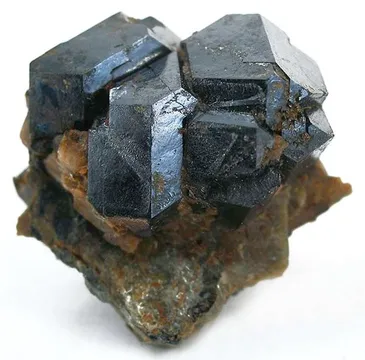
Beyond apatite, Maine has an unusually rich roster of collector minerals. Elbaite from Mount Mica and Newry defines the state’s public mineral identity, while schorl, smoky quartz, albite var. cleavelandite, microcline, muscovite, lepidolite, beryl varieties including aquamarine and goshenite, almandine, spessartine, pollucite, lithiophilite, triphylite, montebrasite, eosphorite, childrenite-eosphorite series minerals, mitridatite, fairfieldite, perhamite, gahnite, columbite-group minerals, cassiterite, and hydroxylherderite make the pegmatites a deep field for specialists. Maine is also tied to important type-locality and nomenclature stories: beryllonite, NaBePO4, was first described from the Stoneham area, and hydroxylherderite, CaBe(PO4)(OH), was historically described from Paris, Maine; many older “herderite” labels from Maine have since proved to represent hydroxylherderite, and several old “roscherite” identifications from Maine pegmatites have required revision or caution in light of greifensteinite and other roscherite-group chemistry.
Maine specimens reward locality precision. A purple apatite from “Pulsifer Quarry” is not the same market object as a purple apatite from “Maine,” and a tourmaline from “Dunton Gem Quarry, Newry” carries a different historical charge from an unlabeled green elbaite in cleavelandite. For older material, keep every label, envelope, box lid, accession number, and dealer tag. The best Maine pieces often moved through named collections, local mineral shops, university museums, and New England clubs, and that paper trail can matter as much as a minor difference in crystal size.
Mislabeling is the main authenticity issue. Purple apatite from Maine has been confused with, or even assigned to, non-Maine localities when labels have been lost; conversely, any attractive purple apatite should not be assumed to be Pulsifer simply because it looks “New England.” Within Maine, Auburn, Harvard Quarry, Emmons Quarry, Mount Rubellite, Bell Pit, and other localities can overlap visually, so matrix, associated minerals, old labels, and collection history are essential. Old “herderite” from Maine should be treated cautiously unless analyzed, because many specimens from Maine localities historically called herderite are hydroxylherderite. Likewise, old “roscherite” labels deserve modern caution, especially for Black Mountain, Dunton, Mount Mica, and related localities where roscherite-group identifications may not reflect current species-level chemistry.
Condition is a major pricing factor. Maine fluorapatite can be brittle, and the finest Pulsifer crystals are commonly small, exposed, and easy to nick along edges and terminations. Purple color can be superb, but fractures, contacts, etched faces, and dull luster sharply reduce desirability. Matrix pieces should be examined for repair, reattachment, glue along cleavelandite blades, and trimmed bases that remove important association context. Tourmaline is tougher than apatite but still commonly fractured by natural pocket rupture, blasting, frost action, or extraction; repaired Maine elbaite is not unusual, and a clean repair should be disclosed rather than treated as fatal if the specimen is important.
Cleaning should be conservative. Pegmatite matrix may include soft mica, cleavelandite blades, cookeite, lepidolite, manganese oxides, and phosphate alteration minerals that do not tolerate aggressive treatment equally. Avoid indiscriminate acid cleaning on mixed Maine pegmatite specimens unless the mineralogy is well understood. Apatite is softer than quartz and feldspar, so careless mechanical trimming, ultrasonic cleaning, or abrasive brushing can leave permanent marks. For display, small purple apatites benefit from controlled lighting that brings out color without overheating or exposing fragile matrix to unnecessary handling.
Fluorescence can be useful but should not replace identification. Some Maine apatite and Dunton-area tourmaline material has been discussed in the literature for ultraviolet response, yet fluorescence varies by specimen and treatment history. Use UV as an observational tool, not as proof of species or quarry. For valuable Maine phosphates, modern analytical confirmation—Raman, XRD, microprobe, or a reputable lab report—is particularly worthwhile when the label claims a rarity, a type-locality species, or an old name now known to be problematic.
Availability is uneven. Common Maine schorl, quartz, feldspar, mica, garnet, and small pegmatite matrix pieces remain accessible to collectors. Good Mount Mica and Newry tourmalines are available but often expensive, especially if they show strong color zoning, undamaged terminations, or historic provenance. Fine Pulsifer purple fluorapatite is genuinely scarce on the open market; the best old examples are locked in museums and advanced collections, and newer production has been selective rather than abundant. The collector who wants a representative Maine apatite can still find small examples, but the collector who wants a top Pulsifer crystal on matrix should expect competition.
The Maine tourmaline story begins in the hills near Paris in 1820, the same year Maine became a state. The old account centers on two boys exploring Mount Mica, where unusual green crystals in the hillside drew attention to a pegmatite that would become one of America’s classic gem mines. What makes the story endure is not merely that boys found bright crystals, but that their discovery opened a vein of collecting history that never fully closed: Mount Mica went on to produce colored elbaite through generations of quarrying, scholarship, and collecting, and its specimens still define the look of Maine tourmaline—striated, gemmy, often color-zoned, and lodged in a pale pegmatite matrix that seems made to show it off.
At Mount Apatite, another story belongs to Pitt P. Pulsifer and the purple crystal that became the Roebling Apatite. The Pulsifer pegmatite had been recognized as valuable in the nineteenth century, but Pulsifer’s own great moment came in 1914, when he wrote to mineral dealer Lazard Cahn about a new crystal from Auburn. His excitement survives in a line collectors still understand perfectly: he said the specimen would make the others look “like thirty cents.” That was not casual boasting. The crystal measured about 3 x 3.8 x 4.3 cm, weighed just over 100 grams, and eventually entered the Smithsonian collection under the Roebling name, after Washington A. Roebling, the great collector. For a mineral species that often produces handsome but modest crystals, that single purple apatite became a standard by which later Pulsifer finds were measured.
The next great Pulsifer chapter came not from an established mining company but from the persistence of Terry “Skip” Szenics, a young New Jersey collector who traveled by bus to Auburn in the late 1960s. He worked the quarry and found some of the best purple fluorapatites ever recovered there after the Pulsifer era. Harvard’s Mineralogical and Geological Museum has highlighted that episode as one of the two great periods in the locality’s history: the early Pitt Pulsifer production and the later Szenics rediscovery. The best Szenics pieces have the quality collectors hope for when they hear the word “Pulsifer”—deep purple fluorapatite, gem transparency, cookeite and quartz associations, and a miniature scale that concentrates the drama into a few centimeters.
Newry’s 1972 Big Find is the Maine story that still sounds almost unbelievable. The Dunton Gem Quarry, on Plumbago Mountain, had been worked before and had long been known for elbaite, but the great rediscovery began with George Hartman, Dale Sweatt, and James Young and led to the Plumbago Mining Corporation. In October 1972, mining opened a series of pockets richer than anything Maine collectors had expected. The finds yielded more than a ton of tourmaline over the next two years, including green, pink, and watermelon material of a quality that placed Newry among the world’s great tourmaline discoveries.
The visual details from Newry are what make the episode live. Pete Dunn’s 1975 work described prismatic, hemimorphic elbaite crystals, with the largest recorded to 27 cm, and many broken sections averaging roughly 5 cm wide by 10–15 cm long. Much of the material was not simply green or pink, but concentrically zoned: a light green rind over a red core, the structure collectors call watermelon tourmaline. Some broken ends showed partial rehealing, evidence that the crystals had fractured while mineralizing fluids were still active in the pocket. In the collector’s imagination, that matters: the pocket was not a neat jewelry box of loose crystals, but a violent and beautiful geologic chamber, grown, broken, healed, and opened millions of years later by miners.
The Big Find also entered Maine civic life. Tourmalines from the Dunton Quarry were used in the State of Maine tourmaline necklace, made by Ellsworth goldsmith Addison Saunders with gold hand-panned from the Swift River. The necklace’s double strings of alternating pink and green stones lead to a 24.58-carat pink tourmaline drop, turning a pegmatite pocket into an official object of state ceremony. That is unusually Maine: a specimen story, a gem story, a mining story, and a local-history story braided together.
Even in the twenty-first century, Pulsifer was not finished. For decades after 1996, the quarry produced no apatite, and many collectors assumed the classic purple locality was exhausted. Then, in 2022, renewed work exposed the right zone again. The first sign was small but electric: on August 10, a collector checking blasted rock saw a glint of purple in cleavelandite, a broken 3–4 mm bit of apatite, and held it up with the words, “We have purple!” Three days later, the first complete crystals appeared, dozens of them, from a zone that Mary Groves’s grandson and his girlfriend dubbed “Lucky 13.” The name stuck. Over the following weeks, small pockets produced purple apatites on cleavelandite, quartz, muscovite, and as loose crystals; a smoky quartz pocket extended roughly 30–40 cm; quartz crystals reached 15 cm; a dark blue-green gahnite octahedron measured about 5 cm across; and a pink lithiophilite pod about 20 cm across delighted phosphate specialist Jim Nizamoff. The 2022 apatites were smaller than the great historic crystals, but many were jewel-like, royal purple, complexly formed, and proof that classic localities can still breathe.

_3.jpg)