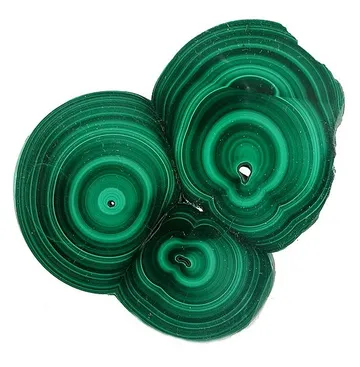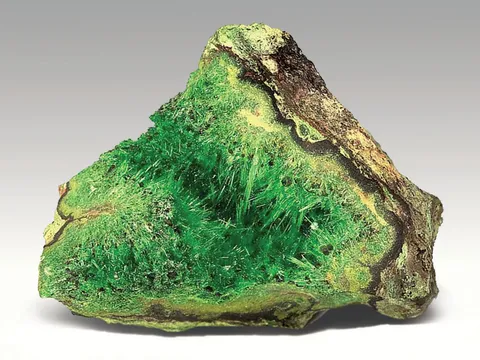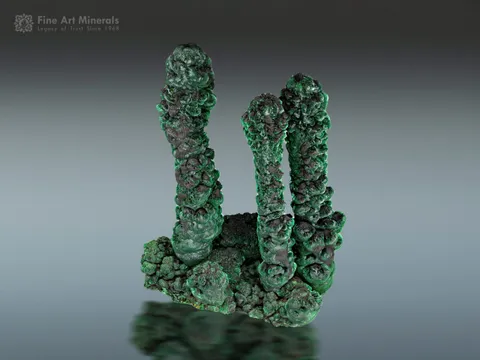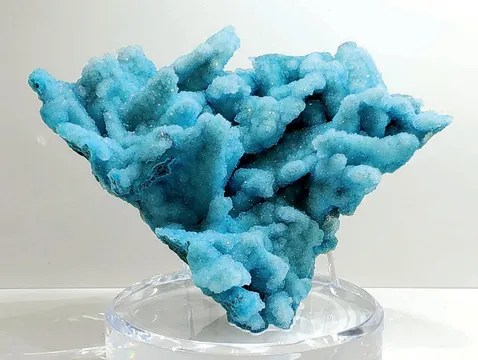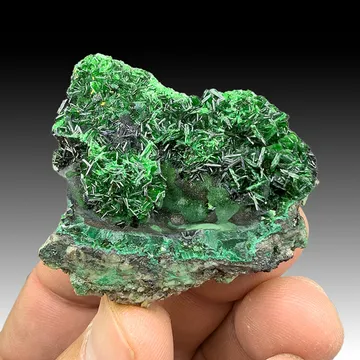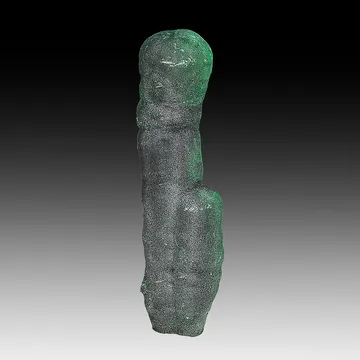
Lualaba, DR Congo — renowned copper-cobalt locality with native copper, cuprite on chrysocolla, malachite, cobalt carbonates, and rare uranyl minerals.
Key facts
Lualaba Province occupies the western, specimen-rich end of the Congolese Copperbelt, where the folded and faulted Katangan Supergroup carries some of the world’s great sediment-hosted copper-cobalt deposits. For collectors, “Lualaba” is not a single pocket or mine face so much as a provincial label covering the Kolwezi district, Mashamba West, Musonoi, Kamoto, KOV, Mashamba East, Dikuluwe, Mutoshi, Tenke-Fungurume, Kalongwe, Kasompi, and related workings. The classic collector look is unmistakable: metallic copper-red native copper, blood-red cuprite octahedrons, velvety or sharply crystallized malachite, blue chrysocolla and shattuckite, pink cobalt-bearing calcite or dolomite, black heterogenite, and, in the uranium-bearing zones, intensely colored uranyl species such as torbernite, cuprosklodowskite, carnotite, metatyuyamunite, kasolite, guilleminite, and their rare selenium-bearing relatives.
What makes Lualaba exceptional is the supergene mineralogy developed above and within enormously productive copper-cobalt orebodies. In the oxidized zones, copper and cobalt were remobilized into carbonates, oxides, silicates, phosphates, vanadates, arsenates, and rarer uranyl phases. This is why the province can produce both robust cabinet specimens—native copper clusters, cuprite on chrysocolla, malachite-covered matrix—and thumbnail rarities whose value lies in chemistry and provenance rather than size. The best pieces combine saturation of color with sharp form: wine-red translucent cuprite crystals on pale blue-green chrysocolla, raspberry-pink cobaltian carbonates with malachite or kolwezite, and radioactive micro-associations from Musonoi or Kamoto that are among the most studied uranium suites in Africa.
Regional View
Country View
Historically, Lualaba’s specimen identity is tied above all to Kolwezi and Mashamba West. Kolwezi is an old copper center, with open-cut work recorded from the early twentieth century and industrial-scale copper-cobalt mining later developed under Union Minière and Gécamines, then through modern joint ventures. Mashamba West became a named collector locality through exceptional cuprite, malachite, cobalt-bearing carbonates, carnotite, metatyuyamunite, and other secondary minerals, while Musonoi became famous for its astonishing uranium-selenium-palladium mineralogy and multiple type-locality species.

Photo: Wikimedia Commons

Photo: Wikimedia Commons
Search for specimens: View all specimens from Lualaba, DR Congo
Lualaba’s collector localities sit in the Congolese part of the Central African Copperbelt, a Neoproterozoic belt of sedimentary and metasedimentary rocks extending across southeastern DR Congo and into Zambia. The copper-cobalt deposits of Kolwezi and nearby districts are classically sediment-hosted and stratiform to stratabound, with ore related to reduced dolomitic and shaly units in the Roan Group, especially the Mines Subgroup. In the Kolwezi district the geology is structurally complex: fragments and sheets of prospective Roan stratigraphy occur in klippen, megabreccias, folds, and faulted blocks, making orebody geometry far less simple than the broad regional phrase “stratiform copper-cobalt” might suggest.
The Kolwezi Klippe is central to understanding both ore and specimens. It is an elongated structural block containing fragments of Mines Subgroup and associated Roan rocks, with copper-cobalt mineralization concentrated in favorable carbonate, dolomitic shale, and silicified horizons. Primary ore minerals include chalcocite, bornite, chalcopyrite, carrollite, and related sulfides, while the oxidized zones generated the collector minerals: malachite, cuprite, chrysocolla, heterogenite, cobalt-bearing calcite and dolomite, spherocobaltite, kolwezite, brochantite, plancheite, shattuckite, dioptase, carnotite, metatyuyamunite, tyuyamunite, torbernite-group minerals, and many rarer species.
Mashamba West, now generally treated within the Sicomines copper-cobalt project, is the most important Lualaba source for the familiar cabinet-suite material seen in collections and on the market. It is an open-cast copper-cobalt mine west of Kolwezi in the Dima group, historically linked with Dikuluwe and Mashamba East. Mashamba West specimens are best known for cuprite octahedrons, malachite, chrysocolla, cobalt-bearing calcite and dolomite, carnotite, metatyuyamunite, and native copper. Its finest cuprites are deep red to nearly black in reflected light but glow red in transmitted light; its best malachites can show sharp “primary” crystals rather than only botryoidal or fibrous masses; and its cobalt-bearing carbonate specimens range from pale rose to saturated pink.
Mashamba East lies immediately within the same broader mining system. It was worked as an open pit in the 1980s and later became part of the Kamoto Copper Company portfolio. Modern KCC operations in the Kolwezi area include open pits and underground workings feeding the Luilu metallurgical complex. KOV, T17, Mashamba East, Kamoto underground operations, and the Luilu plant are industrial copper-cobalt assets, not casual collecting grounds; specimen recovery today is incidental to mining, old stock, dealer channels, or material that entered the market through local and international networks.
Musonoi, near Kolwezi, is the other indispensable name for Lualaba collectors. It is famous not for large display copper specimens but for rare uranium, selenium, and palladium mineralogy. The mine’s oxidized uranium-bearing zones produced torbernite, metatorbernite, cuprosklodowskite, kasolite, sklodowskite, soddyite, vandenbrandeite, becquerelite, guilleminite, demesmaekerite, derriksite, marthozite, and related phases. Many Musonoi specimens are small, radioactive, and mineralogically dense; a single thumbnail can carry a suite that matters to systematic collectors more than a much larger decorative copper specimen.
Kalongwe and Kasompi add another layer of scientific importance. Kalongwe is the type locality for cuprosklodowskite, a green copper uranyl silicate that is now a classic species of uranium collections. Kasompi is the type locality for gysinite-(Nd), a rare lead-neodymium carbonate hydroxide. Kamoto East has yielded rare uranyl carbonates including astrocyanite-(Ce) and the recently described pendevilleite-(Y), extending the province’s reputation from “copper-cobalt district” into a globally important field for secondary uranium mineralogy.
Collecting access should be assumed closed unless specific, written permission has been obtained from the relevant operator, concession holder, and local authorities. These are active or controlled industrial mining districts with heavy equipment, pit walls, haul roads, security zones, radiation issues in some ore types, and serious legal and safety concerns. Modern specimens generally reach collectors through dealers, old collections, miners’ side recovery, mine-channel material, or material dispersed from earlier finds. For serious buyers, a precise label matters: “Lualaba, DR Congo” is acceptable as a provincial label, but higher-value pieces should ideally specify Mashamba West, Musonoi, Kamoto East, Kolwezi Mine, KOV, Luilu, Kalongwe, Tenke-Fungurume, or another sublocality when that information is known.
Native copper from Lualaba appears in two related but distinct collecting contexts: older Kolwezi-Mashamba material, where copper may occur as massive, distorted, arborescent, or partly crystallized copper-red metal associated with cuprite, dolomite, cobalt-bearing carbonates, chrysocolla, or malachite; and a more recent market suite labelled “Luilu, Lualaba,” consisting of matrix-free, elongated, twisting, lustrous native copper crystal groups in small-cabinet to cabinet sizes around 8–10.5 cm. The most desirable Lualaba copper specimens have recognizable crystallization, sculptural branching, bright metallic luster, minimal bruising or flattening, and either clean freestanding form or sharp contrast with red cuprite and pale carbonate or chrysocolla matrix. Ordinary pieces tend to be duller, massive, heavily oxidized, or locality-vague; the best pieces stand out immediately by form and freshness rather than by copper weight alone.
Beyond native copper, Lualaba is a systematic collector’s province. Mashamba West is important for cuprite, malachite, carnotite, metatyuyamunite, vésigniéite, cobalt-bearing calcite and dolomite, kolwezite, dioptase, conichalcite, plancheite, shattuckite, and spherocobaltite. Musonoi is a type locality for demesmaekerite, derriksite, guilleminite, kolwezite, marthozite, oosterboschite, and verbeekite, and it remains one of the great names for uranium-selenium mineralogy. Kalongwe is the type locality for cuprosklodowskite. Kasompi is the type locality for gysinite-(Nd). Kamoto East has produced type or near-type rarities including astrocyanite-(Ce) and pendevilleite-(Y). In practical collecting terms, Lualaba can supply both decorative copperbelt classics and highly specialized radioactive micro-minerals, but the label must be read carefully because many species are sublocality-sensitive.
Lualaba labels require more scrutiny than most broad regional labels. “Lualaba, DR Congo” may be accurate as a province, but it conceals a great deal of mineralogical meaning. A native copper, a Mashamba West cuprite, a Musonoi uranyl selenite, a Kalongwe cuprosklodowskite, and a Kasompi gysinite-(Nd) are not interchangeable. Whenever possible, preserve old labels, dealer labels, collection cards, and any field notes that name the mine, pit, project, or district.
The most discussed locality issue for recent native copper concerns material sold as “Luilu, Lualaba.” Published market commentary noted that attractive matrix-free copper groups labelled Luilu looked very similar to copper specimens reportedly offered as coming from the Kalukuluku or L’Etoile du Congo area near Lubumbashi in Haut-Katanga, more than 250 km away from Kolwezi. That does not prove that any individual “Luilu” specimen is wrong, but it does mean serious collectors should treat unsupported Luilu labels cautiously and value strong provenance.
Misidentification is also common among the pink cobalt-bearing carbonates. Many specimens are sold casually as “cobaltoan calcite,” but Mashamba West and nearby Lualaba material may be cobalt-bearing calcite or cobalt-bearing dolomite; visual identification alone is not always enough. The distinction matters to species collectors, less so to aesthetic buyers, but labels should not be “upgraded” without analytical support.
Several published locality records for Mashamba West have been corrected or questioned. Cuprosklodowskite has been reported erroneously from Mashamba West on the basis of a mislabeled photograph, while authentic cuprosklodowskite is well established from Kalongwe and Musonoi. “Duhamelite” from Mashamba West has been superseded or corrected in part through later identification as khorixasite, and mottramite at Mashamba West has been treated as erroneous in some locality records. For rare species from this province, analysis and sublocality documentation are not luxuries; they are part of the specimen.
Condition issues vary by species. Native copper may darken, spot, or show old cleaning; high-end specimens should be examined for artificial brightening, lacquer, glue repairs, and broken crystal tips. Cuprite from Mashamba West can be brittle and may have chipped octahedron corners, edge bruises, or repaired crystals; strong transmitted red color and sharp faces are premium features. Malachite and chrysocolla may be fragile, powdery, or partly stabilized, especially when the specimen is a porous oxide-zone matrix. Cobalt-bearing calcite and dolomite can cleave or bruise, and saturated pink crystals often show small contact points in vugs.
Radioactive Lualaba minerals require deliberate handling and storage. Carnotite, metatyuyamunite, torbernite, metatorbernite, cuprosklodowskite, kasolite, uranophane, guilleminite, astrocyanite-(Ce), pendevilleite-(Y), and related uranyl species should be kept in closed boxes, handled with clean technique, and not stored loose in living or sleeping areas. Avoid inhaling dust from friable matrices, do not cut or polish radioactive material without appropriate controls, and keep labels with the specimen so future owners understand what they have. Many Lualaba uranium minerals are not fluorescent, so a lack of fluorescence is not evidence against identity.
Market availability is uneven. Mashamba West cuprite, malachite, cobalt-bearing carbonate, and chrysocolla specimens appear regularly, from inexpensive miniatures to high-end cabinet pieces. Native copper from Lualaba is less common in good crystallized form, and the best recent Luilu-labelled groups command strong prices when lustrous, sculptural, and undamaged. Musonoi rare-species material is much scarcer and often circulates through specialist radioactive-mineral and micromount circles rather than general mineral shows. Type-locality material of demesmaekerite, derriksite, guilleminite, marthozite, oosterboschite, verbeekite, gysinite-(Nd), astrocyanite-(Ce), or pendevilleite-(Y) should be treated as rare, label-sensitive, and preferably analytical.
In June 2022, a small market puzzle followed a group of handsome native copper specimens into the collecting world. Seven small-cabinet to large-cabinet copper specimens were offered from “Luilu, Lualaba,” all matrix-free, lustrous, elongated, and twisting—impressive enough to be singled out in a Mineralogical Record market report. The problem was not the quality; it was the geography. The specimens looked strikingly similar to copper that a French dealer had reportedly offered at the 2021 Munich Show as coming from the Kalukuluku mine, the old name associated with L’Etoile du Congo near Lubumbashi in Haut-Katanga. Luilu, by contrast, is tied to the Kolwezi district in Lualaba, more than 250 km northwest. The report did not solve the mystery, but it captured a familiar truth of Congo copper collecting: a beautiful specimen may arrive before its locality story is fully settled.
Mashamba West tells a different kind of story, one in which a mine famous for ore became famous for color. Its best cuprite specimens are not merely “red”; they can look nearly black until light passes through them, then suddenly glow deep cherry to blood red. Fine examples show octahedrons, sometimes modified by cube faces, perched on pale chrysocolla or bright malachite. In one well-documented museum-quality specimen, a single cuprite crystal measured 5.9 x 5.7 x 4.2 cm and weighed 286 grams, a scale that explains why old Mashamba West finds still have a special place in copper-oxide collections. These specimens are reminders that the Congo Copperbelt’s oxide zones were not only ore caps; they were natural laboratories for color, transparency, and crystal form.
The uranium minerals add a quieter but more consequential narrative. At Musonoi, small cavities and altered ore zones yielded minerals that changed reference books: demesmaekerite, derriksite, guilleminite, marthozite, oosterboschite, kolwezite, and verbeekite all tie their type-locality story to the mine. These are not minerals that fill display shelves by the kilogram. They are often tiny, intensely specialized, and associated with radioactive matrices, but their scientific weight is enormous. A modest Musonoi thumbnail can carry copper, uranium, selenium, cobalt, palladium, and lead chemistry in a way few deposits on earth can match.
There is also the story of carnotite at Mashamba West. Most collectors know carnotite as earthy yellow crusts or powdery coatings from sandstone uranium deposits; Mashamba West is one of the localities that complicates that expectation. Specimens from mid-1980s finds were described as carrying hundreds of sharp carnotite crystals, some reaching about 1.5 mm, and have been regarded by collectors as among the finest crystallized examples of the species. On a specimen label, that may sound like a micromount detail. Under magnification, it becomes a field of golden blades and tablets—an improbable uranium-vanadium flowerbed in a copper-cobalt mine.