Little Pipestone Mining District, Montana - a quiet locality famed for amethyst and smoky quartz scepters and tourmalinated crystals; museum-grade pockets.
Key facts
Little Pipestone is one of the quieter but most distinctive specimen districts on the east side of the Butte country: a small southwestern Montana mining district where the collectible story is not bulk metal production, but quartz grown in late-stage Boulder batholith pegmatitic and vein environments. The district lies southeast of Butte and west of Whitehall in the Little Pipestone Creek drainage, among quartz monzonite, granodiorite, lamprophyre, alluvium, and localized pegmatite. For collectors its name is bound above all to amethyst and smoky quartz, especially scepters, phantoms, and tourmalinated quartz associated with the Pohndorf amethyst workings and nearby Toll Mountain occurrences. The best pieces have a distinctly “Montana batholith” look: glassy to smoky quartz stalks, amethyst caps or drusy purple overgrowths, internal zonation, dark schorl needles or tourmaline-rich cores, and iron-stained granite or feldspar remnants that remind you these were not cavern geodes but small, stubborn pockets in hard igneous rock.
Regional View
Country View
Historically, Little Pipestone sat in the shadow of far larger Montana mining camps, but that is part of its appeal. Reports describe only small production from placer gold and gem-quality amethyst, while collectors remember the district for museum-grade quartz rather than ore tonnage. Early twentieth-century museum records already singled out large tourmalinitic quartz and smoky quartz from Little Pipestone; later geological work on the Pohndorf amethyst mine described a zoned pegmatite with vugs in a megacrystic microcline phase, exactly the sort of pocket architecture that produces odd, aesthetic quartz rather than repetitive commercial flats.

Photo: Wikimedia Commons
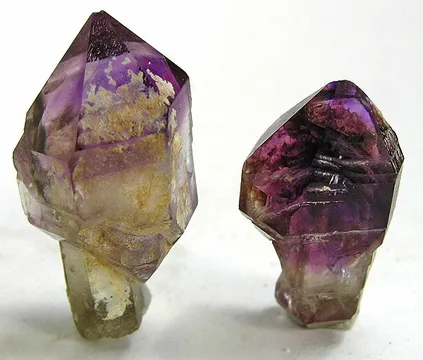
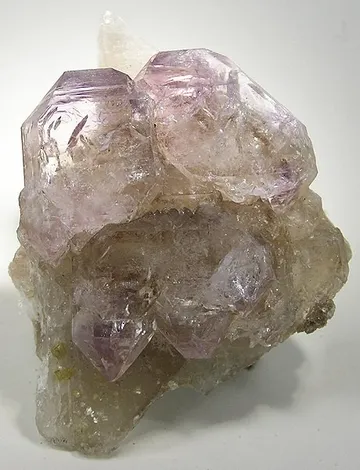
The specimen shown above captures why Little Pipestone quartz has a following out of proportion to the district’s size: a 17 x 5.3 x 4.6 cm amethyst scepter, attributed to the Little Pipestone District and noted as an unusually large and significant example for the locality. Its combination of smoky-gray body, pale-to-purple amethyst growth, bruised luster, and slightly rugged base is typical of a real field locality rather than a polished commercial “brand.”
Search for specimens: View all specimens from Little Pipestone Mining District, USA
The Little Pipestone district is a Jefferson County, Montana mining district southeast of Butte and west of Whitehall, essentially within the Little Pipestone Creek drainage. Older Montana Bureau of Mines and Geology descriptions place it roughly 10 miles southeast of Butte and about 12 miles west of Whitehall, drained by Little Pipestone and Rader Creeks, tributaries of Big Pipestone Creek. The bedrock described for the district is principally Boulder batholith quartz monzonite, with later summaries emphasizing Paleozoic sedimentary rocks intruded by Boulder batholith monzogranite and granodiorite. That mixture matters to collectors because it produced several overlapping mineral environments: alluvial placer ground, quartz fissure veins carrying free gold, mineralized zones in brecciated and recemented granitic rock, contact-metamorphic calcite bodies, and late-stage pegmatitic quartz-amethyst pockets.
For specimen purposes, the most important mineralizing system is the amethyst-bearing pegmatitic quartz of the Pohndorf area near Toll Mountain. The Pohndorf amethyst mine was described as a lens-shaped pegmatite in quartz monzonite, about 140 feet long and as much as 55 feet wide, trending N. 60° E. A flat-lying core of massive quartz, about 60 x 25 feet, lay at the northeast end of the deposit. Later work refined the setting as a zoned pegmatite hosted by sparsely porphyritic granodiorite of the Boulder batholith, with zones ranging from nearly pure coarse quartz through a two-feldspar phase to massive microcline carrying late-stage vugs. Those vugs are the key: they are the cavities from which scepter amethyst on smoky or tourmalinated quartz, smoky quartz, feldspar, muscovite, and schorl-bearing specimens entered collections.
The mining history is modest but colorful. The district’s early economic focus included small placer and lode attempts rather than large sustained production. Reported deposits included placers in Little Pipestone and Rader Creek gravels and nearby “lake beds,” plus lodes and mineralized breccia zones in granitic host rock. Free gold was reported in quartz fissures, but production remained small. A USGS compilation lists Little Pipestone Creek placer, the Moscow Prospect, the Pohndorf Mine, and the Toll Mountain Lode among the district’s sites, with commodities including Au, Ag, Pb, Zn, gem material, and Mo depending on the site. The Moscow Prospect is the lead-zinc-silver name tied to galena and sphalerite in locality databases; the Toll Mountain Lode is recorded as a molybdenum occurrence; the Little Pipestone Creek placer accounts for the gold side of the district; and Pohndorf is the classic gem-mineral locality.
The Pohndorf amethyst mine takes its name from Pohndorf, described in the MBMG literature as a Denver jeweler and mineral dealer who operated the property and obtained tourmalinated quartz and amethyst. It was later operated in 1938 by Montgomery and Over, who recovered beautiful small amethysts. Geological and collector literature subsequently elevated the locality from a small mine entry to a true specimen name: museum specimens of scepter amethyst on tourmalinated quartz were recovered from cavities in the pegmatite, and a New Mexico Mineral Symposium abstract later called the Pohndorf mine one of the Montana deposits to produce world-class mineral specimens, specifically amethyst scepters on smoky quartz prisms and tourmalinated smoky quartz.
Not every “Pipestone” label means the same thing. The broader Jefferson County area includes the Pipestone Mining District, Homestake Pass pegmatites, Bald Mountain skarn localities, the Pipestone Mine, and other quartz and skarn sites that are easily confused on old labels. The Little Pipestone Mining District label is best reserved for specimens tied to the Little Pipestone Creek-Rader Creek-Toll Mountain/Pohndorf setting, not for Bald Mountain diopside-grossular-vesuvianite material or for the separate Pipestone Mining District north and east of Big Pipestone Creek.
Collecting access today must be approached locality by locality. The Toll Mountain quartz deposit was described as being on National Forest land, reachable from the old U.S. Highway 10/Toll Mountain road system by rough roads, with four-wheel drive needed beyond the Moose Creek road turnoff, or by walking up North Fork Little Pipestone Creek from a nearby summer-home area. That historical access description is useful for understanding the geography, not a modern permission slip. Land status in the district is mixed, claim status can change, and old workings or prospects should be assumed unsafe and potentially private or claimed until proven otherwise. Serious collectors should verify current ownership, active claims, Forest Service or BLM rules, and any required permissions before digging, and should avoid adits, shafts, unstable dumps, and reclamation areas.
Quartz is the signature collector species of Little Pipestone, and the district’s best examples are not generic vein quartz but pocket-grown crystals from amethyst-bearing pegmatitic and granitic environments around Toll Mountain and the Pohndorf workings. Documented material includes amethyst scepters, smoky quartz prisms, tourmalinated quartz, phantom quartz, and crystals with zoned internal growth; historic museum records describe large tourmalinitic quartz from Little Pipestone, including a roughly two-foot specimen coated on one side with small richly colored amethysts, and cross sections several inches across showing quartz-tourmaline zoning. Good Little Pipestone quartz is judged by sculptural form first: a clear scepter head on a smoky stalk, a clean termination with amethyst overgrowth, visible black schorl needles or tourmaline-rich cores, or sharp phantoms. Ordinary pieces tend to be broken, massive, iron-stained, or merely milky, while the best preserve the pocket geometry of the Boulder batholith pegmatite—smoky stems, purple caps, feldspar or muscovite context, and enough transparency to show the growth history inside.
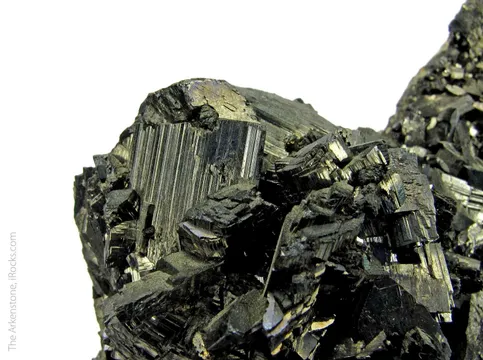
Barite from Little Pipestone is a minor and much less historically emphasized specimen-market component than the quartz suite, so provenance matters more here than abundance or fame. Pieces attributed to the district should be evaluated as accessory vein or pocket material rather than as the classic Montana barite plates known from better-publicized Jefferson County barite localities outside Little Pipestone. The desirable examples are those with distinct, undamaged tabular or bladed crystals, preferably on quartz-rich or iron-stained matrix and with labels that clearly distinguish Little Pipestone from nearby Basin, Whitehouse Campground, Boulder River, or generic Jefferson County barite occurrences. Since published Little Pipestone mineral lists do not foreground barite the way they do quartz, amethyst, smoky quartz, schorl, feldspar, and the Moscow Prospect sulfides, collectors should be conservative: a sharp, well-labeled small-cabinet barite association is more meaningful than a large but locality-vague piece.
Smoky quartz is one of the locality’s defining quartz expressions, particularly around the Toll Mountain campground area and the Pohndorf amethyst mine. The most collectible Little Pipestone smoky quartz occurs as prismatic crystals that may be capped, coated, or overgrown by amethyst, and some specimens show black schorl inclusions or tourmalinated interiors; a historic museum example was described as an approximately 18-inch smoky quartz crystal with good terminations, broken across the base to reveal black tourmaline. Smaller collector pieces are often cabinet to miniature size, with the finest showing a strong contrast between gray to brown smoky bodies and purple amethyst scepter heads or drusy terminations. The best examples here are not simply dark: they have form, zoning, and association—smoky stalks supporting amethyst caps, visible tourmaline needles, or feldspar/muscovite matrix that ties the crystal back to the zoned pegmatite environment.
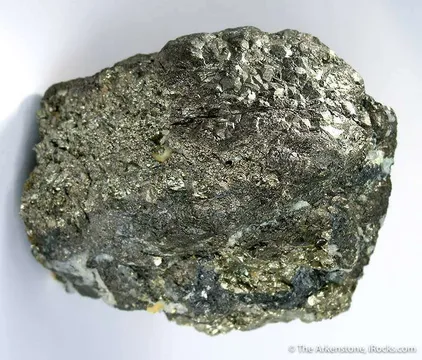
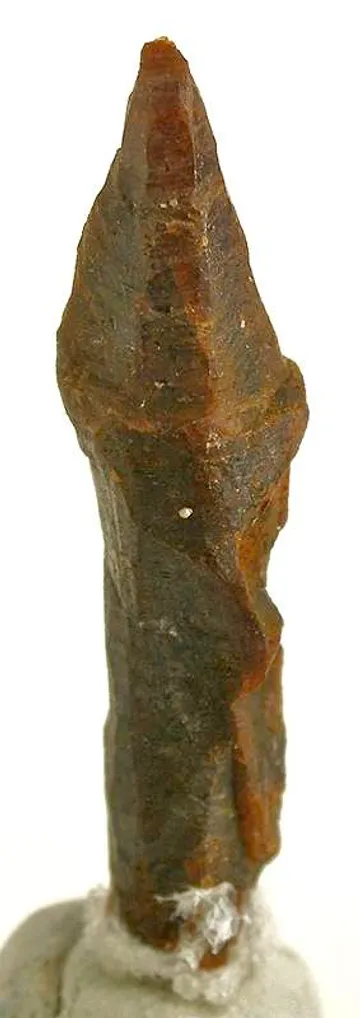
Other documented Little Pipestone minerals include albite, calcite, diopside, epidote, galena, goethite, grossular, malachite, microcline, sphalerite, spinel, titanite, and tourmaline, with the lead-zinc sulfides tied to the Moscow Prospect and several calc-silicate species tied to Toll Mountain occurrences. The goethite is particularly interesting as pseudomorphs after pyrite, and the tourmaline—commonly referred to in collector material as schorl where black—plays an outsized role because it creates the district’s memorable tourmalinated quartz and smoky-amethyst combinations. I have not found an accepted IMA type-locality mineral credited to Little Pipestone; its importance is instead historical and aesthetic, built on unusual quartz pocket specimens from a small Montana batholith district.
The chief authenticity issue for Little Pipestone is not laboratory treatment but locality accuracy. “Pipestone,” “Pipestone Pass,” “Pohndorf,” “Toll Mountain,” “Little Pipestone Creek,” “Boulder Batholith,” and “Jefferson County” have all appeared on labels, and they do not always mean the same locality. Add in nearby Homestake Pass pegmatites, Rader Creek, the separate Pipestone Mining District, and the Bald Mountain/Pipestone Mine skarn material, and old labels can drift badly. For quartz, a credible Little Pipestone specimen should ideally have a label chain naming Little Pipestone District, Pohndorf Mine, Toll Mountain, Little Pipestone Creek, or Rader Creek, and the specimen style should fit: smoky or amethyst quartz, scepter growth, tourmalinated quartz, feldspar/muscovite associations, or phantoms. A label for “Pipestone Mine” with diopside, grossular, calcite, or vesuvianite likely belongs to the Bald Mountain skarn locality, not to the Little Pipestone quartz suite.
I found no well-documented tradition of faked Little Pipestone quartz, irradiation, dyeing, or heat treatment specific to the district. The more realistic concerns are repaired terminations, reattached scepter heads, cleaned iron staining, and optimistic relabeling of Montana smoky/amethyst quartz from nearby areas. Amethyst on smoky quartz from this district can be naturally pale, patchy, or localized to caps and overgrowths; excessive uniform purple color should be questioned, especially if the form does not match known pegmatitic scepter habits.
Condition is often the deciding factor. Many Little Pipestone quartz specimens came from hard-rock pockets and old workings, so bruised prism faces, chipped amethyst caps, contacted sides, etched or rough stalks, and iron-stained bases are common. That should not automatically disqualify a piece: a rare old scepter with one rough side can still be an important locality specimen. But value rises sharply when the main termination is intact, the amethyst is visible rather than merely hinted, the smoky body is lustrous, and tourmaline inclusions are well displayed without making the crystal look muddy.
Fluorescence is not a major selling point for the classic quartz suite, though associated calcite from the broader district may respond variably depending on impurities. Handle barite-attributed specimens more carefully than quartz; barite is dense, relatively soft, and cleaves, so bladed crystals bruise easily. For storage, keep Little Pipestone quartz away from harder specimens that can abrade luster, and avoid aggressive acid cleaning unless you are certain the matrix and accessory minerals can tolerate it.
Market availability is limited but real. Little Pipestone quartz appears intermittently as old collection material, small modern finds, and specimens folded into broader “Montana amethyst,” “Pohndorf,” or “Pipestone Pass” offerings. The very best material—large amethyst scepters, smoky quartz with strong amethyst caps, tourmalinated smoky crystals, and documented old specimens—should be considered scarce. Barite from this label is far less established and should be bought for crystal quality and provenance, not for locality fame alone.
One of the most evocative Little Pipestone episodes is hidden in an early Smithsonian report, where the district appears not as a mine ledger entry but as a cabinet of spectacular American minerals received from the U.S. Geological Survey after the Pan-American and Charleston expositions. Among roughly 200 specimens, the museum singled out the “fine tourmalinitic quartzes” from Little Pipestone District. The standout was described as about two feet long, coated on one side with a parallel growth of small, richly colored amethysts—a startlingly large object for a district now more often represented by miniatures and small-cabinet quartz. Beside it was an approximately 18-inch smoky quartz crystal with good terminations, broken across the base just enough to expose the “sagenitic black tourmaline” inside. Even the cross sections mattered: several were three inches or more in diameter and showed the zoning of quartz and tourmaline plainly enough that the museum considered them display-worthy scientific objects, not simply pretty stones.
The Pohndorf story has a different tone: part small mine, part gem dealer’s gamble. Pohndorf, a Denver jeweler and mineral dealer, worked the amethyst mine that came to carry his name, recovering amethyst and tourmalinated quartz from a lens-shaped pegmatite in the Boulder batholith country. The workings were not a grand industrial enterprise; they were a pocket locality in hard rock, the sort of place where a modest vug could matter more than a tonnage statement. In 1938, Montgomery and Over operated the mine again and recovered beautiful small amethysts. That phrase—small, beautiful, and late in the mine’s recorded life—fits Little Pipestone well. Its best specimens were never common warehouse material. They were finds from individual cavities, the kind that passed quickly into collections and then reappeared decades later with hand-written labels.
The old access description for the Toll Mountain quartz deposit reads like field collecting in another era. From U.S. Highway 10, the route turned north on the Toll Mountain dirt road about 19 miles east of Butte, passed the campground, continued to the Moose Creek road, and then left the traveler with a rougher choice: a creek crossing, a poorly defined jeep road, and finally a visible quartz outcrop in a draw near North Fork Little Pipestone Creek. The report warned that four-wheel drive was needed after the Moose Creek road turnoff. It then offered the collector’s alternative: walk up North Fork Little Pipestone Creek from a summer home with a pond, with the outcrop about 2,000 feet away on the north side of the creek. That is the landscape behind the specimens—granite hills, creek bottoms, rough tracks, and pockets small enough that a single quartz crystal could become a locality record.