Black Pine Mine — Montana blue-green collector locality known for veszelyite on quartz, Japan-law quartz twins, tetrahedrite, and rare arsenates; prized for th…
Key facts
Black Pine Mine is one of the great American collector localities because it unites three things that rarely occur together: serious silver-mining history, an unusually fertile polymetallic vein system, and a secondary mineral suite that has kept mineralogists busy long after the ore stopped coming out. The mine lies northwest of Philipsburg in Granite County, Montana, in the Philipsburg or Flint Creek mining district, on Black Pine Ridge in the John Long Mountains. Its productive lodes cut metasedimentary rocks of the Belt Supergroup, especially the Mount Shields Formation, and the important ore came chiefly from the Combination vein, a quartz-sulfide vein now interpreted as occupying a low-angle thrust-fault structure rather than a simple bedding-plane vein.
For specimen collectors, Black Pine is above all a blue-and-green locality. Its finest pieces are not large cabinet monsters but concentrated, high-character thumbnails and miniatures: dark blue to blue-green veszelyite crystals on quartz or chrysocolla-rich matrix; Japan-law quartz twins and coated quartz clusters; metallic tetrahedrite embedded in, or perched against, quartz; brown-black hübnerite blades intergrown with comb quartz; and a remarkable suite of emerald to yellow-green, lead-copper-zinc arsenates and phosphates. At the microscope scale the mine is even more extraordinary. Black Pine is the type locality for philipsburgite, auriacusite, and joëlbruggerite, and its oxidized ore produced an inventory of arsenates, phosphates, sulfates, tungstates, tellurates, carbonates, and sulfosalt alteration products far out of proportion to the mine’s modest geographical footprint.
Regional View
Country View
Historically, Black Pine was a silver mine first and a specimen locality second. Claims were staked in 1882; by November 1885 ore was already being shipped to the Hope mill in Philipsburg; and the Combination Mining and Milling Company later produced more than two million ounces of silver from the ground. Modern summaries place total production at about 5.62 million ounces of silver, about 3,000 ounces of gold, more than 10.6 million pounds of copper, and lesser lead and zinc. That polymetallic endowment is exactly why the locality became so mineralogically productive: silver-bearing tetrahedrite, pyrite, hübnerite, galena, sphalerite, chalcopyrite, and native metals supplied the chemical ingredients that oxidation later reorganized into collector minerals.


Photo: Wikimedia Commons

Photo: Wikimedia Commons
Search for specimens: View all specimens from Black Pine Mine, USA
Black Pine Mine is in the Philipsburg Mining District, also known as the Flint Creek District, in Granite County, Montana, roughly 10 miles or about 14–15 km northwest of Philipsburg. Locality records place the mine at about 46°26′52″N, 113°21′56″W to 113°21′59″W. The mine is historically intertwined with the names Combination Mine, Combination vein, Black Pine tailings, Black Pine dump, Lewis shaft, Harper shaft, Tim Smith vein, Upper vein, and Onyx vein. Modern environmental records describe the site as an inactive silver mine complex that includes 1,056 acres of patented mining claims and 150 unpatented lode claims surrounded by U.S. Forest Service land.
The deposit is a polymetallic vein system. The principal host rocks are metasedimentary units of the Belt Supergroup, especially quartzites of the Mount Shields Formation of the Missoula Group, with older locality summaries also referring to rocks of the Spokane Formation. Four veins are repeatedly cited in modern summaries: Upper, Tim Smith, Combination, and Onyx. Early descriptions treated the veins as bedding-plane structures, but Dave Waisman’s work emphasized that they occupy low-angle thrust faults, cutting bedding at roughly 10 to 15 degrees. The Combination vein was the economically important structure; during the first year of mining it became clear that the other veins contained only minor ore compared with the rich silver ore of the Combination.
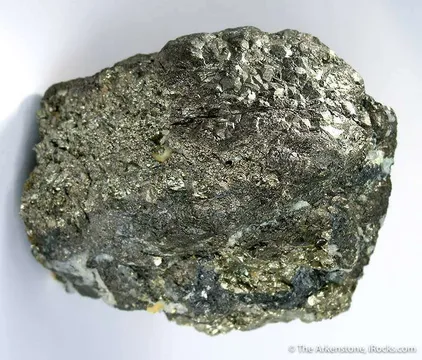
The primary ore assemblage is the key to understanding the specimens. Comb and vuggy quartz carried silver-bearing tetrahedrite, pyrite, hübnerite, galena, sphalerite, chalcopyrite, and native gold, silver, and copper. Oxidation of that ore body produced the secondary suite for which the locality is famous: copper-zinc phosphates, arsenates, sulfates, carbonates, lead arsenates, tungstates, and rarities containing antimony and tellurium. Good specimens often preserve this two-stage history visually: primary quartz and dark sulfosalts or hübnerite, overprinted by brilliant blues and greens of secondary copper-zinc minerals.
Mining claims were staked in 1882 by Aeneas McAndrews in what was then a new Black Pine district. The first notable ore shipment followed in November 1885, when about 400 tons went to the Hope mill in Philipsburg and returned enough profit to demonstrate the value of the property. James A. Pack leased the claims for $25,000, and the Black Pine Mining Company was incorporated on October 6, 1886. That early company built a 10-stamp mill on Willow Creek, but the operation soon encountered financial trouble; a sheriff’s sale and reorganization led to the Combination Mining and Milling Company, which became the great early producer.
The early Black Pine-Combination operation was active through the 1890s, with the main productive period commonly given as 1888–1897. Low silver prices and exhaustion of the oxidized ore forced closure at the end of that cycle. Western Mining History’s MRDS-derived record lists eight vertical shafts, three tunnels, drifts, inclines, crosscuts, more than 2,000 feet of workings, and a flotation mill, with the Combination vein developed approximately 2,400 feet down dip and 3,300 feet along strike. Historic production for 1888–1897 is often given as about 2,135,000 ounces of silver and 1,411 ounces of gold.
The mine had later lives. It was shut down in 1937, reopened in 1974, shut down again in January 1985 and March 1986, reopened by Inspiration in May 1987, and closed in 1988 because of low silver prices. ASARCO purchased the mine in 1990 and operated it intermittently afterward, including mining high-silica ore with oxide minerals from the Tim Smith vein for flux at the East Helena smelter. Production records list substantial silver-copper ore tonnage from the late 1970s through the mid-1980s and smaller silver-ore tonnages in the early 1990s.
The specimen story belongs largely to the later twentieth century. In the 1980s Black Pine became known for excellent crystals of cerussite, hübnerite, pyrite, quartz, tetrahedrite, and particularly rare secondary species. A handful of oxidized pockets produced the fine veszelyite that made the mine internationally famous among collectors: saturated blue to blue-green crystals, commonly small but sharply formed, on quartz, chrysocolla, malachite, or oxidized vein matrix. Japan-law twinned quartz is common enough in the mine to be repeatedly noted in locality literature, and collector-grade tetrahedrite, cerussite, stolzite, and hübnerite give Black Pine a breadth that goes beyond its single most famous mineral.
The site should not be regarded as an open collecting locality today. Montana DEQ describes Black Pine as an inactive silver mine with extensive metal-impacted waste rock, tailings, soils, and sediments. ASARCO deeded the property into custodial trust arrangements after bankruptcy proceedings, and modern reclamation work has been carried out under state and federal oversight. Locality summaries note that the surrounding acreage has been reclaimed and is no longer accessible. Current Black Pine specimens on the market are therefore best understood as old-collection material, dealer stock, or pieces preserved from past legal collecting and mining activity, not products of an active public dig.
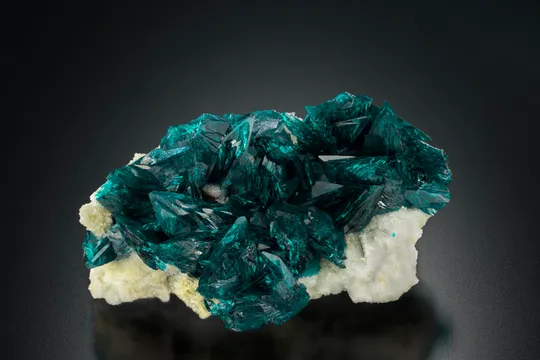
Black Pine veszelyite is the American benchmark for the species: dark blue, blue-green, teal, or almost black-blue crystals, usually elongated prismatic to bladed, with the best examples showing sharp terminations, glassy to subadamantine luster, and strong contrast on quartz or chrysocolla-rich matrix. Most crystals are only millimeters long, but documented display specimens include crystals around 6 mm, fine thumbnails with crystals to about 1.4 cm, and rare matrix pieces around 3 cm across carrying multiple sharp crystals; such pieces are large for both the locality and the species. Veszelyite came from oxidized pockets in the polymetallic vein system, commonly with quartz, chrysocolla, malachite, iron oxides, philipsburgite, pseudomalachite, mimetite, or other secondary copper-zinc minerals. The finest Black Pine pieces are not simply the richest blue crusts; they are specimens with isolated, complete, lustrous crystals, deep but still readable color, undamaged edges, and enough natural matrix to show the pocket context.
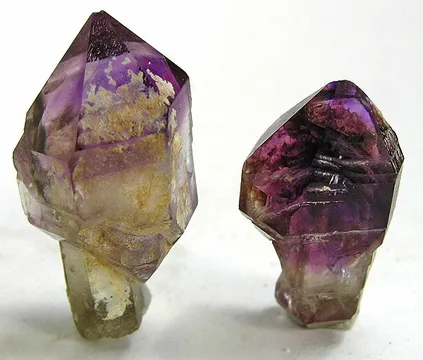
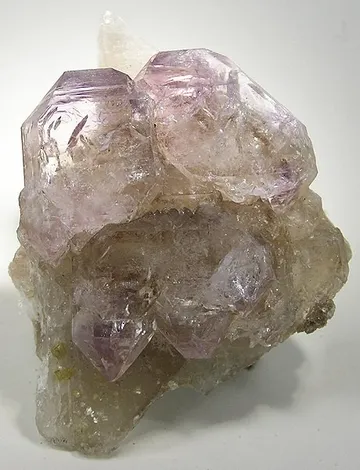
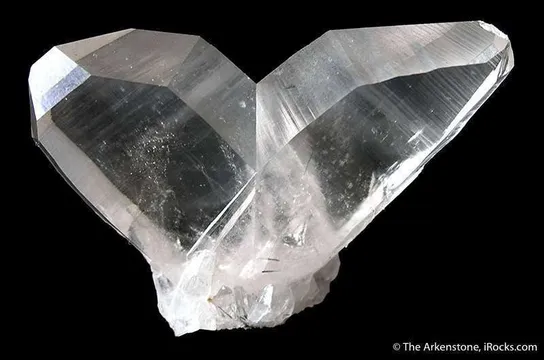
Quartz at Black Pine is both the main vein mineral and a collectible species in its own right. The ore bodies were comb and vuggy quartz veins, and the best quartz specimens range from glassy colorless crystals to iron-stained, coated, drusy, or Japan-law twinned groups. Japan-law twins are one of the mine’s signature quartz habits and are repeatedly singled out in collector and geological summaries; Mindat’s photo record includes glassy, flat Japan-law twins, including examples formed as later secondary quartz on larger earlier quartz crystals, and twins associated with black tetrahedrite. Quartz also provides the principal stage for Black Pine’s rare secondary minerals: it hosts blue veszelyite, green philipsburgite, micro mimetite, stolzite, cerussite, hübnerite, and tetrahedrite. Good Black Pine quartz specimens are those with clean, visible twinning, undamaged tips, attractive iron-oxide or secondary-mineral contrast, and a locality-specific association rather than ordinary massive vein quartz.
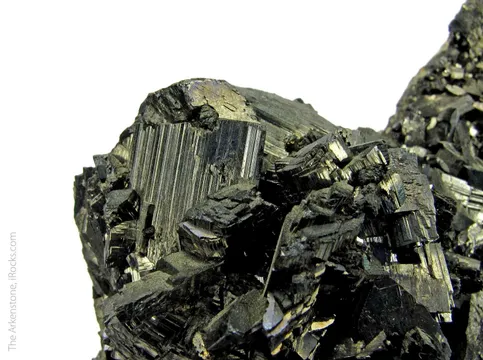
Tetrahedrite is central to Black Pine’s identity because it was not just a collector mineral but one of the principal silver-bearing ore minerals. In specimens it appears as metallic gray to black, commonly sharp tetrahedral or modified tetrahedral crystals and clusters in quartz, sometimes associated with micro mimetite, galena, hübnerite, pyrite, or later oxidation products. Published and photographed examples include tetrahedrite crystals to about 2.2 cm forming a 3.5 x 2.5 x 2.5 cm cluster with quartz and micro mimetite, and Mindat records refer more broadly to tetrahedrite-subgroup and freibergite-subgroup material from the mine. The best pieces have crisp crystal form, bright metallic faces with minimal oxidation, strong separation from the quartz, and a label that recognizes Black Pine’s silver-rich sulfosalt history; dull massive gray ore, even if historically important, is much less desirable as a display specimen.
Black Pine hübnerite is a classic accessory to the silver-copper vein assemblage and one of the mine’s most handsome dark minerals. Specimens show brownish black to reddish brown, bladed or platy crystals embedded in or projecting from quartz, with documented crystals commonly in the centimeter range; dealer and photographic records describe thin bladed crystals to about 3–4 cm, and a well-known 6.0 x 3.6 x 3.5 cm specimen from the Mel and Grace Dyck collection carries a hübnerite crystal about 2.7 cm across with quartz. It belongs to the primary quartz-sulfide stage, occurring with tetrahedrite, galena, pyrite, and comb quartz, and in some specimens later secondary minerals such as stolzite appear on or near the tungsten-bearing material. Fine Black Pine hübnerite is judged by crystal size, exposed blade geometry, red-brown translucency on thin edges or transmitted light, contrast with clean quartz, and freedom from bruised or cleaved terminations.
Beyond these four species, Black Pine’s distinction lies in its exceptional secondary suite. It is the type locality for philipsburgite, Cu5Zn(AsO4)(PO4)(OH)6·H2O, which occurs as vivid green late-stage material on quartz and associated minerals; for joëlbruggerite, Pb3Zn3(Sb5+,Te6+)As2O13(OH,O), a purple microscopic arsenate usually found perched on mimetite in milky quartz veins; and for auriacusite, Fe3+Cu2+AsO4O, an ochreous to brownish golden-yellow fibrous arsenate lining quartz vughs and coating quartz crystals. Other documented Black Pine minerals include acanthite, adamite, anglesite, arsenbrackebuschite, arsentsumebite, arthurite, azurite, bayldonite, beudantite, bindheimite, brochantite, carminite, cerussite, chalcocite, chalcopyrite, chrysocolla, clinoclase, conichalcite, corkite, cuprite, devilline, duftite, dugganite, galena, gartrellite, hemimorphite, kipushite, kuksite, langite, linarite, luzonite, malachite, mawbyite, mimetite, murdochite, native copper, native gold, native silver, olivenite, pharmacosiderite, philipsbornite, pseudomalachite, pyrite, pyromorphite, rhodochrosite, rosasite, scorodite, segnitite, serpierite, sphalerite, stibiconite, stolzite, strashimirite, theisite, torbernite, tsumebite, and wroewolfeite. A useful caution: boleite attributed to Black Pine has been specifically questioned in locality records and traced instead to reaction products in bricks from the Bi-Metallic Mill at Philipsburg, not to the mine’s natural mineral assemblage.
The main authenticity problem with Black Pine specimens is not a famous treatment or manufactured-fake trade; it is misidentification. The mine produced many blue, green, and blue-green secondary minerals on quartz and oxidized matrix, and small specimens can be overcalled. Veszelyite should show the right crystal character—blue to blue-green prismatic or bladed crystals, not merely green botryoidal crusts or amorphous chrysocolla. Philipsburgite, malachite, chrysocolla, brochantite-group minerals, pseudomalachite, and other copper minerals can all appear on Black Pine matrix and can be confused in casual online listings. For expensive specimens, old labels, reputable dealer history, published photographs, or analytical confirmation are worth a premium.
Condition is critical. Veszelyite is a hydrated copper-zinc phosphate and is not a rugged species; terminations chip, edges bruise, and dark glossy crystals can conceal damage until examined under strong oblique light. Good pieces should be checked for rubbed high points, incomplete tips, detached or reglued crystals, and friable iron-oxide or clay-rich matrix. Quartz matrix is usually stable, but specimens with delicate secondary minerals should be handled as small rare-mineral specimens rather than as robust quartz pieces. Philipsburgite and related micro-minerals are best protected from repeated handling, abrasion, and unnecessary washing.
Hübnerite has its own condition issues: the blades can cleave or splinter, and crystals partly embedded in quartz may have naturally contacted or broken ends. Tetrahedrite should be checked for edge bruising, dull etched surfaces, and broken tetrahedral corners. Quartz twins deserve careful inspection at the twin junction and tips, where damage is common and can be visually disruptive. Cerussite, stolzite, and micro-mineral pieces from Black Pine should be treated with ordinary caution for lead-bearing minerals: wash hands after handling, avoid creating dust, and keep small fragments away from children and food-preparation areas.
Market availability is finite in practical terms. The mine is closed, reclaimed, and environmentally sensitive, so the best material now appears mainly when old collections are dispersed. Black Pine veszelyite thumbnails do surface periodically, but matrix specimens with multiple sharp crystals and strong aesthetics are much scarcer. Hübnerite and tetrahedrite specimens from the mine are also obtainable but not common in top quality. Micromounts and analytical rarities may be available through specialist circles, but the finest display pieces—especially saturated blue veszelyite on quartz, fine Japan-law quartz twins, sharp tetrahedrite on quartz, and large hübnerite blades—should be bought with the assumption that replacement will not be easy.
The Black Pine story begins with a trial shipment. In 1882 Aeneas McAndrews staked claims in the new Black Pine district, but the country was rough, roads were poor, and development moved slowly. Then, in November 1885, about 400 tons of ore were hauled to the Hope mill in Philipsburg. The shipment yielded only a modest profit, but it proved the vein was real. In a mining camp, proof mattered more than polish. Investors appeared, James A. Pack leased the claims for $25,000, and by October 6, 1886 the Black Pine Mining Company existed on paper with Pack, J.M. Merrill, William P. Shryock, Joseph H. Harper, Frederick W. Flint, Ralph B. Wallace, and McAndrews among the names attached to the venture.
The new company began with ambition and almost immediately met the realities of mountain mining. In December 1886 it started work with a crew of 13 men. The main shaft on the Oxide claim was 150 feet deep and nearing production when the shaft house burned in June 1887. At the same time the company was trying to finish a 10-stamp mill. The structure was rebuilt, and the mill began operating on July 12, 1887, with 17 men employed at the mine and 11 in the mill. By August the company had shipped five bars containing 900 ounces of silver, yet it still failed to pay miners or settle its bills. The ore was there; the cash was not.
Black Pine was more than a mine. It became a ridge-top company town, with cabins strung along both sides of the dirt road and others scattered into the timbered slope toward Willow Creek. Water was scarce on the ridge and had to be hauled from Willow Creek by horse-drawn cart; residents reportedly paid $1.00 for a gallon, while in winter many melted snow. The company wanted the settlement to be respectable, even dry. That did not mean the miners became teetotalers. A rougher satellite camp known as Whiskey Flats or Whiskey Hill grew just south of the mine property, with saloons and brothels serving the men who were not especially interested in a “proper” company town after a shift underground.
Even burial followed Philipsburg custom rather than camp convenience. Local history preserves the mordant line that there was no cemetery because miners preferred to be “buried in the ‘burg.” When a miner died, the Miner’s Union closed the mines for the day and the community accompanied the body to Philipsburg for the funeral. That detail says as much about the camp as production figures do: Black Pine was remote, hard, and temporary, but socially tied to Philipsburg in life and death.
The corporate struggle became a public spectacle. On October 8, 1889, the Philipsburg Mail advertised a sheriff’s sale involving 36 different people and businesses suing the Black Pine Mining Company. The suit sought about $22,000 plus interest, bringing the total close to $25,000 advanced to the company. A St. Louis bank grew impatient, the property was attached, and Deputy United States Marshal Wall came from Helena to take possession. After litigation and reorganization, a new Combination Mining and Milling Company bought the assets at sheriff’s auction. The mine resumed under a new banner, and the name Combination became inseparable from Black Pine.
At its height the district was busy enough to support three shifts and large mule and horse teams. Ore from the Barrett, Harper, Harrison, and Lewis shafts was hauled through Middletown Canyon to the mill at Combination by eight- to sixteen-horse or mule teams. Concentrates went out by William Gillespie’s eighteen-head string of pack mules, which brought freight in from Philipsburg and hauled concentrate out on the return trip. Some accounts place the boom-time population near 1,200, while other ghost-town summaries push the district figure still higher when Black Pine, Middle Town, and Combination are counted together.
The road from Combination could be dangerous in ways that had nothing to do with geology. In 1891, grocery man J.S. Thorp was returning to Philipsburg around 9 p.m. when two masked men stopped him on the road from Combination. He tried to drive through by putting his team into a run. The robbers fired; one shot wounded his lead horse, another struck a second horse, and the wagon stopped. Thorp was blindfolded and threatened with a knife at his throat before giving up $200. The wounded horses were expected to die, and no later report clearly identifies the highwaymen. It is a small episode, but it gives the silver camp its full setting: ore wagons, payroll anxiety, night roads, and money moving through a landscape where law was always a little behind the team.
The mineralogical afterlife of Black Pine is quieter but just as remarkable. The same mine that once shipped bullion bars later produced tiny specimens that changed mineral nomenclature. Philipsburgite was recognized from Black Pine material and named for the nearby town. In spring 1993, John Dagenais collected material at the mine that later yielded joëlbruggerite, a purple microscopic arsenate named for mineralogist Joël Brugger. The crystals are only about 50 microns across—far beyond the drama of silver bars and stamp mills—but chemically they tell an equally vivid story: lead, zinc, antimony, tellurium, arsenic, and oxygen recombined in the oxidized remnants of a silver vein. Black Pine’s best specimens therefore carry two histories at once: the nineteenth-century mining camp and the late twentieth-century rare-mineral laboratory.