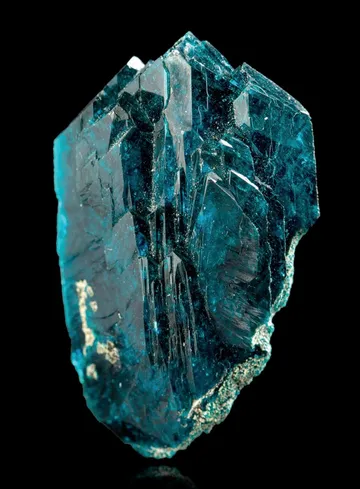
Jefferson County, USA - Montana locality renowned for quartz, amethyst, and rare tellurides; notable mines include PC Mine and Little Gem.
Key facts
Jefferson County, USA, as represented here, is the Jefferson County of southwestern Montana: a Boulder batholith collecting province where pegmatitic pockets, hydrothermal breccias, contact skarns, and gold-silver-telluride ore systems crowd into one county-scale mineral field. For collectors, its reputation rests first on quartz—especially the colorless to smoky Japan-law twins of the PC Mine and the amethyst-to-smoky scepters of the Little Gem and Pohndorf amethyst workings—but the county’s specimen vocabulary is broader than quartz alone. Titanite, schorl, microcline, albite, epidote-group minerals, axinite-group specimens, blue calcite with diopside from the Bald Mountain skarn, and rare tellurides from the Golden Sunlight system give Jefferson County unusual depth for a locality that many collectors still treat as “Montana quartz country.”
Geologically, the county sits across the Late Cretaceous Boulder batholith and its volcanic roof rocks, especially the Elkhorn Mountains Volcanics. The batholith’s granodiorite, quartz monzonite, granite, aplite, and pegmatite supplied the cavities, fractures, and contact zones that made the specimen localities possible. At the Little Gem and Pohndorf amethyst mines, late-stage pegmatitic fluids left vugs in feldspar-rich and quartz-rich zones; at the PC Mine, hydrothermal brecciation produced pocket after pocket lined with transparent quartz; at Bald Mountain and related skarns, intrusion against carbonate rocks made calcium-rich assemblages dominated by diopside, grossular, vesuvianite, apatite, and calcite; and at Golden Sunlight, a precious-metal telluride system developed in and around a breccia pipe rather than in the simple granite-pocket setting collectors associate with amethyst.
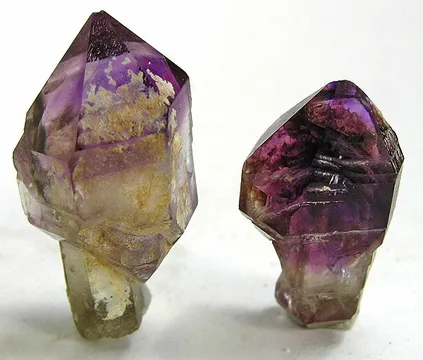
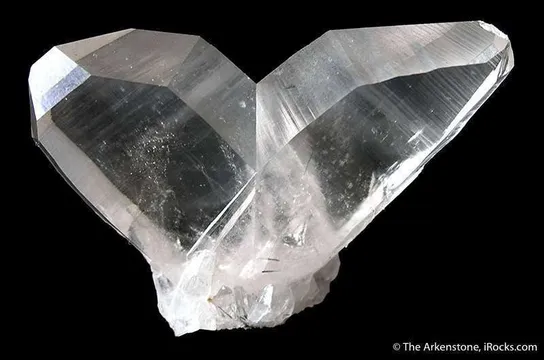
The look of the best Jefferson County specimens is highly distinctive. PC Mine quartz is typically bright, glassy, and sharply prismatic, often on breccia matrix, with the most desirable pieces showing flat, symmetrical Japan-law twinning rather than merely ordinary clusters. Little Gem and Pohndorf amethyst tends to be sceptered: smoky or colorless stems capped by violet amethyst heads, sometimes with complex, hoppered, or “jacare” alligator-skin growth. Titanite from the Boulder batholith pegmatites is not abundant, but good crystals are prized for sharp wedge forms, transparency, and the fact that they come from an American pegmatite environment better known for quartz. The county’s skarn specimens have a different aesthetic altogether: granular to crystalline diopside carrying blue calcite rhombs, brownish-red to orange grossular, and occasional vesuvianite or apatite.
Regional View
Country View
Historically, Jefferson County belongs to the mining arc between Butte and Helena. Gold was discovered in the county in 1864, and the Basin-Boulder, Clancy, Elkhorn, Wickes, and Whitehall districts all contributed metals, principally gold, silver, lead, zinc, and copper. Yet specimen collectors know a parallel history: small pegmatite and breccia mines worked not for tonnage but for pockets. The Little Gem, Pohndorf, and PC mines produced the specimens that made the county a staple of Rocky Mountain quartz collections, while modern pocket names from Little Gem—Hog Hole, Black Hole, Meatloaf, Spruce Up, Pocket City—show that this is not merely an old locality, but an active specimen-producing tradition.
Search for specimens: View all specimens from Jefferson County, USA
Jefferson County’s collector localities are best understood as several related but distinct deposit styles within and around the Boulder batholith. The quartz and amethyst localities are mostly late-stage pegmatitic or hydrothermal-pocket systems associated with the batholith and its roof rocks. The Little Gem and Pohndorf amethyst mines are pegmatitic deposits in the northern Highland Mountains and Boulder batholith area, where quartz-rich cores, aplite, microcline-rich zones, and late vugs supplied smoky quartz, amethyst, schorl, feldspar, mica, titanite, and related accessory minerals. The PC Mine, north of Basin, is a hydrothermal breccia in the Cataract-Basin district, famous not for amethyst but for transparent quartz crystals, groups, and Japan-law twins from innumerable vugs.
The broader county mineralization also includes skarn and precious-metal systems. Bald Mountain and the Pipestone Mine area are calcium-rich contact deposits where diopside, grossular, vesuvianite, calcite, and apatite occur in cavities within skarn. Golden Sunlight, near Whitehall, is a major gold-silver-telluride deposit related to a breccia pipe and a Late Cretaceous intrusive-volcanic system; it is not a normal cabinet-specimen mine, but it is mineralogically important for rare tellurides and associated sulfides. Historic lode districts such as Elkhorn, Wickes, Basin-Boulder, Clancy, and Whitehall produced galena, sphalerite, pyrite, chalcopyrite, tetrahedrite-group minerals, arsenopyrite, cerussite, anglesite, covellite, and quartz-gangue ores, with strong zoning from tourmaline-arsenopyrite assemblages near batholith roof zones into deeper galena- and sphalerite-rich zones.
The Pohndorf amethyst mine, about 15 miles southeast of Butte in the northern Highland Mountains, is one of the classic older amethyst localities. It was worked principally for gem-quality amethyst and produced museum specimens of scepter amethyst on tourmalinated quartz from cavities in a megacrystic microcline phase of the pegmatite. Early descriptions note a lens-shaped pegmatite roughly 140 feet long and up to 55 feet wide, with a quartz core and vuggy microcline-quartz zones carrying tourmaline, sericite, albite, and amethyst. Pohndorf, a Denver jeweler and mineral dealer, worked the deposit for amethyst and tourmalinated quartz; Montgomery and Over last operated it in 1938 and recovered fine small amethysts.
The Little Gem Mine is the county’s modern amethyst engine. Discovered by local gold prospectors in 1886, it was later claimed in 1958 by Oregon geologist Jerry Gray, who worked the surface for decades and eventually drove about 100 feet through granite to reach the pegmatite core. After Gray’s death, Russ Hage acquired the claim, working with Mike Uphus and others; Paul Senn later took over mine management while working with Hage. Since about 2010, work has been largely from the surface, aided by hand methods, small-scale blasting, and an excavator. Documented named pockets and pocket zones include Ladder Pocket in December 2009, the T-Day Pocket Zone in 2011–2012, Fairy Castle in August 2011, Winters Day in January 2014, Taylor Zone in July 2015, Chimney and Hog Hole pockets in 2017, Rocky Top in July 2017, Black Hole in 2018–2019, Father’s Day and Meatloaf pockets in 2023, Spruce Up in June 2024, Winters Day Annex in October 2024, Thunderstorm Zone in May 2025, and the large Pocket City system from July to October 2025.
The PC Mine lies on the North Fork of Basin Creek about 7 miles northwest of Basin. W. C. Van Laer obtained lease access from landowner Forest Klies in 1983 and worked the site until 1987. Bryant Harris, Elvis “Buzz” Gray, and H. Peter Knudsen took over in 1988, and Knudsen held full lease rights from 1990 until the exposed breccia above water level was mined out by 2005. Work was done by drilling and blasting with a trailer compressor, hand drill, and dynamite. The breccia body is at the edge of Basin Creek and plunges below water level, a fact that ultimately limited extraction; continued mining would have required interfering with the creek itself. The locality produced many tons of quartz singles and clusters and a remarkable population of Japan-law twins. Pyrite, galena, and sphalerite are much rarer pocket minerals there, but when present they could be large, including reports of green to brown sphalerite crystals reaching roughly 9 inches and galena reaching about 5 inches.
Mining access today is highly restricted. The Little Gem Mine remains an active private specimen and gem-rough operation and does not allow public collecting. The PC Mine is on private land, and the accessible above-water breccia has been mined out. Pohndorf, Goldflint Mountain, Delmoe Lake Road, Spire Rock Flats, and other Boulder batholith pegmatite or roadcut occurrences include a mixture of claims, private land, public-land complications, road rights-of-way, and sensitive exposures. Serious collectors should treat every Jefferson County specimen locality as permission-only unless current land status, claim status, and safety conditions have been verified directly.
Quartz from Jefferson County is anchored by two contrasting specimen traditions: the hydrothermal breccia quartz of the PC Mine and the pegmatitic smoky-to-amethyst quartz of the Boulder batholith amethyst mines. PC Mine quartz is typically bright, transparent to translucent, colorless to very lightly smoky, and sharply prismatic, occurring as singles, groups, and the highly coveted flat Japan-law twins that made the locality famous; good cabinet pieces may show numerous gemmy points on breccia matrix, while better miniatures and thumbnails have undamaged terminations, symmetry, and enough separation to show the twin law clearly. At Little Gem and Pohndorf, quartz commonly appears as smoky stems, amethyst caps, scepters, phantom-bearing crystals, or tourmalinated quartz associated with schorl, microcline, albite, muscovite-sericite, titanite, and iron staining; the best pieces combine strong luster, intact scepter architecture, visible smoky-amethyst zoning, and clean termination faces, whereas ordinary pieces are massive, etched, broken, weakly colored, or too iron-coated to show the growth structure.
Amethyst from Jefferson County is chiefly a Boulder batholith pegmatite product, especially from Little Gem and Pohndorf in the Toll Mountain–Highland Mountains area, where violet quartz formed in vugs within feldspar- and quartz-rich pegmatitic zones rather than in the basalt geodes or hydrothermal veins more familiar from many other amethyst districts. Little Gem specimens are most admired as scepters: smoky or colorless quartz stems carrying purple heads, sometimes with hoppered faces, “jacare” surface texture, phantoms, or complex termination growth; colors range from pale lilac to saturated grape purple, with the best pieces showing even color, gemminess, undamaged tips, and a sculptural contrast between smoky stem and amethyst cap. Pohndorf material has long been valued for scepter amethyst on tourmalinated quartz, with black schorl and feldspar associations adding locality character; gem rough exists, but cut stones are much less common on the market than crystal specimens.
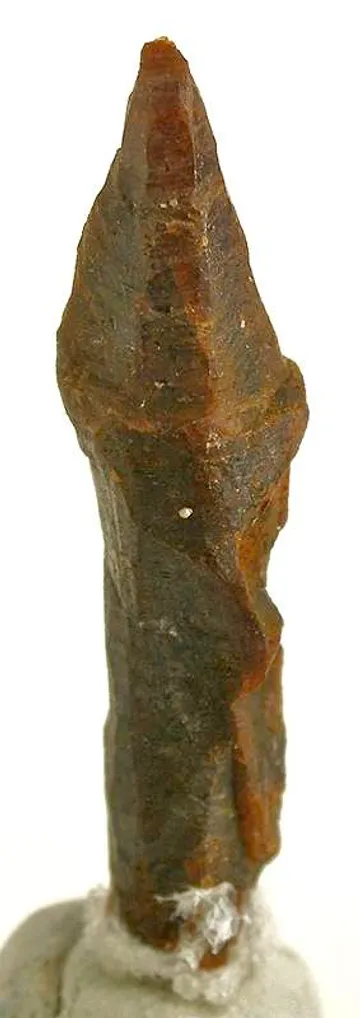
Titanite from Jefferson County is a Boulder batholith accessory mineral rather than a mass-market specimen species, and that scarcity is part of its appeal. Documented occurrences include Little Gem, Pohndorf/Toll Mountain, Goldflint Mountain pegmatites, Homestake Pass, Rader Creek, and related Delmoe Lake Road–Spire Rock Flats settings, where titanite occurs in pegmatitic or altered-contact environments with microcline, albite, quartz, schorl, epidote-group minerals, apatite, magnetite, brookite/anatase, and mica. The crystals are generally small compared with classic Alpine or Pakistani titanites, but good Jefferson County examples are sharply wedged, glassy, brown to yellow-brown or greenish, and transparent enough to reward magnification; a desirable specimen is one where the titanite is isolated, lustrous, and well formed on a recognizable Boulder batholith matrix rather than merely a granular accessory in pegmatite.
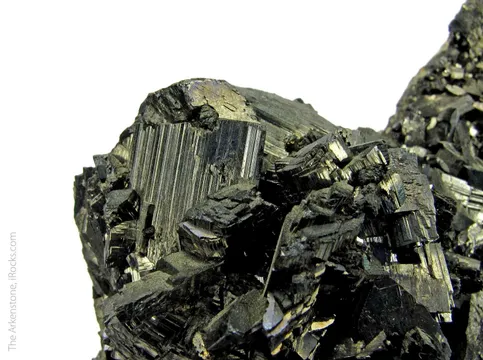
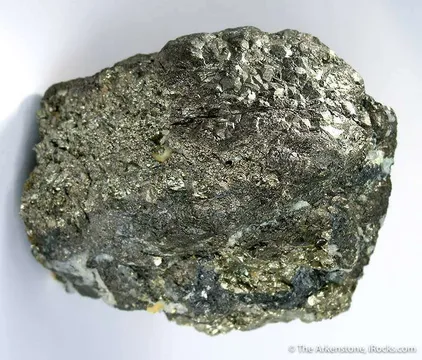
Other documented Jefferson County minerals give the locality much of its collector sophistication. The Boulder batholith pegmatites and altered contacts include albite, cleavelandite, microcline, muscovite and sericite, schorl, epidote, allanite-group minerals, anatase, brookite, magnetite, apatite, smoky quartz, milky quartz, and axinite-group material. The Bald Mountain skarn and Pipestone Mine are important for diopside, grossular, vesuvianite, blue calcite, and apatite, with particularly showy diopside-blue calcite combinations. The metal-mining districts add galena, sphalerite, pyrite, chalcopyrite, tetrahedrite-group minerals, arsenopyrite, cerussite, anglesite, covellite, bournonite, and quartz gangue. Golden Sunlight contributes a specialist’s suite of rare tellurides and associated species, including calaverite, krennerite, petzite, hessite, sylvanite, coloradoite, native tellurium, buckhornite, benleonardite, gold, electrum, and telluride-bearing sulfide assemblages; these are generally ore-microscopy and micromount-interest minerals rather than common display specimens.
The principal authenticity issue for Jefferson County specimens is not widespread fakery but locality precision. “Boulder batholith, Jefferson County” is a legitimate regional label, but it is much less informative than “Little Gem Mine,” “Pohndorf Mine,” “PC Mine,” “Delmoe Lake Road,” “Spire Rock Flats,” “Goldflint Mountain,” or “Pipestone Mine, Bald Mountain.” Serious collectors should value old labels, pocket dates, miner provenance, and photographs of the specimen before cleaning or trimming. Little Gem and Pohndorf amethyst can be confused with other Rocky Mountain scepter localities, and generic “Montana amethyst” labels should be treated cautiously unless the habit, association, and provenance fit.
Repairs are worth checking carefully on PC Mine Japan-law twins. The flat twin form is mechanically vulnerable, and many otherwise attractive examples have repaired arms, reattached twins, or trimmed breccia matrix. A repaired specimen can still be desirable if disclosed, but unrepaired, undamaged Japan-law twins command a premium. Inspect the twin junction, the base of each arm, and any contact with matrix under magnification. Bright luster and strong transparency can make small chips difficult to see in photographs.
Little Gem amethyst scepters commonly have natural growth irregularities: rehealed fractures, hoppered terminations, growth pits, contact points, phantoms, clay-filled hollows, and limonite staining. These are not automatically defects; they are part of the pocket character. The key is whether the termination is intact and whether any base break or side chip interrupts the main display face. Some specimens benefit greatly from professional cleaning because iron oxides can mask amethyst color and quartz transparency, but overcleaning can remove useful pocket patina and make provenance more difficult to judge.
Titanite from Jefferson County should be bought with modest size expectations. Good crystals are uncommon, and the best value lies in sharpness, luster, and association rather than sheer dimensions. Because titanite can resemble brown epidote, allanite-group minerals, or iron-stained wedge-like fragments in pegmatite, labels supported by collector provenance, analytical confirmation, or a reputable old collection matter. Similar caution applies to allanite-group, axinite-group, and rare titanium oxide identifications from the county.
Access has tightened considerably. Little Gem is active but closed to public collecting; PC is private and essentially exhausted above water level; many other occurrences are on claimed or private ground, roadcuts, or sensitive public-land settings. Current market supply therefore comes mostly from active mine operators, older collector holdings, estate dispersals, and occasional dealer releases. Little Gem amethyst appears with some regularity compared with older Pohndorf material, while fine PC Mine Japan-law quartz and Jefferson County titanite are scarcer and more provenance-dependent.
The oldest Little Gem story has the ring of the frontier lapidary era. Local gold prospectors discovered the deposit in 1886, and a 1941 account in The Mineralogist remembered collectors traveling out from Butte by covered wagon to the Nine Mile Inn, then continuing on to the amethyst ground. The detail that survives is wonderfully plain: they “filled their packs with amethyst.” That is the kind of line every field collector understands. Before the locality had pocket names, formal articles, or an internet photo gallery, it was already a place where the color purple made people shoulder extra weight on the way home.
Jerry Gray’s era at Little Gem reads like a miner’s answer to a collector’s dream. Gray, an Oregon geologist, filed a claim in 1958 and worked the surface sporadically for more than thirty years. In the early 1990s he brought in heavy equipment to build road access, not for a large commercial mine in the ordinary sense, but to make a secure working environment protected from trespassers. Then came the extraordinary part: he drove roughly 100 feet through solid granite to reach the pegmatite core. From there he raised upward along a narrow aplite zone, opened pockets, and extended the work into a drift running parallel to the core. It was an immense amount of hard-rock effort for amethyst, but it opened the underground logic of the mine and set the stage for the later surface work that made Little Gem a modern classic.
The modern Little Gem pocket names carry their own folklore. Ladder Pocket appeared in December 2009, followed by the T-Day Pocket Zone in 2011–2012 and Fairy Castle in August 2011. Winters Day came in January 2014, Taylor Zone in July 2015, Chimney Pocket in March 2017, and Hog Hole in April 2017, the last remembered for prolific scepters. Rocky Top, found in July 2017, was described as an extremely large pocket, while Black Hole in 2018–2019 produced some of the largest crystals in the state’s history. The list continued into the 2020s: Father’s Day Pocket in June 2023, Meatloaf on August 2, 2023, Spruce Up on June 20, 2024, Winters Day Annex on October 12, 2024, Thunderstorm Zone on May 11, 2025, and finally Pocket City, a massive pocket system worked from July 15 to October 1, 2025, with thousands of small specimens and a sub-pocket called Oil Change Pocket. Those names matter because they restore individuality to specimens that might otherwise be reduced to “amethyst scepter, Montana.”
The PC Mine has a different feel: less pegmatite romance, more compressed intensity at creek level. Its breccia lay at the edge of the North Fork of Basin Creek, and the pipe dove below water level. W. C. Van Laer began specimen work there under lease in 1983, Bryant Harris, Elvis “Buzz” Gray, and H. Peter Knudsen took over in 1988, and Knudsen worked the deposit until 2005. The equipment list is sparse and specific—trailer compressor, hand drill, dynamite—and the result was anything but modest: many tons of quartz crystals, large numbers of Japan-law twins, and countless vugs. The name “PC” has gathered more than one folk explanation, including “Perfect Crystal,” but Knudsen’s account preserves Van Laer’s meaning: “Pocket City.” For a hydrothermal breccia whose collectible life was defined by one pocket after another, the name could hardly be better.
The end of the PC Mine’s specimen era was dictated by water and geometry. The breccia continued downward, but the workable body above creek level had been removed. To keep going, the creek itself would have had to be stopped. That is the sort of practical boundary that shapes mineral history: not the exhaustion of quartz, exactly, but the point where geology, hydrology, property, regulation, and common sense meet. Today a fine PC Japan-law twin is more than a crystallographic curiosity; it is a survivor from a breccia body whose accessible upper part was mined out by hand-scale methods over a little more than two decades.
Jefferson County’s skarn story has its own memorable moment at the Sourdough mine near Elkhorn. In 2009, a Montana Crystal Collectors field trip visited a roadcut where the rock was essentially massive vesuvianite with small zones of well-crystallized material. Lanny Ream found a concentration of small red grossular crystals in one small area, and then, in Peter Knudsen’s memorable phrase, “a feeding frenzy ensued.” Fifteen collectors converged on a zone only about 5 x 6 x 5 feet deep, recovering grossular and anorthite specimens from a pocket-sized patch of skarn. It is a perfect Jefferson County vignette: the county is big, the batholith vast, the skarn belts extensive, but the collectible prize may be concentrated in a body no larger than a closet.