






A collector's guide to Le Bourg-d'Oisans, France: its geology, mining history and notable minerals, illustrated with the 42 specimens documented from this locality on EarthWonders.
Key facts
Le Bourg-d’Oisans sits at the meeting point of several classic Alpine mineral stories: the green epidote-bearing amphibolite fissures of the Taillefer–Cornillon sector, the clove-brown axinite associations long traded under Oisans labels, and the legendary clear quartz of La Gardette, the old gold mine above the Romanche valley whose specimens entered European cabinets under names such as “Quartz du Dauphiné” and “Quartz du Bourg-d’Oisans.” For collectors, the name is not merely geographic shorthand; it belongs to the foundational literature of Alpine mineralogy. Epidote is tied to Bourg-d’Oisans as a type locality, and the Oisans axinites are historically central to the naming and understanding of the axinite group.
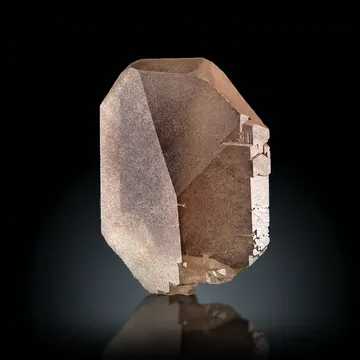
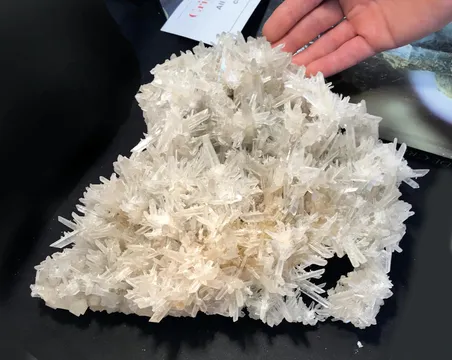
The locality’s finest cabinet specimens have a look that is unmistakably Alpine but not generic. Axinite appears as glassy, axehead-shaped blades in clove-brown, smoky brown, purplish brown, or champagne tones, commonly perched on pale quartz, feldspar, amphibolite, or epidote-rich matrix. Epidote from the Cornillon side forms dense sprays and bushy crusts of parallel, olive-green to nearly black prismatic crystals, often rising perpendicular to the fracture wall. The celebrated quartz from La Gardette is water-clear to faintly milky or honey-tinted, in lustrous prisms, drusy plates, “hérisson” groups, sceptres, Japan-law twins historically known in France as macles de La Gardette, and plates from geodes in the auriferous vein.
Regional View
Country View
Geologically, Bourg-d’Oisans owes its mineral fame to Alpine fracture systems cutting older crystalline basement and amphibolite. In the Cornillon–Grand Galbert sector, mineralized tension gashes in amphibolite produced epidote, axinite, quartz, albite, calcite, and related fissure species. At La Gardette, a narrow quartz–barite auriferous vein, hosted in crystalline rocks near the contact with the sedimentary cover, produced very little gold but exceptional crystal specimens. That mismatch—poor ore, magnificent minerals—is one of the defining themes of the district.
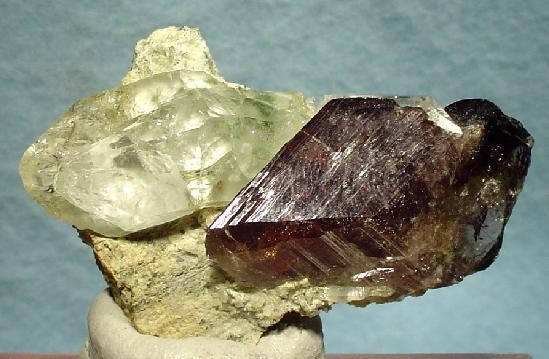
Photo: Wikimedia Commons

Photo: Wikimedia Commons
The village itself became a natural clearinghouse for the mineral wealth of Oisans. Quartz from La Gardette, epidote from Cornillon, axinite from nearby Alpine fissures, and prehnite from the broader Oisans country all passed through the hands of cristalliers, engineers, dealers, museum curators, and visiting mineralogists. Today those old labels can be frustratingly broad—“Bourg d’Oisans,” “Dauphiné,” “Oisans,” “La Gardette,” “Cornillon,” “Armentier,” and “La Balme d’Auris” are not interchangeable—but they testify to a long period when the valley town was the practical collecting center for a constellation of steep, difficult, mineralized Alpine sites.
Search for specimens: View all specimens from Le Bourg-d'Oisans, France
Le Bourg-d’Oisans is best understood as a classic Alpine locality name embracing more than one mineralizing environment around the commune. The Cornillon occurrences are Alpine fissures in amphibolite: open fractures, tension gashes, and pocketed veins in which fluids deposited epidote, axinite, quartz, feldspar, and calcite on fracture walls. Modern analytical work on Oisans axinite describes axinite in low-dipping open fractures developed in amphibolite, with adularia, actinolite, and sometimes epidote crystallizing before or with axinite. The same work interprets the association as the product of Alpine metamorphic fluids reacting with plagioclase, K-feldspar, and amphibole in deformed amphibolite, at temperatures on the order of 350 °C.
Cime du Cornillon, northwest of Bourg-d’Oisans near Rochetaillée, is the key name for the epidote story. The peak rises to 2475 m and is composed mainly of massive amphibolite. Old and modern accounts emphasize how inaccessible the productive ground is: pieces came from near the top of the mountain, from steep faces and fissures where vugs could exceed a square meter. The best epidote specimens are vein and pocket plates, with olive-green to nearly black prismatic crystals growing in sprays, bushes, and close parallel bundles. Quartz and axinite are the most prized associations, especially where the contrasting brown axinite blades are not swallowed by the darker epidote mass.
La Gardette, above the valley on the Villard-Notre-Dame side and historically tied to Bourg-d’Oisans labels, is a different but inseparable part of the collecting history. The mine lies on the north flank of the Rochail, roughly 2 km above Bourg-d’Oisans, around 1250 m elevation. Its famous vein trends roughly east–west and dips steeply south; published descriptions give a maximum thickness of about 0.90 m. The vein filling is dominated by quartz, with barite and a suite of metallic minerals including native gold, pyrite, chalcopyrite, galena, sphalerite, tetrahedrite or “cuivre gris,” aikinite, brannerite, and secondary malachite, azurite, cerussite, anglesite, and pyromorphite at the outcrops. The quartz swells opened into geodes that produced the bright, elongated crystals for which the mine became far more famous than for its gold.
The mining record around Bourg-d’Oisans is long. The Oisans district has evidence of mining and mineral collecting across centuries, while the Pontet lead mine, south of Bourg-d’Oisans on the Prégentil slope, is archaeologically important and was studied as a lead-silver vein system with ancient, medieval, and modern workings. The Pontet vein is hosted in gneissic and granitic basement beneath Liassic cover, and twentieth-century figures describe galena-bearing widths that were respectable for a small Alpine lead mine but not a major industrial orebody. It produced galena, pyrite, chalcopyrite, quartz, calcite, barite, and related vein minerals; as a collecting locality it is much less glamorous than La Gardette or Cornillon, but it anchors the commune’s mining history in real production rather than cabinet romance.
La Gardette’s history reads like a cautionary tale in gold speculation. Gold-bearing samples were known in the eighteenth century, and formal work began in the 1780s under the engineer Johann Gottfried Schreiber, serving interests connected with the comte de Provence. The gold never justified the hopes placed in the mine. Later campaigns in the nineteenth century, including work under M. May, and attempts around 1900 by companies formed for gold and silver, again failed economically. Yet during these episodes quartz and gold specimens were sold to collectors and museums, and at times the sale of mineral specimens became a more reliable income than the extraction of ore. Twentieth-century efforts and later prospecting did not turn the deposit into a durable mine; the adits of La Gardette were ultimately secured and closed, and modern access to underground workings is not a collecting option.
Collecting today must be approached with the seriousness these mountains demand. The old mines are hazardous, many entries are closed or deliberately secured, and the Alpine fissure sites are steep, exposed, and often beyond the ability of casual collectors. Cornillon and nearby fissure ground require mountaineering judgment as much as mineralogical knowledge; old reports mention acrobatic work on horizontal and vertical fractures, with geodes open into cliffs and pocket systems only followed where the rock allowed. Specimens on the market are therefore mostly old collection material, carefully traded modern discoveries from experienced local collectors, or dealer-labeled examples from the broader Oisans circuit.
The most important specimen-producing pockets were not large mines in the ordinary sense but crystal chambers. At Cornillon, modern field accounts describe a horizontal fracture running for about forty meters in a cliff, with several cavities large enough for a person to lie in but mostly emptied or weathered near the face. In one productive zone, a change in the vein geometry created a succession of roughly fifteen pockets, commonly around 30 cm by 30 cm and only 3 to 10 cm open. The larger plates could represent the floor or ceiling of a cavity, reaching about 30 cm by 30 cm, with epidote crystals to about 5 cm and quartz crystals to about 10 cm. At La Gardette, by contrast, the great specimens came from swelling quartz geodes in the vein, where hyaline prisms, twins, chalcopyrite sphenoids, and white crested barite could develop in open space.
Axinite from Le Bourg-d’Oisans is sought for exactly the features that gave the species its name: sharp, axehead-like blades, thin tabular crystals, razor edges, and glassy luster. The best pieces show clove-brown to purplish brown or champagne-brown axinite standing cleanly from matrix rather than forming only crowded crusts; crystals around 1 cm are common enough in old collections, while very showy examples can carry isolated blades of several centimeters, sometimes accompanied by epidote, quartz, albite or adularia, actinolite, and amphibolite matrix. Modern study of Oisans axinite has shown strong Fe-Mn zoning at the scale of a single crystal, so the old “ferroaxinite” character of the locality is chemically more subtle than labels suggest. For collectors, the decisive qualities are transparency, edge sharpness, undamaged tips, separation on matrix, and a convincing old or precise Oisans provenance; combination specimens with well-formed epidote or water-clear quartz are scarcer and markedly more desirable than massive brown axinite crusts.
Quartz under the Bourg-d’Oisans name most famously means La Gardette: water-clear to milky hyaline quartz in elongated prisms, bright plates, druses, sceptres, “hérisson” groups, and historically important twins with the 84-degree Japan-law relationship long known in French collecting as macles de La Gardette. The classic crystals formed in quartz-rich geodes within the auriferous vein rather than as an accessory skarn mineral, and the finest examples are exceptionally lustrous, transparent, and architectural, with minimal bruising and just enough iron staining, chlorite phantom, barite, chalcopyrite, or native gold association to strengthen the locality story without obscuring the quartz. Good pieces are crisp and three-dimensional; ordinary pieces are cloudy, contacted, or detached single prisms lacking the distinctive Dauphiné elegance that made La Gardette quartz a cabinet standard.
Epidote is the mineralogical signature of Bourg-d’Oisans, with Cornillon material especially prized as topotype-style Alpine epidote. The habitual form is a dense spray, crust, or bush of elongated prismatic crystals implanted perpendicular to amphibolite or vein walls, commonly olive green, dark bottle green, or almost black, with terminations that may be tabular, blunt, or sharply prismatic. Historic descriptions emphasize specimens from the high Cornillon slopes and note that many old labels used broad terms such as Dauphiné or Bourg-d’Oisans rather than exact pocket names. The best epidotes here have gemminess at the crystal edges, parallel growth that reads as an organized spray rather than a dull mat, intact terminations, and strong associations with axinite or quartz; large plates are imposing, but condition is critical because old Cornillon material often shows broken tips, bruised ridges, or weathering from open fissures.
Other minerals documented from the Le Bourg-d’Oisans commune and its immediate labeled circle include albite, calcite, anatase, rutile, prehnite, and bertrandite, with the Pontet mine adding galena, pyrite, chalcopyrite, barite, quartz, and calcite to the practical collecting picture. In the La Gardette system, the most celebrated rarities are not showy in the same way as quartz but matter greatly to specialists: brannerite, aikinite, tetrahedrite-group material, gold in quartz, sphalerite, and secondary lead-copper species from oxidized outcrops. Epidote is the clearest type-locality mineral tied to the commune, while axinite-(Fe) from the broader Oisans type-locality tradition remains one of the great historical attractions of specimens sold under Bourg-d’Oisans and neighboring Oisans labels.
The first collecting problem is locality precision. Old labels reading “Bourg d’Oisans,” “Dauphiné,” “Oisans,” or “Isère” may be historically honest yet geographically imprecise. Epidote specimens from Cornillon were sometimes mislabeled in old collections as coming from Malène or Mélaine, a lower hamlet rather than the high crystalline ground. Axinite labels can conflate Le Bourg-d’Oisans with Saint-Christophe-en-Oisans, La Balme d’Auris, Le Rocher d’Armentier, La Garde, and other nearby Oisans fissure localities. Quartz labels can compress La Gardette, Villard-Notre-Dame, Bourg-d’Oisans, and the broader “Dauphiné” trade name into a single line. For important purchases, the label history matters nearly as much as the crystal.
The second issue is condition. These are Alpine fissure specimens from steep, mechanically unforgiving terrain, and many were extracted from narrow openings where crystals were naturally intergrown, contacted, or broken during removal. Axinite blades should be inspected along every edge and termination; tiny chips on the thin margins can be hard to see in photographs but obvious under angled light. Epidote sprays often have broken tips hidden among dense parallel crystals, and older plates may be weathered on exposed surfaces. La Gardette quartz is commonly repaired or cleaned simply because old plates are fragile, iron-stained, or heavily intergrown; this is not automatically disqualifying, but repairs, acid cleaning, or oiling should be disclosed.
No robust, locality-specific tradition of manufactured fake Bourg-d’Oisans axinite, epidote, or La Gardette quartz is documented in the sources consulted, but misattribution is common enough to deserve more attention than outright fakery. Russia, Pakistan, Mexico, Switzerland, and other Alpine and skarn localities can produce axinite with superficially similar brown blades; Austrian, Norwegian, Pakistani, Alaskan, and Alpine epidotes can be confused in dealer stock; and clear quartz twins or sceptres are routinely over-labeled if provenance is weak. A good Bourg-d’Oisans specimen should have a plausible habit, matrix, association, and label trail, not just a romantic French locality name.
Fluorescence is not a major collecting feature for the three headline species here. Handling is instead about brittleness and abrasion: axinite has fragile edges, epidote has brittle terminations, and La Gardette quartz clusters often contain thin side crystals that chip easily. Store older cabinet pieces so that crystals do not bear weight against foam, and avoid aggressive ultrasonic cleaning on axinite-epidote combinations or old repaired quartz plates.
On the market, genuine Le Bourg-d’Oisans material is available but uneven. Small axinite groups, epidote sprays, and quartz pieces appear periodically in European and American dealer inventories and auction archives, often as old collection specimens. Truly high-grade axinite with large isolated blades, epidote-axinite combinations, and fresh cabinet epidote plates from Cornillon are much scarcer than thumbnail or miniature representatives. La Gardette quartz is better known and more widely recognized, but the best historical plates, large water-clear groups, documented Japan-law twins, and quartz with native gold or significant metallic associations command a premium.
The best Bourg-d’Oisans stories begin with a paradox: the district was made famous by mines that repeatedly disappointed miners and delighted collectors. La Gardette was pursued for gold, yet its true wealth came out as quartz. In the eighteenth century, samples of native gold and quartz drew the attention of engineers and concessionaires, and in 1781 major work began under Johann Gottfried Schreiber. The gold was real enough to sustain hope, medals, reports, and speculation, but never rich enough to reward the enterprise. Later accounts repeatedly return to the same irony: the mine’s principal legacy was not bullion but the transparent, theatrical rock crystal that went into cabinets, museums, and the mythology of the Dauphiné.
Schreiber himself stands at the crossroads of science, mining, and specimen collecting. He is remembered in the Oisans mineral story as the Saxon-born engineer who directed operations associated with the comte de Provence’s mining interests and as a figure linked to early recognition of axinite. The mountain economy around Bourg-d’Oisans did not separate ore from curiosity as neatly as modern categories do. A bright quartz plate, an unusual brown “schorl,” or a specimen with visible native gold could be more valuable as a cabinet piece than as ore. That lesson was not lost on the cristalliers.
Napoléon Albertazzo is the most vivid name in the nineteenth-century collecting tradition. A self-taught crystal hunter from Bourg-d’Oisans, he sold to and guided important mineralogists and collectors, including Alfred Lacroix and Groth. Lacroix’s work drew repeatedly on Albertazzo’s finds, and later collector histories record purchases that give rare prices and texture to the trade: an axinite from the Combe de la Selle for 5 francs in 1883, an anatase for 3 francs in 1886, an albite on quartz from La Gardette for 4 francs, a La Gardette quartz twin for 12 francs, and a “plaque de nombreux cristaux” from La Gardette for 180 francs in 1891. Those numbers make the old trade tangible: not anonymous “classic specimens,” but particular objects moving by hand from mountain guide to museum world.
Cornillon adds a different kind of drama. Older descriptions place the finest epidote-bearing ground high on the mountain, in steep and nearly inaccessible ground, with cavities that could be more than a square meter. Modern field notes by Jean-François Astier turn that abstraction into physical reality. He describes the transition from micaschists to amphibolites along the road from Grenoble to Bourg-d’Oisans, then the long problem of cliffs, wooded slopes, “gendarmes” on the ridges, fault mirrors, rusty traces, manganese stains, and hollow “marmites” or “fours” that might be sterile or might be the clue a cristallier needs.
One recent Cornillon account describes a horizontal fracture in a cliff stretching for about forty meters. Several cavities opened directly to the wall; some were large enough to lie down in, yet much of their original content had long since vanished or weathered. The productive moment came where the vein offset and folded, creating more open space. There, pocket followed pocket: around fifteen cavities, most about 30 cm by 30 cm, with openings of only 3 to 10 cm. The vein would narrow to almost nothing, pass through pale green, friable epidote, then darken as the first crystals appeared. When the fracture tilted toward vertical, quartz began to show up, either as floating crystals or on the fault mirror itself. It is an exact picture of Alpine pocket hunting: not a single grand cavern, but a sequence of cramped, discontinuous rewards in dangerous ground.
Astier’s list of the cristallier’s signs reads like fieldcraft passed from one generation to another: a “worked” wall with ledges and towers; amphibolite of the right color and structure; gabbro; rust; manganese; cavities whether sterile or not; fault mirrors. It also explains why so few outstanding specimens can come from so much mountain. The landscape is vast, the slopes steep, the indications subtle, and most pockets are empty or poor. A Cornillon epidote plate that reaches the market in good condition carries all that labor in its matrix.
Even the mislabels have stories. “Les gendarmes,” in the local field vocabulary, are not police but ridge towers—rocky projections standing out above the valleys. Specimens from such sites have often been mislabeled because the words describe a landscape feature as much as a locality. Older Cornillon epidotes also traveled under broad names because the precise source was guarded, misunderstood, or simply less important to nineteenth-century collectors than the district name. Today, serious collectors try to reverse that blur, but the old labels remain part of the charm and the puzzle.
-Quartz-192723.jpg)

