






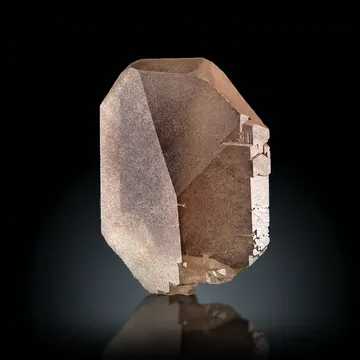
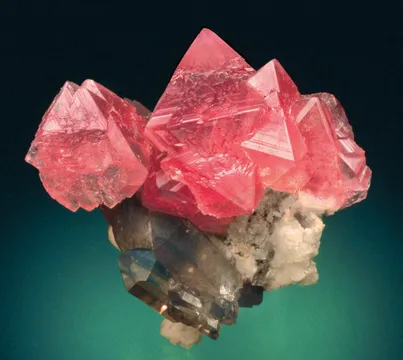
Les Droites, France — alpine locality famed for pink to rose fluorite octahedra on smoky quartz, prized for delicate mountaintop specimens and collector appeal.
Key facts
Les Droites is not a mine in the usual sense, and that is exactly why it occupies such an exalted place among alpine-mineral collectors. It is a high, severe peak on the French side of the Mont Blanc massif above Chamonix, with the classic specimen ground centered on the north face and the Argentière basin. The specimens came from alpine fissures—local cristalliers call them fours—opened in the Mont Blanc granite and related protogine by tectonic strain, hydrothermal fluid circulation, uplift, frost, and glacial erosion. From those cavities came one of the most coveted French alpine combinations: raspberry-pink to rose-red octahedral fluorite perched on smoky quartz, sometimes with albite, adularia, chlorite, calcite, or hematite.
The best Les Droites specimens have an unmistakable look. Instead of heavy, sulfide-mine matrices or massive vein chunks, they are airy alpine pieces: bright octahedra of fluorite, often small but intensely colored, scattered over or clustered against sharp smoky quartz; or a single fluorite octahedron poised on pale feldspar or a clean quartz edge. A fine piece succeeds by balance as much as size: color deep enough to hold under normal light, intact octahedral edges, a contrasting matrix, and the sort of natural alpine architecture that makes a miniature feel like a mountain in itself.
Regional View
Country View
The collector reputation of Les Droites rests especially on late-20th- and early-21st-century cristallier work in very difficult terrain. Documented finds include the famous 23 July 1989 frozen pocket at about 3600 m on the great north spur of Les Droites, which yielded isolated gray smoky quartz crystals up to 18 x 12 x 12 cm carrying transparent, brilliant pink octahedral fluorites to about 25 mm, and a major 15 September 2005 pocket on Les Droites that required several days of careful clearing through collapsed rock and chlorite-rich material before a few important quartz-fluorite specimens emerged.

Photo: Wikimedia Commons

Photo: Wikimedia Commons
Search for specimens: View all specimens from Les Droites, France
Les Droites belongs to the alpine-cleft mineralization of the Mont Blanc massif. The “deposit” is a system of open fissures and cavities in granite and protogine rather than an orebody worked for metal or industrial minerals. Hot, saline fluids circulated through fractures in the crystalline basement, leached silica, calcium, fluorine, and other components from the enclosing rocks, and deposited quartz first, followed in the classic fluorite-bearing assemblages by feldspar, chlorite, calcite, and fluorite. The local word four is important: it means the natural cavity in which crystals grew freely, and in the Chamonix collecting tradition it also carries the practical sense of a pocket that must be approached, opened, cleaned, and emptied with mountain skill rather than mined on an industrial plan.
The productive material at Les Droites is best understood as pocket mineralization along fractures exposed or made reachable by erosion on the flanks of the peak. The north face is the classic collector locality, particularly the Argentière-basin side, but documented Les Droites material also includes south-face quartz-fluorite-hematite finds and in situ reports of clear quartz discovered at about 3800 m on the south face. These are not continuous “veins” in the economic-mining sense; they are discontinuous fissures where a small cavity may be barren, chloritic, crushed by movement, emptied by frost and gravity, or—rarely—lined with undamaged quartz and fluorite.
The mineralization is celebrated for pink to red fluorite, smoky quartz, and gwindel quartz. On Les Droites specimens, fluorite is typically octahedral and commonly rests on smoky quartz, quartz-adularia, albite, or granitic matrix. Quartz may occur as ordinary prismatic rock crystal, smoky quartz, doubly terminated crystals, quartz “à âme,” scepters, or gwindel forms. Hematite has been reported on south-face material, and chlorite coatings are a recurring alpine-cleft issue, sometimes obscuring fine fluorite until careful cleaning reveals the crystals.
There was no mining company or sustained ore operation at Les Droites. The history is the history of Chamonix cristalliers: mountain guides, alpinists, and local specialists who combined prospecting with rope work, weather judgment, and intimate knowledge of the massif. Chamonix’s crystal tradition reaches back centuries, with collectors and naturalists already recognizing Mont Blanc minerals in the 18th and 19th centuries. Pink fluorite in the massif was brought to scientific notice in 1791 by Marc-Auguste Pictet, and by the late 20th century the finest red-pink fluorites of the Mont Blanc area had become icons of French mineralogy. Les Droites entered that tradition not through volume, but through a handful of dangerous, high-altitude pockets that produced quartz-fluorite combinations of extraordinary refinement.
The most specific Les Droites find records are few, which is typical of alpine clefts. A frozen pocket opened on 23 July 1989 at about 3600 m on the great north spur produced three very high-quality specimens with isolated gray smoky quartz crystals and pink fluorites to roughly 25 mm. A major pocket discovered on 15 September 2005 on Les Droites began with signs of quartz and fluorite on the pocket roof, but the main chamber contained about two tonnes of collapsed rock. The discoverers reportedly spent four to five days clearing it and ultimately recovered four important specimens plus smaller pieces; the material was burdened by a thick chlorite layer, making preparation difficult and costly in lost crystal surfaces.
Collecting access today is tightly controlled. Les Droites lies within the Chamonix-Mont-Blanc communal and protected Mont Blanc collecting context, where crystal hunting requires prior declaration and adherence to the local code of honor. Traditional collecting methods are the standard: no explosives, no machines, no heavy equipment, and no helicopter extraction. Current Chamonix rules require annual formalities, attention to the exact location of finds, respect for reserved pockets, and presentation of significant discoveries so that the Musée des Cristaux can evaluate pieces of scientific or heritage importance. In practical collector terms, fresh Les Droites specimens reach the market only when a licensed cristallier makes a legitimate find and enough material is available beyond local retention and museum priority.
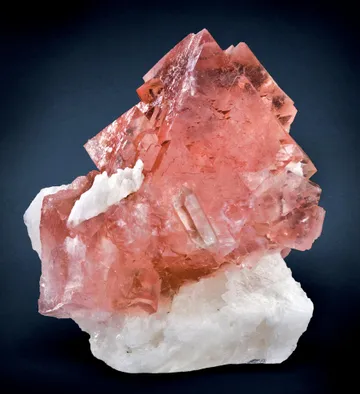
Fluorite is the signature mineral of Les Droites and the reason the locality is known far beyond Chamonix. The best crystals are octahedral, rose-pink to raspberry-red, translucent to transparent, and commonly perched on smoky quartz, albite, adularia, or pale granitic matrix; many are modest thumbnails to miniatures, but important Les Droites fluorites have reached 1–2.5 cm on edge on collector specimens, with exceptional documented Mont Blanc fluorites larger elsewhere in the massif. Surface character is crucial here: alpine fluorite may be frosted, satin-bright, naturally corroded, stepped, internally cleaved, or chlorite-stained, so the premium pieces show intact octahedral geometry, pleasing translucency, strong color under ordinary light, and an uncluttered relationship to the quartz. Les Droites fluorite is especially admired when the octahedra appear as sharp, separate rose crystals on smoky quartz rather than as a damaged crust or dissolved remnant.
Quartz from Les Droites is the structural backbone of the locality’s best specimens. It occurs as alpine-cleft crystals in colorless, slightly smoky, gray, and smoky forms, with documented habits including prismatic crystals, doubly terminated crystals, quartz “à âme,” scepters, and gwindel quartz. Collectors value Les Droites quartz not merely as a species label but as a stage for fluorite: the finest pieces have clean, lustrous, undamaged quartz with enough smoky tone to contrast the pink fluorite while remaining transparent or translucent. The locality has also produced notable stand-alone quartz, including reports of very large Mont Blanc quartz from the base of the north face and clear quartz found high on the south face, but for cabinet collecting the most desirable Les Droites quartz specimens are balanced alpine miniatures and small cabinets with crisp terminations, minimal bruising, and natural pocket surfaces rather than sawed or overcleaned matrix.
Smoky quartz is the classic companion and color counterpoint to Les Droites fluorite. It ranges from lightly smoky gray to richer brown-gray crystals, usually in alpine prismatic habits, and the most memorable specimens are those in which bright pink fluorite octahedra sit on a lustrous smoky crystal or cluster. Documented Les Droites material includes isolated gray smoky quartz crystals as large as 18 x 12 x 12 cm from the 1989 frozen pocket, while market specimens more commonly fall in the thumbnail to small-cabinet range. Good smoky quartz from Les Droites must be judged for alpine-cleft condition: sharp, glassy terminations and natural luster count heavily, while etched sides, contact marks, chlorite, and repaired or reattached fluorites reduce desirability unless the overall architecture is exceptional.
Mindat’s locality record for Les Droites documents fluorite and quartz, including gwindel and smoky quartz varieties, rather than a long species list or type-locality suite. Broader Mont Blanc fissure assemblages include species such as albite, adularia, chlorite, calcite, hematite, epidote, and locally rare alpine minerals, and several of those appear in specimen descriptions tied to Les Droites material. Within Les Droites itself, the notable rarities are therefore not type minerals but exceptional habits and associations: pink fluorite on smoky quartz, smoky gwindel quartz, sceptered quartz, hematite-bearing south-face quartz-fluorite pieces, and the rare pockets where fluorite retained strong color and undamaged octahedral form after exposure to ice, water, collapse, and chlorite.
Les Droites pieces demand careful locality scrutiny. Labels may read “Les Droites,” “Les Droites north face,” “Bassin d’Argentière,” “Argentière,” “Mont Blanc,” or simply “Chamonix,” and those names are not interchangeable at the collector level. Some older labels group material under the Argentière massif or basin, while others specify the north face of Les Droites. A serious specimen should retain as much locality history as possible, ideally including the face, pocket or sector, date of find, cristallier, and prior collection.
The most serious authenticity concern is assembly. Mont Blanc pink fluorite is valuable enough that altered specimens have long been a concern: reattached fluorite octahedra, composite fluorite-on-quartz pieces, oiled or sprayed surfaces, and repairs that disguise cleavage or bruising have all been specifically discussed in the Mont Blanc collecting literature. Inspect the contact between fluorite and quartz under magnification. Natural growth contacts should be convincing in geometry, matrix continuity, and surface texture; suspicious glue films, unnatural gaps, overly perfect placement, or mismatched dirt and chlorite are warning signs. Repairs are not automatically fatal on an alpine classic if disclosed, but undisclosed repair is a major value issue.
Condition is the central grading factor. Fluorite is soft and has perfect cleavage, and the Les Droites material often formed in pockets later affected by frost, water, collapse, and chlorite. Expect contact at the base or matrix edge, minor peripheral cleaves, etched surfaces, and occasional internal fractures. However, the best specimens show undamaged display faces, complete octahedral edges, honest pocket luster, and no obvious modern enhancement. A specimen with smaller but pristine rose octahedra on clean smoky quartz is often preferable to a larger but bruised or muddied plate.
Color should be judged in neutral light. Strong backlighting can make pale fluorite glow beautifully, but market value should rest on what the piece does under normal display illumination. Many Mont Blanc fluorites show frosted or satin surfaces that deepen the perceived rose color, while thick crystals usually show stronger color than thin plates. Pink fluorite color in the massif is related to structural color centers and natural irradiation; prolonged unnecessary exposure to intense light or heat is best avoided, especially for premium red-pink pieces.
Fluorescence has been reported for some Les Droites fluorite specimens under longwave and shortwave UV, but it is not the principal reason to collect the locality. The handling rule is simple: treat these as fragile alpine fluorites first and fluorescent minerals second. Keep them out of harsh sunlight, avoid heat, avoid acids and aggressive cleaning, and never assume chlorite or pocket clay can be removed safely without specialist preparation.
Availability is limited and uneven. Les Droites specimens appear sporadically through European dealers, old collections, Chamonix-related material, and occasional auction dispersals. Modest thumbnails can surface, but fine, undamaged pink fluorite on smoky quartz from a precise Les Droites locality remains scarce and expensive. Superb examples with strong provenance, deep color, sharp fluorite, and aesthetic quartz are firmly in the classic-French-mineral category and compete with top Mont Blanc, Swiss, and alpine-cleft material generally.
One Les Droites story begins not with a glittering crystal but with a wall of snow. On the south face, at about 2000 m, Christophe Perray was described wearing a red helmet and working with a plastic shovel to clear the entrance of a cavity. Behind the snow was the promise that keeps Chamonix cristalliers returning to dangerous ground: rock crystal, smoky quartz, fluorite, and the chance that an alpine fissure might still hold undisturbed pocket surfaces. Perray’s tools and methods capture the peculiar delicacy of the work. Once a four is found, the entry may be thawed with small torches, heaters, or even salt; inside, children’s plastic rakes and knitting needles can be more useful than force, because a single careless motion can turn a pink octahedron into cleaved fragments.
The north face of Les Droites carries a darker romance. Jean-Franck Charlet and René Ghilini were among the first to work certain difficult zones of the massif, including the face nord des Droites. Charlet’s practical rule was to study the faces through binoculars and look for quartz veins cutting the granite. He also explained the danger with the bluntness of someone who had lived it: the cristalliers go in midsummer, when alpinists often avoid the driest faces; the rock is unstable, and collapse risk is high. The point is not theatrical danger but geological reality. The same frost, thaw, and decompression that open crystal pockets also loosen the mountain.
The 1989 north-spur pocket is one of the great Les Droites specimen episodes. Found on 23 July 1989 at about 3600 m in a frozen four on the grand éperon Nord des Droites, it yielded only a few specimens, but they were the kind that define a locality: isolated gray smoky quartz crystals reaching 18 x 12 x 12 cm, with scattered transparent, brilliant pink fluorite octahedra to about 25 mm resting on the quartz. In a district where many fluorites are frosted, etched, dissolved, or cleaved, the description of bright, transparent octahedra on large smoky crystals explains why Les Droites has such force in collector memory.
The 15 September 2005 Les Droites pocket reads like an alpine excavation in miniature. The first signs were disappointing: the ceiling still showed a few smoky quartz crystals and traces where fluorite had been, but much of the roof material was gone. Deeper inside lay roughly two tonnes of collapsed rock, piled in the pocket. The discoverers spent four to five days emptying it. They recovered four important specimens and a few lesser ones, only to face another obstacle: a chlorite layer reported as several centimeters thick over the pieces. Cleaning saved some surfaces and cost others. The best surviving specimen from that pocket measured 14 x 9 x 8.5 cm overall, with quartz to 4.5 cm and a large fluorite octahedron of about 1.7 cm on edge.
The broader Chamonix world around Les Droites has its own succession of characters. Roger Fournier helped revive the cristallier tradition in the late 1960s, pushing into previously inaccessible pockets before dying in a 1976 accident in the Aravis. His son Éric Fournier later became mayor of Chamonix, putting one of the great ironies of the Mont Blanc mineral world into public view: the town’s elected authority regulating a profession that shaped his own family history. Around 2020, roughly 60 to 70 people were presenting themselves at the mairie for authorization, compared with a much smaller circle decades earlier.
The story of Mont Blanc fluorite was permanently altered by the Fluorite Laurent, found by Christophe Perray in the Aiguille Verte massif in 2006 and named for Laurent Châtel, his climbing companion who died in 2005. Though not a Les Droites specimen, it belongs to the same Chamonix culture of fluorite, smoky quartz, peril, and heritage. The piece weighed 5.1 kg, combined red fluorite with smoky quartz, was classified as a major heritage cultural object, and was acquired for the French national collections for 250,000 euros with substantial sponsorship. Afterward, some believed the mountains had become a mineral lottery. Others, including seasoned cristalliers, insisted the reality remained weeks of cold, risk, and often nothing at all.

.jpeg)