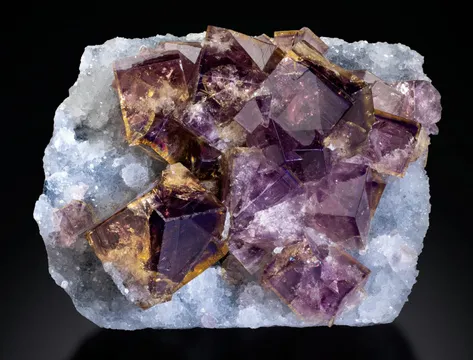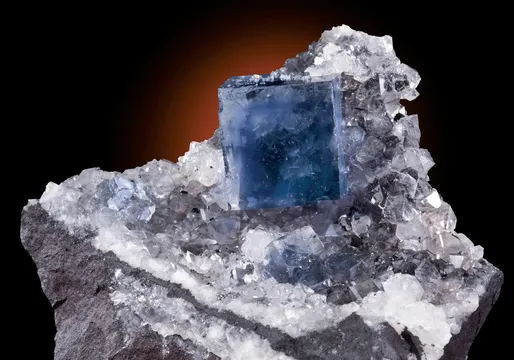
Lady Annabella Mine, UK — a premier Weardale fluorite locality with pocket-rich cavities, cubic crystals, and daylight-fluorescent colors from green to purple.
Key facts
Lady Annabella Mine is one of the defining modern names in English fluorite collecting: a short-lived UK Mining Ventures specimen operation in the former Eastgate, or Blue Circle, cement quarry in Weardale, County Durham. Its importance rests on a very particular combination of geology and timing. The workings exploited the last richly mineralized bench left in a large limestone quarry already famous to collectors for Eastgate fluorite, and the new mining exposed a compact, pocket-rich system of veins, collapse breccias, and metasomatic “flats” in the upper Great Limestone. In collector terms, that means Lady Annabella is not merely another Weardale label; it is a named-pocket locality where the best pieces can be traced to individual cavities with distinct color, habit, associations, and daylight response.
The mine sits within the Northern Pennine Orefield, the classic English Pb-Zn-Ba-F province whose hydrothermal veins and limestone-replacement flats produced many of Britain’s best fluorite, galena, witherite, barytocalcite, and related mineral specimens. At Lady Annabella the collector suite is narrower but highly attractive: fluorite dominates, commonly with calcite, galena, and quartz, with hydrocerussite and rare siderite adding pocket-specific interest. The finest fluorites show the full Weardale vocabulary—cubic crystals, penetration twins, glassy lustre, internal phantoms, green to yellow to purple color zoning, and the much-loved daylight fluorescence that can shift a specimen’s visual character outdoors. Good pieces are not simply colorful; they have the sharply readable architecture of fluorite growth, with transparent edges, nested zones, mirror faces, and enough matrix contrast to make the crystal color sing.
Regional View
Country View
Historically, Lady Annabella bridges two eras of Eastgate collecting. The old quarry had produced fluorite since the early 1960s, when it was worked for cement limestone rather than specimens. Later, in 2020, UKMV reopened a remaining mineralized bench specifically for specimen recovery and gave collectors a rare modern opportunity: new, well-documented Weardale fluorite from named pockets rather than old, vaguely labelled quarry material. The mine was named for Annabella Bruce, daughter of Ian and Diana Bruce, born in June 2020, just before the project began.
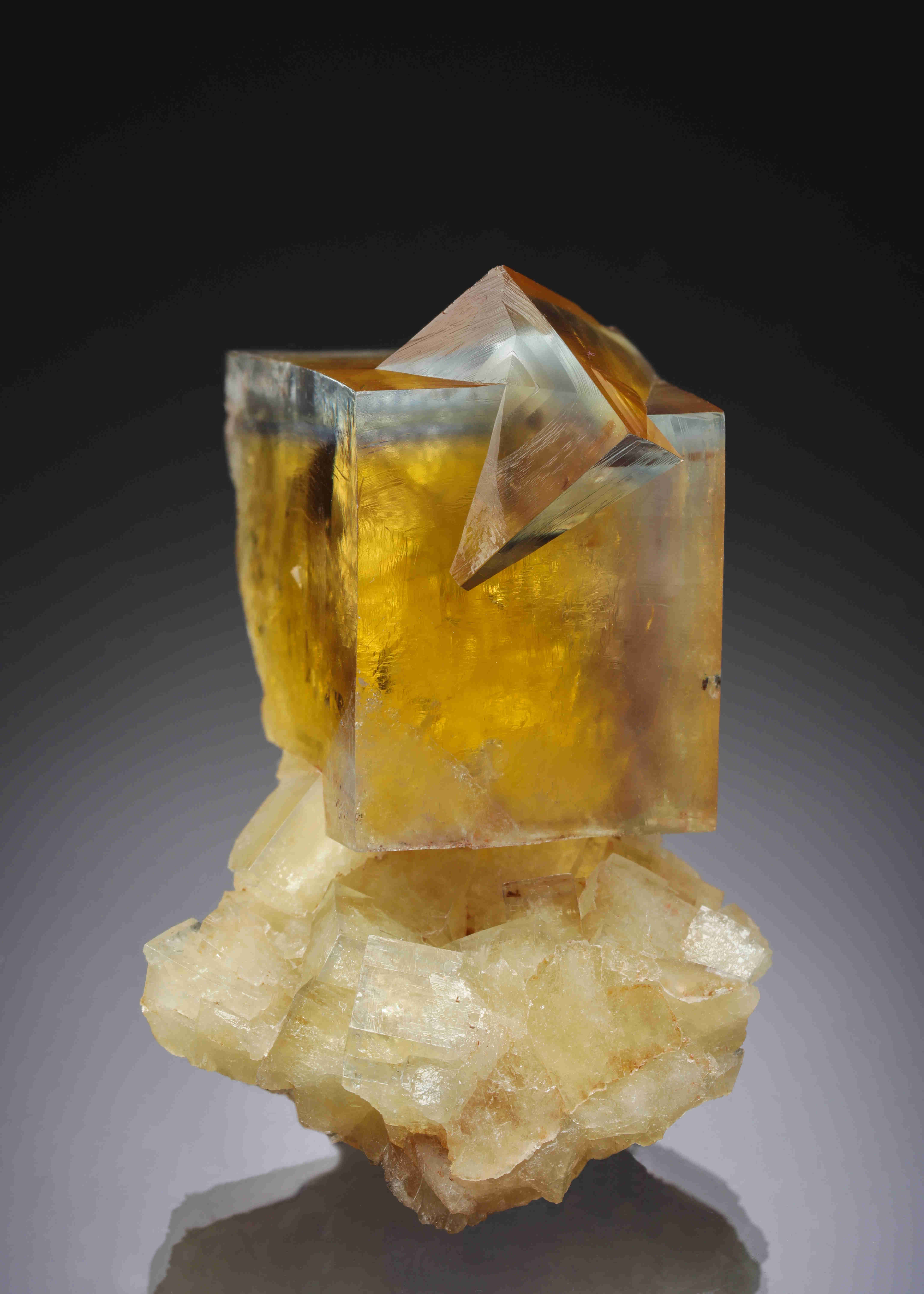
Photo: UK Mining Ventures
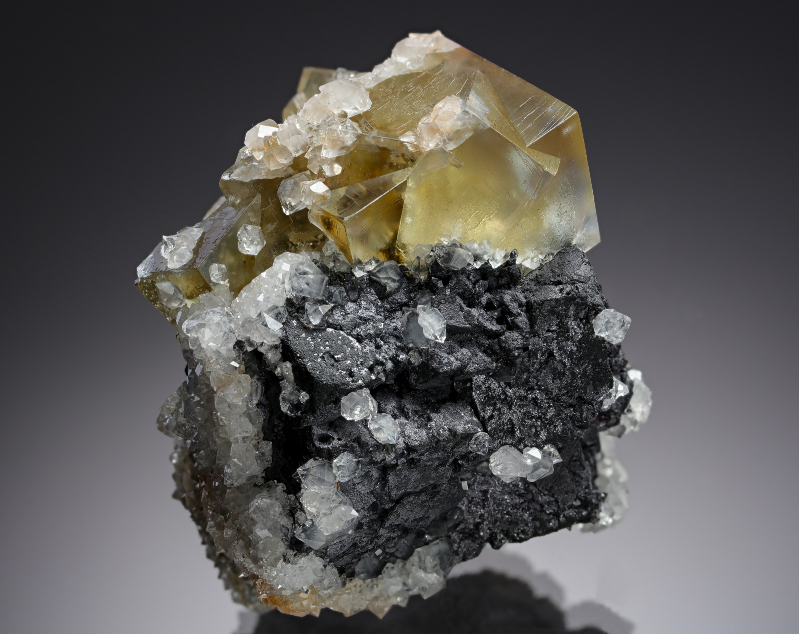
Photo: UK Mining Ventures
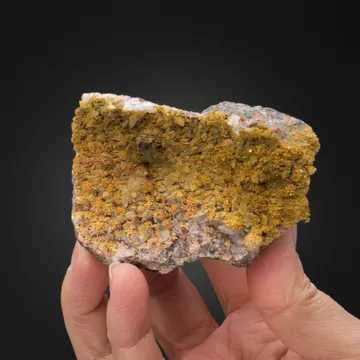
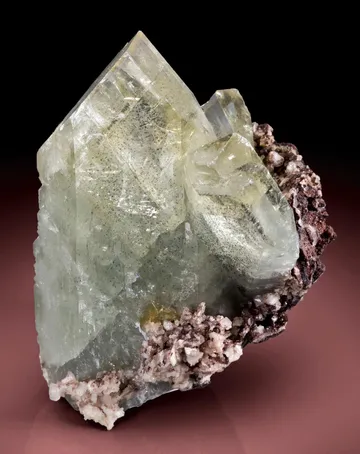
The best Lady Annabella specimens have a recognizably modern English look: bright yellow Bull Vein cubes with pale blue or lilac zoning; green Fairy Holes and Helen’s Pocket twins that flash purple in daylight; apple-green Poison Ivy and Toxic Apple cubes with cloudy white cores and gemmy emerald edges; Purple Rain fluorite with blackberry, cranberry, mauve, green, and blue zones; and Hailstorm Pocket combinations where galena is whitened by hydrocerussite. Because the operation was brief and professionally documented, pocket labels matter here more than usual. A specimen labelled simply “Lady Annabella” is attractive; a specimen tied to Bull Vein, Purple Rain, Layer Cake, Hailstorm, Jakub’s, or another documented pocket tells a sharper mineralogical story.
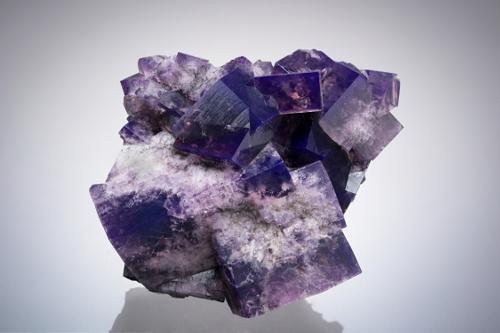
Photo: UK Mining Ventures
Search for specimens: View all specimens from Lady Annabella Mine, UK
Lady Annabella Mine is in the former Eastgate Quarry near Eastgate, Stanhope, Weardale, County Durham, England. The locality is stratigraphically placed in the upper part of the Carboniferous Great Limestone, a thick, fossiliferous limestone unit with shale partings and cyclic limestone-shale beds. The Eastgate quarry bench worked by UKMV includes recognizable fossil horizons with corals, brachiopods, crinoids, and stromatolites, useful as markers within the quarry sequence. In practical collecting terms, this is a limestone-replacement and vein-cavity occurrence: fluorite and associated minerals line cavities in altered limestone, breccia, and small flat-like bodies adjacent to mineralized fractures.
The structural setting is central to the character of the specimens. Eastgate is cut by a major splay shear related to the WNW-ESE Slitt Vein system, one of the important east-west “Quarter-Point” vein structures of the district. At Lady Annabella, UKMV mapped three cross-cutting mineralized structures displaced or intersected by the shear splay: the Bull Vein, Fairy Hole Vein, and Wilson Vein. These structures are not broad, uniform veins producing one consistent specimen style. Instead, they form a branching, locally collapsed network of cavities, tension gashes, breccias, and flats. This explains why Lady Annabella specimens can change character dramatically over very short distances: yellow, green, purple, apple-green, sherry, or blue-zoned fluorite may all come from a compact mine area, but from different cavities with different fluid histories and crystal-growth conditions.
The Bull Vein was the main focus of early mining and is the source of many of the mine’s best-known named pockets. It is described as an east-west vein bisecting the old quarry bench, with remnant mineralized flats left behind after the former cement-quarry operations. In its central part, a prominent northeast-trending strike-slip fault continues into the limestone cap rock, with carbonate-filled en echelon tension gashes along the fault plane. Blocks of limestone collapsed toward the central fracture, producing mosaic breccias and cavities that range from larger open spaces near the fracture core to smaller ribbon-like pockets outward. For collectors, Bull Vein pieces are especially associated with yellow to honey to sherry fluorite, frequent internal zoning, and occasional quartz, calcite, galena, and rare siderite.
The Fairy Hole Vein lies south of the Bull Vein and is subparallel to it. It exposed a well-developed collapse breccia capped by flat-lying limestone beds. The early Fairy Holes Pocket material produced green, often twinned fluorite on altered limestone, commonly with galena and contrasting white calcite. Later, the celebrated Purple Rain and Hailstorm finds were associated with the Fairy Hole Vein system: purple-blue fluorite with bright galena in Purple Rain, and similar fluorite with hydrocerussite-coated galena in Hailstorm. These pockets gave Lady Annabella a darker, more dramatic color range than the predominantly green-and-yellow image many collectors first formed of the mine.
The Wilson Vein is farther south again and marks the southernmost exposed mineralized vein described in the former quarry area. Before UKMV’s modern mapping, fluorite from this zone was known to local collectors under the name Helen’s Pocket. Mapping showed that the structure was more extensive than a single isolated pocket, running and outcropping along the southeastern side of the hill. Helen’s Pocket material is prized for leaf-green interpenetrant fluorite twins on ironstone matrix, with bright lustre and strong daylight response on better pieces.
The quarry itself began as a cement limestone operation, first known to collectors as the Blue Circle Cement Quarry and later associated with Lafarge. Fluorite had been collected from Eastgate quarry material since quarrying began in the early 1960s, but the Lady Annabella specimen mine dates to UKMV’s 2020 work on a remaining mineralized bench. UKMV’s operation ran from 2020 to 2023, a brief but remarkably productive period in which the major pocket names were recorded and marketed. Named discoveries include the Bull Vein, Harvest Pocket, Sherry Twins Pocket, Poison Ivy Pocket, Toxic Apple Pocket, Layer Cake Pocket, Lemon Meringue Pocket, Minty Cheesecake Pocket, Sugar Plum Pocket, Fairy Holes Pocket, Helen’s Pocket, Purple Rain Pocket, Hailstorm Pocket, and Jakub’s Pocket, with some later market references also using names such as Mini Gem and Green Toad.
Access today should be treated as closed and private. This is not an open collecting site, and the former quarry is a managed industrial landscape with safety, land-ownership, and permission issues. Collector specimens reach the market through UKMV/Crystal Classics releases, older stock, dealer resales, auctions, and private collections. As with all modern Weardale UKMV material, the best labels are specific: mine, vein, pocket, collection date where known, and original UKMV or dealer provenance.
Fluorite is the collector mineral of Lady Annabella and occurs chiefly as cubic crystals and interpenetrant twins, ranging from sharp miniature crystals to composite groups around 6 cm and cabinet specimens exceeding 10 cm across where matrix and associated minerals are included. Bull Vein material is famous for yellow, honey, sherry, lemon, and blue-zoned fluorite, including equant and elongated cubes, twins to around 2 cm, and larger composite crystals with lilac, sky-blue, marine-green, or colorless bands. Harvest produced straw-yellow to lemon cubes on altered limestone with calcite; Layer Cake gave amber-yellow, flattened to almost tabular cubes with galena and quartz; Lemon Meringue yielded citrus-yellow cubes sprinkled with milky quartz; Poison Ivy and Toxic Apple are prized for complex green zoning, cloudy pale centers, and gemmy emerald or apple-green edges; Fairy Holes and Helen’s Pocket produced leaf- to emerald-green twins, often daylight fluorescent purple; Purple Rain and Hailstorm supplied the mine’s darker purple-blue, blackberry, cranberry, mauve, green, and blue-zoned fluorites, commonly with galena. The best Lady Annabella fluorites are transparent enough to show internal architecture, lustrous enough to hold light across the cube faces, and undamaged enough that the edges and corners remain crisp—qualities especially important because many crystals grew in collapsed, clay-filled, or brecciated cavities where bruising and etching are common.
Galena at Lady Annabella is a subordinate but important association, most collectible when it gives visual contrast to fluorite or defines a particular pocket. In the Layer Cake Pocket, galena is described as heavily etched and pitted lead-grey cubic crystals to about 2 cm, with a matte metallic surface and scattered tiny quartz crystals, set against amber-yellow fluorite; these pieces are among the classic fluorite-galena-quartz combinations from the mine. In Purple Rain material, galena can be bright silver and sharply contrasted with deep purple-blue fluorite, giving the specimens a distinctly ore-mineral character compared with the cleaner yellow and green Bull Vein pieces. Hailstorm Pocket specimens are the special case: many galena crystals are coated cream to pure white by hydrocerussite, producing rounded, pale “hailstone” accents among purple fluorite. Fine galena-bearing Lady Annabella specimens depend on balance—metallic galena should be well placed, not simply massive and dark, and the best combinations preserve both the fluorite’s transparency and the galena’s sculptural relief.
Other documented minerals from Lady Annabella include calcite, quartz, hydrocerussite, and siderite. Calcite appears as snowy-white layers, drusy cream coatings, and, in Harvest Pocket material, occasional sprays of off-cream crystals reported to reach several centimeters; it is valuable mainly as a contrast mineral that lifts yellow or green fluorite off the iron-rich matrix. Quartz is common as small colorless to milky crystals, especially in Layer Cake, Lemon Meringue, and Sugar Plum styles, where it can dust fluorite like sugar and sharpen the surface sparkle. Hydrocerussite, Pb3(CO3)2(OH)2, is the notable rarity, forming white coatings on Hailstorm Pocket galena and giving that pocket its name and identity. Siderite is rare and pocket-specific, recorded as dark chocolate-brown etched crystals associated with some Sherry Twins material.
For Lady Annabella, the chief authenticity issue is not usually dyed or manufactured fluorite; it is locality precision. Modern UKMV-labelled pieces are relatively secure when accompanied by original labels, pocket names, and provenance. Less secure are specimens generically labelled Eastgate, Blue Circle Quarry, Weardale, or “Lady Annabelle” without a pocket name or history. Because Lady Annabella occupies part of the old Eastgate quarry, older Eastgate/Blue Circle specimens may be visually similar but predate the UKMV operation; they should not automatically be sold as Lady Annabella pocket material unless the label history supports it. Another easy confusion is verbal rather than mineralogical: Lady Annabella Mine in England is unrelated to the Annabel Lee Mine in Illinois, a well-known American fluorite-galena locality whose name can appear in search results and old dealer listings.
No well-documented fake or treatment scandal is attached to Lady Annabella material, but fluorite in general is soft, cleavable, and vulnerable to edge damage, and Weardale fluorite is often judged harshly on condition. Inspect cube corners, penetration-twin contact points, and raised matrix edges for chips. Surface etching is common in Eastgate material and is not automatically damage; in some Lady Annabella pockets it is part of the natural growth-and-dissolution history. The question is whether etching is attractive and even, or whether it dulls an otherwise fine crystal. Clay-filled pockets can also leave residue in growth features and between crystals; careful cleaning may reveal transparency, but aggressive treatment can remove delicate coatings or loosen matrix.
Fluorescence is a major part of Lady Annabella’s appeal. Many green and purple fluorites show daylight fluorescence or strong longwave ultraviolet response, with colors shifting toward lilac, royal purple, lavender-white, or blackberry purple depending on pocket and lighting. View this effect briefly in daylight or with a 365 nm longwave lamp; do not store display specimens in sustained direct sun. Fluorite color stability varies by locality and by color center, and a closed display case out of direct sunlight is the safest long-term choice.
Galena and hydrocerussite-bearing specimens deserve additional care. Galena is dense and can stress fragile fluorite or matrix during handling and shipping; hydrocerussite coatings are soft, pale, and easily marred. Both are lead minerals, so normal mineral-collection hygiene applies: wash hands after handling, keep them away from food preparation areas, and avoid generating or inhaling dust.
Market availability remains good for a closed modern locality, but the supply is finite. Small Lady Annabella fluorites appear regularly from dealer stock and resales; named-pocket miniatures and small cabinets are obtainable, especially Bull Vein, Fairy Holes, Poison Ivy, and Purple Rain styles. The strongest specimens—undamaged twins, highly transparent zoned cubes, well-composed fluorite-galena combinations, Hailstorm pieces with clean hydrocerussite-coated galena, and rarer named-pocket examples—are already being treated as closed-locality material and priced accordingly.
The Lady Annabella story begins with an unusually personal mine name. In June 2020, Ian and Diana Bruce welcomed their daughter Annabella; in July, UKMV began work on the remaining mineralized bench at the former Eastgate quarry and named the new project after her. It was a very modern Weardale opening: not a nineteenth-century lead mine reopened from old levels, but a surface specimen operation in the remnant pockets of an industrial cement quarry, with pocket names, photographs, and maps becoming part of the collecting record almost as soon as the specimens came out.
The Bull Vein owes its name to Fred Bull, a local collector who recognized good yellow fluorite in what had been an unnamed vein. That small act of field memory mattered. Once UKMV began systematic work, the vein proved to be more than a single yellow-fluorite source: it became the host for a procession of named cavities whose identities sound like a dessert menu, a weather report, and a poison garden all at once—Harvest, Sherry Twins, Poison Ivy, Toxic Apple, Layer Cake, Lemon Meringue, Minty Cheesecake, Sugar Plum, and Jakub’s. The names are whimsical, but they are not random. They preserve what the crystals looked like when they came out: lemon-yellow cubes with milky quartz, sherry-colored twins, apple-green fluorite with cloudy pale centers, and mint-green faces that reminded the miners of “bubble-filled peppermint chocolate.”
The older history kept surfacing through the new work. Helen’s Pocket was named for Helen Wilkinson, a respected local collector and mine explorer, and the Wilson Vein commemorates George and Matthew Wilson, who collected much of the original late-1990s material from that zone. What first seemed like a pocket turned out, under UKMV mapping, to be a more extended vein structure. For collectors, that distinction matters: the familiar “Helen’s Pocket” label belongs to a local collecting tradition, while “Wilson Vein” records the broader geological structure that explained it.
The Fairy Holes name reaches beyond mineral collecting into the limestone beneath Weardale. The Fairy Holes Pocket is named for the nearby Fairy Holes cave system, a natural cave system affected by the old quarrying. The imagery is apt: fluorite here formed in a world of voids, collapse breccias, and limestone cavities, and the pocket’s green twins on altered matrix feel closer to cave geology than to the neat idea of a single planar vein.
The most memorable 2021 episode was Purple Rain. Less than a month into that season, miners working Pit 1 in the Fairy Hole Vein system hit a large clay-filled pocket with purple-blue fluorite and galena. The pocket was not a single clean chamber; it was a complicated run of connected cavities where vein and flat blurred together. The name records both the intense purple fluorite and the weather during extraction—near-continuous rain in a place where even a modest annual rainfall can feel relentless when one is working an exposed quarry bench. The specimens justified the discomfort: purple and blue fluorite with blackberry, cranberry, mauve, green, and sometimes frosted face centers, set with bright silver galena.
Hailstorm followed as the white-coated counterpart to Purple Rain. In the same general Fairy Hole Vein association, galena crystals were coated cream to white with hydrocerussite. The result looked like pale hailstones lodged among purple fluorite, and some were described as golf-ball-sized or larger. It is one of those pocket names that works because the mineralogy and the field experience agree: a summer specimen operation, an exposed Weardale quarry, the occasional real hailstorm, and lead carbonate turning galena pale enough to look weather-made.
Jakub’s Pocket gives the story its miniature treasure chest. In September 2021, UKMV team member Jakub Sauermann found a football-sized cavity in the Bull Vein. It was small, but the contents were choice: rich yellow fluorite, some golden-amber to lemon zoned, edged in pale sky blue. In a district famous for great veins and long mining history, that little pocket is a reminder that specimen mining often comes down to the scale of a single cavity, one careful break, and the good eye of the person standing in front of the rock.