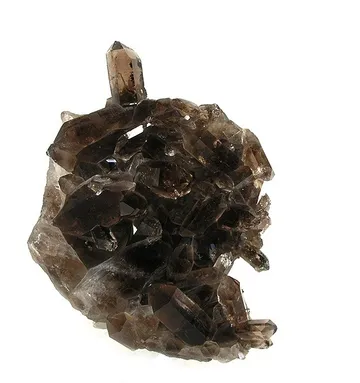
Kola Peninsula, Russia — mineral locality with alkali-rich eudialyte-bearing nepheline-syenites, iconic Khibiny/Lovozero finds, and rare peralkaline minerals p…
Key facts
The Kola Peninsula is not a single mine locality in the usual specimen-label sense; it is a mineral province. For collectors, its name gathers together several of the most consequential alkaline, peralkaline, carbonatitic, and metamorphic districts in the Russian Arctic: the Khibiny and Lovozero massifs in the central peninsula, the Kovdor ultramafic-alkaline carbonatite complex in the southwest, the Afrikanda complex, the Keivy metamorphic belt, and smaller rare-element occurrences distributed through the Kola Alkaline Province. Few regions on Earth have yielded such a dense inventory of strange sodium-, titanium-, zirconium-, niobium-, tantalum-, fluorine-, and rare-earth-bearing minerals, and few have paired that scientific richness with so many immediately recognizable cabinet specimens.
Khibiny and Lovozero are the heart of Kola collecting. These great Devonian agpaitic nepheline-syenite complexes crystallized magmas so rich in alkalis and high-field-strength elements that common rock-forming minerals were joined by eudialyte-group minerals, lorenzenite, loparite-(Ce), lamprophyllite, lomonosovite, villiaumite, natrolite, sodalite, aegirine, arfvedsonite, rinkite-group minerals, and a long roll call of species that seem almost designed to test the limits of a label. The best pieces have the saturated color contrast collectors love: cherry-red eudialyte in pale feldspathic rock, black-green aegirine sprays cutting through white albite or natrolite, resinous brown lorenzenite crystals perched in nepheline-aegirine matrix, metallic-black loparite grains in sodalite, and dark wine-red villiaumite cleavages that are unmistakably Kola.
Kovdor is a different kind of classic. Its phoscorites and carbonatites are dominated by forsterite, apatite, magnetite, calcite, dolomite, phlogopite, and baddeleyite, but late hydrothermal pockets in the carbonatite system produced one of the great one-locality collector minerals: kovdorskite. Cream, pale rose, blue, and pink prismatic crystals of kovdorskite with collinsite, dolomite, magnesite, hydrotalcite, apatite, magnetite, and forsterite give Kovdor specimens a look unlike anything from the Khibiny-Lovozero suite.
Regional View
Country View
The peninsula’s importance is historical as well as mineralogical. Alexander Fersman and his colleagues turned Kola into one of the defining Soviet field laboratories of geochemistry, and the discovery and development of the Khibiny apatite-nepheline ores in the 1920s and 1930s transformed a remote Arctic terrain into a major mining region. The same scientific momentum generated an extraordinary sequence of new species descriptions from Khibiny, Lovozero, Kovdor, and related complexes. To collect Kola is therefore to collect a chapter of 20th-century mineralogy: labels from “Kola Peninsula, USSR” are often imprecise, but they evoke a very real era of museum expeditions, academic monographs, mine dumps, and mineral names that entered the collector vocabulary from Russian journals long before they became common in Western show cases.

Photo: Wikimedia Commons
Search for specimens: View all specimens from Kola Peninsula, Russia
The collecting identity of the Kola Peninsula rests on several deposit types rather than one. Khibiny and Lovozero are enormous alkaline to peralkaline nepheline-syenite intrusions emplaced in the Baltic Shield. Their rock names—foyaite, urtite, ijolite, lujavrite, rischorrite, and related agpaitic pegmatites—matter to collectors because they predict the mineral assemblage: nepheline and alkali feldspar host black aegirine and amphibole, red eudialyte-group minerals, brown lamprophyllite and astrophyllite, lorenzenite, loparite-(Ce), sodalite, natrolite, villiaumite, lomonosovite-group minerals, rinkite-group minerals, and numerous late sodium carbonates, phosphates, sulfates, and silicates. Lovozero is especially important for rare-metal mineralization, with loparite-bearing layered rocks and eudialyte-enriched lujavrites; Khibiny is best known industrially for apatite-nepheline ore and, for collectors, for pegmatitic and hydrothermal pockets in and around the apatite mines.
Kovdor is a phoscorite-carbonatite complex in an ultramafic-alkaline massif. Its economic ore is a baddeleyite-apatite-magnetite system in which magnetite, apatite, forsterite, calcite, dolomite, and phlogopite form the principal mineral architecture. Specimen mineralization appears both in massive ore and in late veins and cavities: lustrous magnetite octahedra, apatite, forsterite, dolomite, magnesite, hydrotalcite, collinsite, and kovdorskite. The Kovdor Zheleznyi open pit has been worked since 1962, and modern descriptions of the operation emphasize the unusual three-commodity character of the deposit: iron ore, phosphate, and baddeleyite from a single ore body.
Mining in the Khibiny district began from the apatite-nepheline discoveries made during Fersman’s early Soviet-era expeditions. The Apatit enterprise, now within the PhosAgro group, mines the Khibiny deposits by both underground and open-pit methods, including Kukisvumchorr, Yukspor, Apatitovy Cirque, Rasvumchorr Plateau, Koashva, and Njorkpahk. These are not casual collecting sites. They are active industrial operations, and much of the fine material that reached collectors came from mine dumps, older workings, exchanged institutional material, or specimen recoveries made during mining rather than from open public access.
Lovozero’s mining story centers on loparite at the Lovozerskoye deposit, especially around Revda and the Karnasurt mine. Loparite concentrate from Lovozero has long been an important source of rare-earth elements, niobium, tantalum, and titanium. Specimen material from Lovozero often carries old locality names such as Alluaiv, Karnasurt, Kedykverpakhk, Flora Mountain, Selsurt, and Umbozero; these names matter, because habits and associations vary strongly across the massif. A lorenzenite crystal from Flora Mountain is a different collecting proposition from red eudialyte-rich lujavrite from the broader Lovozero complex or a loparite grain assemblage from Karnasurt.
The most famous pocket-scale finds are scattered through the literature and dealer record rather than gathered in a single mine chronicle. At Kovdor, late-1990s kovdorskite pockets produced exceptionally large, lustrous crystals with a faint blue internal hue, some approaching or exceeding the usual 2 cm scale of the species. At Koashva in Khibiny, late hyperagpaitic veins in urtite produced villiaumite with aegirine, pectolite, sodalite, microcline, natrolite, lomonosovite-group minerals, chkalovite, and other rare species. Lovozero’s Flora Mountain and related exposures yielded the brown, sharp, matrix lorenzenite crystals that made Kola the world’s reference locality for display-quality specimens of that species. The Keivy Mountains, geologically separate from the alkaline centers, added a metamorphic counterpoint: red-brown staurolite twins in mica schist, valued for their crisp “fairy cross” geometry and contrast against pale micaceous matrix.
Kovdorskite is the signature collector mineral of Kovdor and one of the most locality-specific species in the Kola suite: it was described from the Kovdor massif and occurs there in late hydrothermal assemblages related to carbonatized ultramafic-alkaline rocks and carbonatite breccias. Typical Kovdor specimens show rough prismatic to bladed crystals and granular aggregates in pale rose, cream, pale blue, or bright pink tones, usually with collinsite, dolomite, magnesite, hydrotalcite, apatite, magnetite, and forsterite. Ordinary pieces may be small, chalky, or partly embedded in carbonate; fine pieces show lustrous, well-separated prismatic crystals, visible color zoning, and the prized association with sparkling collinsite. The best late-1990s pocket material stands out because crystals can reach several centimeters and may show a delicate internal blue tint, a feature that helps distinguish Kovdor’s most aesthetic kovdorskite from merely rare kovdorskite.
Kola villiaumite is most familiar from the hyperagpaitic pegmatitic and vein systems of Khibiny and Lovozero, especially the Koashva area of Khibiny, where dark red NaF occurs with aegirine, nepheline, microcline, sodalite, pectolite, lomonosovite-group minerals, natrolite, and other late sodium-rich species. Collectors prize the wine-red to almost black-red translucent masses and cleavage blocks; many large “cubic” Kola villiaumites are not true free-grown cubes but cleavage fragments or blocky pieces from larger nests frozen into pegmatite. The best examples are lustrous, saturated, and translucent on the edges, with crisp blocky form and contrasting white feldspar or gray-white natrolite plus black aegirine needles. Dull, fractured, or dehydrated-looking material is much less desirable, and villiaumite’s water-soluble, soft halide character makes clean, undamaged specimens especially valued.
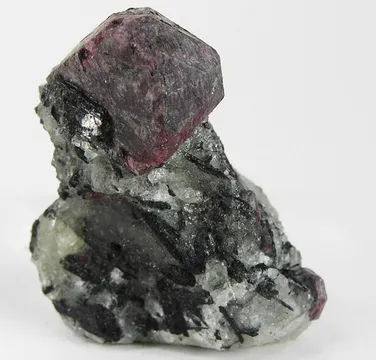
Eudialyte and related eudialyte-group minerals are among the defining minerals of Lovozero and Khibiny, with Lovozero especially important for eudialyte-rich lujavrites and rare-metal mineralization. Kola material ranges from massive red to pink patches in nepheline syenite to anhedral grains, zoned crystals, and richly colored red “eyes” in pale feldspathic rock with aegirine, arfvedsonite, lamprophyllite, sodalite, natrolite, and lorenzenite. Most collector pieces are appreciated for color and texture rather than textbook crystal form; strong specimens show saturated cherry to raspberry red areas, sharp contrast against white-gray feldspar or nepheline, and accessory black aegirine or golden-brown lamprophyllite that confirms the alkaline assemblage. Weak pieces can look muddy, brownish, or too massive, and Kola eudialyte is often better judged as an aesthetic rock specimen or polished rare-element material than as a single-crystal species.
Lorenzenite from the Kola Peninsula is best known from Lovozero, particularly Flora Mountain and associated exposures, where the old Russian name ramsayite became part of the locality’s collecting history. It occurs in agpaitic nepheline syenites and pegmatitic rocks with aegirine, nepheline, microcline, arfvedsonite, eudialyte, loparite, murmanite, astrophyllite, lavenite, titanite, apatite, and other rare silicates. The desirable habit is a sharp, brown to reddish-brown prismatic crystal, ideally doubly terminated and standing visibly in a pale nepheline-aegirine matrix; some specimens from Flora Mountain have crystals on the centimeter scale and may show a yellow response under shortwave ultraviolet light. Ordinary pieces are small, embedded, or difficult to separate from other brown titanium silicates; the good ones have clean termination geometry, matrix contrast, and a label that narrows “Kola Peninsula” to Lovozero or Flora Mountain.
Kola magnetite is most strongly associated with Kovdor, where it is a principal ore mineral in the baddeleyite-apatite-magnetite deposit and a major component of phoscorites with forsterite, apatite, calcite, dolomite, and phlogopite. Specimen-grade magnetite occurs as lustrous black octahedra and granular to massive ore, sometimes on or within pale forsterite-carbonate matrix. A fine Kovdor magnetite specimen should show bright, mirrorlike octahedral faces, multiple well-defined crystals, and enough matrix to place it in the phoscorite-carbonatite context; ordinary ore fragments are heavy and magnetic but lack display geometry. Kovdor pieces are also scientifically interesting because magnetite in the complex records subsolidus evolution within the magnetite-spinel-ulvöspinel series and may host inclusions related to the evolving carbonatitic system.
Aegirine is one of the visual signatures of Khibiny and Lovozero: black to deep green acicular crystals, sprays, sheaves, and radiating clusters cutting through white albite, microcline, nepheline, sodalite, or natrolite and commonly associated with red eudialyte, brown astrophyllite or lamprophyllite, lorenzenite, arfvedsonite, and rare agpaitic species. In the Lovozero eudialyte complex it is a major mafic mineral, while in Khibiny it appears in many pegmatitic and hydrothermal assemblages, including the classic Eveslogchorr-style material with astrophyllite and feldspar. The strongest collector pieces have undamaged, lustrous sprays with separation and contrast; mediocre examples are dense black mats without individual crystal definition. Because many Kola specimens are mixed rare-mineral assemblages, aegirine is often the dark structural element that makes red eudialyte, golden astrophyllite, or pale natrolite visually coherent.
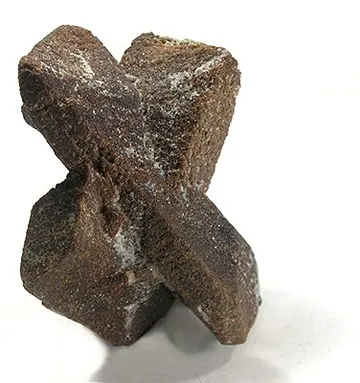
Kola staurolite belongs not to the alkaline-complex story but to the metamorphic Keivy Mountains of the peninsula, where red-brown crystals occur in mica schist and related aluminous metamorphic rocks. Collector material is famous for cruciform twinning, including clean 60-degree macles and “fairy cross” forms set against pale, sparkly micaceous matrix. The best Keivy specimens show sharp prismatic crystals, clear crossing geometry, strong reddish-brown color, and good exposure without excessive trimming into the twin; lesser examples are flattened, incomplete, or lost in schist. Good multi-twin plates from the Keivy area are scarcer than the single loose crosses that entered commerce in quantity, and well-balanced matrix pieces are especially sought after by collectors who want a Russian metamorphic classic to stand beside Kola’s alkaline rarities.
Collinsite from Kola is most important at Kovdor, where several generations formed during hydrothermal alteration of phoscorite and dolomite carbonatite. It is often seen as yellowish, tan, cream, or pale sparkling druse and spherulitic to crusty aggregates lining small vugs and fissures with kovdorskite, dolomite, magnesite, bobierrite, hydrotalcite, apatite, magnetite, and other late phosphates. As a specimen mineral it is usually an association species rather than the main visual event; the best pieces use collinsite as a glittering backdrop for kovdorskite crystals, and the association can be quite diagnostic for Kovdor. Standalone collinsite specimens are less visually dramatic unless the druse is fresh, lustrous, and well exposed, while powdery coatings or indistinct yellow phosphate crusts require careful labeling and, for high-value material, analytical confidence.
Kola natrolite is a late-stage zeolite of the Khibiny-Lovozero alkaline systems, appearing in pegmatites, veins, and altered nepheline-syenite assemblages with microcline, nepheline, sodalite, aegirine, villiaumite, eudialyte-group minerals, and rare sodium silicates and phosphates. From Khibiny it is known both as fibrous to radiating white masses and as surprisingly thick, well-terminated, pearly white crystals; older material from the Khibiny massif produced stout crystals several centimeters across that look more like classic zeolite cabinet pieces than typical agpaitic rarity matrix. Lovozero natrolite is also important as a late alteration and cavity mineral in eudialyte-bearing rocks and pegmatites. The desirable pieces are clean, lustrous, and well terminated, especially where white natrolite contrasts with red eudialyte or black aegirine; ordinary pieces are chalky, cleaved, or confused with other pale zeolitic and feldspathic material.
Loparite-(Ce) is both a collector species and an ore mineral in the Kola Peninsula, particularly in the Lovozero layered complex, where loparite-bearing rocks have been mined for rare-earth elements, niobium, tantalum, and titanium. Specimens usually show small black to brown-black metallic or submetallic grains and crystals, commonly in sodalite-, nepheline-, feldspar-, or aegirine-bearing matrix; display pieces from Alluaiv, Karnasurt, Flora Mountain, and broader Lovozero localities may show sharp twinned crystals, but large aesthetic examples are uncommon. Good collector loparite has distinct crystal form, metallic luster, and clean contrast against pale or blue-white sodalite-rich matrix. Ordinary pieces can look like anonymous black specks unless the association and label are strong, so locality precision and visual separation matter greatly.
Beyond these species, Kola is a type-locality engine. Lovozero and Khibiny have produced or helped define many rare agpaitic minerals and eudialyte-group species, including lomonosovite-group and labuntsovite-group minerals, murmanite, vuonnemite, lovozerite, raslakite, ikranite, dualite, andrianovite, voronkovite, rastsvetaevite, koashvite, nacaphite, shcherbakovite, vitusite-(Ce), and others. Kovdor adds its own carbonatite-phosphate rarities, including kovdorskite, pakhomovskyite, rimkorolgite, strontiowhitlockite, girvasite, krasnovite, juonniite, and related late minerals in dolomite carbonatite and hydrothermal vugs. For collectors, this means that many Kola specimens are more than one label deep: a red eudialyte rock may also carry lamprophyllite, lorenzenite, sodalite, or aegirine; a Kovdor phosphate vug may combine kovdorskite, collinsite, and rarer microscopic phosphates; and an old “Kola Peninsula” label can conceal a much more specific and scientifically meaningful locality.
The greatest authenticity issue with Kola specimens is not outright faking but locality compression. “Kola Peninsula, Russia” and older “Kola Peninsula, USSR” labels are common, yet the peninsula contains multiple geologically distinct districts. A kovdorskite or collinsite association should point to Kovdor; lorenzenite macrocrystals should usually be narrowed to Lovozero, often Flora Mountain or nearby exposures; villiaumite and hyperagpaitic assemblages may be Khibiny or Lovozero; staurolite should be Keivy, not Khibiny or Lovozero. Value and scientific meaning rise sharply when a specimen carries a mine, massif, mountain, or deposit name rather than the regional umbrella.
Villiaumite deserves special handling. It is sodium fluoride, soft and water soluble, so it should never be washed, soaked, cleaned ultrasonically, or stored in damp conditions. Many Kola villiaumite specimens are cleavage masses from pegmatitic nests rather than true free-grown cubic crystals; this is normal for the locality, but a seller should not overstate cleavage blocks as perfect natural cubes. Dark red, translucent edge color is desirable, while surface dulling, cracking, and edge bruising are common condition problems.
Kovdorskite is rare and locality-restricted enough that high-value examples should be judged cautiously. Pale carbonate, magnesite, and other light minerals can look superficially similar in small fragments, while collinsite crusts can be visually modest. Good kovdorskite typically has a prismatic habit, glassy to pearly luster, pale blue-pink-cream coloration, and Kovdor associations. Because the species is hydrated, avoid heat, aggressive cleaning, and repeated wetting.
Eudialyte is often sold as rough, slabs, cabochons, spheres, or polished decorative material, especially from Lovozero. Massive red pieces are abundant compared with sharp crystal specimens, and many are mixtures of eudialyte-group minerals with nepheline, feldspar, aegirine, sodalite, amphibole, and lamprophyllite rather than pure mineral specimens. Weak radioactivity is possible in some eudialyte-group and associated rare-element minerals because of trace U and Th; normal display handling is not generally a problem, but dust control during cutting or polishing is important.
Aegirine and astrophyllite-rich Kola specimens often shed needles or splinters if handled roughly. The most attractive pieces are also the most vulnerable: sprays protruding from feldspar or natrolite break easily, and loose black needles in a shipping box are a warning sign. Staurolite from Keivy is tougher, but matrix pieces can be trimmed too aggressively; the collector should look for natural exposure of the twin rather than a heavily ground schist wafer.
Market availability is uneven. Massive eudialyte and astrophyllite-aegirine material remains fairly available; villiaumite, good lorenzenite, matrix staurolite twins, sharp loparite, and aesthetic kovdorskite are much less common. Political and logistical barriers have also made fresh Russian material less predictable in the international market, so older collection pieces with detailed labels, former Soviet museum or institute provenance, or documented dealer histories deserve a premium.
The great Kola collecting story begins with the transformation of the Khibiny Mountains from a remote Arctic massif into a mineralogical proving ground. Fersman’s museum expeditions of 1919–1922 helped reveal the apatite potential of the Khibiny, and the broader campaign of the 1920s turned field mineralogy into state-building. A generation of geologists walked, mapped, sampled, and named its way through tundra, talus, and new mine workings. The results were not merely academic: by the end of the decade, apatite-nepheline ore from Khibiny was moving into the Soviet industrial system, and Kirovsk and Apatity became mining towns whose names now appear on specimen labels around the world.
The Kovdor kovdorskite story is smaller in scale but unforgettable to collectors. The type mineral was first described from Kovdor, but the showier specimens that collectors remember came from later pockets in the Kovdor Mine. One late-1990s find has been described as a pocket “the size of a basketball” that produced unusually large kovdorskite crystals, including splayed, lustrous cream-colored examples with a faint internal blue tone. For a species normally expected at modest size, a 3 cm-plus crystal is not just better than average; it is a fundamentally different kind of specimen, the difference between a systematic rarity and a cabinet mineral.
Koashva’s villiaumite pockets offer a different lesson: Kola minerals can deceive by beauty. Some of the best dark red pieces look cubic at first glance, yet many are really cleavage blocks from larger masses, not free-grown cubes in open cavities. The distinction does not make them lesser Kola specimens; it makes them more honest. Villiaumite formed late in the pegmatitic sequence, locked into sodium-rich assemblages with aegirine, sodalite, pectolite, natrolite, lomonosovite-group minerals, chkalovite, and other hyperagpaitic species. The collector’s red block is a frozen remnant of a chemical environment so alkaline and fluorine-rich that ordinary pegmatite rules no longer apply.
At Lovozero, the best lorenzenite specimens are tied to Flora Mountain and neighboring exposures where brown prismatic crystals emerged from pale nepheline-aegirine matrix. The mineral had long been entangled with the name ramsayite in Russian usage, and a fine Lovozero lorenzenite still feels like a survival from that older literature. A sharp, doubly terminated brown crystal on matrix, a few centimeters long, may not be flamboyant beside a gem tourmaline or fluorite, but for a Kola collector it is a trophy: an agpaitic titanium silicate crystallized cleanly enough to become a display mineral.
The Keivy staurolites tell the peninsula’s other geological story. Away from the alkaline massifs and carbonatites, aluminous metamorphic rocks of the Keivy region produced red-brown cross twins in mica schist. These are not rare-element oddities; they are sculptural metamorphic crystals, the sort of “fairy cross” specimens that appeal instantly even to non-specialists. Their presence on the same regional label as villiaumite, kovdorskite, and loparite is a useful reminder that “Kola Peninsula” is not one deposit, one magma, or one collecting style. It is a province large enough to hold several mineral worlds.