






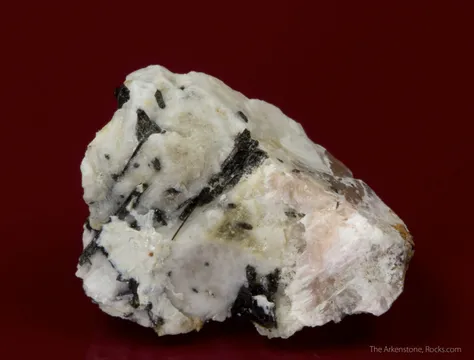
Aegirine, a sodium iron pyroxene, shows jet-to-olive prisms, sharp monoclinic crystals, and radiating clusters; prized by collectors for bold color and matrix.
Key facts
Aegirine is a sodium iron (Fe3+) pyroxene, NaFe3+Si2O6, famed among collectors for its sleek, jet-to-deep-olive-green prisms and dramatic sprays. Typically forming slender to stout monoclinic crystals with prominent longitudinal striations, aegirine often grows in radiating clusters, jackstraw bundles, or as single dominant prisms to remarkable lengths. Color ranges from bottle-green through dark olive to inky black; backlighting sometimes reveals a surprisingly rich green core. Its luster is vitreous with a slightly oily sheen on fresh faces, and terminations are commonly sharp, wedge-like, or stepped.
Aesthetically, aegirine almost always shines as part of a combination specimen. It provides striking contrast against white feldspar or natrolite, bright pastel fluorite cubes, salmon serandite, or smoky quartz. The very best pieces from classic localities—Malawi’s Mount Malosa, Canada’s Mont Saint-Hilaire, Russia’s Kola Peninsula, China’s Huanggang, and South Africa’s Riemvasmaak—are unmistakable: clean, lustrous, undamaged prisms arranged in balanced clusters with bold color contrasts. While single crystals can be impressive, matrix context often elevates an aegirine specimen from “good” to “memorable.”
Aegirine’s appeal lies in architecture and contrast. It is not a gemstone species in the conventional sense, yet it is a staple of fine systematic and aesthetic collections. Over the past decades, major finds have kept interest strong:
Prices span widely. Modest sprays or association pieces can be affordable, while large, perfectly preserved clusters on attractive matrix with complementary species command strong premiums.
Below are renowned sources known for producing distinctive and often world-class aegirine specimens. Each locality is represented with a map and a gallery to explore typical habits and associations.
Mont Saint-Hilaire in Québec is legendary for exotic alkaline associations. Aegirine occurs as elegant sprays, needles, and slender prisms in vugs with serandite, natrolite, analcime, albite, and countless rarities. Collectors prize MSH aegirine for its delicacy and paragenesis: thin, glossy crystals forming airy bouquets on white natrolite or contrasted with pink-orange serandite embody the classic “MSH look.” While not always large, the best sprays are pristine, balanced, and highly refined—a connoisseur’s choice.
Color and Luster:
Crystal Form and Termination:
Associations and Aesthetics:
Condition:
Size and Rarity:
Repairs:
Treatments:
Handling:
Light and Temperature:
Cleaning:
Storage:
With sharp architecture, glossy luster, and dramatic color contrasts, aegirine is a true “designer” species in the cabinet—capable of elevating any display when chosen with an eye for form, association, and condition.