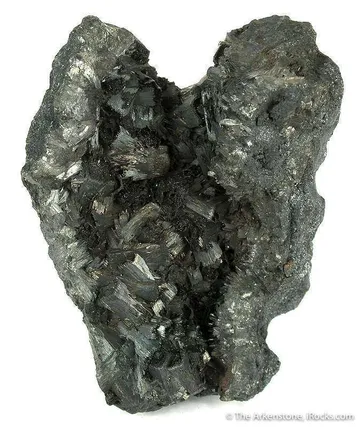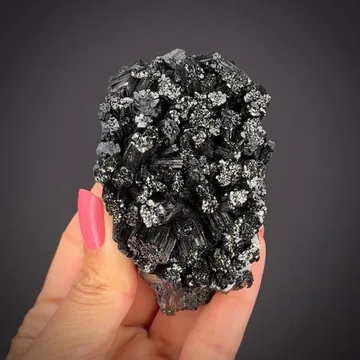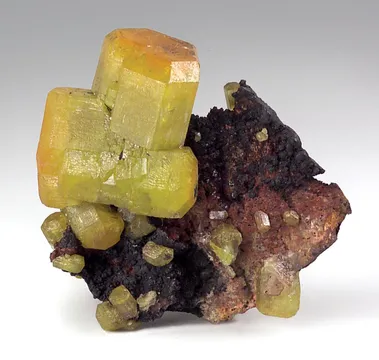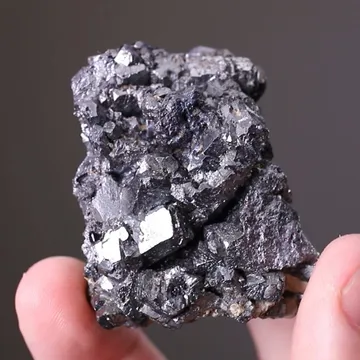
Kohnstein Quarry, Germany — a distinctive European collector locality for evaporites, famed for hydroboracite on anhydrite and a diverse borate suite.
Key facts
Kohnstein Quarry is one of the most distinctive modern European collector localities for evaporite minerals: a great anhydrite quarry cut into Kohnstein Hill at Niedersachswerfen, on the southern edge of the Harz in Thuringia. The hill is part of the Zechstein evaporite belt, where Permian seawater repeatedly concentrated in a hot, restricted basin and laid down carbonates, sulphates, halite, and potash salts. At Kohnstein the collector’s stage is the Werra anhydrite: massive, pale sulphate rock, locally gypsified, with small cavities, seams, and borate-bearing pockets that produced a suite far more refined than the industrial appearance of the quarry would suggest.
Collectors know Kohnstein above all for hydroboracite—particularly the brilliant late finds of clear to white, slender crystals and radiating sprays on anhydrite and gypsum. The locality also produced very good probertite, strontioginorite, tuzlaite, priceite, heidornite, jarandolite, and other rare borates, making it one of the key European localities for a whole borate assemblage rather than for a single species. Its best specimens have the paradoxical beauty of evaporites: water-clear blades and needles, white “sun” aggregates, sparkling gypsum, and pale pink, bluish, or sugary anhydrite matrix, all from a deposit that was worked principally as a bulk industrial sulphate resource.
The historical setting is inseparable from the hill itself. Kohnstein was quarried and tunneled for gypsum and anhydrite long before mineral collectors paid serious attention to its borate pockets. During the twentieth century the underground workings became bound to one of the darkest chapters in industrial and military history: the tunnel system in the Kohnstein was adapted first as a fuel depot and later as the Mittelwerk underground armaments factory associated with the Mittelbau-Dora concentration camp. For the collector, that history gives Kohnstein specimens an unusually heavy locality context: they are attractive, sometimes world-class evaporite minerals from a mountain whose industrial past is also a memorial landscape.
Regional View
Country View
What separates Kohnstein from many other gypsum-and-anhydrite quarries is the combination of specimen scale and rarity. Hydroboracite is often an unassuming, chalky or fibrous borate elsewhere, but Kohnstein yielded fine, lustrous, free-standing crystals and aggregates large enough to compete visually with more familiar zeolite or evaporite classics. The associated borates are typically more specialized collector material—thin laths, fragile needles, small colourless crystals, or inconspicuous coatings—but as a suite they mark the quarry as a systematic collector’s locality of real importance.

Photo: Fabre Minerals
Search for specimens: View all specimens from Kohnstein Quarry, Germany
Kohnstein Quarry lies near Niedersachswerfen, in Harztor, Nordhausen District, Thuringia, about 6 km north-northwest of Nordhausen and close to the southeastern Harz. The deposit is not a metallic ore body but a large evaporite sulphate deposit, worked for gypsum and anhydrite. Kohnstein Hill consists chiefly of Werra-series anhydrite reported up to about 400 m thick, with a gypsified outer rind and remnants of Staßfurt Hauptdolomit in the upper parts. Where anhydrite and water meet, hydration produces gypsum; this conversion, together with the sulphate-karst setting, accounts for much of the quarry’s geology, its pale faces, and its karst features.
The exploitable raw material was anhydrite and gypsum, but the collector mineralization occurs in small openings and zones within the massive anhydrite rather than as broad ore shoots. The borates are tied to the evaporite chemistry of the Werra anhydrite and to localized cavities, seams, and halite-bearing pockets. Hydroboracite, probertite, strontioginorite, tuzlaite, priceite, heidornite, howlite, ulexite, veatchite-1M, and jarandolite give the quarry its scientific and collector importance. Gypsum and anhydrite form both the host and the display matrix; halite and epsomite represent the more soluble evaporite component, while small sulphides and sulphates such as galena, wurtzite, sphalerite, pyrite, marcasite, celestine, and native sulphur round out the assemblage.
Industrial use of the Kohnstein gypsum and anhydrite is old. Lime burning at the Kohnstein is mentioned as early as 1368, and gypsum use around Niedersachswerfen continued through mills, kilns, and local works before large-scale modern extraction. In 1917 BASF, through the Ammoniakwerk Merseburg connection, began major sulphate-rock extraction at Kohnstein. By 1935, roughly 35 million tonnes of anhydrite had reportedly been broken, partly by open-cast work. The material was used at different periods for fertilizer production, sulphuric acid, cement, and building materials.
From 1935 onward, the Wirtschaftliche Forschungsgesellschaft developed an extensive underground system in the Kohnstein as a fuel and chemical depot. After the bombing of Peenemünde in August 1943, the existing tunnels were converted under National Socialist control into the underground Mittelwerk armaments factory for V-weapons, using forced labour from Mittelbau-Dora. That history belongs more properly to the memorial than to mineral collecting, but it is part of the full locality story: the same mountain that yielded delicate borate specimens was also hollowed by industrial quarrying and wartime tunnel work.
After the Second World War, anhydrite and gypsum extraction continued under the Leuna works and later the Harzer Anhydritwerke. Following German reunification, the property passed through the Treuhandanstalt to the Wildgruber/WICO group and associated operating companies. Wildgruber closed the gypsum works at Kohnstein in the early 2000s, and Knauf acquired a major share of the quarry interests in 2004. Mindat lists the quarry as a large inactive anhydrite quarry in 2008; later public discussions of the site emphasize ownership, residual quarry rights, renaturation, and the use of imported gypsum-bearing material from the Stuttgart 21 rail project in restoration areas.
For collectors, the critical period is much more recent than the industrial history might suggest. Kohnstein had been known in mineral circles before, but it gained far wider recognition through late twentieth- and early twenty-first-century finds of rare borates. Older hydroboracite specimens were commonly grey-white to brownish radial “suns.” Later finds, especially those circulating around the early 2010s, introduced more brilliant, free-standing, colourless crystals, with hydroboracite aggregates reportedly reaching exceptional sizes for the species. Thin tabular strontioginorite, fragile tuzlaite needles, good priceite, probertite, and very rare heidornite emerged from the same broad borate story.
Collecting access should be treated as closed unless explicit permission from the landowner, operator, and any relevant authorities has been secured. This is a large industrial and historically sensitive quarry-and-tunnel landscape, not a casual field-collecting site. The adjacent Kohnstein and Mittelbau-Dora areas also include memorial, safety, and legal considerations; collectors should not confuse mineral-locality interest with permission to enter workings, quarry faces, dumps, fenced property, or tunnel areas.
Hydroboracite is the emblematic Kohnstein specimen mineral, occurring in the Werra anhydrite as slender prismatic crystals, sprays, radial “sun” aggregates, and later free-standing transparent to white crystals in small pockets in massive anhydrite; classic older pieces are grey-white and rarely brownish, while the best later specimens are colourless to water-clear, sharp, lustrous, and set on pale anhydrite or clear gypsum. Mindat records the Kohnstein habit as sprays of slender prismatic crystals to several centimetres, and collector reports describe several-centimetre individuals and an exceptional aggregate measuring 13 cm, with common associations of anhydrite and gypsum. The finest pieces here are not merely rich coatings: they show open, undamaged crystal form, strong glassy lustre, minimal bruising on the fragile terminations, and attractive contrast against gypsum or pale, sometimes pinkish anhydrite matrix.
Gypsum at Kohnstein is geologically abundant because it forms where the massive anhydrite has hydrated, yet well-formed free crystals are much less common as display specimens than the quarry’s scale would imply. In collector pieces it appears as clear to white crystals and drusy or massive material on anhydrite, most memorably as the companion to hydroboracite; one published collector note describes a roughly 1.8 cm hydroboracite piercing a clear gypsum crystal, a very Kohnstein association in miniature. Good gypsum specimens from the quarry are those with transparent, undamaged crystals and a readable relationship to the borate mineralization, rather than massive pale sulphate with little crystal definition.
Anhydrite is the quarry’s principal rock-forming mineral and the essential matrix for Kohnstein’s borate specimens, but it also occurs as collectible crystals in its own right. The best Kohnstein anhydrites include colourless transparent pseudo-octahedral or diamond-shaped crystals, small but sharp crystal groups, and attractive “sugary” aggregates that may show bluish, pink, or faint violet tints. Collectors should distinguish ordinary massive anhydrite matrix from display-quality anhydrite: the latter has crisp crystal form, translucency or transparency, clean faces, and ideally serves either as a fine specimen by itself or as a visually sympathetic base for hydroboracite, strontioginorite, probertite, or other borates.
Beyond the three headline species, Kohnstein is a rare-borate locality of unusual breadth. Probertite is important here as colourless elongated crystals, while strontioginorite is prized as thin, water-clear to white lath-like or tabular crystals, sometimes in flattened fan or “tie-shaped” sprays on anhydrite. Tuzlaite is one of the quarry’s most delicate prizes, reported as needle-like crystals to about 2 cm, often fragile and sometimes only loosely attached to anhydrite or suspended in halite. Priceite, heidornite, howlite, ulexite, veatchite-1M, jarandolite, and polyhalite broaden the systematic value of the locality; heidornite is especially scarce as Kohnstein material, with matrix specimens considered particularly rare. Other documented minerals include aragonite, calcite, celestine, epsomite, galena, halite, marcasite, native sulphur, pyrite, sphalerite, and wurtzite, with yellow celestine double-terminated crystals and small sulphide crystals noted as local rarities.
Kohnstein specimens require careful label discipline. The most common confusion is between Kohnstein Quarry at Niedersachswerfen and nearby Kohnstein/Himmelberg/Woffleben localities. Hydroboracite was also found at Himmelberg near Woffleben, only a few kilometres away, and some older or dealer labels use broad phrases such as “Kohnstein,” “Harz,” or occasionally imprecise Woffleben wording. For serious cabinets, labels should preserve the full locality: Kohnstein Quarry, Niedersachswerfen, Harztor, Nordhausen District, Thuringia, Germany. If an old label says only “Woffleben” or “Himmelberg,” do not automatically relabel it as Kohnstein Quarry without supporting provenance.
No well-documented, locality-specific fakery appears to be a major issue for Kohnstein hydroboracite, but mislabelling and overgeneralized locality names are real concerns. Some borate specimens are visually subtle, and small white or colourless crystals on anhydrite can be hard to separate without experience or analysis. Probertite, hydroboracite, strontioginorite, tuzlaite, ulexite, and other borates should not be identified by wishful thinking from habit alone, especially on fragmentary matrix. High-value pieces benefit from an old collection label, dealer chain of custody, or analytical confirmation if the species is not visually distinctive.
Condition is the main practical issue. Hydroboracite sprays, tuzlaite needles, and strontioginorite laths are easily bruised, and the most desirable Kohnstein specimens often owe their value to exposed, freestanding crystal architecture. Gypsum is soft and scratches easily; halite-bearing pieces must be kept dry and away from high humidity; epsomite and other soluble sulphates are poor candidates for damp display cases. Avoid washing borate specimens. Dusting should be minimal and dry, with air puffs rather than brushes wherever possible.
Market availability is uneven but not hopeless. Hydroboracite from Kohnstein appears regularly enough that collectors can be selective, yet the top transparent, lustrous, freestanding pieces from the important late finds have become much harder to buy. Small and average radial aggregates remain more attainable; large matrix specimens with sharp clear crystals, attractive gypsum association, or fine pinkish anhydrite command substantially more attention. The rarer associated borates—especially tuzlaite, heidornite, jarandolite, and good strontioginorite—are much more specialist pieces and may appear only sporadically from old collections or dealer back stock.
For a long time Kohnstein was an industrial hill first and a mineral locality second. Collectors knew Niedersachswerfen, but the quarry did not immediately have the aura of a world-class specimen source. That changed when the borates began to emerge in quantity and quality. One German collector, writing at the end of 2013, described the site as a locality that had only really been noticed in the previous “20, 30 years,” then argued that the finds of the preceding two years made it fair to call Niedersachswerfen a world locality. The reason was hydroboracite: not just dull white sprays, but brilliant, free-standing crystals, several-centimetre individuals, and an extraordinary 13 cm crystal aggregate.
The older hydroboracites had their own charm: grey-white, sometimes brownish radial suns on pale anhydrite. Then the later pockets changed expectations. Suddenly Kohnstein could produce hydroboracite that looked less like a systematic rarity and more like a showy cabinet mineral—glassy, spear-like, and open on matrix. The same collecting wave brought thin strontioginorite plates over 4 cm long, often lying flat on anhydrite in narrow sprays, and tuzlaite needles so fragile that some were described as loose on anhydrite or seemingly suspended in halite. These were not rugged quarry minerals; they were evaporite filigree.
The human history beneath Kohnstein is far darker than its mineral cabinets suggest. In the mid-1930s, the underground workings were developed as a Wehrmacht fuel and lubricant depot. After Peenemünde was bombed in August 1943, the SS, Armaments Ministry, and Army selected the Kohnstein tunnels for the rapid transfer of rocket production underground. On August 28, 1943, the first 107 prisoners were driven from Buchenwald to the foot of the hill; by the end of September there were more than 3,000 prisoners, by the end of October 6,800, and by Christmas more than 10,000. In the first phase there was no completed barracks camp above ground, and thousands slept in side chambers of the tunnel system on makeshift four-tier bunks.
Today the memorial’s guided tunnel route preserves only a small portion of the much larger system. The historic layout was ladder-like, with two long tunnels, A and B, and 46 side chambers between them. In those spaces, rock, gypsum, anhydrite, forced labour, military production, postwar demolition, decades of closure, and later memorial work overlap in a way few mineral localities can match. A Kohnstein hydroboracite is a small, bright object; its locality name carries an entire mountain.