Ilfeld, Germany — historic manganese locality in the Harz famed for jet-black manganite crystals, ribbed prisms and open-pocket habits; essential for collector…
Key facts
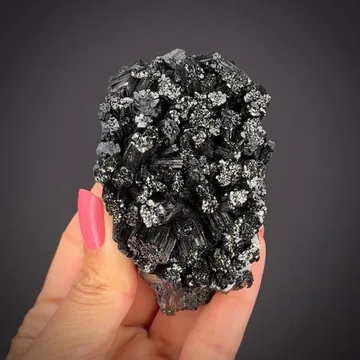
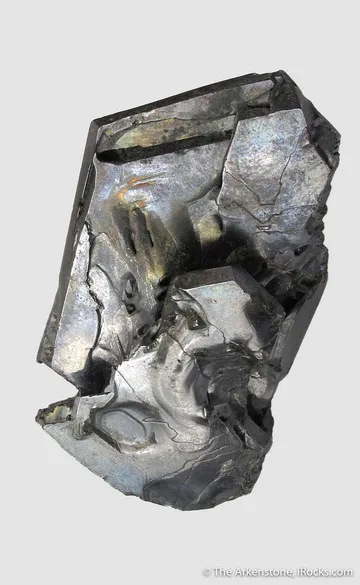
Ilfeld is one of the great old manganese localities of Europe: a compact, historically mined vein district in the southern Harz Mountains of Thuringia, west of the village of Ilfeld and around the old Braunsteinhaus. To collectors, its name is inseparable from manganite. The species was named from Ilfeld material in 1827, and the locality remains the classic benchmark for lustrous, jet-black manganite crystals: ribbed prisms, blocky columns, parallel-growth clusters, and dramatic jackstraw groups with a metallic gleam that can make a small miniature feel monumental.
Geologically, the Ilfeld manganese deposit belongs to the Permian Ilfeld Basin, where hydrothermal veins cut Rotliegend volcanic rocks, especially porphyritic rocks described historically as porphyry or porphyrite. The veins were narrow by modern mining standards but mineralogically rich, carrying manganese oxides and hydroxides with baryte, calcite, quartz, and local carbonate and sulfide associations. The collector assemblage centers on manganite, pyrolusite, hausmannite, braunite, baryte, calcite, rhodochrosite, and rarer vanadates and rare-earth minerals reported from later analytical work.
The best Ilfeld specimens have a very particular look: black to steel-gray manganese minerals against snowy or cream-white baryte or pale calcite, often in open pockets rather than massive ore. Manganite is the star, but Ilfeld’s pyrolusite and hausmannite are important in their own right. Old cabinet specimens from the district, especially those with 19th-century labels or museum provenance, are now far more than species examples; they are artifacts from a closed classic locality whose finest material was already famous while the mines were still working.
Regional View
Country View

Photo: Wikimedia Commons
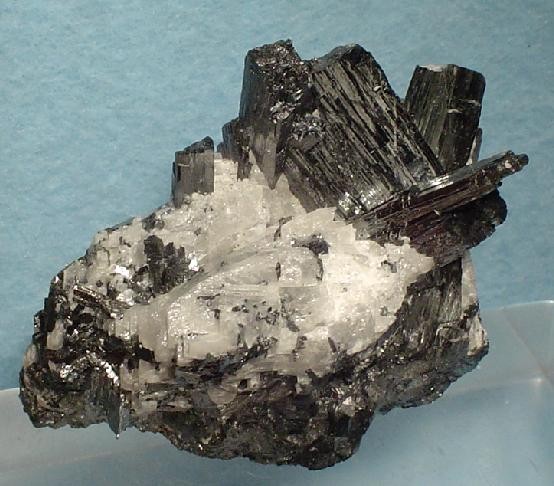
Photo: Wikimedia Commons
The locality’s historical importance is unusually well documented. Mining activity around Ilfeld evolved from surface digging and shallow workings into organized manganese mining, with a major boom in the 18th and 19th centuries, closure in 1890, wartime reopening in 1916, and final shutdown in 1922. The Braunsteinhaus, now known as a forest inn and landmark, was tied to the old manganese operation; the surrounding mining landscape preserves pits, adits, dumps, and shallow workings now treated as protected cultural-historical features.
Search for specimens: View all specimens from Ilfeld, Germany
The Ilfeld manganese deposit lies in the southeastern Harz Mountains, in the Harztor municipality of Nordhausen District, Thuringia, roughly north of Nordhausen and west of Ilfeld near the Braunsteinhaus. The collector locality is best understood not as a single pocket or shaft but as a small manganese-mining district, with old workings around areas such as Harzeburg, Müncheberg or Möncheberg, Heiligenberg, Silberbach, Hegersberg, and the Silberkopfzeche, also known in its late period as Grube Ilfelds Mangan.
The deposit is a hydrothermal manganese-vein system in the Permian Ilfeld Basin. The host rocks are Rotliegend volcanic and volcaniclastic rocks, especially porphyritic volcanic rocks, with associated sedimentary units such as conglomerates and sandstones in the wider basin. Later studies of the Ilfeld Basin’s vein mineralization connect the manganese-iron oxide veins around the Braunsteinhaus with baryte-rich veins at the visitor mine “Lange Wand” south of Ilfeld; both belong to a broader pattern of Permian to post-Permian vein mineralization in the southern Harz region, including oxidic Fe-Mn mineralization and sulfidic Cu-Fe-Co-Ni-(As) mineralization.
The ore veins were modest but specimen-rich. Geopark descriptions of the manganese district give common vein lengths of about 10–15 m, rarely up to about 60 m, with average thicknesses around 0.45–0.60 m. Historic mine reports repeatedly describe the ore as occurring in veins and veinlets that swelled and pinched unpredictably, in places appearing as near-surface “Rasenläufer” bodies just beneath the soil. This erratic geometry explains both the difficulty of sustained commercial mining and the remarkable pockets that yielded well-formed crystals.
The principal ore minerals were manganite, pyrolusite, hausmannite, braunite, and other manganese oxides historically grouped under names such as “Braunstein,” “psilomelane,” “wad,” or “varvicite.” The main gangue minerals of collector interest are baryte and calcite, with quartz and carbonates also present. In the better pockets, lustrous manganite crystals grew freely into open space, commonly with white to cream baryte blades or calcite providing contrast. Much of the finest material entered old European collections before 1900, and modern specimens with convincing 19th-century provenance command special attention.
Mining at Ilfeld likely began with very old surface prospecting and shallow extraction, but the written mining history becomes much clearer in the early 18th century. A 1724 report by the forester Seibd and a 1725 assessment by Berg-Inspektor J. G. Sander describe a district that had been worked in an uncoordinated way and needed professional mining supervision. Sander examined the Harzeburg, Heiligenberger Gang, Müncheberg, Silberbach, and Hintere Harzeburg areas, noting water problems, narrow shafts, and the need to drive adits from valley level rather than simply dig shallow pits from above.
Through the 18th century, Ilfeld manganese ore was sold not only locally but to buyers as far away as Holland. Transport was a constant problem. Ore was packed in wooden barrels, hauled from the Braunsteinhaus to Magdeburg, sent onward to Hamburg, and then shipped to Rotterdam. Winter sledging over the Harz was sometimes essential because the same farmers who hauled ore were busy with field work from spring through autumn, just when demand often rose.
The 19th century brought a stronger industrial market for manganese ore, especially for chemical bleaching and glassmaking. In 1818 the Ilfeld operation expanded sharply, experienced miners from Elbingerode were brought in, and better ore preparation and storage were emphasized. Mine officials struggled with the same fundamental problem collectors now appreciate: the deposit produced beautiful crystals, but the ore bodies were capricious. Reports from the period describe the veins as changing “soon to the advantage and soon to the disadvantage” of the works, making production hard to plan.
By about 1840, demand had weakened enough that the workforce was reduced from about 100 miners to roughly 20. In 1860, the district still produced about 1,000 centners of manganese ore, sold in three grades. In 1872, manganese ore was still being won from 20 small open pits and one adit. But cheap and abundant manganese from the Caucasus, Spain, and India undermined Ilfeld’s economics. The district closed in 1890, and an attempted renewal by Eduard Gossel of Nordhausen was rejected after official review.
The final mining phase came during World War I. In 1916, renewed demand for manganese led to reopening by the Südharzer Schwerspatwerke Max Döring under lease from the Fürstliche Kammer in Wernigerode. From 1917 the Dresden firm Pretzschmer und Fitzsching took over, acquired the Grubenfeld Ilfelds Mangan, and worked the deposit with modest mechanization: hand drills driven by a small compressor, handcarts moving ore to the mine house, sorting on a picking bench, and shipment in wooden barrels. Production through 1921 reached 33,110 centners, with the peak year 1918 yielding 9,410 centners. The mines closed for good in 1922.
Collecting access today is restricted. The old manganese district is a protected mining landscape with historical surface features, adits, pingen, dumps, steep rock faces, and shallow underground voids. The Manganerz-Bergbau Lehrpfad at Kleiner Möncheberg allows visitors to see and understand the old workings from a marked trail, but collecting is prohibited and entering the protected mining remains is unsafe and not permitted. For collectors, legitimate Ilfeld material means old collection pieces, long-held dealer stock, documented historic specimens, and occasional analytical or micromount material obtained before modern restrictions.
Ilfeld manganite is the locality’s defining mineral and the type-locality material for the species: black to steel-gray, highly lustrous MnO(OH) in coarse rectangular prisms, striated columns, blocky crystals, parallel-growth groups, and three-dimensional jackstraw clusters. Most desirable specimens show sharp terminations, strong metallic to submetallic luster, visible longitudinal striations, and crystals rising freely from baryte, calcite, or manganese-oxide matrix rather than lying in a flat massive seam. Documented Ilfeld manganites range from small thumbnails and miniatures with crystals around 1–3 cm to celebrated cabinet specimens exceeding 10 cm overall; museum examples and old dealer records show that the finest crystals can be thick, sculptural, and exceptionally bright. Baryte and calcite are the classic associates, with hausmannite, pyrolusite, braunite, rhodochrosite, hematite, quartz, and sudoite also documented in the broader assemblage. The best pieces are old, undamaged, sharply crystallized, and visually balanced; ordinary Ilfeld manganite is massive, rubbed, broken, or so dense that the crystal form is lost.
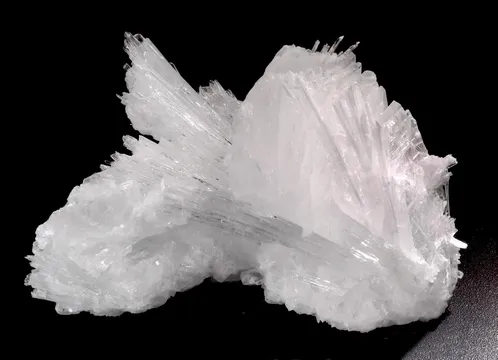
Barite from Ilfeld is best appreciated as the pale stage on which the black manganese minerals perform. In the manganese deposit and at the Silberkopfzeche it occurs as white, cream, or pale buff BaSO4, commonly in bladed to tabular aggregates and vein gangue associated with manganite, hausmannite, calcite, and the manganese-oxide ore. In specimen terms, Ilfeld barite is rarely pursued as a standalone barite classic; its value rises sharply when it forms clean, contrasting matrix for lustrous manganite or hausmannite crystals. Good pieces show bright, open baryte blades or compact crystalline masses that frame the black crystals without overwhelming them, while ordinary examples are merely massive vein material, iron- or manganese-stained, or visually subordinate.
Baryte is the same BaSO4 mineral represented under the traditional European spelling, and Ilfeld’s baryte is central to the locality’s visual identity: white to cream bladed gangue in hydrothermal manganese veins cutting porphyritic Rotliegend rocks. The most collectible baryte-bearing Ilfeld specimens are combinations, especially miniature to cabinet manganite-on-baryte pieces in which black, ribbed manganite prisms stand in relief against pale blades, sometimes with calcite accents or hausmannite. Baryte also records the broader Ilfeld Basin story, linking the Braunsteinhaus manganese-iron oxide veins with baryte-rich veins at the Lange Wand visitor mine. Top baryte-associated specimens have contrast, separation, and depth; lesser pieces have the minerals smeared together as dark massive ore with only patchy pale gangue.
Ilfeld hausmannite is a significant but less common companion to the manganite fame, occurring as black Mn3O4 in old manganese-oxide veins and on baryte-bearing matrix. Historic literature and later collector records describe pseudo-octahedral to tetragonal dipyramidal crystals from Ilfeld, with small sharp crystals in seams and larger early specimens that helped place the locality among Europe’s classic hausmannite sources, though the true type locality of hausmannite is Öhrenstock, not Ilfeld. Modern collector descriptions also emphasize hausmannite pseudomorphs after manganite: black prismatic replacements preserving the form of manganite crystals, sometimes to several centimeters, as well as small lustrous crystals scattered on cream-colored baryte blades. Good Ilfeld hausmannite is crystallized, clearly distinguished from generic black manganese oxide, and preferably associated with baryte or manganite; ordinary material is massive, poorly identified, or merely a dark coating.
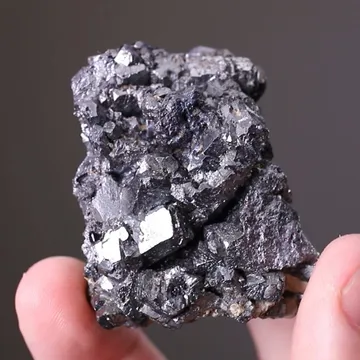
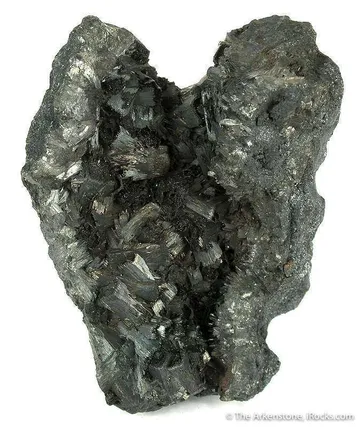
Ilfeld pyrolusite is far scarcer on the collector market than Ilfeld manganite but is part of the classic manganese suite. It occurs as steel-gray to black MnO2 in fibrous, acicular, radial, compact, and locally crystallized forms, sometimes forming intergrown sprays with a silky, bronze-metallic sheen. Strong examples are not just black ore: they show three-dimensional radial clusters, acicular bundles, or sharp small crystals, often on manganese-oxide matrix and sometimes with baryte or manganite association. Pyrolusite may also appear as an alteration or pseudomorphous phase after manganite, which makes careful labeling important. The best Ilfeld pyrolusite specimens have sparkle, radial structure, recognizable crystal habit, and old provenance; ordinary pieces are dull massive manganese oxide with little form.
Calcite from Ilfeld is chiefly a gangue and association mineral, but it matters because it gives contrast and paragenetic context to the manganese specimens. It occurs as pale to white CaCO3 in the hydrothermal veins with manganite and baryte, and documented collector pieces show small calcite crystals perched on or among lustrous black manganite prisms. The strongest Ilfeld calcite specimens are not judged like major calcite localities; their appeal lies in crisp, undamaged calcite accents that brighten a manganite specimen and confirm the classic Ilfeld assemblage of manganite with calcite and baryte. Ordinary pieces are massive carbonate vein material or small dull calcite without well-formed manganese crystals.
Beyond these featured species, Ilfeld has a surprisingly broad documented mineral list for such a small district. Manganite is the valid type-locality mineral. Other recorded species include braunite, rhodochrosite, siderite, ankerite, dolomite, kutnohorite, quartz, hematite, magnetite, groutite, romanèchite, ranciéite, malachite, cuprite, chalcopyrite, galena, sphalerite, erythrite, strontianite, sudoite, talc, spessartine, anatase, and a suite of rarer vanadate, phosphate, arsenate, and rare-earth minerals reported from modern analytical work, including brackebuschite, pyrobelonite, pyromorphite, vanadinite, vésigniéite, wakefieldite-(Ce), wakefieldite-(Nd), xenotime-(Y), arsenoflorencite-(Ce), arsenoflorencite-(La), and arsenogoyazite. Several old names and uncertain identifications in manganese-oxide material require caution, especially for cryptomelane, warwickite, wad, and historical “psilomelane” labels.
Ilfeld is a closed classic locality, and the first question for any serious specimen is provenance. The strongest pieces usually carry old European labels, museum or estate history, or a chain of ownership consistent with 19th- or early 20th-century recovery. Modern-looking labels alone are not a problem, but claims of recent legal collecting from the protected Braunsteinhaus district should be treated skeptically.
The most common mislabeling issue is not geographic but mineralogical. Ilfeld is the type locality for manganite, not hausmannite. Some old hausmannite labels and dealer descriptions have repeated the mistaken idea that Ilfeld is the hausmannite type locality; the actual type locality is Öhrenstock in Thuringia. Ilfeld hausmannite is nevertheless real and collectible, especially as old crystallized material or pseudomorphs after manganite.
A second identification concern involves black manganese oxides. Manganite, pyrolusite, hausmannite, braunite, groutite, romanèchite, ranciéite, cryptomelane-like material, and old “wad” can be difficult to distinguish visually, particularly in massive or fibrous specimens. Ilfeld manganite should ideally show the locality’s classic columnar to prismatic habit, strong ribbing, high luster, and association with baryte or calcite. Pyrolusite after manganite may preserve manganite form but is a different collecting proposition and should be labeled as such when known. Analytical confirmation is valuable for unusual species, micromounts, and any piece sold as a rarity from the modern vanadate or rare-earth suite.
Condition is critical. Ilfeld manganite often breaks across terminations or along elongated crystals, and its black luster can hide bruises until the specimen is turned under a strong oblique light. Look for flattened ends, chipped prism edges, rubbed high points, reglued crystals, and dull spots where cleaning or handling has reduced the sheen. Jackstraw groups are especially vulnerable because freestanding crystals project in several directions. Baryte and calcite associations add beauty but also introduce cleavage and abrasion risk.
Avoid aggressive cleaning. Manganese oxides can be visually unforgiving: acids, peroxide mixtures, ultrasonic cleaning, and overbrushing may remove desirable surface films, expose breaks, or dull delicate fibers. White baryte and calcite can tempt owners to clean dark staining away, but at Ilfeld the black manganese contrast is part of the specimen’s identity, and overcleaning may reduce both aesthetics and authenticity.
Fluorescence is not a collecting driver for Ilfeld manganese specimens. Some calcite from manganese-rich environments elsewhere can fluoresce, but Ilfeld calcite associated with dark manganese oxides should not be purchased on fluorescence expectations unless the response is documented for the individual specimen.
Market availability is highly uneven. Small manganite pieces from old stocks appear regularly enough that Ilfeld remains obtainable, but top-class, undamaged, three-dimensional manganite clusters with old labels are scarce and expensive. Fine pyrolusite from Ilfeld is much less common than manganite. Crystallized hausmannite, especially convincing non-massive examples or attractive hausmannite-on-baryte combinations, is also genuinely scarce. For all Ilfeld material, aesthetics, luster, condition, and provenance matter more than size alone.
In 1725, Berg-Inspektor J. G. Sander walked into a district that had manganese ore, workers, demand, and almost no orderly mining. The Harzeburg shaft had reached only about 4 m depth before usable ore pinched out and water became a problem. At the Heiligenberger Gang he found a seam about 1 Schuh thick but impure, and he complained that the miners had worked carelessly. The Müncheberg workings were already abandoned and flooded. The Hintere Harzeburg had a 15 m shaft, also abandoned, where a roughly 1 Schuh manganese seam was remembered but could not be worked until the water was mastered. Sander’s cure was practical: hire a Steiger, drive adits from valley level, stop the haphazard shallow digging, and mark the veins systematically. In the same month, a dowser was hired to walk the ground, and the veins were marked at the surface with stakes set at intervals of 10 Lachtern, about 20 m.
The ore’s road to market could be as elaborate as the mining itself. In 1765, Ilfeld manganese was being packed into wooden barrels and sent toward Dutch customers. One barrel cost 12 Gute Groschen to make and bring to the Braunsteinhaus. The journey then ran by wagon to Magdeburg, onward to Hamburg, and finally by ship to Rotterdam. A barrel delivered to the Dutch buyer cost about 38 Reichstaler. The timing was awkward: farmers handled much of the transport, but from spring to autumn those same farmers were needed in their fields. Winter, when a “good sled road” made movement over the Harz easier, became the season for building manganese stocks at Trautenstein, Wernigerode, or Cattenstedt ahead of later demand.
In 1818, demand rose so sharply that Ilfeld had to import skill. Experienced miners from Elbingerode were brought in, and the operation had to provide them lodging near the workings. The mine officials also wanted cleaner, better-sorted ore, better storage, and more regular output. But the deposit resisted neat planning. Bergschreiber Preu wrote that production could not be forecast for months at a time because the veins changed constantly, “soon to the advantage and soon to the disadvantage” of the works. Theft was treated severely. Even taking a single attractive piece home for family display counted as stealing and could lead to immediate dismissal.
By 1820, the economics of a working miner were written in small deductions. A two-week net wage averaged 3 Reichstaler, 11 Gute Groschen, and 9 Pfennige, but the miner’s gross pay was reduced for light, powder, tool costs, and sharpening. The records make the underground world concrete: light cost 4 to 10 Gute Groschen, powder 7 to 15 Gute Groschen, tools 6 Gute Groschen, and sharpening 10 Gute Groschen. The ore that collectors now admire in cabinets was once a material measured against candles, black powder, and worn steel.
One of Ilfeld’s great specimens left Germany long before modern collecting culture formed. In 1878, Archibald Liversidge, trustee of the Australian Museum and professor at the University of Sydney, bought a superb Ilfeld manganite from the German dealer Theodor Schuchardt of Görlitz for 15 shillings. Liversidge was in Europe as a commissioner for the Colony at the Paris Exposition, and the Australian Parliament had allocated £1000 for him to acquire mineral specimens from major European dealers. He bought about 1500 specimens. The Ilfeld manganite, later registered by the Australian Museum in 1892 as D.4025, measures 12 x 17 x 10 cm and has remained on display through successive mineral exhibitions. Albert Chapman, one of Australia’s best-known mineral collectors, considered it the finest manganite he had ever seen.
Another celebrated Ilfeld manganite has a wartime afterlife. A 12 cm specimen described in the Mineralogical Record’s Ikons supplement was found in a bombed-out house at the end of World War II with a label identifying it as from the “Wittig Collection.” It was acquired by a German mineral museum, later traded to Eric Asselborn, and eventually passed to Wayne A. Thompson and Rob Lavinsky in 2006. The specimen’s drama lies not merely in size, but in survival: a brilliant black crystal cluster from a 19th-century German manganese district, recovered from the ruins of the 20th century and still recognized as one of the finest manganites known.
The last mining chapter came during World War I. Ilfeld reopened in 1916, first under Südharzer Schwerspatwerke Max Döring and then, from 1917, under Pretzschmer und Fitzsching of Dresden. The technology was still modest: hand drilling machines powered by a small compressor, handcarts to the mine house, sorting on a picking bench, and wooden barrels for shipment. The renewed work was intense. Through 1921 the reopened mines produced 33,110 centners of ore, and the best year, 1918, yielded 9,410 centners. Then foreign manganese ore returned to the German market, the economics collapsed, and the Ilfeld manganese mines closed for good in 1922.