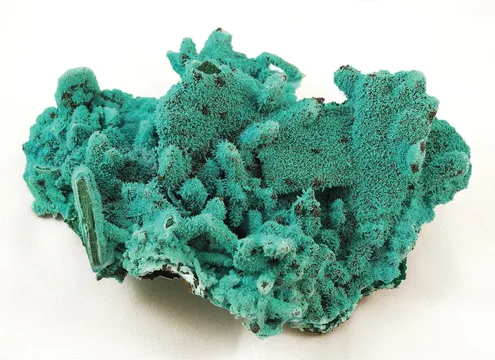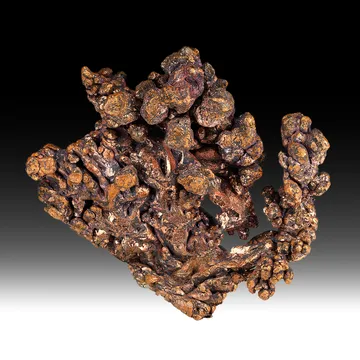
Katanga, DR Congo — historic copper-cobalt province famed for velvety malachite, electric chrysocolla, and rare cobalt minerals; top locality for collectors.
Key facts
Katanga is not a single pocket, quarry, or tidy mine name; for collectors it is a whole mineral province, a historic label that gathers the great copper-cobalt belt of southeastern Democratic Republic of the Congo under one word. The name still carries the weight of the former Katanga Province, even though that administrative province was divided in 2015 into Haut-Katanga, Lualaba, Haut-Lomami, and Tanganyika. Mineral labels, old collection cards, dealer stock, and museum drawers still say “Katanga,” “Shaba,” “Katanga Copper Crescent,” “Kolwezi,” “Likasi,” or “Lubumbashi,” often for material that today would plot in Lualaba or Haut-Katanga.
The collector importance of Katanga rests on the Central African Copperbelt: a Neoproterozoic sediment-hosted copper-cobalt system developed in the Katanga Basin and folded into the Lufilian Arc. In the Congolese Copperbelt, copper and cobalt ores are hosted chiefly by the Roan Group and its Mines Series equivalents—dolomitic shales, dolomites, siltstones, carbonates, and structurally broken “rafts” of ore-bearing strata. To the mining geologist it is one of the world’s great sediment-hosted copper provinces; to the collector it is the birthplace of some of the most vivid secondary copper specimens ever handled.
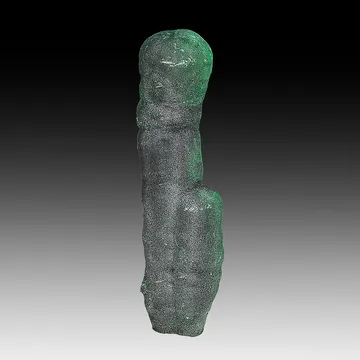
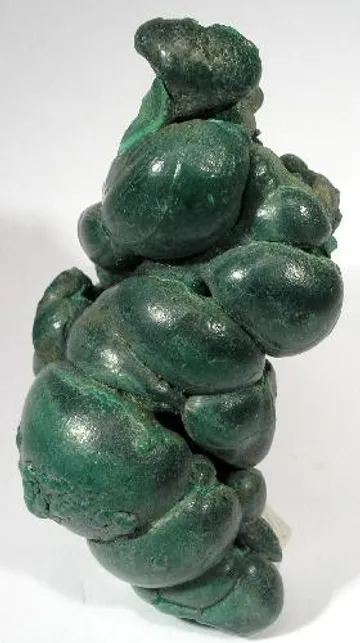
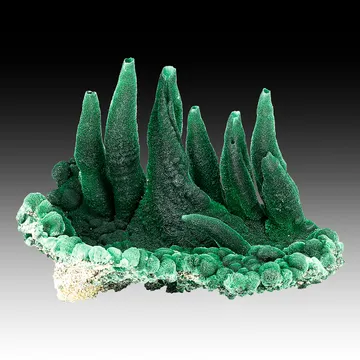
The signature look is unmistakable: deep velvet-green malachite in botryoidal skins, stalactitic sprays, silky fibrous crusts, and sparkling carpets of microcrystals; chrysocolla in electric turquoise to sky blue, often sitting against malachite or dark cobalt-rich oxides; pseudomorphs that preserve former azurite, barite, gypsum, or other bladed forms; pink cobalt-bearing calcite and dolomite; metallic carrollite crystals from the Kamoya area; brilliant blue cornetite from L’Etoile du Congo; and uranium-carbonate and uranium-phosphate microminerals from Kamoto and Shinkolobwe that belong in the front rank of systematic mineralogy. Good Katanga specimens are rarely quiet. They are saturated, sculptural, and high-contrast—green against blue, blue against black, pink against malachite, metallic cubo-octahedra on pale carbonate.
Regional View
Country View
The region’s specimen history is layered. Early colonial mining at places such as L’Etoile du Congo, Kipushi, Shinkolobwe, Kambove, and Kolwezi fed European museums and Belgian collections with classic material; Gécamines-era workings and mine dumps produced generations of specimens; and modern industrial copper-cobalt projects around Kolwezi, Tenke-Fungurume, Mutanda, Mashamba, Kamoto, and related areas have continued to yield superb, but often irregularly documented, collector material. That mixture—historic mine names, changing political geography, artisanal recovery, restricted industrial access, and specimens traded through multiple hands—is why locality precision matters so much here.
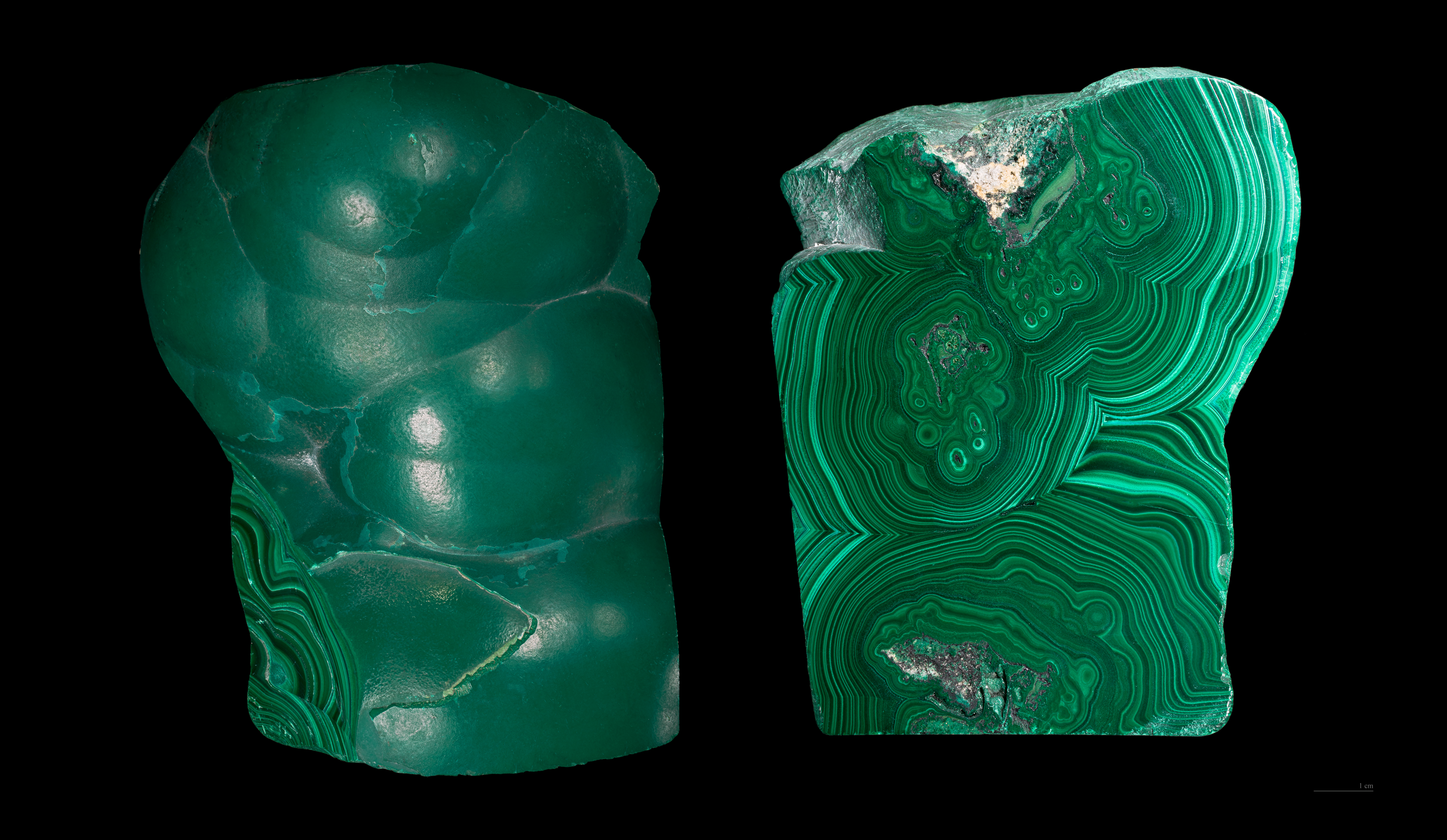
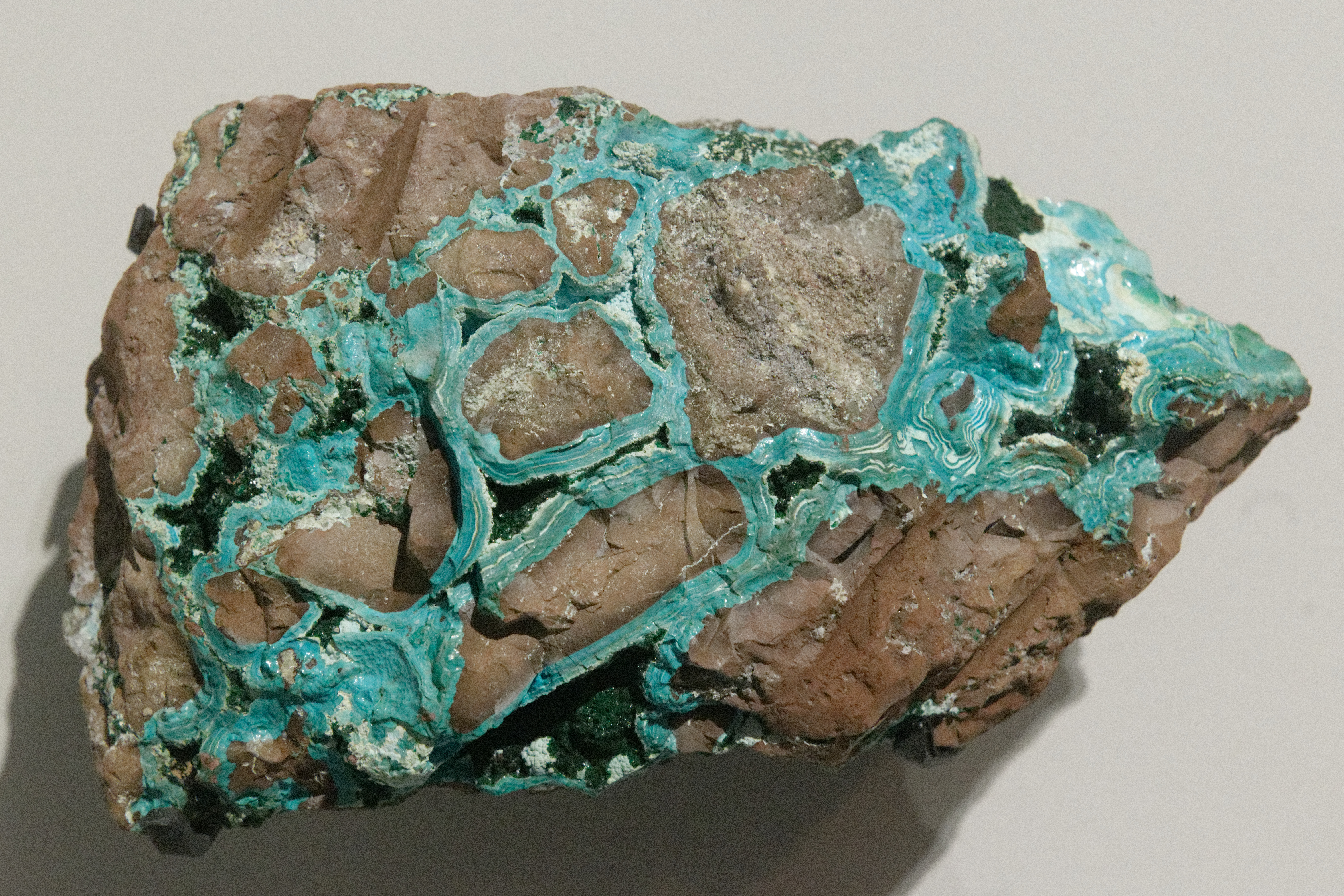
Search for specimens: View all specimens from Katanga, DR Congo
Katanga specimens come from the Congolese side of the Central African Copperbelt, especially the arc of deposits from the Lubumbashi area through Likasi and Kambove to Kolwezi and Tenke-Fungurume. The mineral deposits are classically sediment-hosted stratiform to stratabound copper-cobalt systems in Neoproterozoic rocks of the Katanga Supergroup. In the Congolese Copperbelt the ore-bearing Mines Series is commonly preserved in strongly deformed slices and breccia bodies rather than as simple undisturbed beds. That structural complexity matters to collectors because it helped create repeated oxidation, dissolution, collapse, and groundwater pathways—the very settings in which malachite stalactites, chrysocolla crusts, barite-related pseudomorphs, uranium secondaries, and cobalt-rich oxides formed.
Primary copper-cobalt mineralization includes sulfides such as chalcocite, bornite, chalcopyrite, carrollite, and related Cu-Co sulfides, with important zinc-lead-germanium mineralization at Kipushi. The collector minerals most associated with Katanga are mostly secondary: malachite, chrysocolla, azurite, cuprite, heterogenite, pseudomalachite, libethenite, plancheite, dioptase, torbernite, metatorbernite, cuprosklodowskite, kasolite, uranophane, curite, becquerelite, and many other copper, cobalt, and uranium minerals. Research on Katanga malachite has shown that much of the region’s secondary copper mineralization formed through supergene remobilization, with copper leached from sulfides and reprecipitated with carbonate supplied by dissolving host carbonates. Karstic cavities and other open spaces acted as traps, allowing laminated crusts, stalactitic forms, speleothem-like malachite, and chrysocolla-bearing assemblages to develop.
Mining history begins long before modern companies, because surface malachite and copper minerals were known and worked locally before industrial development. Large-scale industrial exploitation followed the creation of Union Minière du Haut-Katanga in 1906. Copper production began in the early twentieth century, and the company became central to the mining economy of Belgian Congo, producing copper, cobalt, uranium, radium, zinc, cadmium, germanium, and other metals. After independence and nationalization in 1967, Union Minière’s Congolese assets passed into the state mining sector that became Gécamines. Later decades brought restructuring, joint ventures, and international operators, with major modern projects involving companies such as Glencore, Gécamines, Kamoto Copper Company, Tenke Fungurume Mining, Mutanda Mining, Sicomines, Chemaf, and others depending on the mine and period.
For collectors, the great named localities are worth separating. L’Etoile du Congo, also called the Star of the Congo or Kalukuluku Mine, near Lubumbashi, is a classic copper-cobalt locality and the type locality for cornetite, famous for deep blue cornetite, malachite, chrysocolla, heterogenite, and related copper phosphates and carbonates. Kipushi, the former Prince Léopold Mine, is a world-class zinc-copper-lead-germanium deposit and type locality for germanium-bearing sulfides such as renierite; its specimen reputation includes renierite, briartite, germanite, gallite, sphalerite, galena, tennantite-group minerals, and unusual secondary uranium material. Shinkolobwe is historically overwhelming: a uranium mine of global importance, type locality for many uranium minerals, and the source of uranium ore central to the Manhattan Project.
The Kolwezi district is the great engine of modern Katanga specimen supply. Musonoi, Kamoto, Mashamba West, Mashamba East, KOV, Dikuluwe, Mutoshi, and related workings have produced malachite, chrysocolla, cuprite, heterogenite, cobalt-bearing calcite and dolomite, and uranium secondaries. Kamoto East Open Cut is especially important to systematic collectors because several rare uranyl carbonate and phosphate species were described from there, including shabaite-(Nd), astrocyanite-(Ce), kamotoite-(Y), françoisite-(Nd), and the recently described pendevilleite-(Y). Mashamba West and associated Kolwezi workings are major sources of attractive malachite-on-chrysocolla combinations, cobalt-bearing calcite associations, and the kind of sharply crystallized “primary malachite” valued by collectors when the crystals are crisp rather than merely velvet coatings.
The Likasi-Kambove belt supplies a different suite of classics. Shangulowé is famous for barite included or coated by malachite and for malachite pseudomorphs after barite, with the best pieces showing unusually sharp tabular or “arrowhead” forms. Mindingi and Mindigi labels are seen on velvety and fibrous malachite, chrysocolla, and secondary copper material; Kamoya South II is the correct source for the finest modern carrollite crystals long misattributed to Kamfundwa, Mashamba West, or other localities; and Kambove-area mines have produced pseudomalachite, libethenite, cobalt-rich oxides, malachite, and associated copper phosphates.
Collecting access today is not comparable to a public fee-dig or old Western hard-rock dump. Many productive localities are active industrial copper-cobalt mines, restricted concessions, hazardous open cuts, underground workings, tailings areas, or artisanal mining zones. Collectors should assume that direct access requires formal permission from the operator and that casual collecting is neither safe nor appropriate. Most specimens reach the collector market through mine employees, local diggers, artisanal recovery, dealers working in the DRC and Belgium, or secondary market collections. Because labels may pass through several languages and political eras—Belgian Congo, Congo, Zaïre, Shaba, Katanga, Haut-Katanga, Lualaba—the best labels record both the historic name and the modern administrative position.
Katanga malachite is the region’s green signature: velvet botryoids, silky fibrous carpets, stalactites, laminated crusts, polished banded masses, and, in the best crystallized pieces, sharp acicular to bladed microcrystals that glitter rather than merely fuzz. The mineral occurs through the oxidized zones of the copper-cobalt deposits, especially around Kolwezi, Kambove, Likasi, Lubumbashi, Mashamba West, L’Etoile du Congo, Shangulowé, Mindingi, Lupoto, and related workings. It is commonly associated with chrysocolla, heterogenite, quartz, azurite, cuprite, cobalt-bearing calcite or dolomite, barite, and dark iron-manganese-cobalt oxides. Collector-grade pieces are judged less by bulk—Katanga has produced enormous quantities of malachite lapidary rough—than by liveliness of surface, undamaged stalactite tips, crisp crystal definition, contrasting blue chrysocolla or pink cobalt-carbonate associations, and a convincing natural growth surface. Ordinary material is simply green and massive; fine Katanga malachite has movement, sparkle, architecture, and an old-mine or mine-specific label.
Katanga chrysocolla ranges from massive blue-green crusts to saturated turquoise botryoids, pocket linings, replacement shells, and pseudomorphs after earlier copper minerals, most memorably in combinations with malachite and late drusy quartz. The Tenke-Fungurume and Kolwezi-area material has made a strong modern impression: bladed or tabular forms interpreted on the market as chrysocolla after malachite after azurite, or in some cases after barite or gypsum, can show sky-blue chrysocolla over a malachite core with a sparkling silica skin. Likasi, L’Etoile du Congo, Lupoto, Mashamba West, Mutanda, and Tenke-area specimens also show chrysocolla as crusts and botryoidal masses with malachite, quartz, heterogenite, and other secondary copper minerals. Fine pieces need saturated color, coherent structure, and a stable surface; poor examples are crumbly, dull, or simply massive blue-green copper silicate with little specimen form.
Beyond malachite and chrysocolla, Katanga is a systematic collector’s province of unusual depth. L’Etoile du Congo is the type locality for cornetite, Cu3(PO4)(OH)3, a deep blue copper phosphate that occurs in rosettes and pseudo-octahedral aggregates with malachite, chrysocolla, goethite, and heterogenite. Kamoto East Open Cut is the type locality for several rare uranium-bearing minerals, including astrocyanite-(Ce), kamotoite-(Y), shabaite-(Nd), françoisite-(Nd), and pendevilleite-(Y). Shinkolobwe is one of the world’s great uranium-mineral type localities, with species such as becquerelite, billietite, curite, cattierite, comblainite, cousinite, and others described from the mine. Kipushi anchors the sulfide side of the story with renierite, briartite, germanite, gallite, sphalerite, galena, tennantite-group minerals, and germanium-rich ore assemblages. Kamoya South II has produced superb carrollite, often sharp cubo-octahedral crystals with metallic luster on calcite or pale gangue, while Shangulowé has supplied some of the region’s most distinctive barite-and-malachite combinations and malachite pseudomorphs after barite.
The first collector issue with Katanga is locality precision. “Katanga” on a label may mean the former province, the Katanga Copper Crescent, a dealer’s broad regional label, or an unknown Congolese copperbelt source. That is acceptable for attractive commercial malachite, but insufficient for rarities such as cornetite, carrollite, uranium minerals, or unusual pseudomorphs. For high-value material, prefer labels that name the mine—Mashamba West, L’Etoile du Congo, Kamoya South II, Shangulowé, Kamoto East, Shinkolobwe, Kipushi, Tenke-Fungurume, Mutoshi, Mutanda, Mindingi, Lupoto—and preserve older synonyms such as Shaba, Zaïre, Prince Léopold Mine, Kalukuluku, Star of the Congo, or Kamoya Sud.
Authenticity deserves real attention. Genuine Congolese malachite stalactites and fibrous specimens are abundant enough that authenticity should not be doubted merely because a piece is spectacular, but the market has also seen assembled, repaired, and manufactured-looking malachite. Watch for wires or rods inside broken stalactites, unnaturally repeated smooth “fingers,” resin at attachment points, crushed malachite or green powder bound to a substrate, suspicious glitter coating over broken areas, and bases that look engineered rather than geologic. A hollow tube or central opening alone is not proof of fakery; natural malachite stalactites and soda-straw forms can be hollow. The pattern must be judged as a whole.
Chrysocolla and chrysocolla-malachite combinations from the Congo have also been questioned in the collector community, especially recent specimens marketed in quantity with oddly uniform blue-green surfaces or poor layer relationships. Good natural chrysocolla commonly shows paragenetic logic: malachite under chrysocolla, late quartz on top, open cavities, copper-stained matrix, or partial replacement textures. Be wary of pieces with a pasted-on surface, color that crosses breaks without respecting mineral boundaries, or a fragile coating that behaves more like binder than mineral.
Condition is a major value factor. Fibrous malachite bruises easily and shows rubbed highlights; velvet surfaces become dull from handling; stalactites lose tips; chrysocolla can be soft, porous, or chalky; drusy quartz coatings can hide repairs; and barite-on-malachite combinations from Shangulowé are vulnerable because the barite crystals are exposed and the malachite substrate may be uneven. Metallic carrollite from Kamoya South II should be checked for edge chipping, contact points, and mislabeling. Uranium-bearing specimens from Shinkolobwe, Kamoto, Musonoi, and related localities require proper radiation handling: store them labeled, isolated from living spaces, avoid inhaling dust, wash hands after handling, and do not cut, grind, or polish radioactive material.
Fluorescence is not the main reason collectors seek Katanga copper specimens, although some associated carbonates, barite, calcite, or uranium minerals may respond to UV. The more important “light effect” is ordinary directional light on velvet malachite and quartz-dusted chrysocolla: fine specimens brighten and move as they are turned. Photographing them under flat light can undersell them badly.
Market availability is broad but uneven. Small to cabinet-size malachite and chrysocolla pieces from the Congolese Copperbelt are continually available, while fine mine-specific examples with strong aesthetics, old provenance, and no restoration are much scarcer. Star of the Congo cornetite, Kamoto uranium-carbonate rarities, Shinkolobwe type-locality uranium minerals, and large complete Kamoya South II carrollites are specialized and increasingly provenance-driven. The safest buying strategy is to pay for locality, condition, and authenticity before size.
The most consequential Katanga mineral story begins not with a display specimen but with ore so rich that it changed modern history. Shinkolobwe, west of Likasi, was not merely another uranium locality; it was a freakishly high-grade deposit whose uraninite and alteration minerals became bound to the story of radium, medical radioactivity, nuclear physics, and war. When Edgar Sengier of Union Minière du Haut-Katanga became convinced that uranium might become strategically decisive, he arranged for part of the Congolese stockpile to be shipped to the United States before American wartime demand fully materialized. By the time Manhattan Project procurement officers came looking, ore from Katanga was already sitting in New York. The striking line associated with the episode—“You can have the ore now. It is in New York.”—has become one of the most memorable sentences in mineral-resource history. For collectors, it gives Shinkolobwe specimens a gravity beyond rarity: a small curite, becquerelite, kasolite, or uraninite from that mine is a mineral specimen, a type-locality object, and a piece of twentieth-century history all at once.
Another very different Katanga story belongs to Kamoya South II and its carrollite. In the late 1990s and early 2000s, superb metallic carrollite crystals appeared on the market, some with sharp cubo-octahedral form and astonishing size. The true source was guarded. The mine was operated as a secret benched open cut with a strict no-specimen policy, and pieces were reportedly recovered not by ordinary collecting at the face but at the mill. While the locality was still concealed, many carrollites were sold under other names—Kamfundwa, Mashamba West, and various incorrect labels. That confusion still follows old specimens. The best Kamoya South II crystals have the clean geometry and luster that make them instantly memorable: steel-gray to silvery metallic forms, often on pale calcite or altered gangue, far sharper than the average sulfide specimen from a copper mine. A good old label may be wrong; a later corrected label may be more truthful.
A third thread runs through the old Belgian and Congolese collecting networks. Gilbert Gauthier’s name recurs around important Katanga uranium and secondary copper-cobalt specimens, including rare Kamoto material and late twentieth-century L’Etoile du Congo cornetite. These pieces entered European and North American collections through a narrow pipeline of miners, local contacts, Belgian dealers, and specialists who understood that a blue crust from an exhausted copper mine might not be “just another Congo copper mineral” but a type-locality cornetite, an ultrarare uranyl carbonate, or a species known from only a handful of specimens. Katanga rewards that kind of attention. The region’s great specimens are often obvious from across the room, but some of its most important minerals are millimetric rosettes, pale flakes, or radioactive crusts that require a label, a microscope, and trust in the chain of custody.