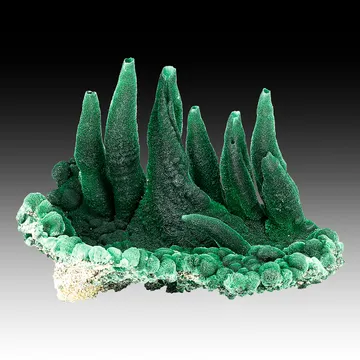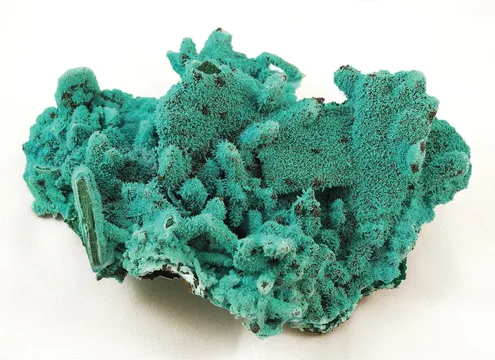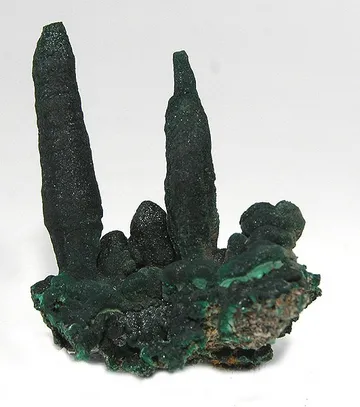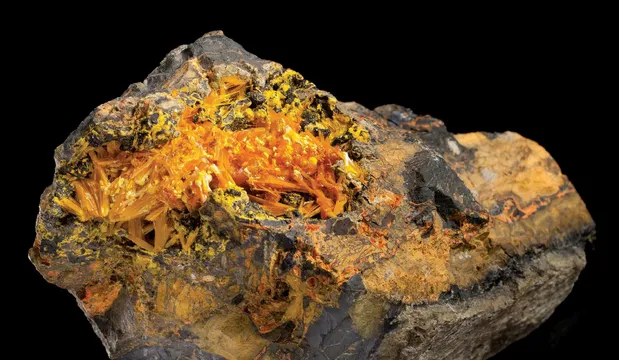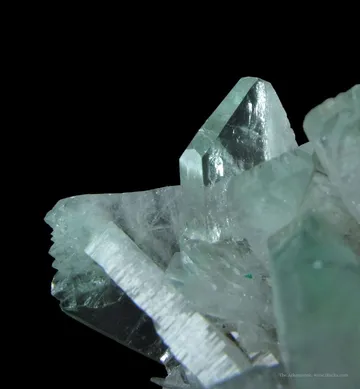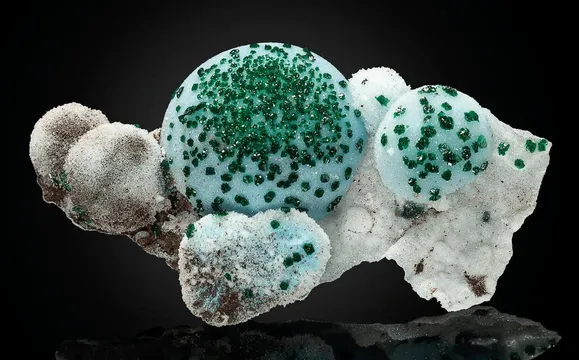
Katanga Copper Crescent, DR Congo — renowned malachite locality in the copper-cobalt belt; cabinet-grade forms and velvety botryoidal textures.
Key facts
The Katanga Copper Crescent is not a single mine but an entire mineral province: the Congolese arc of the Central African Copperbelt, sweeping through the old Shaba/Katanga mining country from the Lubumbashi area through Likasi and Kambove to Kolwezi. For collectors, its importance rests on a rare combination of scale and beauty. Geologically it is a Neoproterozoic sediment-hosted copper-cobalt province in Katanga Supergroup rocks, with the richest specimen material coming from oxidized zones, karst cavities, breccias, and silicified dolomitic host rocks above or near stratabound sulfide ores.
Its signature mineral is malachite, and few localities on Earth have produced it in such quantity or in so many collector-grade forms. Katanga malachite can be massive and banded for lapidary work, but the serious cabinet pieces are the velvety, fibrous, radial, botryoidal, mammillary, and stalactitic specimens whose surfaces flash from grass-green to deep emerald under moving light. The best pieces have motion: silky chatoyancy, tight radial fans, undamaged velvet, sculptural stalactites, or sharp contrast with turquoise-blue chrysocolla, black heterogenite, white barite, cobaltian carbonates, or dark siliceous matrix.
The Crescent also carries a deeper mineralogical history. Musonoi and Shinkolobwe alone place this district among the world’s great type-locality regions: uranyl selenites, uranyl carbonates, uranyl silicates, cobalt and palladium selenides, and cobalt-copper carbonates were first described from mines inside this belt. Shinkolobwe added a second, geopolitical layer to the story as the source of exceptionally rich uranium ore used in the Manhattan Project, while the older copper tradition of Katanga reaches back to precolonial malachite mining and cast copper currency.
Regional View
Country View
In mineral cabinets, “Katanga” is often seen as a broad label, but experienced collectors try to narrow it whenever possible. “Kolwezi,” “Mashamba West,” “Star of the Congo,” “Shangulowé,” “Musonoi,” “Shinkolobwe,” “Luishia,” “Luiswishi,” “Ruashi,” and “Mutanda” each imply a different collector context. Some names point to classic malachite and chrysocolla; others to cobalt minerals, uranium minerals, or old-stock type-locality rarities. The regional name is legitimate for many old pieces, but mine-level provenance greatly increases scientific and historical value.

Photo: Wikimedia Commons
Search for specimens: View all specimens from Katanga Copper Crescent, DR Congo
The Katanga Copper Crescent is the Congolese portion of the Central African Copperbelt, a world-class sediment-hosted stratiform to stratabound copper-cobalt province. The ores are hosted mainly by Neoproterozoic rocks of the Katanga Supergroup, especially the Roan Group and its Mines Subgroup, historically known as the Série des Mines. In collector terms, the important host rocks are not anonymous gray sediments: they are dolomitic shales, silicified dolomites, breccias, carbonate-rich units, and altered evaporitic sequences that fractured, folded, dissolved, and reopened repeatedly during the long structural history of the Lufilian fold-and-thrust belt.
Primary ore in the Crescent is dominated by copper and cobalt sulfides such as chalcocite, bornite, chalcopyrite, carrollite, and pyrite, with local selenium-, nickel-, palladium-, uranium-, and other metal enrichments. The spectacular specimens largely belong to the oxidized and supergene story. As groundwater percolated through sulfide-bearing beds and carbonate host rocks, copper was remobilized and reprecipitated as malachite, azurite, chrysocolla, brochantite, pseudomalachite, and related secondary minerals. Cobalt moved into heterogenite, erythrite, cobalt-bearing dolomite and calcite, spherocobaltite, and other cobalt phases. In uranium-bearing sectors, particularly Shinkolobwe and Musonoi, oxidation produced an extraordinary secondary uranium suite.
The shape of the ore bodies matters to collectors because it controls the shape of the specimens. The best malachite did not simply coat flat fractures. It grew in open space: dissolution cavities, karst pockets, widened fractures, breccia voids, and permeable zones in silicified carbonate rocks. Studies of Katanga malachite recognize several specimen-making habits: coarse crystalline crusts, breccia cements, botryoidal and nodular aggregates, and speleothem-like stalactites. Some malachite linings and crusts reached decimeter thicknesses, and speleothem masses could reach impressive dimensions where cavities remained open long enough for repeated precipitation.
Geographically, collectors usually think of the Crescent in three broad specimen districts. The eastern Lubumbashi area includes Star of the Congo, also known as L’Etoile du Congo or Kalukuluku, together with Ruashi, Luiswishi, Lukuni, Luishia, and nearby copper-cobalt deposits. The central Likasi-Kambove area includes Shangulowé, Kambove, Kamoya, Kakanda, Mindigi, and Shinkolobwe. The western Kolwezi area includes Musonoi, Kamoto, KOV, Mashamba, Mutoshi, Mutanda, and related mines. These are not neat collector boxes; names changed through Belgian Congo, Congo, Zaire, Shaba, and DR Congo usage, and old labels often preserve obsolete spellings.
The mining history is exceptionally long. Before industrial mining, Katanga copper was extracted from malachite-rich surface ores and smelted locally; the resulting copper ingots, including the well-known Katanga crosses, circulated as wealth and exchange objects across central and southern Africa. European geological attention intensified in the late nineteenth century, and Union Minière du Haut-Katanga was founded in 1906 to industrialize extraction. Major copper-cobalt deposits were then developed across the belt, including early twentieth-century work around Lubumbashi, Kambove, Likasi, and Kolwezi. Etoile and Ruashi entered the industrial record in the early Union Minière period; Luishia was mined by Union Minière from 1913 to 1949; and Shinkolobwe became one of the most historically consequential uranium mines in the world after its 1915 discovery.
After Congolese independence, the mining industry passed through nationalization and the long Gécamines era. Later, especially from the late twentieth century onward, the Crescent moved into a joint-venture and international-operator landscape. Modern production is dominated by large industrial copper-cobalt operations and hydrometallurgical plants. The Kolwezi district includes major assets associated with Kamoto Copper Company, KOV, Kamoto, Mashamba East, Mutanda, and other operations; Tenke-Fungurume lies in the wider Congolese Copperbelt; and the Lubumbashi-area Etoile and Mutoshi assets have been part of the modern Chemaf/Virtus story. For collectors, the key point is that this is active industrial mining country, not a casual public collecting field.
Collecting access today should be treated as restricted unless explicit permission is obtained from the landholder, mine operator, and relevant authorities. Many mines are active concessions with security, safety, environmental, and legal controls. Specimens reach the market through old collections, mine workers, local dealers, artisanal mining networks, and commercial channels rather than through ordinary recreational collecting. That path is one reason labels can be frustratingly vague: “Katanga,” “Congo,” “Kolwezi,” or “Shaba” may be the only provenance preserved even for excellent material.
The best documented specimen finds tend to be attached to individual mines rather than to the regional label. Mashamba West is a classic source of malachite with chrysocolla from the Kolwezi district. Star of the Congo is associated with fine malachite, pseudomalachite, chrysocolla, and other oxidized copper species near Lubumbashi. Shangulowé is especially valued by collectors for barite on malachite and pseudomorph-related material. Musonoi is a world-class rare-mineral locality, especially for uranyl selenites, palladium selenides, cuprosklodowskite, torbernite-group specimens, and unusual copper-cobalt-uranium associations. Shinkolobwe is legendary for uranium minerals, including superb old specimens of uraninite and a long list of secondary uranyl species.
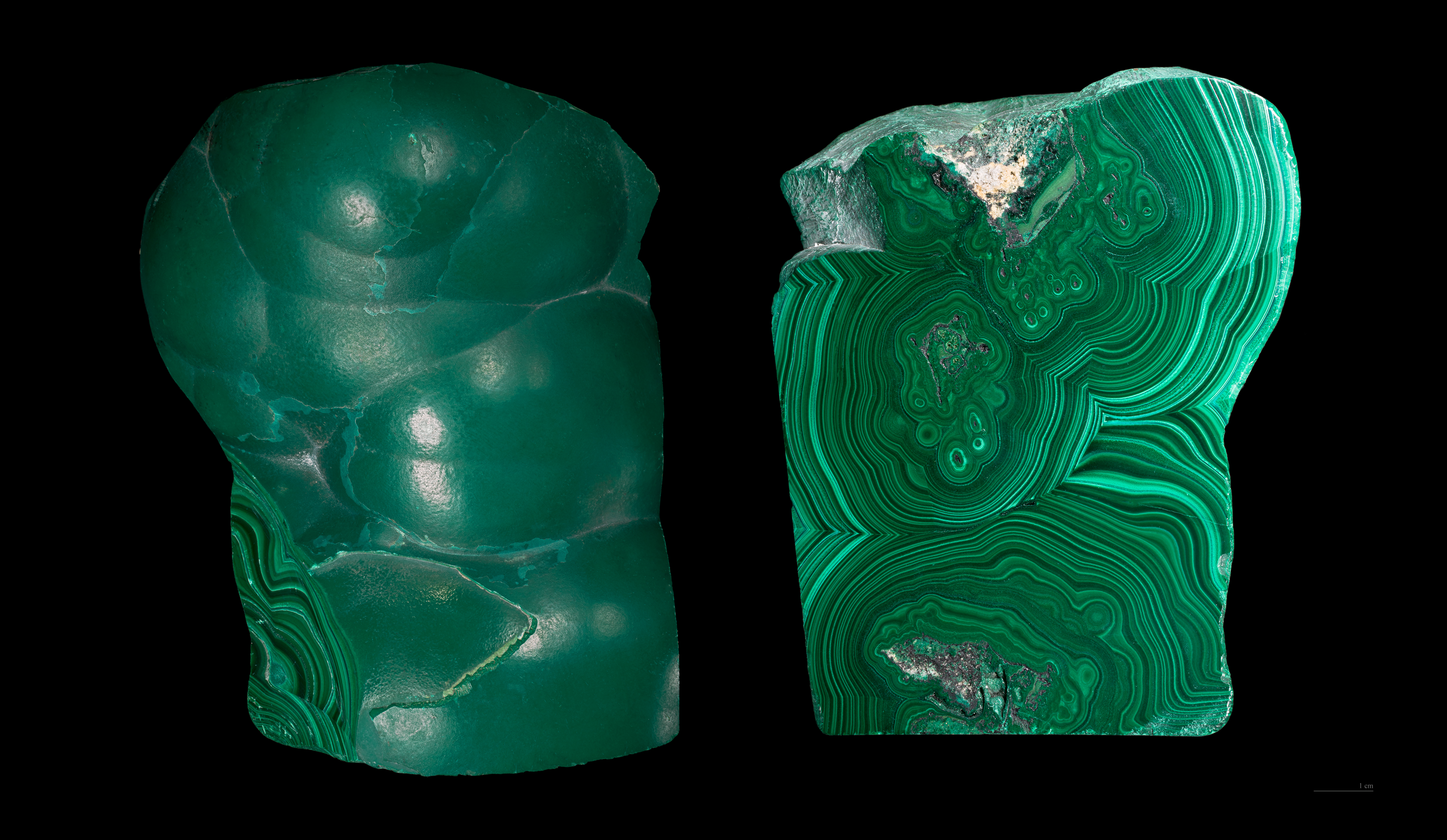
Photo: Wikimedia Commons
Malachite from the Katanga Copper Crescent ranges from ore-grade massive material to some of the finest display specimens of the species. In the Mines Subgroup carbonate and silicified carbonate rocks, it occurs as bedding-parallel impregnation, breccia cement, thick laminated crusts, nodular to botryoidal masses, radial fibrous sprays, and stalactitic or speleothem-like growths in cavities. The richest collector pieces are saturated green rather than dull olive, with intact velvety surfaces, strong chatoyancy, sculptural relief, and lively associations with chrysocolla, heterogenite, barite, azurite, pseudomalachite, and dark siliceous matrix. Ordinary Katanga malachite is abundant; exceptional pieces are separated by surface preservation, form, luster, locality detail, and the sense that the fibrous surface flashes and ripples as the specimen is turned.
Beyond malachite, the Crescent is one of Africa’s great rare-mineral provinces. Shinkolobwe is the type locality for a remarkable suite of uranium minerals, including becquerelite, billietite, curite, dumontite, fourmarierite, ianthinite, kasolite, masuyite, parsonsite, richetite, sklodowskite, soddyite, studtite, vandendriesscheite, wyartite, and the much newer gauthierite and shinkolobweite. Musonoi is the type locality for demesmaekerite, derriksite, guilleminite, kolwezite, marthozite, oosterboschite, and verbeekite, and is especially important for uranyl selenites and palladium selenides in copper-cobalt-uranium ore. The broader Crescent also yields important collector material in chrysocolla, azurite, pseudomalachite, barite, carrollite, spherocobaltite, cobaltian calcite and dolomite, heterogenite, dioptase, plancheite, shattuckite, cuprosklodowskite, torbernite/metatorbernite, uranophane, rutherfordine, and many other species whose labels may read Katanga, Shaba, Zaire, or DR Congo depending on when they entered collections.
The first collector problem with Katanga material is not whether malachite is common; it is whether the specimen is natural, repaired, treated, or correctly labelled. Genuine Congolese malachite stalactites and fibrous specimens are abundant enough that a good piece need not be suspect by default, but the market has also seen convincing composites and chemically altered material. Be wary of stalactites with central wires, squared supports, unnatural repeated shapes, resin at attachment points, glittering coatings that continue over broken edges, or surfaces that look sprayed on rather than grown. A hollow core is not proof of fakery, because natural stalactitic growths can be hollow; the warning signs are construction details and surface behavior.
A documented modern problem involves supposed Congo malachite-chrysocolla specimens marketed after 2022 that were investigated by experienced dealers and laboratory work and described as fake or chemically treated. These are especially relevant because real Katanga malachite-chrysocolla is so desirable. On natural specimens, the green and blue minerals should show geological relationships: layered growth, cavity lining, replacement, veining, or botryoidal intergrowths. Suspicious pieces may show color without structure, implausibly uniform blue-green saturation, resinous texture, or a surface that lacks the fibrous, botryoidal, or laminated logic of genuine copper oxide-zone growth.
Mislabelling is constant. “Katanga” may be accurate but incomplete; “Kolwezi” is often used broadly; “Shaba” and “Zaire” are historical label terms; and some mine names have variants in French, English, and local usage. Star of the Congo, L’Etoile du Congo, and Kalukuluku may refer to the same collecting context. Old stock with a credible period label can be more valuable than a showy piece with a vague modern tag, especially for Musonoi and Shinkolobwe rarities.
Condition matters enormously. Fibrous malachite bruises, mats, and dusts easily; velvet surfaces can be ruined by rubbing. Chrysocolla is softer, more porous, and more prone to edge wear than malachite. Cobaltian carbonates and calcite associations should be kept away from acids. Do not wash delicate fibrous or chalky oxide-zone specimens unless you understand the matrix; a dry air bulb and careful display storage are safer than water. Avoid oils, waxes, and aggressive “enhancement” products, which can permanently darken porous copper minerals.
Radioactivity is a real handling consideration for Musonoi, Shinkolobwe, and some other uranium-bearing pieces. Malachite itself is not radioactive in the usual collector sense, but malachite from a uranium-bearing mine can sit on or near uranyl minerals, uraninite, or contaminated matrix. Bright yellow, orange, greenish-yellow, and brown secondary uranium minerals from these mines should be stored in a labelled, closed container, handled with clean technique, kept away from children and food areas, and monitored if the specimen is significant. Old Shinkolobwe specimens are historically important but should be treated as radioactive mineral specimens, not decorative cabinet curiosities.
Market availability is uneven. Good Katanga malachite is always present somewhere in the market, from affordable miniatures to large decorative masses. Truly fine sculptural velvety specimens, old labelled Star of Congo material, sharp barite-on-malachite from Shangulowé, top malachite-chrysocolla from Kolwezi mines, and well-provenanced Musonoi or Shinkolobwe rarities are much harder. Type-locality rare species from Musonoi and Shinkolobwe are specialist material: small, expensive, sometimes radioactive, and often requiring analytical confidence rather than visual identification alone.
Long before mineral labels read “Katanga Copper Crescent,” the green copper stones of the region were being turned into metal, wealth, and political authority. Malachite was not a cabinet mineral then; it was ore. Copper workers mined oxidized outcrops, smelted the green carbonate material, and cast the metal into recognizable exchange forms. The most famous survivor of that tradition is the Katanga cross, or handa, an X-shaped copper ingot. Museum examples measure roughly the span of a hand, often around 20 cm across and near 1 kg in weight, though forms and sizes varied. Farther from the copper source, the crosses gained value, and by the eighteenth and nineteenth centuries they had become both currency and symbols of power among kingdoms competing for control of copper.
The same mineral belt later entered the atomic age through Shinkolobwe. The deposit was discovered in 1915 by Robert Rich Sharp, an English geologist and prospector working in Katanga. Shinkolobwe first mattered for radium and uranium, then became strategically decisive during World War II. Edgar Sengier of Union Minière du Haut-Katanga understood the danger of leaving extraordinarily rich uranium ore exposed to wartime uncertainty. In 1940, before the United States had formally organized the Manhattan Project, he had roughly 1,200 tons of Shinkolobwe ore shipped to the United States and stored in a warehouse on Staten Island. When American procurement finally came looking, the material was already on American soil. The story has become legendary among historians of the Manhattan Project because the Congo ore was not just available; it was exceptionally rich and immediately accessible when the race for uranium became urgent.
For mineral collectors, Musonoi offers a quieter but equally memorable story: a mine where ordinary copper-cobalt geology gave way to an exotic chemical cabinet of uranium, selenium, palladium, cobalt, and copper. The Musonoi Extension, especially the unit known locally as Ecaille 2400, became famous for uranyl selenites and palladium selenides in altered copper sulfide ores. Minerals such as guilleminite, demesmaekerite, derriksite, marthozite, oosterboschite, and verbeekite are not species one encounters by accident in a general collection. They tell of a chemically unusual pocket of ore in which selenium and uranium met oxidizing fluids in ways that produced minerals measured in millimeters but valued by species collectors around the world.
One field reminiscence from a 1960s student trip through the African Copperbelt captures the older collector’s world before access tightened and before many specimens disappeared into private cabinets. A Wits geological group visited the major mines of Northern Rhodesia and the Belgian Congo, went underground at Musonoi near Kolwezi, and encountered what the writer remembered as a Cu-Co-U deposit with dozens of mineral species and several type-locality minerals. The same account recalls sampling in areas where uranium minerals from other localities had been dumped, ending up in Elisabethville, and returning with “a large box full of interesting minerals” that was later lost during moves. That last detail is painfully familiar to collectors: sometimes the rarest specimen is the one that once existed, had a story, and vanished before it could be catalogued.
Wendell E. Wilson, “The Musonoi mine, Kolwezi District, Lualaba Province, Democratic Republic of the Congo,” The Mineralogical Record, 49(2), 236–304, 2018 — The key collector-focused modern monograph on Musonoi, its history, species list, specimens, and rare-mineral importance.
Pirard, C. and Hatert, F., “The sulfides and selenides of the Musonoï mine, Kolwezi, Katanga, Democratic Republic of Congo,” The Canadian Mineralogist, 46, 19–31, 2008 — Technical study of the copper sulfide and selenide assemblage at Musonoi, important for understanding the source of several rare selenium-bearing species.
De Putter, T., Mees, F., Decrée, S. and Dewaele, S., “Malachite, an indicator of major Pliocene Cu remobilization in a karstic environment (Katanga, Democratic Republic of Congo),” Ore Geology Reviews, 38, 90–100, 2010 — Essential paper on Katanga malachite habits, karst cavities, groundwater formation, and supergene copper remobilization.
Zientek, M. L., et al., “Copper Assessment, Neoproterozoic Roan Group, Central African Copperbelt, Katanga Basin, Democratic Republic of the Congo and Zambia,” U.S. Geological Survey Scientific Investigations Report 2010-5090-T — Regional geological and resource framework for the Roan Group copper deposits of the Central African Copperbelt.
Cailteux, J. and De Putter, T., “The Neoproterozoic Katanga Supergroup (D.R. Congo): state-of-the-art and revisions of the lithostratigraphy, sedimentary basin and geodynamic evolution,” Journal of African Earth Sciences, 2019 — Modern lithostratigraphic revision of the Katanga Supergroup, useful for placing Mines Subgroup-hosted ores in their sedimentary and tectonic context.
Olds, T. A., Plášil, J., Kampf, A. R., Škoda, R., Burns, P. C., Čejka, J., Bourgoin, V. and Boulliard, J.-C., “Gauthierite, KPb[(UO2)7O5(OH)7]·H2O, a new uranyl-oxide hydroxy-hydrate mineral from Shinkolobwe with a novel uranyl-anion sheet-topology,” European Journal of Mineralogy, 29, 129–141, 2017 — Description of a modern Shinkolobwe type-locality uranyl mineral.
Mindat Type Locality Report for Musonoi Mine, Kolwezi, Mutshatsha, Lualaba, DR Congo — Concise list of Musonoi type-locality species and references.
Mindat Type Locality Report for Shinkolobwe Mine, Shinkolobwe, Kambove Territory, Haut-Katanga, DR Congo — Concise list of Shinkolobwe type-locality species and references.
Mindat: Shinkolobweite mineral data — Modern type-mineral entry for shinkolobweite, including type-material repositories and associated minerals.
Royal Belgian Institute of Natural Sciences, “Mineral species first described from Zaire and their type mineral specimens,” Working Document 77, 1995 — Valuable historical reference for Zaire/DR Congo type species and type specimens.
Mindat: Katanga Copper Crescent, Haut-Katanga, DR Congo — Regional mineral list, locality hierarchy, references, and sublocalities across the Crescent.
Wikimedia Commons: Minerals of Katanga Copper Crescent — Open-image category with malachite, carrollite, cuprosklodowskite, plancheite, spherocobaltite, and other Katanga specimens.
Wikimedia Commons: Malachite-253988.jpg — Rob Lavinsky photograph of a sculptural chatoyant radial fibrous malachite specimen from the Katanga Copper Crescent.
Wikimedia Commons: Malachite Kolwezi Katanga Congo.jpg — Didier Descouens photograph showing natural and polished faces of banded Katanga malachite.
Mindat: Musonoi Mine, Kolwezi, Mutshatsha, Lualaba, DR Congo — Detailed locality page for Musonoi, including commodities, mineral list, references, and type-locality context.
Mindat: Shinkolobwe Mine, Shinkolobwe, Kambove Territory, Haut-Katanga, DR Congo — Detailed locality page for one of the world’s classic uranium-mineral localities.
National Park Service: Staten Island, New York — Manhattan Project uranium story — Accessible account of Edgar Sengier, the Shinkolobwe ore stockpile, and the Staten Island warehouse.
Atomic Heritage Foundation: Edgar Sengier — Biographical account of Sengier’s role in moving Shinkolobwe uranium ore before the Manhattan Project procurement effort.
Smithsonian Institution: Katanga cross — Museum object record explaining Katanga copper crosses as cast copper ingots and symbols of wealth and power.
Nikis, N., “Case study: copper ingots in Central Africa” — Scholarly discussion of Central African copper ingots, including Katanga forms and trade context.
Frontiers in Remote Sensing: Geological mapping of copper deposits in the DRC through remote sensing and machine learning — Recent open-access geological mapping study focused on Musonoi and the Kolwezi region.
U.S. Geological Survey: Congo (Kinshasa) minerals information — Current national minerals overview, including copper-cobalt operators and production context.
Kamoto Copper Company: Who We Are — Operator information for major Kolwezi-area copper-cobalt assets including KOV, T17, Mashamba East, Kamoto, and Luilu.
Glencore DRC: Our Operations — Current operator context for Kamoto Copper Company and Mutanda Mining in Lualaba Province.
Friends of Minerals Forum: Fake chrysocollas from Congo — Collector-facing discussion of documented fake or treated Congo malachite-chrysocolla material.
Mindat discussion: Please help with malachite pseudo from DR Congo — Useful discussion of pseudomorph identification and provenance uncertainty in Congo copper minerals.