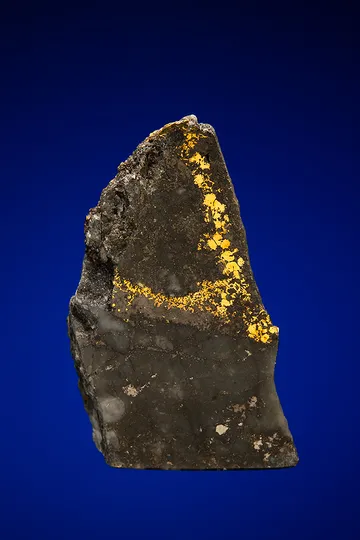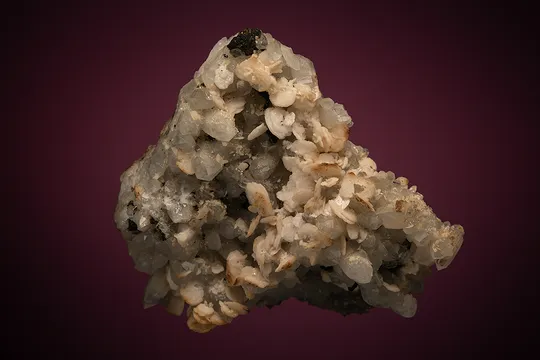
Jefferson County, USA - a mineral province with pyrite fossil hybrids, North Table Mountain zeolites, and South Platte NYF pegmatites, prized by collectors.
Key facts
Jefferson County, USA, in this EarthWonders guide, refers to Jefferson County, Colorado: the mineralogically crowded strip where the Colorado Front Range drops into the Denver Basin. Few American county-level localities carry such a peculiar mixture of collector appeal. On the mountain side are Proterozoic rocks, Laramide faults, rare-earth pegmatites, uranium veins, small base-metal prospects, and Clear Creek placer gravels. On the plains-facing side are Cretaceous and Paleogene sedimentary rocks, coal and clay beds, oil-stained sandstones, fossil-bearing shales, and the shoshonitic lava caps of North and South Table Mountains. The result is not a single “mine locality” but a compact mineral province with several very different collecting personalities.
For specimen collectors, the county’s sharpest modern identity comes from pyrite associated with fossil material, especially pyritized Baculites-type ammonites that can show a slender, shell-replacing pyrite or marcasite body capped by brassy crystal growth. The best pieces are not ordinary cubes on matrix; they are mineral-fossil hybrids, cleaned from dark shale or concretionary host rock so the replaced fossil and the crystal aggregate read as one sculptural object. Their appeal lies in the visible chemistry: an animal shell acting as the nucleation site for iron sulfide, then being preserved as a metallic object from the Cretaceous sea.
Regional View
Country View
Jefferson County is also important well beyond pyrite. North Table Mountain at Golden is a classic zeolite locality and one of the co-type localities for cowlesite, with cavities in ancient lava yielding thomsonite, chabazite, analcime, calcite, levyne, and other small but historically significant species. Farther southwest, the South Platte pegmatite district is one of Colorado’s defining NYF pegmatite districts: a rare-earth-, niobium-, yttrium-, fluorine-, and iron-rich system tied to the Pikes Peak batholith. There, pegmatites such as Little Patsy, White Cloud, Big Bertha, Oregon No. 3, and related bodies produced topaz, smoky quartz, amazonite, fluorite, yttrofluorite, samarskite-group minerals, monazite, xenotime, gadolinite, thalénite, fluocerite, thorite, cyrtolite, and other specialized collector minerals. Little Patsy gave mineralogy samarskite-(Yb), a valid species and type-locality mineral.
Historically, the county belongs to the Colorado mining story in several ways. Clear Creek placer gold linked the area to the earliest Front Range rushes; the Foothills coal field supplied fuel from steep Laramie Formation seams; clay deposits along the Dakota Hogback and nearby Cretaceous units fed brick and ceramic industries; and the Schwartzwalder mine northwest of Golden became the dominant uranium producer of the county and one of the great vein-type uranium deposits of North America. That range of deposit types is precisely why Jefferson County specimens can look so different from one tray to the next: pyrite after fossils, zeolite-lined basalt amygdules, radioactive black rare-earth oxides in pegmatite, green or purple fluorite, topaz in granitic pegmatite, and modest gold from alluvial gravels all share the same county label.
Search for specimens: View all specimens from Jefferson County, USA
Jefferson County’s collector minerals come from several unrelated geological settings. The most visually distinctive pyrite specimens are tied to Upper Cretaceous marine sedimentary rocks along the Front Range margin, where ammonites, including Baculites-type straight-shelled forms, occur in shale and concretionary horizons. In reducing, organic-rich muds, decaying shell material supplied sulfur and local chemical conditions that favored iron sulfide precipitation. Where preservation and later preparation were kind, the fossil form survives as metallic pyrite or marcasite, and in exceptional specimens brassy crystal aggregates project from or cap the replaced shell.
The county’s hard-rock mineralization is centered in older basement rocks and associated intrusions of the Front Range. The Schwartzwalder mine, about seven to eight miles northwest of Golden in the Ralston Buttes area, is a hydrothermal vein uranium deposit hosted by Proterozoic metamorphic rocks. Uranium occurs chiefly as pitchblende/uraninite in brecciated, iron-stained, quartz-rich material along steep north- to northwest-trending fault zones. Associated minerals include carbonate gangue, quartz, copper sulfides, base-metal sulfides, and secondary uranium minerals. Uranium was discovered there in 1949 by Fred Schwartzwalder, and production began in the early 1950s. Cotter Corporation owned the mine from 1965, and the mine shut down in March 2000 when uranium prices were low. The site is now inactive and under reclamation and water-treatment oversight; it is not a collecting locality.
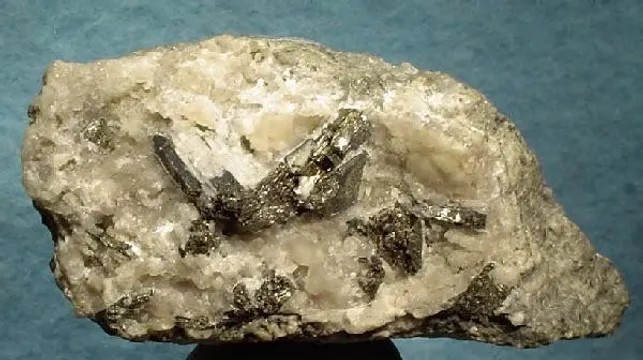
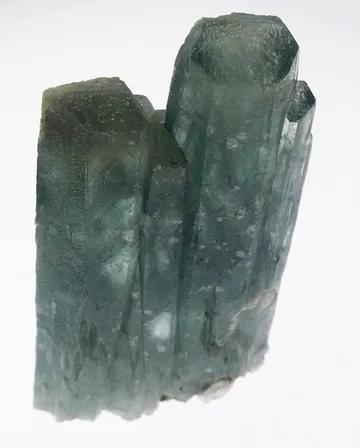
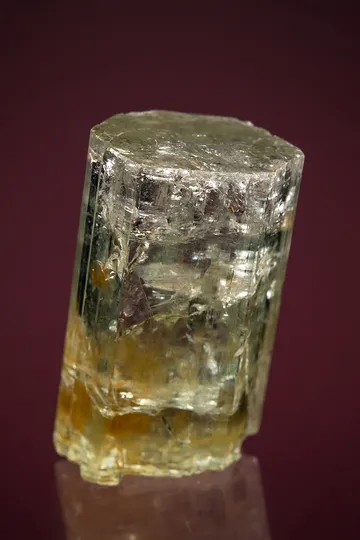
Southwest of the Denver urban corridor, the South Platte pegmatite district gives Jefferson County an entirely different collector identity. The district lies near the northern end of the Pikes Peak batholith and consists of numerous large, complex, steeply dipping to near-vertical, concentrically zoned pegmatites hosted by related granitic rocks. These are classic NYF pegmatites, enriched in niobium, yttrium, fluorine, rare earth elements, iron, and uranium-thorium-bearing accessory minerals. Their industrial history included feldspar, quartz, mica, and rare-earth-bearing material, while their specimen history centers on fluorite and yttrofluorite, amazonite, topaz, smoky quartz, monazite, xenotime, gadolinite, cyrtolite, thorite, fergusonite, fluocerite, thalénite, and samarskite-group oxides. White Cloud is especially important for fluorite-rich rare-earth assemblages; Little Patsy is the type locality for samarskite-(Yb); Oregon No. 3 and related pegmatites are known to collectors for feldspar-quartz pegmatite minerals, accessory rare-earth oxides, and occasional pyrite.
The Table Mountains at Golden are another classic locality suite. North and South Table Mountains are capped by Paleogene shoshonitic lava flows. Vesicles and amygdules in those flows were later lined or filled by zeolites and associated minerals. Collectors know North Table Mountain particularly for thomsonite, chabazite, analcime, calcite, fluorapophyllite-(K), levyne, cowlesite, and related zeolites. The specimens are usually small-cavity pieces rather than large display crystals, but their historical importance is outsized: North Table Mountain is a co-type locality for cowlesite and one of the best-known American zeolite localities in the older Colorado collecting literature.
Jefferson County also has a long industrial-mineral history. Coal was mined from the Upper Cretaceous Laramie Formation in the Foothills coal field between the Boulder County line and the Littleton area, with 55 producing coal mines recorded between 1876 and 1950. Clay was extracted from several Cretaceous units, especially the Laramie Formation and Dakota Sandstone, for brick, tile, refractory products, and pottery clay. Clear Creek gravels produced placer gold from west of Golden toward Denver, with the gold derived from lode districts upstream around Idaho Springs, Central City, Black Hawk, and Georgetown. Construction aggregate remains a major county resource, drawn from both stream gravels and crushed igneous or metamorphic rock.
Collecting access is highly locality-dependent. Jefferson County Open Space lands are regulated, and removal of natural or cultural resources is generally prohibited except under specific rules or permits. North Table Mountain is the notable exception for hobby mineral collecting: county guidance allows limited personal, non-commercial zeolite collecting at two historically used quarry areas, with hand tools only and a five-pound annual limit per person. Elsewhere, serious collectors must assume that mines, prospects, pegmatites, fossil sites, and quarry properties may be private, claimed, reclaimed, closed, or protected. Schwartzwalder is an inactive uranium-mine reclamation site and should be treated as strictly off-limits. For South Platte pegmatites and fossil occurrences, current land status and claim status matter as much as geology.
Jefferson County pyrite is most collectible when it records its sedimentary origin: metallic replacements of Baculites-type ammonites and related iron-sulfide growths from Cretaceous shale or concretionary host rock. Good examples show a brassy to bronze shell replacement, sometimes with a smoother marcasitic-looking fossil body transitioning into a sharper pyrite crystal cluster or knob; the most dramatic specimens stand as small sculptural towers or stalk-and-cap forms rather than lying flat in matrix. Sizes range from thumbnail and miniature prepared fossils to small-cabinet specimens several centimeters tall, with exceptional examples exceeding 10 cm overall. The best pieces are complete, three-dimensional, and cleanly prepared, with the pyrite lustre intact and the fossil geometry still readable; ordinary examples are broken sections, dull replacements, or crystal groups whose fossil nucleus is no longer visible.
Other documented Jefferson County minerals span an unusually broad list. North Table Mountain contributes the county’s classic zeolite suite, including thomsonite, chabazite, analcime, levyne, calcite, fluorapophyllite-(K), and the co-type-locality species cowlesite. The South Platte pegmatites add rare-earth and rare-element species of much greater specialist interest: samarskite-(Yb) from Little Patsy is a type-locality mineral, and related pegmatites have produced samarskite-(Y), monazite-(Ce), xenotime-(Y), fergusonite-(Y), gadolinite-(Y), gadolinite-(Ce), fluocerite-(Ce), thalénite-(Y), thorite, cyrtolite, yttrotantalite-(Y), topaz, amazonite, smoky quartz, fluorite, and yttrofluorite. The Schwartzwalder uranium system adds uraninite/pitchblende, coffinite, copper and base-metal sulfides, carbonate gangue, and secondary uranium minerals, but specimens from that setting require careful provenance and handling.
Jefferson County labels require careful reading because the county contains several unrelated specimen traditions. “Jefferson County, Colorado” pyrite on the current market may mean prepared pyritized fossils from Cretaceous shale, simple pyrite from sedimentary or hard-rock settings, or pegmatite-associated pyrite from the South Platte district. The value structure is very different in each case. A pyrite fossil with recognizable Baculites morphology, strong three-dimensional form, bright surfaces, and an old or well-documented collection history belongs in a different category from loose pyrite fragments or shale-hosted nodules.
The most important authenticity issue for the pyrite fossils is preparation and stabilization. Commercially handled pyrite-on-Baculites specimens are commonly worked free of enclosing black rock, and good sellers disclose repairs, joins, or stabilizer. That does not make the specimens fake; it reflects the difficulty of extracting a fragile mineral-fossil form from tough matrix. Collectors should ask whether the fossil is complete, whether the pyrite cap or stalk has been reattached, whether any missing areas are filled, and whether resin or consolidant has been used. The transition between smooth marcasite-like replacement and brighter pyrite crystal growth is natural in well-documented examples, but it is also exactly the area where repairs can be visually hidden.
Condition is a real concern. Iron sulfide fossils can contain both pyrite and marcasite, and marcasite-rich material is more prone to alteration in humid storage. Keep Jefferson County pyrite fossils dry, away from temperature swings, and out of sealed damp display cases. Avoid water cleaning. If a specimen develops sulfurous odor, white efflorescence, powdering, cracking, or acidic staining on its storage surface, isolate it immediately from other sulfides and lower the storage humidity.
South Platte rare-earth pegmatite specimens present a different set of collector cautions. Samarskite-group minerals, thorite, cyrtolite, monazite, xenotime, yttrofluorite, and uranium-bearing accessory minerals can be radioactive to varying degrees. They should be stored with labels that clearly identify locality and species, handled with common-sense hygiene, and not kept loose where dust can be generated. Small cabinet specimens are generally manageable in a responsible mineral collection, but cutting, grinding, acid cleaning, or keeping friable radioactive matrix in living spaces is poor practice.
North Table Mountain zeolites are usually not dangerous, but they are easily damaged. Thomsonite sprays, cowlesite linings, levyne, mesolite, and delicate cavity fillings suffer from bruising, dust, and careless trimming. Many worthwhile pieces are micromounts or small hand specimens; magnification and lighting matter more than size. Because Jefferson County Open Space allows only limited zeolite collecting at designated North Table Mountain areas, modern self-collected material should be accompanied by notes confirming it came from an authorized location and was collected within current rules.
Market availability is uneven. Pyrite fossil specimens from Jefferson County appear periodically and can bring strong prices when prepared, aesthetic, and well documented. North Table Mountain zeolites remain available from old collections and limited modern field collecting, usually at modest prices unless the species is rare or the aesthetics are exceptional. South Platte pegmatite minerals range from common quartz-feldspar-topaz field pieces to scarce rare-earth species that should be bought only with good locality data and, for rare species, analytical confidence.
Fred Schwartzwalder’s discovery has the kind of plainspoken Colorado origin that collectors remember. In 1949, Schwartzwalder was not introduced in the old field-guide account as a mining magnate or academic geologist, but as a high school janitor and rock collector from Golden. The ground had already attracted a failed copper effort back in the 1890s, but the important mineralization turned out to be black pitchblende in brecciated, iron-stained, quartz-rich rock along steep faults in Precambrian metamorphic country. By the time Cotter Corporation owned the property, the Schwartzwalder mine had become the county’s dominant uranium operation and one of the largest single uranium mines in the country. It shut down in March 2000, not because the ore story had become uninteresting, but because uranium prices had made continued mining uneconomic. The modern legacy is less romantic: water treatment, reclamation permits, uranium-bearing mine drainage, and a site whose collecting appeal is completely overridden by safety and regulatory reality.
The pyrite Baculites specimens have a different, almost workshop-like mythology. The memorable figure is Bill Hawes, described in commercial and auction histories as an amateur paleontologist and mineral preparator who spent decades searching through ugly black rock for the metallic surprises inside. One account of a top specimen emphasizes “over 40 years of painstaking searching,” the kind of phrase that would sound like salesmanship if the specimens themselves did not look so improbable: a long fossil shell transformed to iron sulfide, then crowned by a pyrite cluster as though the fossil had grown a mineral flower. Another auctioned specimen, collected by Hawes in the summer of 1996 and later sold in a major Heritage sale, measured about 20 x 20 cm overall, with a Baculites fossil about 10.8 cm long and a pyrite group about 9.7 cm across. It sold on June 2, 2013, for $10,625. The best pieces make the geochemistry visible enough for a collector to explain across a table: dead marine animal, sulfur from decay, iron in low-oxygen mud, iron sulfide replacing shell, crystal growth preserved in stone.
North Table Mountain tells a quieter collecting story, but it is central to Colorado mineral culture. The old quarries were not opened for collectors at all; stone from the Table Mountain lava flows was used historically for paving blocks, railroad ballast, aggregate, and building or ornamental stone. Collectors later learned that the vesicular zones in the lava held delicate zeolite-lined cavities. Club field trips still treat the site as a seasonal rite of passage, with beginners finding analcime, chabazite, and thomsonite and sharper eyes searching for cowlesite and levyne. The locality is now managed open space rather than a free-for-all quarry dump, which gives it a distinctly modern character: one of Colorado’s classic specimen sites survives, but only under limits tight enough to keep the place from being loved to death.
Caine, Jonathan Saul; Johnson, Raymond H.; and Wild, Emily C. “Review and Interpretation of Previous Work and New Data on the Hydrogeology of the Schwartzwalder Uranium Mine and Vicinity, Jefferson County, Colorado.” U.S. Geological Survey Open-File Report 2011-1092.
A key modern USGS synthesis for the Schwartzwalder mine, describing it as the largest known vein-type uranium deposit in the United States and summarizing its hydrogeology, mining history, host rocks, and reclamation context.
Wallace, A. R., and Karlson, R. C. “The Schwartzwalder uranium deposit. I: Geology and structural controls on mineralization.” Economic Geology, 1985.
A technical publication on fracture and fault control of uranium mineralization in Proterozoic gneiss of the east-central Front Range.
Colorado Geological Survey. “Mineral Resources of Jefferson County Field Trip Guide.”
Concise field-trip treatment of Jefferson County’s uranium, coal, clay, placer gold, aggregate, oil, and gas resources, with especially useful figures for the Schwartzwalder mine, Dakota Hogback, Clear Creek gravels, and Golden-area mining history.
Colorado Geological Survey. “Rare Earth Pegmatites of the South Platte District, Colorado” (Resource Series 11).
The essential publication for the South Platte pegmatites: maps, zonation, mineral constituents, and the rare-earth-rich NYF pegmatite framework of Jefferson County.
Simmons, W. B.; Hanson, S. L.; and Falster, A. U. “Samarskite-(Yb): a new species of the samarskite group from the Little Patsy pegmatite, Jefferson County, Colorado.” The Canadian Mineralogist, 44(5), 1119–1125, 2006.
Formal description of samarskite-(Yb), the type-locality mineral from Little Patsy pegmatite.
Canadian Mineralogist, Volume 44, Number 5 contents page.
Confirms the publication details, authors, title, and page range for the 2006 samarskite-(Yb) description.
Mindat occurrence record for samarskite-(Yb) from Little Patsy pegmatite, South Platte Pegmatite Mining District, Jefferson County, Colorado.
Useful species-locality record confirming Little Patsy as the type locality and listing associated photo-based minerals.
Mindat locality page for Little Patsy pegmatite, South Platte Pegmatite Mining District, Jefferson County, Colorado.
Locality-level mineral list for Little Patsy, including samarskite-(Yb), samarskite-(Y), monazite-(Ce), topaz, thorite, torbernite, yttrotantalite-(Y), zircon/cyrtolite, and other pegmatite minerals.
Jacobson, Mark I., and Smith, Myron W. “Fluocerite-(Ce) and Other Minerals from the Little Patsy Quarry [Colorado].” The Mineralogical Record, 21(5), 429–430, 1990.
Cited in the Little Patsy mineral records for fluocerite-(Ce), hematite, microcline, quartz, samarskite-(Y), thorite, and yttrotantalite-(Y).
Adams, John W., and Sharp, William N. “Thalenite and allanite derived from yttrofluorite in the White Cloud pegmatite, South Platte area, Colorado.” U.S. Geological Survey Professional Paper 800-C, 1972.
Classic treatment of thalénite, allanite, yttrofluorite, and rare-earth mineral reactions at White Cloud pegmatite.
Smyth, Joseph R.; Raschke, Markus B.; Allaz, Julien M.; Anderson, Evan; Persson, Philip M.; and Koda, Radek. “Crystal chemistry of fluorthalenite-(Y) and gadolinite-(Y) from White Cloud pegmatite, Jefferson County, CO, USA.” Geological Society of America Abstracts, 46, 751, 2014.
Modern analytical work on rare-earth silicates from the White Cloud pegmatite.
Kile, Daniel E. “Zeolites and Associated Minerals from the Table Mountains near Golden, Jefferson County, Colorado.” Rocks & Minerals, 79(4), 218–238, 2004.
Major modern article on the Golden Table Mountains zeolite locality suite, including specimen-quality thomsonite and rare zeolites such as levyne and cowlesite.
Wise, William S., and Tschernich, Rudy W. “Cowlesite, a new Ca-zeolite.” American Mineralogist, 60(11–12), 951–956, 1975.
Original cowlesite description; North Table Mountain, Golden, is one of the co-type localities.
Jefferson County, Colorado, USA — Mindat — Broad mineral and fossil index for the county, useful for separating the Table Mountain, Golden, South Platte, Ralston Buttes, and other sublocalities.
Golden, Golden Mining District, Jefferson County, Colorado — Mindat — Good entry point for the Golden-area zeolites, Table Mountain minerals, pyrite records, and fossil context.
North Table Mountain, Golden, Jefferson County, Colorado — Mindat — Locality record for the classic zeolite site and co-type-locality cowlesite occurrence.
South Platte Pegmatite Mining District, Jefferson County, Colorado — Mindat — District-level pegmatite mineral list, including amazonite, topaz, fluorite, gadolinite, xenotime, and other rare-earth minerals.
White Cloud pegmatite, South Platte Pegmatite Mining District — Mindat — Locality page for one of the county’s key rare-earth and yttrofluorite pegmatites.
Little Patsy pegmatite, South Platte Pegmatite Mining District — Mindat — Type-locality page for samarskite-(Yb) and an important source record for rare South Platte pegmatite minerals.
Samarskite-(Yb) mineral data — Webmineral — Independent mineral-data page for the Little Patsy type-locality species.
Colorado Geological Survey: Uranium — Useful overview of Colorado uranium settings, including the Schwartzwalder vein-type uranium deposit in Jefferson County.
U.S. Nuclear Regulatory Commission: Colorado Legacy Land – Schwartzwalder Mine — Current regulatory and reclamation status for the inactive Schwartzwalder uranium mine.
Jefferson County Open Space Regulations — Current rules affecting collecting, protection of geological objects, closures, and resource removal on county open-space lands.
Jefferson County Open Space Recreation and Activity Management Guide — Important collector-access guidance, including the limited zeolite-collecting allowance at North Table Mountain.