Infiernillos Mine, Bolivia — Potosí silver-tin locality famed for cassiterite, native silver, bournonite and rare phosphophyllites, prized by collectors.
Key facts
Infiernillos Mine—long entangled on labels with the Canutillos Mine, Canutillos district, Colavi-Machacamarca district, Huayllani, and nearby Tomokoni—is one of those Bolivian localities where the specimen story is as important as the mining story. The mine itself is a silver-tin occurrence in the Potosí Department, with Sn-Ag veins recorded in red argillaceous sandstone. Its documented ore suite is modest but interesting: cassiterite, native silver, bournonite, sphalerite, wurtzite, tetrahedrite-subgroup minerals, pyrite, siderite, quartz, hematite, goethite, baryte, native sulfur, and augelite.
For collectors, however, Infiernillos matters because the name sits at the crossroads of several short-lived, early-2000s specimen discoveries in the Canutillos subdistrict. The true Infiernillos ore assemblage produced bright octahedral pyrite, pyrite-siderite combinations, bournonite, and rare associated species. At the same time, many labels reading “Infiernillos” or “Canutillos” have been applied to phosphophyllite from near-surface diggings in the surrounding country rock and to vivianite from the nearby Tomokoni occurrence. Good labels here require caution, not cynicism: the district names are real, the specimens are real, and the mineralogical distinction is simply finer than the older trade labels often allowed.
Regional View
Country View
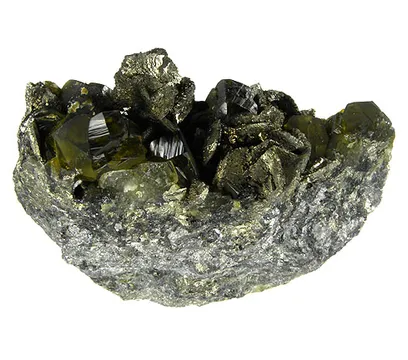
The finest pieces associated with the Infiernillos name are small but visually memorable. The phosphophyllites are pale green, sharply crystallized, and commonly butterfly- or swallowtail-twinned on limonitic matrix, very different in style from the great gemmy old phosphophyllites of Cerro Rico. The vivianites attributed in the trade to Canutillos are sharply formed emerald- to bottle-green crystals on red sandstone, now more properly understood as Tomokoni material. The pyrites from Infiernillos proper are crisp metallic clusters of intergrown octahedra, sometimes with trapezohedral modifications, and they have become the most locality-correct display mineral for the mine itself.

Photo: Wikimedia Commons
Search for specimens: View all specimens from Infiernillos Mine, Bolivia
Infiernillos Mine is in the Canutillos subdistrict of Tacobamba Municipality, Cornelio Saavedra Province, Potosí Department, Bolivia. In older specimen literature and dealer usage it appears as Infiernillos Mine, Canutillos Mine, a section of the Canutillos Mine, or a mine within the broader Canutillos or Colavi-Machacamarca district. That naming variability is not trivial for collectors, because several different occurrences only a short distance apart have supplied specimens under overlapping labels.
The mine proper is recorded as a silver-tin vein occurrence hosted in red argillaceous sandstone. The exploitable commodities listed for the locality are silver and tin, and the verified species reflect a compact polymetallic assemblage: cassiterite for tin, native silver and silver-bearing sulfide associations for the argentiferous side, with pyrite, bournonite, sphalerite, wurtzite, tetrahedrite-subgroup minerals, quartz, siderite, baryte, hematite, and goethite as the important gangue and accessory phases.
The broader Colavi-Canutillos area sits within one of Bolivia’s classic tin-silver districts northeast of Potosí. Regional technical descriptions of the neighboring Colavi and Canutillos operations place the district in a sequence that includes Ordovician shale and sandstone, Cretaceous sandstone and dacitic tuffs, and local dacitic intrusive bodies occurring as stocks, sills, or dikes. Nearby Colavi is noted for manto-style tin mineralization in calcareous sandstone horizons within a Cretaceous red sandstone and tuff sequence, while later cassiterite veins occur in dacite. Infiernillos itself should not be reduced to that whole district model, but the red sandstone host, silver-tin association, and cassiterite-bearing polymetallic suite fit naturally within the same metallogenic neighborhood.
Public mining-history data for Canutillos are sparse. The best verified modern summaries state that COMIBOL began operations at Canutillos in 1964, while Empresa Minera Tirex Ltda. began silver heap-leach activity there in 2010. COMIBOL later delivered a mining contract to Cooperativa Minera Canutillos Altiplano R.L. on August 22, 2023, confirming that the area remains a formal mining-cooperative setting rather than a casual recreational collecting locality. For practical purposes, collecting access should be considered private, permitted, and operationally hazardous; specimens on the market are the realistic route for most collectors.
The most important locality distinction concerns the famous phosphophyllite and vivianite. The phosphophyllite specimens long sold as Infiernillos or Huayllani-Infiernillos came from near-surface diggings in sterile, unmineralized country rock nearby rather than from the Infiernillos ore workings proper. The vivianite crystals discovered on June 20, 2003 were found a few hundred meters away on the neighboring Tomokoni property; three adits were dug specifically for vivianite specimen mining there, but many dealer labels have historically called those pieces Canutillos. Thus the Infiernillos name in the collector world embraces three realities: the ore mine, the surrounding phosphophyllite diggings, and the neighboring Tomokoni vivianite occurrence. A good collector label should preserve that complexity instead of erasing it.
The documented Infiernillos-pyrite find from around 2004 is a useful anchor for the mine proper. Auction descriptions record bright clusters composed of octahedral pyrite crystals, typically 1 to 6 or 7 mm, sometimes mounded into chains or intergrown clusters and occasionally showing trapezohedral modifications. That pyrite material appears to have been marketed chiefly in the early 2000s, with later examples circulating as collection pieces rather than as a continuous supply.
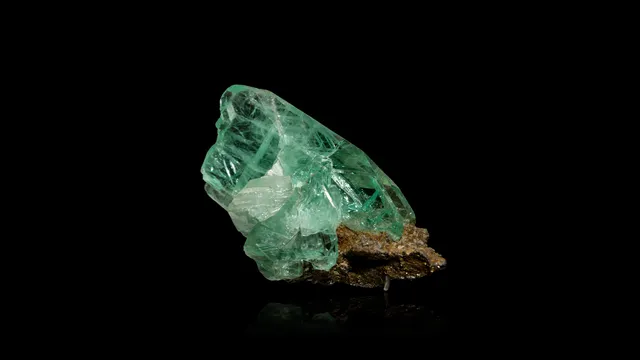
Phosphophyllite under the Infiernillos name is best understood as Huayllani-Infiernillos district material from shallow country-rock diggings near, rather than inside, the Infiernillos ore mine. The 2009–2010 find produced pale green to bluish green crystals on limonitic matrix, ranging from rich coatings of small euhedral crystals a few millimeters across to better miniature and small-cabinet specimens with sharp butterfly or swallowtail twins; documented examples include a 5.0 x 3.7 x 1.9 cm specimen with crystals to 7 mm, Fabre specimens from the December 2009 find with 0.7 x 0.3 cm to 1.4 x 0.5 cm main crystals, and a Mineralogical Record online note picturing a 2.9 cm example. The best pieces show recognizable twinning, fresh pale green color, translucency, and numerous complete crystals on natural limonite-rich matrix; ordinary pieces are more botryoidal, poorly individualized, or simply too sparse to carry the locality’s importance visually.
Siderite from Infiernillos is a locality-signature gangue mineral rather than the glamorous face of the occurrence: it has been confirmed for the locality by SEM-EDS work and appears in market specimens as the iron-carbonate matrix or drusy companion to the mine’s bright pyrite. Dealer records document Infiernillos siderite-with-pyrite specimens in miniature to small-cabinet sizes, including 2.7 x 2.5 x 2.5 cm and 5 x 5 x 2.5 cm pieces, and pyrite-with-siderite matrix examples around 4.5 x 3.5 x 3 cm. The desirable Infiernillos siderites are those that frame or contrast sharp metallic pyrite without becoming dull, muddy, or massive; the species is most valuable here when it preserves the texture of an open vein pocket and provides honest locality context for the pyrite.
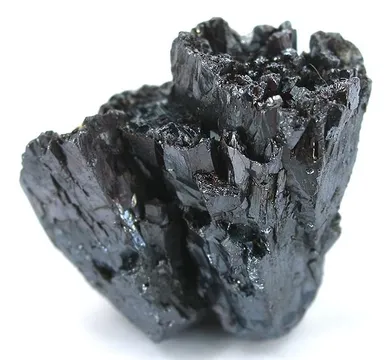
Pyrite is the best-documented display mineral from Infiernillos proper, and the early-2000s material is distinctive: bright metallic octahedra, commonly 1 to 6 or 7 mm, grow into elongate chains, mounded clusters, and compact small-cabinet specimens; some crystals show trapezohedral modifications that give the faces extra liveliness under a hand lens. Auction records describe a 9.5 x 4.1 x 3.1 cm elongate cluster from a small find and a 6.5 x 4.3 x 3.8 cm ex-Tom Campbell specimen from a find around 2004, the latter noted for sharp octahedra with trapezohedral faces and strong luster. The best pieces are bright, crisp, undamaged aggregates with repeated octahedral form and minimal dead matrix; lesser examples are contacted, tarnished, granular, or too heavily intergrown to show the crystal habit that makes Infiernillos pyrite worth singling out.
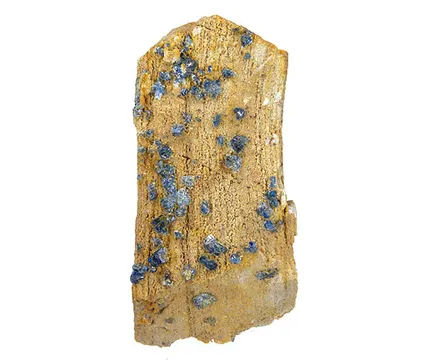
Vivianite sold as Infiernillos or Canutillos is the classic locality-label trap of the district: the notable crystals were discovered a few hundred meters from the Infiernillos/Canutillos workings on the neighboring Tomokoni property, where specimen adits were dug for vivianite after the June 20, 2003 discovery. These vivianites are famous for sharp flattened-prismatic to swordlike crystals, emerald to bottle-green color, strong vitreous luster, and red argillaceous sandstone matrix; early accounts mention crystals to 9 cm on red sandstone, common thumbnail to small-cabinet matrix pieces, and occasional white baryte rosettes or siderite druses. A fine “Infiernillos/Canutillos” vivianite should therefore be judged as Tomokoni-style material: intact terminations, transparent green transmission when backlit, firm original sandstone matrix, and honest labeling are more important than sheer size, while loose blades, cleaved edges, darkened surfaces, and vague Canutillos-only labels should be assessed carefully.
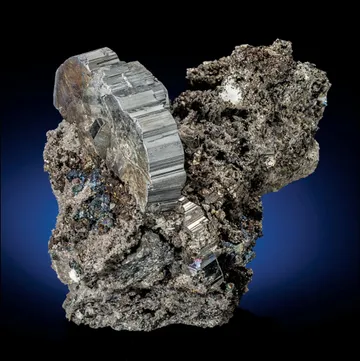
Beyond the four collector-facing species above, Infiernillos has a compact but worthwhile recorded mineral list. Cassiterite anchors the tin side of the deposit and is cited from the classic Bolivian mineral-deposit literature. Bournonite is a notable display species from the Canutillos-Infiernillos orbit, with recent dealer material showing cogwheel twinning and pyrite association. Native silver, sphalerite, wurtzite, tetrahedrite-subgroup minerals, quartz, baryte, hematite, goethite, native sulfur, and augelite are all documented from the locality or its immediate record. Wurtzite is especially worth noting because it was confirmed by PXRD, while native sulfur is described as rounded microcrystals in cavities left by decomposed pyrite—an elegant little oxidation-zone detail that explains some of the locality’s more obscure micromineral interest.
The central authenticity issue for Infiernillos is not widespread fakery; it is locality precision. Phosphophyllite labeled “Infiernillos” is usually better described as Huayllani-Infiernillos or nearby Canutillos-subdistrict material from shallow diggings in country rock, not ore-mine phosphophyllite from the Infiernillos workings. Vivianite labeled “Canutillos” or “Infiernillos” should be checked against the Tomokoni occurrence, where the important early-2000s vivianites were actually found. A careful modern label can read something like “Tomokoni Mine, near Canutillos/Infiernillos, Canutillos subdistrict” for those vivianites, or “Huayllani, Infiernillos area” for phosphophyllites, depending on the provenance.
Condition is the next major concern. Phosphophyllite is fragile and should be inspected for edge bruising, cleaved crystal tips, missing twins, and repairs. The best Infiernillos-area phosphophyllites are not large by Cerro Rico standards, so a 5 to 10 mm sharp twin on matrix may be more desirable than a larger but crude botryoidal mass. Color should be pale green and lively rather than dead gray-green, and the matrix should look like natural limonite-rich country rock, not an artificial base or suspiciously trimmed fragment.
Vivianite requires dark storage. Tomokoni-type vivianite can be wonderfully transparent and glassy when fresh, but vivianite darkens with oxidation associated with light exposure, and the change is practically irreversible in collector terms. Store pieces in a closed box or dark drawer and bring them out for brief viewing. Do not use a bright permanent display case for a fine specimen. The red sandstone matrix can be crumbly; handle from the base, avoid vibration, and never soak or ultrasonically clean the piece. Some sandstone matrices may have been consolidated, which is not automatically unacceptable, but repairs, reattached crystals, and filled breaks should be disclosed.
Pyrite and siderite from Infiernillos are more robust, but the small octahedral pyrite clusters still deserve magnification. Check for contacted high points, flattened broken octahedra, dull tarnish, iron-oxide replacement, or instability along decomposed zones. Goethite pseudomorphs after pyrite and sulfur in cavities after decomposed pyrite are part of the locality record, so oxidation is not merely theoretical here. A good Infiernillos pyrite should be bright, crisp, metallic, and geometrically readable; a merely brassy granular mass from Bolivia is not enough.
Market availability is intermittent. Fine Tomokoni vivianite remains visible in old-stock dealer inventories and auctions, but top transparent matrix pieces are no longer abundant. Infiernillos-area phosphophyllite appeared as a notable new occurrence around 2009–2010 and is now encountered mostly as old stock, collection material, or scattered dealer pieces. Infiernillos pyrite is uncommon but not impossibly expensive; the challenge is finding well-labeled, sharp, lustrous examples with the distinctive octahedral habit intact.
The most vivid story attached to the Infiernillos name begins not in the mine’s silver-tin veins but on nearby red sandstone. In June 2003, three miner brothers from Colavi were hiking on the Tomokoni claim when a blue streak in the red sandstone caught their attention. They opened fractures and cavities within hours and found green vivianite. Within days, Bolivian dealers were buying the new specimens and sending them abroad.
The discovery quickly became a rights dispute. Miners from Colavi and Canutillos both wanted access to the pocket ground, and the conflict became serious enough that COMIBOL stepped in and stopped collecting. By August 2003, visiting American collectors found that three small adits had already been driven at Tomokoni, while local miners were still sneaking in to collect. By December, an agreement had reportedly been negotiated and collecting resumed. One contemporary account speculated that several thousand specimens might come out in the following year, but also noted the practical enemy waiting underground: groundwater.
There is a wonderfully tactile field detail in the early vivianite accounts. The red argillaceous sandstone matrix was described as giving off an earthy odor when breathed upon. That is a collector’s observation, not a laboratory abstraction: lift a crumbly red matrix specimen, warm it with breath, and the clay-rich sedimentary rock answers back. On some specimens the only associated minerals were rosettes of thin white baryte and druses of siderite. In a country famous for complex sulfide veins and dramatic metallic assemblages, Tomokoni’s stage was almost humble—red sandstone, green crystal, air, light, and fragility.
The Infiernillos phosphophyllite episode is quieter but important. When new phosphophyllite specimens appeared around 2009, Thomas P. Moore noted them in the Mineralogical Record online reports as a new occurrence from the Infiernillos Mine, Canutillos, Colavi district. He was blunt about their beauty: they were “certainly not beautiful” and not competitive with the gemmy old Cerro Rico phosphophyllites, yet they mattered because they represented a new phosphophyllite occurrence. That is often how locality history really advances—not with a world-class cabinet piece, but with a modest specimen that changes the map.
By Tucson 2010 the new phosphophyllite had become show news. Fabre Minerals described the December 2009 Huayllani-Infiernillos pieces as Tucson novelties: pale green crystals, many in swallowtail twins, on limonite matrix. One 4 x 3.4 x 1.7 cm specimen with a 1.4 x 0.5 cm main crystal was later noted as having been reviewed, photographed, and published as a new discovery in Mineral Up. For the serious phosphate collector, that was enough. Even a small, imperfect phosphophyllite from a newly documented Bolivian occurrence carries a charge that a prettier common specimen cannot imitate.