Porco, Bolivia — historic high-altitude silver locality famed for native silver wires and crystalline curls, with acanthite, pyrargyrite, stephanite, and dense…
Key facts
Porco is one of the great names in Andean silver: not because it has flooded the collector market, but precisely because a mine that has produced metal for centuries has yielded remarkably few fine specimens. The district lies southwest of Potosí in Bolivia’s Eastern Cordillera, on the southeastern edge of the Los Frailes volcanic field, where the Porco Ag-Zn-Pb-Sn vein system is tied to the Porco caldera and the Miocene Huayna Porco intrusive center. For the mineral collector, the essential image is a high-altitude, historically deep silver camp whose best pieces are compact, metallic, and intensely “ore-stage”: native silver wires and crystalline curls with acanthite, ruby-red pyrargyrite, dark stephanite, and complex silver sulfosalts from narrow veins better known to miners than to display-case collectors.
Geologically, Porco is a volcanic-hosted polymetallic vein deposit developed within and around a small resurgent caldera. The ore is zoned around the Huayna Porco stock: cassiterite occurs nearer the intrusive center, while sphalerite and galena dominate outward, with the richest primary silver minerals concentrated in the upper parts of the veins. This zonation gives Porco specimens their characteristic personality. Even when silver is the collectible face of the locality, it is usually not an isolated show mineral; it belongs to a dense assemblage of acanthite, sphalerite, galena, pyrargyrite, stephanite, argyrodite, and other dark, heavy silver minerals.
Regional View
Country View
Historically, Porco predates the fame of Cerro Rico de Potosí. Chroniclers recorded that silver was worked here in Inca times, and Spanish exploitation began in the first generation after conquest. In a Bolivian context, Porco is therefore not merely an old mine; it is one of the places where the pre-Hispanic, colonial, Republican, tin-boom, state-mining, cooperative, and modern corporate phases of Andean mining visibly overlap. Today it remains an industrial zinc-silver-lead operation rather than a specimen mine, which is a central reason why good collector pieces are elusive.

Photo: Wikimedia Commons
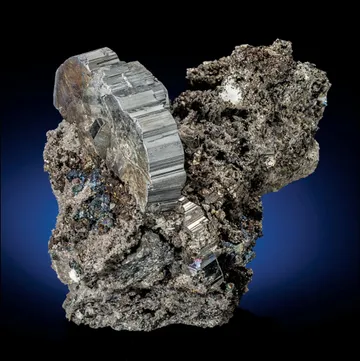
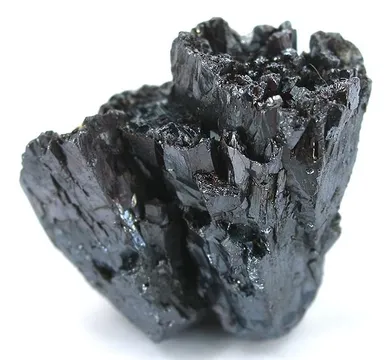
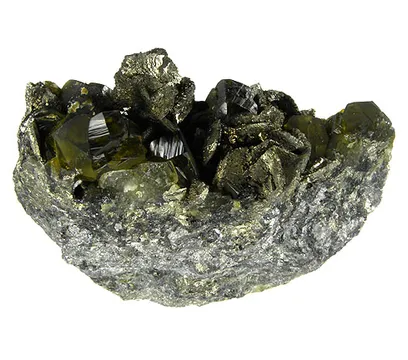
The best Porco silver specimens are usually miniatures and thumbnails rather than great cabinet pieces: coiled or pseudo-wire native silver, sometimes rising from grey acanthite-rich matrix; skeletal black acanthite clusters; and, more rarely, pyrargyrite with the internal crimson of “ruby silver.” Their appeal is locality, history, and density of associations more than sheer size. A fine Porco specimen should look like it came directly from a narrow, high-grade silver vein—dark, metallic, compact, and geologically convincing.

Photo: Wikimedia Commons
Search for specimens: View all specimens from Porco, Bolivia
The Porco mining complex is in the Porco Municipality of Antonio Quijarro Province, Potosí Department, roughly 50 km southwest of Potosí city. The mine area is reached from the Potosí-Uyuni highway by secondary roads through the mining communities of Porco and Agua de Castilla. Agua de Castilla is particularly important in the modern operation because concentrates are moved a short distance to the Yancaviri warehouse and rail station, from which they are transported toward the Pacific port of Antofagasta, Chile.
The deposit is a structurally controlled polymetallic vein system hosted chiefly by the intracaldera Porco Tuff and related volcanic rocks. The caldera is about 5 km north-south by 3 km east-west and formed after eruption of the dacitic Porco Tuff at about 12 Ma. Mineralization is younger and is associated with the Huayna Porco stock, dated at about 8.6 Ma. The principal veins cut the intracaldera tuff roughly a kilometre east of the stock and follow major caldera structures, including radial and ring-fracture patterns. Individual major veins are generally narrow—commonly less than a metre wide—but can be long and persistent.
The modern mine is best understood as two overlapping worlds. The corporate operation works zinc-dominant polymetallic veins, producing separate zinc and lead concentrates with silver credits by underground methods including sublevel longhole stoping with backfill, shrinkage stoping, and cut-and-fill mining where vein geometry requires it. The cooperative sector works in and adjacent to older areas, particularly in historically silver-rich ground. These two modes of mining partly explain the irregular appearance of specimens on the market: pockets are not mined for collectors, and the pieces that survive do so incidentally.
The main ore assemblage is sphalerite, galena, pyrite, cassiterite, and silver minerals. In the zoned system, cassiterite is more proximal to the Huayna Porco stock, while sphalerite and galena are more prominent outward along ring-fracture veins. The primary silver suite is dominated by pyrargyrite, acanthite, and stephanite in the upper parts of the veins. German-language field descriptions of the mine record San Antonio Principal as a principal Pb-Zn-Ag vein worked on multiple levels; it shows massive, coarse, black-brown sphalerite along the margins, pyrite layers, and finer banded sphalerite toward the center, with common greenockite and disseminated pyrite, arsenopyrite, and galena in altered Porco Tuff. Another important and very silver-rich zone is Veta Hundimiento, worked in stacked Santiago Bajo, Santiago Alto, and Santiago Más Alto levels between roughly 4100 and 4200 m elevation.
The named mine sectors and workings associated with Porco include Degollada, Huayna Porco, Santiago Alto, Santiago Bajo, Pie de Gallo, Ckacha Capilla, Ckacala, Oriente Bajo, Prometedora, and others. For collectors, Santiago Alto is especially relevant because specimen records document native silver, acanthite, argyrodite, baumstarkite, galena, löllingite, miargyrite, polybasite, pyrargyrite, pyrostilpnite, sphalerite, and stephanite from that mine. Sold specimen records also document argyrodite with pyrargyrite and sphalerite, plus native silver in vugs, from Santiago Alto.
Porco’s mining history begins before the Spanish conquest. Cieza de León reported Inca silver working at the Cerro de Porco, and early colonial sources describe Porco ore that looked nearly all silver. Spanish exploitation began in the 1530s and 1540s, but the sensational discovery and development of Cerro Rico de Potosí soon eclipsed Porco’s production. Even so, Porco remained a known and intermittently important silver producer, later shifting into tin and then zinc-dominant polymetallic mining as metal prices, technology, and operators changed.
The industrial phase became especially visible in the early twentieth century. Porco Tin Mines Ltd. was active by the 1910s, with milling infrastructure at Agua de Castilla, aerial tram transport from the mines, and railway shipment of concentrates toward the coast. The property later entered the orbit of the Aramayo mining interests and, after Bolivia’s 1952 revolution and mining nationalization, became part of COMIBOL. Later leases and operating arrangements involved Iris Mines & Metal, COMSUR, Sinchi Wayra, Sociedad Minera Illapa, Glencore-linked companies, and, since 2022, Santacruz Silver, which acquired Glencore’s Bolivian silver-asset portfolio and operates Porco through the Illapa/COMIBOL arrangement.
Collecting access today should be regarded as closed in the practical sense. Porco is an active underground industrial mine, not a collecting locality. The notable specimen finds known to collectors—wire silver around 2009–2011, small lots of stephanite, occasional pyrargyrite, skeletal acanthite, and isolated silver-acanthite cabinet pieces—came out through miners, geologists, or the secondary market rather than through organized collecting. That scarcity is part of the locality’s cachet: a good Porco miniature carries the aura of a mine that has produced metal for five centuries yet has spared very little for mineral cabinets.
Native silver from Porco is most admired as compact wire, pseudo-wire, and crystalline aggregates, typically silver-white to grey and commonly associated with acanthite-rich matrix. The strongest pieces show sculptural curls, branching wires, or crystalline masses that are clearly native silver rather than merely argentiferous ore; thumbnails and miniatures are the usual sizes, though occasional larger matrix pieces with small bunches of wire silver have been recorded. A 2009 find produced attractive crystalline and pseudo-wire miniatures, and later market reports described loose curved wires to a few centimeters, including an exceptional specimen with two wires about 11 cm long rising from grey acanthite-like matrix. Porco silver is separated from ordinary material less by brilliance than by locality integrity, form, and association: the most desirable examples preserve clean, three-dimensional wire or crystalline silver on acanthite, rather than flattened smears or indistinct silver-bearing ore.
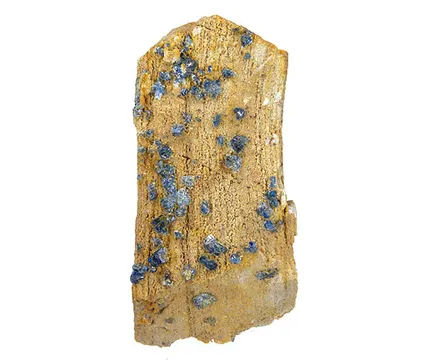
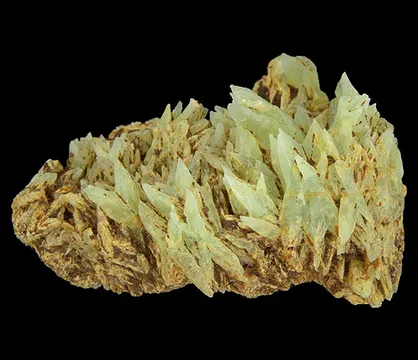
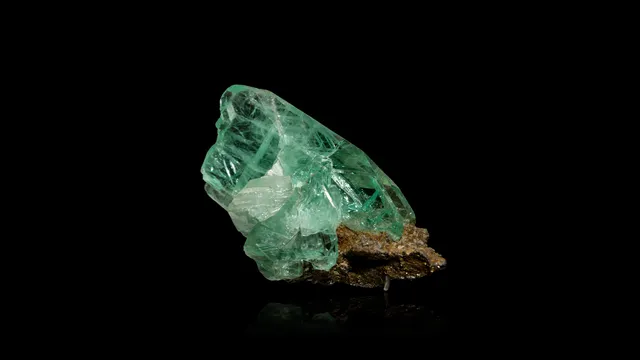
Porco’s wider mineral list is unusually rich for silver sulfosalts and related species. The Porco and Santiago Alto records include acanthite, pyrargyrite, stephanite, miargyrite, polybasite, pyrostilpnite, argyrodite, baumstarkite, sphalerite, galena, löllingite, and rare silver-rich ore minerals; greenockite is also noted in the zinc-rich vein assemblage. In the broader Porco Municipality, the abandoned El Dragón selenium mine is a separate but mineralogically extraordinary locality, famous as the type locality for a suite of selenium minerals including alfredopetrovite, bernardevansite, cerromojonite, eldragónite, favreauite, franksousaite, grundmannite, guangyuanite, hansblockite, nickeltyrrellite, petermegawite, and quijarroite. El Dragón is not the source of the classic Porco native silver specimens, but it gives the municipality one of the most important selenium-mineral records in the world.
Porco specimens demand careful locality discipline. Labels may say “Porco,” “Porco Mine,” “Santiago Alto,” “Agua de Castilla,” or, for selenium minerals, “El Dragón”; those are not interchangeable. A native silver or acanthite specimen labelled simply “Porco” is usually understood by collectors to mean the Porco mine group near Agua de Castilla, while the type-locality selenium suite belongs to El Dragón, several kilometres away within Porco Municipality. Confusing the municipality with the mine is the most common locality problem.
There is no well-established literature of fabricated Porco silver “fakes” comparable to the notorious problems at some specimen localities, but the rarity of genuine material makes optimistic labelling a real concern. Porco acanthite can resemble classic black acanthite thumbnails from Fresnillo, Guanajuato, or Freiberg, and Porco silver wires can be visually less distinctive than their provenance suggests. Buy on provenance when possible: old dealer labels, mine-sector detail such as Santiago Alto, and association with acanthite, pyrargyrite, stephanite, or sphalerite are more meaningful than a loose “Bolivia silver” label.
Condition is often the limiting factor. Native silver from Porco is soft and can be bent, burnished, or flattened by handling; old pieces may show dark tarnish but should not be aggressively cleaned, since the tarnish can help preserve the surface texture and the association with acanthite. Acanthite groups are brittle and can have contacts or broken skeletal terminations. Pyrargyrite and related ruby-silver minerals should be protected from strong light because they can darken, and sharp little crystals are easily bruised. Stephanite is brittle and often occurs as small thumbnails, so even minor edge wear matters.
From a market perspective, Porco is a connoisseur locality. Native silver is available from time to time, but usually in small sizes; acanthite and stephanite appear in small lots separated by years; pyrargyrite is distinctly uncommon; and matrix pieces with multiple silver minerals are far scarcer than the mine’s historic production would lead one to expect. The best Porco pieces appeal to collectors who value locality, documented history, and unusual Bolivian silver associations more than large display scale.
Porco’s first great story is older than Bolivia, older than Spain’s imperial mint at Potosí, and older than the word “collector” in any modern mineral sense. Pedro de Cieza de León wrote that in the time of the Inca kings, silver was taken from Porco for the lords of Peru, and that people said much of the silver in the Temple of the Sun at Coricancha had come from this hill. The passage is memorable because it does not treat Porco as rumor. It names people and objects: Hernando Pizarro’s mine being cleaned in 1549, ore shown in Lima by Antonio Álvarez, and a sample that “almost all seemed silver.” Cieza’s conclusion has the ring of a sixteenth-century assay report and a prophecy at once: Porco had been enormously rich, still was, and was believed likely to remain so.
Archaeologists Mary Van Buren and Brendan Weaver describe a landscape shaped by Apu Porco, “Lord Porco,” and Huayna Porco, “Young Porco,” rather than by a single mine portal. From Apu Porco, nearly 5000 m high, the view takes in Cerro Rico de Potosí to the northeast and other mineralized peaks to the south. In Andean terms these mountains were not inert topography. They were powerful residents of the landscape, watched, invoked, and worked around. Under Inca administration, Porco was not a stable mining town in the modern sense. Workers and pilgrims moved seasonally from distant provinces; extraction, sorting, grinding, smelting, refining, storage, maintenance of the workforce, and ritual were organized across distinct places. Silver mining and sacred geography were one system.
The Spanish did not simply replace that system with a mine. They fractured it. Colonial Porco became a landscape of claims, owners, indigenous miners, reused Inca buildings, seasonal labor, and European-style settlement, all superimposed on the older sacred mining terrain. The archaeology is especially valuable because Porco was later overshadowed by Potosí; it preserves evidence of a mining world that was not fully swallowed by a single boom city. In the long view, Porco and Potosí are less rivals than related expressions of the same Andean silver economy, one famous on a global scale and the other stubbornly local, persistent, and layered.
One of the most vivid twentieth-century turns came with industrial tin mining. Joseph Pentland found Porco abandoned in the early Republican period, but the revival of mining in the nineteenth century and the tin boom transformed the district. By the second decade of the twentieth century, Porco Tin Mines had milling infrastructure at Agua de Castilla, and reports described stamps, sand and slime tables, and a Hardinge mill. Ore no longer moved primarily by animal caravan. It descended from mine to mill by aerial tram, then moved by rail toward Antofagasta and onward to New York. Van Buren and Weaver’s image is unforgettable: Porco’s mineral was “virtually spirited out of the country,” carried by cables and rails rather than by llamas and drivers.
The specimen story is smaller, but for collectors it is just as revealing. Around 2009 and 2010, fine thumbnails of Porco silver and stephanite appeared in scattered dealer offerings. A 2011 market report noted that wire silver was emerging from the Porco mine and described loose, medium-thick, curved wires to a few centimeters long; one specimen had two 11-cm wires rising from grey acanthite-like matrix. In 2022, a Mineralogical Record market report described Porco acanthites that could easily be mistaken at first glance for Mexican or German classics, but were in fact from the Porco mine group. The report emphasized the paradox: Bolivia’s oldest silver mine was still producing ore, yet specimens were “very rarely seen on the market,” because almost everything went to the crusher and miners risked their jobs if they smuggled pieces out.
That is the modern collector’s Porco in a sentence: one of the oldest and most historically charged silver mines in the Americas, still active, still geologically alive in the industrial sense, but stubbornly stingy with specimens. The mine has yielded mountains of concentrate and only a thin trickle of cabinet-worthy silver minerals. A thumbnail wire silver or black acanthite from Porco therefore carries more history than its size suggests.
Cunningham, C.G., Aparicio N., H., Murillo S., F., Jiménez, N.C., Lizeca B., J.L., McKee, E.H., Ericksen, G.E., and Tavera V., F. (1994). “Relationship between the Porco, Bolivia, Ag-Zn-Pb-Sn deposit and the Porco Caldera.” Economic Geology, 89(8), 1833–1841. The key modern geologic paper tying the Porco Ag-Zn-Pb-Sn vein system to the Porco caldera, Porco Tuff, Huayna Porco stock, zoned mineralization, and boiling epithermal conditions.
Cunningham, C.G., Aparicio N., H., Murillo S., F., Jiménez, N.C., Lizeca B., J.L., McKee, E.H., Ericksen, G.E., and Tavera V., F. (1994). The Relationship Between the Porco, Bolivia, Ag-Zn-Pb-Sn Deposit and the Porco Caldera. U.S. Geological Survey Open-File Report 94-238. Open-file treatment of the same deposit-caldera relationship, useful for the geologic map and locality-scale framework.
JDS Energy & Mining Inc. (2024). NI 43-101 Technical Report for the Advanced Project Porco Mining Operations, Antonio Quijarro Province, Bolivia, prepared for Santacruz Silver Mining Ltd. Current technical documentation for the operating mine, ownership, reserves/resources, mining methods, and production context.
Van Buren, M., and Weaver, B.J. (2012). “Contours of Labor and History: A Diachronic Perspective on Andean Mineral Production and the Making of Landscapes in Porco, Bolivia.” Historical Archaeology, 46(3), 79–101. The best archaeological and historical landscape study of Porco’s Inca, colonial, industrial, and modern mining phases.
Schnorrer-Köhler, G., Grundmann, G., and Lehrberger, G. (1990). “The El Dragón Mine, Potosí, Bolivia.” The Mineralogical Record, 21(2), 133–146. Classic collector-oriented publication on the El Dragón selenium locality in Porco Municipality.
Grundmann, G., and Förster, H.-J. (2017). “Origin of the El Dragón Selenium Mineralization, Quijarro Province, Potosí, Bolivia.” Minerals, 7(5), 68. Detailed genetic and mineralogical study of the El Dragón selenium vein system.
Paar, W.H., Cooper, M.A., Moëlo, Y., Stanley, C.J., Putz, H., Topa, D., Roberts, A.C., Stirling, J., Raith, J.G., and Rowe, R. (2012). “Eldragónite, Cu6BiSe4(Se2), a new mineral species from the El Dragón Mine, Potosí, Bolivia, and its crystal structure.” The Canadian Mineralogist, 50(2), 281–294. Type description of eldragónite, named for the El Dragón mine.
Förster, H.-J., Bindi, L., Grundmann, G., and Stanley, C.J. (2016). “Quijarroite, Cu6HgPb2Bi4Se12, a new selenide from the El Dragón Mine, Bolivia.” Minerals, 6(4), 123. Type description of quijarroite, named for Antonio Quijarro Province.
Förster, H.-J., Bindi, L., Grundmann, G., and Stanley, C.J. (2018). “Cerromojonite, CuPbBiSe3, from El Dragón (Bolivia): a new member of the bournonite group.” Minerals, 8(10), 420. Type description of another El Dragón selenium rarity.
Yang, H., McGlasson, J.A., Gibbs, R.B., and Downs, R.T. (2022). “Franksousaite, PbCu(Se6+O4)(OH)2, the Se6+ analogue of linarite, a new mineral from the El Dragón mine, Potosí, Bolivia.” Mineralogical Magazine, 86(5), 792–798. Type description of the blue lead-copper selenate franksousaite.
Yang, H., Gu, X., McGlasson, J.A., Gibbs, R.B., and Downs, R.T. (2024). “Guangyuanite, Pb3Cl3(Se4+O3)(OH), a new lead-chloride-selenite mineral from the El Dragón mine, Potosí, Bolivia.” Mineralogical Magazine, 88, 97–104. Type description of guangyuanite from El Dragón.
Mindat: Porco, Agua de Castilla, Porco Municipality, Antonio Quijarro Province, Potosí, Bolivia — Core locality page for the Porco mine group and its documented species.
Mindat: Santiago Alto mine, Porco — Useful sublocality page for the silver-sulfosalt suite, including native silver, acanthite, argyrodite, pyrargyrite, and stephanite.
Mindat: El Dragón mine, Porco Municipality — Essential reference for the selenium-mineral type locality within Porco Municipality.
USGS: Relationship between the Porco, Bolivia, Ag-Zn-Pb-Sn deposit and the Porco Caldera — Authoritative abstract and citation for the principal Economic Geology paper on the deposit.
Santacruz Silver: Porco Mine — Current operator overview with mine type, ownership, infrastructure, grades, and reserve/resource summaries.
Major Mines & Projects: Porco Mine — Independent mining-data summary for location, ownership, geology, and operating status.
Wikimedia Commons: Silver from Porco — Freely licensed photo and description of a 5.0 cm Porco native silver specimen from the 2009 find.
Wikimedia Commons: Porco view — Recent landscape image showing Porco town and its high Andean setting.
The Mineralogical Record: “What’s New in the Mineral World,” June 2022 report — Market note documenting Porco acanthite thumbnails, wire silver, pyrargyrite, and specimen scarcity.
The Mineralogical Record: Online Report 29 — Earlier market report describing Porco wire silver, stephanite, and pyrargyrite appearances.
Van Buren and Weaver: “Contours of Labor and History” — Archaeological and historical interpretation of Porco’s mining landscape across Inca, colonial, and modern periods.