Colquechaca, Bolivia, a classic silver-sulfosalt locality with dark red pyrargyrite, native silver, and rare Ag-Sn/Ag-Sb minerals prized by collectors.
Key facts
Colquechaca is one of the classic silver-sulfosalt localities of the central Andes: a high, cold, historically worked Ag-Sn-Zn-Pb district in northern Potosí, centered on the old mining settlements of Colquechaca and Aullagas. To collectors, its name means dark red pyrargyrite, metallic gray argyrodite, native silver in wires and patches, acanthite-rich ore, and a suite of rare silver-tin and silver-antimony species that belong unmistakably to Bolivia’s great tin-silver belt. The best specimens have the look of old high-grade ore rather than showroom prettiness: black to steel-gray metallic masses, lustrous ruby-silver crystals that flash deep red when backlit, carbonate- and quartz-lined cavities, and old labels reading “Aullagas,” “Colquechaca,” or both.
The district lies in the Bolivian Cordillera Oriental, within the broader province of subvolcanic, “Bolivian-type” polymetallic vein systems. These deposits are famous for telescoped mineralization: cassiterite- and sulfide-bearing tin assemblages overlapping with rich silver sulfosalts, sphalerite, galena, pyrite, marcasite, siderite, quartz, and carbonate gangue. Colquechaca’s silver ores were already celebrated in the colonial period and remained important through the great nineteenth-century boom, later shifting more strongly toward tin and base-metal production as the bonanza silver shoots were exhausted or flooded.
Regional View
Country View
Older literature and labels often separate “Aullagas” from “Colquechaca,” but specimen interpretation is cleaner if they are treated as intimately linked names for the same working district and vein system. Aullagas was the earlier settlement above the present town; Colquechaca later became the working center from which long adits, including Progreso and San Bartolomé, accessed the historic veins. That label nuance matters: a nineteenth-century Aullagas specimen and a twentieth-century Colquechaca specimen may come from the same mineralized structures.

Photo: Wikimedia Commons

Photo: Wikimedia Commons

Photo: Wikimedia Commons
Search for specimens: View all specimens from Colquechaca, Bolivia
Colquechaca is a vein and vein-stockwork district rather than a single specimen pocket locality. It belongs to the central Bolivian tin-silver province, where felsic subvolcanic centers and hydrothermal systems cut older sedimentary rocks and generated polymetallic mineralization. The economic suite is classically Ag-Sn-Zn-Pb, with tin in cassiterite and stannite, silver in pyrargyrite, native silver, acanthite and related sulfosalts, zinc in sphalerite, and lead chiefly in galena and complex lead-silver-antimony sulfosalts.
The old ore was worked in narrow fissure veins and rich shoots. The 1894 Engineering and Mining Journal account described the principal ore as a well-defined vein filling, with slickensides, clay gouge, quartz, vugs, and two local ore categories: first-class “broza-guia,” rich in ruby silver, native silver and argentite, and lower-grade “broza” between and around the bonanza pockets. The same account singled out the Embudo vein and described cavities lined with pyrargyrite and quartz, accompanied by wire silver; it also noted sphalerite and subordinate galena with the high-grade silver ore.
The named workings and veins are a collector’s key to the district. Gallofa and Embudo are especially important in specimen literature, and the Gallofa mine, accessed by the Progreso adit, is repeatedly tied to canfieldite and argyrodite material. San Bartolomé is another historically important adit and mine name. San Carlos, described as a silver-tin vein in the Gallofa mine area, appears in locality data for cassiterite, petroleum-like hydrocarbon material, and other species. Other named Colquechaca occurrences include Descubridora, Transvaal, Nueva Verdun and Nueva Virginia, reflecting the district’s long life as a network of mines rather than a single shaft.
The mining history is unusually deep. Colonial Aullagas and Colquechaca were worked for silver and became part of the wider silver economy of Upper Peru. Local historical accounts place early Spanish-period development around San Miguel de Aullagas and the later mines San Bartolomé and Gallofa; the old town of Aullagas, now largely a ruin field, grew around that silver boom. By the late nineteenth century, Colquechaca was again prominent enough to attract major capital and became associated with the Compañía Colquechaca-Aullagas and later with the rise of Simón I. Patiño’s mining interests. Production shifted over time: the old high-grade silver shoots made the locality famous, while twentieth-century and modern operations have emphasized tin, zinc, lead and silver concentrates.
A 1920 Engineering and Mining Journal article portrayed the district as a revival story: ancient narrow fissure veins in igneous rocks were being reworked for both silver and tin, with flotation contemplated for metal recovery. That article also emphasized the physical drama of the place: three mining towns had grown on the flanks of the mineralized mountains, two of them largely abandoned, and Colquechaca itself had dwindled severely after the old boom years. Modern sources indicate that the Cooperativa Minera Colquechaca R.L. works the district under arrangements involving COMIBOL, exploiting lead-silver and zinc-silver complexes as well as tin-bearing material in the hills around Hermoso, Viscachani, Ánimas, San Mateo and Aullagas.
For collectors today, Colquechaca is not a casual collecting stop. It is an active mining district with cooperative operations, underground workings, historic adits, unstable dumps, and environmental and access issues. Specimens on the market mostly come from old collections, miners’ pieces, dispersed museum duplicates, and occasional modern recoveries; field access should be assumed to require local permission and professional caution. The serious collector should treat precise old labels as part of the specimen: “Aullagas,” “Gallofa vein,” “Socavón Progreso,” “San Bartolomé,” or “Colquechaca” can materially affect both interpretation and value.
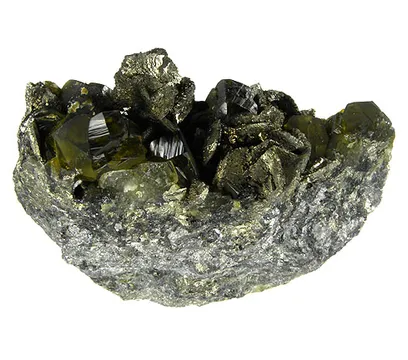
Colquechaca pyrargyrite is the locality’s signature “ruby silver,” occurring as deep red to nearly black metallic-looking crystals and massive ore, commonly with quartz, siderite, pyrite, marcasite, sphalerite, galena, miargyrite, argyrodite and native silver. Historic accounts describe large, perfectly terminated crystals in vugs, and modern specimen records include smooth prismatic crystals with multiple growth terminations and rhombohedral faces, with documented individual crystals around 2 cm and thumbnails carrying lustrous, translucent gem-red crystals around the centimeter scale. Good pieces are not merely black sulfosalt ore: they show sharp form, red transmission at thin edges or under strong backlighting, bright luster, minimal bruising on terminations, and a credible old Aullagas-Colquechaca provenance.
Native silver from Colquechaca occurs in the classic high-grade silver ore as wires, filigree, patches and coatings, associated especially with acanthite, pyrargyrite, sphalerite, galena and quartz-carbonate gangue. Nineteenth-century descriptions mention large pieces of native silver ore in wire and filigree form, while museum and gallery specimens show silver wires and visible metallic patches in acanthite-rich matrix, sometimes with iridescent patina. The best examples balance age, locality credibility and aesthetics: distinct wires or arborescent silver visible without over-cleaning, attractive contrast against black acanthite or dark sulfosalt ore, and a stable surface that has not been harshly polished, stripped, lacquered or artificially brightened.
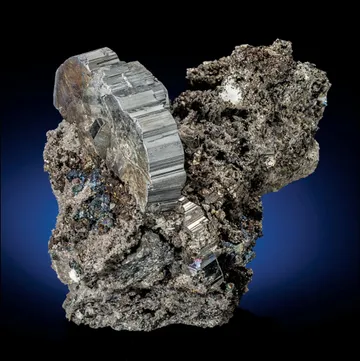
Argyrodite from Colquechaca is one of the great rare-species prizes of the district, valued less for color than for crystallographic and chemical significance: metallic gray to black Ag8GeS6 occurring as pseudo-octahedral, blocky, stepped, granular or massive crystals, commonly on or within pyrargyrite-rich silver ore and associated with miargyrite, marcasite, pyrite and siderite. Mindat and museum-linked specimens document millimeter-scale crystals as well as larger, old, rich masses; one notable Colquechaca specimen photographed from a circa 1929-1932 collection is a 2.5 cm matrix specimen carrying a large octahedral argyrodite partly coated by secondary native silver and acanthite. Fine argyrodite pieces are those with obvious crystal form, documented analysis or museum-style provenance, and visible separation from visually similar black pyrargyrite, acanthite or canfieldite-group material.
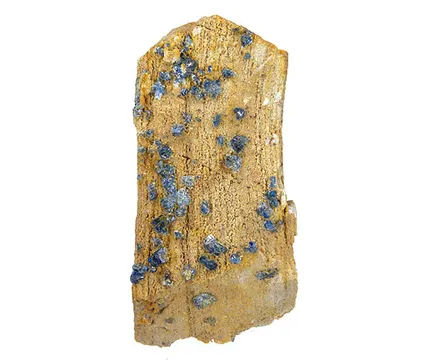
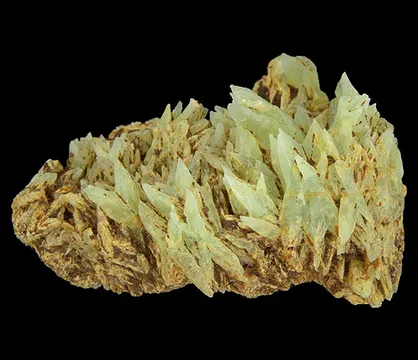
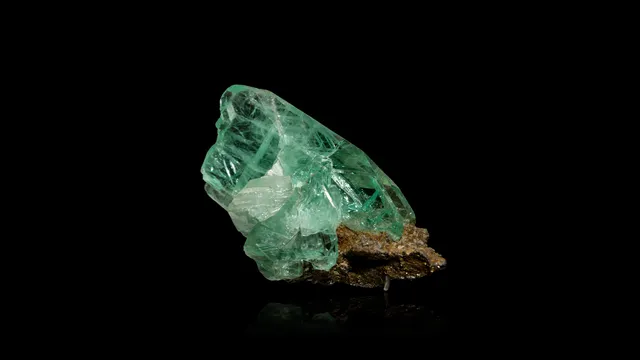
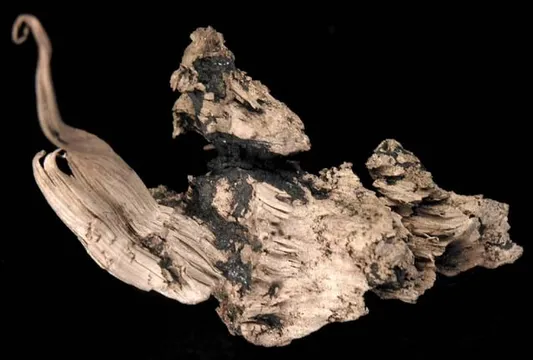
Beyond those three headliners, Colquechaca is important for canfieldite, Ag8SnS6, for which it is the type locality; true canfieldite-dominant material is elusive, and many old “canfieldite” labels have later proved to be argyrodite or tin-bearing argyrodite. Other documented species include acanthite, miargyrite, stephanite, polybasite, owyheeite, dyscrasite, proustite reported with uncertainty, cassiterite, stannite, sphalerite, galena, chalcopyrite, pyrite, marcasite, pyrrhotite, siderite, quartz, baryte, tetrahedrite-group minerals, bournonite, chalcostibite, cosalite, cylindrite, teallite, native bismuth, schoenfliesite, wickmanite, vivianite, smithsonite and wurtzite. Selenium minerals sometimes attributed to Colquechaca should be treated with special care: the classic Colquechaca silver deposit itself is not the source of the Pakajake-Virgen de Surumi selenium suite, even though that area lies within the broader Colquechaca municipality.
Colquechaca specimens reward skepticism and punish casual identification. The commonest serious problem is not outright fakery but old-label ambiguity: Aullagas versus Colquechaca, Gallofa versus general district, and canfieldite versus argyrodite. Aullagas labels are historically legitimate when applied to the old settlement and workings, but they should not be interpreted as a separate mineral species locality without context. Conversely, specimens labeled only “Bolivia” or “Potosí” are often upgraded by wishful thinking; Colquechaca attribution should rest on old labels, collection history, analytical notes, or a very convincing match to the classic silver-sulfosalt assemblage.
Canfieldite and argyrodite require particular care. They can be visually similar: both may be dark metallic gray to black, pseudo-cubic or pseudo-octahedral, and embedded in silver-sulfosalt ore. Analysis matters. A specimen sold as canfieldite from the type locality is not automatically canfieldite-dominant; many historically labeled examples are argyrodite or intermediate Ag8(Ge,Sn)S6 material. For a rare-species cabinet, EDS, WDS, XRD, or a reputable analytical provenance adds real value.
Pyrargyrite condition is another key issue. The best Colquechaca examples are old, brittle, light-sensitive silver sulfosalts, and many have rubbed terminations, bruised prism edges, or blackened surfaces that obscure the ruby-red character. Do not over-clean them. Strong light can darken pyrargyrite over time, and prolonged display in direct sunlight is poor practice. Backlighting is useful for inspection, but long-term storage should be in low light, with stable humidity and minimal handling.
Native silver from Colquechaca is usually valued for old patina and association, not for bright whiteness. Tarnish is expected; an unnaturally bright specimen may have been chemically cleaned. Wires can be delicate and easily bent, and acanthite-rich matrices may shed small grains. Old silver specimens with academy, university or nineteenth-century collection provenance are especially desirable.
Market availability is uneven. Small pyrargyrite thumbnails and dark sulfosalt miniatures appear periodically, while fine red crystals, analyzable argyrodite, true canfieldite, and well-composed silver-acanthite pieces are scarce. The strongest specimens usually trade as old classics rather than as recent mine-run material, and their labels can be nearly as important as their aesthetics.
The most persistent story in Colquechaca collecting is that two locality names follow one orebody through time. Aullagas was once the living mining town; Colquechaca later became the access point. When the Gallofa-Embudo vein was worked from the old Aullagas side, labels naturally read “Aullagas.” When the same vein system was accessed by long adits from Colquechaca, labels changed. A collector holding two old specimens—one labeled Aullagas, one labeled Colquechaca—may be holding two chapters of the same vein, not two separate localities. That is why the labels feel confusing until the topography is restored: abandoned Aullagas above, working Colquechaca below, and the same silver-rich structures between them.
The 1894 account by Robert Peele Jr. reads like a miner’s inventory of a specimen cabinet. In the rich ore, cavities or vugs were lined with pyrargyrite and quartz, with wire silver threading the openings. The “broza-guia” was not ordinary ore; it was ruby silver, native silver and argentite, sometimes with high-grade tetrahedrite, sphalerite and galena. Values given for the rich ore ranged from hundreds to thousands of ounces of silver per ton. For mineral collectors, the important point is that the finest specimens were not accidental curiosities pulled from waste: they were the visible faces of bonanza ore shoots, the same material that made the mine worth fighting, draining, capitalizing and reopening.
Aullagas itself became a ghostly part of the district’s lore. The ruins are described as a “city of stone,” the remains of a colonial mining settlement that rose around silver and then emptied as the working center shifted. One 1920 observer described Colquechaca as the third mining town on the flanks of the same mineralized mountains: first older workings and ruined settlements, then Aullagas, then Colquechaca. Around thirty years before that article, the town was said to have had a population of about 8,000; by 1900 it had fallen to a few hundred, and by 1915 much of it was “roofless walls.” That image—a silver city stripped down to masonry by exhausted ore and economic collapse—belongs to the same history as the old red-silver specimens now sitting in drawers with browned labels.
The San Bartolomé adit has its own longevity. A 1920 mining article stated that it had been begun before 1700, making it one of the district’s great old underground arteries. Later historical summaries say San Bartolomé was famous for productive work and that, over 26 years, about 30 million bolivianos were extracted from it. The same narratives describe the consolidation of Aullagas, Porvenir, Consuelo, Flamenca and Colquechaca, followed by debt, flooding of rich silver workings, and the later Patiño-era emphasis on tin. For collectors, those production shifts explain why the district’s best silver minerals feel old: the rich silver chapters were early; the later industrial chapters often chased different metals through the same battered ground.
Local tradition around Aullagas folds mining into religion and festival. The old San Miguel church, the annual veneration of the archangel, and the “tinku diablo” traditions preserve a mining landscape where silver, danger, Catholic imagery and Andean ritual met in the same streets. Stories say dancers dressed as devils and angels at ceremonial spaces near the old city, linking Aullagas to wider northern Potosí traditions that later traveled toward other mining towns. Whether a collector comes for pyrargyrite or argyrodite, the specimen’s setting is not just geological; it is a landscape of adits, ruined houses, patron saints, abandoned churches, flooded workings, and the long memory of silver.