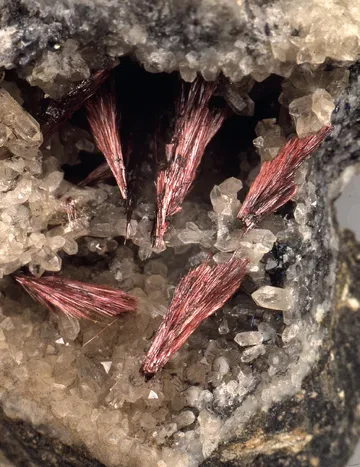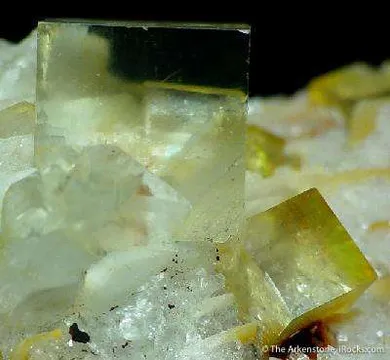
Idar-Oberstein, Germany — Europe’s classic agate-and-quartz locality, yielding agate, jasper, rock crystal, smoky quartz and amethyst; prized for provenance an…
Key facts
Idar-Oberstein is one of Europe’s classic names in the collector vocabulary, not because it is a great producer of ore minerals, but because it is the archetypal European agate-and-quartz locality: Permian volcanic rock packed with silica-lined amygdules, nodules, veins, druses, and “almonds” of agate, jasper, rock crystal, smoky quartz, and amethyst. The best-known collecting ground is Steinkaulenberg, west-northwest of Idar, historically linked with the Galgenberg workings and with the older agate pits that supplied a lapidary industry famous for centuries. Geologically, the specimens belong to the volcanic successions of the Saar-Nahe Basin, where gas-rich lava flows cooled with abundant cavities that were later filled, band by band and crystal by crystal, by silica-rich fluids.
Collectors know the locality by its look: compact volcanic matrix enclosing grey, white, reddish, blue-grey, and brown agate; jasper in red and yellow tones; and small to cabinet-size cavities glittering with colorless quartz, smoky quartz, or purple amethyst. Unlike the grand South American amethyst cathedrals that later fed the Idar-Oberstein cutting trade, true old German pieces are usually modest in scale, historic in character, and prized for provenance. A fine Idar-Oberstein specimen has the old-world combination collectors love: a volcanic rind or sawn nodule surface, restrained banding, a central quartz or amethyst pocket, and, ideally, an early label tying it to Steinkaulenberg, Setz Quarry, Göttschied, or another named local sublocality.
Regional View
Country View
The town’s importance is larger than the mineralization itself. Local agate, jasper, rock crystal, and amethyst supported one of the most influential lapidary traditions in Europe; after the local deposits declined, imported Brazilian and Uruguayan agate, quartz, and other gem rough kept the workshops alive and transformed Idar-Oberstein into an international stone-cutting center. For the specimen collector, that history cuts two ways: genuine local pieces are desirable precisely because the mines were worked early and heavily, but the town’s later fame as a processing center means “Idar-Oberstein” on an old label can sometimes mean cut, traded, or processed there rather than found there.
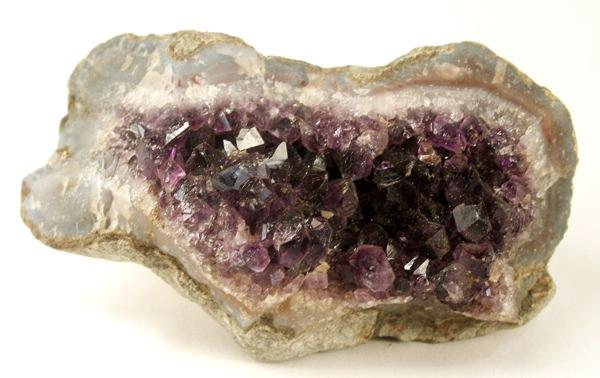
Photo: Wikimedia Commons

Photo: Wikimedia Commons
Search for specimens: View all specimens from Idar-Oberstein, Germany
Idar-Oberstein lies in the Nahe-Hunsrück gemstone district of Rhineland-Palatinate, within the Permian volcanic terrain of the Saar-Nahe Basin. The signature deposit type is volcanic-hosted silica infill: gas cavities and fractures in latite-andesite and related “melaphyre” volcanic rocks were filled by chalcedony, agate, jasper, macrocrystalline quartz, smoky quartz, amethyst, and later carbonate or iron-oxide phases. Steinkaulenberg, the classic locality west-northwest of Idar, is an underground agate, jasper, and amethyst mine in latite-andesite rock; nearby Setz Quarry, Göttschieder Heide, Karschholz, Schönlautenbach, and other localities broaden the mineral record for the town and its immediate environs.
The mineralization is not an orebody in the traditional sense. The “productive bodies” were amygdaloidal zones, geode-bearing horizons, jasper veins, and locally mineralized fractures in the volcanic sequence. In the agate mine, the economically important targets were filled cavities: solid agate “almonds,” jasper seams, and drusy cavities lined with quartz or amethyst. Collectors should visualize the deposit as a lava-flow system rather than a vein mine: pockets are discontinuous, irregular, and controlled by original gas-bubble distribution, permeability contrasts, flow-top and flow-base alteration, and subsequent silica-bearing fluids.
Steinkaulenberg’s historic workings are inseparable from the German word “Kaulen,” the old surface pits or diggings from which the hill’s name is derived. Early collecting and mining began above ground where weathering released agate-bearing nodules; later work followed the richer material underground in narrow adits and crawl workings. Regional accounts place documented agate extraction in the Idar-Oberstein area by the late medieval period, and the commercial life of the local agate mines continued for centuries before declining in the nineteenth century. Commercial mining at Steinkaulenberg ended in 1875, after which the old adits deteriorated until twentieth-century clearing and stabilization opened part of the system as a visitor mine.
The present Steinkaulenberg visitor mine shows the mineralization in place. Modern guided routes pass through several hundred meters of accessible workings where agate, amethyst, rock crystal, smoky quartz, and jasper can be seen in the host rock. The public experience should not be mistaken for open collecting in old stopes: the underground mine is a protected show mine, and collecting from the walls or unauthorized ground is not appropriate. Separate above-ground gemstone-camp and prospecting areas are operated for visitors; these are controlled tourist collecting settings, and one of them is restocked with minerals from around the world. Provenance-conscious collectors should therefore distinguish sharply between historic mine specimens, local field-collected material, and souvenir finds from arranged digging areas.
Named sublocalities matter here. Steinkaulenberg is the historic heart of the agate-amethyst story; Setz Quarry is particularly important for collector specimens of amethyst and harmotome, including late-1960s and older-label material; Göttschieder Heide and Karschholz add agate, chalcedony, quartz, calcite, chabazite-group minerals, and harmotome; Schönlautenbach is cited for prehnite and harmotome. Idar-Oberstein as a marketplace also handled immense quantities of imported agate and quartz from Brazil, Uruguay, Switzerland, Saxony, Bohemia, India, and elsewhere, so a label must be read carefully: “Idar-Oberstein” can be a locality, a cutting center, a dealer address, or a commercial origin note.
The finest old pockets produced compact geodes with pale chalcedony or agate walls and interiors lined by amethyst or clear to smoky quartz. The best mineral specimens are not the largest objects to pass through the town’s workshops, but those that still preserve the local volcanic context: amethyst crystals in a cavity with agate banding, quartz crystals set in altered latite-andesite, calcite perched on purple quartz, or old harmotome twins on calcite and quartz from Setz. Historic specimens with nineteenth- or early-twentieth-century labels are especially desirable, because they anchor the piece to the local deposits rather than to the later global trade that made the town famous.
Quartz from Idar-Oberstein occurs both as macrocrystalline rock crystal and smoky quartz in druses and as the crystalline interior phase of agate-lined geodes in the Permian volcanic rocks, especially at Steinkaulenberg and Setz Quarry. The usual scale is small to hand-size rather than monumental: clear, milky, or smoky crystals lining cavities, commonly bordered by chalcedony or agate and associated with calcite, hematite, goethite, and locally zeolite minerals. Fine pieces are judged by intact cavity architecture, sharp lustrous terminations, attractive contrast between quartz and agate wall, old locality specificity, and evidence that the specimen is a true local geode fragment rather than imported quartz merely processed in town.
Amethyst is the collector’s emblem of Idar-Oberstein: violet quartz lining small geodes and drusy cavities in the altered volcanic host, most famously at Steinkaulenberg and also at Setz Quarry and Göttschieder Heide. Good examples show a natural agate or chalcedony rind passing inward to sparkling purple crystals, with color ranging from pale lilac to richer grape-purple zones; old specimens may be only a few centimeters across but carry far more historical weight than size alone suggests. The best pieces have undamaged crystal points, clear purple zoning, balanced cavity exposure, and credible old labels, while ordinary pieces are weathered fragments, sawed tourist geodes, or amethyst of uncertain origin associated only commercially with Idar-Oberstein.
Other minerals documented from Idar-Oberstein and its immediate localities include agate, agate-jasper, chalcedony, eye agate, ferruginous quartz, rock crystal, smoky quartz, calcite, hematite, goethite, pyrite, marcasite, harmotome, chabazite-group minerals, prehnite, laumontite, scolecite, heulandite-Ca, mesolite, kaolinite, malachite, sphalerite, uraninite, bornite, chalcopyrite, chalcocite, digenite, yarrowite, spionkopite, romanèchite, pyrolusite, and wad-like manganese oxides in nearby mineralized ground. The town is not primarily a type-locality district; the records tied to the Idar-Oberstein locality emphasize historic quartz-family gemstones and local zeolite/carbonate associations rather than newly described IMA species. For rarity-minded collectors, old Setz Quarry harmotome twins, prehnite from Schönlautenbach, and documented historical amethyst-calcite-quartz geodes are far more interesting than anonymous polished agate.
The first authenticity problem at Idar-Oberstein is geographic, not mineralogical. The town has processed imported gem rough for nearly two centuries, and old dealer stock from Idar-Oberstein may include Brazilian agate, Uruguayan amethyst, Swiss rock crystal, Saxon or Bohemian amethyst, Indian carnelian, and many other materials. A specimen simply labeled “Idar-Oberstein” is not automatically a local specimen. For collector-grade provenance, look for a named sublocality such as Steinkaulenberg, Setz Quarry, Göttschieder Heide, Karschholz, Schönlautenbach, or another specific local site; old labels that say only “Oberstein” or “Idar” are historically appealing but require interpretation.
Treatment is the second major issue. Idar-Oberstein is historically famous for agate cutting, heating, and staining, and the classical chemical methods for coloring agate became a major part of the town’s lapidary identity. That does not make treated agate fraudulent when sold honestly as lapidary material, but it does matter for mineral specimens. Intensely black, blue, green, hot pink, or unnaturally even banded agate should be approached as treated unless there is strong reason to think otherwise. True local specimen material is usually subtler: grey-white, brown, red, yellow, blue-grey, or violet where amethyst is present, with natural iron staining, weathered volcanic matrix, and irregular cavity surfaces.
Condition issues are typical of old geode material. Thin chalcedony rims can bruise, amethyst points can be rubbed or chipped, calcite on amethyst is soft and easily etched or cleaved, and iron oxides may dust or stain surrounding quartz. Old sawn nodules may have polished faces and broken backs; that is not necessarily a defect if the piece is being collected as a historical lapidary specimen, but it changes how it should be valued. For mineral-specimen purposes, natural cavity exposure with intact terminations usually commands more interest than a heavily polished slice unless the slice shows exceptional fortification banding, eye agate, jasper-agate transition, or documented museum-style provenance.
Fluorescence is not the principal appeal of the classic agate-amethyst material. Some associated calcite may fluoresce, and some chalcedony can show weak or variable responses, but locality attribution should never rest on ultraviolet behavior. Handling is straightforward: keep amethyst out of prolonged direct sunlight, protect calcite-bearing specimens from acids and abrasion, and avoid oiling or waxing geode interiors. For old labels, store the label separately but with the specimen; in this locality, a credible paper trail can be more valuable than a few extra millimeters of crystal.
On the market, true historic Idar-Oberstein amethyst and quartz geodes are much scarcer than the town’s name recognition suggests. Polished agates and cut objects from Idar-Oberstein are common; local mine specimens with precise provenance are not. Expect many inexpensive souvenirs from visitor settings, many lapidary goods made in town from imported rough, and relatively few serious mineral specimens from the actual Permian volcanic deposits. The most desirable pieces combine mineral quality, old provenance, and a named sublocality.
The romance of Idar-Oberstein begins with farmers, not miners. Local lore has agate nodules and quartz-family stones turning up in fields as plows cut through the soil above the volcanic rocks. What later became a world-famous lapidary center seems to have begun with weathered nodules gathered from the ground, then followed downward into pits and adits when surface finds could no longer satisfy the cutters. The old surface diggings were called Kaulen, and that small word still survives in Steinkaulenberg: the hill of stone pits.
By the eighteenth century, the district had already attracted the attention of traveling naturalists. In 1774, the Italian naturalist Cosimo Alessandro Collini visited the agate country around Oberstein and Idar and wrote about its mineralogy and industry. Early records described the Galgenberg beside Steinkaulenberg as a principal source of fine agates, and later local histories placed Collini’s visit at the beginning of renewed documented interest in the mines. The landscape itself helped fix the story in memory: Galgenberg, “Gallows Hill,” appears on historic maps near the old “Achat Brüche,” the agate diggings.
The cutting trade developed a physical culture that is almost unimaginable to anyone who has only seen modern diamond wheels. Idar-Oberstein’s cutters once worked with large sandstone wheels driven by the Nahe, Idarbach, and other streams. The larger wheels could be up to three meters in diameter. A cutter lay stomach-down on a wooden bench, braced his feet against the floor or a block of wood, and pressed the stone against the turning wheel with his hands and body weight. It was a craft of leverage, endurance, water, grit, and secrecy.
The social rules of that craft were just as severe. A 1609 Grinder’s Guild document gave the trade a hereditary character with the warning: “No stranger must acquire the trade of a grinder, but the craft must be handed down from father to son.” The sentence says much about why Idar-Oberstein became a place of dynasties: knowledge of the stone, the wheel, and later the dye pot was guarded at family scale.
One of the most memorable accounts describes cutters rising at 4:00 a.m. and going to the water mills in Vollmersbach to wait for their turn at the wheel. Cutting alone often did not feed a family, so work at the bench had to fit around farming. This was not a romantic studio practice; it was rural labor adapted to a hard volcanic gemstone. The same families who knew the fields also knew the nodules beneath them.
The miners, too, read geodes by practical signs. In the Steinkaulenberg interpretation, a newly recovered geode did not immediately reveal whether it held an open druse or a solid-filled “almond.” Weight was a clue: a lighter nodule suggested an open cavity, while a heavier one suggested a solid fill. The miners wanted agate almonds and jasper vein material most of all, because early tools and markets favored material that could be cut into objects. Rock crystal, smoky quartz, and amethyst druses—exactly the forms modern collectors like—were once sometimes discarded because they were not useful to the old cutting practice.
That changed as cutting and faceting skills evolved. Around the late nineteenth century, new lapidary methods made it possible to work stones that earlier cutters had avoided. By then, however, the local deposits were no longer enough. The great pivot came through emigration. People from the Idar-Oberstein area went to South America in the early nineteenth century, and in southern Brazil they encountered agate and quartz deposits vastly richer than the worn Hunsrück sources. Shipments began reaching Idar-Oberstein in the 1820s and 1830s, and the effect was transformative.
The numbers became astonishing. A nineteenth-century report cited by GIA described up to 300 tons of agate shipped each year to Idar and Oberstein, with about 6,000 people employed in the trade. The local mines were fading, but the workshops boomed. This is one of the great ironies of the locality: Idar-Oberstein became globally famous for gemstones partly because its own old mines had been depleted, forcing the town’s cutters to build an international supply chain.
The Dreher family story carries that lapidary inheritance into the modern collector world. The family traces its gem-working lineage back to 1620, with earlier records lost in the destructions of the Thirty Years’ War and later conflicts. By the late nineteenth and early twentieth centuries, Dreher work reached imperial and aristocratic circles. Wilhelm Dreher, active in the nineteenth century, made an agate bowl weighing 43 kilograms that was sent to Napoleon III, and a lapis lazuli bowl attributed within the family history to Karl Dreher was made for Emperor Nicholas II of Russia. Later, the same local carving tradition intersected with Fabergé: representatives supplied plaster models for Idar-region carvers to reproduce in hardstone, including animal figures that helped shape the town’s three-dimensional carving reputation.
Steinkaulenberg’s second life as a visitor mine began with rescue rather than extraction. After commercial mining stopped in 1875, the adits closed and decayed. In 1964, the Idar-Oberstein citizen Eugen Morschhäuser initiated clearing work that led to the reopening of underground chambers. In 1978, the Förderverein Steinkaulenberg-Weiherschleife e.V. was founded and, working with the city, helped develop the old mine into the visitor attraction known today. The modern visitor route is safe, illuminated, and interpreted, but its glittering walls still rest on the same fact that brought farmers, miners, cutters, emigrants, and gem dealers here: this volcanic hill was full of small sealed worlds of quartz.