Hot Springs, USA - a Ouachita quartz locality famed for rock crystals, sculptural clusters, and wavellite varieties, prized by collectors for color and form.
Key facts
Hot Springs, in Garland County, Arkansas, sits on one of the most familiar names in American quartz collecting, but it is not a single neatly bounded mine in the way a classic European ore locality might be. It is a collecting label, a town, a trade center, and a cluster of nearby Ouachita Mountain occurrences whose specimens have moved through Hot Springs rock shops for generations. The mineralogical backbone is the Ouachita quartz-crystal belt: low-temperature hydrothermal silica deposited in fractures, pockets, sheeted zones, and stockworks within tightly folded Paleozoic sedimentary rocks. Around Hot Springs itself, the Bigfork Chert, Arkansas Novaculite, Stanley Shale, and related sandstones and shales are the rocks that matter; they supplied both the fractures and the silica plumbing that made the region collectible.
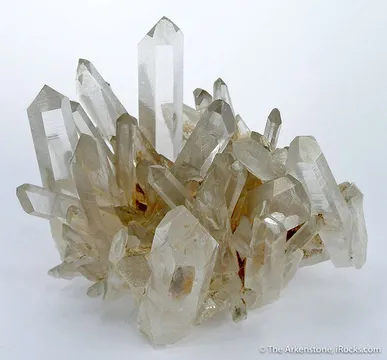
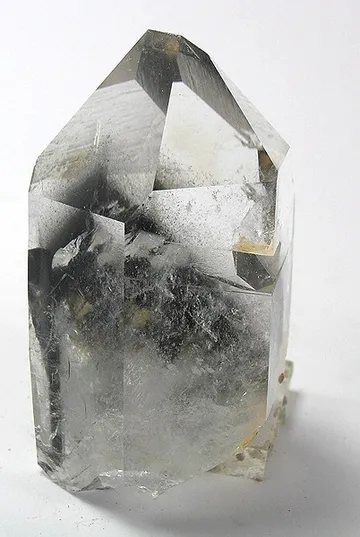
For specimen collectors, Hot Springs is above all a quartz name. The best pieces are not merely loose points by the pound, but lustrous plates and sculptural clusters of transparent to milky rock crystal, often with clear terminations rising from a whiter base. Fine examples show the classic Arkansas virtues: bright glassy luster, sharply bounded hexagonal prisms, water-clear tips, complex stepped side faces, and three-dimensional cluster architecture. Some specimens carry the warm iron-clay staining that collectors either cherish as locality character or remove by cleaning; others are nearly colorless, with only phantom-like veils, healed fractures, or internal wisps breaking the clarity.
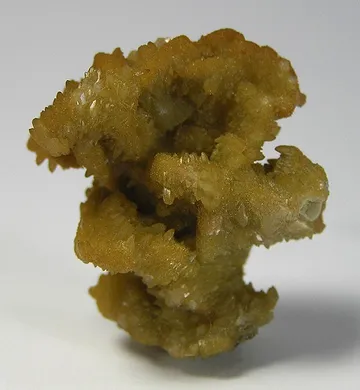
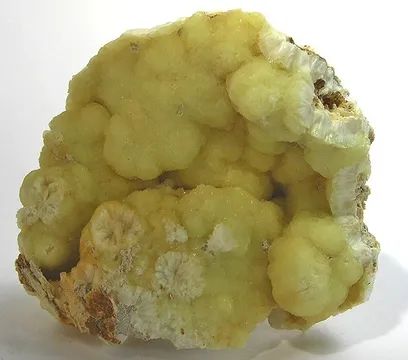
Hot Springs also belongs to the Arkansas aluminum-phosphate story. Wavellite, variscite, planerite, crandallite, and gorceixite occur in the region, especially in Bigfork Chert and related siliceous rocks. The famous green to yellow-green wavellite spherules of Garland County are part of a larger Ouachita suite that has long supplied collectors with radiating “cat’s-eye” rosettes, hemispheres, and crusts. At the Hot Springs Water Works occurrence, now effectively obliterated, wavellite was recorded as white to yellow smooth spheres on quartz matrix with planerite. That phosphate suite gives the Hot Springs label a second personality: not only colorless quartz clusters, but also small, dense, strongly locality-specific phosphate specimens that appeal to systematic collectors.
The thermal springs themselves add historical and geological context rather than collectible mineral production. Hot Springs National Park is a protected hydrothermal system where deeply circulated rainwater rises along fractures and deposits tufa, a calcium-carbonate spring deposit, near spring outlets. That system illustrates the same structural theme that dominates the mineral specimens: folded and fractured Ouachita rocks provide pathways, cavities, and permeability. For collectors, however, the legal and productive collecting ground lies outside the protected park and on fee mines, private leases, old prospects, or historic localities with permission.
Regional View
Country View

Photo: Wikimedia Commons

Photo: Wikimedia Commons
The important collector’s distinction is that “Hot Springs” on an old label may mean the city locality, the Hot Springs Water Works phosphate occurrence, the Graves or Floyd Graves quartz mine north-northwest of town, a nearby Garland County quartz mine in the Jessieville–Blue Springs district, or simply the commercial origin from which a specimen entered the mineral trade. That ambiguity is part of the locality’s charm and part of its risk. A first-rate Hot Springs specimen should be judged not only by the sparkle of its quartz or the color of its wavellite, but by the precision and credibility of its label.
Search for specimens: View all specimens from Hot Springs, USA
Hot Springs lies on the eastern part of the Ouachita Mountains quartz province, a folded and faulted belt of Paleozoic sedimentary rocks in central Arkansas. The quartz-crystal deposits are hydrothermal cavity fillings in fractures, veins, sheeted zones, and stockworks. The most important regional host rocks for collectible quartz include Ordovician sandstones and cherts of the Ouachita section, while Hot Springs National Park and its vicinity expose Bigfork Chert, Polk Creek Shale, Missouri Mountain Shale, Arkansas Novaculite, Stanley Shale, and the Hot Springs Sandstone Member. The same brittle, fractured rocks that conduct the park’s thermal waters also help explain why the region is so strongly jointed, veined, and mineralized.
The quartz deposits formed late in the Ouachita mountain-building cycle, when silica-bearing fluids moved through fractures under relatively low-temperature, low-pressure conditions. In the broader western Arkansas belt, quartz makes up the great majority of the cavity fillings, with associated minerals including calcite, adularia, dickite, chloritic material, and carbonaceous inclusions. At Hot Springs specifically, the Graves, or Floyd Graves, Mine was recorded about five miles north-northwest of the city, with quartz veins in Bigfork Chert and calcite occurring in those veins. The locality is modest in species count but significant because it anchors the “Hot Springs” quartz label to a documented mine rather than only to the town’s mineral trade.
The aluminum-phosphate occurrences belong to a different but related collecting environment: weathered, fractured, and locally brecciated siliceous rocks, especially Bigfork Chert, in which phosphate minerals formed as fracture fillings, crusts, spherules, and replacements. Wavellite and variscite are known from the Avant area, the Hot Springs Water Works, and other Garland County occurrences, with planerite and crandallite-group minerals also recorded. At the Hot Springs Water Works occurrence north of Hot Springs, the phosphate suite is especially important for labels: wavellite was described as white to yellow smooth spheres on quartz matrix with planerite, and the site was reported as last worked in 1972 and later obliterated.
Mining in the Hot Springs area is inseparable from Arkansas’s long quartz history. Clear quartz from the Ouachita Mountains became nationally important during World War II, when untwinned, transparent material was needed for oscillator and optical uses. USGS work in the 1940s examined quartz prospects across the United States and found western Arkansas to be one of the few regions of real wartime promise. After the technical demand declined, the same deposits became a cornerstone of Arkansas’s specimen, tourist, lapidary, and metaphysical crystal trade. The state formally made quartz crystal its official mineral in 1967, and commercial and fee-collecting mines near Hot Springs, Jessieville, Blue Springs, and Mount Ida have kept Arkansas quartz continuously visible to collectors.
Current access is mixed. Hot Springs National Park is not a collecting locality; tufa, spring deposits, and bedrock there are protected. Serious collectors should use established fee mines or obtain explicit permission for private land, leased claims, old prospects, and roadcuts. Ron Coleman Mining at Jessieville, north of Hot Springs, remains a public fee-digging operation and is one of the best-known visitor-accessible quartz mines in the Hot Springs orbit. Jim Coleman Crystal Mines, also in the Jessieville area, has likewise been part of the public quartz-mining tradition. These operations are not identical to every old “Hot Springs” label, but they explain why the city remains the commercial gateway for Arkansas quartz.
The notable finds are best understood in pocket terms. Good Hot Springs-label quartz came from clay-filled pockets and open seams where crystals could grow freely against cavity walls. Ordinary material consists of broken points, iron-stained small crystals, partial clusters, and milky vein quartz. Better specimens have undamaged terminations, bright luster, balanced three-dimensional plates, transparent tips, and an aesthetic transition from milky base to glassy crystal faces. Exceptional pieces show unusual architecture: doubly terminated crystals perched on larger crystals, stepped side faces, radiating sprays, and large plates where many points retain their terminations rather than forming a bruised bed of broken prisms.
Quartz from Hot Springs is classic Arkansas rock crystal: transparent to milky, lustrous, generally colorless, and most desirable as undamaged plates or clusters rather than loose points. The finest specimens show sharp hexagonal prisms, glassy terminations, clear tips over milky roots, and enough open space between crystals to create depth. Hot Springs-label pieces range from small hand specimens to large cabinet plates; documented examples include plates over 25 cm across and smaller sculptural pieces in which unusual growth features, stepped side faces, or a complete doubly terminated crystal give the specimen far more character than ordinary Arkansas mine-run quartz. Associations at the locality level include calcite in Bigfork Chert veins at the Graves Mine and, in the phosphate occurrences, wavellite and planerite on or near quartz matrix. The best collector pieces are clean enough to show the bright Arkansas luster but not so overcleaned that they lose the subtle iron-clay patina and pocket texture that make old Hot Springs specimens recognizable.
Other documented minerals from Hot Springs and its immediate mineral-locality circle include milky quartz, opal, calcite, crandallite, gorceixite, variscite, wavellite, and planerite. Wavellite is the most collectible of these after quartz, especially where it forms discrete radiating balls or hemispheres rather than flat, dull crusts. Variscite occurs as green coatings and fracture fillings in the Garland County phosphate suite, while planerite is important at Hot Springs Water Works and in related Ouachita phosphate occurrences. Crandallite and gorceixite are chiefly of systematic interest, and cacoxenite specimens attributed to Hot Springs are known as small but desirable reference pieces with microcrystals and yellow-brown phosphate coloration. Fluorwavellite, formally described in 2017, is tied to Arkansas wavellite localities including Dug Hill near Avant in Garland County; it is not a simple replacement for every old “wavellite” label, but it has made analytical confirmation more important for advanced collectors working with Garland County phosphate specimens.
The chief authenticity issue is locality precision. “Hot Springs, Arkansas” is a historically common trade label, but it can conceal several different realities: a specimen collected at a mine near the city, a specimen sold through Hot Springs, a quartz from Jessieville or Blue Springs, a Mount Ida-area cluster, a Garland County phosphate, or even a specimen from Hot Spring County, which is a different county from Hot Springs city in Garland County. Old labels should be read carefully. “Hot Springs Water Works” points to a specific phosphate occurrence; “Graves Mine” or “Floyd Graves Mine” points to a quartz-vein occurrence north-northwest of town; “Coleman,” “Ron Coleman,” “Jim Coleman,” “Jessieville,” and “Blue Springs” should not be casually collapsed into “Hot Springs” unless the label history supports it.
Quartz condition is everything. Arkansas quartz is common enough that ordinary damaged points are inexpensive, but undamaged old-cabinet clusters with good architecture are a different market. Check terminations under a loupe: bruised tips, rehealed but unattractive breaks, and contacts along the edges of plates are common. Clay pocket material is frequently acid-cleaned; careful cleaning is normal, but harsh cleaning can leave quartz unnaturally stark, with etched-looking surfaces, loosened pocket dirt in crevices, or exposed glue repairs. Large plates deserve inspection for repaired points and joined bases. A well-repaired Arkansas quartz cluster may still be attractive, but it should be priced and disclosed accordingly.
Be especially cautious with smoky quartz. Arkansas naturally produces smoky material, including in Garland County and near Magnet Cove, but much dark “smoky” quartz in the Arkansas trade has been produced by irradiation of otherwise colorless quartz. Very dark, nearly black clusters marketed as smoky quartz should not be assumed natural without provenance or disclosure. Similarly, the trade name “Hot Springs diamond” refers to faceted rock crystal, not diamond, and should never be confused with Arkansas’s actual diamond locality at Murfreesboro.
Wavellite and related phosphates have different condition problems. Fine wavellite balls are easily flattened, chipped, or abraded on the high points; pale spheres on quartz matrix can be underwhelming unless they are discrete, lustrous, and well isolated. Green Arkansas wavellite is famous, but color alone is not enough: the best pieces show separated hemispheres or rosettes on contrasting matrix, visible radial structure, and minimal bruising. Old Hot Springs Water Works specimens are far scarcer than generic Arkansas wavellite, and labels from that obliterated locality deserve preservation. Because fluorwavellite has complicated the wavellite story in Garland County, high-end or research-grade phosphate specimens may justify analytical confirmation, especially if the locality is Dug Hill or Avant rather than Hot Springs Water Works.
Fluorescence is not the main reason to collect Hot Springs specimens. Quartz may show weak or variable responses depending on impurities and inclusions, but collectors should not buy Hot Springs quartz on fluorescence claims unless they have seen the specimen under known shortwave and longwave conditions. The more meaningful handling concern is mechanical: quartz points chip against one another, and phosphate spherules scuff easily. Store quartz clusters so no point bears weight against foam or a box lid, and keep wavellite and planerite specimens away from repeated handling, ultrasonic cleaning, and aggressive chemical treatment.
Market availability remains good for Arkansas quartz in general, but properly labelled old Hot Springs pieces are much less common than Arkansas quartz broadly. Small clear points and mine-run clusters remain abundant from active fee mines; old cabinet plates with persuasive Hot Springs provenance are scarcer. Hot Springs-label wavellite and phosphate pieces are intermittent, often old-stock, and frequently less precisely labelled than collectors would like. In today’s market, the premium belongs to exact labels, undamaged aesthetics, and specimens whose style matches the stated sublocality.
The most vivid Hot Springs mineral story begins not with a pocket of quartz but with color. In 1937, Waldemar T. Schaller collected wavellite from Dug Hill with Hugh D. Miser and C. S. Ross. Dug Hill, about nineteen miles northwest of Hot Springs and roughly one and a half miles north of Avant, was already known for wavellite spherules in a range of greens, blues, yellows, and grays. The name of the hill itself had a practical origin: Miser explained that the ridge was called Dug Hill because a road had been dug through it to make north-south passage across the country. That small roadcut fact is exactly the kind of detail that matters in Arkansas phosphate collecting; a locality could be a ridge, a ditch, a quarry face, a lease, or a roadbank, and a few yards of exposure could decide whether a collector found dull crusts or brilliant radial eyes.
Schaller’s question was simple and good: why were the colors so varied? Earlier work on green variscite and metavariscite from Utah suggested that trace elements might be responsible, and Schaller suspected that vanadium could be involved in Arkansas wavellite as well. Preliminary tests by J. M. Axelrod showed vanadium in every tested sample, in places up to one percent or more calculated as vanadium oxide. Optical examination added another clue: many specimens showed unusually strong pleochroism in yellow, pink, and blue, unlike the nonpleochroic green Utah variscite used for comparison. Later analysis showed a good correlation between color and the valence states of vanadium. In collector terms, the handsome green and blue-green balls were not just pretty curiosities from the Ouachitas; they were chemical records of vanadium in different oxidation states, locked into radiating phosphate fibers.
Another Arkansas story runs through wartime quartz. In the fall of 1942, the U.S. Geological Survey began extensive investigations of domestic quartz-crystal deposits because radio equipment, optical devices, and precision instruments needed clear, suitable quartz. The work continued through 1943 and carried geologists into about twenty states, where more than 1,400 deposits or reported deposits were examined. Only a few regions proved promising enough for detailed work, and western Arkansas was one of them. In 1943, production from the promising areas totaled slightly less than four tons of oscillator quartz, and more than eighty-five percent came from Arkansas. Collectors looking today at a bright Hot Springs or Garland County cluster are seeing the same material that once stood at the intersection of geology, electronics, and wartime urgency.
The modern Hot Springs experience is gentler but still physical: red clay, broken points, sunlit quartz faces in the dirt, and the endless judgment call between a common cluster and one worth keeping. Fee mines north of Hot Springs have turned that work into a public ritual. Visitors dig in tailings from commercial operations, wash clay from crystals, and learn quickly that Arkansas quartz is abundant but unforgiving. A pocket can yield a bucket of chipped points or, with luck, a balanced cluster whose terminations survive the shovel, the screen, the ride home, and the cleaning bucket. That is why seasoned collectors look slowly. The difference between tourist quartz and a cabinet specimen is not the species; it is luster, architecture, preservation, and the little surprises that only an open pocket can make.
The Hot Springs Water Works phosphate story has a more melancholy ending. The occurrence was reported north of Hot Springs and was known for quartz matrix carrying white to yellow smooth wavellite spheres with planerite. By later accounts it had last been worked in 1972 and was subsequently obliterated. For collectors, that word carries weight. It means that old labels are not replaceable, that modest specimens can become important by provenance, and that a pale wavellite once dismissed beside brighter Avant or Mauldin Mountain material may, if labelled Hot Springs Water Works, represent a locality that cannot simply be revisited with a pick and a free afternoon.