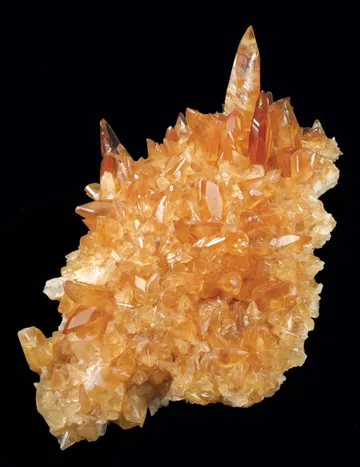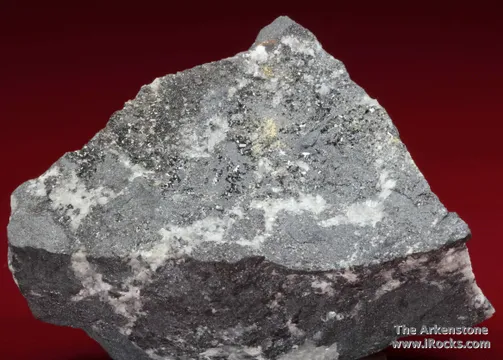
Håkansbo Mines, Sweden — classic Bergslagen locality known for cobaltite and glaucodot crystals in sulphide ore, with historical merit and collector appeal.
Key facts
Håkansbo, as the name appears on many collector labels, is the classic Håkansboda copper-cobalt occurrence near Stråssa in the Bergslagen mining district of central Sweden. It is one of those deceptively modest old European mines whose reputation rests not on large-scale production, but on a remarkably distinctive suite of cobalt-bearing sulpharsenides. The locality is best known for cobaltite and glaucodot: metallic, silver-white to steel-grey crystals set in dense sulphide ore of pyrrhotite, chalcopyrite, arsenopyrite, pyrite and related minerals. Good Håkansbo pieces have the unmistakable look of old Bergslagen ore—heavy, dark, brassy and iron-stained—but the finest specimens rise above “ore specimen” status through sharply formed, lustrous single crystals with crisp modified cubic or dipyramidal geometry.
Geologically, the mine belongs to the complex Precambrian metallogenic story of Bergslagen. The Håkansboda mineralization is hosted in dolomitic and calcitic marble with calc-silicate rocks and metasomatically altered felsic volcanic or “quartzitic” rocks, within the folded Guldsmedshyttan syncline. Modern descriptions treat it as a stratabound polymetallic Cu-Co-Ag-Au sulphide system in Håkansboda marble, with richer chalcopyrite-pyrrhotite ore shoots enclosed by broader disseminated mineralization. For collectors, that geology matters because it produced a paragenesis in which glaucodot, cobaltite and cobalt-bearing arsenopyrite are not mere analytical curiosities, but visible, collectible minerals.
Regional View
Country View
The historical importance of Håkansbo lies in its long mining record and its unusually fine cobalt minerals. Mining is recorded from the early modern period and perhaps earlier, with the main productive era running from the early eighteenth century into the 1870s and minor work again around World War I. Production was never immense by Bergslagen standards, but the mine became a mineralogical name because it yielded some of the best European glaucodot crystals and classic cobaltite crystals that still circulate with old labels.

Photo: Wikimedia Commons

Photo: Wikimedia Commons
Search for specimens: View all specimens from Håkansbo Mines, Sweden
In mineral-collecting usage, Håkansbo most often refers to the historic Håkansboda copper-cobalt mines near Stråssa, south-southwest of Stråssa and east of Storå in Lindesberg municipality, Örebro County. Older labels and older literature may use Håkansbo, Hakansbo, Hakansbö, Håkansboda, or Västmanland for the same classic cobalt locality. This label tradition is important because there is also an unrelated Håkansbo Mines locality in Östhammar, Uppsala County, consisting of small iron mines; that occurrence is not the source of the well-known cobaltite and glaucodot classics.
The deposit is a stratabound polymetallic Cu-Co system in the western Bergslagen ore province. The mineralization is hosted mainly in Håkansboda marble—dolomitic and calcitic carbonate rocks with calc-silicate layers—and in associated metasomatically altered felsic volcanic rocks that older Swedish descriptions call leptite altered to quartzite. Modern geological work places the deposit in the Guldsmedshyttan syncline, a regionally folded sequence of metasedimentary and felsic metavolcanic rocks affected by Svecofennian deformation and metamorphism. The ore zone follows the marble and calc-silicate stratigraphy, trending broadly north-south and dipping steeply eastward in historical descriptions.
The ore is not a simple vein. Disseminated sulphides occur irregularly through the carbonate horizon, while richer ore shoots form lenses and pipe-like to streaky bodies dominated by chalcopyrite and pyrrhotite, with arsenopyrite, pyrite, cobaltite, glaucodot, molybdenite and tennantite-tetrahedrite. Later or superimposed Pb-As-Sb-Cu-Bi-Ag-Au mineralization has also been described, including galena, native bismuth, electrum and gold-bearing phases in schlieren or breccia-like zones. For specimen purposes, the important point is that the cobalt minerals grew in and around massive sulphide, not in spacious quartz-lined cavities; consequently many Håkansbo specimens are heavy sulphide matrix pieces, loose single crystals, or crystals partly embedded in pyrrhotite-chalcopyrite ore.
The mine field comprised a north-south series of workings, generally listed from south to north as Sörgruvan, Varpgruvan, Märrgruvan, Ceciliagruvan, Kommersgruvan, Smedjegruvan, Logruvan and Norrgruvan. Kommersgruvan, the “Commerce mine,” was the largest and most important of the group. Modern Swedish geological database entries also preserve individual workings such as Norrgruvan, Smedgruvan, Commercegruvan, Märrgruvan, Varpgruvan and Sörgruvans schakt, all tied to the Håkansboda copper field and its sulphide-precious-metal assemblage.
Mining history is long and uneven. Early work is traditionally associated with the reign of King Karl Knutsson in the fifteenth century, while Gustav Vasa is recorded as having tried the mines around 1540 and again in 1551. The main historical mining period began in 1702 and ended in 1873, with smaller-scale work during World War I. Tegengren’s early twentieth-century compilation gives total copper production from 1613 to 1905 as about 2,100 tonnes, and cobalt production from 1836 to 1841 as 7.1 tonnes. The mine is now abandoned and flooded; historical descriptions of the modern site mention water-filled open pits, dumps, and a later headframe over a 75 m shaft in wooded ground near Stråssa.
Exploration has continued to return to the district because the old cobalt-copper system is not fully exhausted geologically. In the 1980s the LKAB-BP joint venture examined the Håkansboda project and documented a mineralized zone traced at outcrop, in old workings and drill holes for at least 850 m of strike length and to a depth of about 600 m, with disseminated mineralization up to roughly 50 m wide and richer 4–8 m ore shoots. More recently, Lovisagruvan AB has reported drilling in the historical Håkansboda field and has investigated the surrounding area as a copper-cobalt-gold-silver target, including renewed attention to the old waste heaps for critical raw materials.
For collectors today, the site should be regarded as a historic and exploration-sensitive mine field rather than an open collecting ground. The best specimens on the market are overwhelmingly old material, often with European dealer or museum provenance. Fresh field collecting, where legally possible at all, would be dump collecting only and must be approached with permission, caution around old workings, and awareness that the remaining dumps are of geological and potential resource interest. Fine pieces are not casual finds; the locality’s collector-grade stock comes from historical mining and from specimens preserved in collections over many decades.
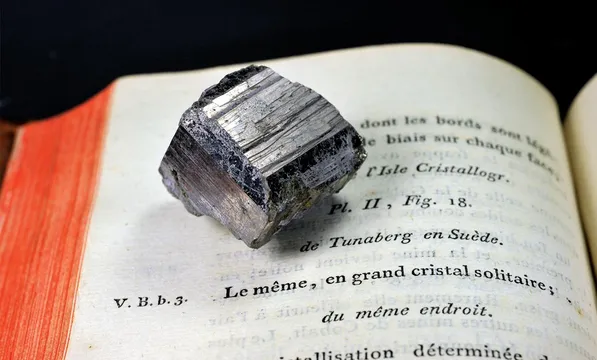
Håkansbo cobaltite is the locality’s signature mineral: bright silver-white to steel-grey CoAsS crystals, commonly modified cubes, pyritohedral-looking forms or complex single crystals, either loose or perched in massive pyrrhotite-chalcopyrite sulphide matrix. Documented specimen descriptions give attractive crystals around 9–11 mm on small cabinet pieces, while older literature and museum references record much larger crystals, including a celebrated 8 x 8 cm single crystal in the Swedish Museum of Natural History in Stockholm. The best examples show sharp edges, high metallic luster, complete form, and minimal bruising; ordinary pieces tend to be granular cobaltite in dark ore or partly embedded crystals whose form is interrupted by sulphide matrix. Associations with pyrrhotite and chalcopyrite are especially typical, with arsenopyrite, pyrite and glaucodot also appearing in the cobalt-rich assemblage.
Håkansbo glaucodot is prized because this is one of the few localities that produced sizable, well-formed crystals of a mineral more often encountered as massive or granular material. The crystals are opaque metallic grey to tin-white, commonly striated, and Håkansboda is especially noted for large twinned and untwinned dipyramidal crystals associated with chalcopyrite and pyrrhotite; a well-known specimen photographed from the locality measures 3.3 x 2.7 x 2.6 cm and weighs 40 grams. In ore microscopy, glaucodot is treated as an earlier high-temperature Fe-Co-As-S phase that may be partly overprinted by later cobaltite and chalcopyrite during cooling and recrystallization. Superior collector pieces are those where the crystal is three-dimensional, lustrous, and visually separable from the surrounding sulphides; lesser specimens may still be scientifically interesting, but lack the crystal definition that makes Håkansbo glaucodot exceptional.
Beyond cobaltite and glaucodot, the Håkansbo assemblage includes chalcopyrite, pyrrhotite, arsenopyrite, pyrite, sphalerite, galena, molybdenite, magnetite, tennantite-tetrahedrite, native bismuth, gold or electrum-bearing phases, and cobalt- or nickel-bearing rarities such as willyamite reported from Sweden at Håkansboda. The gangue and host-rock suite includes dolomite, calcite, diopside, amphiboles, anthophyllite, chondrodite, clinohumite, humite, olivine, serpentine and fluorite. No major type-mineral status attaches to Håkansbo in the way collectors know Långban or Bastnäs, but its cobalt-sulpharsenide paragenesis makes it one of Sweden’s essential old cobalt localities.
The principal authenticity issue is not artificial treatment but locality precision. Labels reading Håkansbo, Hakansbo, Hakansbö, Håkansboda, Västmanland, Örebro, Lindesberg, Stråssa or simply “Sweden” may all occur on classic cobaltite and glaucodot specimens from the Håkansboda field, while the separate Håkansbo iron mines in Uppsala County have no standing as a source for these cobalt classics. A specimen offered as Håkansbo cobaltite or glaucodot should fit the known habit and matrix: metallic cobaltite or glaucodot in a heavy sulphide association dominated by pyrrhotite and chalcopyrite, commonly with arsenopyrite or pyrite, rather than in light quartz cavity matrix or unrelated skarn.
Mislabelling against nearby Bergslagen cobalt localities is also possible. Riddarhyttan, Tunaberg and Håkansboda all produced classic cobalt minerals, and old labels can be vague or erroneous. Håkansbo cobaltite commonly has a massive sulphide matrix and modified cubic to pyritohedral crystal habit; Tunaberg material can be comparably brilliant, but is a different classic locality and should not be blended into Håkansbo without strong provenance. A specimen with an antique label is valuable, but the label should be read critically, especially where old regional names or obsolete county references are used.
Condition matters greatly. Cobaltite and glaucodot are brittle, and the value difference between a crisp crystal and one with worn edges is large. Check modified cube corners, dipyramidal ridges, and the exposed high points of matrix specimens under magnification. Pyrrhotite-rich matrix may weather or develop rusty alteration, and some Håkansbo matrix pieces show iron staining or minor goethitic crusts; that is normal for old sulphide ore but should not obscure the main crystal. Avoid aggressive cleaning: acids and harsh mechanical work can damage sulphides, dull metallic faces, and destabilize matrix.
Fluorescence is not a selling point here. These are opaque sulphide and sulpharsenide specimens, collected for metallic luster, crystallography and locality pedigree. Because the ore contains arsenic- and cobalt-bearing minerals, sensible handling is warranted: do not cut, grind or ultrasonically clean without proper controls, wash hands after handling friable material, and store powdery or weathering specimens away from children, pets and food-preparation areas.
Market availability is narrow but persistent. Håkansbo cobaltite appears more often than glaucodot, usually as thumbnails to small miniatures, old matrix pieces, or single crystals with historic labels. Large, sharp, damage-free cobaltite crystals are scarce and command serious classic-locality prices. Fine glaucodot is rarer still: a three-dimensional crystal with good luster, crystal faces visible on multiple sides and minimal edge damage is a specialist specimen, not routine inventory. The best purchases are pieces with old collection history, clear photographs of all exposed faces, and an honest description of contacts and matrix.
The first story at Håkansbo is a king’s story, though the ground keeps most of the details to itself. Swedish mining tradition records copper being worked there during the reign of King Karl Knutsson in the fifteenth century. The site was not yet the tidy mineral locality of modern labels; it was a sulphide showing in marble and calc-silicate rock in a forested Bergslagen landscape, part of the long Swedish search for usable metal. What survives is not a pocket description or a miner’s diary, but the remarkable persistence of the place-name: centuries later, collectors still turn over silver-white cobaltite crystals from the same little field.
Gustav Vasa tried the mines twice, around 1540 and again in 1551, and failed to make them pay. That detail gives Håkansbo a different flavor from the triumphal histories often attached to famous mines. The ore was real, but difficult; the ground was rich enough to invite royal attention and stubborn enough to defeat it. The mine’s later fame among collectors rests partly on that contradiction. The cobaltite crystals that now sit in trays and cabinets are the beautiful leftovers of a deposit that was never an easy industrial prize.
The practical Håkansbo of the eighteenth and nineteenth centuries was a line of named workings: Sörgruvan, Varpgruvan, Märrgruvan, Ceciliagruvan, Kommersgruvan, Smedjegruvan, Logruvan and Norrgruvan. Kommersgruvan became the largest, the central name in the field. From 1702 to 1873 the mines were worked in the main productive period, and the numbers later compiled by Tegengren are modest but memorable: about 2,100 tonnes of copper from 1613 to 1905, and only 7.1 tonnes of cobalt from 1836 to 1841. That small cobalt figure helps explain why old Håkansbo cobaltite and glaucodot specimens feel so precious in collections; the locality’s mineralogical reputation far exceeds its cobalt output.
A later description of the abandoned site is almost cinematic: water-filled open pits, waste dumps, and a more recent headframe over a 75 m shaft, all in wooded ground about 1 km southwest of Stråssa village. By then the mine had passed from production into geology, collecting and exploration. The old workings were flooded, but the ore body had not become geologically silent. Drill core, polished sections and microprobe work began to reveal the sequence hidden inside the heavy sulphide: earlier glaucodot and danaite-like Fe-Co-As-S phases, later well-formed arsenopyrite and cobaltite, pyrrhotite in more than one structural form, and a younger precious-metal association carrying lead, antimony, bismuth, silver and gold.
Modern exploration added another chapter. In the 1980s the LKAB-BP joint venture traced the Håkansboda mineralized zone for at least 850 m along strike and down to about 600 m, noting broad disseminated mineralization with richer ore shoots only a few metres wide. A practical problem appeared in the engineering notes: if the Blanka tunnel were plugged in the wrong way, Håkansboda could flood; one proposal considered a 30–33 m level extension and a 127 m raise to maintain access through the Håkansboda shaft, with a preliminary cost of about 800,000 Swedish kronor. The language is not romantic, but it is vivid—the old mine reduced to metres of drivage, a raise, a plug, and the question of whether water would reclaim the workings.
The most recent story is written in drill-hole numbers. Lovisagruvan’s 2023 campaign drilled three holes totaling 1,322 m in the historic field. One hole cut 2.00 m at 1.27% copper and 0.24% cobalt from 73.5 m depth. Another intercepted 5.00 m at 2.93% copper from 412.75 m, including narrower intervals near 4% copper with silver values reported up to 43 g/t. A third hole cut 0.35 m at 6.08% copper from a deeper interval. Those are not specimen pockets, but they are a reminder that the old cobaltite and glaucodot specimens came from a system still capable of producing hard geological surprises.