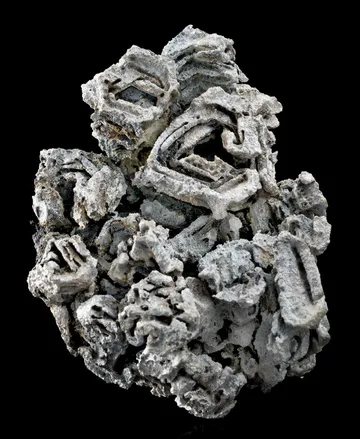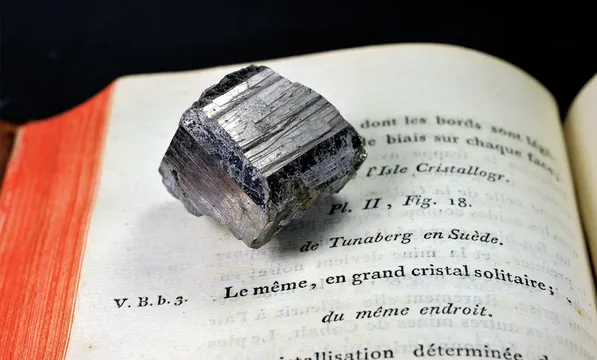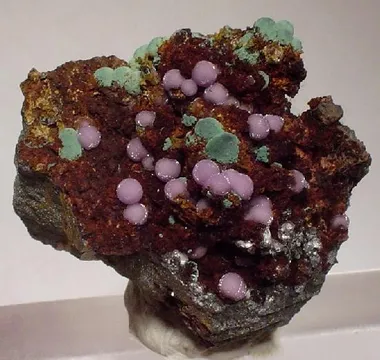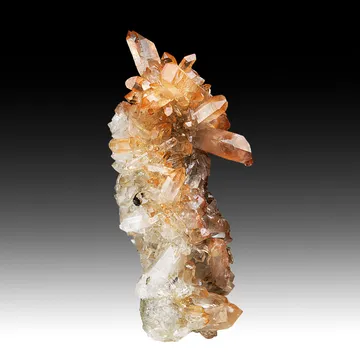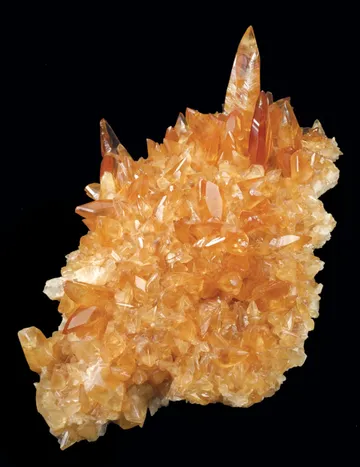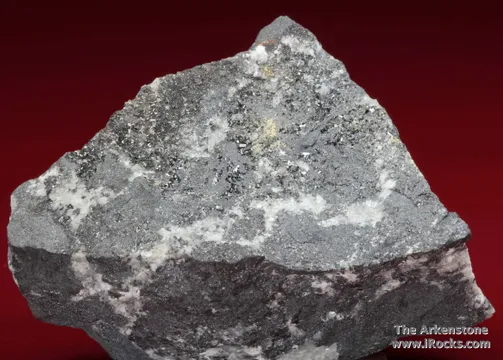
Värmland County, Sweden — home to Långban-type assemblage (pyrosmalite-(Fe), hedenbergite, hausmannite, calcite) and dense, rare mineral deposits prized by col…
Key facts
For mineral collectors, “Värmland County” most often means the classic iron–manganese skarn and carbonate-hosted deposits around Filipstad: Långban, Nordmark, Jakobsberg, Pajsberg, Harstigen, Persberg, and their neighboring ore fields. This is the western edge of the Bergslagen mineral province, where Proterozoic carbonate rocks, metavolcanics, iron and manganese oxides, and later hydrothermal fluids produced one of the densest concentrations of rare mineral species on Earth. The locality name on an old label may read Värmland, Wermland, Nordmarken, Langban, Långbanshyttan, Pajsberg, or Filipstad; behind those spellings is a compact mining landscape that has supplied museums and systematic collectors for more than two centuries.
The county’s great mineralogical drama is the Långban-type assemblage: hematite, magnetite, braunite, hausmannite, dolomite, calcite, baryte, diopside-hedenbergite skarn, and an extraordinary suite of Pb-, Mn-, As-, Sb-, Ba-, Be-, B-, W-, and V-bearing minerals. Långban itself is the anchor locality, famous for a type-mineral list so long that new names still appear in the literature. Nordmark, a few kilometers away, is equally important for collectors because it produced world-class pyrosmalite-(Fe) crystals from the Bjelke mine and the dark, lustrous hedenbergite crystals that made “Nordmark” a classic pyroxene label.
The best Värmland specimens have a look unlike anything from ordinary skarns. Pyrosmalite-(Fe) from Nordmark appears as sharp, olive to brownish-green hexagonal crystals, sometimes broad and tabular, with a slightly resinous to glassy luster that rewards side lighting. Hedenbergite can look nearly black until a broken edge or strong illumination reveals deep bottle-green translucency. Långban specimens are often more mineralogical than decorative: dense black hausmannite or hematite, pink to white calcite and dolomite, granular or prismatic pyroxene, and tiny but scientifically weighty arsenates, arsenites, oxyborates, and lead oxysalts in cavities and seams.
Regional View
Country View

Photo: Wikimedia Commons

Photo: Wikimedia Commons
Search for specimens: View all specimens from Värmland County, Sweden
The collector’s Värmland is centered on carbonate-hosted Fe-Mn deposits of the Långban type in the Filipstad district. At Långban, the ore field lies between Hyttsjön and Långbanssjön, north of Filipstad, where iron ore, manganese ore, and dolomitic marble were mined. The iron ore was chiefly hematite with magnetite in places; the manganese ore was dominated by braunite and hausmannite. In the richer manganese bodies, braunite commonly occupied the central part of an ore stock, with hausmannite forming an outer shell, while skarn and carbonate gangue provided the reactive host for later mineral growth.
Geologically, these deposits belong to the ancient Bergslagen province of south-central Sweden. Modern descriptions treat the Långban-type ores as carbonate-hosted, syngenetic Fe-Mn deposits enriched in a remarkable suite of minor elements: Ba, As, Pb, Sb, W, Be, B, and others. The original ore-forming system was later metamorphosed and repeatedly overprinted by fluids, opening fissures and cavities in skarn, carbonate, and oxide ore. That overprint is crucial for collectors, because many of the rarities are not coarse ore minerals but late-stage species formed in small vugs, leached carbonate, breccias, and fissure assemblages.
Långban’s mining history reaches deep into Swedish industrial history. A furnace was operating there around 1550 to extract iron from the ore, but the long continuous period of mining began in 1711 and lasted until 1972. The district passed from bergsman ownership and small mining partnerships into more organized industrial control; Gruveaktiebolaget Långban was formed in the 1880s, and Uddeholms AB later became the controlling operator. In the 1870s and 1880s, manganese became the most valuable product, helped by improved sorting and concentration methods. By the second half of the 1950s, iron and manganese mining had ceased because the workable ore was exhausted; dolomite extraction continued until the mine finally closed in mid-1972.
Nordmark, just to the north and northeast of Filipstad, is a parallel classic. Its mines and ore fields produced skarn and fissure minerals rather than just ore, and the Bjelke mine in the Nordmark Odal Field is the type locality for pyrosmalite-(Fe). Nordmark labels are especially prized when they carry good pyrosmalite or hedenbergite rather than merely massive skarn. Jakobsberg, Harstigen, Pajsberg, and other nearby deposits extend the same collector landscape: iron-manganese skarns, calcite and dolomite, hausmannite, magnetite, and the rare arsenates, antimonates, borates, and lead minerals that made the Filipstad district a systematic collector’s pilgrimage.
Collecting today is most realistic at Långbans Gruvby, the preserved mining village operated as a museum site. During the visitor season, the museum offers guided tours, exhibitions, and a Mineral LAB program in which visitors can borrow a sledgehammer, safety glasses, and gloves to search the old heaps near the lake and then examine their finds. This is not an invitation to enter workings or disturb protected industrial structures; the mines are water-filled, many areas are heritage features, and current rules should be checked with the museum before collecting. Serious field collectors should treat Långban as a managed cultural and mineralogical site, not as an abandoned free-for-all.
The most important specimen-producing “pockets” in the broad sense were not Alpine-style crystal pockets but skarn cavities, fissures, dumps, sorting tables, and mine waste accumulated during different periods of ore extraction. At Långban, old dumps have continued to yield study material and even new species long after mining stopped. At Nordmark, large pyrosmalite-(Fe) crystals from the Bjelke mine were collected more than a century ago and remain the benchmark for the species. Hedenbergite from Nordmark is valued for sharp, lustrous, dark green to nearly black monoclinic prisms, while Långban hedenbergite is more often encountered as massive to banded green pyroxene in calcite-rich skarn.
Värmland pyrosmalite means, above all, pyrosmalite-(Fe) from the Bjelke mine at Nordmark, its type locality and the source of the finest large crystals known to collectors. Good pieces show well-formed hexagonal crystals rather than massive or indistinct greenish-brown material; the better crystals are sharp-edged, lustrous, pale olive to brownish olive, and can reach miniature to cabinet scale, with documented specimens several centimeters across and notable examples around 9 cm wide. The classic Bjelke assemblage includes calcite, magnetite, titanite, apatite, hornblende, chlorite, and apophyllite-group minerals in skarn. The premium specimen is a clearly crystallized, old-label Nordmark or Bjelke piece with clean terminations, visible hexagonal form, and minimal bruising along the crystal edges; ordinary pieces are darker, granular, partly massive, or so matrix-bound that the species is more of a label mineral than a display mineral.
Hedenbergite from Värmland is strongest as a Nordmark skarn mineral, where collectors look for dark bottle-green monoclinic prisms that appear jet black in normal light but show olive-green edges under magnification or strong illumination. Well-crystallized Nordmark specimens can carry sharp, multifaced, terminated prisms around 1 cm and larger crystals are documented; old literature and collector references note handsome Nordmark crystals reaching more than decimeter scale, though most market pieces are miniatures to small cabinets. The mineral occurs in the district’s Fe-rich skarn and fissure assemblages with calcite, quartz, amphiboles, epidote, chlorite, sulfides, magnetite, titanite, and related calc-silicates. At Långban, hedenbergite is also documented, but specimens are commonly massive, layered, or banded dark green pyroxene with pale calcite rather than showy freestanding crystals. For value, form matters: sharp, lustrous, terminated Nordmark crystals with visible green translucency and a credible old label outrank black, massive skarn fragments or pieces that could easily be amphibole or another dark silicate without analysis.
Beyond pyrosmalite and hedenbergite, Värmland’s Filipstad district is a type-locality powerhouse. Långban alone has yielded dozens of type minerals, including famous names such as långbanite, berzeliite, hedyphane, swedenborgite, magnussonite, melanotekite, pinakiolite, pyroaurite, quenselite, wermlandite, langhofite, wiklundite, erssonite, gatedalite, and the recently described vargite. Nordmark adds classic type-locality minerals of its own, including pyrosmalite-(Fe), allactite, adelite, brattforsite, folvikite, manganhumite, manganostibite, hematolite, katoptrite, blatterite, and others from the Nordmark ore fields. Jakobsberg is especially significant for arsenate and apatite-supergroup minerals such as svabite and related Pb-Ca-Mn-As assemblages. Many of these rarities are microscopic, embedded, or dull-looking to the untrained eye; their value lies in locality, analysis, and paragenesis rather than sparkle.
Värmland specimens demand label discipline. Old material may be labeled Värmland, Wermland, Nordmarken, Nordmark, Langban, Långban, Långbanshyttan, Pajsberg, or Filipstad, and those words are not interchangeable. A pyrosmalite-(Fe) label reading simply “Nordmark” is plausible, but the most desirable attribution is Bjelke mine, Nordmark Odal Field. Hedenbergite labeled “Nordmark” is a recognized classic, while hedenbergite labeled “Långban” may be a legitimate but usually less showy skarn occurrence. For systematic minerals, “Värmland” alone is too vague unless accompanied by an old collection label, museum provenance, or analytical history.
I am not aware of a widely documented trade in deliberate fake Värmland specimens, but misidentification is a real issue. Dark hedenbergite can be confused with amphibole, ilvaite, or other black-green skarn silicates, and at least one trade example has been publicly noted as having arrived labeled hedenbergite but looking more like an amphibole-group mineral. Pyrosmalite-(Fe) is also vulnerable to optimistic labeling when the specimen is merely greenish skarn without obvious hexagonal habit. For high-value examples, especially old pyrosmalite crystals or rare Långban species, analysis or strong provenance is worth more than a dramatic handwritten label.
Condition standards vary by species. Nordmark pyrosmalite commonly shows edge wear, bruising, or imperfect terminations; a fully sharp, lustrous crystal is exceptional. Hedenbergite is tougher but dark, so chips and missing terminations can be hard to see until the specimen is examined under oblique light. Långban rarities are often tiny grains or crusts in carbonate or oxide matrix, and trimming can destroy the very association that makes the piece important. Do not overclean carbonate-hosted Långban specimens; acid treatment can remove calcite or dolomite that may be paragenetically important and can expose or damage delicate late-stage minerals.
Handling deserves ordinary but serious caution. Many Långban and Nordmark specimens contain lead, arsenic, antimony, or manganese-bearing minerals. They are safe as collection specimens when handled sensibly, but collectors should avoid inhaling dust, sawing or grinding without proper controls, licking, prolonged skin contact with friable material, or storing crumbs where children or pets can reach them. Wash hands after handling arsenates, lead oxysalts, or powdery alteration material. Some Jakobsberg and related specimens, especially apatite-supergroup species such as svabite and johnbaumite, may be of interest to fluorescence collectors, but fluorescence is not the main selling point of most Värmland classics.
Market availability is uneven. Massive Långban material and small systematic specimens appear regularly, but attractive display pieces are much scarcer. Fine Nordmark pyrosmalite-(Fe) is genuinely difficult, and the best pieces are usually old-collection specimens rather than new finds. Hedenbergite from Nordmark appears more often than pyrosmalite but remains a classic locality item when crystallized. The rarest Långban species may be obtainable only as micromounts, analytical fragments, or museum-quality systematic specimens, and locality precision should drive price.
In Långban, the great mineral discoveries were often rescued at the last possible moment. During the second half of the 1800s, the iron and manganese workings were still intimate places of hand labor: men drilling, blasting, sorting, and loading ore by touch and by eye. That closeness to the rock mattered. Unusual pieces that might otherwise have vanished into the furnace or the waste heaps could be set aside by a watchful worker, sold to a visiting collector, or shipped by rail to Stockholm, where the mineralogists at the national museum were ready to buy anything strange enough to warrant study. The modern collector sees a specimen in a tray; the original collector may have been a sorter at a table, noticing that one greasy green crust or pale arsenate seam did not look like the day’s ordinary ore.
One of the most vivid episodes belongs not to a famous professor but to Olof Backelin, a sorting foreman at Östra Mossgruvan in the Nordmark Odal Field. In 1883 and 1884, his finds of unknown hydrous manganese arsenate minerals helped set off what has been described as a scientific race between Anton Sjögren and Lars Johan Igelström. Sjögren, as mining engineer and later mining official, had access through managers and superintendents; Igelström, sharp-eyed and constantly traveling, worked the sorting floors and picking tables directly, buying specimens from workers and foremen when something odd emerged from the ore. In that little economy of mineral noticing, a foreman’s eye could move a mineral from an ore pile into scientific history.
Hugo Viktor Tiberg’s story is even more improbable. In November 1874 he became superintendent at Långban at only 25 years old. The mining company was skeptical of the manganese ore that had often been treated as waste, but Tiberg saw value in it. With little money, and partly at his own expense, he built a concentrating plant so the richer manganese ore could be sold to glassworks in Sweden and abroad; the manganese colored glass a handsome brown. The same restless mind later produced Sweden’s first mechanical sorting or concentration works for non-magnetic hematite ore at Långban in 1883. The skeptical board eventually reimbursed him. A mineral collector looking at Långban hausmannite or braunite today is also looking at the material that transformed the mine’s economics.
Långban’s old engineering solutions could be strikingly physical. In 1787, an inclined bridge was built down into Storgruvan so that horses could walk daily down to a horse whim more than 30 meters underground and then return to the surface. Before that, the mine had reportedly used up about one horse each year in Storgruvan. The new arrangement increased the animals’ lifespan considerably. It is a grim but memorable detail, and it makes the quiet museum landscape feel suddenly populated again: water wheels, rod systems, hoisting gear, horses, ore, and men all working around the same deepening hole.
The mine’s battle with water was just as concrete. In 1897 a fault fissure was encountered at the 150-meter level and caused years of trouble because of its heavy water flow. In 1907, while an exploratory drift was being driven at 186 meters, the miners hit a horizontal fissure after 25 meters and water inflow increased by about 50 percent. Then, in July 1910, blasting in a drift from Bjelke’s shaft at the 200-meter level made the inflow drastically worse. In only two months the water level rose 58 meters. Not until 1914, with electric power and modern centrifugal pumps, could the flooded mine finally be drained.
The most charming Långban story may be Tiberg’s carp experiment. The superintendent who modernized manganese mining also decided that carp could be raised in Värmland, much farther north than most people thought practical. In 1883 he had two ponds built near the superintendent’s residence, about 150 meters northwest of Nya schaktet. The winter pond was 75 meters long and 40 meters wide at its broadest point; the summer pond was 60 meters long and 30 meters wide. Because the ponds lay above Hyttsjön’s water level, water had to be pumped into them by a mining water-power arrangement. In spring 1884, the first 200 carp fry arrived from Skåne in a water-filled wooden barrel. They weighed about 30 grams each and cost 10 öre apiece, freight extra. By July 1887 they averaged 935 grams. In the warm spring of 1889, Tiberg saw them spawn for the first time; that summer about 1,500 young carp were counted, and roughly half were captured and distributed to other waters. By 1912 he could look at Hyttsjön and say that whole shoals of large carp could sometimes be seen standing in the shallows, sunning themselves.
The most modern chapter proves that Långban is not finished. Vargite, a copper-bearing manganese arsenate formally published in recent literature, was named for Erik Gustaf Varg, a miner and ore picker who lived from 1886 to 1970. Varg collected the type specimen, and over the years he sold about 3,000 Långban specimens to the Swedish Museum of Natural History. That number is astonishing: not a single lucky find, but a lifetime of noticing. The mineral itself forms bright green, half-spherical aggregates only up to about 0.5 mm across, made of thin lath-shaped crystals. It is a perfect Långban ending: a new mineral, almost microscopic, carried into science by a working miner’s eye.
Holtstam, D. and Langhof, J., editors. 1999. Långban: The Mines, Their Minerals, Geology and Explorers. Raster Förlag, Stockholm, 215 pp. — The standard modern monograph on Långban’s mining history, geology, mineralogy, and collectors.
Wilson, W. E., Langhof, J., and Kjellman, J. 2019. “Pyrosmalite-(Fe) from the Bjelke mine, Nordmark, Filipstad, Värmland, Sweden.” The Mineralogical Record, 50(6), 679–708. — The essential collector reference for Nordmark pyrosmalite-(Fe), including the Bjelke mine type-locality material.
Boström, K., Rydell, H., and Joensuu, O. 1979. “Långban — an exhalative sedimentary deposit?” Economic Geology, 74, 1002–1011. — A key ore-genesis paper arguing from chemistry, mineralogy, and isotopes that Långban has strong exhalative-sedimentary affinities.
Holtstam, D., Cámara, F., and Karlsson, A. 2020. “Langhofite, Pb2(OH)[WO4(OH)], a new mineral from Långban, Sweden.” Mineralogical Magazine, 84(3), 381–389. — Description of a Pb-W oxysalt from a small vug in hematite-pyroxene skarn; also summarizes Långban’s extraordinary Pb-mineral diversity.
Langhof, J., Holtstam, D., Bindi, L., Karlsson, A., and Jonsson, E. 2024. “Introducing the akrochordite mineral group, with the new mineral vargite from the Långban Mn-Fe deposit, Filipstad, Värmland, Sweden.” GFF, 146(1–2), 40–47. — Description of vargite and the akrochordite group, with the memorable provenance of Erik Gustaf Varg’s collecting.
Hålenius, U. and Bosi, F. 2015. “Gatedalite, Zr(Mn2+2Mn3+4)SiO12, a new mineral species of the braunite group from Långban, Sweden.” Mineralogical Magazine, 79(3), 625–634. — Description of a very rare zirconium-bearing braunite-group mineral from hausmannite-impregnated Långban skarn.
Zhitova, E. S., Chukanov, N. V., Jonsson, E., Pekov, I. V., Belakovskiy, D. I., Vigasina, M. F., Zubkova, N. V., Van, K. V., and Britvin, S. N. 2021. “Erssonite, CaMg7Fe3+2(OH)18(SO4)2·12H2O, a new hydrotalcite-supergroup mineral from Långban, Sweden.” Mineralogical Magazine, 85(5), 817–826. — A modern description of a late-stage, low-temperature hydrotalcite-supergroup mineral from cavities in magnetite-bearing dolomitic rock.
Runnells, D. D. 1971. “Wermlandite, a new mineral from Långban, Sweden.” Lithos, 4(3), 213–217. — Classic description of wermlandite, named for the old spelling Wermland and found as pale greenish-gray plates on calcite.
Cooper, M. A., Hawthorne, F. C., Langhof, J., Hålenius, U., and Holtstam, D. 2017. “Wiklundite, ideally Pb2(Mn2+,Zn)3(Fe3+,Mn2+)2(Mn2+,Mg)19(As3+O3)2[(Si,As5+)O4]6(OH)18Cl6, a new mineral from Långban, Filipstad, Värmland, Sweden: Description and crystal structure.” Mineralogical Magazine, 81(4). — A structurally complex Långban arsenite-silicate-arsenate mineral, representative of the locality’s chemical subtlety.
Cooper, M. A., Hawthorne, F. C., Langhof, J., Hålenius, U., and Holtstam, D. 2018. “Folvikite, Sb5+9Mn3+(Mg,Mn2+)10O8(BO3)4, a new oxyborate mineral from the Kitteln mine, Nordmark ore district, Värmland, Sweden: description and crystal structure.” Mineralogical Magazine, 82(4), 821–836. — Important Nordmark publication tying Kitteln mine oxyborates to the broader Värmland rare-mineral suite.
“Långban under ytan” — Värmlands Museum — A set of underwater films made with Långbans dyksällskap, showing the water-filled mine workings below Storgruvan, Nya schaktet, Kollegiegruvan, and Lokaschaktet.
“Långban” — UR Play, with Daniel Olsson — A short educational program on Långban’s geology, history, and its connection with Nils and John Ericsson, recorded at Värmlands Museum in May 2021.
Värmland County, Sweden — Mindat — Broad locality index for minerals reported from Värmland County, including Nordmark, Långban, Jakobsberg, Persberg, and related districts.
Långban Mine, Filipstad, Värmland — Mindat — The main locality database entry for Långban, useful for mineral lists, type-locality status, references, and photo records.
Nordmark Odal Field, Filipstad, Värmland — Mindat — Essential reference for Nordmark’s pyrosmalite-(Fe), hedenbergite, and type-locality species.
Bjelke Mine, Nordmark Odal Field — Mindat — Specific locality page for the pyrosmalite-(Fe) type locality.
Långban — Geological Survey of Sweden — Concise official geological overview of Långban’s mineral richness, mining, dumps, and type-locality importance.
Gruvbrytning i Långban — Värmlands Museum — Detailed Swedish-language mining history with ore descriptions, dates, shafts, water problems, and production changes.
Bolagshistorien och driften — Värmlands Museum — Useful history of ownership, operators, Uddeholm’s role, and mine managers.
Två smålänningar i Filipstads Bergslag — Värmlands Museum — Rich narrative source on Anton Sjögren, Hugo Tiberg, workers, collecting networks, and the scientific discovery culture around Långban, Nordmark, and Pajsberg.
Långbans Gruvby — Värmlands Museum — Current visitor information for the preserved mining village, exhibitions, tours, and seasonal access.
Activities & program at Långbans Gruvby — Värmlands Museum — Current information on guided tours, the Mineral LAB, and visitor collecting activities.
Minerals of Långban — Wikimedia Commons — Open image category with photographs of Långban minerals and specimens.