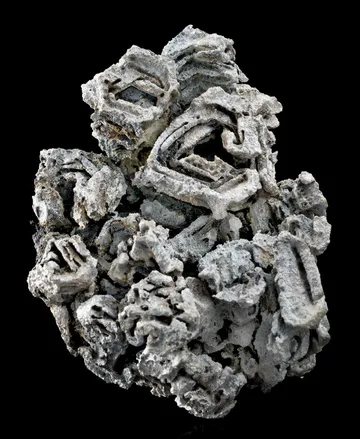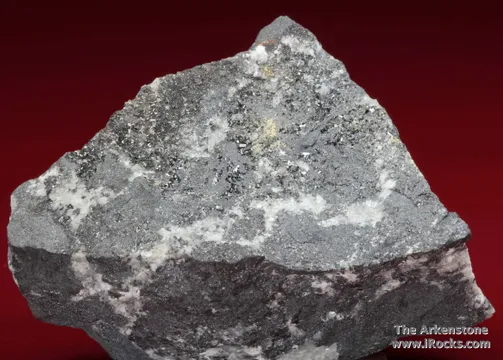
Tunaberg, Sweden - classic cobalt locality famed for cobaltite on chalcopyrite, old-stock pieces, and type-locality status for kieftite and oenite.
Key facts
Tunaberg is one of the great Scandinavian names in classic cobalt mineral collecting: a small copper–cobalt ore field around Koppartorp, south-southwest of Nyköping in Södermanland, where metallic cobaltite crystals came out of skarn ore rather than from the familiar silver-cobalt vein style of central Europe. Its collector identity rests on that combination—bright tin-white to silvery cobaltite, often sharply cubic or pyritohedral, set against brassy chalcopyrite and dark massive sulphide ore in calc-silicate skarn. The locality belongs to the southeastern part of the Bergslagen metallogenic province, where Early Proterozoic volcanosedimentary rocks were metamorphosed to high grade and where sulphide mineralisation is organised into copper–cobalt skarns, peripheral zinc–lead sulphides, and iron-oxide skarns.
Historically, Tunaberg matters for more than pretty crystals. Copper mining at Koppartorp is documented in the early 1400s, cobalt entered the story in the later eighteenth century, and the ore field became one of Sweden’s best-known old cobalt sources. Mineralogically it is much deeper than a two-species locality: Tunaberg is the type locality for kieftite and oenite, and Mormorsgruvan within the same ore field is tied to the early history and type-locality literature of hedenbergite. For collectors, however, the classic aesthetic is unmistakable: lustrous, striated, silver-grey cobaltite crystals—commonly thumbnails to small miniatures, exceptional crystals approaching 2 cm—on chalcopyrite-rich ore, with the best pieces retaining a sharp, complete crystal firmly seated on matrix.
Regional View
Country View
Tunaberg specimens are usually old-stock pieces, and that is part of their charm. Many have nineteenth- or early twentieth-century European labels, and fine examples have moved through major collections. A Tunaberg cobaltite can look deceptively simple in photographs—a silver crystal on yellow ore—but in hand the contrast is strong: the cobaltite has a hard, colder metallic light, while the chalcopyrite matrix is warmer, granular, and brassy. The finest matrix specimens show the cobaltite standing proud, with undamaged edges, bright lustre, and enough associated sulphide to make the locality immediately legible.
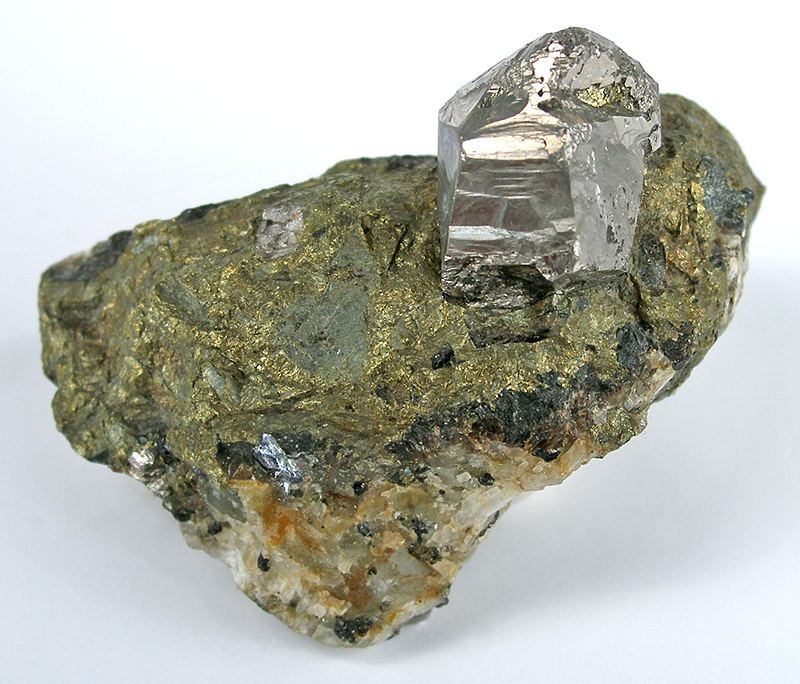
Photo: Wikimedia Commons
Search for specimens: View all specimens from Tunaberg, Sweden
The collecting locality usually labelled simply “Tunaberg” refers to the Tunaberg Cu-Co ore field in the Koppartorp area of Nyköping Municipality, Södermanland County. The mines lie about 10–15 km south to south-southwest of Nyköping, within the southeastern Bergslagen ore province. In specimen terms, the essential geological setting is copper–cobalt sulphide mineralisation in skarn-altered carbonate horizons enclosed in metamorphosed volcanic and sedimentary rocks. The Cu-Co mineralisation is concentrated in a central skarn zone, while Zn-Pb sulphides occur more peripherally in metatuffite, graphitic slate, and marble; iron-oxide skarns are also present in the wider Tunaberg area.
The classic cobaltite and chalcopyrite specimens belong to the Cu-Co skarn system. In the central zone, sulphides occur in diopside–hedenbergite–hornblende skarns hosted by skarn-altered marble. Published work on Tunaberg distinguishes an earlier high-temperature pyrrhotite–cubanite–chalcopyrite assemblage from a later, more Cu-rich chalcopyrite–bornite–galena assemblage. The latter is especially important for the locality’s microscopic rarities: cobalt, nickel, iron, antimony, bismuth, silver, gold, tellurium, and related elements are partitioned into a remarkable suite of sulpharsenides, antimonides, sulphosalts, tellurides, native elements, and alloys.
Storgruvan—also known as de Besche’ska gruvan or the Stor Mine—was the principal mine of the field and the source most strongly associated with Koppartorp’s old copper and cobalt industry. Named workings and shafts connected with the larger mine include Görans Shaft and Lovisins Shaft. Other recorded mines in the field include Adolfsbergsgruvan, Kabbelgruvan, Österbergsgruvan, Sofia Magdalena gruvan, Näsmansgruvan, Kattgruvan, and Mormorsgruvan. Mormorsgruvan is especially notable to mineralogists as the locality linked to hedenbergite.
The mining history is unusually long for such a modest specimen locality. Copper mining at Koppartorp is documented in 1420, when Erik of Pomerania confirmed old mining privileges, and the district may have been worked even earlier. Storgruvan was abandoned for a time in the sixteenth century after the ore was lost where a pegmatite body cut the mineralised zone. A major revival came in the eighteenth century, with copper production renewed in the 1750s and cobalt recognised in mine records in 1769. By the 1770s, the mine had substantial pumping and hoisting infrastructure, including power transmitted from a waterwheel at Tomta by a rod line. Systematic copper and cobalt mining continued into the nineteenth century; Storgruvan ceased mining in 1889, and the cobalt and copper works were closed at that time. Later activity elsewhere in the Tunaberg district included small-scale zinc and manganese production, with the broader mining history of the parish ending in the mid-twentieth century.
Recorded production figures underline the small but serious character of the ore field. For 1810–1916, official and SGU-cited records give 670 metric tonnes of mixed copper–cobalt ore and 4,450 metric tonnes of copper ore from the Koppartorp area, with typical grades reported around 0.1–2% Co and 1–2% Cu. Nearby Börjelstorp and Skara produced 818 metric tonnes of zinc ore between 1914 and 1916, with an average grade around 35% Zn. A cultural-historical account records 62 tonnes of cobalt extracted from 1810 to 1889.
Today Koppartorp is a historic mining landscape rather than an active mineral locality. The Gruvslingan walking loop begins at Koppartorp and passes Storgruvan, mine buildings, water-management remains, and smaller pits and skärpningar in the forest. Old dumps and workings remain, but collectors should treat the area first as a protected cultural landscape with dangerous abandoned mine openings, not as an open dig site. Permission, local rules, and safety precautions are essential; old Swedish mine dumps can be unstable, overgrown, and historically significant, and the mineralisation includes arsenic-bearing species such as cobaltite and arsenopyrite.
The notable specimen finds are overwhelmingly historic. Fine cobaltite crystals occur as loose crystals and as matrix pieces on chalcopyrite-rich ore. Matrix examples are scarcer and more desirable because many cobaltite crystals separated from the sulphide matrix during mining, handling, or later trimming. Published descriptions of the ore field’s rare minerals repeatedly refer to material collected from dumps and exposed rocks at abandoned Cu-Co skarn workings in the central zone; those dumps yielded the polished-section material in which kieftite and oenite were recognised. For hand-specimen collectors, the memorable pockets were not the open cavities of an Alpine vein but pockets of quality within massive sulphide skarn: places where cobaltite had room and chemistry enough to form sharp, lustrous crystals instead of only granular ore.
Tunaberg cobaltite is the locality’s calling card: silvery to tin-white metallic crystals, most often cubic, pyritohedral, or modified combinations, set in brassy chalcopyrite-rich sulphide ore and skarn. Fine crystals are typically thumbnail scale, around 1 cm across; exceptional old pieces approach 1.5–2 cm and may sit dramatically on matrix. The best examples show sharp edges, bright lustre, striated or smoothly modified faces, and a complete or nearly complete crystal with minimal bruising. Matrix specimens are especially prized because loose crystals are more common than intact crystals still anchored in ore. Associations may include chalcopyrite, pyrrhotite, bornite, galena, arsenopyrite, safflorite, and microscopic Co-Ni-Fe arsenide and antimonide minerals. Ordinary pieces are massive or dull and need a label to carry them; choice Tunaberg cobaltites announce themselves at once by the cold silver crystal against golden chalcopyrite.
Tunaberg chalcopyrite is best understood as both an ore mineral and a display matrix. It is the principal copper sulphide of the Cu-Co skarn ores, occurring as brassy massive to granular material with pyrrhotite, cubanite, bornite, galena, cobaltite, and skarn silicates such as diopside–hedenbergite and hornblende. It rarely competes with dedicated chalcopyrite localities for large freestanding crystals; its collector importance at Tunaberg is the way it frames cobaltite and records the copper-rich evolution of the skarn ore. Good chalcopyrite pieces from here show fresh brassy colour, compact sulphide texture, and ideally one or more sharp cobaltite crystals riding on the ore. The best are old matrix specimens where the chalcopyrite has not been deeply tarnished, crushed, or trimmed so tightly that the cobaltite loses context.
Beyond cobaltite and chalcopyrite, Tunaberg is a serious ore-microscopy locality. The ore field has documented acanthite, aikinite, allargentum, arsenopyrite, bismuthinite, bornite, breithauptite, carrollite, clausthalite, cobaltpentlandite, covellite, cubanite, dyscrasite, emplectite, erythrite, galena, gersdorffite, greenockite, gudmundite, gustavite, hauchecornite, hessite, joséite-B, kawazulite, linnaeite, löllingite, mackinawite, magnetite, matildite, mawsonite, meneghinite, miargyrite, molybdenite, native antimony, native bismuth, native gold, native silver, native tellurium, nickeline, nisbite, parkerite, pyrrhotite, quartz, safflorite, sphalerite, stannoidite, tellurobismuthite, tetradymite, tetrahedrite-group minerals, tsumoite, ullmannite, uraninite, westerveldite, and wittichenite. Its three most important type-locality associations are hedenbergite at Mormorsgruvan, kieftite from the Cu-Co sulphide skarns, and oenite from the same skarn system. For collectors, many of these rarities are microscopic or polished-section minerals rather than cabinet display species, but they give Tunaberg an importance far beyond the number of handsome hand specimens it produced.
Tunaberg cobaltite is classic, old, and finite. Most fine specimens on the market are historic collection pieces rather than new finds, and good matrix examples are much less available than loose crystals or small ore fragments. A detached cobaltite crystal is not automatically suspect—loose crystals are a known style for the locality—but a matrix specimen with a suspicious glue line, mismatched contact, or fresh adhesive should be examined carefully. Because Tunaberg is often used as a broad label, older pieces may be imprecisely labelled “Tunaberg,” “Nyköping,” “Södermanland,” “Lovisin Mine,” or “Koppartorp,” and occasionally Swedish cobaltites from other classic localities such as Håkansboda or Riddarhyttan can be confused in poorly documented collections.
The main condition issue is edge wear. Cobaltite is hard enough to keep a bright face but brittle enough that high points, modified corners, and pyritohedral edges can bruise. Many old crystals show small contact areas, rubbed ridges, or subtle chipping; that is tolerable in historic thumbnails, but the premium rises sharply for complete crystals with crisp faces. Matrix pieces need inspection for stability, as chalcopyrite-rich sulphide ore can be fractured, and older trimming may leave fresh-looking broken sulphide around a better cobaltite crystal.
No Tunaberg-specific treatment problem is widely recognised in the specimen literature or market record. The more common risks are mislabelling, over-cleaning, old repairs, and detached crystals presented as naturally seated. Erythrite staining may occur on cobalt-bearing material, but bright purple secondary cobalt arsenate is not the core aesthetic for the classic pieces. Because cobaltite and arsenopyrite contain arsenic, Tunaberg ore should not be cut, ground, ultrasonically cleaned to powder, or handled carelessly in dusty condition. Normal display is safe with sensible mineral hygiene: wash hands after handling, keep fragments away from children, and avoid generating dust.
Market availability is thin but steady. Small old-stock cobaltite crystals appear periodically from dealer inventories and collection dispersals; high-end thumbnails with sharp, complete, lustrous crystals and good provenance command far more attention than ordinary massive ore. The most desirable pieces combine size, geometry, matrix, pedigree, and condition: a 1.5–2 cm cobaltite crystal on brassy chalcopyrite-rich matrix, especially with an old European or institutional provenance, is a serious classic.
Koppartorp’s mining story begins not with a spectacular specimen pocket but with a royal paper trail. In 1420, the miners asked Erik of Pomerania to confirm their old privileges at Koppartorp—wording that implies the mines were not new even then. The district sat in a hard working landscape of forest, small farms, ore roads, furnaces, and watercourses. Rocklösa village and its furnace are documented in 1417, and by the sixteenth century a chain of furnace sites and mining roads linked the mines with places such as Rocklösa, Präst-Uttervik, Lilla Uttervik, Kestorp, Grishyttan, and Buskhyttan. Tunaberg was not simply a mine in the woods; it was a small industrial world.
Storgruvan’s ore was elusive enough to shape the history of the field. The old mine was abandoned in the sixteenth century after miners lost the ore where a pegmatite lens cut across it. Later attempts to reopen the workings were frustrated by water. One account says Karl IX tried to revive copper mining but failed to find ore and had to give up because of heavy inflow. When the eighteenth-century revival came, it was as much an engineering story as a mining one: in 1754 a hoisting windlass was built, in 1755 a pumping windlass followed, and in 1765 a rod line was constructed from Tomta to transmit power from water to mine. By 1776, Storgruvan was pumped and hoisted by power carried from a waterwheel at Tomta, with the rod line passing beneath a road bridge just before it reached the mine.
The human scale in the 1770s was striking. About 160 miners worked at Storgruvan and lived with their families nearby. Koppartorp grew into a mining village with workers’ dwellings, a mine bailiff’s residence, smithy, coal house, storehouses, church, school, and the apparatus of a company settlement. Cobalt was first recorded in the mine journal in 1769, and what began as copper mining gained a second value: blue pigment and cobalt ore. At Tomta, the waterwheel that powered the mine also became part of the cobalt story; remains of walls connected with cobalt extraction still survive near the stream.
Then came the collapse that changed the landscape. In 1818, a large day opening formed at Storgruvan after a cave-in. The same year, a crushing and washing works for cobalt opened by Tomtaån, beside the waterwheel that served the rod line to Storgruvan. That pairing—one disaster opening the mine to the sky, and one new works built to concentrate the cobalt value of the ore—captures Tunaberg’s nineteenth-century transition. The mine landscape visible today is not only excavation but adaptation: pits, ruins, water-management remains, and the memory of ore sorted and washed along the stream.
The museum objects from Tunaberg make the old workings feel physical again. Sörmland Museum records tools and objects connected with “gruvfogde Lindgren,” probably Anders Petter Lindgren, the last mine bailiff at Koppartorp. Among the surviving items are two mine lamps, one carbide lamp and one lamp fired with hemp oil, a box for blasting caps, a filling dish, a rectangular stool, and a “vattåk”—a long wheeled pole with handles and hooks for carrying water bottles. Most vivid are the pine torches: 130 cm long, the kind of object that makes the underground world visible in the imagination. The collection also includes a copper-plate weather vane dated 1765 from a mine building at Tunaberg, a small bright survivor from the same decade in which the rod line and cobalt story were taking shape.
Even the modern walking route preserves the drama of the place. The Gruvslingan loop starts at Koppartorp and leads to Storgruvan, where signs show the extensive underground passages and chamber-like spaces beneath the ground. The path then returns past Konstvaktarstugan, the cottage of the man responsible for keeping the water-control machinery working day and night. It follows the stream toward the Tomta waterwheel, climbs into the forest past smaller copper pits, and ends among older traces of mining and even Bronze Age rock carvings on a bedrock surface that once lay at the sea’s edge. For a mineral collector, it is a reminder that a Tunaberg cobaltite is not just a crystal: it is a fragment of a working landscape that spans from medieval privilege letters to eighteenth-century water engineering and nineteenth-century ore microscopy.