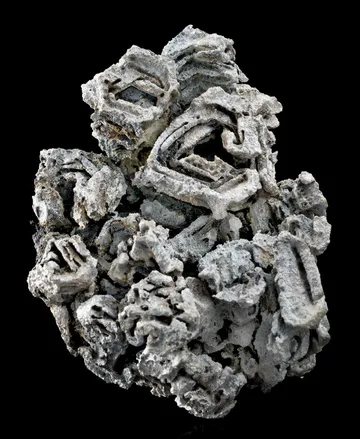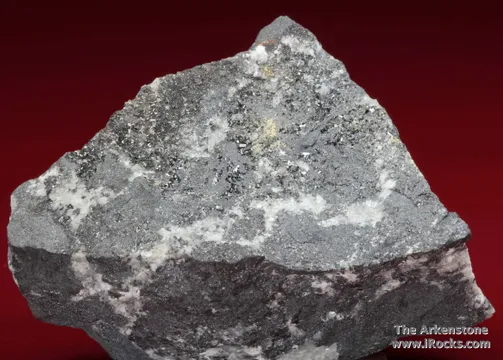
Dalarna County, Sweden - collector’s cross-section of Falun and Garpenberg with sulphide ores, magnetite–hematite–apatite iron ore, and hematite-included quart…
Key facts
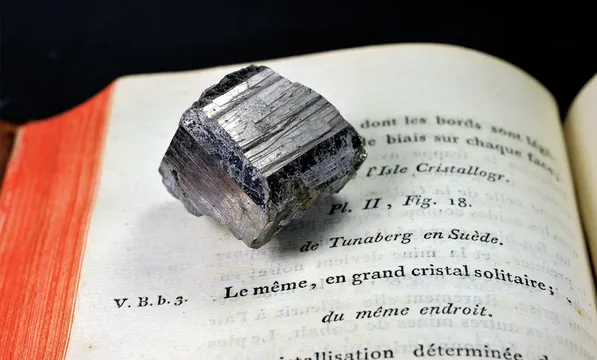
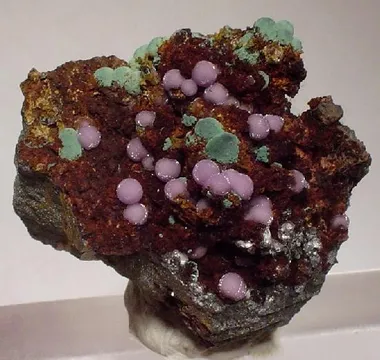
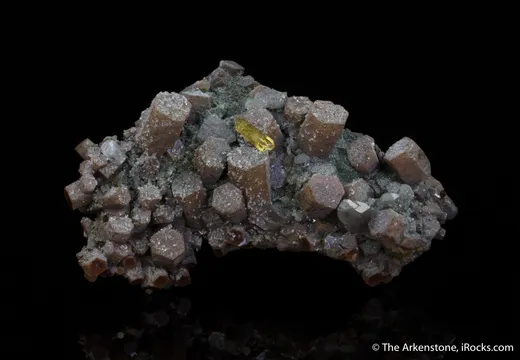
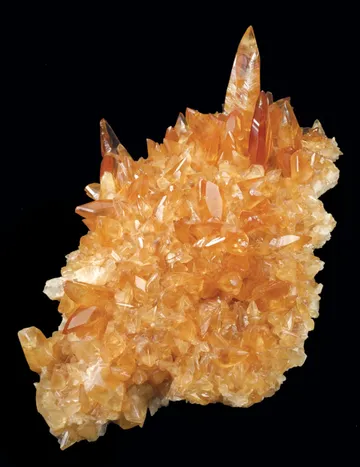
Dalarna County is not a single mine locality so much as a collector’s cross-section through the old Swedish ore country: Falun, Garpenberg, Smedjebacken–Väster Silvberg, Grängesberg, Blötberget, and Idkerberget all sit within or at the margin of the Bergslagen province, where Paleoproterozoic volcanic, carbonate, skarn, and iron-oxide systems have been folded, metamorphosed, mined, reinterpreted, and collected for centuries. For the specimen collector, Dalarna matters because it combines three very different collecting personalities: the black, brassy, and often micro-mineralogical world of sulphide ores at Falun and Garpenberg; the red-black magnetite–hematite–apatite iron-ore suite of the Ludvika–Grängesberg–Idkerberget belt; and the more aesthetic quartz finds of the Smedjebacken area, including orange to red hematite-included crystals that have entered the modern specimen market.
Falun is the historical anchor. The Great Copper Mountain was one of Europe’s defining copper mines, worked for roughly a millennium and closed only in 1992. Its ores are not simple “copper ore” in the collector’s sense: the deposit is a metamorphosed, pyritic Zn-Pb-Cu-(Au-Ag) sulphide system with massive pyrite-rich ore, chalcopyrite-bearing stringer and disseminated Cu-Au mineralization, auriferous quartz veins, talc-chlorite shear zones, marble, and skarn. Garpenberg, by contrast, remains alive: Boliden’s modern underground mine works complex Zn-Pb-Ag-(Cu-Au) ores in several orebodies, including Lappberget, and has become especially important to mineralogists because its skarns produced rare manganese-, antimony-, arsenic-, lead-, and zinc-bearing minerals, including type-locality species.
The look of the best Dalarna specimens depends strongly on which sublocality is on the label. Falun pieces tend toward dense sulphide ore, gold-bearing quartz, and cabinet pieces valued as much for history as display. Garpenberg material is often a specialist’s province: small rare species in skarn, polished or sawn sections, sulphide ore, and micromounts requiring careful identification. The most immediately decorative recent Dalarna specimens are the Smedjebacken quartzes—clusters of orange, red-orange, or smoky-orange crystals tinted internally by hematite inclusions, commonly small-cabinet to hand-size and far more attractive than the word “quartz” alone suggests. From the iron fields, hematite is typically massive, specular, foliated, or intergrown with magnetite, fluorapatite, quartz, amphibole, and biotite rather than forming freestanding alpine-style crystals.
Regional View
Country View

The county’s mineralogical fame also extends beyond ore specimens. Finnbo, near Falun, is the type locality of albite, described in 1815 by J. G. Gahn and J. Berzelius. Garpenberg Norra has yielded modern type-locality minerals such as rinmanite, rambergite, and garpenbergite. This gives Dalarna a dual appeal: it is both an old mining landscape of immense cultural weight and a research locality where new mineral species and ore-genetic interpretations continue to be published.
Search for specimens: View all specimens from Dalarna County, Sweden
Dalarna County’s collectible mineral occurrences are concentrated in the southern and southeastern parts of the county, where the Bergslagen ore province exposes metamorphosed volcanic, volcaniclastic, carbonate, skarn, and intrusive rocks of the Fennoscandian Shield. The most important collector localities are not geologically identical. Falun and Garpenberg belong to the great family of metamorphosed base-metal sulphide deposits associated with felsic volcanism, carbonate horizons, and skarn alteration. The Ludvika–Grängesberg–Blötberget–Idkerberget belt is dominated by apatite-bearing iron oxide ores, with magnetite and hematite accompanied by fluorapatite and silicate gangue. The Falun-area pegmatites, including Finnbo and nearby classic pegmatite occurrences, add a separate rare-element and feldspar story to the county.
At Falun, the deposit is best understood as a complex, metamorphosed Zn-Pb-Cu-(Au-Ag) sulphide system. Three broad mineralization styles matter to collectors and ore geologists: pyrite-dominated massive sulphide ore with sphalerite, galena, and chalcopyrite; Cu-Au stringer or disseminated mineralization in intensely altered rocks; and later gold-bearing quartz veins. The wall-rock assemblages include quartz-anthophyllite-rich altered rocks, talc-chlorite schist, marble, skarn, and felsic metavolcanic units. For collectors, this means that a “Falun” label may cover very different specimen types: massive pyrite ore, chalcopyrite-bearing sulphide, quartz with visible or microscopic native gold/electrum, bismuth-bearing phases, or historical mine material rather than bright display crystals.
Falun’s mining history is central to any Dalarna locality label. Mining in the Falun area is generally traced back to at least the Viking Age by archaeological and geological work, while the oldest surviving written document tied to the Great Copper Mountain dates to 1288. A royal charter in 1347 helped formalize the mining community, and by the 17th century Falun had become a mine of European importance. The enormous open pit called Stora Stöten formed in the catastrophic collapse of 1687. Mining continued for centuries afterward, but the great age of Falun copper had passed; the mine finally closed in 1992 and was inscribed as part of the UNESCO World Heritage “Mining Area of the Great Copper Mountain in Falun” in 2001. Today it is a visitor mine and museum landscape, not a casual collecting site.
Garpenberg, in Hedemora municipality, is the modern counterpoint to Falun. It is Sweden’s oldest mining area still in operation and is owned and operated by Boliden. Mining is documented historically from the medieval period, and lake-sediment work indicates small-scale copper extraction in the area as early as about 375 BCE. Boliden has operated Garpenberg since 1957; Garpenberg Norra opened in 1972; the North and South mines were connected by an underground gallery in 2004; and the major Lappberget discovery at the end of the 1990s was pivotal in extending the life of the operation. The mine produces complex ore containing zinc, lead, silver, copper, and gold. Modern resource and ore studies describe multiple mineralization styles at Lappberget, including sphalerite-pyrite-galena ore, chalcopyrite- and pyrrhotite-bearing massive sulphide, footwall disseminated to semi-massive mineralization, skarn-hosted sulphides, magnetite mineralization, mineralized shear zones, and carbonate-hosted silver-rich sulphide-sulphosalt veinlets.
Garpenberg’s collector significance lies less in showy large crystals and more in mineralogical richness. Garpenberg Norra skarns have yielded unusual assemblages involving jacobsite, alleghanyite, kutnohorite, dolomite, tremolite, talc, galena, pyrite, franklinite, barysilite, carlfrancisite, filipstadite, stibarsen, paradocrasite, rambergite, rinmanite, and garpenbergite. Many of these are micromount or analytical minerals rather than hand-specimen showpieces. The best Garpenberg labels are therefore precise: “Garpenberg Norra Mine,” “Lappberget deposit,” or another named orebody tells far more than simply “Garpenberg.”
The iron-ore part of Dalarna is centered on the Grängesberg district and its northern continuation toward Blötberget and Idkerberget. These apatite-iron oxide ores are commonly discussed in relation to Kiruna-type iron oxide–apatite deposits. Grängesberg was the largest iron-ore concentration in Bergslagen and produced on the order of 150 million tonnes of ore before closure in 1989. The ores consist chiefly of magnetite and hematite, with fluorapatite and subordinate quartz, amphibole, biotite, chlorite, epidote, garnet, monazite, allanite, xenotime, titanite, zircon, and other accessory minerals. Idkerberget, north of Grängesberg, produced iron ore from the early 20th century into the 1970s; descriptions of the deposit emphasize magnetite with hornblende and apatite, with local hematite especially near contacts and along parts of the orebody.
Smedjebacken and Väster Silvberg add an important specimen dimension. The Väster Silvberg mining district and nearby named occurrences include quartz, hematite, magnetite, löllingite, amphibole-group minerals, cordierite, sulphides, carbonates, and skarn minerals. Saxrönningen, in Smedjebacken, is especially notable in the present specimen market for orange quartz crystals tinted by hematite inclusions and has been described as a staked claim worked for mineral specimens. These pieces, often in the miniature to small-cabinet range, are among the most visually appealing modern Dalarna specimens.
Collecting access must be treated conservatively. Active operations such as Boliden Garpenberg are industrial mines and are not open to casual collecting. Falun is a managed World Heritage and museum landscape; it can be visited, toured, and studied, but specimens should not be removed without explicit authorization. Many older mine dumps and prospects in Sweden are on private land, within heritage areas, or under mineral rights and exploration permits; the Swedish right of public access does not grant a general right to remove stone, break rock, dig, or use a metal detector at protected or archaeological sites. Serious collecting in Dalarna is therefore best approached through old collections, reputable dealers, organized clubs, museum exchanges, or clearly permitted field situations.
Quartz from Dalarna is most collectible when the label narrows from county to sublocality: at Saxrönningen and Smedjebacken, the desirable pieces are orange to red-orange crystal groups colored internally by hematite inclusions rather than merely surface-stained, with documented specimens ranging from about 5 cm miniatures to roughly 8–9 cm small-cabinet groups; at Falun, quartz is historically and genetically important as the gangue of younger auriferous veins that cut the altered sulphide system and may carry native gold or electrum with sulphides and bismuth-bearing minerals. Good Dalarna quartz is judged on transparency through the red hematitic color, sharp unbruised terminations, three-dimensional crystal groups on matrix, and precise locality; ordinary milky vein quartz or rusty fracture quartz from old mine dumps is far less significant unless accompanied by verified Falun gold, sulphides, or a strong historical label.
Hematite in Dalarna has two collector faces: as a visible iron-oxide ore mineral in the Grängesberg–Blötberget–Idkerberget apatite-iron oxide belt, where it occurs with magnetite, fluorapatite, hornblende, quartz, biotite, and other silicates in massive, foliated, granular, or banded textures; and as the fine red inclusion responsible for the warm orange color of the Saxrönningen–Smedjebacken quartz specimens. The best display pieces are not usually isolated mirror-bright hematite rosettes, but either crisp quartz crystals colored from within by hematite or compact iron-ore specimens showing clear magnetite–hematite–apatite–quartz banding and sharp contrast; lesser material is simply heavy black-red ore with little texture, poor locality data, or weathered surfaces that obscure the mineral relationships.
Gold from Dalarna is chiefly a Falun and Garpenberg story, and collectors should expect rarity, small scale, and the need for careful verification. At Falun, native gold and electrum are tied to auriferous quartz veins and to the broader Cu-Au sulphide system, with attractive historical specimens described as gold in quartz or as electrum associated with quartz and bismuth-bearing phases; at Garpenberg’s Lappberget deposit, modern ore microscopy shows gold mainly as Au-Ag electrum in and around chalcopyrite, pyrite, galena, sphalerite, and pyrrhotite, with grains commonly below 100 microns and ranging up to about 300 microns, plus rare native-gold compositions in polished sections and processing concentrates. The best collector pieces show visible metallic yellow gold or pale electrum in quartz or sulphide matrix with an old, specific Falun or Garpenberg label; vague “Dalarna gold ore” with only pyrite, chalcopyrite, mica, or rusty quartz should be treated skeptically.
Other documented Dalarna minerals give the county exceptional depth beyond the three featured species. Finnbo near Falun is the type locality of albite, NaAlSi3O8, one of the fundamental feldspars of mineralogy. Garpenberg Norra is the type locality for rare species including rinmanite, Zn2Sb2Mg2Fe4O14(OH)2; rambergite, MnS; and garpenbergite, Mn6AsSbO10(OH)2, and the same skarn environment has produced barysilite, carlfrancisite, filipstadite, jacobsite, alleghanyite, kutnohorite, tremolite, talc, franklinite, galena, and pyrite. The Smedjebacken–Väster Silvberg district contributes skarn and ore minerals such as löllingite, magnetite, amphibole-group minerals, cordierite, carbonates, and sulphides, while the Grängesberg–Idkerberget iron-oxide systems add fluorapatite, monazite, allanite, xenotime, titanite, zircon, and REE-bearing accessory phases that are far more important under the microscope than in a display case.
Dalarna specimens reward precise labels. “Dalarna County” is useful as a regional tag, but for serious collecting it should be refined whenever possible to Falun Mine, Garpenberg Norra Mine, Lappberget deposit, Saxrönningen, Väster Silvberg, Grängesberg, Idkerberget, Finnbo, or another named locality. Older labels may use Kopparberg County or Dalecarlia; both can refer to what is now Dalarna County, and neither should be dismissed as wrong without checking historical context.
The principal authenticity problem is not a famous wave of outright fakes, but misidentification and over-broad labeling. Orange Smedjebacken quartz can be confused with ordinary iron-stained quartz from other regions; good examples have color arising from internal hematite inclusions, not a simple removable coating. Gold specimens need especially close scrutiny. At Garpenberg much of the gold is microscopic electrum in sulphides or processing concentrates, so hand specimens sold as “gold ore” may contain no visible gold at all. Falun gold in quartz is more collectible, but brassy sulphides, chalcopyrite flashes, bismuth minerals, or weathered pyrite can mislead a casual eye. A loupe, reflected-light inspection, density of the metallic grains, and old provenance are important.
Condition issues vary by material. Smedjebacken quartz should be checked for bruised terminations, contact damage, and artificial oiling or wet-looking coatings that exaggerate luster. Sulphide ore from Falun and Garpenberg may carry pyrite and other sulphides that oxidize if stored damp; keep such pieces dry, avoid aggressive washing, and do not seal actively deteriorating sulphide specimens in closed plastic without desiccant. Hematite–magnetite ore is physically robust but can shed red dust and may be strongly magnetic if magnetite-rich. Garpenberg rare-species material is commonly micromount-scale and often requires analytical confirmation; unattractive-looking skarn chips can be more important than cleaner cabinet pieces if the species identification is sound.
Fluorescence is not the central attraction of Dalarna, although calcite, fluorite where present, and some skarn assemblages may reward ultraviolet checking. The county’s real appeal is historical provenance, ore texture, and mineralogical specificity. On the market, Falun material with old labels, visible gold/electrum in quartz, and unusual bismuth or sulphosalt associations is scarce. Garpenberg rare minerals are usually specialist material. Smedjebacken hematite-included quartz is the most accessible modern aesthetic material and appears sporadically from dealer inventories in miniature to small-cabinet sizes.
The old Falun story begins, as so many ore-discovery legends do, with an animal that found what people had missed. In the Dalarna version the animal is Kåre, a billy goat. He disappears into the forest and returns with his horns stained red; when the goatherd follows him, the red earth leads to the copper-bearing ground that would become the Great Copper Mountain. It is a legend, not a mine record, and versions of the same animal-discovery motif appear in other mining districts, but it remains one of the most durable images attached to Falun: a goat with red horns walking out of the woods at the beginning of Sweden’s copper age.
The true drama of Falun is stranger than legend. On Midsummer’s weekend in 1687, after warning sounds in the rock, a vast portion of the mine collapsed. The void that opened is the present Stora Stöten, the Great Pit—about 95 metres deep and roughly 1.6 kilometres around. Rubble was found hundreds of metres underground. The catastrophe became famous not only because of its scale, but because no miners were killed: they had been given time off for Midsummer. For a mine that employed hundreds of men and had been worked into a maze of shafts, galleries, and weakened ground, the timing turned disaster into a national astonishment rather than a mass funeral.
Then there is Fet-Mats, the story that turned Falun from mining history into European literature. Mats Israelsson, a miner from Boda in Svärdsjö, disappeared in the mine in 1676 or 1677. On 2 December 1719, workers found a body in the long-abandoned, water-filled Mårdskinn shaft. The man’s legs were broken away, but his face, hands, arms, clothing, and upper body were so well preserved that he seemed recently dead. No one at first knew him. Then Margareta Olsdotter, who had once been engaged to him, identified the body as Mats, lost more than forty years earlier. The vitriol-rich mine water had preserved him; once raised into air, the body began to dry, darken, and decay. For decades he was treated as a curiosity, displayed in Falun before being buried in Stora Kopparberg Church on 21 December 1749. His fate was later taken up by writers, including E. T. A. Hoffmann, and became one of the most haunting afterlives of any European mine accident.
Garpenberg’s modern story has a quieter but equally remarkable turn. For generations it was an old Bergslagen mining camp working complex sulphide ores, but at the end of the 1990s exploration found the Lappberget mineralization between Garpenberg and Garpenberg Norra. Boliden later described that discovery as the event that saved the mine from closure. What had seemed an old district approaching exhaustion became one of Sweden’s most modern and efficient underground mines. For mineral collectors, Lappberget is not famous for glittering cabinet gold; its importance is more subtle. Under reflected light and electron beams, researchers have shown electrum grains caught on sulphide borders, sealed as inclusions, grown over chalcopyrite, pyrite, galena, sphalerite, and pyrrhotite, or disseminated in gangue. The mine’s gold story is literally microscopic, but it is the kind of microscopic evidence that keeps a centuries-old district economically alive.