Norrbotten County, Sweden — top locality for Kiruna-type magnetite-apatite and Leveäniemi phosphate pieces, prized for color, contrast, and paragenesis.
Key facts
Norrbotten County is one of Europe’s great mineral provinces: a vast slice of northern Sweden where Precambrian iron-oxide systems, copper-gold porphyries, Caledonian lead-zinc deposits, historic silver workings, rare-element occurrences, and even the Muonionalusta meteorite field all sit within the same collector’s geography. For specimen collectors, however, the county’s name most often comes down to two very different reputations: the world-scale iron mines of the Kiruna–Gällivare–Svappavaara district, and the remarkable secondary phosphate suites formed in oxidized, apatite-bearing magnetite ores at Leveäniemi.
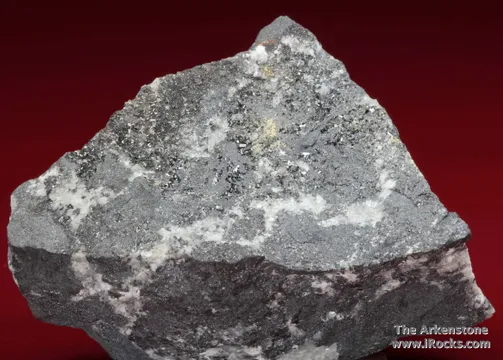
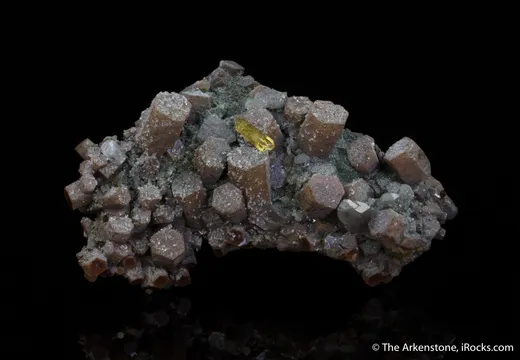
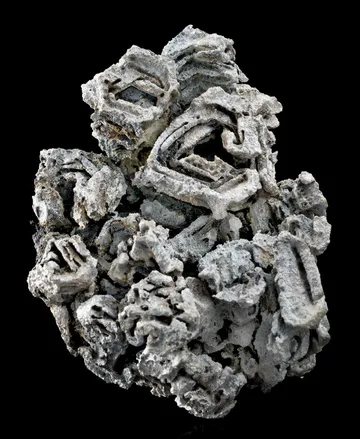
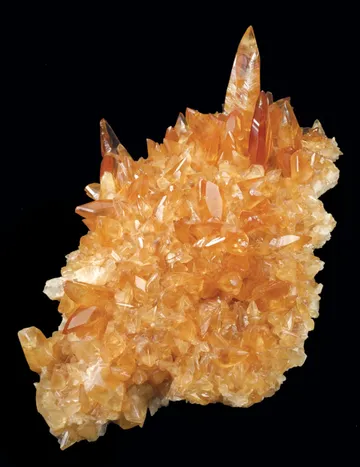
The visual signature of classic Norrbotten specimens is unusually varied. From Leveäniemi come thumbnail-to-cabinet plates of heavy martite and goethitic iron ore dotted with wine-red, lilac, rose-pink, or purple balls of strengite, commonly set off by dark green to grey-green beraunite or rockbridgeite, straw-yellow cacoxenite, green kidwellite, waxy tinticite, and rare pale sprays of other hydrous phosphates. From Malmberget, the county is famous among connoisseurs for golden to honey-orange calcite, emerald-green fluorite, stilbite, stellerite, hematite, pyrite, chalcopyrite, titanite, and other cavity minerals rescued from an intensely deformed and metamorphosed iron-apatite orebody. From Kiruna itself, the importance is as much geological as aesthetic: Kiirunavaara is the eponymous “Kiruna-type” iron oxide-apatite model, one of the classic global references for massive magnetite-apatite ore.
Regional View
Country View
The county’s best phosphate specimens are not large-crystal showpieces in the pegmatite sense; their power is in contrast, color, and paragenesis. The most satisfying Leveäniemi pieces have bright, spherical aggregates of strengite standing proud on dark martite, with enough open vug surface that the collector can read the sequence of growth. Ordinary examples can be small, dark, scurfy, or visually confused; the fine ones have clean separation of phases, obvious radial crystal texture, and that unmistakable purple-red phosphate color against black iron ore.

Photo: Wikimedia Commons
Norrbotten also matters because it is not a single-mine locality masquerading as a region. The county includes the active LKAB iron-ore centers at Kiruna, Malmberget, and Svappavaara; Boliden’s Aitik copper-gold-silver mine near Gällivare; the Laisvall sandstone-hosted lead-zinc district in the Caledonian foreland; old silver-lead workings at Nasafjäll; manganese-iron-barium-arsenic occurrences around Ultevis; Fe-Ti and REE-bearing occurrences around Jokkmokk and Kvikkjokk; and the meteorite-weathering mineralogy of the Muonionalusta field near Kitkiöjärvi. For a collector, “Norrbotten” is therefore both a classic Swedish mining province and a label that must be read carefully: the sublocality is everything.
Search for specimens: View all specimens from Norrbotten County, Sweden
Norrbotten County occupies northern Sweden, including the mining towns and districts that collectors usually encounter on labels as Kiruna, Svappavaara, Gällivare, Malmberget, Pajala, Jokkmokk, Kvikkjokk, Arjeplog, and Kitkiöjärvi. The dominant economic theme is iron: the northern Norrbotten ore province contains numerous iron oxide-apatite deposits, with Kiirunavaara at Kiruna serving as the classic reference locality for Kiruna-type apatite iron ores. These deposits are magnetite- and hematite-rich bodies in Paleoproterozoic volcanic and sedimentary successions of the Fennoscandian Shield, affected by alteration, deformation, metamorphism, and later hydrothermal events. Gangue and accessory minerals include apatite, actinolite, amphibole, scapolite, feldspars, carbonates, zeolites, and locally REE-bearing phosphates.
The Leveäniemi mine near Svappavaara is the county’s key source for strengite and beraunite specimens. It is an open-pit iron mine in a Kiruna-type iron oxide-apatite deposit, with primary magnetite-actinolite-apatite mineralization partly oxidized to hematite or martite. In the oxidized, drusy martite ore, phosphorus originally held in fluorapatite was remobilized and reprecipitated as a suite of secondary hydrous Fe-Ca-Al phosphates in vugs and fractures. The most specimen-rich material came from martite ore in the northern part of the exposed orebody, where open cavities allowed euhedral and radial phosphate aggregates to develop instead of compact earthy crusts.
Leveäniemi was discovered in 1897 and was mined by LKAB as an open pit during the 1960s through the early 1980s before closure. The pit later filled with water. In the 2010s LKAB began the process of dewatering and reopening the operation; tens of millions of cubic metres of water were pumped out, test blasting followed, and renewed mining was authorized with a permit allowing substantial annual production. Today Leveäniemi is again part of LKAB’s Svappavaara operations, but that status is not good news for casual collecting: active open-pit mines are industrial sites, not collecting grounds, and access is controlled.
The classic phosphate specimens circulating among collectors largely represent older recoveries, especially material collected before modern operations and modern access restrictions. They occur as small vug sections in dense iron ore rather than as loose crystals. Labels may say “Leveäniemi,” “Leveaniemi,” “Svappavaara,” “Kiruna district,” “Lappland,” or simply “Norrbotten.” The more specific label is always preferable, because Norrbotten County also includes other phosphate-, iron-, copper-, and zeolite-bearing localities that can be confused in old collections.
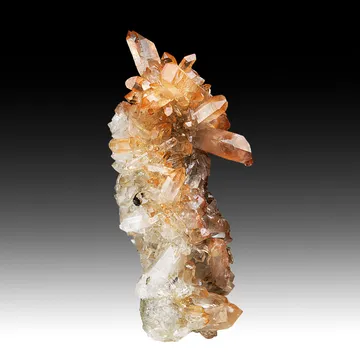
Malmberget, near Gällivare, is the other major Norrbotten locality that serious collectors should know. Unlike Leveäniemi, it is not chiefly a strengite locality; it is celebrated for cavity minerals in a folded, faulted, metamorphosed, and locally pegmatite-influenced iron-apatite ore system. Pockets there have produced superb calcite, green fluorite, stilbite, stellerite, pyrite, hematite, chalcopyrite, quartz, feldspars, titanite, and related species. The best Malmberget calcites, especially the golden scalenohedra and butterfly twins associated with late-1980s finds, are among the most recognizable European calcites on the market.
Aitik, south of Gällivare, represents a different deposit type: a Paleoproterozoic porphyry Cu-Au-Ag system, now one of Sweden’s largest open-pit metal mines. Its collector output is far less central to the EarthWonders Norrbotten phosphate suite, but it is important geologically and economically. Disseminated chalcopyrite, pyrite, magnetite, pyrrhotite, ilmenite, molybdenite, gold, and silver are part of the documented ore mineralogy, and the deposit illustrates the copper-gold side of the northern Norrbotten metallogenic province.
In western Norrbotten, the Laisvall district adds another chapter: sandstone-hosted Pb-Zn-Ag mineralization in the Caledonian foreland. It is significant as one of Scandinavia’s best-described sandstone-hosted lead-zinc systems rather than as a common source of aesthetic modern specimens. Nasafjäll, near the Norwegian border in the Arjeplog area, is historically important for silver-lead mining, with working periods in the 17th and 18th–early 19th centuries. These old workings are cultural and archaeological landscapes as much as mineral localities, and collectors should treat them accordingly.
Collecting access in Norrbotten requires care. Active mines such as LKAB’s operations and Boliden Aitik require permission and formal site access. Old mine dumps and historic workings may be private property, protected cultural remains, within nature reserves, or subject to local restrictions. Sweden’s right of public access is not a license to dig, break rock, remove material from protected sites, enter industrial areas, or disturb archaeological remains. For collectors today, the safest and most ethical route is to acquire well-provenanced old specimens, attend Scandinavian mineral shows, or arrange legitimate access through landowners, clubs, researchers, or mine operators where permitted.
Strengite from Norrbotten County means, above all, Leveäniemi: radial balls and crystal aggregates in vugs of oxidized martite ore, typically wine-red, purple, lavender, or pinkish violet, with individual aggregates commonly in the millimetre range and exceptional clusters forming colorful fields across small iron-ore matrices. It is associated especially with beraunite, ferroberaunite-like material, rockbridgeite, laubmannite in the old specimen sense, cacoxenite, kidwellite, tinticite, goethite, hematite, fluorapatite, and other late hydrous phosphates. The best pieces show saturated purple to red-purple strengite standing in sharp relief on dark martite or goethite, preferably with visible radial crystal texture and contrasting green-black phosphate aggregates; lesser examples are dull, pale, iron-stained, or so crowded by dark alteration products that the strengite becomes hard to distinguish.
Beraunite-labelled specimens from Norrbotten County are again principally Leveäniemi pieces, where the mineral occurs in small vugs as dark green, greenish black, grey-green, brownish, or locally pale fibrous to stubby radial aggregates, commonly forming spheres and rosettes with strengite on martite or hematite. Visually it can be difficult to separate from rockbridgeite and related Fe phosphate aggregates without analytical work, and some older “beraunite” labels from Leveäniemi should be treated cautiously in light of later nomenclature and XRD-confirmed distinctions among the dark green Fe phosphates. Strong collector specimens are not judged by beraunite alone so much as by association: good pieces have distinct, recognizable beraunite or beraunite-group aggregates providing dark contrast for purple strengite, yellow cacoxenite, green kidwellite, or other phosphate phases, while ordinary specimens are small dark crusts with little visual separation.
Beyond strengite and beraunite, Norrbotten County has an unusually rich record of scientifically important minerals. Leveäniemi has documented cacoxenite, crandallite, ferrostrunzite, fluellite, fluorapatite, kidwellite, mitridatite, montgomeryite, paravauxite, rockbridgeite, tinticite, variscite, wavellite, and related low-temperature phosphates. Ruoutevare near Kvikkjokk is the type locality for magnesiohögbomite-2N2S, historically known through högbomite material from a Fe-Ti setting. Stora Sahavaara in the Pajala area is the type locality of goryainovite, Ca2PO4Cl, a chlorine analogue of spodiosite described from an iron ore deposit. The Muonionalusta meteorite field near Kitkiöjärvi has produced type-locality meteoritic or meteorite-weathering minerals including muonionalustaite, Ni3(OH)4Cl2·4H2O, and the shock-related silica polymorph xiexiandeite, emphasizing that Norrbotten’s mineral record ranges from Proterozoic ore systems to extraterrestrial material altered in Arctic soils.
The first rule with Norrbotten specimens is locality precision. “Norrbotten County” is too broad for serious cataloguing unless no better information survives. A strengite–beraunite specimen should usually be assigned to Leveäniemi, Svappavaara, Kiruna, Norrbotten County, Sweden if the matrix, habit, and provenance support it. A golden calcite or green fluorite should not be lumped under Leveäniemi merely because both localities are in LKAB iron country; the classic calcite and fluorite pocket specimens are Malmberget material. A meteorite-weathering mineral from Kitkiöjärvi belongs to the Muonionalusta meteorite locality, not to the Kiruna iron mines.
The most common authenticity issue is not outright fakery but old nomenclature and visual overconfidence. Dark green Fe phosphates from Leveäniemi may have been sold historically as beraunite, rockbridgeite, laubmannite, dufrenite-like material, or generalized “iron phosphate” without XRD confirmation. Pale strengite has also been described in the collector trade as Al-rich strengite or material approaching variscite; that is a plausible paragenetic theme at Leveäniemi, but individual specimens should not be upgraded to a special composition without analysis. For valuable pieces, especially those carrying multiple rare phosphate species on one matrix, analytical provenance is a real advantage.
Condition is a central concern. Leveäniemi specimens are typically small vug pieces in heavy, hard iron ore, but the phosphate aggregates themselves are delicate. Radial strengite balls can abrade, flatten, or lose sparkle with careless packing. Cacoxenite needles, pale sprays of fluellite, and crusts of tinticite or kidwellite are easily bruised or contaminated by dust. Avoid oiling, aggressive washing, ultrasonic cleaning, acids, and prolonged soaking. A gentle air bulb, soft brush used sparingly, and stable dry storage are usually the best treatment.
Malmberget calcites and fluorites demand different handling. Fine golden calcite can show tiny edge nicks, cleaves, or contacts, and the most transparent pieces reveal damage immediately. Green fluorite from famous pockets is often judged sharply on luster, transparency, edge preservation, and whether crystals are isolated or crowded. Some calcites are reported as fluorescent on the market, but fluorescence should be treated as a specimen-specific observation rather than a county-wide diagnostic feature.
Rarity is uneven. Small Leveäniemi strengite specimens still appear periodically from old Scandinavian stocks and older collections, including inexpensive micromount and thumbnail material. Attractive cabinet pieces with strong color contrast, open vugs, and multiple identified phosphate species are much less common. Beraunite-labelled pieces without obvious purple strengite may be overlooked, but analytical certainty can make them more interesting than their visual impact suggests. Malmberget golden calcites from named pockets, especially old Peter Lyckberg-associated material and butterfly twins, are genuinely scarce on the open market and can command strong prices when well documented.
There are no widely documented, locality-specific treatments for Leveäniemi strengite comparable to dyeing or irradiation in the gem trade. The larger risk is mislabelling, over-identification, and loss of old provenance. Preserve every label, even dealer labels with obsolete names, because they may record whether a piece came from the 1960s–1970s Leveäniemi material, the 1980s Malmberget pockets, or later collection dispersals.
Leveäniemi’s phosphate story begins in a setting that sounds, at first, too industrial for beauty: an iron open cut at Svappavaara, dense magnetite ore altered to martite, and black cavities in a pit mined for tonnage rather than crystals. Yet those cavities are exactly why the locality became a classic. The primary apatite in the ore was not simply a chemical footnote; during oxidation and low-temperature hydrothermal alteration it supplied phosphorus to a strange miniature garden of hydrous phosphates. In the best vugs, purple strengite grew as radial balls, dark green Fe phosphates formed layered spheres, and younger water-rich phases settled over earlier minerals like a sequence of colored varnishes. The result was not a pegmatite pocket with fist-sized crystals, but something subtler: a world-class phosphate paragenesis written in millimetres on heavy iron ore.
The human part of the Leveäniemi story has an equally northern character. The mine worked through the 1960s and 1970s, shut down in the early 1980s, and the pit slowly became a lake. Decades later, LKAB decided the ore still mattered. The reopening required the removal of more than 30 million cubic metres of water, transforming a flooded industrial void back into a working open pit. For collectors, the romance is double-edged: the old phosphate finds became more historically important just as the modern site became more firmly industrial, regulated, and inaccessible to casual collecting.
Malmberget provides the county’s most vivid specimen-collecting legend. In the late 1980s, Peter Lyckberg and miners at Malmberget documented extraordinary golden calcites in a fissure cavity associated with a side magnetite orebody near the Parta orebody. The crystals reached 10–20 cm in some accounts, and a second related pocket yielded butterfly twins reported to 16.5 cm. These were not abundant crystals in an easy collecting area; they were rare survivors from a gigantic operating iron mine where most pockets were barren, collapsed, destroyed by mining, or produced only limited collectible material. The named “Butterfly Twin Pocket” became a collector shorthand for one of Europe’s most desirable calcite styles: transparent to translucent honey-orange crystals, often with modified scalenohedral form, preserved from a part of the mine that later became inaccessible.
Another Malmberget episode belongs to the green fluorites. The “Emerald Hole” pocket, on the 450 m level in the Snedbana tunnel adjoining the Baron orebody, produced emerald-green fluorite crystals mostly in the 1–3 cm range, with a few larger crystals reaching 3.5–4 cm and one reported at an extraordinary 9 cm. The pocket was part of a series of fluorite-bearing cavities encountered in the same tunnel system, and the better pieces have the kind of saturated color that made Malmberget fluorite instantly recognizable among European classics. A fine specimen from this find later appeared as a Mineralogical Record cover specimen, proof that the pocket’s reputation survived far beyond the mine level where it was found.
Nasafjäll is a very different story: not a specimen-pocket tale, but a hard historical chapter. The silver ore was found in the 1630s in a remote mountain area near the present Swedish–Norwegian border, and mining began soon after in the hope that Lapland silver could help the Swedish economy. The setting was severe—high, roadless, exposed, and far from easy transport—and the operation became entangled with forced labor, difficult logistics, and poor profitability. Mining resumed in a later phase in the 1770s and continued into the early 1800s, leaving a landscape that is now as much cultural memory as mineral locality. For collectors, Nasafjäll is a reminder that old mine dumps are not just sources of galena, chalcopyrite, or quartz; they may be protected historical ground carrying the scars of early northern industrial ambition.
Even the county’s meteorite mineralogy has a field-story quality. Muonionalusta fragments, recovered around Kitkiöjärvi in the Pajala area, record an iron meteorite’s long residence in terrestrial Arctic conditions. In corrosion crust cavities on one fragment, researchers identified muonionalustaite: green, transparent, lath-like crystals only micrometres long, a new nickel chloride hydroxide hydrate formed by weathering of extraterrestrial metal after arrival on Earth. That is Norrbotten in miniature: a place where collectors can move, in one county label, from Proterozoic magnetite ores to microscopic minerals born where a meteorite rusted in northern soil.