






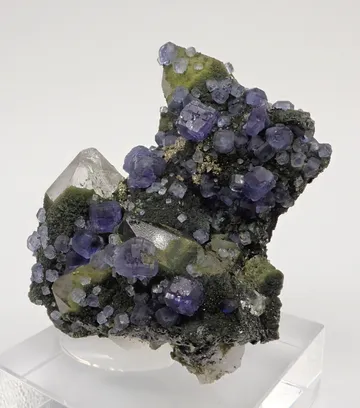
Chlorite - soft micaceous silicates with rich green color, velvety rosettes and phantom quartz inclusions, alpine habits, and affordable, striking specimens.
Key facts
Chlorite is a large group of soft, micaceous silicates best known to collectors for its rich green color, pearly to satiny luster, and remarkable variety of habits. It occurs as velvety coatings, foliated “books,” rosettes and sprays, delicate crusts, and as striking inclusions and phantoms inside quartz. In alpine clefts and high-grade metamorphic terrains, chlorite often pseudomorphs other minerals (notably garnet) and forms dramatic contrasts on white adularia or quartz. “Chlorite-included quartz” with razor-sharp phantoms—mountain-like silhouettes frozen inside limpid crystals—is a favorite aesthetic style. While individual chlorite crystals are seldom sharply euhedral, the best specimens have vibrant green tones, crisp forms (rosettes, stacks, balls), and eye-catching associations.
For collectors, chlorite’s appeal lies in texture and contrast: velvety green rosettes on snow-white quartz, frosted coatings that sculpt surface relief, and vivid phantoms within crystal “windows.” It’s broadly available and often affordable, yet exceptional alpine classics or ultra-sharp phantoms can be genuinely scarce and highly coveted.
Chlorite has long been a staple of alpine mineral suites, featured in historic finds from the Alps and the Apennines. Its popularity surged again with modern “Himalayan quartz” discoveries, where sharp green phantoms and inclusions created spectacular display pieces, often at accessible sizes. Collectors across experience levels enjoy chlorite: beginners appreciate attractive, inexpensive matrix specimens, while advanced collectors pursue:
Because chlorite is soft and fragile, truly pristine examples—especially delicate rosettes on exposed matrix or perfectly sharp phantoms—are less common than the species’ abundance suggests. That scarcity of “top condition” drives interest and competition for the finest pieces.
Chlorite occurs worldwide, but several localities are renowned for unusually aesthetic or classic material prized by collectors.
Panasqueira is world-famous for beautifully composed vugs of quartz, fluorapatite, and ferberite—and chlorite often adds a vital green accent. It occurs as rosettes and mats on quartz and apatite, sometimes forming lovely drapes and textures that elevate display appeal. The mine’s reputation for balanced, architectural specimens means that even modest chlorite associations can be noteworthy when composition, color contrast, and luster align.
Color and Luster:
Form and Habit:
Associations and Composition:
Size vs. Integrity:
Condition:
Provenance:
Stabilization and Consolidants:
Polished or Lapped Quartz:
Assembled Matrices:
Cleaning Damage:
Chlorite is soft and flaky; treat it as extremely delicate.
Handling:
Cleaning:
Light and Heat:
Environment:
Display Tips:
By favoring vibrant color, crisp forms, careful associations, and pristine condition—and by handling with extreme gentleness—you can assemble a distinctive, beautiful chlorite suite that ranges from alpine classics to modern Himalayan phantoms.