Alakamisy Itenina, Madagascar — a secondary gem-deposit locality famed for polychromatic tourmaline with backlit, stained-glass-like slices prized by collector…
Key facts
Alakamisy Itenina is one of Madagascar’s most distinctive collector names because it is not remembered as a deep, classic pegmatite mine with wall-rock matrix, but as a gem-tourmaline occurrence in the rice-field country of the Fianarantsoa highlands. The deposit is best known under two names: the proper Malagasy locality, Alakamisy Itenina, and the gem-trade corruption “Lacamisinten.” The latter appears in older labels and literature because the spoken locality name was heard and repeated by non-Malagasy buyers in a simplified form. For collectors, that small linguistic twist matters: a polished slice labeled “Lacamisinten” and one labeled “Alakamisy Itenina” may refer to the same alluvial source.
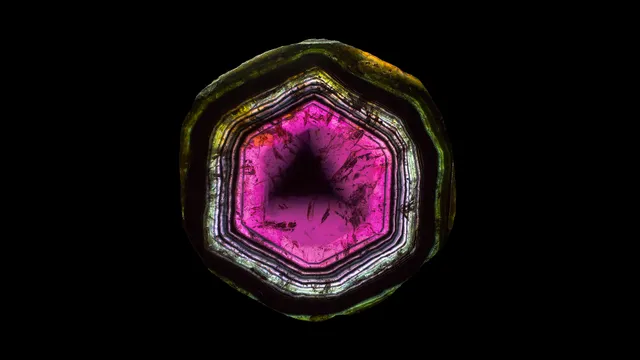
The collecting importance of the locality rests on polychromatic calcic lithium tourmaline—historically sold as liddicoatite and, for unanalysed pieces, best treated cautiously as liddicoatitic tourmaline. The best Alakamisy Itenina pieces are not ordinary pink or green pegmatite tourmalines. They are cross-sections cut from rounded, waterworn masses: discs and slabs with triangular cores, three-rayed star figures, nested color polygons, yellow-green outer fields, red or fuchsia centers, black to dark green bands, and tight concentric growth shells. They are specimens made to be backlit. Under transmitted light, the finest slices have the graphic presence of a stained-glass window and the scientific interest of a chemical zoning map.
Regional View
Country View
The geological setting is a secondary gem deposit. Published locality records describe the tourmalines as having been found in a rice field located in an ancient riverbed, in a productive horizon buried beneath roughly 20 m of younger material. The tourmaline pieces are rounded rather than freshly crystallized in pocket matrix, and reported recovered masses reached as much as about 20 cm in diameter. That origin explains the look of most surviving collector pieces: polished cross-sections, not sharply terminated crystals. Alakamisy Itenina is therefore a locality where lapidary presentation and mineralogical identity are inseparable.
Its historical significance is also analytical. A large pink-red crystal fragment from the Lacamisinten gem deposit was the subject of a 1999 European Journal of Mineralogy study by Aurisicchio, Demartin, Ottolini, and Pezzotta, who examined it by EMPA, SIMS, crystal-structure refinement, atomic absorption, thermogravimetry, and gas chromatography as a possible homogeneous liddicoatite reference material. The locality was also included among the central and south-central Madagascar sources chemically tied to liddicoatite in the 2002 Gems & Gemology study of Madagascar liddicoatite tourmaline. In other words, Alakamisy Itenina is not merely a trade name for pretty slices; it is one of the named Madagascar occurrences that helped define how collectors and gemologists think about liddicoatite, elbaite, and fluor-liddicoatite in zoned crystals.
Search for specimens: View all specimens from Alakamisy Itenina, Madagascar
Alakamisy Itenina lies in the Vohibato District of the Matsiatra Ambony Region, in the central highlands of Madagascar, near the broader Fianarantsoa gem district. The locality is formally recorded as the Alakamisy-Itenina gem deposit, and the rural commune itself is documented at about 21°27′ S, 47°05′ E. Modern locality descriptions place it in agricultural country: rice fields, cultivated land, and highland villages. This is essential to understanding the deposit. The collectible tourmaline did not enter the market chiefly as fresh pocket crystals attached to cleavelandite or quartz, but as rounded, reworked gem material from an old river channel beneath younger cover.
The deposit type is an alluvial or paleochannel concentration of gem tourmaline derived from older pegmatitic sources. The exact primary pegmatite source feeding the Alakamisy Itenina material is not well documented in the public collector literature, but the chemistry and appearance align the locality with Madagascar’s lithium-rich gem-pegmatite province. Regional Madagascar tourmaline literature repeatedly links Alakamisy Itenina, under the name Lacamisinten, with the country’s central and south-central suite of liddicoatitic tourmaline localities. In practical collecting terms, that means the recovered pieces are best understood as durable, transported remnants of gem pockets: broken or detached tourmaline masses rounded by weathering and stream action, then preserved in a buried gravel or sediment horizon.
The ore body, if one may call it that for a collector locality, was a gem-bearing layer rather than a conventional hard-rock vein. The productive horizon lay beneath approximately 20 m of younger sedimentary or soil cover. Reported pieces were rounded and reached up to about 20 cm across, a size large enough to yield dramatic polished slabs. The mineralization documented from the deposit is narrow but important: liddicoatite, tourmaline, and rubellite. A locality like this does not have the long mineral list of a complex open pegmatite quarry; its fame is concentrated in one exceptional material.
Mining history is correspondingly episodic. The classic period most often attached to Alakamisy Itenina specimens is the early 1990s, when a liddicoatite pocket or productive zone was reportedly worked in 1991–1992. After that, the area was considered largely exhausted in the trade. One later, highly publicized specimen account records a 2017 revisit in which scouts recovered a single large liddicoatite crystal that was cut into five kaleidoscopic slices, only two of which showed a strong red center. That story fits the market pattern collectors see: true Alakamisy Itenina pieces appear intermittently, usually as old-stock polished slices rather than as continuing mine production.
No sustained industrial operator is clearly documented for the Alakamisy Itenina gem deposit in the public mineralogical sources consulted. The available record points instead to small-scale gem recovery, scouting, and hand working in an agricultural setting. A 2014 field mission report to Alakamisy Itenina describes the village as about 36 km from Fianarantsoa, including 21 km of track, and notes “mines de tourmaline” among the rice fields and cultivated landscapes. That is a useful modern glimpse: the locality is not a casual roadside collecting stop but part of a rural working landscape where access, permission, land use, and safety must be treated seriously.
For present-day collectors, the most important locality-control issue is label interpretation. “Alakamisy,” “Alakamisy Itenina,” “Alakamisy, Fianarantsoa,” and “Lacamisinten” may all occur on labels, and older lapidary goods may have moved through gem-cutting centers far from Madagascar. The best locality attribution usually comes from old collection history, dealer chain of custody, or published specimen pedigree. Pieces sold simply as “Madagascar liddicoatite” should not be upgraded to Alakamisy Itenina without evidence.
Alakamisy Itenina liddicoatite is prized chiefly as polished cross-sectional material from rounded alluvial tourmaline masses, not as matrix crystals; documented pieces include pink-red chemically studied material, rubellite-red material, and polychrome slabs with yellow, green, gray-blue, pink, fuchsia, crimson, and near-black zoning. The locality’s best slices show crisp triangular cores, three-branched star motifs, nested interlocking triangles, spotted or dark borders, and enough translucency to glow under backlighting; reported recovered tourmaline pieces reached up to about 20 cm in diameter, while museum and dealer specimens include sections in the 9–16 cm range and a 14.5 x 15 x 0.5 cm, 234 g slice from a 2017 find. Good pieces are separated from ordinary ones by symmetry, strong transmitted color, sharp internal zoning, minimal open fractures, and a center that lands visually within the slice rather than being cut off or lost in dark bands. Because Madagascar zoned tourmalines may contain liddicoatite and elbaite compositions in different sectors, serious collectors should regard unanalysed examples as liddicoatitic tourmaline unless reliable chemical work accompanies the specimen.
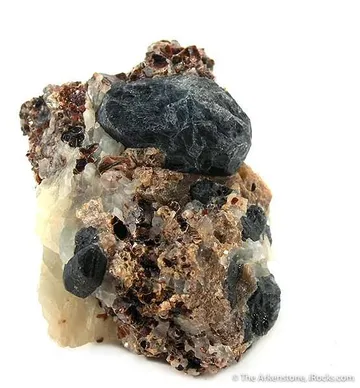
The verified mineral list for the Alakamisy-Itenina gem deposit is short: liddicoatite, tourmaline, and tourmaline var. rubellite. No approved type-locality mineral is documented from this exact deposit in the major online locality records. Rubellite labels from Alakamisy Itenina should be read as a color-variety designation rather than a species identification; a red tourmaline slice may be elbaite, liddicoatite, fluor-liddicoatite, or compositionally zoned between tourmaline species. Quartz and tourmaline together have appeared in modern dealer material attributed to the Alakamisy Itenina mine, including tourmaline visible externally and as inclusions in quartz, but the classic and scientifically important collector material remains the polychrome tourmaline slice suite.
The main authenticity issue is not synthetic material but locality and species precision. The market loves the word “liddicoatite,” yet Madagascar tourmalines with dramatic zoning cannot be separated reliably from elbaite or fluor-liddicoatite by appearance alone. The 2002 Gems & Gemology study emphasized that quantitative chemical analysis is needed, and that different zones of a single crystal may fall into different tourmaline species fields. A specimen sold as “Alakamisy Itenina liddicoatite” is strongest when it has an old, specific label, analytical support, or a documented chain of custody. A specimen sold as “Madagascar liddicoatite” should remain Madagascar material unless evidence ties it to Alakamisy Itenina.
The second common problem is name drift. “Lacamisinten” is a known misspelling used by gem dealers for Alakamisy Itenina. That spelling can actually strengthen an old label if it fits the period and provenance, but it can also obscure the locality for modern buyers. “Alakamisy, Fianarantsoa” is another label style, and it should be distinguished from other Malagasy places beginning with Alakamisy. Serious collection catalogues should record the full modern locality as Alakamisy-Itenina gem deposit, Alakamisy Itenina, Vohibato District, Matsiatra Ambony, Madagascar, while preserving the historical label text.
Condition is central to value. Many pieces are slices, so the exposed polished faces are vulnerable to scratches, edge chips, repolishing, and over-thinning. Tourmaline has good hardness but is brittle, and thin slabs with old healed fractures, strain features, or feathering can break if flexed or dropped. Look carefully for glued breaks along dark bands, resin-filled fractures, or beveled edges that disguise old chips. Backlighting is the correct way to examine a slice, but harsh point-source lighting can make a mediocre piece seem better than it is; assess it both in transmitted and reflected light.
Treatments should be considered in the gem sense. The Gem Trader specimen from Alakamisy Itenina was described with no treatment, and classic collector slices are generally valued as natural color-zoned tourmaline, but tourmaline as a gem material can be heated or irradiated in some contexts. For mineral-specimen collecting, any treatment, stabilization, dyeing, or major repolishing should be disclosed. Be especially cautious with loose slices that lack provenance but show unusually perfect surfaces, suspiciously saturated color, or modern jewelry-style finishing.
Availability is limited. Alakamisy Itenina is not a locality that regularly floods the specimen market. The classic material was episodic, with a notable 1991–1992 recovery and scattered later reappearances; the 2017 account describes a single crystal yielding five slices. Today, collectors are more likely to encounter old-stock polished slices, museum-style section sets, or isolated dealer pieces than newly mined lots. The best examples—large, translucent, sharply zoned, well-centered, and securely attributed—are locality specimens first and lapidary objects second.
The most memorable Alakamisy Itenina story begins in a rice field, not in a glittering pocket underground. The deposit is recorded as a buried ancient riverbed beneath about 20 m of younger material, a place where farmers’ landscape and gem geology overlap. Out of that horizon came rounded tourmaline masses up to about 20 cm across. For a collector used to pegmatite pockets, the mental image is striking: not a crystal pried from cleavelandite, but a waterworn nodule lifted from old alluvium, later sawn open to reveal triangles, stars, and bands that had been hidden since the crystal grew.
The gem trade then gave the place a second identity. “Lacamisinten” looks like an exotic mine name, but it is really a listening error turned label tradition. Spoken aloud in Malagasy, Alakamisy Itenina could be heard by outsiders as something close to Lacamisinten. That misspelling traveled with gem rough and polished slices into dealer inventories, collections, and publications. A collector finding an old “Lacamisinten” label is therefore holding a small fossil of the trade route itself: Malagasy locality, foreign ear, lapidary bench, cabinet drawer.
One of the most elegant afterlives of Alakamisy Itenina tourmaline was not a mineral specimen at all but an intaglio. Gems & Gemology illustrated an Alakamisy Itenina tourmaline carved by Ute Bernhardt, with permission from Mikhail Baryshnikov, to depict his representation of an older man in the ballet Heart Beat. The choice of material was apt. The stone’s “aggregate-type” zoning gave the carving internal movement: not a blank gem surface, but a stage of color domains, layered growth, and human design.
The 2017 dealer account has the compact drama collectors remember. After a significant 1991–1992 working, the area was considered depleted and essentially absent from the market for about two decades. Then scouts returned and found a single large crystal. It was not a commercial lot, not a renewed mine run, but one crystal—cut into five kaleidoscopic slices. Only two reportedly held the most coveted visual feature: a red center. In a locality whose best pieces are judged by what the saw reveals, that is the perfect Alakamisy Itenina story: years of silence, one recovered mass, five windows, and only two with the heart collectors hope for.
A small modern field note comes from outside the mineral trade. A 2014 French school-mission report describes the route to Alakamisy Itenina as 36 km from Fianarantsoa, including 21 km of track, taking roughly 1 hour 15 minutes to 2 hours by vehicle. The same report notes rice fields, other crops, village crossings, and tourmaline mines. It is a useful corrective to romantic locality labels: these specimens come from a lived rural highland landscape, not from an abstract dot on a mineral map.