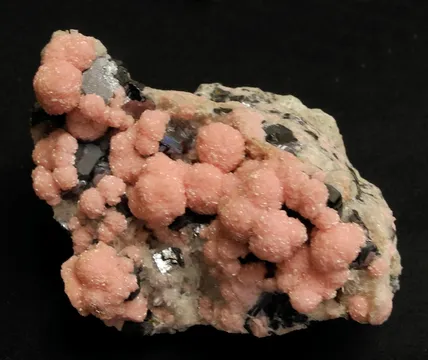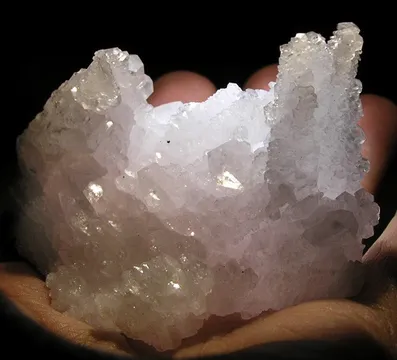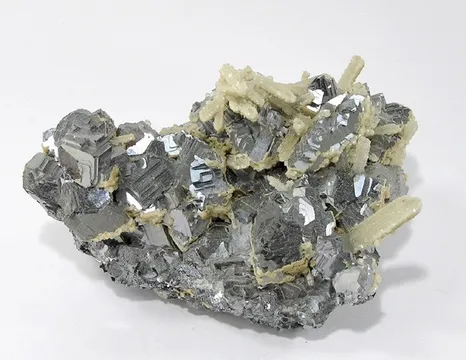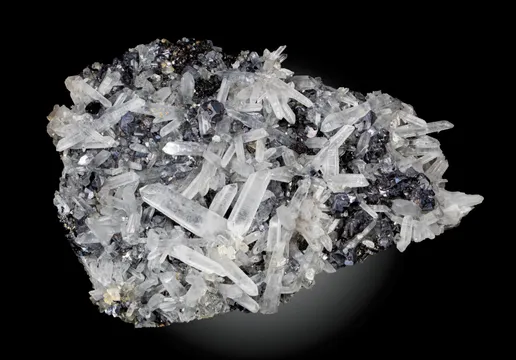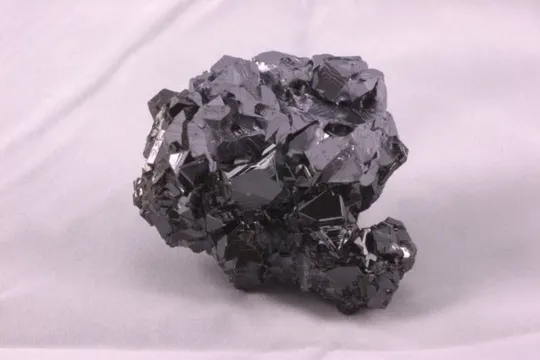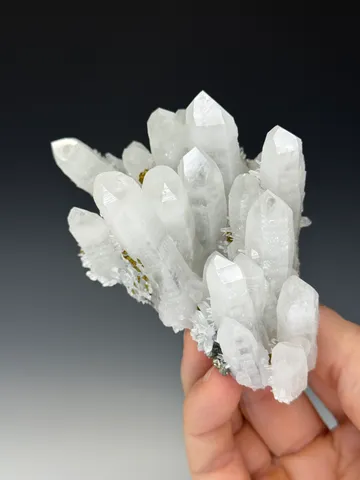
Haskovo Province, Bulgaria: famed Madzharovo and Chala mine localities yield pyromorphite, ardaite, amethyst, quartz, pyrite and galena in the Rhodope district.
Key facts
Haskovo Province sits on the northern and eastern edge of the Eastern Rhodopes, where Paleogene volcanism and later hydrothermal activity built several quite different collecting stories into one administrative region. For collectors the name most often resolves to two classic sub-localities: the Madzharovo polymetallic district on the Arda River, famous for pyromorphite, ardaite, amethyst, quartz, galena and secondary lead phosphates; and the Chala mine in the Spahievo ore field, a gold-polymetallic epithermal deposit whose modern specimens are best known for amethyst, pyrite, hematite and a rich suite of secondary phosphates and sulfate-phosphates.
At Madzharovo, the geology is unusually legible in the landscape. The Arda River cuts through the old volcanic complex, exposing a thick volcanic pile of latites, basaltic andesites, and related intrusions. The ore system belongs to the Rhodope metallogenic province: a shallow volcanic-hosted Pb-Zn-precious-metal system, with intermediate-sulfidation veins overprinted by oxidation that produced the collectible secondary lead assemblage. Its best pyromorphites are not the big, glossy green barrels familiar from China or France; they are typically more subtle, more textural Bulgarian pieces—tan to yellow-green barrel crystals, hoppered forms, needle-like sprays, drusy crusts, and pyromorphite replacing or coating quartz, often on dark sulfide-rich or iron-oxide matrix.
Regional View
Country View
The province also matters because Madzharovo is a true mineralogical type-locality district. Ardaite, named for the Arda River that passes through the deposit, was described from microscopic lead-antimony chlorine-bearing sulfosalt aggregates in the Madzharovo polymetallic ore. The deposit was also historically tied to “orpheite,” a lead aluminum phosphate-sulfate phase later discredited, which remains a reminder that Haskovo specimens sit at the intersection of display collecting, ore microscopy, and Bulgarian mineralogical research.
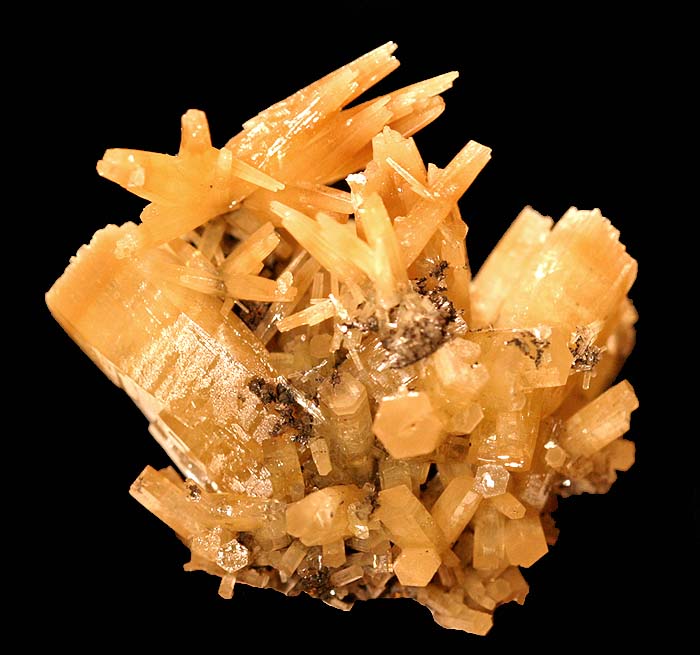
Photo: Wikimedia Commons

Photo: Wikimedia Commons
Search for specimens: View all specimens from Haskovo Province, Bulgaria
Haskovo Province is best understood as a collector locality only after separating its main mineral-producing districts. The Madzharovo deposit is the classic polymetallic locality: a Pb-Zn-precious-metal ore district in the Eastern Rhodopes, centered in and around the old Madzharovo volcanic complex. Published geochronology places the main volcanic and hydrothermal activity in the Early Oligocene, around 32.7–32.1 million years ago. The volcanic pile includes high-K calc-alkaline to shoshonitic rocks, with latite as a major component, later intruded by monzonitic stocks and trachytic dykes. Radial fissures, feeder structures and hydrothermal veins gave the district its characteristic vein geometry.
The ore was mined chiefly for lead and zinc, with gold and silver as important precious-metal components in places. Primary ore minerals include galena, sphalerite, pyrite, chalcopyrite, tetrahedrite-tennantite group minerals and a suite of sulfosalts; oxidation then produced the colorful collector minerals—pyromorphite, anglesite, cerussite, corkite, plumbogummite, iron oxides, and related phosphates and sulfates. The secondary assemblage is most interesting where lead-bearing sulfides, phosphate-bearing solutions, quartz-adularia alteration, and open cracks or cavities intersected.
Madzharovo’s mining history reaches far beyond modern specimen collecting. Ancient activity in the district is commonly attributed to Thracian times, while most industrial development belongs to the mid-20th century. The town grew as a mining settlement during the socialist period, when the Rhodope lead-zinc industry became a strategic Bulgarian metal source. Modern references describe roughly 10.8 million tonnes of ore processed from the Madzharovo district at about 1.3% Pb and 0.7% Zn, with additional low-grade and residual resources left after mining became uneconomic. The district’s modern decline followed the 1990s closure and dismantling of state-run mining operations; the former mining landscape is now more associated with abandoned workings, tailings, local stone workers, gem hunters, and the dramatic Arda River meanders than with active base-metal production.
The Chala mine is a separate but equally important Haskovo locality. It lies between Spahievo and Bryastovo in the Mechkovets ridge, also known locally as Aida or Mechata Planina, in Mineralni Bani Municipality. Chala is an underground mine on an epithermal gold-polymetallic deposit of the Spahievo ore field. Published work describes it as hosted by a Late Eocene to Oligocene volcanic complex and especially notable for its secondary phosphate, phosphate-sulfate and sulfate minerals. The official concession record identifies the concessionaire as GORUBSO-Kardzhali AD and the concession as a state concession for lead-zinc and gold-bearing ores at Chala, with the official concession area in the thousands of decares. The operator describes the deposit as opened on several underground levels and employing more than 200 people, chiefly local workers.
Specimen collectors know Chala mostly for quartz and amethyst, commonly with pyrite, chalcopyrite, native gold, copper minerals, hematite, turquoise-group minerals, wavellite, corkite, hinsdalite, beaverite-(Cu), osarizawaite, jarosite, plumbogummite and related secondary species. Carbonates are reported as rare in the deposit, which helps explain why phosphate-sulfate minerals are such an important part of the Chala collector identity. A recent museum study of two Chala dump specimens documented yellowish-green spherulitic turquoise-group aggregates in small cavities, transparent colorless wavellite crystals and aggregates on them, and strong 365 nm fluorescence from the wavellite.
Collecting access must be treated conservatively. Chala is not a casual-access locality: it is a concessioned underground mine, and any visit requires formal permission from the operator and respect for mine safety rules. The dumps have also been heavily disturbed; locality notes describe the remaining dump material as bulldozed flat, with patient searching still capable of producing micromounts rather than large hand specimens. Madzharovo’s old mine areas are no longer normal active collecting ground either. The region includes abandoned industrial ground, old workings, altered sulfide dumps, unstable slopes, and protected natural landscapes; collecting should be limited to legal, permitted ground, with particular caution around arsenic-, lead-, and cadmium-bearing oxidation products.
Notable pockets and finds are best documented through the specimen record rather than mine-by-mine pocket names. Madzharovo pyromorphites occur as crystalline druses, acicular sprays, tan barrel-shaped crystals with hoppered growth, and crusts or replacements in cracks and cavities. Chala’s best collector output has come from quartz and amethyst pockets with pyrite and from dump material carrying microcrystalline secondary phosphates. In both districts, the most scientifically important material may be visually modest: ardaite is microscopic, Chala’s turquoise-group rarities may form millimetric spherules, and many of the phosphate-sulfate species require analytical confirmation.
Haskovo pyromorphite is most strongly associated with the Madzharovo Pb-Zn polymetallic district and, more specifically, the oxidized portions of lead-bearing sulfide veins and altered quartz-adularia rocks. The best display pieces show locality-character rather than sheer size: tan to yellow-green barrel-shaped crystals, hoppered forms, slender acicular sprays, drusy coatings on quartz, and small but sharply textured clusters on dark sulfide or iron-oxide matrix. Published studies of Bulgarian pyromorphites include yellow-green crystalline druses from Madzharovo and document calcium-bearing compositions; work on Brussevtzi material within the Madzharovo ore field describes pyromorphite with plumbogummite and corkite in the weathering zone, filling cracks and cavities or forming pseudomorphic textures after quartz. Ordinary pieces are dull granular coatings; good pieces have recognizable crystal habit, lively contrast against matrix, intact needle sprays or barrels, and enough three-dimensional relief to read as a miniature rather than a green crust.
Chabazite attributed to Haskovo Province belongs to the Eastern Rhodope volcanic zeolite story rather than to the Madzharovo-Chala lead-zinc oxidation suite. Bulgarian zeolite literature records chabasite, often under the older spelling “chabasite” and sometimes the habit name phacolite, in amygdales, cavities and fissures of Paleogene volcanic rocks together with analcime, harmotome, mordenite, heulandite, laumontite, calcite, quartz and chalcedony. Collector specimens from this regional suite are expected to be modest in scale: colorless, white, pale cream or lightly tinted rhombohedral crystals or phacolite twins in small cavities, commonly with other zeolites or silica lining the same void. The better pieces are clean, undamaged, well-centered cavity specimens with sharp chabazite form and clear association; ordinary examples are partial cavity linings where the chabazite is difficult to separate visually from heulandite, calcite or other white zeolite aggregates without magnification and, ideally, analytical confirmation.
Other documented Haskovo minerals range from display species to microscope-only rarities. Madzharovo is the type locality for ardaite, Pb19Sb13S35Cl7, a very rare lead-antimony chlorine-bearing sulfosalt named for the Arda River; type material occurs as microscopic acicular aggregates and inclusions associated with galena, nadorite, pyrostilpnite, robinsonite, semseyite, tetrahedrite-group minerals and anglesite. The same deposit is historically connected with “orpheite,” now discredited, and has produced galena, sphalerite, pyrite, chalcopyrite, quartz, amethyst, anglesite, cerussite, corkite, plumbogummite, fluorite, gold, silver-bearing sulfosalts and many oxidation-zone species. Chala adds a strong phosphate-sulfate personality: beaverite-(Cu), hinsdalite, corkite, cacoxenite, plumbogummite, osarizawaite, jarosite, wavellite, turquoise-group minerals including planerite-faustite-aheylite associations, plus amethyst, pyrite, chalcopyrite, native gold, native copper and hematite. The wider province and adjacent older Haskovo district records also include zeolitized volcanic rocks and agate-bearing fields, so labels should always be preserved down to mine, village or prospect level when available.
The main authenticity issue for Haskovo Province is not a well-established tradition of manufactured fakes, but locality looseness. “Bulgaria,” “Rhodope Mountains,” “Haskovo,” “Madzharovo,” “Madjarovo,” “Madyarovo,” “Chala,” “Spahievo,” and “Mineralni Bani” appear in older labels, dealer labels and translated records, sometimes with inconsistent spelling. That matters because a Madzharovo pyromorphite, a Chala amethyst, and an Eastern Rhodope zeolite specimen tell quite different geological stories. The best labels specify the deposit or mine, municipality, and province; old labels that mention only “Bulgaria” should be treated as incomplete rather than upgraded by wishful thinking.
Madzharovo pyromorphite deserves careful visual checking. Many pieces are naturally dull, earthy or iron-stained, so high luster alone is not the defining test. Look instead for intact crystal endings, non-random distribution in cracks or on quartz, and the correct association with lead-ore oxidation matrix. Slender acicular pyromorphite sprays are vulnerable to rub damage; tan barrel crystals may show contact points and broken hopper rims. Pyromorphite coatings on quartz can be attractive, but they should not be described as large pyromorphite crystals unless the individual crystal forms are actually visible.
For Chala and Madzharovo secondary phosphates, analytical certainty is often the difference between a scientific label and a hopeful trade name. Green or blue-green microcrystalline material from Chala may be turquoise, planerite, faustite, aheylite, chalcosiderite-series material, osarizawaite, jarosite mixtures, or other fine-grained phosphate/sulfate assemblages. Many of these species are visually similar at cabinet scale. Good sellers will say whether the identification is confirmed, visually assigned, or based on association.
Condition problems are predictable. Oxidized lead-zinc specimens often carry friable limonite, soft secondary crusts, delicate needles, microcrystalline coatings, and loose matrix. Wash only when you are certain the minerals can tolerate water; avoid acids on mixed secondary assemblages; and never clean Chala phosphate-sulfate material aggressively. Wavellite from Chala may fluoresce strongly under 365 nm UV, but ultraviolet response is an association clue, not a species proof. Lead, arsenic, cadmium and antimony-bearing minerals occur in these districts, so avoid dust, keep specimens away from children and pets, and wash hands after handling.
Market availability is intermittent. Chala amethyst and pyrite-amethyst combinations appear more often than fine Madzharovo pyromorphite, partly because Chala has had modern activity and broader dealer circulation. Good Madzharovo pyromorphite is scarcer: the best miniatures have a distinctive, old-European character and are usually bought by pyromorphite specialists, Bulgarian collectors, or collectors of type-locality districts. Ardaite is not a normal aesthetic specimen mineral; it is principally a microscopic and museum-type locality species, so any “ardaite specimen” should be understood as ore material carrying ardaite, not visible crystals.
Madzharovo’s collecting romance is inseparable from its rise and collapse as a mining town. From the 1950s through the end of the 1980s, the settlement grew around lead-zinc mining until it reached roughly 10,000 people. Then the 1990s arrived. The state abandoned the mine, the planned gemstone-processing plant was never completed, equipment was removed, and the old GORUBSO mines closed. The town shrank dramatically; modern reports describe Madzharovo as one of Bulgaria’s smallest towns, with only hundreds of residents. The abandoned mine lands did not disappear from mineral memory, though. They became a landscape of former miners, local guides, stone workers, gem hunters, and jewelry makers, all working around a volcanic district where amethyst, jasper, chalcedony and agate still carry the name of the Arda valley into shops and collections.
The Arda River gives the district both its scenery and one of its mineral names. Ardaite was not discovered as a glittering cabinet specimen pulled from a pocket; it was a microscopic discovery in the Madzharovo polymetallic ore, a new lead-antimony chlorine-bearing sulfosalt recognized in fine acicular aggregates and inclusions. The mineral was named for the river that cuts through the deposit. It is a perfect Madzharovo story: a dramatic river gorge, an industrial ore field, and a mineral so small that its importance belongs to the reflected-light microscope and the mineralogical literature rather than to a display case.
Chala has its own recent field-note moment. In April 2023, the Earth and Man National Museum in Sofia received two samples from the large dump of the Chala mine, donated by Georgi Georgiev, a lawyer and mineral collector. The pieces were not spectacular in the usual cabinet sense; they contained small yellowish-green spherulitic masses in cavities among quartz, with transparent colorless wavellite crystals growing on them. Laboratory work showed that the spherules were dominated by planerite with microcrystalline faustite and aheylite, and the study established aheylite for the first time in Bulgaria. The episode is a useful lesson for collectors: at Chala, a small dump specimen can carry more mineralogical value than a showier quartz cluster, if someone takes the trouble to analyze the green crusts.
V. V. Breskovska, N. N. Mozgova, N. S. Bortnikov, A. I. Gorshkov & A. I. Tsepin, “Ardaite—a new lead-antimony chlorosulphosalt,” Mineralogical Magazine, 46, 357–361, 1982 — original description of ardaite from the Madzharovo polymetallic ore deposit.
Mindat: Ardaite — concise reference for ardaite’s type locality, formula, associated minerals and type-material repositories.
Mindat: Madzharovo deposit, Madzharovo Municipality, Haskovo Province — central locality page for the Madzharovo deposit and its documented mineral list, including ardaite and pyromorphite.
Peter Marchev & Brad Singer, “40Ar/39Ar geochronology of magmatism and hydrothermal activity of the Madjarovo base-precious metal ore district, eastern Rhodopes, Bulgaria,” Geological Society, London, Special Publications, 204, 137–150, 2002 — key geochronology paper for the Madzharovo volcanic and hydrothermal system.
C. M. Rice, R. J. McCoyd, A. J. Boyce & P. Marchev, “Stable isotope study of the mineralization and alteration in the Madjarovo Pb-Zn district, south-east Bulgaria,” Mineralium Deposita, 42, 691–713, 2007 — important synthesis of the Madzharovo ore-forming fluids, alteration and mining history.
I. Kostov-Kytin, “Single-crystal X-ray diffraction studies on pyromorphites from Bulgarian localities. Crystal-chemical implications on the cationic sites population,” Review of the Bulgarian Geological Society, 2025 — modern crystal-chemical work including Madzharovo pyromorphite.
Institute of Mineralogy and Crystallography, Bulgarian Academy of Sciences, Annual Report No. 8: “Lead phosphate minerals from Brussevtzi deposit, Eastern Rhodopes: SEM, IR and DTA studies” — documents pyromorphite, plumbogummite and corkite in the Brussevtzi part of the Madzharovo ore field.
Larisa Nesheva et al., “Planerite with aheylite and faustite from the Chala deposit, Spahievo Ore Field,” Review of the Bulgarian Geological Society, 84(3), 43–46, 2023 — documents Chala turquoise-group material and the first Bulgarian occurrence of aheylite.
Mindat: Chala mine, Spahievo ore field, Mineralni Bani Municipality, Haskovo Province — practical collector locality page with coordinates, mineral list, access notes and dump condition notes.
R. Atanassova, R. D. Vassileva, M. Kadiyski & Z. Zlatev, “Crystallographic, chemical and structural characteristics of harmotome from Zlatolist, Eastern Rhodopes, Bulgaria,” Bulgarian Chemical Communications, 44, 7–16, 2012 — useful regional reference for Eastern Rhodope zeolite assemblages including chabasite, analcime, harmotome, mordenite and heulandite.
Mindat: Haskovo Province, Bulgaria — province-level mineral index tying together Madzharovo, Chala and other Haskovo localities.
Mindat: Madzharovo deposit — essential locality page for Madzharovo species, references and photo links.
Mindat: Chala mine, Spahievo ore field — essential locality page for Chala minerals and collecting-access notes.
Wikimedia Commons: Madjarovo Deposit — open image category with pyromorphite, ardaite, quartz epimorphs and Arda River scenery from the Madzharovo area.
GORUBSO-Kardzhali AD: Chala Mine — operator information on the mine’s location, underground working and concession basis.
Bulgaria National Concession Register: Chala deposit concession — official state concession record for Chala.
Bulgarian News Agency: “Bulgaria has Huge Potential to Develop Gem Hunting” — useful popular account of Madzharovo’s post-mining landscape and gem-hunting tourism.
Ministry of Environment and Water: Rozino polymetallic project notice — current official environmental-procedure page for the Rozino polymetallic proposal in Haskovo Province.