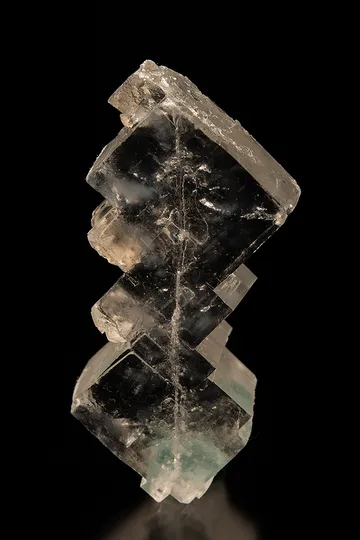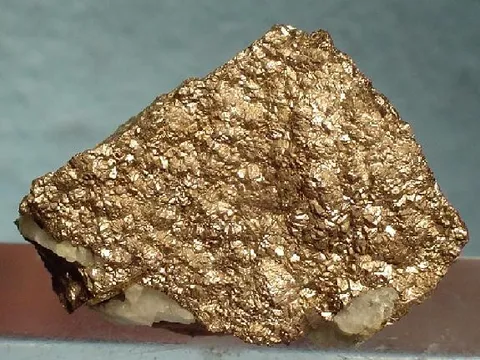
Harz, Germany - a mineral province yielding calcite varieties from St. Andreasberg, rare clausthalite, and dense sulfide ores; prized by collectors.
Key facts
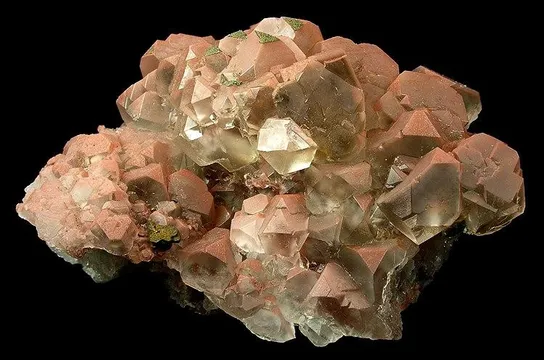
The Harz is not a single mine locality so much as a compact mineral province: a block of Variscan basement, lifted in northern Germany and cut by a crowded history of polymetallic veins, stratiform massive sulphide ore, barite-fluorite systems, contact rocks, slags, and oxidation zones. For collectors, the name carries several very different visual signatures. From St. Andreasberg come the famous old calcites—paper-thin tabular forms, nail-head rhombs, white-capped hexagonal crystals, stacked “poker-chip” plates, and gemmy scalenohedra—often with silver minerals, galena, arsenides, apophyllite, or zeolites. From Clausthal and the Burgstätte veins comes clausthalite, the lead selenide whose very name preserves the mining town. From Rammelsberg, near Goslar, come dark, dense, banded sulphide ores of galena, sphalerite, chalcopyrite, pyrite, baryte, and carbonate from one of Europe’s great non-ferrous deposits. From Tilkerode, Neudorf, Lautenthal, Bad Grund, Bad Lauterberg, and the old smelter and slag sites come the specialist rarities that make Harz labels enduringly attractive to systematic collectors.
Regional View
Country View
Geologically, the Harz is a showcase in miniature. Paleozoic shales, greywackes, sandstones, limestones, and basic volcanic rocks were folded and faulted during the Variscan orogeny; later, Mesozoic brines repeatedly used the inherited fracture systems as plumbing. The Upper Harz Pb-Zn-Ag veins around Clausthal-Zellerfeld, Zellerfeld, Wildemann, Lautenthal, and Bad Grund are chiefly quartz-calcite-carbonate-sulphide vein systems. The Middle Harz district of St. Andreasberg is more compact but mineralogically flamboyant, with narrow, fault-controlled silver-bearing veins famous for calcite, pyrargyrite, dyscrasite, zeolites, arsenides, and rare sulfosalts. Rammelsberg is different again: a Middle Devonian sediment-hosted massive sulphide and barite deposit, deformed and recrystallized, whose ores fed Goslar for roughly a millennium.

Photo: Wikimedia Commons
The historical weight is part of the collecting appeal. Rammelsberg, Goslar, and the Upper Harz Water Management System are UNESCO World Heritage because the mines, watercourses, reservoirs, adits, shafts, and processing works record centuries of European mining technology. In mineral cabinets, the same history appears as old handwriting: “Andreasberg,” “Clausthal,” “Zellerfeld,” “Rammelsberg,” “Tilkerode,” “Neudorf.” Fine Harz specimens are often not bright in the modern, competition-mineral sense; their beauty is older and more studied. A cabinet calcite from St. Andreasberg may show stacked generations, bevelled edges, milky caps over transparent cores, or zoning across a cluster. A good clausthalite is a heavy, metallic grey selenide mass or veinlet, ideally with calcite, quartz, greywacke, tiemannite, naumannite, or associated selenides documented from Clausthal or Tilkerode.

Photo: Wikimedia Commons
Search for specimens: View all specimens from Harz, Germany
A “Harz, Germany” label needs to be read as a regional label unless a mine, district, or town is also given. The Harz Mountains extend across Lower Saxony, Saxony-Anhalt, and Thuringia; the principal classic specimen labels cluster in the Upper Harz around Clausthal-Zellerfeld, Bad Grund, Lautenthal, Wildemann, and Goslar, and in the Middle and Lower Harz around St. Andreasberg, Bad Lauterberg, Neudorf, Harzgerode, and Tilkerode. The regional ore story is therefore not one deposit but several: Rammelsberg’s stratiform Cu-Zn-Pb-Ba massive sulphide ore, Upper Harz Pb-Zn-Ag carbonate-sulphide veins, St. Andreasberg silver and arsenide-sulfosalt veins, Lower Harz barite-fluorite systems, and numerous secondary and slag-mineral localities.
The bedrock framework is Paleozoic, dominated by Devonian to Lower Carboniferous siliciclastic rocks—shales, greywackes, sandstones—with limestone reefs, basic volcanic rocks, and later intrusions including the Brocken granite and Harzburger gabbro. The ore-bearing structures commonly follow WNW-ESE fracture and shear zones, many of them reactivated Variscan faults. Modern fluid-inclusion and isotope work has moved the interpretation of the major vein systems away from a simple granitic-hydrothermal model and toward Mesozoic basinal brines: hot, saline NaCl-CaCl2-rich fluids moving through old structures, mixing with reduced sulfur-bearing fluids for the main sulphide stage, and later with sulfate-rich or meteoric waters for barite and fluorite stages.
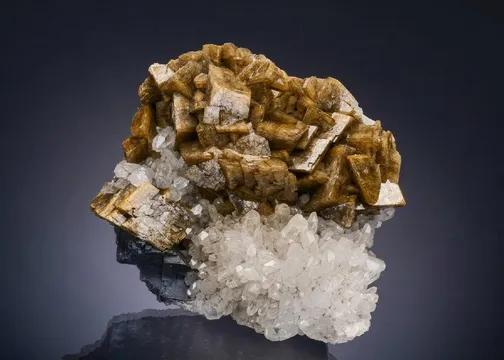
In the Upper Harz vein province, the central mining districts around Clausthal-Zellerfeld and Bad Grund produced ores dominated by galena, sphalerite, pyrite, chalcopyrite, quartz, calcite, siderite, ankerite, dolomite, and baryte, with silver carried largely in galena and in accessory silver minerals. The veins could be thick fault zones with banded quartz-sulphide and calcite-sulphide textures; Bad Grund became the most important later ore source, and the regional crude-ore production of the Upper Harz Pb-Zn-Ag veins is generally placed at roughly 36.9 million metric tons, yielding about 1.91 million tons lead, 1.463 million tons zinc, and a little over 5,000 tons silver. The deep, later operations around Bad Grund survived long after many older Upper Harz mines closed, with the closure of the Hilfe Gottes mine in 1992 marking the end of ore mining in the Upper Harz.
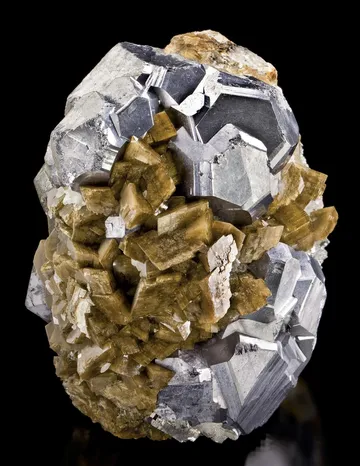
Rammelsberg, just south of Goslar, is the great counterpoint to the vein districts. Its ores were not classic open-space crystal pockets but deformed stratiform massive sulphide and barite bodies formed in a Middle Devonian marine basin and later folded and overprinted. The deposit is described as sediment-hosted massive sulphide mineralization, with principal ores of sphalerite, galena, chalcopyrite, pyrite, baryte, and carbonate gangue. Its main orebodies—the Altes Lager, Neues Lager, and associated lenses—contained on the order of 27 million metric tons of massive sulphide ore, with an additional banded-ore fringe. For collectors, Rammelsberg pieces are usually valued as historic ore specimens: dense, dark, banded, metallic, and locality-significant rather than vuggy and crystal-lined.
St. Andreasberg is the mineral collector’s jewel box within the Harz. Its veins are narrower and more structurally fussy than the great Upper Harz lodes: steep, discontinuous, commonly less than a meter thick, with ore shoots controlled by intersections, cataclastic “ruschel” zones, and changes in country rock. The district sits in Middle Devonian slates, marly shales, sandstones, and spilitic rocks near the contact aureole of the Brocken pluton. Its production was modest beside the Upper Harz, but its mineralogical importance is disproportionate. The district is famous for calcite in extraordinary morphological variety, zeolites such as apophyllite, harmotome, and stilbite, and silver minerals including pyrargyrite, dyscrasite, stephanite, polybasite, pyrostilpnite, and argentopyrite. The Samson Mine became the emblematic locality, opening in the early 16th century, reaching great depth, producing to 1910, and yielding specimens now prized as old European classics.
Clausthal and its neighboring mines matter especially for selenium mineralogy. The St. Lorenz and Königin Charlotte mines belong to the old Clausthal Pb-Zn-Ag vein field, but their fame in systematic cabinets rests on clausthalite, tiemannite, naumannite, klockmannite, eskebornite, berzelianite, and related selenides. Recent work on historical material from the Königin Charlotte mine showed clausthalite and tiemannite as the main selenide components, with naumannite subordinate and klockmannite and eskebornite accessory. The assemblage occurs along calcite-quartz veinlets in bleached and reddened greywacke and in massive to semi-massive pockets, indicating a late, low-temperature selenide event that postdated the principal sulphide mineralization.
Tilkerode, in the Lower Harz, is another selenide name serious collectors should know. Its hematite-carbonate-selenide veins are famous for clausthalite, tiemannite, naumannite, gold, and platinum-group selenides and have yielded modern type minerals including tischendorfite and tilkerodeite. These are not cabinet-showpiece species in the usual sense; many occur as microscopic grains, inclusions, or polished-section subjects. Their significance is scientific and systematic, tied to low-temperature, oxidizing, selenium-rich hydrothermal fluids capable of transporting and depositing precious metals and platinum-group elements.
Mining began early in the Harz. Rammelsberg is documented from the medieval period and was worked continuously from the 11th century until the 1980s; older archaeological evidence and slag studies show still earlier metallurgical activity in the wider region. In the Upper Harz, the first intense near-surface mining discovered the major vein systems by the late medieval period, while systematic exploitation resumed strongly in the early 16th century. The founding of the free mining towns—Clausthal, Zellerfeld, Bad Grund, St. Andreasberg, Lautenthal, Altenau, and Wildemann—turned the Upper Harz into one of Europe’s early industrial landscapes. Water control was the critical technology: ponds, ditches, adits, water wheels, and man-engines powered pumping and hoisting in a wet mountain district where water could make or break a mine.
Modern collecting access is limited and must be treated conservatively. Many old mines are closed, flooded, unstable, protected as heritage monuments, situated on private land, or inside nature reserves. Rammelsberg, Samson, Catharina Neufang, Roter Bär, and related sites are primarily museums, heritage mines, or educational operations; they are valuable for seeing the geology and mining architecture, not for casual specimen removal. Some old dumps still yield study pieces where access is legal and permitted, but collectors should assume that permission, local regulations, and safety checks are required. The most desirable Harz specimens on the market today are overwhelmingly historic: 19th-century and early-20th-century calcites and silver minerals from St. Andreasberg, old Clausthal selenides, Rammelsberg ore specimens, and later specialist finds from quarry, slag, and selenide occurrences.
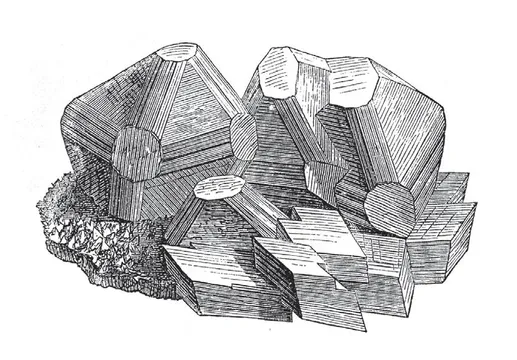
Calcite is the showpiece mineral of St. Andreasberg and one of the reasons the Harz remains a classic European locality in aesthetic collecting; the best examples are old-time cabinet and miniature specimens showing transparent to translucent colorless, grey, honey, pale red, or white-zoned crystals in nail-head, tabular, stacked, scalenohedral, and white-capped hexagonal habits, commonly on massive calcite, galena, quartz, or sulphide-bearing matrix. The Samson Mine and the wider St. Andreasberg mining area are especially prized because their calcites are not merely common gangue but morphology specimens: historical literature and modern summaries emphasize the extraordinary number of distinct habits, with individual pieces showing bevelled edges, bright luster, sharply defined pinacoidal terminations, dark basal inclusions, or repeated generations. Sizes range from small thumbnails and miniatures to full cabinet specimens over 10 cm, and quality here is judged by undamaged terminations, clarity or attractive zoning, sculptural three-dimensional form, and old provenance; ordinary Harz calcite is abundant, but a crisp St. Andreasberg calcite with strong form and 19th-century character is a true classic.
Clausthalite from the Harz is historically central because Clausthal is the name-locality and St. Lorenz at Clausthal-Zellerfeld is the accepted type locality for PbSe; collectors encounter it mostly as heavy lead-grey to silvery metallic masses, blebs, veinlets, or granular to massive aggregates rather than showy freestanding crystals. The important Clausthal material is associated with calcite, quartz, greywacke, tiemannite, naumannite, klockmannite, eskebornite, berzelianite, galena, sphalerite, chalcopyrite, hematite, dolomite, and siderite, with recent study of Königin Charlotte material showing clausthalite and tiemannite as the main selenides in calcite-quartz veinlets and in massive to semi-massive pockets. Good collector pieces are locality-secure, unusually rich, bright, and preferably accompanied by old labels or analytical support, because massive clausthalite can resemble galena and other metallic grey sulphides; the most desirable specimens retain the Clausthal or Harz selenide context rather than being anonymous grey metallic ore.
Beyond calcite and clausthalite, the Harz is a systematic collector’s province of unusual depth. St. Andreasberg is the type locality of samsonite, Ag4MnSb2S6, and is renowned for pyrargyrite, dyscrasite, pyrostilpnite, stephanite, polybasite, native silver, native arsenic, breithauptite, nickeline, apophyllite, harmotome, stilbite, and analcime. Clausthal and neighboring mines add the selenium suite of tiemannite, naumannite, klockmannite, eskebornite, berzelianite, and related minerals. Tilkerode is exceptionally important for selenium and platinum-group mineralogy, with tischendorfite and tilkerodeite among the modern type minerals tied to its selenide system, and with naumannite and eskebornite also historically important there. The wider Harz also includes Rammelsberg ore species such as galena, sphalerite, chalcopyrite, pyrite, baryte, siderite, and rare sulphosalts; Schulenberg and Lautenthal slag and mine occurrences have yielded secondary copper, lead, zinc, and sulphate minerals including schools of interest to micromounters.
The chief authenticity issue with Harz specimens is locality precision. “Harz” alone is often too broad for high-end valuation: a St. Andreasberg calcite, a Clausthal clausthalite, a Rammelsberg ore specimen, and a Tilkerode polished selenide mount belong to different geological and collecting worlds. Old labels may use obsolete spellings such as Andreasberg, St. Andreasberg, Sankt Andreasberg, Clausthal, Klausthal, Hartz, or Harz Mts.; these are not automatically suspicious, but they must be reconciled with the mineral species and matrix. A calcite with a St. Andreasberg label should plausibly show the locality’s classic habits or associations; a clausthalite without analytical support should be treated cautiously if it could simply be galena, especially when sold as a rare selenide.
I am not aware of a widely documented Harz-specific industry of treated or manufactured fakes comparable to famous modern fraud localities, but misidentification and label inflation are real risks. Metallic grey selenides, silver sulfosalts, arsenides, and lead sulphides require more than visual confidence. Clausthalite, tiemannite, naumannite, and related species are best bought with old provenance, a credible mine attribution, and, for expensive pieces, analytical confirmation. Samsonite is so rare and so easily confused with dark silver sulfosalts such as miargyrite or pyrargyrite that a high-priced specimen should be regarded as a papered, analytical purchase rather than a trust-me rarity.
Condition matters strongly. St. Andreasberg calcites often have exposed edges, thin plates, cleavages, or contacted peripheral crystals; small chips can be forgiven on old cabinet pieces, but broken central terminations reduce value sharply. White-capped and tabular calcites may show internal parting or cleavage, and old specimens can have grime in intergrowths from decades of handling. Harz silver minerals and sulfosalts are commonly small and visually dark; they can be brittle, tarnished, or partly embedded in calcite, so aggressive cleaning is a mistake. Native silver and silver sulfosalts should be protected from abrasion and sulfurous storage environments.
Fluorescence is not the core appeal of the Harz, but individual calcites may respond under long- or short-wave UV, and manganese-bearing calcites from the region can be of interest to fluorescent-mineral collectors. Treat fluorescence as a specimen-specific bonus, not a locality guarantee. The real market premium is historical: old St. Andreasberg calcites, fine pyrargyrite or dyscrasite on calcite, rich and confirmed clausthalite or tiemannite from Clausthal, Rammelsberg ore specimens with good labels, and systematic Tilkerode material. Availability is intermittent. Ordinary Harz ore and small calcites appear regularly, but elite old calcites, attractive silver minerals, and confirmed rare selenides surface mainly through European dealers, old collections, and specialized auctions.
On 12 December 1777, Johann Wolfgang von Goethe went underground at St. Andreasberg during his first Harz journey. The diary note is short and memorable: he entered Samson in the evening and came out “by God’s grace” through Neufang; it was very hard on him. The line is easy to romanticize, but the physical context matters. These were cold, wet, deep silver workings in a district where shafts, ladders, water, and darkness were part of the normal mining world. For a visiting poet and statesman, the descent was not picturesque scenery but a bodily encounter with the same underworld that produced the calcites, silver minerals, and arsenides collectors now place under glass.
The Samson Mine’s own mineral legend sharpened in the summer of 1908. Royal mining inspector H. Werner was inspecting the Samson vein on the 29th level, roughly 550 m deep and a little more than 300 m from the shaft, when miners showed him an unusual stretch of ore. The vein had been tectonically squeezed and thinned along about 40 m of strike, with the ore zone standing 20 to 30 m above the level. The gangue was quartz, calcite, anhydrite, and gypsum, sprinkled with flakes and specks of galena. Two meters above the gypsum lay a narrow stibnite lens, only about 20 by 1 cm, enclosed in massive calcite.
A few meters farther east, a pocket opened. In it were around 60 steel-grey to steel-black monoclinic prismatic crystals, some reaching 3 cm, standing on shattered quartz and projecting into open space. Werner thought they were miargyrite, a reasonable guess for a dark silver sulfosalt from St. Andreasberg. They occurred with pyrargyrite, unidentified silver sulphides, fahlores, galena, löllingite, chalcopyrite, native silver, apophyllite, quartz, and probably cubanite. Five meters higher, a second smaller pocket yielded about 20 more black crystals. One striking detail survived in the description: some of the unknown crystals were perched on a pea-sized mass of pyrolusite.
The new mineral emerged through a chain of old-school mineralogy. Professors Alfred Bergeat and Friedrich Kolbeck, teaching at Clausthal and Freiberg, recognized that Werner’s material might not be a known species. Werner gave Dr. Fraatz in Clausthal just 0.5 g for chemical analysis. The decisive number was manganese: 5.86 weight percent. The black prisms were not merely another familiar silver sulfosalt; they were a new silver-manganese antimony sulphide. Werner and Fraatz named it samsonite in 1910, after the mine. Only about 80 small specimens were recovered from the discovery, and the best crystals—those up to 3 cm from St. Andreasberg—remain among the great rarities of European silver-mineral collecting.
The end of Samson as an ore producer was less glamorous. Silver output had once reached thousands of kilograms per year in the district, and the record year at Samson is given as 3,040 kg in 1822. By 1905 the mine produced 364 kg; by 1909, only 90 kg. On 31 March 1910, the last shift of 80 miners left the workings. The mine had reached 42 levels and a total depth usually given in the range of about 810 to 840 m. The machines did not simply become ruins, however. The water system that had once served mining was adapted to generate electricity, and the preserved man-engine and water wheels became part of the reason Samson is now one of the most evocative technical monuments in the Harz.
The Harz also has a quieter mineral story in Clausthal’s grey selenides. Clausthalite and tiemannite were born into science in the 19th century from specimens that looked, at first glance, like dense metallic ore. They then fell into a strange kind of obscurity: famous names, but few modern descriptions of the actual type-locality assemblages. When historical samples from the Königin Charlotte mine were reexamined in the 21st century, the old material finally yielded a modern paragenesis. The selenides lay in bleached and reddened greywacke along calcite-quartz veinlets, or formed massive to semi-massive pockets. Inclusions of celestine, anhydrite, and carrollite in tiemannite pointed toward sulfate-bearing brines, and the selenide event proved younger than the main polymetallic sulphide stage. For collectors, that gives the best Clausthal pieces a second life: not merely “old Harz ore,” but mineral evidence from a late, low-temperature selenium-rich pulse in one of Europe’s classic mining regions.