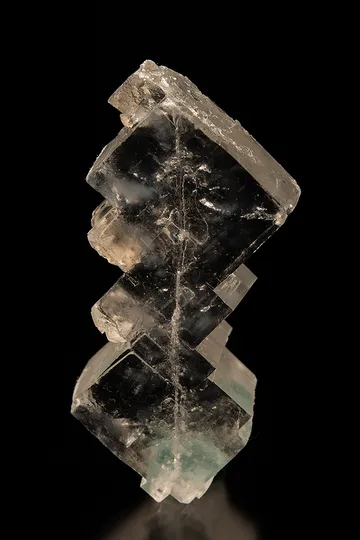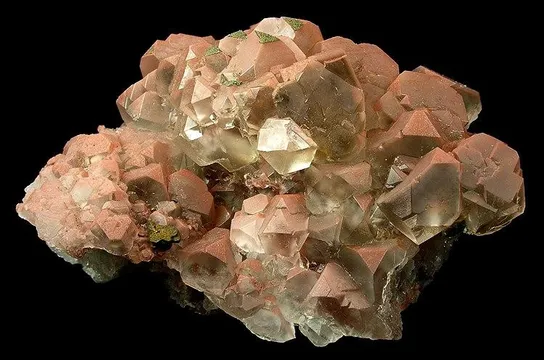
Eisleben, Germany — historic mining town in the Mansfeld Basin, known for copper-silver ore minerals with nickel arsenides (nickeline, maucherite); type locali…
Key facts
Eisleben is one of the great old names in European ore mineralogy: not a single mine in the narrow modern sense, but a historic mining town in the Mansfeld Basin, where generations of miners followed the Permian Kupferschiefer copper shale and its associated vein and replacement ores. For collectors, Eisleben matters because the locality unites three kinds of significance rarely found together. It is part of one of the world’s classic sediment-hosted copper systems; it belongs to an 800-year mining culture whose dumps, shafts, smelters, and technical monuments still shape the landscape around the town; and it produced a distinctive specimen suite in which copper-silver ore minerals are joined by nickel arsenides, especially nickeline and maucherite.
The collector image of Eisleben is not a showy field of bright secondary greens, although malachite and other alteration products are known from the district. The best classic pieces are dense, heavy, metallic specimens: brassy to reddish metallic nickeline crystals on pale baryte; grey to rose-grey maucherite with nickeline and pitchblende in baryte; old massive arsenide ore with cavities lined by tiny crystals; and, more rarely, silver-bearing and bismuth-bearing combinations. The specimens have a compact, old-European character—small in size, high in density, and often far more important mineralogically than their cabinet dimensions suggest.
Regional View
Country View
Eisleben sits on the Mansfelder Mulde, where the thin, organic-rich Kupferschiefer horizon at the base of the Zechstein succession was mined for copper and silver, while local hydrothermal “Rückenvererzungen” and baryte-rich veins furnished the nickel-arsenide specimens that made the town famous in systematic collections. The locality is the type locality for maucherite, Ni11As8, and also part of the type-locality story of betekhtinite, Pb2(Cu,Fe)22-24S15, making it essential not only to collectors of German classics but to anyone building a serious suite of type-locality sulfides and arsenides.

Photo: Wikimedia Commons

Photo: Wikimedia Commons
Search for specimens: View all specimens from Eisleben, Germany
Eisleben belongs to the Mansfeld-Sangerhausen Kupferschiefer province of central Germany, a Permian sediment-hosted copper district developed along the southern margin of the Central European Basin. The ore-bearing interval is the Kupferschiefer sensu stricto, a thin black, organic-rich shale at the base of the Zechstein succession, but the economically and mineralogically important mineralization is not confined to that shale alone. In the Mansfeld and Sangerhausen districts, ore occurs in the shale, along immediate bedding contacts, in footwall sandstones and conglomerates, and in hanging-wall carbonate rocks and veins. This is important for collectors because the best Eisleben arsenide specimens are not ordinary laminated shale ore; they are products of localized hydrothermal enrichment and baryte-carbonate vein assemblages associated with the copper-nickel mineralization.
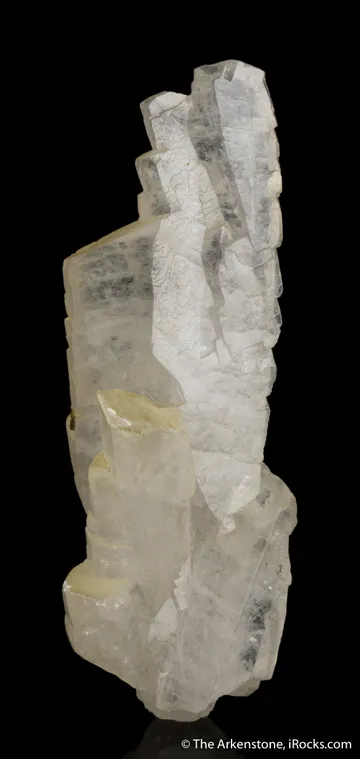
The general ore suite of the district is the familiar Kupferschiefer association of chalcocite, bornite, chalcopyrite, covellite, galena, pyrite, marcasite, and related copper sulfides, accompanied by baryte, calcite, dolomite, anhydrite, and locally fluorite. Eisleben’s special place comes from the nickel-arsenic enrichment: nickeline, maucherite, rammelsbergite, millerite, native bismuth, uraninite, native silver, and related metallic species occur in specimens that are far more coveted than the common disseminated copper shale. Baryte is the most characteristic light-colored gangue on old pieces, often giving badly needed contrast to the small metallic crystals.
The historical locality is a network rather than one hole in the ground. Relevant Eisleben-area names include the Max-Lademann shaft, formerly the Clotilde shaft; the Fortschritt shaft I at Volkstedt, formerly the Wolf shaft; and old smelter-related localities such as the Karl-Liebknecht smelter, or Krug smelter, slag occurrence. Volkstedt is now part of Lutherstadt Eisleben, and the great Fortschrittschacht heap remains one of the most visible mining monuments in the area. The Wolfschacht was sunk from 1906 to 1909 to reach the Kupferschiefer, passed through significant potash seams on the way down, and later became one of the major ore shafts of the Mansfeld Basin. Copper shale was first hoisted there in July 1923; after the 1949 renaming to Fortschrittschacht, the shaft continued under the postwar East German mining regime until the final shift on 8 December 1967.
The broader Mansfeld mining history reaches much farther back. Traditional accounts place the beginning of Mansfeld copper mining in 1199 with the discovery of copper ore near Hettstedt, and written evidence documents medieval exploitation from the late 12th century. The Counts of Mansfeld developed mines, smelters, and a mint at Eisleben, where the metals of the Kupferschiefer—especially copper and silver—fed both regional industry and coinage. In 1671, the “Freilassung” of Mansfeld mining and the establishment of the mining office in Eisleben opened the way toward more intensive industrial organization. In 1852, the surviving Mansfeld unions were consolidated into the Mansfeldische Kupferschieferbauende Gewerkschaft; in 1921 the industry took the form of Mansfeld AG for copper-shale mining and smelting; and in the German Democratic Republic it was reorganized under the VEB Mansfeld Kombinat “Wilhelm Pieck.”
Production figures underline the scale behind the specimens. The Mansfelder Mulde yielded tens of millions of tonnes of ore over its history, and district summaries give total production from about 1200 to 1969 as more than 80 million tonnes of ore, over 2 million tonnes of copper, and more than 11,000 tonnes of silver. Fortschrittschacht alone is credited with about 16.8 million tonnes of ore and roughly 350,000 tonnes of contained copper during its operating life. These figures explain why Eisleben and its neighboring towns are still ringed by mine dumps and conical waste heaps, yet collector-grade nickeline and maucherite specimens remain scarce: the mines were vast industrial ore producers, not specimen mines, and the most desirable pockets represented unusual localized conditions within a much larger ore system.
Collecting access today must be approached conservatively. The productive underground workings are abandoned and inaccessible; remaining dumps, smelter sites, and shaft grounds may be protected, reclaimed, privately owned, industrial, or unsafe. The Fortschrittschacht heap is a landmark and is sometimes visited in an organized tourism context, but that is not the same as permission to collect specimens. Loose material from older collections is the real source for most serious Eisleben pieces on the market. The best specimens usually carry old German, dealer, museum, or collection labels, and such provenance is not a decorative extra here—it is often the strongest evidence that a piece truly came from the classic mining period rather than from a later, less certain dump or smelter material source.
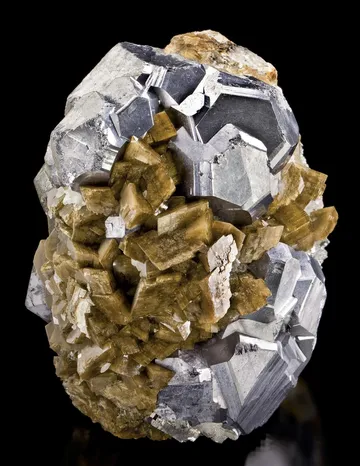
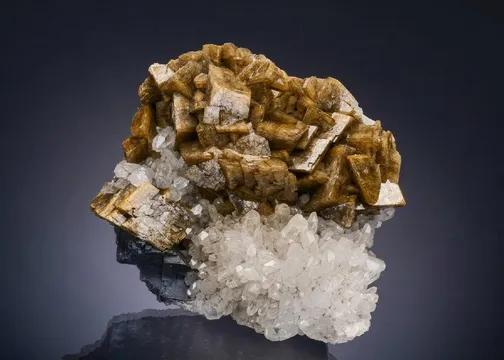
Eisleben nickeline is the locality’s signature collector species, occurring as reddish-bronze to brassy metallic material in baryte-rich copper-nickel ore, commonly associated with maucherite and locally with native bismuth, uraninite, galena, chalcopyrite, and other Kupferschiefer ore minerals. Ordinary pieces are massive, granular, or dull intergrowths in heavy ore, but fine specimens show distinct hexagonal crystals, commonly only millimetric, packed on matrix or exposed in cavities; documented classic examples include 3 mm crystals on baryte and specimens in the miniature range around 3 to 5 cm. The most desirable Eisleben nickelines have sharp crystal form, strong metallic luster, the characteristic reddish-golden tint, clean contrast against cream-white baryte, and credible old provenance, because crystallized nickeline from this locality is much scarcer than massive arsenide ore.
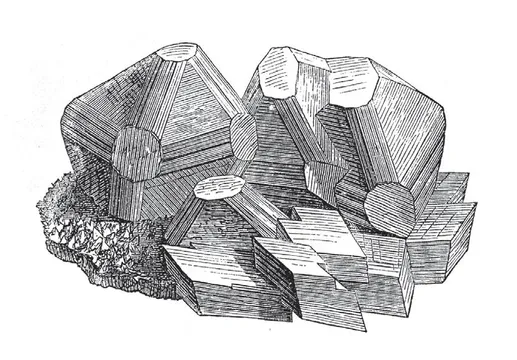
Beyond nickeline, Eisleben is indispensable for maucherite, whose type locality is here; the mineral was first recognized on Eisleben material noticed by Wilhelm Maucher and described by Friedrich Grünling in 1913 from cobalt-nickel-bearing mineralization of the Mansfeld Kupferschiefer. Maucherite occurs as grey to faintly rose-grey metallic masses, tabular crystals, granular material, and fine crystal aggregates, commonly with nickeline and baryte; it can be difficult to separate visually from nickeline in old specimens. Betekhtinite is the other major type-locality mineral tied to the Eisleben-Mansfeld area, with type material connected to the Wolfschacht/Fortschritt shaft I at Volkstedt and the Vitzthum shaft in the Mansfeld Basin. The documented Eisleben mineral list also includes native silver, native copper, native bismuth, native zinc, chalcocite, bornite, chalcopyrite, covellite, anilite, digenite, djurleite, galena, millerite, rammelsbergite, uraninite, baryte, calcite, anhydrite, dolomite, fluorite, annabergite, linarite, malachite, brochantite, connellite, spangolite, serpierite, and spertiniite. Several of the brightly colored hydroxides, chlorides, and sulfates are known especially from smelter or slag contexts and should not be confused with the classic natural Kupferschiefer ore specimens.
The main authenticity issue with Eisleben is not a famous modern fake, but a locality-and-identification problem. Massive nickeline and maucherite intergrowths can be visually ambiguous, and maucherite has been specifically noted as easy to confuse with nickeline when massive. A specimen labeled simply “Eisleben nickeline” may contain maucherite, and a “maucherite” label may be based on tradition rather than analysis unless the piece shows typical habits, has old provenance, or has been verified. The distinction matters because maucherite is a type-locality species, and well-crystallized maucherite from Eisleben is far more significant than a vague massive nickel-arsenide lump.
Collectors should also separate natural ore specimens from anthropogenic slag minerals. Eisleben-area smelter localities are legitimate and interesting in their own right, and species such as spertiniite have been recorded from slag occurrences, but they belong to a different collecting category than minerals formed in the Kupferschiefer ore system. Labels that collapse “Eisleben,” “Mansfeld,” “slag,” “Fortschrittschacht,” and “Kupferschiefer” into one undifferentiated locality should be treated cautiously. For systematic collections, a precise sublocality—Max-Lademann shaft, Fortschritt shaft I/Wolf shaft, Krug smelter slag locality, Oberhütte slag locality, or simply historical Eisleben when no better detail exists—is preferable.
Condition is usually judged differently here than on showy modern display specimens. Many Eisleben pieces are small, old, dense, and uneven; broken edges, sawed or trimmed backs, and compact massive ore are common. The premium rests on visible crystallization, fresh metallic luster, contrast with baryte or carbonate, and old labels. Tarnish is expected on some maucherite and nickeline, and overcleaning can reduce both aesthetic value and historical surface character. Uraninite- or pitchblende-bearing combinations require sensible radioactive-mineral handling: store them labeled and isolated, avoid grinding or trimming, wash hands after handling, and do not keep them loose in living spaces. Arsenide specimens should likewise be handled as toxic mineral specimens, not as lapidary material.
Market availability is limited but not impossible. Eisleben nickeline appears periodically from old European collections and dealer inventories, usually as thumbnails and miniatures; well-crystallized, lustrous examples with baryte command a premium. Maucherite from the type locality is less frequently offered in convincing crystallized form, though massive and mixed maucherite-nickeline pieces occur. The most attractive specimens—sharp nickeline on baryte, maucherite with old Maucher-era or museum labels, and combinations with native bismuth, uraninite, or native silver—are classic locality pieces and should be bought with provenance in mind.
The Mansfeld story begins, as good mining districts often do, with a founding legend. In Eisleben’s municipal chronology, the year 1199 is attached to the discovery of copper ore at the Kupferberg near Hettstedt by the miners Nappian and Neuke. Whether treated as literal event or regional origin myth, the tale captures the essential fact: the thin dark Kupferschiefer was valuable enough to draw medieval miners into a landscape that would remain a copper country for centuries. By the late Middle Ages, Eisleben’s streets, suburbs, institutions, and fortunes were tied to the mine. Bergleute settled in the Neuendorf and around the Nußbreite; the Counts of Mansfeld controlled the mining rights; and copper from the shale entered the economic bloodstream of the town.
Eisleben’s mining history repeatedly spilled into civic life in dramatic ways. In 1671, when the Mansfeld mining industry was “released” under Saxon authority, the mining office established at Eisleben became a center of administration for the district. In 1798, the Bergschule was founded in the town, training the technical people needed for a mining region that was already moving toward industrial scale. Johann Karl Freiesleben, later remembered as an important geologist and mining official, worked in the Mansfeld mining industry between 1800 and 1808; Friedrich Ludwig Plümicke taught at the Eisleben Bergschule until 1862 and devoted his life to collecting materials on Mansfeld mining technology and history. These were not remote academic figures—they were part of the machinery by which a medieval mining district became a modern industrial organism.
One of the most vivid technological episodes came in 1871, when a cableway was built between the Martin shaft and the Krughütte in Eisleben. Local histories describe it as the first aerial ropeway on the European continent. Its purpose was practical rather than picturesque: moving ore from mine to smelter across a worked-out industrial landscape. A collector looking today at a small baryte-nickeline specimen from Eisleben is holding the mineralogical remnant of that same logistical world—shafts, heaps, haulage systems, smelters, and a town whose growth was organized around ore.
The mining also altered the landscape in ways no specimen label can fully convey. In 1892 and 1893, the Salzige See disappeared as a mining consequence: water entered the subsurface and flowed into the Mansfeld workings, and the lake had to be pumped away until it vanished from the map. The same episode brought threatening ground subsidence within Eisleben itself; by 1898, more than 440 houses in the town had been damaged. This is the darker counterpoint to the neat old labels on specimens. The Kupferschiefer was a source of wealth and scientific discovery, but it also made the ground under Eisleben unstable.
The scale of the industry was celebrated with imperial theatre. On 12 June 1900, the Mansfelder Kupferschieferbauende Gewerkschaft marked the 700th anniversary of commercial Mansfeld mining in Eisleben with a great parade, ceremonial meetings, and a grand celebration on the market square. Kaiser Wilhelm II and Empress Auguste Viktoria attended. It is an extraordinary image: a medieval copper-shale district, now an industrial corporation, staging its own long memory before the German emperor. Only a few years later, photographs from 1904 and 1905 documented child labor underground at Eisleben—another reminder that the celebrated mining tradition rested on hard lives in narrow workings.
The Fortschrittschacht at Volkstedt gives the 20th-century chapter its monument. Sunk from 1906 to 1909 and named originally for Dr. Theodor Wolf, the shaft reached roughly 600 meters into the earth. The miners who drove it for copper shale unexpectedly encountered two thick potash seams, and from 1911 to 1914 potash was mined alongside the preparation of the ore operation. The shaft gained rail connection to the Mansfeld mining railway between 1917 and 1923; in July 1923, copper shale from underground was first hoisted there. By about 1930, roughly 4,000 miners were employed at the Wolfschacht. In 1949 it was renamed Fortschrittschacht, and in 1951 a high-angle waste conveying system began building the great conical dump that still dominates the skyline.
The figures from Fortschrittschacht are stark. During its operating life, the mine produced about 16.8 million tonnes of ore containing roughly 350,000 tonnes of copper. The heap complex covers about 26 hectares; its older flat dump rises to about 53 meters, while the later pointed conical heap reaches 153 meters and contains about 8.5 million cubic meters of rock. The human cost was also recorded: 147 fatal accidents occurred at the Wolf/Fortschritt shaft during its working life. The last shift ended on 8 December 1967. Afterward the shaft was filled, the hoisting plant dismantled, the railway connection removed, and the surface buildings found new lives in furniture and later drill production. What remains above Eisleben is one of Germany’s most unmistakable mining silhouettes: a man-made pyramid of Kupferschiefer waste, visible from far across the Mansfeld country.