Stolberg, Germany — classic Harz locality for pale, glassy fluorite with siderite; Großer Auerberg phenocrysts and historic Wolfsberg sulfosalts appeal to coll…
Key facts
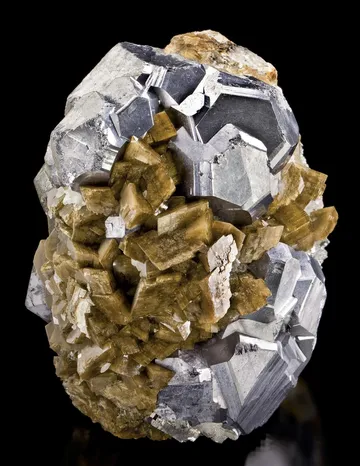
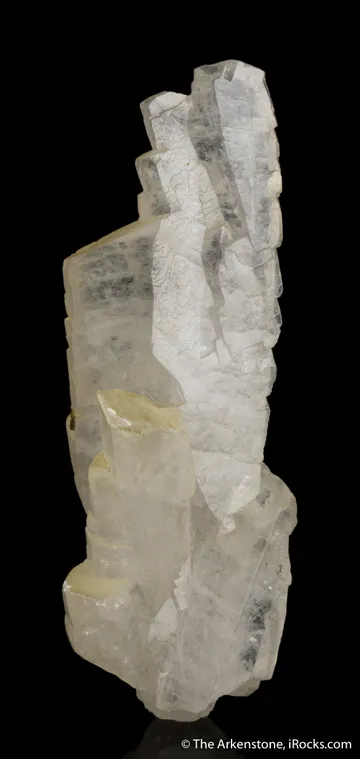
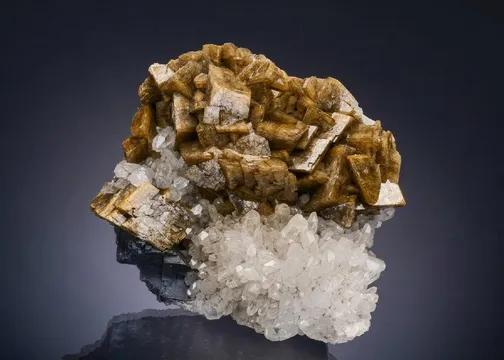
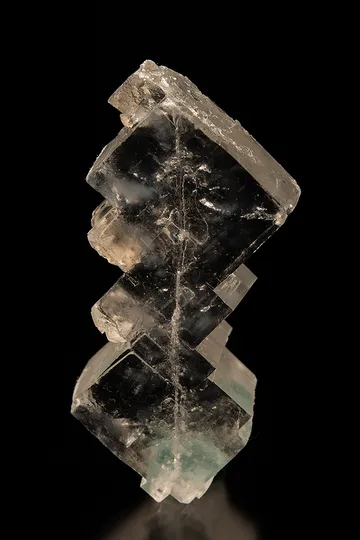
Stolberg in this guide is the Stolberg of the southern Harz, now within Südharz, Mansfeld-Südharz, Saxony-Anhalt—not the better-known zinc-smelting Stolberg near Aachen. For collectors, that distinction matters. The Harz Stolberg–Rottleberode district belongs to the classic eastern Harz vein province, where post-Variscan hydrothermal solutions worked through faulted Paleozoic greywackes, mudstones, volcanic rocks, and the wider Harzgerode structural complex. In the cabinet, the name “Stolberg” usually means pale, glassy fluorite with siderite: water-clear to colorless or faintly greenish cuboctahedra and modified cubes perched on brown rhombs, with chalcopyrite, quartz, hematite dusting, and occasional barite completing the association.
The best Stolberg fluorites have an unmistakable German-old-collection look. They are rarely gaudy. Their appeal is architectural: transparent blocky crystals with truncated corners, ghostly pale-green or pale-pink internal zones, rusty hematite accents, and clean siderite rhombs that make the colorless fluorite read as crisp and sculptural rather than bland. Many fine pieces entered collections long ago under broad labels such as “Stolberg, Harz” or “Rottleberode, Stolberg,” and the locality still rewards a collector who studies old labels as closely as the crystals.
Regional View
Country View
The Stolberg story is broader than fluorite alone. Großer Auerberg, just north of the town, is a Permian rhyolite dome famous to local geology guides for “Stolberg diamonds”—small quartz and orthoclase phenocrysts weathered from the porphyry. Southward in the historical Stolberg-Harz sphere, the Wolfsberg antimony mines add a second collecting identity: dark Pb-Sb and Cu-Sb sulfosalts from the Graf Jost-Christian Mine, including several type-locality species. Thus the locality sits at the meeting point of two collecting traditions: elegant fluorspar specimens from the Lower Harz vein systems and dense, historically important sulfosalt mineralogy from the old antimony workings.
Search for specimens: View all specimens from Stolberg, Germany
Stolberg lies on the southern edge of the Lower Harz, in a region where the eastern Harz vein district became one of central Europe’s important historical fluorspar provinces. The principal specimen-producing material associated with “Stolberg” comes from hydrothermal veins carrying fluorite, siderite, quartz, calcite, barite, chalcopyrite, pyrite, galena, sphalerite, and related Cu-Pb-Zn-Sb minerals. In modern locality usage the names Stolberg, Luise Mine, Silberbach, Rottleberode, Flußschacht, and Backöfner Gangzug are often entangled, because the old mining landscape, administrative boundaries, and dealer labels do not always coincide neatly.
Geologically, the important veins occupy repeatedly reactivated fault systems in the eastern Harz. Published work on fluorite and siderite from the district treats the deposits as sediment-hosted epithermal to low-temperature hydrothermal veins. Major structures, including the Strassberg-Neudorf and Flussschacht systems, are traceable for many kilometres and record several mineralizing pulses. The main paragenetic stages include an early quartz-sulfide assemblage with quartz, base-metal sulfides, arsenides, Pb-Cu-Sb sulfosalts, siderite, and minor fluorite; a carbonate-sulfide stage rich in siderite with chalcopyrite and pyrite; localized barite-carbonate mineralization; a major calcite-fluorite-quartz stage; and a later barite-fluorite stage. For collectors, the practical consequence is that the best display specimens tend to be mixed-stage objects: transparent fluorite crystals on earlier siderite or quartz, with small sulfides sprinkled across the carbonate.
The Luise Mine is central to the Stolberg fluorite-siderite identity. It is recorded as an old fluorite mine about 2 km north of Rottleberode and has long been labeled in collections as “Luise Mine, Stolberg” or simply “Stolberg, Harz.” It is also the source most often invoked when collectors refer to the classic colorless Stolberg fluorites on siderite. The nearby Silberbach fluorite/barite mine is important in analytical work on the district and was known for barite-bearing material. Rottleberode’s Flußschacht Mine, by contrast, is famous in its own right for large green to sea-green fluorites, especially material from the Backöfner vein system; because old and dealer labels sometimes shift material between Stolberg/Luise and Rottleberode/Flußschacht, the distinction is one of the key locality problems for advanced collectors.
Mining in the broader district reaches back many centuries. The Earls of Stolberg and the neighboring Anhalt authorities contested mining ground and rights in the Lower Harz; by the early modern period, the district was producing silver, lead, copper, antimony, and later fluorite and barite. Fluorspar became economically important as industrial demand rose in the nineteenth and twentieth centuries, particularly for metallurgical fluxes and chemical uses. Rottleberode and Straßberg were at times counted among the great fluorspar operations of Germany, with a modern processing focus at Flußschacht. After the Second World War the flooded workings were pumped out and production resumed. In 1957 the operations were combined into VEB Harzer Spatgruben; smaller barite mines near Stolberg such as Silberbach and Edelweiß were included in the enterprise during the early 1960s. Mining finally ended around 1989–1990 as economic reserves were exhausted and the East German fluorspar industry was wound down.
Specimen production was largely a by-product of mining rather than the result of modern collector pocket work. The most desirable Stolberg pieces are therefore old-time specimens: cabinet and small-cabinet plates with clean modified fluorite crystals, siderite rhombs, and sharp accessory chalcopyrite. Documented individual specimens show fluorite crystals from about 1–3 cm commonly, while Rottleberode mine material is recorded with crystals up to 10 cm from the active mining period. A few exceptional Stolberg-labeled fluorites reach cabinet scale, but condition becomes the limiting factor: fluorite cleaves readily, and old mining recovery favored ore and industrial spar, not pristine display pieces.
Access today should be treated as closed or highly restricted unless explicit permission is obtained. Many old workings are inaccessible, unsafe, filled, protected, or on private ground. Some sites in the Harz are integrated into geopark, nature, museum, or hiking infrastructure, and collecting on protected geosites or historic mining dumps may be prohibited. The collector’s route to Stolberg material is now primarily through old German collections, European dealers, and estate dispersals rather than field collecting.
Stolberg fluorite is most admired as colorless to very pale greenish or faintly tinted modified cubes and cuboctahedra, commonly transparent to translucent, on siderite with quartz, chalcopyrite, and hematite or chloritic coatings; documented cabinet pieces show crystals commonly around 1–3 cm, while related Rottleberode Flußschacht material is known for larger green crystals and is frequently confused with Luise/Stolberg material. The premium Stolberg look is not simply “clear fluorite”: it is the combination of glassy faces, natural corner modifications rather than cleaved damage, subtle internal zoning, and a clean architectural perch on lustrous brown siderite rhombs. Ordinary pieces are massive, dinged, too rusty, or locality-ambiguous; the best ones carry convincing old labels, sharp undamaged edges, and enough siderite or chalcopyrite association to anchor them unmistakably in the Harz paragenesis.
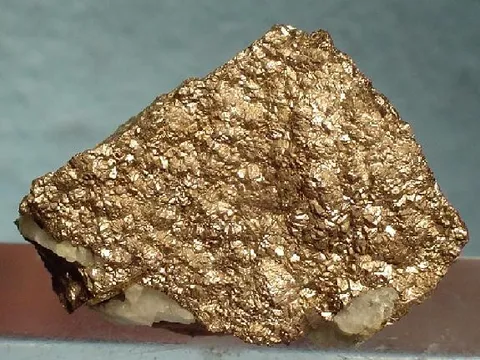
Siderite from Stolberg is usually the supporting actor but often the diagnostic one: brown, beige-brown, or dark-brown rhombohedra and aggregates forming matrix for fluorite, quartz, chalcopyrite, and pyrite. In the eastern Harz paragenesis siderite appears in several stages, including quartz-sulfide, carbonate-sulfide, and barite-carbonate mineralization, so Stolberg specimens may show it as sharp rhombs beneath clear fluorite, as compact brown carbonate masses, or as lustrous crystals with small brassy sulfides. Collectors prize pieces where the siderite is not merely a dull brown base but a crystallized, balanced partner to the fluorite, with clean rhombs, good luster, and minimal iron-oxide overprint.
Other documented minerals from the Stolberg–Rottleberode–Lower Harz setting include baryte, calcite, quartz, chalcopyrite, pyrite, galena, sphalerite, arsenopyrite, tetrahedrite-group minerals, covellite, chalcocite, cuprite, malachite, azurite, brochantite, antlerite, cyanotrichite, gearksutite, gypsum, goethite, hematite, lepidocrocite, manganite, pyrolusite, ranciéite, woodwardite, and possible langite and posnjakite. Großer Auerberg adds the local “Stolberg diamonds,” small quartz and orthoclase crystals weathered from rhyolite, along with reported phosphate and secondary species such as strengite, variscite, and wavellite from the Holzchaussee quarry area. The Wolfsberg antimony field, historically tied to Stolberg-Harz labels, is mineralogically exceptional: the Graf Jost-Christian Mine is the type locality for chalcostibite, plagionite, zinkenite, and dadsonite, and is also known for stibnite, boulangerite, jamesonite, heteromorphite, semseyite, robinsonite, miargyrite, and related sulfosalts.
The first authentication problem is locality confusion. “Stolberg” on an old label may mean Luise Mine/Stolberg, the broader Stolberg-Rottleberode fluorspar district, or even simply the Harz trading convention used by a dealer or museum. The most common mix-up is between Luise Mine Stolberg material and Rottleberode Flußschacht/Backöfner material. Collectors generally associate the classic Stolberg/Luise style with colorless to pale fluorite on siderite, while the classic Rottleberode/Flußschacht look includes larger sea-green fluorite, though overlap and relabeling are real. A vague “Stolberg, Saxony” label should also be read historically rather than literally; older labels often used regional names that do not match modern Saxony-Anhalt administrative geography.
Condition is the second issue. Fluorite’s perfect octahedral cleavage makes old mine-run pieces vulnerable to edge bruising, cleaved corners, and repairs. Stolberg specimens with naturally truncated cuboctahedral corners should not be dismissed automatically as damaged, but every corner should be examined with magnification: natural growth truncations show continuous luster and surface texture, while bruised cleavages have a different gloss, step pattern, or frosted look. Rust-red hematite coatings are normal on some pieces, but heavy iron staining can obscure luster and may indicate aggressive cleaning attempts. Siderite is more chemically sensitive than fluorite; acid cleaning can dull or destroy carbonate luster and may leave an unnaturally etched appearance.
Fluorescence is a minor but pleasant feature on some Stolberg fluorite, with auctioned specimens specifically noted as fluorescent, but it is not the primary value driver. The market rewards form, association, provenance, and condition above ultraviolet response. Strong provenance—old German labels, American Museum of Natural History or Bement-related provenance, Sorbonne or Herb Obodda collection history, and well-documented dealer records—adds real confidence because much of the best material is old and the field sources are no longer practically available.
No broad pattern of manufactured fakes is documented for Stolberg fluorite, but repairs, trimmed bases, enhanced cleaning, and optimistic locality attributions should be expected in the old-classic market. Reattached fluorite crystals can be difficult to see on iron-stained siderite matrices, so inspect contact points under long-wave and short-wave UV, side lighting, and magnification. For sulfosalt material from Wolfsberg, the authenticity concern is different: most crystals are tiny, metallic, and visually difficult, so species-level claims for chalcostibite, plagionite, zinkenite, dadsonite, and related minerals should be supported by old labels from credible collections or by analytical confirmation when the specimen is more than a locality-representative curiosity.
Availability is limited but not impossible. Stolberg fluorite-siderite specimens appear periodically in European dealer inventories and old-collection auctions, usually as thumbnails to small cabinets, with exceptional cabinet specimens commanding a premium. Clean, undamaged fluorite on crystallized siderite from the Luise/Stolberg style is much scarcer than ordinary damaged Harz fluorite, and well-provenanced pieces are increasingly absorbed into locality, fluorite, and German-classic collections.
The most memorable Stolberg story is not a single pocket but a border dispute with miners caught in the middle. The Lower Harz mining ground lay between the Earldom of Stolberg and the Principality of Anhalt-Bernburg-Harzgerode, and the line on the map mattered because the line underground meant ore rights. In May 1563, four miners working at the Biewende Mine, which belonged to the Anhalt office of Harzgerode, were seized by the Earldom of Stolberg. The quarrel was not a local squabble soon forgotten; it grew out of a disputed 1498 sale of the castles and towns of Güntersberge and Harzgerode, a sale that contained a buy-back clause and apparently did not transfer mining rights. Commissions appointed by the Imperial High Court struggled to settle the matter because boundary markers and important documents had disappeared. A compromise was finally reached in 1613, only for the Thirty Years’ War to bring Stolberg mining largely to a standstill.
Another field story belongs to the old fluorspar industry. After the Second World War, the Harz workings were flooded, yet the mines were pumped out again in the autumn of 1945 and production resumed. By 1957 the fluorspar operations were reorganized as VEB Harzer Spatgruben, and the processing of concentrates for metallurgical and chemical customers became centered at the Flußschacht plant near Rottleberode. Half of the end products reportedly went for export into the “non-socialist economic area,” making the district a source of hard currency as well as spar. That industrial urgency explains why so many Stolberg and Rottleberode specimens are old mining by-products: pockets were opened in working ground, selected by miners or mine contacts, and then filtered into collections through routes that were rarely documented in specimen-level detail.
A more collector-friendly story is told on Auerberg, above Stolberg. The mountain is only 579 m high, but it is conspicuous in the Lower Harz and crowned by the Josephskreuz observation tower. The rhyolite contains the small quartz and orthoclase crystals known locally as “Stolberg diamonds.” Modern geopark material describes them as crystals “floating” in the volcanic groundmass; after heavy rain, loose grains may be washed out along trails. They are not valuable gemstones, but they are a fine reminder that Stolberg’s mineral fame is not restricted to mine veins: the town also has a small, durable folklore of crystals weathering from volcanic rock underfoot.
The Graf Jost-Christian Mine at Wolfsberg supplies the district’s most scholarly mineral tale. It began as an ancient antimony mine around 1700, with regular stibnite extraction starting in 1741 and ending in 1864 after roughly 60,000 tons of raw ore had been mined. Out of that dark antimony ore came some of the classic sulfosalt names of nineteenth-century mineralogy. Chalcostibite was first recognized there under the German descriptive name Kupfer-Antimonglanz; James Nicol later proposed “wolfsbergite” after the place of discovery, and later work established its identity with chalcostibite. Zinkenite honors Johann Ludwig Carl Zincken, who was central to the early recognition of the Wolfsberg sulfosalts. For a collector holding a tiny metallic spray or seam from Wolfsberg, the romance is not size—it is standing at the type locality end of mineralogical nomenclature.