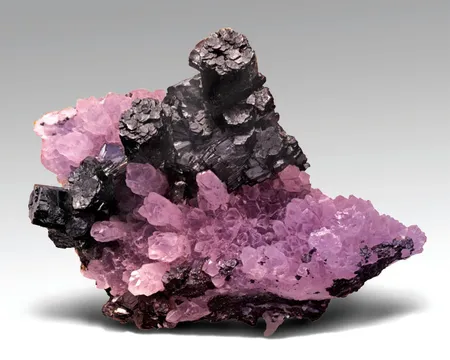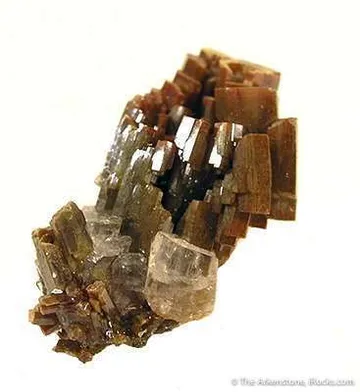
Guanajuato, Mexico — iconic silver-gold vein district famed for acanthite, polybasite, native silver, and sculptural quartz-calcite textures prized by collecto…
Key facts
Guanajuato is one of the great silver-mineral localities of the Americas: not merely a historic mining camp, but a classic epithermal system whose specimens helped define the look of Mexican silver mineralogy. The collecting name usually refers to the Guanajuato mining district around the city of Guanajuato, especially the long-lived Veta Madre, La Luz, Valenciana, Rayas, Cata, Mellado, Sirena, and related mine areas. Geologically it is a low-sulfidation silver-gold vein district, developed along northwest-trending faults and breccia zones in a complex pile of Mesozoic sedimentary and volcanic basement, intrusive rocks, the Guanajuato conglomerate, and younger Cenozoic volcanic units. The collector sees that story directly in the specimens: white to cream calcite, quartz and amethystine quartz, adularia-bearing epithermal textures, and metallic black-to-steel-gray silver sulfides and sulfosalts.
The district’s fame rests above all on acanthite after argentite from the Rayas and Valenciana mines, polybasite plates from Rayas, pyrargyrite and stephanite, native silver, aguilarite from La Luz, and quartz-calcite gangue that often preserves the open-space textures of boiling epithermal fluids. A superb Guanajuato silver specimen tends not to be a massive ore chunk; it is a sculptural object. The best acanthites have sharp, distorted, pseudo-cubic forms or arborescent strings with a metallic luster that reads as old silver rather than black sulfide. The better polybasites show platy pseudohexagonal crystals, often with chalcopyrite dusting or acanthite association. The amethyst is not Brazilian geode material in miniature; it is vein quartz from a silver district, commonly pale to medium purple, with phantom-like growth, white calcite rhombs, and a distinctly “ore vein” aesthetic.
Regional View
Country View
Historically, Guanajuato was among the engines of New Spain’s silver economy. The Veta Madre was recognized in the 16th century, and by the late 18th century the Valenciana mine had become one of the world’s most celebrated silver producers. That history matters to mineral collectors because many of the finest pieces are old: labels may read Rayas, Valenciana, Guanajuato, or simply “Mexico,” and the sharpest acanthites, ruby-silver sulfosalts, and aguilarites often passed through older Mexican, American, and European collections long before locality data were recorded with modern precision.

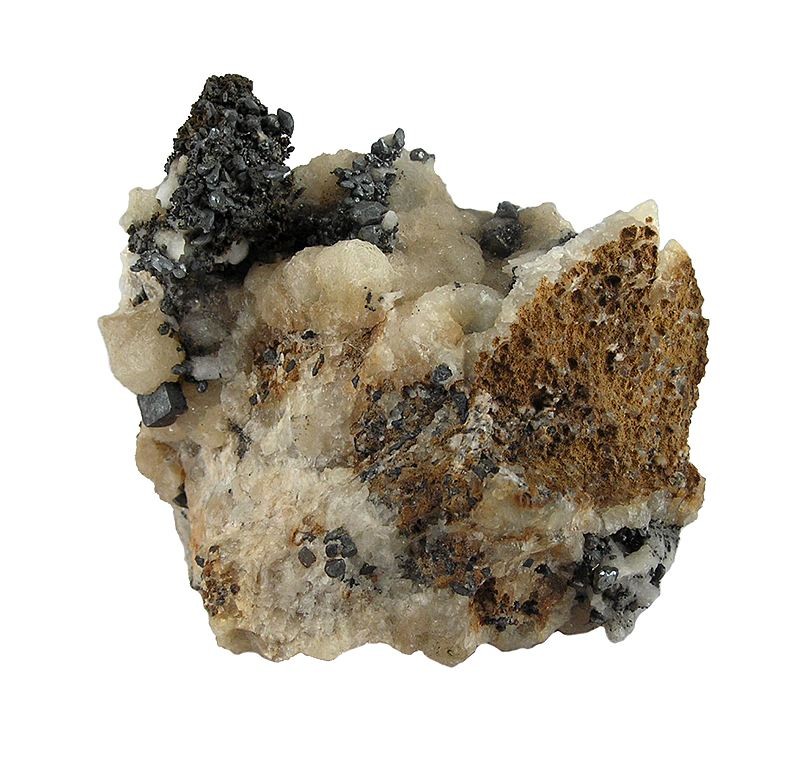
Photo: Wikimedia Commons
Search for specimens: View all specimens from Guanajuato, Mexico
The Guanajuato district is best understood as a fissure-vein and breccia-hosted, low-sulfidation epithermal silver-gold system. Its principal structures are the La Luz system to the northwest, the central Veta Madre, and the Sierra system to the east. The Veta Madre is the collector’s essential structure: it trends northwest, dips southwest, and is traceable for roughly 25 km through the district. Modern mine descriptions of the Valenciana Mines Complex place the productive system along the Veta Madre fault and an associated diorite dike, with mineralization developed along dike contacts, within the Esperanza Formation footwall, and in breccia and stockwork zones above and along the main structure.
The gangue is dominantly quartz and calcite, with important adularia-sericite alteration and repeated open-space filling. The ore suite is silver-rich: acanthite or argentite-acanthite, native gold-silver alloy or electrum, polybasite, pyrargyrite, stephanite, aguilarite, naumannite, argyrodite, pearceite, proustite, and related silver sulfosalts, accompanied by base-metal sulfides including chalcopyrite, sphalerite, galena, and pyrite. Many specimens show exactly the sort of crustiform banding, breccia cement, drusy cavities, bladed calcite, calcite replaced by quartz, and amethystine quartz expected in a boiling epithermal environment.
The old producing names are not interchangeable for collectors. Rayas is the classic source for many of the finest acanthites and polybasites, including large pseudo-cubic and sculptural aggregates of acanthite and black platy polybasite crystals with chalcopyrite. Valenciana is central to the great mining history and produced acanthite on white botryoidal calcite, native silver, amethyst, calcite, and silver minerals with strong old-label appeal. La Sirena is an important name for amethyst and silver sulfosalts, while the La Luz area is critical for aguilarite and other silver-selenium minerals. Cata, Mellado, Santa Margarita, Los Pozos, Promontorio, and Guanajuatito are part of the modern and historical Veta Madre mine complex and are important names on contemporary mining reports and older specimen labels.
Mining began in the 16th century after the discovery of silver mineralization in the La Luz area and the recognition of the Veta Madre outcrop on what became the Rayas claim. Production was intermittent and technically constrained at first, but the introduction of explosives for tunneling in the early 18th century increased productive capacity. Valenciana’s great period came later, when Antonio Obregón y Alcocer financed the exploration and development of the mine; by the late 18th century Valenciana was famous enough that Obregón received the title Count of Valenciana. Mining declined or halted during the War of Independence, revived under British and later American capital, passed through cooperative control in the 20th century, and was later operated by Great Panther. Guanajuato Silver Company subsequently acquired and restarted the Valenciana Mines Complex, which includes formerly independent but now interconnected mines such as Rayas-Promontorio, Los Pozos, Cata, Valenciana, and Guanajuatito.
Collecting access today should be treated as essentially closed without permission. Much of the important ground is active, on care-and-maintenance status, private, historic, unsafe, or part of tourist-mine infrastructure rather than a collecting locality. Surface picking around old dumps and shafts is not a reliable or responsible way to obtain specimens, and underground access is a serious safety and legal issue. Serious collectors generally acquire Guanajuato specimens through old collections, established dealers, museum deaccessions where legitimate, or modern mine-connected channels with clear provenance. The district is still a tourist-mining landscape, but a mine tour is not a collecting permit.
The notable specimen “pockets” in the collector’s sense were not always documented as single named cavities; many pieces came from ore shoots, stopes, and old workings, later entering commerce with mine names rather than precise level-and-stope data. Modern reports show why: mineralization occurs as shoots and structurally prepared zones along bends, splays, breccias, dike contacts, and stockworks, not as a single continuous collectible vein. The best old specimens tend to preserve open cavities in quartz-calcite gangue where silver minerals had room to crystallize.
Calcite from Guanajuato is inseparable from the silver assemblage: it is both a principal gangue mineral and one of the visual foils that makes the metallic species display so well. Specimens range from white botryoidal or mammillary calcite carrying gray acanthite at Valenciana to milky rhombs and scalenohedra on amethyst from La Sirena and other district labels. In ore studies, calcite appears as breccia cement and vein filling, and in modern epithermal work bladed calcite and calcite replaced by quartz are important textures connected with boiling. Collector-grade pieces are those in which the calcite is not merely matrix but a clean, contrasting stage for acanthite, polybasite, amethyst, or native silver; ordinary material is usually massive, stained, or broken vein calcite without crystallized silver minerals.
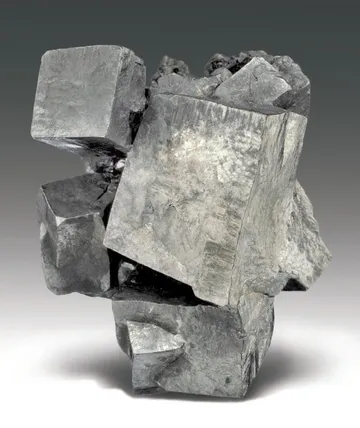
Acanthite is the signature collectible mineral of Guanajuato, especially from the San Juan de Rayas and Valenciana mines. The classic pieces are black to battleship-gray, lustrous to matte, and commonly represent acanthite after high-temperature argentite, producing distorted pseudo-cubes, skeletal “cubes,” hopper-like crystals, elongated forms, and branching sculptural aggregates. Rayas produced superb crystals from thumbnail size to major small-cabinet specimens, with individual crystals reaching centimeter scale and exceptional clusters far larger; Valenciana pieces are especially desirable when acanthite sits on white calcite or old, dated matrix. Associations include calcite, quartz, polybasite, chalcopyrite, sphalerite, pyrite, and other silver sulfosalts. The best pieces have sharp crystal definition, metallic luster, three-dimensional form, old mine provenance, and minimal bruising on exposed edges.
Quartz at Guanajuato is not a sideline mineral but a primary gangue and ore carrier in the district’s epithermal veins. It occurs as crustiform bands, drusy linings, breccia cement, replacements of earlier calcite, and clear to milky crystals, with amethystine zones especially important in the silver-bearing parts of the system. In specimen terms, the best quartz pieces are those that still read as ore-vein material: drusy cavities with acanthite, polybasite, chalcopyrite, pyrite, or calcite rhombs, or sharp transparent terminations showing later growth over amethyst. Massive vein quartz is common and usually of little collector interest unless it carries identifiable silver minerals or preserves strong epithermal textures.
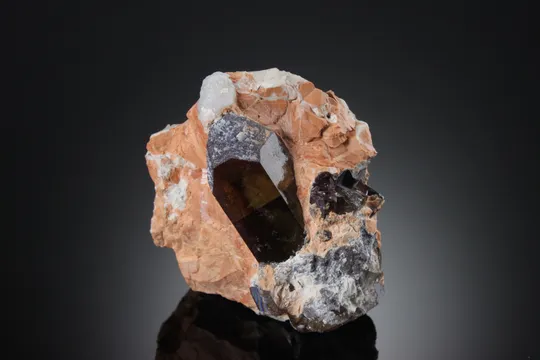
Guanajuato amethyst is a vein-mineral specimen, not a geode commodity, and that is its charm. La Sirena and Valenciana labels are especially associated with amethystine quartz from the district, commonly as pale to medium purple crystals, drusy plates, or doubly terminated crystals with later colorless quartz overgrowths and white calcite rhombs. Some pieces show two generations of quartz and phantom-like internal zoning, a look that is quite different from the saturated amethyst of basalt geodes. The most desirable examples combine clean purple color, sharp undamaged terminations, visible growth zoning, and calcite or silver-mineral association; low-grade examples are pale, iron-stained quartz plates with little form or locality character.
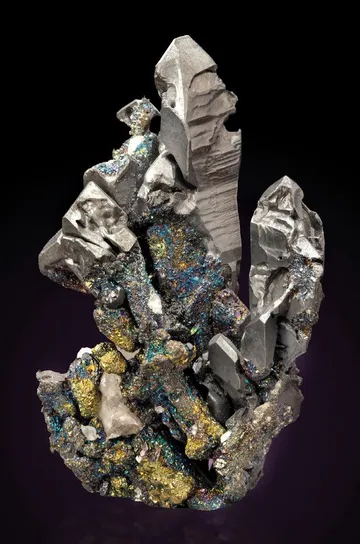
Polybasite from Guanajuato, particularly San Juan de Rayas, is among the district’s most important silver sulfosalts. Rayas material is known for black pseudohexagonal plates, with reported crystals reaching remarkably large sizes for the species and commonly associated with acanthite, chalcopyrite, calcite, stephanite, quartz, pyrite, argyrodite, and occasional pyrargyrite. Many of the most attractive pieces show platy polybasite standing proud on matrix or intergrown with acanthite, sometimes dusted by tiny brassy chalcopyrite crystals. Fine specimens require sharp plate edges, recognizable crystal habit, luster, and confirmed locality; ordinary pieces may be visually confused with other black silver sulfosalts unless they are well documented or analyzed.
Pyrargyrite, the antimony-rich “ruby silver,” is a classic but less commonly available Guanajuato species than acanthite or polybasite. Rayas and the La Luz area are the most important names to watch for, and specimens are typically dark gray to black in reflected light, with the ruby-red character visible only in thin edges or small transmitted-light fragments. Collectible crystals are usually small, sharp, lustrous prismatic to complex aggregates, often with acanthite, polybasite, calcite, quartz, and base-metal sulfides. The best Guanajuato pyrargyrites have crisp form and verified identity; because black silver sulfosalts can resemble one another, labels alone should be treated cautiously unless the specimen has a strong provenance or analytical support.
Native silver from Guanajuato is historically evocative but far scarcer on the market than the district’s acanthite. It is recorded from Valenciana and other Guanajuato localities, typically as small wires, curls, irregular masses, or silver-bearing electrum in quartz-calcite-pyrite vein material rather than the large wire nests associated with some other silver camps. The most appealing specimens retain visible metallic silver with quartz, pyrite, calcite, or acanthite and have old Guanajuato or mine-specific labels. Tarnish is normal, but harsh cleaning can destroy the soft luster and remove the historical surface that many collectors value.
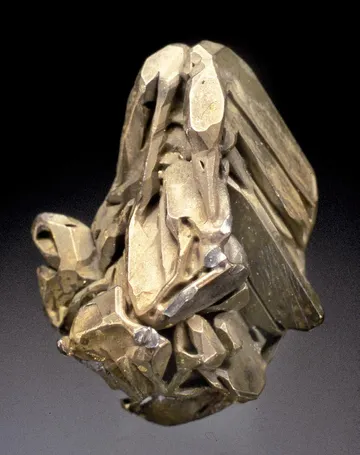
Chalcopyrite is an important accessory sulfide in the Guanajuato ore suite and is documented from mines including Rayas, Valenciana, El Cubo, and Peñafiel. Collectors encounter it less often as a primary display species than as tiny brassy crystals, coatings, or modified pseudo-tetrahedra associated with polybasite, acanthite, quartz, calcite, sphalerite, galena, and pyrite. Its role in fine specimens is often compositional and aesthetic: a dusting of yellow chalcopyrite can brighten black acanthite or polybasite and help confirm the base-metal-rich character of a particular ore stage. Standalone chalcopyrite specimens from Guanajuato are uncommon and usually modest; the desirable pieces are those in which chalcopyrite is sharply crystallized and clearly associated with important silver sulfosalts.
Beyond these showcase species, Guanajuato is rich in silver-selenium and silver-sulfosalt mineralogy. Aguilarite, Ag4SeS, is one of the district’s great scientific minerals and has its type locality at the San Carlos Mine in the La Luz area. Guanajuatite, Bi2Se3, and paraguanajuatite, Bi2(Se,S)3, are tied to the Santa Catarina area of the Sierra de Santa Rosa, while ordoñezite, ZnSb2O6, is another Guanajuato type-locality mineral from the Santín mine area. Other documented species include argyrodite, naumannite, stephanite, proustite, pearceite, selenopolybasite, sphalerite, galena, pyrite, cinnabar, chlorargyrite, bromargyrite, fluorite, datolite, baryte, rhodochrosite, siderite, and opal varieties from broader Guanajuato state localities.
The most important authenticity issue for Guanajuato is not usually outright fabrication but identity and locality precision. Black silver sulfides and sulfosalts can be visually treacherous: acanthite, stephanite, polybasite, pyrargyrite, aguilarite, and related selenium-bearing phases may resemble one another, especially as dark metallic microcrystals. Old labels reading “argentite” are common and should usually be understood in the historical specimen sense; many such pieces are acanthite paramorphs after argentite. For high-value polybasite, pyrargyrite, aguilarite, and stephanite specimens, analysis or a strong provenance is a real advantage.
Locality labels also require care. “Guanajuato” may mean the city, the mining district, the municipality, or the state. A label such as Rayas, Valenciana, La Sirena, San Carlos, Cata, Mellado, or La Luz is more valuable and more informative than a broad “Guanajuato, Mexico” label, provided it is credible. Conversely, very specific mine names added to old unlabeled material should be viewed with suspicion unless supported by an older label, collection history, or specimen style.
Condition is critical. Acanthite and silver sulfosalts are soft, heavy, and brittle enough at edges that tiny crystal bruises are common. The sharp pseudo-cubic corners of Rayas acanthite are easily nicked; polybasite plates chip along thin edges; pyrargyrite can be dark, delicate, and hard to evaluate without magnification. Calcite matrices may be cleaved, etched, or iron-stained, and old silver specimens may have been cleaned too aggressively. Native silver should not be polished; original patina is often part of the specimen’s value.
Fluorescence is not a major buying point for the classic Guanajuato silver assemblage. Acanthite and most associated silver sulfides are non-fluorescent, and calcite response, when present, is secondary to form and association. Handling should be conservative: avoid repeated touching of native silver and silver sulfides, keep specimens dry, and store labels carefully. For old pieces, the label may be as important as a minor crystal.
Market availability is uneven. Small to mid-sized acanthites from old collections appear regularly enough that serious collectors can obtain one, but truly sharp, lustrous Rayas pieces with three-dimensional form are strongly contested. Polybasite, pyrargyrite, stephanite, and aguilarite are substantially scarcer in good crystallized examples. Guanajuato amethyst and calcite combinations are more obtainable, though the best old La Sirena-style plates with phantoms, calcite rhombs, and good aesthetics have become much harder to replace.
In Guanajuato the collecting story begins with a vein so important it became a phrase: the Veta Madre, the “mother vein.” The Rayas mine marks one of the oldest chapters. Juan de Rayas is credited with finding the Veta Madre outcrop around 1550 at the site of the present Rayas shaft. Over time the mine became not only a producer but a landmark, its deep shaft and surrounding neighborhood fixing the geography of the city itself. For mineral collectors, the name Rayas later came to mean something very specific: distorted metallic acanthite crystals, black polybasite plates, ruby-silver sulfosalts, and old Mexican labels that carry the authority of a district mined for centuries.
The most dramatic rise was Valenciana. The story most often told is of Antonio Obregón y Alcocer, a man who persisted in ground that earlier miners had considered unpromising. By the 1760s and 1770s the Valenciana ore shoot transformed the district. The mine became one of the richest silver mines of its age, and the fortune it generated was large enough to reshape architecture, titles, and politics around Guanajuato. On March 20, 1780, King Charles III granted Obregón the title Count of Valenciana. Collectors sometimes meet this history in miniature: a hand-sized piece of acanthite on calcite from Valenciana is not just a sulfide on carbonate, but a remnant of the same mining world that funded the great church of San Cayetano and made the Valenciana name known across the Spanish empire.
The district also produced one of the best mineralogical discovery stories in Mexico. In 1890, Ponciano Aguilar Frías was superintendent of the San Carlos mine near Guanajuato. Aguilar was not merely a mine employee; he was an engineer, teacher, collector, and provincial scientist in a mining city whose mines were still yielding surprises. The specimens that became aguilarite passed from Aguilar to the collector William Niven, then to the Philadelphia chemist Frederick A. Genth, and then to Samuel L. Penfield for further study. The key observation was chemical: the material contained silver, selenium, and sulfur, setting it apart from acanthite, Ag2S, and naumannite, Ag2Se. Genth described the new species in 1891 and named it aguilarite in honor of Aguilar. Today, the story survives not only in textbooks but in the Ponciano Aguilar collection at the University of Guanajuato, where the human chain behind a mineral name becomes visible.
The finest old specimens have their own quieter biographies. A Valenciana acanthite on white botryoidal calcite in the public Wikimedia record carries a label indicating it was mined in 1892 and later entered the University of Chicago collection in 1964. A Rayas acanthite from the Dr. Miguel Romero collection was displayed for years at the University of Arizona Mineral Museum, and old Rayas pieces passed through the hands of collectors such as Fred Pough, Cal Graeber, and Irv Brown. This is typical of Guanajuato’s best material: specimens move slowly, gathering labels, reputations, and sometimes a century of cabinet history before appearing again.