






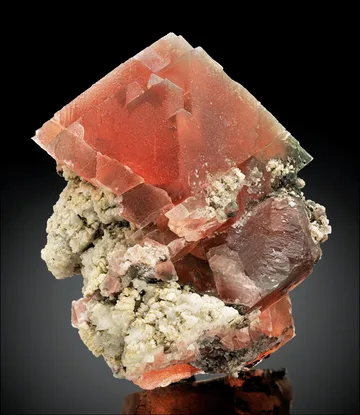
Göschenen, Switzerland — Alpine locality famed for water-clear quartz and pink fluorite octahedra, from classic clefts and tunnel finds, prized by collectors.
Key facts
Göschenen is one of the great Alpine collector names: a Uri municipality at the northern approach to the Gotthard, where high granite walls, hydroelectric works, road tunnels, and generations of Strahler have repeatedly opened Alpine clefts rich in quartz and pink fluorite. In specimen language “Göschenen” usually embraces the Göschenen Valley and especially the Göscheneralp–Planggenstock–Winterstock–Lochberg area above the Göscheneralpsee, together with tunnel finds around the village and the Gotthard works. The classic assemblage is unmistakable—water-clear to pale smoky quartz, smoky gwindels, adularia, chlorite, hematite, calcite, and the celebrated rose-to-strawberry-red octahedral fluorite that made the district famous far beyond Switzerland.
The geology is the classic Alpine-cleft setting: fissures and cavities in crystalline basement, particularly granitic rocks, opened during Alpine uplift and brittle deformation and were later lined by hydrothermal minerals. The best pieces have the look collectors expect from the Central Alps at their finest: brilliant quartz crystals with high transparency, twisted smoky gwindels, sharp pink fluorite octahedra perched on white feldspathic or quartz matrix, and green chlorite either as delicate coatings, inclusions, or pocket dusting. Surface clefts often yield etched or weathered fluorite, while deep tunnel finds can preserve glassy, uncorroded faces that would never have survived long exposure to meteoric water.
Regional View
Country View
The historical range of the locality is unusually broad. It includes old high-Alpine clefts worked by individual Strahler, the ancient Sandbalm workings north of the Göschenen Valley, the Göschenen power-station tunnel find of 1958, the Planggenstock cleft system that produced some of the most important quartz and fluorite specimens in the Alps, and the new Gotthard road-tunnel works, where modern excavation again intersected specimen-bearing cavities. For collectors, this continuity matters: a “Göschenen” label may refer to a 19th- or early-20th-century Alpine classic, a Planggenstock masterpiece from the 1990s–2000s, or a precisely dated New Gotthard Road Tunnel specimen from the 2020s.

Photo: Wikimedia Commons

Photo: Wikimedia Commons
Search for specimens: View all specimens from Göschenen, Switzerland
Göschenen lies in the Reuss Valley of canton Uri, with the Göschenen Valley running westward toward the Göscheneralpsee, Planggenstock, Feldschijen, Lochberg, Winterstock, Dammastock, the Voralp Valley, and related high-Alpine collecting ground. Mineral labels may be quite general—“Göschenen,” “Göschenen Valley,” “Göscheneralp,” or the older “Goschener Alp”—or highly specific, naming Planggenstock, Winterstock, Lochberg, Sandbalm, a power-station tunnel, or a Gotthard tunnel section. For fine specimens, the more precise label is important because the district is not a single mine but a network of Alpine fissures, tunnel discoveries, and high-elevation pocket systems.
The deposit type is Alpine cleft mineralization rather than an ore deposit in the usual economic sense. The productive cavities are fissures and open spaces in granitic and associated crystalline rocks, opened by Alpine tectonism and sealed by mineral growth from hot aqueous fluids. Quartz is the backbone of the paragenesis, with fluorite appearing as pink to red octahedra, commonly on quartz or feldspathic matrix. Adularia, albite/pericline, chlorite-group minerals, hematite, calcite, zeolites such as laumontite, stilbite-Ca, heulandite-Ca and scolecite, and smaller accessory species accompany the principal specimens in various sublocalities.
Mining history at Göschenen is really a hybrid story of Strahler work and civil engineering. The high-Alpine clefts were hunted by professional and amateur crystal seekers, while tunnels and hydroelectric excavations occasionally cut sealed cavities that no surface collector could have reached. The Göschenen power-station works produced a celebrated 1958 pink-fluorite-on-quartz specimen near Göschenen. The first Gotthard transport works, later hydroelectric tunnels, the Gotthard Base Tunnel era, and the second Gotthard road-tunnel project all made new exposures in the Gotthard region; some of these produced mineral specimens, though collecting on active infrastructure sites is controlled and not a public opportunity.
The Planggenstock cleft system is the locality’s modern legend. In the upper part of the Planggenstock’s roughly 200-meter-high northeast wall, Franz von Arx and Paul von Känel began following signs in the granite in the early 1990s. They removed huge loose blocks, some described as about 10 cubic meters and around 25 tonnes, before opening a major cleft system. By the mid-1990s the workings had produced large quartz groups, pink fluorite, and smoky quartz; one widely cited description records a cavity about 6 meters wide, 8 meters deep, and 60 centimeters high. The 1994 Planggenstock find yielded huge plates of pale smoky quartz, including gwindels, and one part of the cavity produced fluorite octahedra approaching 10 centimeters on edge.
The greatest Planggenstock quartz discovery followed in 2005. After the Strahler had worked roughly 30 meters into the mountain, they opened a chamber containing extraordinarily clear, large quartz crystals and groups. The material removed in 2006 totaled nearly two tonnes of fine rock crystal; the signature museum group weighs about 300 kilograms and carries a central crystal 107 centimeters long. The find was first shown at Flüelen and later acquired for the Natural History Museum Bern, where it became the centerpiece of the “Riesenkristalle – Der Schatz vom Planggenstock” exhibition. The same cleft system continued to produce: in 2008 Franz von Arx and Elio Müller recovered another major chamber, described as about 2.5 tonnes of crystals, with crystals up to around 1.20 meters and groups to roughly 500 kilograms.
The New Gotthard Road Tunnel has added a 21st-century chapter. The Federal Roads Office project for the second Gotthard road-tunnel tube began preparatory work in 2021, with major tunnel construction lots following from 2022. In September 2022, blasting on the northern Göschenen side exposed a glittering cleft roughly 300 meters inside the mountain, carrying rock crystal and pink fluorite. The canton’s mineral overseer Peter Amacher and his team recovered several hundred kilograms of material, with the best pieces selected, cleaned, and stored under cantonal control. The published collector record includes pink fluorite with chlorite and bavenite from the New Gotthard Road Tunnel, including crystals to 1.7 centimeters on specimens illustrated in the 2023 Mineralogical Record article, and the issue cover showed a 5.8-centimeter fluorite specimen from the same tunnel find.
Collecting access today must be treated seriously. Much of the Uri collecting ground is under the authority of the Korporation Uri or Korporation Ursern, and mineral collecting generally requires the proper Strahler patent or landowner permission. Active tunnels, hydro works, and construction sites are not collectible localities for the public. Even in the mountains, claims to discovered clefts are governed by local custom and regulation; the old Strahler practice of marking an occupied cleft remains culturally important, and working another collector’s claimed pocket is considered a serious breach. The terrain is steep, glaciated, and seasonally snow-covered, so genuine field collecting around the Göscheneralp is alpine work, not casual roadside picking.
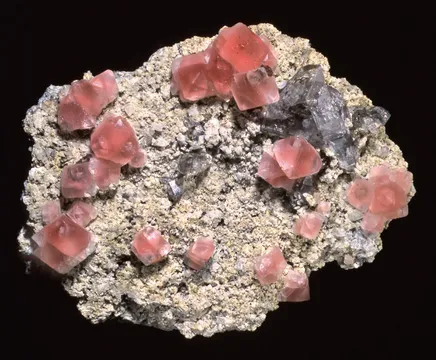
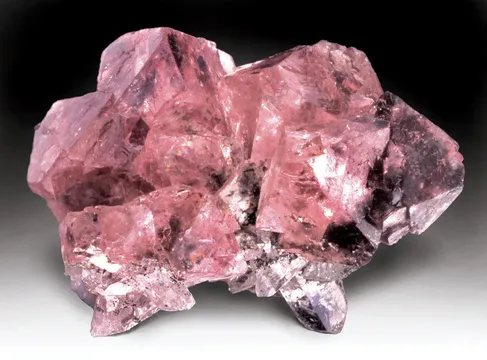
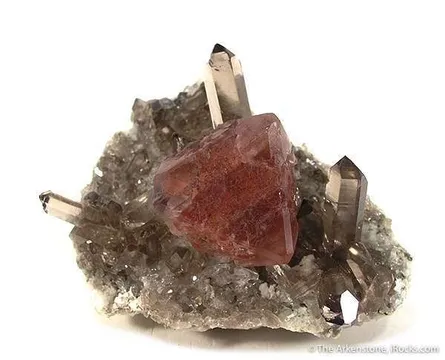
Fluorite is the signature collector mineral of Göschenen, especially from the Göscheneralp and Planggenstock sector, where it occurs as pink, rose-red, strawberry-red, and locally pale greenish octahedra on quartz, adularia, calcite, and chloritic matrix. The classic crystals are octahedral rather than cubic, with the finest examples combining saturated color, transparency, sharp edges, and minimal corrosion; surface-cleft fluorites are often etched or frosted, whereas deep tunnel pieces can show unusually fresh, lustrous faces. At Winterstock and Planggenstock, crystals from thumbnail to miniature size are known, while exceptional Planggenstock crystals approached 10 centimeters on edge; the New Gotthard Road Tunnel find added modern pink octahedra, including specimens with chlorite inclusions and bavenite, and tunnel material is especially prized when the fluorite sits cleanly on brilliant quartz rather than appearing as loose or damaged crystals.
Quartz from Göschenen ranges from water-clear rock crystal to pale smoky quartz, dark smoky quartz, morion-like pieces, plates, single points, doubly terminated crystals, and superb gwindels. The district’s quartz is not merely an accessory for fluorite: the Planggenstock cleft system produced museum-scale crystal groups, including the 300-kilogram group now in Bern with a 107-centimeter central crystal, as well as later finds with individual crystals to about 1.20 meters. Fine collector specimens are judged by transparency, luster, undamaged terminations, sculptural architecture, and meaningful association—pink fluorite on quartz, smoky gwindels with adularia or chlorite, and clean plates of pale smoky quartz from Planggenstock and neighboring Göscheneralp clefts stand far above the more common bruised, iron-stained, or incomplete Alpine quartz.
Chlorite at Göschenen is usually encountered as green coatings, pocket dusting, inclusions, and chlorite-group material associated with quartz and fluorite rather than as freestanding display crystals. In the best combinations it gives contrast: green chlorite dusting against clear or smoky quartz, chlorite included in pink fluorite, or chlorite accompanying bavenite and other small cleft minerals from tunnel material. A notable rarity from the Göscheneralp is clinochlore or prochlorite after fluorite, forming sparkly green pseudomorphs after sharp octahedra to about 7 millimeters; such pseudomorphs are far rarer than ordinary chlorite-coated quartz and are of real locality interest when old labels and provenance support the attribution.
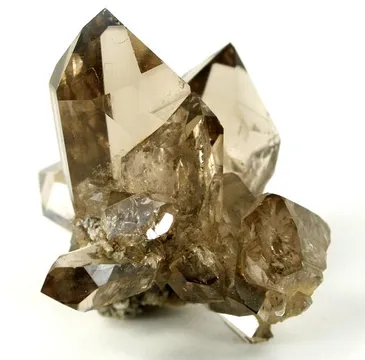
Smoky quartz is one of Göschenen’s most desirable quartz varieties, occurring as transparent pale-brown crystals, darker smoky groups, doubly terminated crystals, and gwindels from the Göschenen Valley, Göscheneralp, Planggenstock, Lochberg, Winterstock, and Voralp Valley localities. The strongest pieces are not simply dark; they are glassy, sharply terminated, three-dimensional, and preferably show the elegant torsion of a gwindel or an association with pink fluorite, chlorite, hematite, or adularia. Planggenstock supplied pale smoky plates and gwindels in the great clefts, while older Göschenen Valley specimens can show very deep smoky color, sometimes nearly purple-black in strong transmitted light, making provenance and crystal habit especially important in separating true alpine classics from generic smoky quartz.
Other documented Göschenen minerals broaden the locality beyond its famous quartet. Mindat and Swiss locality references list albite and pericline, adularia, anatase, calcite, hematite, pyrite, galena, laumontite, heulandite-Ca, stilbite-Ca, scolecite, phenakite, bavenite, bertrandite, allanite-(Ce), anhydrite, ankerite, arsenopyrite, titanite-group occurrences in the broader region, and additional small Alpine-cleft species. I found no verified type-mineral status for the Göschenen locality itself, but the district does have collector rarities: bavenite and chlorite with New Gotthard fluorite, phenakite in the Göscheneralp mineral list, bertrandite from the Voralp Valley side, and uncommon chlorite pseudomorphs after fluorite.
Göschenen specimens are generally authentic when accompanied by old Swiss labels, precise sublocality information, or modern documentation from recognized dealers and publications, but mislabelling is common in a broad sense. “Göscheneralp,” “Göschenen,” “Planggenstock,” “Goschener Alp,” and “Uri, Switzerland” are often used loosely, and older dealer labels may not distinguish between Planggenstock, Winterstock, Lochberg, Voralp Valley, or tunnel finds. Because the look overlaps with other Swiss Alpine localities—Furka, Grimsel, Tiefengletscher, Cavradi, Val Giuv, and Mont Blanc-region material—serious buyers should value provenance, old collection history, and precise pocket or tunnel information.
No well-documented systematic fake industry is tied specifically to Göschenen, but there are practical authenticity concerns. Pink fluorite octahedra can be repaired, reattached to quartz, or paired with unrelated Alpine quartz; any high-value fluorite-on-quartz should be examined under magnification for glue lines, suspicious contact points, and mismatched matrix. Freestanding fluorite crystals from Planggenstock or Göscheneralp are easier to misattribute than matrix pieces. Very large quartz specimens should be checked for reconstructed bases, repaired terminations, and old saw cuts or drilling associated with display mounting. Chlorite can hide contacts and repairs, so bright green coatings near attachment points deserve close inspection.
Condition is central to value. Fluorite from surface clefts may be naturally etched or matte from water action; that is not necessarily damage, but the market strongly favors sharp, lustrous, translucent to transparent octahedra with saturated rose color. Chips on octahedral points and edges are common. Quartz from the district may show bruised terminations, internal veils, chlorite staining, clay residues, iron oxide, or pressure marks from cramped clefts; the finest pieces retain complete terminations, strong luster, and the bright, glassy Alpine clarity for which the locality is loved. Gwindels should be judged by the elegance of the twist, taper, termination quality, and absence of bruising along the stepped growth edges.
Handling is straightforward but careful. Fluorite has perfect cleavage and modest hardness, so the sharp pink octahedra should be kept away from harder quartz points and never cleaned aggressively. Ultrasonic cleaning is a poor idea for repaired or cleaved fluorite specimens and may also dislodge delicate chlorite, bavenite, or zeolite associations. Laumontite and some zeolites from the broader locality can be dehydration-sensitive, so associated zeolite specimens should be stored in stable humidity and not exposed to heat. Fluorite fluorescence varies and should not be relied upon as a locality test.
Market availability is uneven. Small pink fluorite octahedra, quartz points, and chlorite-coated alpine quartz appear regularly, but top Göschenen and Planggenstock specimens are scarce, expensive, and often retained in Swiss collections. Fine matrix fluorite with bright color, undamaged octahedra, and clear quartz commands a major premium. Documented Planggenstock material from the 1990s–2000s and New Gotthard Road Tunnel specimens from 2022 carry added locality significance. Museum-scale Planggenstock quartz is effectively unavailable except as institutional holdings or historic centerpiece material; the Natural History Museum Bern display has removed some of the best examples permanently from the private market.
The Planggenstock story begins with a wall. High above the Göscheneralpsee, the northeast face of the Planggenstock rises in pale granite, and in its upper third the signs were too persuasive for Franz von Arx and Paul von Känel to ignore. In 1993 they studied a suspicious zone under loose blocks and began clearing. The numbers still sound absurd: 23 days of work, roughly 150 cubic meters of rock shifted, individual granite blocks estimated up to 10 cubic meters and about 25 tonnes. Beneath that rubble they were not opening a tidy pocket but the entrance to a hidden system. The first great cavity was broad and low, roughly 10 to 15 meters wide, about 20 meters deep, and only 60 to 70 centimeters high, lined with quartz and accompanied by pink fluorite. The largest early groups were around 200 kilograms, with crystals to about 25 centimeters. What might have crowned a Strahler’s life became only the beginning.
In 1997, about 15 meters lower, von Arx and von Känel found another large cleft. The work became less like casual collecting and more like underground mining, pursued year after year through hard granite. By 2005 they were about 30 meters inside the mountain. On 21 September 2005 they opened the chamber that made Planggenstock famous to the public: nearly fifty extraordinary clear quartz crystals and groups, some with crystals to about a meter, some groups estimated up to 450 kilograms. The chamber was emptied in 2006, yielding nearly two tonnes of rock crystal. The great rotating museum group now in Bern weighs about 300 kilograms and carries a central crystal 107 centimeters long.
The public life of the find was almost as memorable as the underground work. The crystals were exhibited in the old church at Flüelen, a 17th-century building converted for display. Visitors queued; the specimens were lit from behind in a darkened church interior, and the contrast between altar-like architecture and glacially clear quartz was hard to miss. One contemporary visitor described making it into the “Allerheiligtum”—the holy of holies—where giant crystals and loose fluorites glowed under the lights. The same account records single crystals up to 150 kilograms and more than a meter long, and notes the documentary footage shown above the church floor: Strahler crawling in tight passages at around freezing temperature and high humidity, following the trace of rose-fluorite fragments that Paul had found on an exposed rock ledge.
The story did not end when Paul von Känel stepped back in 2007. Franz von Arx continued with Elio Müller, who had already grown up with the passion for crystals. On 19 September 2008, after three months of hard work, the new partnership opened another chamber. This one was even larger in yield: about 2.5 tonnes of fine crystals, with crystals to about 1.20 meters and groups to roughly 500 kilograms. After that came lean years—about five years of hard digging, some 30 meters farther through granite, without another comparable harvest. Yet the Planggenstock kept answering persistence. Later openings produced smaller but important pockets, and by 2018 the workings had reached a lower promising level in a cleft system described as nearly 100 meters long. In 2019, Franz von Arx and Elio Müller found exceptionally pure and large fire-red fluorites, material described by the finders as beyond what had been seen in the Alps.
A different kind of story unfolded in the New Gotthard Road Tunnel. In January 2023, Swiss public radio described Uri’s mineral overseer Peter Amacher leaving his office in Amsteg whenever possible to go to Göschenen, pulling on a helmet and orange gear to inspect the second-tube construction site for new crystal-bearing fissures. The phrase he gave them is unforgettable: “Wenn ich fünf oder sechs Tage nicht im Tunnel war, bin ich auf Entzug”—if he had not been in the tunnel for five or six days, he was in withdrawal. In September 2022, blasting had opened a sparkling cleft about 300 meters inside the mountain, full of rock crystal and pink fluorite. Amacher’s team recovered several hundred kilograms, selected the best, cleaned them, and stored them for the canton.
That tunnel story also has a darker edge. Uri’s authorities treated the crystals as public property, intended for exhibition, science, and official gifts rather than disappearance into private rucksacks. Amacher’s six-person team patrolled the works daily, because theft attempts were not theoretical. In one incident he found four backpacks near the tunnel portal; one was extraordinarily heavy. Inside was rock crystal—about 7,000 Swiss francs’ worth, according to the report. The protocol was stern: a warning for a first offense by a miner, a formal complaint for a second, and precedent from the Gotthard Base Tunnel where theft had led to court convictions. In Göschenen, even a tunnel muck pile can become a cultural-property question.
_(Naturhistorisches_Museum_Bern).jpg)
