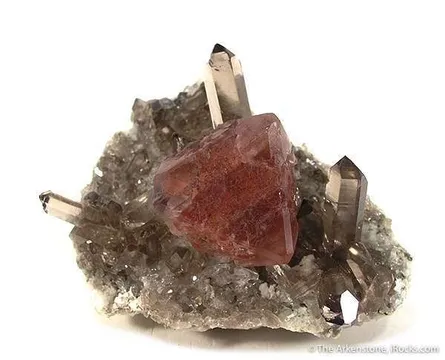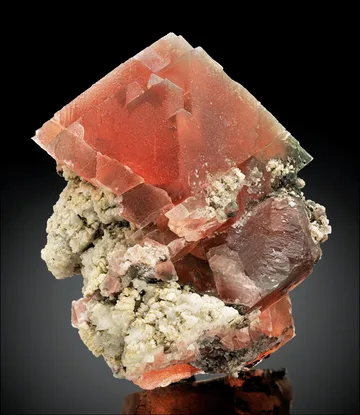
St Gotthard pass road, Switzerland — Alpine fissure locality yielding quartz, smoky quartz, and pink fluorite; prized for glassy octahedra and cleft specimens.
Key facts
St Gotthard pass road is not a mine in the usual sense. It is a classic Alpine fissure locality exposed by road and tunnel works through one of Europe’s most storied high passes, where the old world of Swiss Strahler culture meets the engineered cross-section of the Gotthard Massif. Collectors know the name for quartz, smoky quartz, and especially pink Alpine fluorite: sharp, glassy octahedra and lustrous quartz crystals that came from clefts opened in granitic gneiss during construction. The locality sits in the broader Gotthard region, a rugged meeting ground of the Aar Massif, Urseren zone, and Gotthard Massif, where Alpine fluids moved through fractures during uplift and cooling and deposited the familiar cleft assemblage of quartz, feldspar, chlorite, carbonates, rutile, and rarer accessory minerals.
Regional View
Country View
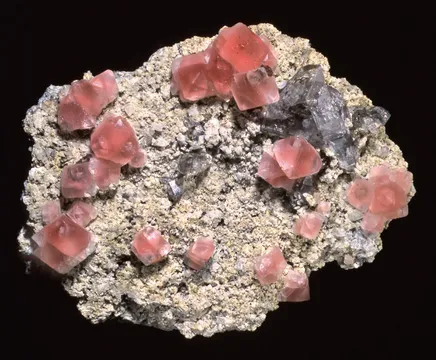
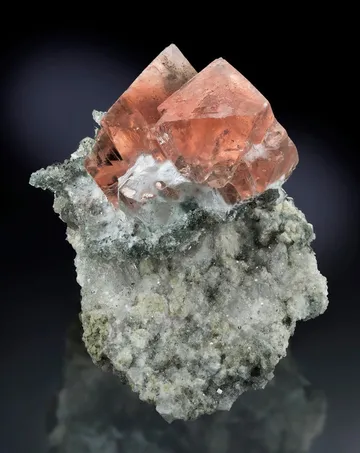
The best pieces have a distinctly Alpine look: transparent quartz with polished-looking prism faces, chlorite-dusted growth surfaces, smoky crystals on pale feldspar, and pink fluorite octahedra that seem too delicate for the violent setting in which they were recovered. The locality’s modern importance was renewed by work on the second Gotthard road-tunnel tube, where in 2022 and again in 2026 exceptional pockets yielded quartz and darker rose fluorites now represented in the Canton Uri mineral collection and the Schloss A Pro exhibition at Seedorf.

Photo: Wikimedia Commons

Photo: Wikimedia Commons
The collector locality is best understood as an Alpine-cleft and tunnel-construction occurrence rather than an ore deposit. Mindat places the St Gotthard pass road locality at Hospental in the Urseren district of Canton Uri, with the German name Gotthardstrasse, and lists subordinate occurrences including Gotthardmättli and a road tunnel. The mineral list for the Uri road entry is modest—Aeschynite-(Y), albite and pericline, ankerite, arsenopyrite, and rutile—but the market name “St Gotthard pass road” is also used for specimens from the Gotthard pass road-tunnel works and the road-tunnel system, which have produced quartz, smoky quartz, and pink fluorite in the broader Gotthard pass setting.
Geologically the setting is a road-and-tunnel transect through Alpine crystalline rocks and intervening metasedimentary zones. The Gotthard road-tunnel system runs from Göschenen in Uri toward Airolo in Ticino, passing through Aar granite and Aar-Massif paragneisses, the Urseren-Garvera zone, and the Gotthard Massif with its paragneisses, Gamsboden and Fibbia orthogneisses, Guspis paragneisses, Rotondo granite, Sorescia and Prato gneisses, Tremola-series metasediments, and cover rocks near the portals. The mineralizing environments were Alpine fissures—open extensional clefts lined by quartz and companion species—not continuous ore shoots. Published tunnel work recorded hundreds of clefts in the road-tunnel system; later summaries note 271 investigated Alpine fissures and 51 determined mineral species in the Gotthard road tunnel, with a strong dependence of mineral assemblage on wall-rock composition and metamorphic grade.
There were no conventional ore bodies or mining companies at this locality. The important mineral production came during civil-engineering work: road construction, short road tunnels associated with the pass road, the first Gotthard road tunnel, and, most recently, the second Gotthard road-tunnel tube. For the pass-road tunnel southeast of the pass, Mindat records Alpine-type clefts in Fibbia gneiss opened during construction of a tunnel of the new road to the pass from 1962 to 1964; quartz, rock crystal, and rutile are documented there, with minor mineralized quartz veins and pegmatites also encountered. For the main Gotthard road tunnel, construction began in 1969 and the tunnel opened to traffic in September 1980; later work for the second tube began opening new headings from the Göschenen and Airolo sides.
The collecting history is therefore inseparable from Swiss tunnel mineralogy. In the Uri part of the first road-tunnel system, mineral supervision allowed systematic documentation of many pocket occurrences that would otherwise have disappeared into spoil. Records list fluorite at 625 m from the north portal in a connecting gallery, quartz in a larger cleft around 2050 m from the north portal, pyrite at multiple tunnel-meter positions, rutile as needles and sagenitic aggregates, sphalerite up to 25 mm, xenotime in the Gurschen and Fibbia gneisses, and a long suite of feldspar, chlorite, carbonate, zeolite, sulfide, oxide, and REE-bearing species. These are tunnel-locality data rather than a surface mine inventory, but they explain why Gotthard labels often carry exact tunnel-meter information.
Access today must be treated conservatively. The pass road and Gotthardpassstrasse are public infrastructure, and the tunnel systems are active, restricted transport and construction facilities. Casual entry or collecting in road cuts, tunnel works, portals, or construction areas is not a realistic or lawful collecting opportunity. On Korporation Ursern territory, mineral collecting requires an annual Strahlerpatent; applicants must be adults, the patent is requested in writing by 31 May for the current calendar year, and rules prohibit collecting on Sundays and holidays, machine tools, and explosives. The local Strahler code also recognizes the staking of a cleft by leaving a tool and a weatherproof marker with name, address, and date, with limits on how many sites one person may claim and how long they may leave them inactive.
The most discussed modern finds are the pink-fluorite and quartz pockets exposed during the second Gotthard road-tunnel works. In late September 2022, a cleft roughly 300 m from the north-side tunnel entrance was opened by blasting in the roof area. The Uri mineral-supervision team recovered several hundred kilograms of material over an almost 24-hour operation using a lifting platform; the find included quartz groups, pink fluorite, and apophyllite, and Peter Amacher described the fluorites as one of the best Swiss finds in years. A further 2026 Uri report described new rose-fluorite finds from 1493 m from the portal, in massive granitic gneiss of the Aar Massif, with darker rose tones than earlier pieces and finely stacked, plate-like structures associated with calcite. Selected specimens from these finds are now in the Canton Uri collection at Schloss A Pro in Seedorf.
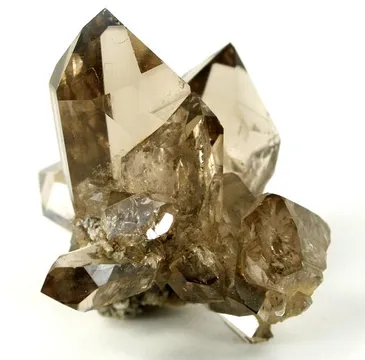
Quartz from the St Gotthard pass road label ranges from clear rock crystal to rutilated quartz and smoky quartz, with the best specimens showing the crisp prism faces, glassy luster, and water-clear interiors collectors expect from high Alpine clefts. Documented pass-road tunnel finds in Fibbia gneiss include rock crystal with rutile, and the Gotthard road-tunnel records include colorless to milky quartz from clefts such as the larger north-side pocket around 2050 m, plus later second-tube pieces with pink fluorite and apophyllite. A strong example is judged less by mere size than by preservation: sharp, unbruised terminations, balanced matrix, visible rutile needles or clean associations with chlorite and fluorite, and the “fresh pocket” luster that separates real Alpine cleft quartz from ordinary broken vein quartz.
Fluorite is the prestige mineral of the Gotthard road-tunnel tradition, occurring as pink to rose octahedra on quartz, chlorite, calcite, or granitic matrix. Classic older specimens from the road-tunnel works are typically translucent to gemmy octahedra, sometimes with lightly frosted faces, while the celebrated 2022 second-tube find produced rich plates and matrix pieces of quartz with rosafluorite, and the 2026 material was described as darker rose and architecturally layered with calcite. The best pieces here are saturated, lustrous, visibly octahedral, and undamaged at the fragile fluorite edges; association with bright quartz or a thin dusting of chlorite gives a distinctly Swiss look, while large, richly covered matrix specimens from the recent tunnel finds are far scarcer than isolated thumbnails.
Smoky quartz with the St Gotthard pass road label belongs to the classic Swiss Alpine idiom: transparent to tea-brown crystals, commonly sharp and prismatic, sometimes perched on adularia and touched by oriented chlorite dusting on selected faces. Market examples include small-cabinet crystals and matrix pieces with robust upright smoky prisms, old labels, and the clean “read-through” clarity prized in Alpine quartz. Fine pieces are not just dark; they are complete all around, damage-free at the termination and prism edges, and aesthetically set on matrix or feldspar, because isolated smoky points from the Gotthard region are more common than balanced, old-collection matrix specimens.
Other documented minerals from the exact Uri St Gotthard pass road entry include Aeschynite-(Y), albite including pericline, ankerite from the road tunnel, arsenopyrite from Gotthardmättli, and rutile. Aeschynite-(Y) is notable as a rare REE-Ti-Nb oxide in the Alpine-cleft context, though it is not a type-locality species for this road locality; the accepted type locality for Aeschynite-(Y) is in Norway. The broader Gotthard tunnel system adds many important accessories and rarities, including apatite, apophyllite, chabazite, chlorite, pyrite, sphalerite, rutile, titanite, xenotime, stilbite, zeolite minerals, pyrrhotite, galena, chalcopyrite, and rare species such as kainosite and harmotome recorded from Gotthard road-tunnel literature. Tremolite’s name is historically tied to the Tremola/St Gotthard district, but modern locality treatment separates that story from the specific Uri pass-road locality.
The main authenticity issue is locality precision, not artificial treatment. Labels reading “St Gotthard,” “Gotthard Pass,” “Gotthard road tunnel,” “St Gotthard pass road tunnel,” “Gotthard Highway tunnel,” “Göschenen,” “Airolo,” “Ticino,” and “Uri” have been used with varying specificity, and they do not all mean the same collecting point. Serious collectors should preserve old labels, but they should also note whether a specimen is from the pass road at Hospental, the 1962–1964 pass-road tunnel southeast of the pass, the first road tunnel, the north or south section of the highway tunnel, or the second road-tunnel tube. Specimens described only as “St Gotthard” may be perfectly genuine yet impossible to assign to the narrow EarthWonders locality without supporting provenance.
No well-documented, locality-specific industry of fake St Gotthard pass road specimens appears in the literature consulted. The riskier area is enhancement by context: a true Swiss fluorite may be promoted as “Gotthard tunnel” without proof, or an Alpine smoky quartz may be given a more famous pass label because old Swiss labels can be vague. Pink fluorite deserves special scrutiny: verify octahedral form, contact style, matrix compatibility, and old collection history, and be wary of dramatic loose crystals sold without any provenance. Repaired fluorite is possible because octahedral edges and points are fragile; inspect under magnification for glue in contacts and for over-cleaning that removes chlorite or alters the natural surface contrast.
Condition standards are high. Quartz points should be checked for tiny bruises on the main termination and along prism edges, because even minute nicks are obvious on glassy Alpine pieces. Smoky quartz should be assessed for natural back contacts versus modern breakage, and matrix pieces should be examined for stability around feldspar, chlorite, and carbonate. Fluorite should be protected from impact, heat, and prolonged strong light; many pink fluorites are valued for delicate color and transparency, and collectors commonly store them out of direct sun. Rutile-in-quartz and chlorite-included pieces should not be aggressively cleaned, as inclusions and selective chlorite coatings are part of the locality character.
Market availability is uneven. Quartz and smoky quartz with generic St Gotthard labels appear periodically, often from old European or American collections. True pink fluorite from the Gotthard road-tunnel tradition is much scarcer, and fine examples from the 2022 and 2026 second-tube finds are especially desirable because the recovery was supervised and many top pieces entered the Canton Uri collection. When a specimen comes with exact tunnel-tube, portal, meter, pocket, collector, or publication data, that provenance is a major part of its value.
The great modern Gotthard story begins not in a mine, but on a construction site. In late September 2022, blasting for the second Gotthard road-tunnel tube opened a pocket about 300 m from the portal. The cleft was high in the roof, only partly struck by the blast, and the head of blasting called the Uri mineral-supervision team instead of letting the find vanish into spoil. Because the find came on a Friday, the team had the work-free weekend to act. Peter Amacher and his crew brought in a lifting platform and worked for almost 24 hours, clearing several hundred kilograms of crystal-bearing rock from a pocket rich in quartz, pink fluorite, and apophyllite. Amacher later called the fluorite find one of the best in Switzerland in years.
The same episode takes on an even more physical character in field reporting from the tunnel. Amacher remembered the fluorites and quartz as “absolute” top pieces, with exceptional luster, color, and smooth surfaces. The pocket was 7 m above the tunnel floor; the team stood on the edge of the lifting platform, leaning their upper bodies into the cavity and fishing out specimens. At one point rock began to trickle from the roof. Amacher pulled the men aside; soon after, a block fell where they had been working. They continued, filled the pickup several times, and came home around five in the morning exhausted, with the images of the pocket still replaying in their heads.
The tunnel also has its folklore of temptation. Amacher, both a geologist and a lifelong Strahler, was hired to make sure Uri’s mineral heritage did not disappear into workers’ pockets. In one account he found four miners’ provision rucksacks outside the portal. One was so heavy he could barely lift it. Inside were rock crystals, with an estimated offense value of about 7000 Swiss francs. A first offense could bring a warning; a second could bring a formal complaint, and during the Gotthard Base Tunnel construction there were even court convictions. Mineral collecting in a tunnel is not a romantic free-for-all: it is a controlled struggle between science, public ownership, private desire, and the very human pull of a glittering pocket.
The 2026 finds added a quieter sequel. New rose fluorites recovered at the end of January 2026 came from 1493 m inside the mountain, in massive granitic gneiss of the Aar Massif. They were darker than earlier fluorites and had an unusual stacked, plate-like architecture, paired with calcite in delicate constructions that looked almost built. Five selected fluorites and eleven Gotthard quartz specimens were added to the Schloss A Pro display in Seedorf, where the Canton Uri collection gathers material from the Gotthard Base Tunnel, power-station works, and both Gotthard road-tunnel tubes. The public sees them cleaned, labeled, and lit in glass cases; their real birthplace was a wet, noisy tunnel face where the rock was being secured almost as soon as it was exposed.